 Made to Stick: Why Some Ideas Survive and Others Die
Quotes from the Book
It is safe to assume that any individual or group you wish to influence has access to more wisdom than they currently use. It is also safe to assume that they also have considerably more facts than they can process effectively. Giving them even more facts adds to the wrong pile. They don't need more facts. They need help finding their wisdom. Contrary to popular belief, bad decisions are rarely made because people don't have all the facts.
9
The telling and hearing of stories is a bonding ritual that breaks through illusions of separateness and activates a deep sense of our collective interdependence.
6
Other methods of influence—persuasion, bribery, or charismatic appeals—are push strategies. Story is a pull strategy. If your story is good enough, people—of their own free will—come to the conclusion they can trust you and the message you bring.
4
When studying tools of influence, people always ask the question, “How can I make them listen to me?” They ask because that is what they think they want to learn. Unfortunately, this can never be learned because it can’t be done. You can’t make someone listen. You can entice, inspire, cajole, stimulate, or fascinate but you cannot make anyone listen to anything. Embracing this fact up-front lets us focus on what we can do.
2
Usually, influence means persuading people to believe what they currently do not believe. They do not believe they need to cooperate with you, that they should change their behavior, or that they should support your goals until they “see” it. Facts don’t help them “see.” The unbelievable (whether it is difficult or unpleasant to see) only becomes believable after they can “see” it through personal experience or a simulation of personal experience—via story. If you believe that the people you want to influence would say yes if they could just “see” what you have seen, use a story to open their eyes.
2
If a picture is worth a thousand words, then a story is worth a thousand assurances.
2
There are six types of stories that will serve you well in your efforts to influence others. 1. ”Who I Am” Stories 2. ”Why I Am Here” Stories 3. ”The Vision” Story 4. ”Teaching” Stories 5. ”Values-in-Action” Stories 6. “I Know What You Are Thinking
1
People follow a person who they feel “speaks the Truth.
1
The magic of influence is less in what we say and more in how we say it and who we are.
One story Plato used to teach about the limitations of democracy was about a ship in the middle of the ocean. On this ship was a gruff, burly captain who was rather shortsighted and slightly deaf. He and his crew followed the principles of majority rule on decisions about navigational direction. They had a very skilled navigator who knew how to read the stars on voyages, but the navigator was not very popular and was rather introverted. In the panic of being lost, the captain and crew made a decision to follow the most charismatic, eloquent, and persuasive of the crew members. They ignored and ridiculed the navigator’s suggestions, remained lost, and ultimately starved to death at sea. One
Watch on YouTube
About Annette Simmons
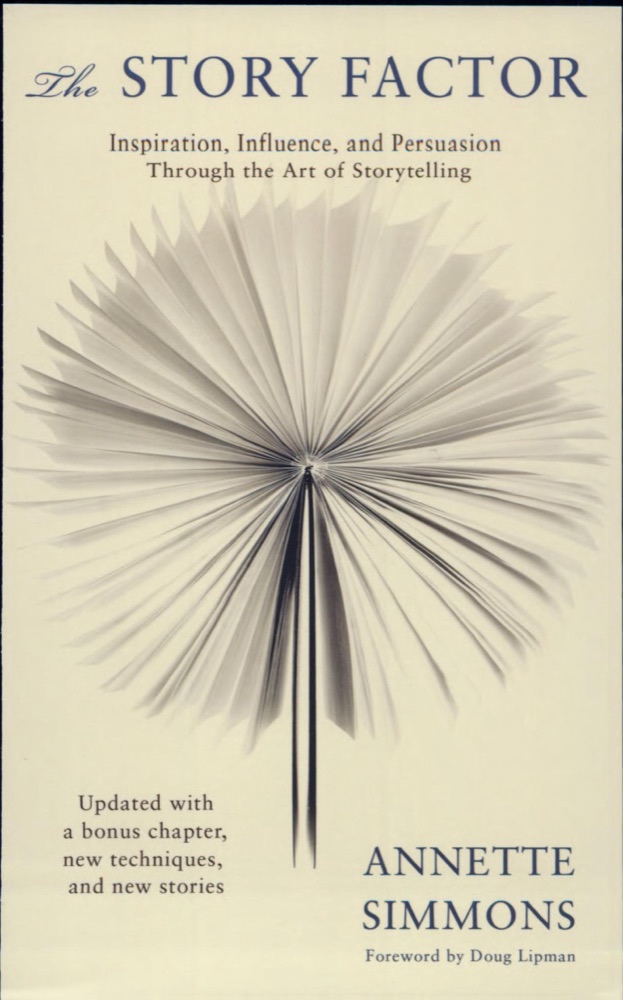
About the book
The new material for this revised edition offers an expanded case study of storytelling in action that focuses on one of Simmons’s success stories. Over one hundred stories drawn from the front lines of business and government, as well as myths, fables, and parables from around the world, illustrate how story can be used to persuade, motivate, and inspire in ways that cold facts, bullet points, and directives can’t. These stories, combined with practical storytelling techniques show anyone how to become a more effective communicator. From “who I am” to “I-know-what-you’re thinking,” Simmons identifies the six stories you need to know how to tell and demonstrates how they can be applied. This revised edition offers a guide to using storytelling in specific business circumstances, including corporate reorganizations, layoffs, and diversity issues.
Book details
- First published
- 2000
- Author
- Annette Simmons
- Genre
- Nonfiction
- Goodreads rating
- 3.81 (3k ratings)
Keep reading
Made to Stick: Why Some Ideas Survive and Others Die
 Resonate: Present Visual Stories that Transform Audiences
 Talk Like TED: The 9 Public-Speaking Secrets of the World's Top Minds
 If I Understood You, Would I Have This Look on My Face?: My Adventures in the Art and Science of Relating and Communicating
 TED Talks: The Official TED Guide to Public Speaking
 Influence Is Your Superpower: The Science of Winning Hearts, Sparking Change, and Making Good Things Happen
 Start Something That Matters
 The Science of Storytelling
 Consider This: Moments in My Writing Life After Which Everything Was Different
 Storyworthy: Engage, Teach, Persuade, and Change Your Life through the Power of Storytelling
 Wired for Story: The Writer's Guide to Using Brain Science to Hook Readers from the Very First Sentence
 Thank You for Arguing: What Aristotle, Lincoln, and Homer Simpson Can Teach Us About the Art of Persuasion
 What the Dog Saw and Other Adventures
 Crucial Conversations: Tools for Talking When Stakes are High
 Influence: The Psychology of Persuasion
 The Catalyst: How to Change Anyone's Mind
 Influencer: The Power to Change Anything
 The 7 Habits of Highly Effective People: Personal Workbook
 Story Genius: How to Use Brain Science to Go Beyond Outlining and Write a Riveting Novel
 How to Know a Person: The Art of Seeing Others Deeply and Being Deeply Seen
 How to Win Friends & Influence People
 Difficult Conversations: How to Discuss What Matters Most
 The Tipping Point: How Little Things Can Make a Big Difference
 The Elephant in the Brain: Hidden Motives in Everyday Life
 Supercommunicators: How to Unlock the Secret Language of Connection
 Words That Work: It's Not What You Say, It's What People Hear
 Show Your Work!: 10 Ways to Share Your Creativity and Get Discovered
 Think Like a Freak
 Give and Take: A Revolutionary Approach to Success
 Think Again: The Power of Knowing What You Don't Know
 Story: Substance, Structure, Style, and the Principles of Screenwriting
 The Truth About Stories: A Native Narrative
 The Social Animal: The Hidden Sources of Love, Character, and Achievement
 The Art of Thinking Clearly
 Start with Why: How Great Leaders Inspire Everyone to Take Action
 Revenge of the Tipping Point
 Presence: Bringing Your Boldest Self to Your Biggest Challenges
 A Higher Loyalty: Truth, Lies, and Leadership
 Children of Dune
 Surrounded by Idiots
 The Age of Magical Overthinking: Notes on Modern Irrationality
 Magic of Thinking Big
 Tribes: We Need You to Lead Us
 The Ogress and the Orphans
 A Million Miles in a Thousand Years: What I Learned While Editing My Life
 To Sell is Human: The Surprising Truth About Moving Others
 Originals: How Non-Conformists Move the World
 The Writer's Journey: Mythic Structure for Writers
 The First Binding
 The Influencing Machine: Brooke Gladstone on the Media
 The Art of Public Speaking
 The Laws of Human Nature
 Trust Me, I'm Lying: Confessions of a Media Manipulator
 The Blue Sweater: Bridging the Gap Between Rich and Poor in an Interconnected World
 The View from the Cheap Seats: Selected Nonfiction
 Dæmon Voices
 Turn the Ship Around!: A True Story of Turning Followers into Leaders
 You Are Now Less Dumb: How to Conquer Mob Mentality, How to Buy Happiness, and All the Other Ways to Outsmart Yourself
 Say More: Lessons from Work, the White House, and the World
 In the Light of What We Know