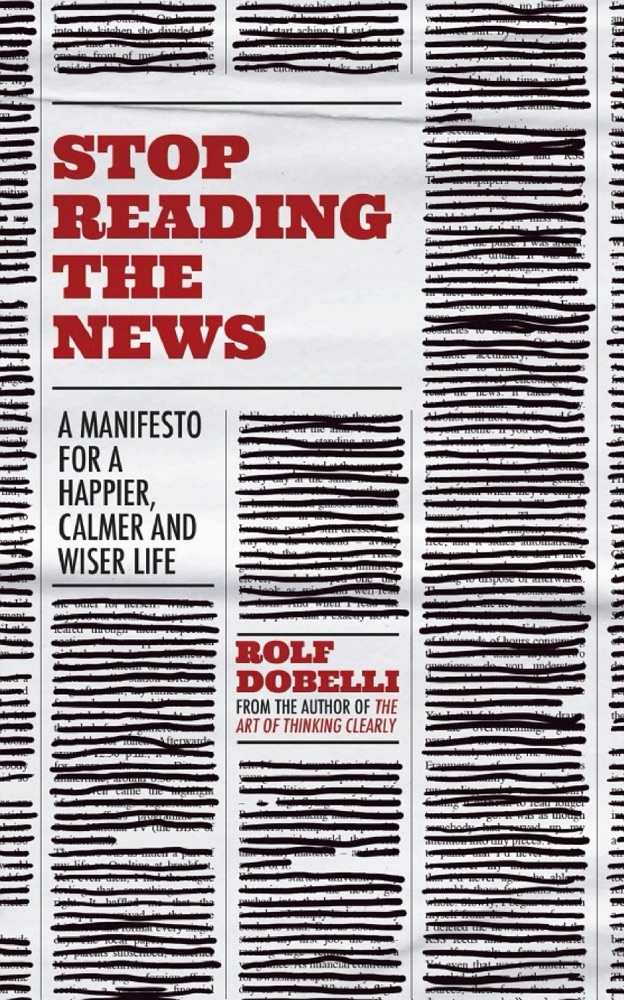
 Stop Reading the News: A Manifesto for a Happier, Calmer and Wiser Life
Quotes from the Book
Whether we like it or not, we are puppets of our emotions. We make complex decisions by consulting our feelings, not our thoughts. Against our best intentions, we substitute the question, “What do I think about this?” with “How do I feel about this?” So, smile! Your future depends on it.
64
If 50 million people say something foolish, it is still foolish.
57
How do you curb envy? First, stop comparing yourself to others. Second, find your “circle of competence” and fill it on your own. Create a niche where you are the best. It doesn’t matter how small your area of mastery is. The main thing is that you are king of the castle.
36
We must learn to close doors. A business strategy is primarily a statement on what not to engage in. Adopt a life strategy similar to a corporate strategy: Write down what not to pursue in your life. In other words, make calculated decisions to disregard certain possibilities and when an option shows up, test it against your not-to-pursue list. It will not only keep you from trouble but also save you lots of thinking time. Think hard once and then just consult your list instead of having to make up your mind whenever a new door cracks open. Most doors are not worth entering, even when the handle seems to turn so effortlessly.
30
If your only tool is a hammer, all your problems will be nails,
28
As paradoxical as it sounds: The best way to shield yourself from nasty surprises is to anticipate them.
22
There are two kinds of forecasters: those who don’t know, and those who don’t know they don’t know,
19
We are drunk on our own ideas. To sober up, take a step back every now and then and examine their quality in hindsight. Which of your ideas from the past ten years were truly outstanding? Exactly.
19
Assume that your worldview is not borne by the public. More than that: Do not assume that those who think differently are idiots. Before you distrust them, question your own assumptions.
17
Facts do not cease to exist because they are ignored,’ said writer Aldous Huxley.
16
It’s OK to be envious – but only of the person you aspire to become.
16
it is much more common that we overestimate our knowledge than that we underestimate it.
14
After receiving the Nobel Prize in Physics in 1918, Max Planck went on tour across Germany. Wherever he was invited, he delivered the same lecture on new quantum mechanics. Over time, his chauffeur grew to know it by heart: “It has to be boring giving the same speech each time, Professor Planck. How about I do it for you in Munich? You can sit in the front row and wear my chauffeur’s cap. That’d give us both a bit of variety.” Planck liked the idea, so that evening the driver held a long lecture on quantum mechanics in front of a distinguished audience. Later, a physics professor stood up with a question. The driver recoiled: “Never would I have thought that someone from such an advanced city as Munich would ask such a simple question! My chauffeur
13
Certain people make a living from their abilities, such as pilots, plumbers, and lawyers. In other areas, skill is necessary but not critical, as with entrepreneurs and leaders. Finally, chance is the deciding factor in a number of fields, such as in financial markets. Here, the illusion of skill pervades. So, give plumbers due respect and chuckle at successful financial jesters.
13
do you have at least one enemy? Good. Invite him or her over for coffee and ask for an honest opinion about your strengths and weaknesses. You will be forever grateful you did.
11
While his school was closed due to an outbreak of plague in 1666–67, twenty-five-year-old Isaac Newton showed his professor, Isaac Barrow, what research he was conducting in his spare time. Barrow immediately gave up his job as a professor and became a student of Newton. What a noble gesture. What ethical behavior. When was the last time you heard of a professor vacating his post in favor of a better candidate? And when was the last time you read about a CEO clearing out his desk when he realized that one of his twenty thousand employees could do a better job?
11
Patience is indeed a virtue.
11
Stories attract us; abstract details repel us. Consequently, entertaining side issues and backstories are prioritised over relevant facts.
10
The human brain seeks patterns and rules. In fact, it takes it one step further: If it finds no familiar patterns, it simply invents some.
8
No matter how much you have already invested, only your assessment of the future costs and benefits counts.
8
If you ever find yourself in a tight, unanimous group, you must speak your mind, even if your team does not like it.
8
Do you want to influence the behaviour of people or organisations? You could always preach about values and visions, or you could appeal to reason. But in nearly every case, incentives work better. These need not be monetary; anything is useable, from good grades to Nobel Prizes to special treatment in the afterlife.
8
The Pope asked Michelangelo: ‘Tell me the secret of your genius. How have you created the statue of David, the masterpiece of all masterpieces?’ Michelangelo’s answer: ‘It’s simple. I removed everything that is not David.
7
Should you ever be sent to war, and you don’t agree with its goals, desert.
7
18 NEVER PAY YOUR LAWYER BY THE HOUR Incentive Super-Response Tendency To control a rat infestation, French colonial rulers in Hanoi in the nineteenth century passed a law: for every dead rat handed in to the authorities, the catcher would receive a reward. Yes, many rats were destroyed, but many were also bred specially for this purpose. In 1947, when the Dead Sea scrolls were discovered, archaeologists set a finder’s fee for each new parchment. Instead of lots of extra scrolls being found, they were simply torn apart to increase the reward. Similarly, in China in the nineteenth century, an incentive was offered for finding dinosaur bones. Farmers located a few on their land, broke them into pieces and cashed in. Modern incentives are no better: company boards promise bonuses for achieved targets. And what happens? Managers invest more energy in trying to lower the targets than in growing the business. These are examples of the incentive super-response tendency. Credited to Charlie Munger, this titanic name describes a rather trivial observation: people respond to incentives by doing what is in their best interests. What is noteworthy is, first, how quickly and radically people’s behaviour changes when incentives come into play or are altered and, second, the fact that people respond to the incentives themselves and not the grander intentions behind them.
7
Verbal expression is the mirror of the mind. Clear thoughts become clear statements, whereas ambiguous ideas transform into vacant ramblings.
6
In conclusion: when it comes to pattern recognition, we are oversensitive. Regain your scepticism. If you think you have discovered a pattern, first consider it pure chance. If it seems too good to be true, find a mathematician and have the data tested statistically. And if the crispy parts of your pancake start to look a lot like Jesus’ face, ask yourself: if he really wants to reveal himself, why doesn’t he do it in Times Square or on CNN?
6
Excel spreadsheets might as well be one of the most dangerous recent inventions.
6
We are obsessed with having as many irons as possible in the fire, ruling nothing out and being open to everything. However, this can easily destroy success. We must learn to close doors.
5
In psychology, this phenomenon is called reactance: when we are deprived of an option, we suddenly deem it more attractive. It is a kind of act of defiance. It is also known as the Romeo and Juliet effect: because the love between the tragic Shakespearean teenagers is forbidden, it knows no bounds.
5
Watch on YouTube
About Rolf Dobelli
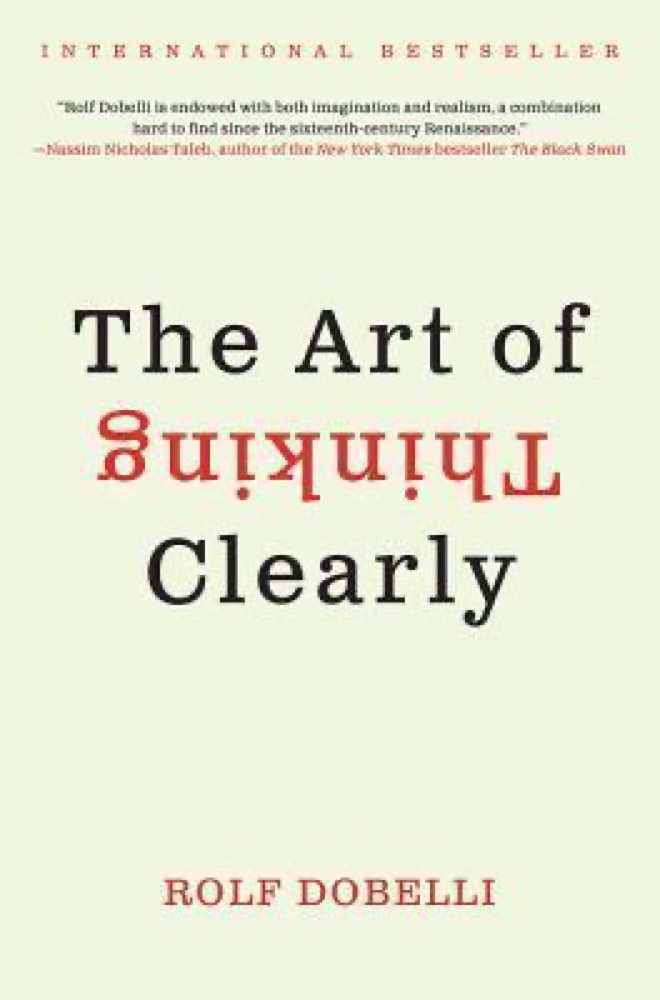
We have collected 61 quotes from 3 books by Rolf Dobelli on BookQuoters.
More about the author →More by Rolf Dobelli
Stop Reading the News: A Manifesto for a Happier, Calmer and Wiser Life
About the book
In engaging prose and with practical examples and anecdotes, an eye-opening look at human reasoning and essential reading for anyone with important decisions to make.
Have you ever: • Invested time in something that, with hindsight, just wasn't worth it? • Overpayed in an Ebay auction? • Continued doing something you knew was bad for you? • Sold stocks too late, or too early? • Taken credit for success, but blamed failure on external circumstances? • Backed the wrong horse?
These are examples of cognitive biases, simple errors we all make in our day-to-day thinking. But by knowing what they are and how to spot them, we can avoid them and make better choices-whether dealing with a personal problem or a business negotiation; trying to save money or make money; working out what we do or don't want in life: and how best to get it.
Simple, clear and always surprising, this indi
Book details
- First published
- 2011
- Author
- Rolf Dobelli
- Genre
- Nonfiction
- Goodreads rating
- 3.85 (42k ratings)
Keep reading
 The Black Swan: The Impact of the Highly Improbable
 Think Like a Freak
 Rationality: From AI to Zombies
 You Are Not So Smart
 Antifragile: Things That Gain from Disorder
 Same as Ever: A Guide to What Never Changes
 Algorithms to Live By: The Computer Science of Human Decisions
 Excellent Advice for Living: Wisdom I Wish I'd Known Earlier
 Principles: Life and Work
 You Are Now Less Dumb: How to Conquer Mob Mentality, How to Buy Happiness, and All the Other Ways to Outsmart Yourself
 How to Fail at Almost Everything and Still Win Big: Kind of the Story of My Life
 The Undoing Project: A Friendship That Changed Our Minds
 The Last Lecture
 Tools of Titans: The Tactics, Routines, and Habits of Billionaires, Icons, and World-Class Performers
 Black Box Thinking: Why Some People Never Learn from Their Mistakes - But Some Do
 Tribe Of Mentors: Transformative Wisdom From Icons and Innovators to Help You Navigate Life's Challenges
 Superforecasting: The Art and Science of Prediction
 The 7 Habits of Highly Effective People: Personal Workbook
 Barking Up the Wrong Tree: The Surprising Science Behind Why Everything You Know About Success Is (Mostly) Wrong
 Think Like a Rocket Scientist: Simple Strategies You Can Use to Make Giant Leaps in Work and Life
 Zen and the Art of Motorcycle Maintenance
 Fooled by Randomness: The Hidden Role of Chance in Life and in the Markets
 What Do You Care What Other People Think?
 Think Again: The Power of Knowing What You Don't Know
 Creativity, Inc.: Overcoming the Unseen Forces That Stand in the Way of True Inspiration
 The Daily Laws: 366 Meditations
 What the Dog Saw and Other Adventures
 Be Your Future Self Now: The Science of Intentional Transformation
 Alchemy: The Surprising Power of Ideas That Don't Make Sense
 How We Decide
 Influence: The Psychology of Persuasion
 God's Debris: A Thought Experiment
 Made to Stick: Why Some Ideas Survive and Others Die
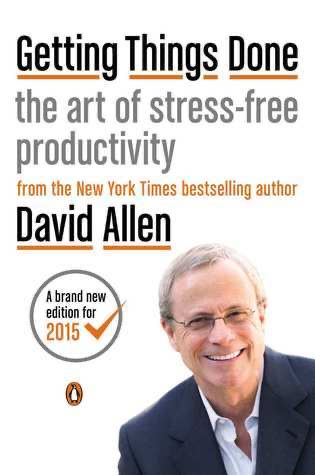 Getting Things Done: The Art of Stress-Free Productivity
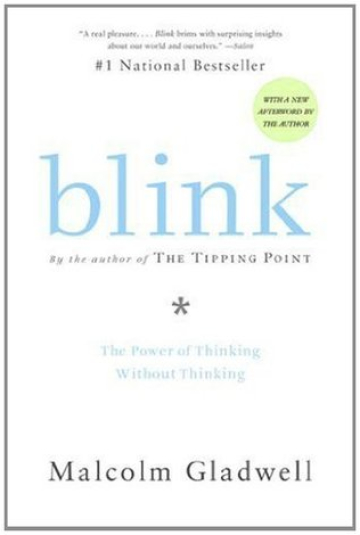 Blink: The Power of Thinking Without Thinking
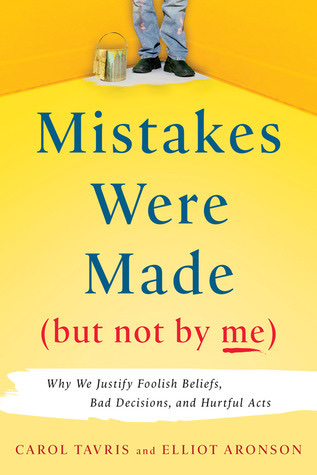 Mistakes Were Made (But Not by Me): Why We Justify Foolish Beliefs, Bad Decisions, and Hurtful Acts
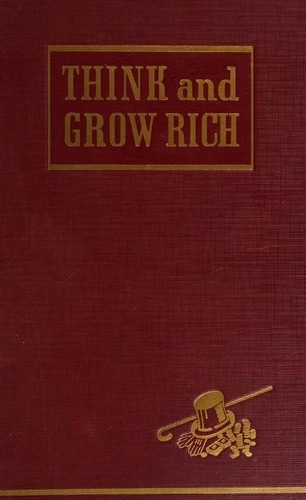 Think and Grow Rich
 Ignore Everybody: and 39 Other Keys to Creativity
 Do Epic Shit
 The Elephant in the Brain: Hidden Motives in Everyday Life
 The Obstacle Is the Way: The Timeless Art of Turning Trials into Triumph
 12 Rules for Life: An Antidote to Chaos
 Psycho-Cybernetics
 How to Use Your Enemies
 How to Win Friends & Influence People
 Crucial Conversations: Tools for Talking When Stakes are High
 Predictably Irrational: The Hidden Forces That Shape Our Decisions
 Rework
 Choose Yourself: Be Happy, Make Millions, Live the Dream
 It Worked for Me: In Life and Leadership
 The Tao of Pooh
 Chaos Monkeys: Obscene Fortune and Random Failure in Silicon Valley
 Letters to a Young Contrarian
 Originals: How Non-Conformists Move the World
 A Whack on the Side of the Head: How You Can Be More Creative
 The Age of Magical Overthinking: Notes on Modern Irrationality
 Hackers & Painters: Big Ideas from the Computer Age