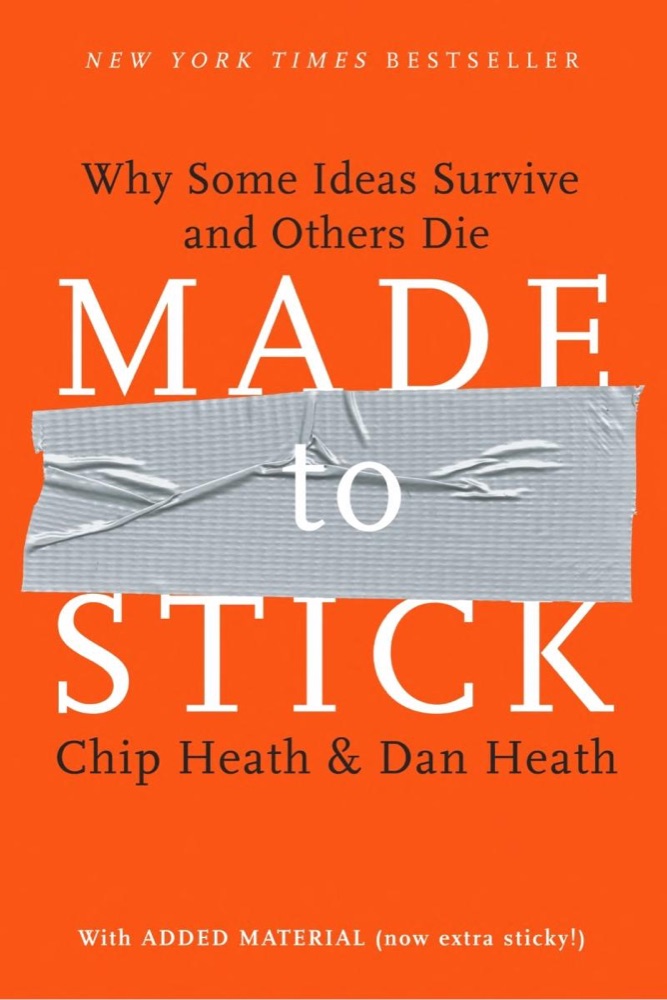

 Think Like a Freak
Quotes from the Book
The most basic way to get someone's attention is this: Break a pattern.
109
Stephen Covey, in his book The 8th Habit, decribes a poll of 23,000 employees drawn from a number of companies and industries. He reports the poll's findings: * Only 37 percent said they have a clear understanding of what their organization is trying to achieve and why * Only one in five was enthusiastic about their team's and their organization's goals * Only one in five said they had a clear "line of sight" between their tasks and their team's and organization's goals * Only 15 percent felt that their organization fully enables them to execute key goals * Only 20 percent fully trusted the organization they work for Then, Covey superimposes a very human metaphor over the statistics. He says, "If, say, a soccer team had these same scores, only 4 of the 11 players on the field would know which goal is theirs. Only 2 of the 11 would care. Only 2 of the 11 would know what position they play and know exactly what they are supposed to do. And all but 2 players would, in some way, be competing against their own team members rather than the opponent.
51
Anger prepares us to fight and fear prepares us to flee.
49
To make our communications more effective, we need to shift our thinking from "What information do I need to convey?" to "What questions do I want my audience to ask?
38
The first problem of communication is getting people's attention.
30
The Curse of Knowledge: when we are given knowledge, it is impossible to imagine what it's like to LACK that knowledge.
29
The most basic way to make people care is to form an association between something they don’t yet care about and something they do care about. We
14
People tend to overuse any idea or concept that delivers an emotional kick.
12
A designer knows he has achieved perfection not when there is nothing left to add, but when there is nothing left to take away.
10
When you say three things, you say nothing.
10
If I already intuitively "get" what you're trying to tell me, why should I obsess about remembering it? The danger, of course, is that what sounds like common sense often isn't.... It's your job, as a communicator, to expose the parts of your message that are uncommon sense. (p.72)
10
So, a good process for making your ideas stickier is: (1) Identify the central message you need to communicate—find the core; (2) Figure out what is counterintuitive about the message—i.e., What are the unexpected implications of your core message? Why isn’t it already happening naturally? (3) Communicate your message in a way that breaks your audience’s guessing machines along the critical, counterintuitive dimension. Then, once their guessing machines have failed, help them refine their machines.
9
People are tempted to tell you everything, with perfect accuracy, right up front, when they should be giving you just enough info to be useful, then a little more, then a little more.
8
When people know the desired destination, they’re free to improvise, as needed, in arriving there.
8
Don't think outside the box. Go box shopping. Keep trying on one after another until you find the one that catalyzes your thinking. A good box is like a lane marker on the highway. It's a constraint that liberates.
7
A great way to avoid useless accuracy, and to dodge the Curse of Knowledge, is to use analogies. Analogies derive their power from schemas: A pomelo is like a grapefruit. A good news story is structured like an inverted pyramid. Skin damage is like aging. Analogies make it possible to understand a compact message because they invoke concepts that you already know.
6
The story’s power, then, is twofold: It provides simulation (knowledge about how to act) and inspiration (motivation to act).
6
for creating a successful idea: a Simple Unexpected Concrete Credentialed Emotional Story.
6
Mystery is created not from an unexpected moment but from an unexpected journey. We know where we’re headed—we want to solve the mystery—but we’re not sure how we’ll get there.
5
work to make the core message itself more interesting.
5
Nora Ephron is a screenwriter whose scripts for Silkwood, When Harry Met Sally, and Sleepless in Seattle have all been nominated for Academy Awards. Ephron started her career as a journalist for the New York Post and Esquire. She became a journalist because of her high school journalism teacher. Ephron still remembers the first day of her journalism class. Although the students had no journalism experience, they walked into their first class with a sense of what a journalist does: A journalists gets the facts and reports them. To get the facts, you track down the five Ws—who, what, where, when, and why. As students sat in front of their manual typewriters, Ephron’s teacher announced the first assignment. They would write the lead of a newspaper story. The teacher reeled off the facts: “Kenneth L. Peters, the principal of Beverly Hills High School, announced today that the entire high school faculty will travel to Sacramento next Thursday for a colloquium in new teaching methods. Among the speakers will be anthropologist Margaret Mead, college president Dr. Robert Maynard Hutchins, and California governor Edmund ‘Pat’ Brown.” The budding journalists sat at their typewriters and pecked away at the first lead of their careers. According to Ephron, she and most of the other students produced leads that reordered the facts and condensed them into a single sentence: “Governor Pat Brown, Margaret Mead, and Robert Maynard Hutchins will address the Beverly Hills High School faculty Thursday in Sacramento. . .blah, blah, blah.” The teacher collected the leads and scanned them rapidly. Then he laid them aside and paused for a moment. Finally, he said, “The lead to the story is ‘There will be no school next Thursday.’” “It was a breathtaking moment,” Ephron recalls. “In that instant I realized that journalism was not just about regurgitating the facts but about figuring out the point. It wasn’t enough to know the who, what, when, and where; you had to understand what it meant. And why it mattered.” For the rest of the year, she says, every assignment had a secret—a hidden point that the students had to figure out in order to produce a good story.
5
spell out the benefit of the benefit. In other words, people don’t buy quarter-inch drill bits. They buy quarter-inch holes so they can hang their children’s pictures.
4
Your brain hosts a truly staggering number of loops. The more hooks an idea has, the better it will cling to memory.
3
Statistics are rarely meaningful in and of themselves. Statistics will, and should, almost always be used to illustrate a relationship. It’s more important for people to remember the relationship than the number.
3
the pop-psychology literature is full of gurus urging you to visualize success. It turns out that a positive mental attitude isn’t quite enough to get the job done. Maybe financial gurus shouldn’t be telling us to imagine that we’re filthy rich; instead, they should be telling us to replay the steps that led to our being poor.
3
It’s hard to make ideas stick in a noisy, unpredictable, chaotic environment. If we’re to succeed, the first step is this: Be simple. Not simple in terms of “dumbing down” or “sound bites.” You don’t have to speak in monosyllables to be simple. What we mean by “simple” is finding the core of the idea. “Finding the core” means stripping an idea down to its most critical essence. To get to the core, we’ve got to weed out superfluous and tangential elements. But that’s the easy part. The hard part is weeding out ideas that may be really important but just aren’t the most important idea. The Army’s Commander’s Intent forces its officers to highlight the most important goal of an operation. The value of the Intent comes from its singularity. You can’t have five North Stars, you can’t have five “most important goals,” and you can’t have five Commander’s Intents. Finding the core is analogous to writing the Commander’s Intent—it’s about discarding a lot of great insights in order to let the most important insight shine. The French aviator and author Antoine de Saint-Exupéry once offered a definition of engineering elegance: “A designer knows he has achieved perfection not when there is nothing left to add, but when there is nothing left to take away.” A designer of simple ideas should aspire to the same goal: knowing how much can be wrung out of an idea before it begins to lose its essence.
3
mental practice alone produced about two thirds of the benefits of actual physical practice
3
Curiosity, he says, happens when we feel a gap in our knowledge.
3
Generative metaphors and proverbs both derive their power from a clever substitution: They substitute something easy to think about for something difficult.
3
Did you know?
- The book's framework is captured in the acronym SUCCESs: Simple, Unexpected, Concrete, Credible, Emotional, and Stories.
- Authors Chip and Dan Heath are brothers who have co-written multiple bestsellers together.
- The book introduced many readers to "the Curse of Knowledge," the idea that experts struggle to imagine not knowing what they know.
- It builds on the concept of "stickiness" popularized by Malcolm Gladwell in "The Tipping Point."
- It spent roughly two years on BusinessWeek's bestseller list and has been translated into more than 30 languages.
About Chip Heath
Chip Heath is a professor at the Stanford Graduate School of Business and his brother Dan Heath is a senior fellow at Duke University's CASE center; together they have co-written several bestselling books on ideas, decisions, and behavior, including "Switch" and "Decisive."
More about the author →About the book
"Made to Stick: Why Some Ideas Survive and Others Die" is a 2007 nonfiction book by brothers Chip and Dan Heath that asks why some ideas—urban legends, proverbs, conspiracy theories, effective ad campaigns—lodge in our memories while others, often more important, vanish. Drawing on case studies from business, education, and popular culture, the Heaths argue that "stickiness" is not a matter of luck or innate talent but a set of identifiable, learnable principles anyone can apply to their own messages.
The book's central framework is the SUCCESs acronym: sticky ideas tend to be Simple, Unexpected, Concrete, Credible, and Emotional, and they are conveyed through Stories. Each principle is unpacked with examples and counterexamples, and the authors emphasize what they call "the Curse of Knowledge"—the difficulty experts have imagining what it is like not to know what they know—as the chief obstacle to clear communication. The recurring theme is that communicators should strip ideas to their core and make them tangible rather than abstract.
Building on the notion of "stickiness" popularized by Malcolm Gladwell's "The Tipping Point," the book became a major business bestseller, appearing on the New York Times, Wall Street Journal, and BusinessWeek lists, with a multi-year run on the latter. It was named a Best Business Book of the Year by 800-CEO-READ and has been widely adopted in marketing, education, and management circles, helping establish the Heath brothers as popular authorities on behavior and communication.
Book details
- First published
- 2007
- Length
- 291 pages
- Reading time
- 4 hours
- Author
- Chip Heath
- Genre
- Nonfiction
- Goodreads rating
- 3.98 (101k ratings)
Critical reception
- Appeared on the New York Times, Wall Street Journal, and BusinessWeek bestseller lists.
- Named Best Business Book of the Year by the 800-CEO-READ awards.
- Has been translated into more than 30 languages.
Keep reading
Think Like a Freak
 The Art of Thinking Clearly
 The Tipping Point: How Little Things Can Make a Big Difference
 Making Ideas Happen: Overcoming the Obstacles Between Vision and Reality
 TED Talks: The Official TED Guide to Public Speaking
 The Undoing Project: A Friendship That Changed Our Minds
 Imagine: How Creativity Works
 Hit Makers: The Science of Popularity in an Age of Distraction
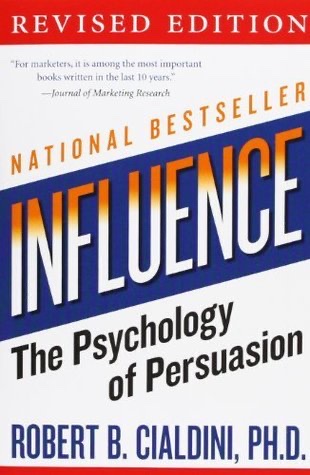 Influence: The Psychology of Persuasion
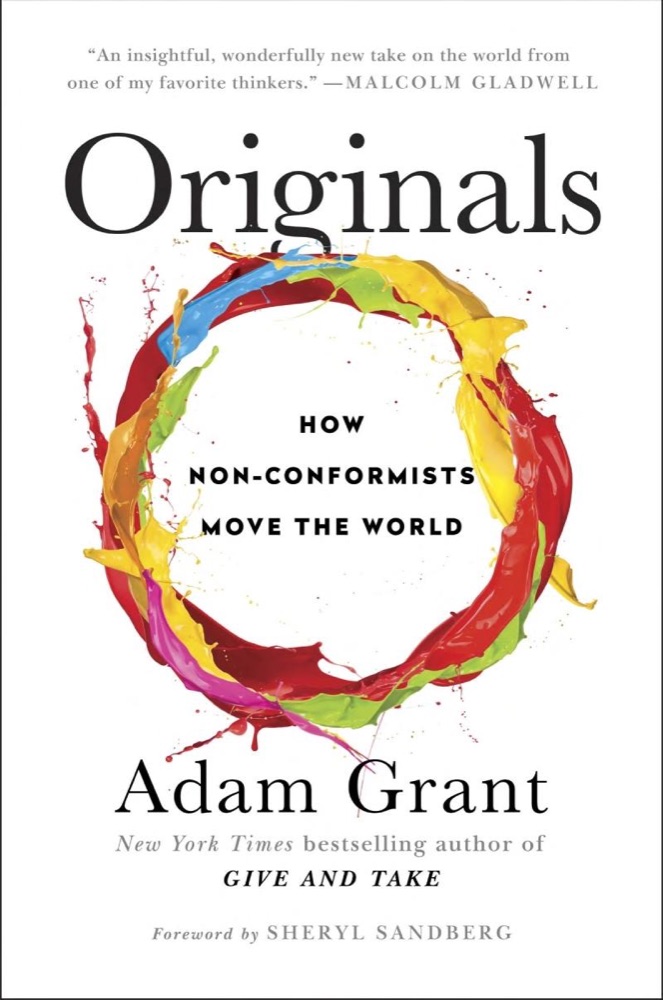 Originals: How Non-Conformists Move the World
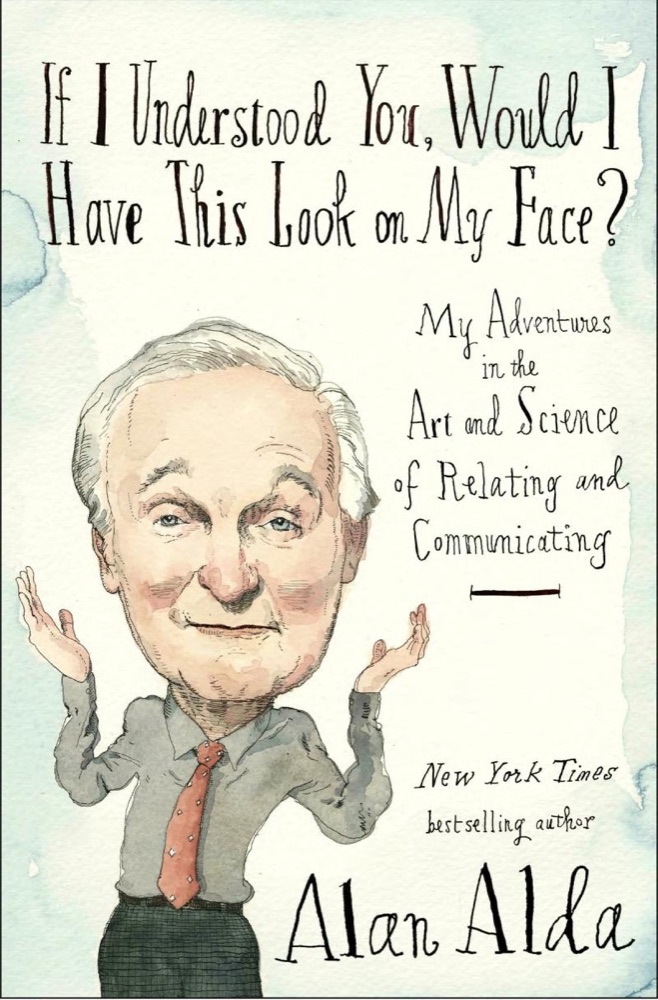 If I Understood You, Would I Have This Look on My Face?: My Adventures in the Art and Science of Relating and Communicating
 Creativity, Inc.: Overcoming the Unseen Forces That Stand in the Way of True Inspiration
 Thinking, Fast and Slow
 Things a Little Bird Told Me: Confessions of the Creative Mind
 Resonate: Present Visual Stories that Transform Audiences
 What the Dog Saw and Other Adventures
 Ignore Everybody: and 39 Other Keys to Creativity
 A Whack on the Side of the Head: How You Can Be More Creative
 How to Take Smart Notes
 The Black Swan: The Impact of the Highly Improbable
 Show Your Work!: 10 Ways to Share Your Creativity and Get Discovered
 The Art of Creative Thinking
 Smarter Faster Better: The Secrets of Being Productive in Life and Business
 The 7 Habits of Highly Effective People: Personal Workbook
 Getting Things Done: The Art of Stress-Free Productivity
 Blink: The Power of Thinking Without Thinking
 Same as Ever: A Guide to What Never Changes
 Talk Like TED: The 9 Public-Speaking Secrets of the World's Top Minds
 Crucial Conversations: Tools for Talking When Stakes are High
 You Are Now Less Dumb: How to Conquer Mob Mentality, How to Buy Happiness, and All the Other Ways to Outsmart Yourself
 The Creative Habit: Learn It and Use It for Life
 The Social Animal: The Hidden Sources of Love, Character, and Achievement
 Zen and the Art of Motorcycle Maintenance
 The Last Lecture
 Black Box Thinking: Why Some People Never Learn from Their Mistakes - But Some Do
 Magic of Thinking Big
 Think Like a Rocket Scientist: Simple Strategies You Can Use to Make Giant Leaps in Work and Life
 Math with Bad Drawings
 Consider This: Moments in My Writing Life After Which Everything Was Different
 The Accidental Creative: How to Be Brilliant at a Moment's Notice
 Hackers & Painters: Big Ideas from the Computer Age
 Rework
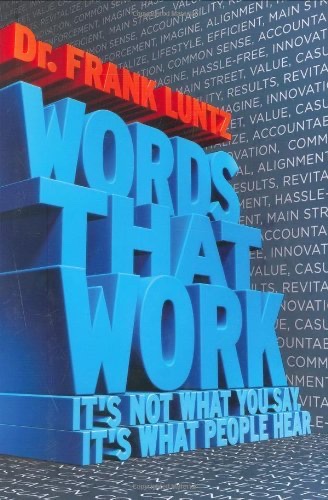 Words That Work: It's Not What You Say, It's What People Hear
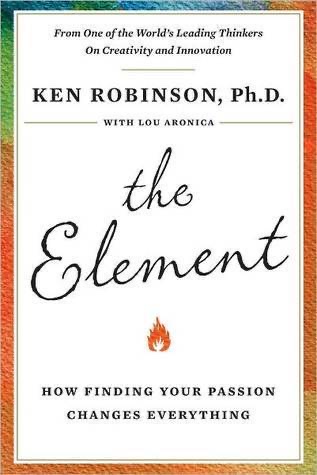 The Element: How Finding Your Passion Changes Everything
 Predictably Irrational: The Hidden Forces That Shape Our Decisions
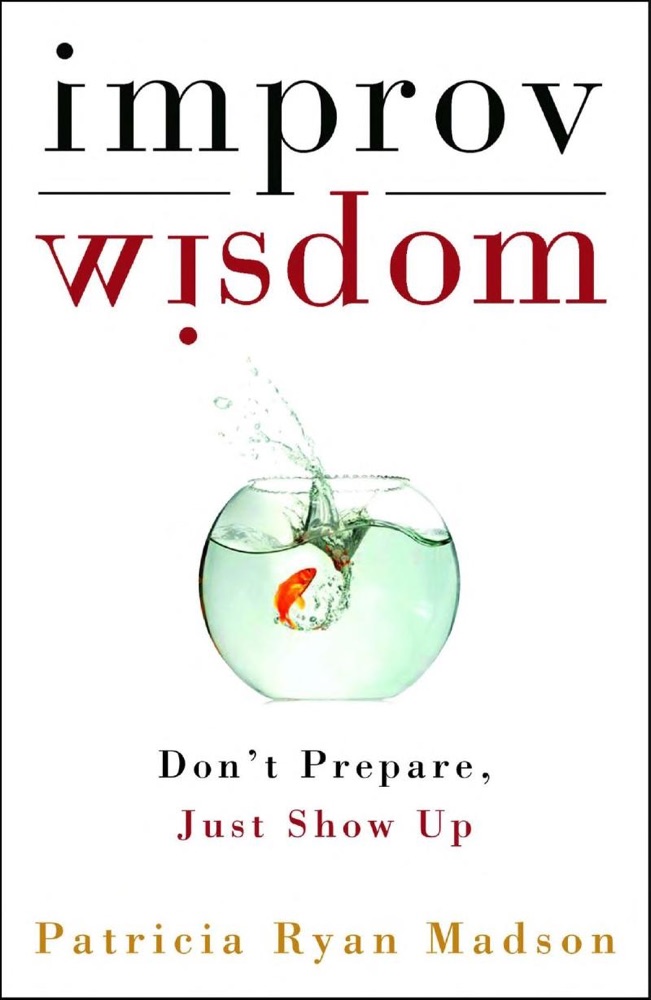 Improv Wisdom: Don't Prepare, Just Show Up
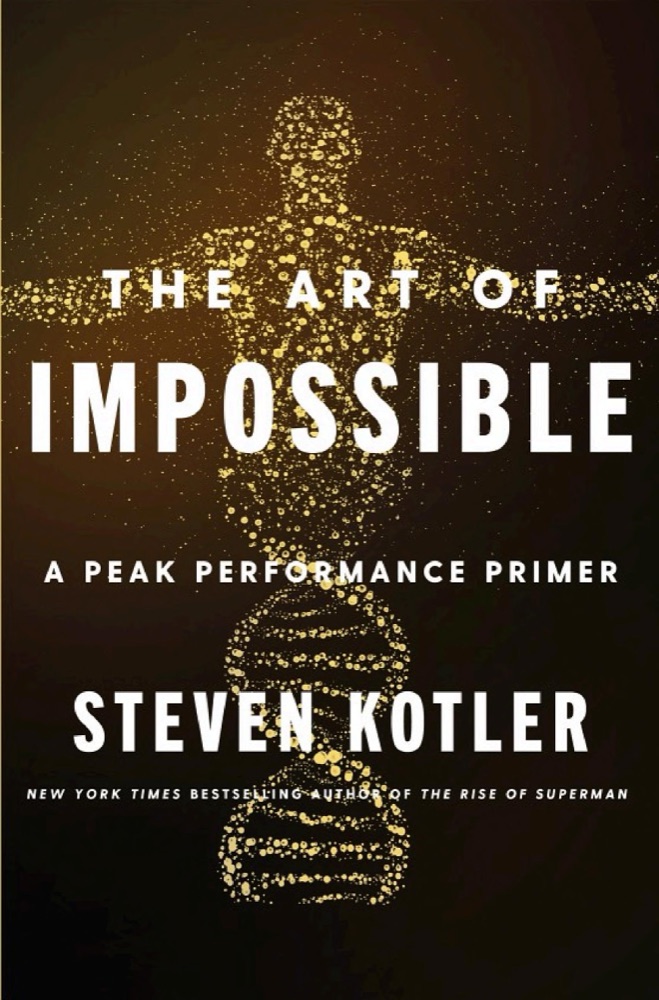 The Art of Impossible: A Peak Performance Primer
 Principles: Life and Work
 Mastermind: How to Think Like Sherlock Holmes
 A Technique for Producing Ideas
 Eating the Dinosaur
 Smartcuts: How Hackers, Innovators, and Icons Accelerate Success
 God's Debris: A Thought Experiment
 Rationality: From AI to Zombies
 Antifragile: Things That Gain from Disorder
 Excellent Advice for Living: Wisdom I Wish I'd Known Earlier
 The Age of Magical Overthinking: Notes on Modern Irrationality
 Creativity: Flow and the Psychology of Discovery and Invention
 How to Fly a Horse: The Secret History of Creation, Invention, and Discovery