
 The Catalyst: How to Change Anyone's Mind
Quotes from the Book
Along with saying no, the easiest thing you can do to become more influential is just ask. Ask more often, ask more directly, and ask for more. People who ask for what they want get better grades, more raises and promotions, and bigger job opportunities and even more orgasm. This might seem obvious but apparently it isn't. Most people do not realize how often they are not asking until they start asking more often. Whenever our MBA course ends and students share the biggest thing they have learned - after we have done so much together - the most common answer is “just ask”. The full realization comes from practice. What if you’re not sure how to ask? Just ask the other person. Seriously. One of the simplest and most surprising influence hacks is that if you ask people how to influence them, they will often tell you. Most of us are reluctant to ask because we fundamentally misunderstand the psychology of asking and we underestimate our likelihood of success. In one series of experiments, employees were more likely to turn in mediocre work than to ask for deadline extension, fearing their supervisor, would think them incompetent if they asked for extra time. But they had it backward: Managers saw extension requests as a good sign of capability and motivation. Pg 64, 65
1
The best salespeople are great relationship builders whose clients want to do business with them again and again. If you say no, they’ll ask your permission to check back with you in the future. If you say no to that, they won’t bother you again. They’re people who treat you with respect, people you’re happy to interact with even if it doesn’t make sense to say yes this time. The reason they don’t come to mind when you think of the archetypical salesperson is that interacting with a master salesperson doesn’t feel transactional. It just feels like a friendly conversation. And it is.
1
The Gator doesn’t take requests. You can’t reason yourself into falling in love, despising ice cream, or enjoying parsnips (which are clearly odious). It’s possible to override gut reactions, but it’s not easy. When disgust researcher Paul Rozin asked adults to eat a piece of chocolate shaped like dog doo, 40 percent couldn’t do it. (Toddlers, however, had no Gator conflict and happily ate poo-shaped food.)
1
Framing is how spellcasting works in the real world. Just by describing something or giving it a name, you called it into being. Well chosen frame can determine what’s relevant, what’s important, or what’s good. When you frame someone’s experience in a compelling way, you shape their expectations as well as their interpretation of events.
Framing is magical stuff. It determines people’s experiences and even shapes how they think. An effective frame can be so sticky that it becomes hard to see things from a different perspective. Once that frame helped transition a small tech start up into the worlds most valuable company. A frame doesn’t say “Pay attention to this and ignore everything else!” But it creates this effect by putting an idea at the center of our attention and giving as a reason to force on it
The Bedrock principle of influencing behavior is this: People tend to take the path of least resistance. Ease is the single best predictor of behavior, intentions, price, quality, or satisfaction. There's a little-known marketing metric for measuring ease called the Customer Effort Score that comes down to a simple question: how easy was it? How customers answer that one question explains one-third of their willingness to buy again, to increase their business with the company, or to rave about it to other people. While one-third may not sound like much, it's actually huge; the Customer Effort Score is 12% more predictive of customer loyalty than customer satisfaction is. Ease makes people happy and effort can really piss people off. Pg. 41
As you release your fear of hearing no, you gain the freedom to ask for things. Pg 58
No matter how often I see it happens, I'm still surprised by the lengths to which strangers will go to be helpful just to because they are asked Pg 59
When Jia Jiang graduated with an MBA from Duke, he wanted to be an entrepreneur. Like so many of us, however, his fear of hearing no was holding him back. To face this fear head-on, he started a video blog called 100 Days of Rejection Therapy. His endearing, perplexing, and absurd videos document what happened as he approached complete strangers, day after day, with off-the-wall requests: to speak over Costco’s intercom, to become a live mannequin at Abercrombie and Fitch, or to borrow a dog from the Humane Society. I love his rejections so much that I challenge my students to replicate them. Jia’s tolerance for rejection and vulnerability reveal the delight and playfulness that can emerge out of the most awkward situations.
El caimán puede tomar decisiones sin la participación del juez, pero el juez no puede tomar decisiones sin la participación del caimán. Esta asimetría es una de las claves de la influencia.
This mental process leads us to caricature the views of people who disagree with us, and to imagine them to be far more extreme than they actually are. These distortions play out in every realm—personal, professional, and political. In the United States, Democrats and Republicans both believe that members of the other party hold more extreme views than they themselves do. When it comes to the contentious issue of immigration, for example, Democrats assume Republican voters want to close
These distortions play out in every realm—personal, professional, and political. In the United States, Democrats and Republicans both believe that members of the other party hold more extreme views than they themselves do. When it comes to the contentious issue of immigration, for example, Democrats assume Republican voters want to close
Watch on YouTube
About Zoe Chance
We have collected 12 quotes from 1 book by Zoe Chance on BookQuoters.
More about the author →About the book
Rediscover the superpower that makes good things happen, from the professor behind Yale School of Management's most popular class
“The new rules of persuasion for a better world.”—Charles Duhigg, author of the bestsellers The Power of Habit and Smarter Faster Better
You were born influential. But then you were taught to suppress that power, to follow the rules, to wait your turn, to not make waves. Award-winning Yale professor Zoe Chance will show you how to rediscover the superpower that brings great ideas to life.
Influence doesn’t work the way you think because you don’t think the way you think. Move past common misconceptions—such as the idea that asking for more will make people dislike you—and understand why your go-to negotiation strategies are probably making you less influential. Discover the one thing that influences behavior more than anything else. Learn to cultivat
Book details
- First published
- 2022
- Author
- Zoe Chance
- Genre
- Nonfiction
- Goodreads rating
- 4.14 (2k ratings)
Keep reading
The Catalyst: How to Change Anyone's Mind
 Getting More: How to Negotiate to Achieve Your Goals in the Real World
 The Art of Thinking Clearly
 The Elephant in the Brain: Hidden Motives in Everyday Life
 Radical Candor: Be a Kickass Boss Without Losing Your Humanity
 Think Like a Freak
 Principles: Life and Work
 Crucial Conversations: Tools for Talking When Stakes are High
 The Art of Asking; or, How I Learned to Stop Worrying and Let People Help
 Smarter Faster Better: The Secrets of Being Productive in Life and Business
 The 7 Habits of Highly Effective People: Personal Workbook
 Thank You for Arguing: What Aristotle, Lincoln, and Homer Simpson Can Teach Us About the Art of Persuasion
 You Are Not So Smart
 Tribe Of Mentors: Transformative Wisdom From Icons and Innovators to Help You Navigate Life's Challenges
 Never Split the Difference: Negotiating As If Your Life Depended On It
 Be Your Future Self Now: The Science of Intentional Transformation
 The Laws of Human Nature
 Originals: How Non-Conformists Move the World
 Made to Stick: Why Some Ideas Survive and Others Die
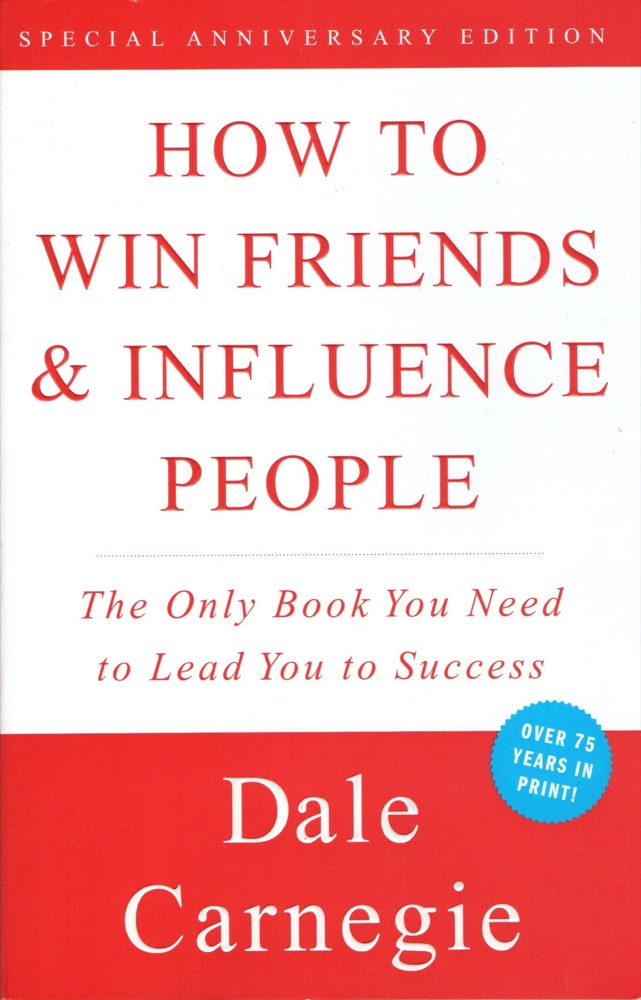 How to Win Friends & Influence People
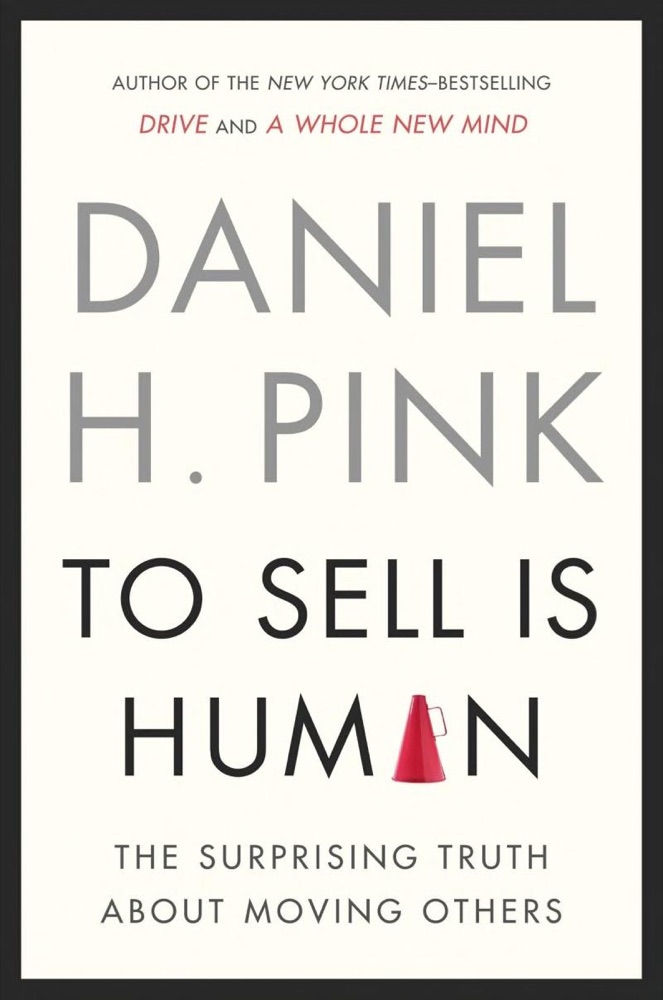 To Sell is Human: The Surprising Truth About Moving Others
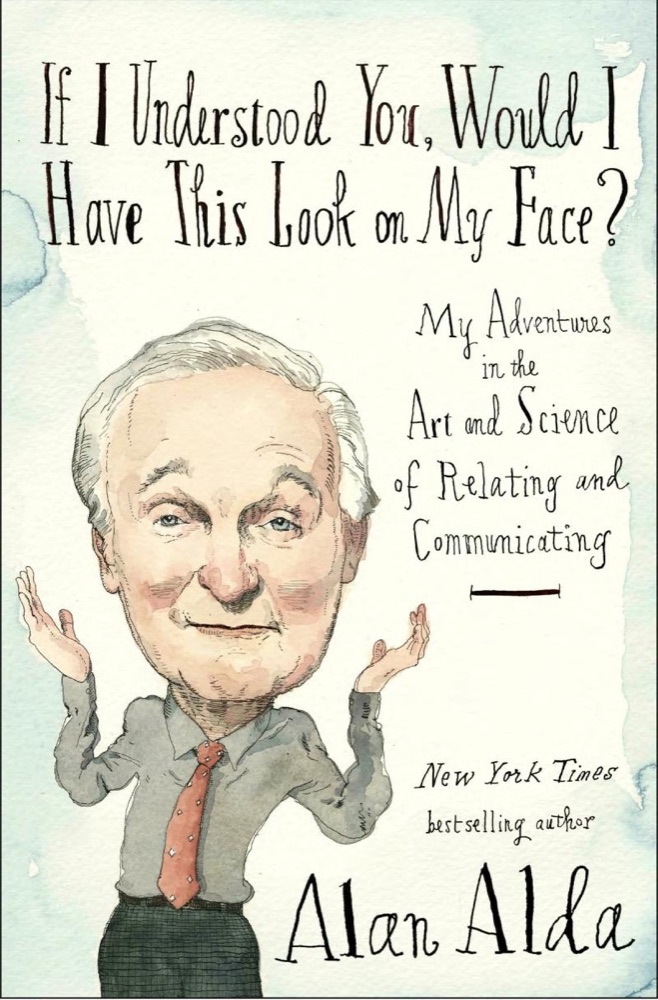 If I Understood You, Would I Have This Look on My Face?: My Adventures in the Art and Science of Relating and Communicating
 Influence: The Psychology of Persuasion
 Think Again: The Power of Knowing What You Don't Know
 It Worked for Me: In Life and Leadership
 Barking Up the Wrong Tree: The Surprising Science Behind Why Everything You Know About Success Is (Mostly) Wrong
 Influencer: The Power to Change Anything
 Surrounded by Idiots
 Difficult Conversations: How to Discuss What Matters Most
 Professional Troublemaker: The Fear-Fighter Manual
 The Age of Magical Overthinking: Notes on Modern Irrationality
 The Power of a Positive No: How to Say No and Still Get to Yes
 Tools of Titans: The Tactics, Routines, and Habits of Billionaires, Icons, and World-Class Performers
 The Gift of Fear: Survival Signals That Protect Us from Violence
 The Mom Test: How to talk to customers & learn if your business is a good idea when everyone is lying to you
 The Art of Choosing
 A Higher Loyalty: Truth, Lies, and Leadership
 The Tipping Point: How Little Things Can Make a Big Difference
 Your Next Five Moves: Master the Art of Business Strategy
 Pour Your Heart Into It: How Starbucks Built a Company One Cup at a Time
 The Daily Laws: 366 Meditations
 The Black Swan: The Impact of the Highly Improbable
 Do Over: Rescue Monday, Reinvent Your Work, and Never Get Stuck
 Impro: Improvisation and the Theatre
 How to Know a Person: The Art of Seeing Others Deeply and Being Deeply Seen
 Excellent Advice for Living: Wisdom I Wish I'd Known Earlier
 Predictably Irrational: The Hidden Forces That Shape Our Decisions
 The Last Lecture
 Dare to Lead
 Talk Like TED: The 9 Public-Speaking Secrets of the World's Top Minds
 Will
Will
 High Conflict: Why We Get Trapped and How We Get Out
 How to Fail at Almost Everything and Still Win Big: Kind of the Story of My Life
 Skin in the Game: The Hidden Asymmetries in Daily Life
 What's Our Problem?: A Self-Help Book for Societies
 Give and Take: A Revolutionary Approach to Success
 Revenge of the Tipping Point
 The Undoing Project: A Friendship That Changed Our Minds