
 Give and Take: A Revolutionary Approach to Success
Quotes from the Book
In the deepest sense of the word, a friend is someone who sees more potential in you than you see in yourself, someone who helps you become the best version of yourself.
143
Argue like you’re right and listen like you’re wrong.
119
Procrastination may be the enemy of productivity, but it can be a resource for creativity.
66
Being original doesn’t require being first. It just means being different and better.
64
Practice makes perfect, but it doesn’t make new.
57
Creativity is allowing yourself to make mistakes. Art is knowing which ones to keep.
52
The reasonable man adapts himself to the world; the unreasonable one persists in trying to adapt the world to himself. Therefore all progress depends on the unreasonable man.” George Bernard Shaw
51
To become original, you have to try something new, which means accepting some measure of risk.
43
In these pages, I learned that great creators don’t necessarily have the deepest expertise but rather seek out the broadest perspectives.
30
The greatest shapers don’t stop at introducing originality into the world. They create cultures that unleash originality in others.
30
This explains why we often undercommunicate our ideas. They’re already so familiar to us that we underestimate how much exposure an audience needs to comprehend and buy into them. When
30
Shapers” are independent thinkers: curious, non-conforming, and rebellious. They practice brutal, nonhierarchical honesty. And they act in the face of risk, because their fear of not succeeding exceeds their fear of failing.
28
I arise in the morning torn between a desire to improve the world and a desire to enjoy the world,” E. B. White once wrote. “This makes it difficult to plan the day.
23
Having a sense of security in one realm gives us the freedom to be original in another.
19
The least favorite students were the non-conformists who made up their own rules. Teachers tend to discriminate against highly creative students, labeling them as troublemakers. In
17
If we communicate the vision behind our ideas, the purpose guiding our products, people will flock to us.
15
People who suffer the most from a given state of affairs are paradoxically the least likely to question, challenge, reject, or change it.
14
When our commitment is wavering, the best way to stay on track is to consider the progress we've already made. As we recognize what we've invested and attained, it seems like a waste to give up, and our confidence and commitment surge.
13
If you’re going to build a strong culture, it’s paramount to make diversity one of your core values. This is what separates Bridgewater’s strong culture from a cult: The commitment is to promoting dissent. In hiring, instead of using similarity to gauge cultural fit, Bridgewater assesses cultural contribution.* Dalio wants people who will think independently and enrich the culture. By holding them accountable for dissenting, Dalio has fundamentally altered the way people make decisions. In a cult, core values are dogma. At Bridgewater, employees are expected to challenge the principles themselves. During training, when employees learn the principles, they’re constantly asked: Do you agree? “We have these standards that are stress tested over time, and you have to either operate by them or disagree with them and fight for better ones,” explains Zack Wieder, who works with Dalio on codifying the principles. Rather than deferring to the people with the greatest seniority or status, as was the case at Polaroid, decisions at Bridgewater are based on quality. The goal is to create an idea meritocracy, where the best ideas win. To get the best ideas on the table in the first place, you need radical transparency. Later, I’m going to challenge some of Dalio’s principles, but first I want to explain the weapons he has used to wage a war on groupthink.
13
When we use the logic of consequence, we can always find reasons not to take risks. The
12
Passionate people don’t wear their passion on their sleeves; they have it in their hearts.” The
11
At its core, comedy is an act of rebellion. Evidence shows that compared to the norms in the population, comedians tend to be more original and rebellious—and the higher they score on these dimensions, the more professional success they attain. After
10
If originals aren’t reliable judges of the quality of their ideas, how do they maximize their odds of creating a masterpiece? They come up with a large number of ideas. Simonton finds that on average, creative geniuses weren’t qualitatively better in their fields than their peers. They simply produced a greater volume of work, which gave them more variation and a higher chance of originality. “The odds of producing an influential or successful idea,” Simonton notes, are “a positive function of the total number of ideas generated.
10
It’s widely assumed that there’s a tradeoff between quantity and quality—if you want to do better work, you have to do less of it—but this turns out to be false. In fact, when it comes to idea generation, quantity is the most predictable path to quality. “Original thinkers,” Stanford professor Robert Sutton notes, “will come up with many ideas that are strange mutations, dead ends, and utter failures. The cost is worthwhile because they also generate a larger pool of ideas—especially novel ideas.
9
Timing accounted for forty-two percent of the difference between success and failure.
9
Consider the four responses to dissatisfaction: exit, voice, persistence, and neglect. Only exit and voice improve your circumstances.
8
Parent and Teacher Actions: 1. Ask children what their role models would do. Children feel free to take initiative when they look at problems through the eyes of originals. Ask children what they would like to improve in their family or school. Then have them identify a real person or fictional character they admire for being unusually creative and inventive. What would that person do in this situation? 2. Link good behaviors to moral character. Many parents and teachers praise helpful actions, but children are more generous when they’re commended for being helpful people—it becomes part of their identity. If you see a child do something good, try saying, “You’re a good person because you ___.” Children are also more ethical when they’re asked to be moral people—they want to earn the identity. If you want a child to share a toy, instead of asking, “Will you share?” ask, “Will you be a sharer?” 3. Explain how bad behaviors have consequences for others. When children misbehave, help them see how their actions hurt other people. “How do you think this made her feel?” As they consider the negative impact on others, children begin to feel empathy and guilt, which strengthens their motivation to right the wrong—and to avoid the action in the future. 4. Emphasize values over rules. Rules set limits that teach children to adopt a fixed view of the world. Values encourage children to internalize principles for themselves. When you talk about standards, like the parents of the Holocaust rescuers, describe why certain ideals matter to you and ask children why they’re important. 5. Create novel niches for children to pursue. Just as laterborns sought out more original niches when conventional ones were closed to them, there are ways to help children carve out niches. One of my favorite techniques is the Jigsaw Classroom: bring students together for a group project, and assign each of them a unique part. For example, when writing a book report on Eleanor Roosevelt’s life, one student worked on her childhood, another on her teenage years, and a third on her role in the women’s movement. Research shows that this reduces prejudice—children learn to value each other’s distinctive strengths. It can also give them the space to consider original ideas instead of falling victim to groupthink. To further enhance the opportunity for novel thinking, ask children to consider a different frame of reference. How would Roosevelt’s childhood have been different if she grew up in China? What battles would she have chosen to fight there?
8
Entrepreneurs who kept their day jobs had 33 percent lower odds of failure than those who quit. If you’re risk averse and have some doubts about the feasibility of your ideas, it’s likely that your business will be built to last. If you’re a freewheeling gambler, your startup is far more fragile. Like the Warby Parker crew, the entrepreneurs whose companies topped Fast Company’s recent most innovative lists typically stayed in their day jobs even after they launched. Former track star Phil Knight started selling running shoes out of the trunk of his car in 1964, yet kept working as an accountant until 1969. After inventing the original Apple I computer, Steve Wozniak started the company with Steve Jobs in 1976 but continued working full time in his engineering job at Hewlett-Packard until 1977. And although Google founders Larry Page and Sergey Brin figured out how to dramatically improve internet searches in 1996, they didn’t go on leave from their graduate studies at Stanford until 1998. “We almost didn’t start Google,” Page says, because we “were too worried about dropping out of our Ph.D. program.” In 1997, concerned that their fledgling search engine was distracting them from their research, they tried to sell Google for less than $2 million in cash and stock. Luckily for them, the potential buyer rejected the offer. This habit of keeping one’s day job isn’t limited to successful entrepreneurs. Many influential creative minds have stayed in full-time employment or education even after earning income from major projects. Selma director Ava DuVernay made her first three films while working in her day job as a publicist, only pursuing filmmaking full time after working at it for four years and winning multiple awards. Brian May was in the middle of doctoral studies in astrophysics when he started playing guitar in a new band, but he didn’t drop out until several years later to go all in with Queen. Soon thereafter he wrote “We Will Rock You.” Grammy winner John Legend released his first album in 2000 but kept working as a management consultant until 2002, preparing PowerPoint presentations by day while performing at night. Thriller master Stephen King worked as a teacher, janitor, and gas station attendant for seven years after writing his first story, only quitting a year after his first novel, Carrie, was published. Dilbert author Scott Adams worked at Pacific Bell for seven years after his first comic strip hit newspapers. Why did all these originals play it safe instead of risking it all?
7
To overcome fear, why does getting excited work better than trying to calm yourself down? Fear is an intense emotion. You can feel your heart pumping and your blood coursing. In that state, trying to relax is like slamming on the brakes when a car is going 80 miles per hour. The vehicle still has momentum. Rather than trying to suppress a strong emotion, it's easier to convert it into a different emotion - one that's equally intense, but propels is to step on the gas.
6
Watch on YouTube
About Adam M. Grant
We have collected 88 quotes from 3 books by Adam M. Grant on BookQuoters.
More about the author →More by Adam M. Grant
Give and Take: A Revolutionary Approach to Success
 Think Again: The Power of Knowing What You Don't Know
About the book
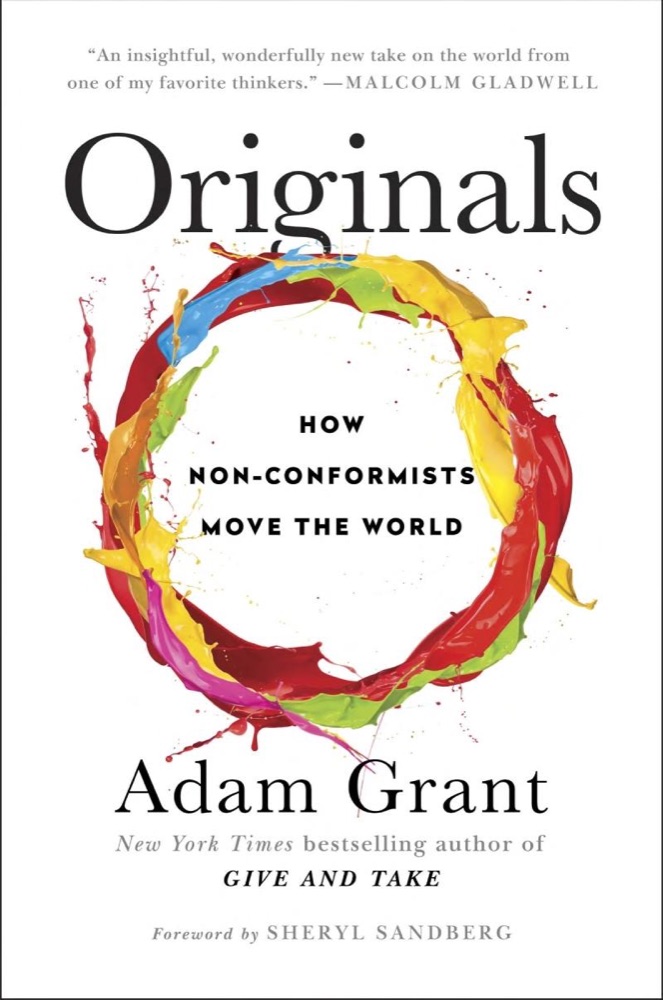
In Originals the author addresses the challenge of improving the world from the perspective of becoming original: choosing to champion novel ideas and values that go against the grain, battle conformity, and buck outdated traditions. How can we originate new ideas, policies, and practices without risking it all? Using surprising studies and stories spanning business, politics, sports, and entertainment, Grant explores how to recognize a good idea, speak up without getting silenced, build a coalition of allies, choose the right time to act, and manage fear and doubt; how parents and teachers can nurture originality in children; and how leaders can build cultures that welcome dissent. Learn from an entrepreneur who pitches his start-ups by highlighting the reasons not to invest, a woman at Apple who challenged Steve Jobs from three levels below, an analyst who overturned the rule of secr
Book details
- First published
- 2016
- Author
- Adam M. Grant
- Genre
- Nonfiction
- Goodreads rating
- 3.95 (59k ratings)
Keep reading
 The Art of Creative Thinking
 How to Fly a Horse: The Secret History of Creation, Invention, and Discovery
 Creativity, Inc.: Overcoming the Unseen Forces That Stand in the Way of True Inspiration
 Things a Little Bird Told Me: Confessions of the Creative Mind
 The Art of Thinking Clearly
 The Element: How Finding Your Passion Changes Everything
 Smartcuts: How Hackers, Innovators, and Icons Accelerate Success
 Principles: Life and Work
 Linchpin: Are You Indispensable?
 Making Ideas Happen: Overcoming the Obstacles Between Vision and Reality
 Think Like a Freak
 The Practice: Shipping Creative Work
 Creativity: Flow and the Psychology of Discovery and Invention
 Creative Quest
 Range: Why Generalists Triumph in a Specialized World
 Grit: The Power of Passion and Perseverance
 The 7 Habits of Highly Effective People: Personal Workbook
 What the Dog Saw and Other Adventures
 Made to Stick: Why Some Ideas Survive and Others Die
 Imagine: How Creativity Works
 Antifragile: Things That Gain from Disorder
 The Creative Habit: Learn It and Use It for Life
 Please Understand Me II: Temperament, Character, Intelligence
 Think Like a Rocket Scientist: Simple Strategies You Can Use to Make Giant Leaps in Work and Life
 A Whack on the Side of the Head: How You Can Be More Creative
 It's Not How Good You Are, It's How Good You Want To Be
 David and Goliath: Underdogs, Misfits, and the Art of Battling Giants
 Firestarters: How Innovators, Instigators, and Initiators Can Inspire You to Ignite Your Own Life
 Great by Choice: Uncertainty, Chaos, and Luck—Why Some Thrive Despite Them All
 The Accidental Creative: How to Be Brilliant at a Moment's Notice
 Personality Isn't Permanent: Break Free from Self-Limiting Beliefs and Rewrite Your Story
 Getting There: A Book of Mentors
 The Art of Impossible: A Peak Performance Primer
 Tribe Of Mentors: Transformative Wisdom From Icons and Innovators to Help You Navigate Life's Challenges
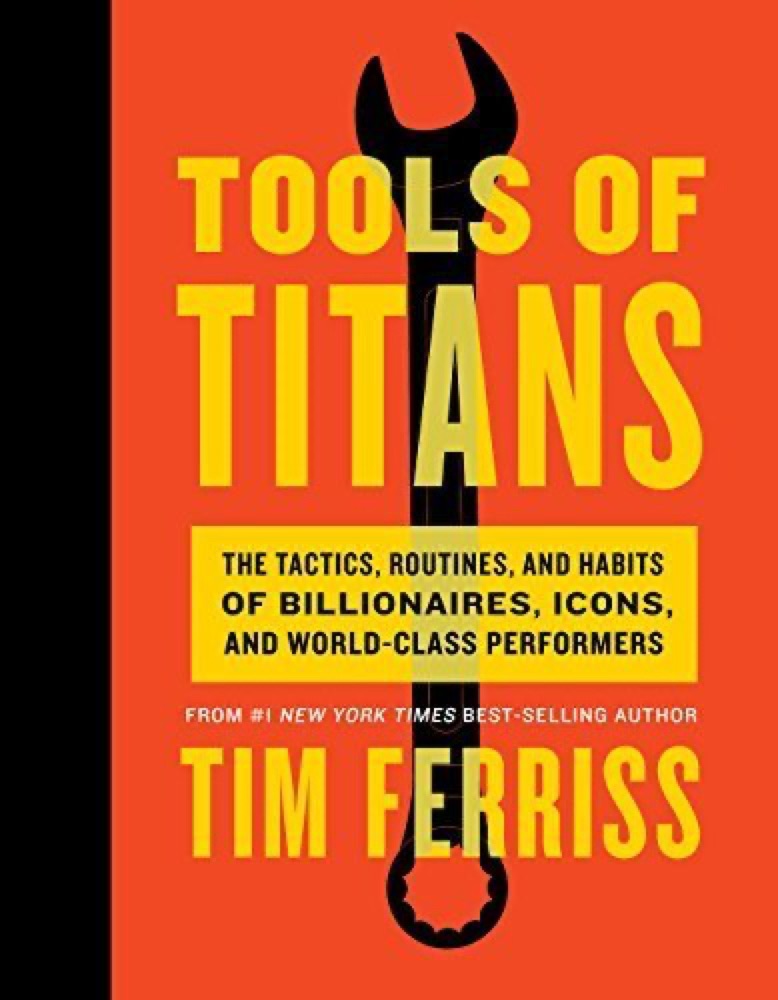 Tools of Titans: The Tactics, Routines, and Habits of Billionaires, Icons, and World-Class Performers
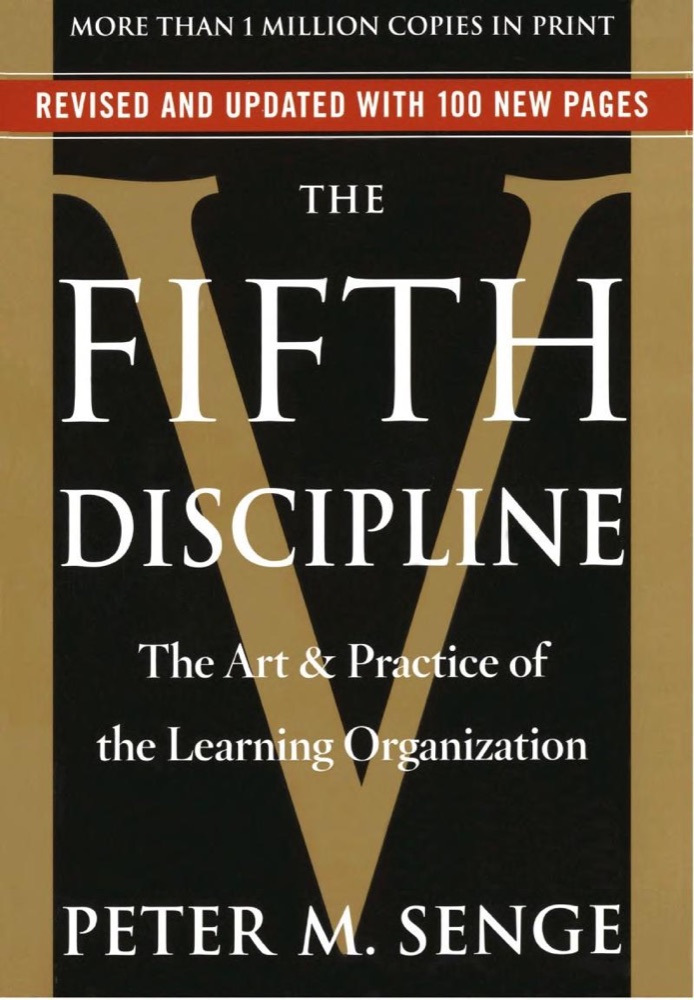 The Fifth Discipline: The Art & Practice of The Learning Organization
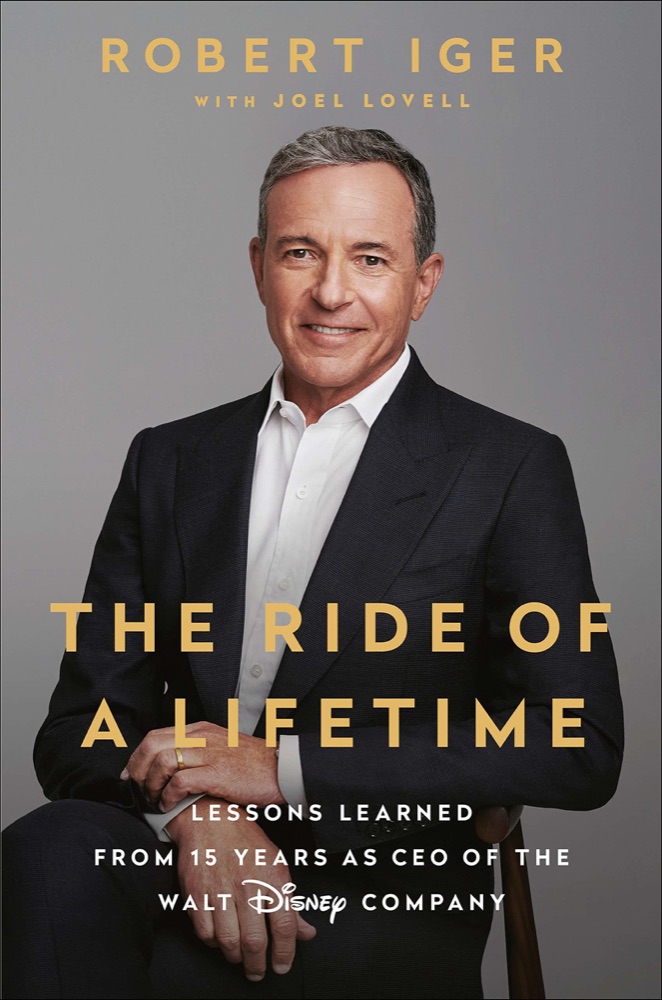 The Ride of a Lifetime: Lessons Learned from 15 Years as CEO of the Walt Disney Company
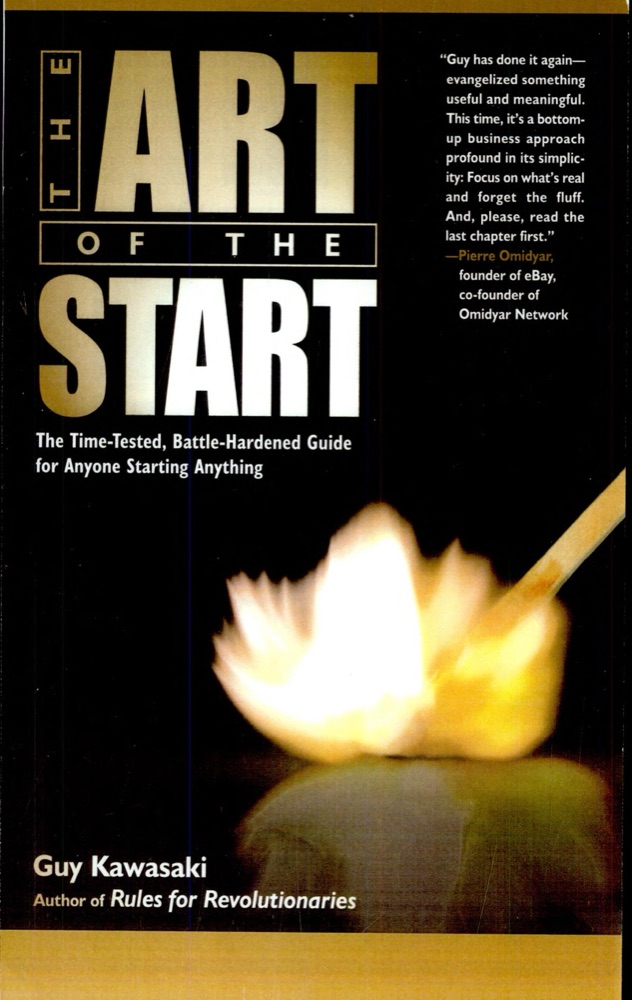 The Art of the Start: The Time-Tested, Battle-Hardened Guide for Anyone Starting Anything
 Ignore Everybody: and 39 Other Keys to Creativity
 Smarter Faster Better: The Secrets of Being Productive in Life and Business
 The Geography of Genius: A Search for the World's Most Creative Places from Ancient Athens to Silicon Valley
 Barking Up the Wrong Tree: The Surprising Science Behind Why Everything You Know About Success Is (Mostly) Wrong
Give and Take: A Revolutionary Approach to Success
Think Again: The Power of Knowing What You Don't Know
Barking Up the Wrong Tree: The Surprising Science Behind Why Everything You Know About Success Is (Mostly) Wrong
Give and Take: A Revolutionary Approach to Success
Think Again: The Power of Knowing What You Don't Know
 The Social Animal: The Hidden Sources of Love, Character, and Achievement
 Talk Like TED: The 9 Public-Speaking Secrets of the World's Top Minds
 Pour Your Heart Into It: How Starbucks Built a Company One Cup at a Time
 Hackers & Painters: Big Ideas from the Computer Age
 The Icarus Deception: How High Will You Fly?
 Delivering Happiness: A Path to Profits, Passion, and Purpose
 Lead from the Outside: How to Build Your Future and Make Real Change
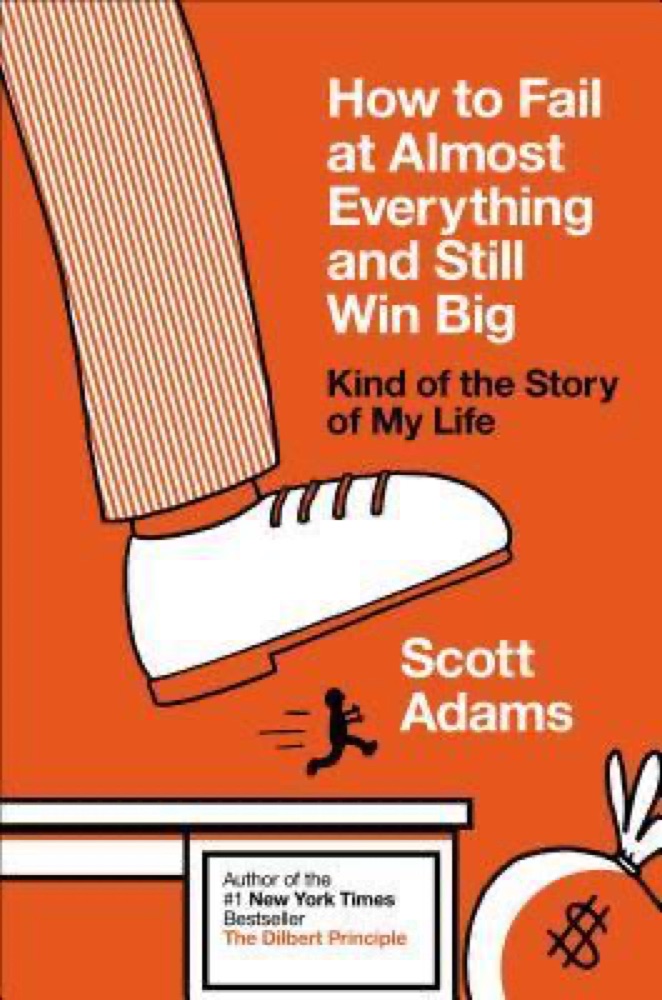 How to Fail at Almost Everything and Still Win Big: Kind of the Story of My Life
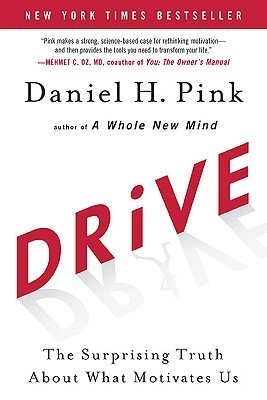 Drive: The Surprising Truth About What Motivates Us
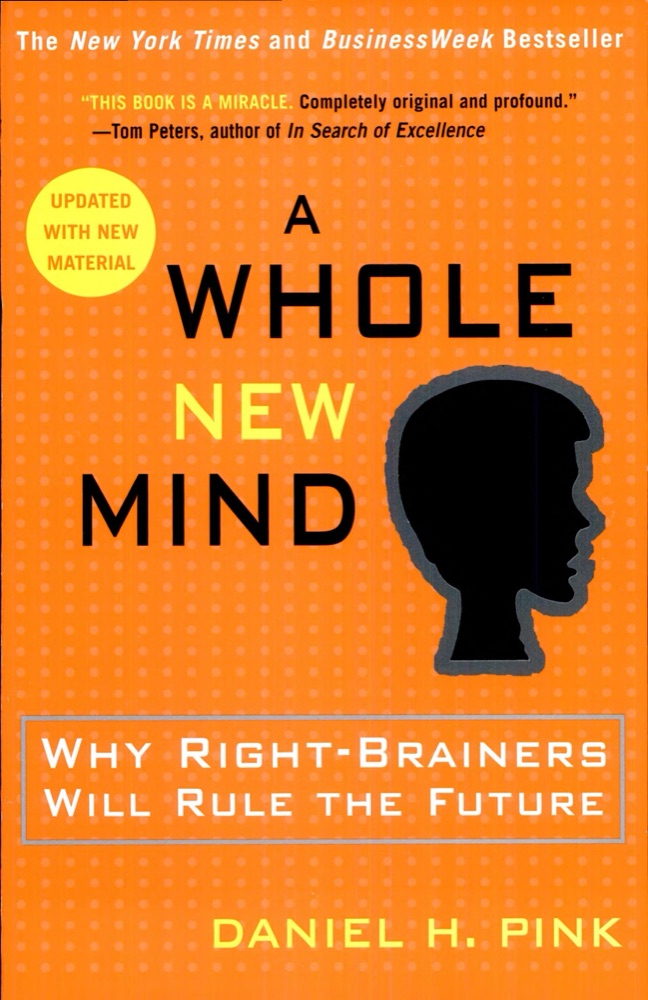 A Whole New Mind: Why Right-Brainers Will Rule the Future
 Built to Last: Successful Habits of Visionary Companies
 Big Magic: Creative Living Beyond Fear
 Mastery
 The Leader Who Had No Title: A Modern Fable on Real Success in Business and in Life
 Do Epic Shit