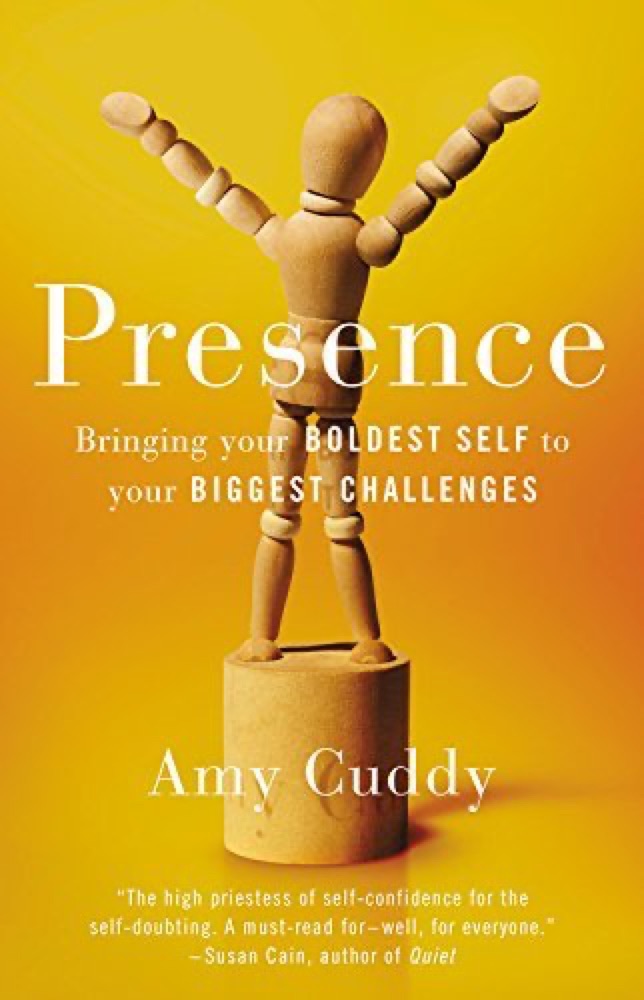

 Be a People Person
Quotes from the Book
preparation is obviously important, but at some point, you must stop preparing content and start preparing mind-set. You have to shift from what you’ll say to how you’ll say it.
31
focus less on the impression you’re making on others and more on the impression you’re making on yourself.
27
A truly confident person does not require arrogance, which is nothing more than a smoke screen for insecurity.
22
Powerful people initiate speech more often, talk more overall, and make more eye contact while they’re speaking than powerless people do. When we feel powerful, we speak more slowly and take more time. We don’t rush. We’re not afraid to pause. We feel entitled to the time we’re using.
14
A confident person — knowing and believing in her identity — carries tools, not weapons.
13
We convince by our presence,” and to convince others we need to convince ourselves.
11
All changes… have their melancholy; for what we leave behind us is a part of ourselves; we must die to one life before we can enter another.
10
This is how self-fulfilling prophecies work: we have an expectation about who someone is and how she’s likely to behave, then we treat her in a way that is likely to elicit those behaviors, thus confirming our initial expectations… and so on.
9
When we meet someone new, we quickly answer two questions: “Can I trust this person?” and “Can I respect this person?” In our research, my colleagues and I have referred to these dimensions as warmth and competence respectively. Usually we think that a person we’ve just met is either more warm than competent or more competent than warm, but not both in equal measure. We like our distinctions to be clear—it’s a human bias. So we classify new acquaintances into types. Tiziana Casciaro, in her research into organizations, refers to these types as lovable fools or competent jerks.2 Occasionally we see people as incompetent and cold—foolish jerks—or as warm and competent—lovable stars. The latter is the golden quadrant, because receiving trust and respect from other people allows you to interact well and get things done. But we don’t value the two traits equally. First we judge warmth or trustworthiness, which we consider to be the more important of the two dimensions. Oscar Ybarra and his colleagues found, for instance, that people process words related to warmth and morality (friendly, honest, and others) faster than words related to competence (creative, skillful, and others).3 Why do we prioritize warmth over competence? Because from an evolutionary perspective, it is more crucial to our survival to know whether a person deserves our trust. If he doesn’t, we’d better keep our distance, because he’s potentially dangerous, especially if he’s competent. We do value people who are capable, especially in circumstances where that trait is necessary, but we only notice that after we’ve judged their trustworthiness. Recalling
8
When our body language is confident and open, other people respond in kind, unconsciously reinforcing not only their perception of us but also our perception of ourselves.
8
I am larger, better than I thought, I did not know I held so much goodness.
7
Presence emerges when we feel personally powerful, which allows us to be acutely attuned to our most sincere selves.
7
Entrepreneurs’ grounded enthusiasm is contagious, stimulating a high level of commitment, confidence, passion, and performance in the people who work for and with them.
6
Movement, like posture, tells the brain how it feels and even manages what it remembers. As walking becomes more open, upright, and buoyant, our memories about ourselves follow suit.
6
All changes have their melancholy
5
Ultimately, the only power to which man should aspire is that which he exercises over himself.
5
After meticulously analyzing videos of 185 venture capital presentations — looking at both verbal and nonverbal behavior — Lakshmi ended up with results that surprised her: the strongest predictor of who got the money was not the person’s credentials or the content of the pitch. The strongest predictors of who got the money were these traits: confidence, comfort level, and passionate enthusiasm.
5
The way you carry yourself is a source of personal power—the kind of power that is the key to presence. It’s the key that allows you to unlock yourself—your abilities, your creativity, your courage, and even your generosity. It doesn’t give you skills or talents you don’t have; it helps you to share the ones you do have. It doesn’t make you smarter or better informed; it makes you more resilient and open. It doesn’t change who you are; it allows you to be who you are.
5
You never figure out how to write a novel; you just learn how to write the novel that you’re on.
5
When people lie, they are juggling multiple narratives: what they know to be true, what they want to be true, what they are presenting as true, and all the emotions that go along with each—fear, anger, guilt, hope. All the while, they are trying to project a credible image of themselves, which suddenly becomes very, very difficult. Their beliefs and feelings are in conflict with themselves and each other.29 Managing all this conflict—conscious and unconscious, psychological and physiological—removes people from the moment.
5
trust is the conduit of influence, and the only way to establish real trust is by being present.
4
Impostorism causes us to overthink and second-guess. It makes us fixate on how we think others are judging us (in these fixations, we’re usually wrong), then fixate some more on how those judgments might poison our interactions. We’re scattered—worrying that we underprepared, obsessing about what we should be doing, mentally reviewing what we said five seconds earlier, fretting about what people think of us and what that will mean for us tomorrow.
4
the strongest predictor of who got the money was not the person’s credentials or the content of the pitch. The strongest predictors of who got the money were these traits: confidence, comfort level, and passionate enthusiasm.
4
Of that first decade, Neil said I would have this recurring fantasy in which there would be a knock on the door, and I would go down, and there would be somebody wearing a suit – not an expensive suit, just the kind of suit that showed they had a job – and they would be holding a clipboard, and they'd have a paper on the clipboard, and I'd open the door and they'd say, „Hello, excuse me, I'm afraid I am here on official business. Are you Neil Gaiman?” And I would say yes. „Well, it says here that you are a writer and that you don't have to get up in the morning at any particular time, that you just write each day as much you want.” And I'd go „That's right.” "And that you enjoy writing. And it says here that all the books you want – they are just sent to you and you don't have to buy them. And films: it says here that you just go to see films. If you want to see them you just call up the person who runs the films." And I say, „Yes, that's right.” And that people like what you do and they give you money for just writing things down." And I'd say yes. And he'd say, „Well, I'm afraid we are on to you. We've caught up with you. And I'm afraid you are now going to have to go out and get a proper job.” At which point in my fantasy my heart would always sink, and I'd go, „Okay,” and I'd go and buy a cheap suit and I'd start applying to real jobs. Because once they've caught up with you, you can't argue with this: they've caught up with you. So that was the thing in my head.
3
When we are truly present in a challenging moment, our verbal and nonverbal communication flows. We are no longer occupying a discombobulated mental state — as I was on that ill-fated elevator ride — simultaneously analyzing what we think others think of us, what we said a minute earlier, and what we think they will think of us after we leave, all while frantically trying to adjust what we’re saying and doing to create the impression we think they want to see. Usually our words are relatively easy to
3
It was divine because it was exactly you. It was the very best you—the strongest most generous you.
3
Expanding your body language—through posture, movement, and speech—makes you feel more confident and powerful, less anxious and self-absorbed, and generally more positive.
3
In a sense, speaking in an unhurried way allows us time to communicate clearly, without runaway social anxieties inhibiting us from presenting our true selves.
3
We don’t rush our words. We’re not afraid to pause. We feel deserving of the time we’re using. We even make more direct eye contact while we’re speaking.
3
Power… transforms individual psychology such that the powerful think and act in ways that lead to the retention and acquisition of power,
3
Watch on YouTube
About Amy Cuddy
We have collected 30 quotes from 1 book by Amy Cuddy on BookQuoters.
More about the author →About the book
MORE THAN HALF A MILLION COPIES Learn the simple techniques you'll need to approach your biggest challenges with confidence.
Have you ever left a nerve-racking challenge and immediately wished for a do over? Maybe after a job interview, a performance, or a difficult conversation? The very moments that require us to be genuine and commanding can instead cause us to feel phony and powerless. Too often we approach our lives' biggest hurdles with dread, execute them with anxiety, and leave them with regret.
By accessing our personal power, we can achieve "presence," the state in which we stop worrying about the impression we're making on others and instead adjust the impression we've been making on ourselves. As Harvard professor Amy Cuddy's revolutionary book reveals, we don't need to embark on a grand spiritual quest or complete an inner transformation to harness the power of presence
Book details
- First published
- 2015
- Author
- Amy Cuddy
- Genre
- Nonfiction
- Goodreads rating
- 3.90 (19k ratings)
Keep reading
Be a People Person
 The 7 Habits of Highly Effective People: Personal Workbook
 Six Pillars of Self-Esteem
 The Laws of Human Nature
 Dare to Lead
 Psycho-Cybernetics
 The Confidence Code: The Science and Art of Self-Assurance – What Women Should Know
 Believe It: How to Go from Underestimated to Unstoppable
 The Promise of a Pencil: How an Ordinary Person Can Create Extraordinary Change
 How to Know a Person: The Art of Seeing Others Deeply and Being Deeply Seen
 Magic of Thinking Big
 Heart Talk: Poetic Wisdom for a Better Life
 What to Say When You Talk to Yourself
 The Light We Carry: Overcoming in Uncertain Times
 Mastery
 Karamo: My Story of Embracing Purpose, Healing, and Hope
 Will
Will
 The Art of Seduction
 Buy Yourself the F*cking Lilies: And Other Rituals to Fix Your Life, from Someone Who's Been There
 Maximum Achievement: Strategies and Skills That Will Unlock Your Hidden Powers to Succeed
 How to Have Confidence and Power in Dealing with People
 The Fire Starter Sessions: A Soulful + Practical Guide to Creating Success on Your Own Terms
 A New Earth: Awakening to Your Life's Purpose
 The Leader Who Had No Title: A Modern Fable on Real Success in Business and in Life
 Awaken The Giant Within
 Social Intelligence: The New Science of Human Relationships
 The Highly Sensitive Person: How to Thrive When the World Overwhelms You
 The Vortex: Where the Law of Attraction Assembles All Cooperative Relationships
 Thrive: The Third Metric to Redefining Success and Creating a Life of Well-Being, Wisdom, and Wonder
 Ego Is the Enemy
 Self Love Poetry: For Thinkers & Feelers
 Personality Isn't Permanent: Break Free from Self-Limiting Beliefs and Rewrite Your Story
 The Path Made Clear: Discovering Your Life's Direction and Purpose
 Crucial Conversations: Tools for Talking When Stakes are High
 The Art of Being
 Speak: Find Your Voice, Trust Your Gut, and Get from Where You Are to Where You Want to Be
 Influence: The Psychology of Persuasion
 Orbiting the Giant Hairball: A Corporate Fool's Guide to Surviving with Grace
 Surrounded by Idiots
 Feel the Fear and Do It Anyway
 More Than Enough: Claiming Space for Who You Are
 Selfie: How the West Became Self-Obsessed
 Like Streams to the Ocean: Notes on Ego, Love, and the Things That Make Us Who We Are
 Lead from the Outside: How to Build Your Future and Make Real Change
 A Way of Being
 The 5 Second Rule: Transform Your Life, Work, and Confidence with Everyday Courage
 Talk Like TED: The 9 Public-Speaking Secrets of the World's Top Minds
 The Courage to Be Disliked: How to Free Yourself, Change Your Life and Achieve Real Happiness
 On Becoming a Person: A Therapist's View of Psychotherapy
 It Takes What It Takes: How to Think Neutrally and Gain Control of Your Life
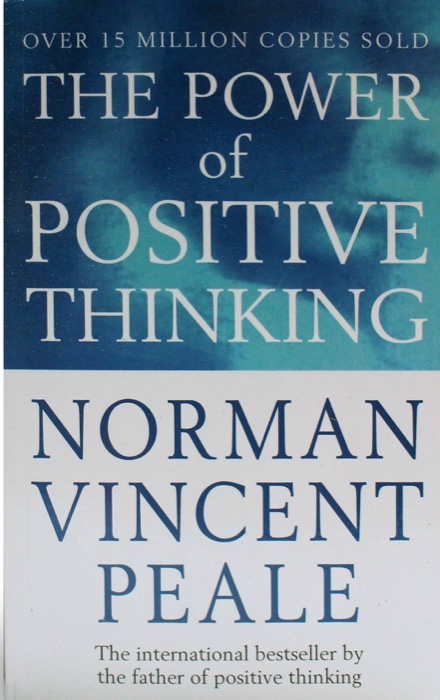 The Power of Positive Thinking
 The Secret Letters of the Monk Who Sold His Ferrari
 The Power of One
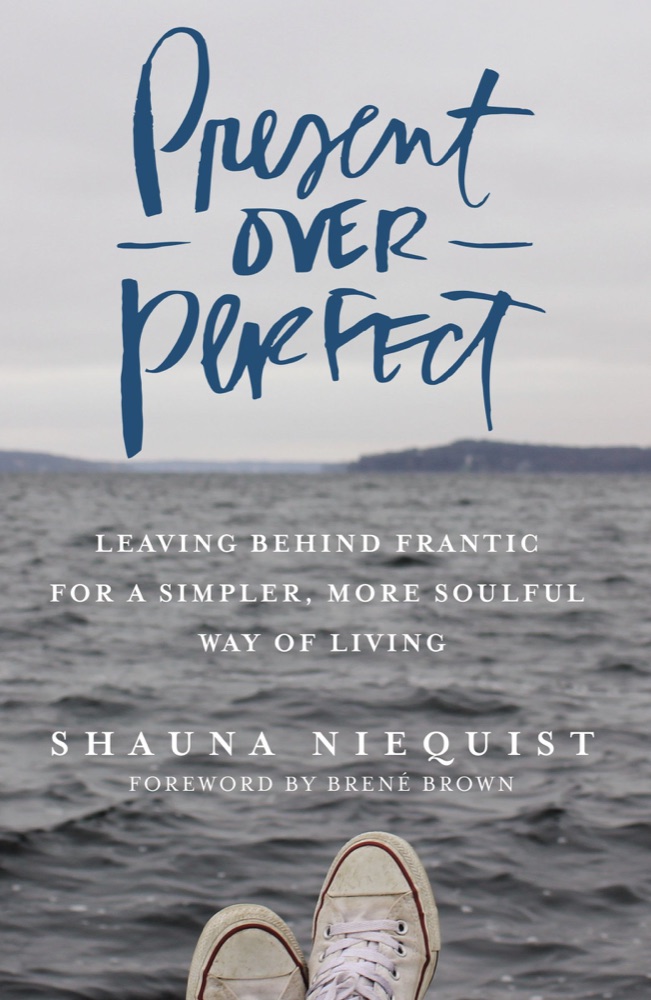 Present Over Perfect: Leaving Behind Frantic for a Simpler, More Soulful Way of Living
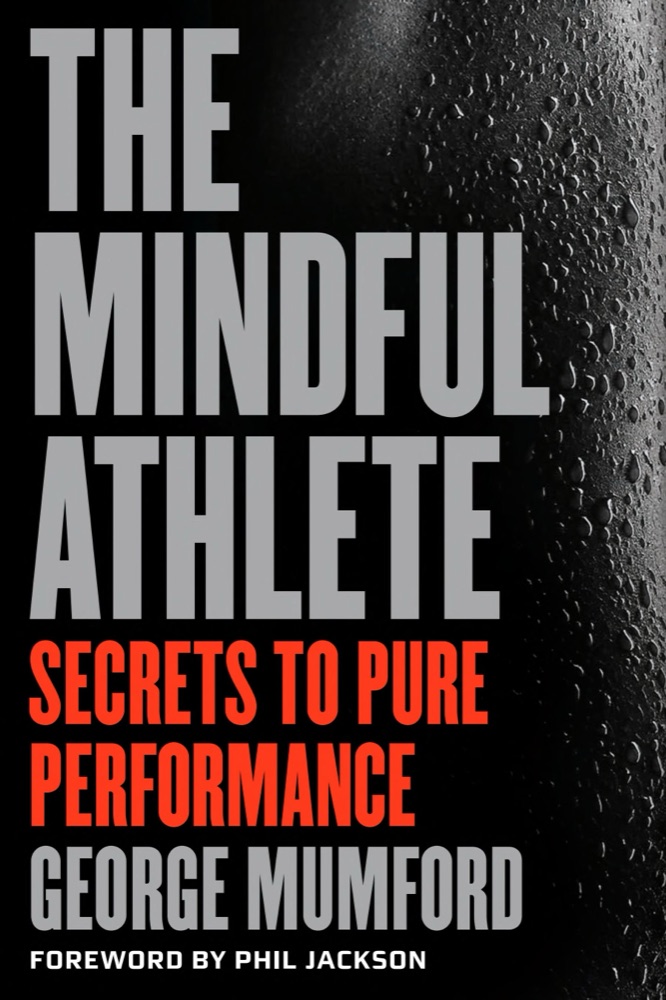 The Mindful Athlete: Secrets to Pure Performance
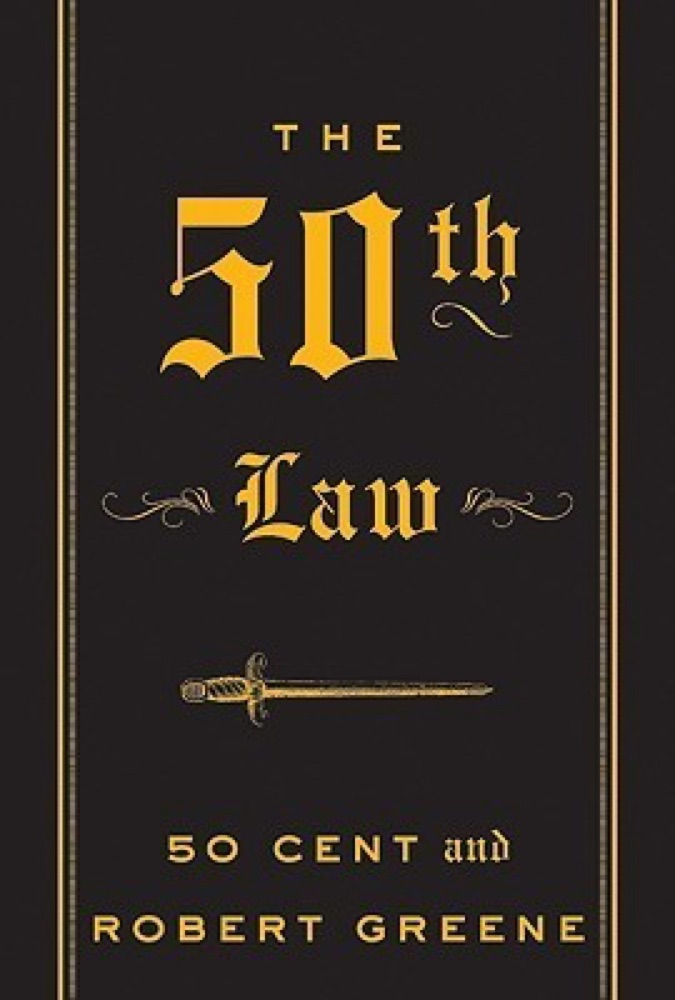 The 50th Law
 The Mountain Is You: Transforming Self-Sabotage Into Self-Mastery
 How to Be a Bawse: A Guide to Conquering Life