
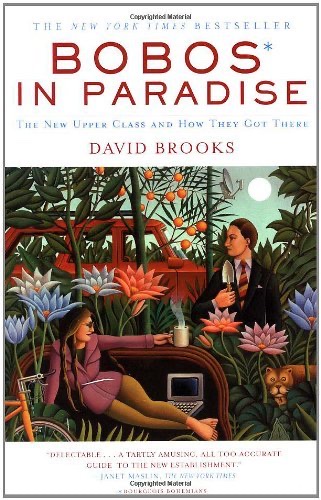
 Bobos in Paradise: The New Upper Class and How They Got There
Quotes from the Book
Much of life is about failure, whether we acknowledge it or not, and your destiny is profoundly shaped by how effectively you learn from and adapt to failure.
56
If there is one thing developmental psychologists have learned over the years, it is that parents don’t have to be brilliant psychologists to succeed. They don’t have to be supremely gifted teachers. Most of the stuff parents do with flashcards and special drills and tutorials to hone their kids into perfect achievement machines don’t have any effect at all. Instead, parents just have to be good enough. They have to provide their kids with stable and predictable rhythms. They need to be able to fall in tune with their kids’ needs, combining warmth and discipline. They need to establish the secure emotional bonds that kids can fall back upon in the face of stress. They need to be there to provide living examples of how to cope with the problems of the world so that their children can develop unconscious models in their heads.
39
people who succeed tend to find one goal in the distant future and then chase it through thick and thin. People who flit from one interest to another are much, much less likely to excel at any of them. School asks students to be good at a range of subjects, but life asks people to find one passion that they will follow forever.
36
We are primarily the products of thinking that happens below the level of awareness.
24
the art of being wise is the art of knowing what to overlook.
22
Learning was a by-product of her search for pleasure
22
People generally overestimate how distinct their lives are, so the commonalities seemed to them like a series of miracles.
17
The point of being a teacher is to do more than impart facts, it's to shape the way students perceive the world, to help a student absorb the rules of a discipline. The teachers who do that get remembered.
16
Reason and emotion are not separate and opposed. Reason is nestled upon emotion and dependent upon it. Emotion assigns value to things, and reason can only make choices on the basis of those valuations. The human mind can be pragmatic because deep down it is romantic.
15
cultivation of the hard skills, while failing to develop the moral and emotional faculties down below. Children are coached on how to jump through a thousand scholastic hoops. Yet by far the most important decisions they will make are about whom to marry and whom to befriend, what to love and what to despise, and how to control impulses. On these matters, they are almost entirely on their own. We are good at talking about material incentives, but bad about talking about emotions and intuitions. We are good at teaching technical skills, but when it comes to the most important things, like character, we have almost nothing to say.
9
It is an emotional and an enchanted place. If the study of the conscious mind highlights the importance of reason and analysis, study of the unconscious mind highlights the importance of passions and perception.
9
Many of these policies were proposed by wonks who are comfortable only with traits and correlations that can be measured and quantified. They were passed through legislative committees that are as capable of speaking about the deep wellsprings of human action as they are of speaking in ancient Aramaic. They were executed by officials that have only the most superficial grasp of what is immovable and bent about human beings. So of course they failed. And they will continue to fail unless the new knowledge about our true makeup is integrated more fully into the world of public policy, unless the enchanted story is told along with the prosaic one.
8
Instead, parents just have to be good enough. They have to provide their kids with stable and predictable rhythms. They need to be able to fall in tune with their kids’ needs, combining warmth and discipline. They need to establish the secure emotional bonds that kids can fall back upon in the face of stress. They need to be there to provide living examples of how to cope with the problems of the world so that their children can develop unconscious models in their heads.
7
There must be some supreme creative energy, he thought, that can take love and turn it into synapses and then take a population of synapses and turn it into love. The hand of God must be there
6
You are the spiritual entity that emerges out of the material networks in your head.
6
In his book Human Universals, Donald E. Brown lists traits that people in all places share. The list goes on and on. All children fear strangers and prefer sugar solutions to plain water from birth. All humans enjoy stories, myths, and proverbs. In all societies men engage in more group violence and travel farther from home than women. In all societies, husbands are on average older than their wives. People everywhere rank one another according to prestige. People everywhere divide the world between those inside their group and those outside their group. These tendencies are all stored deep below awareness.
5
A few minutes after they left, Harold bought the blanket from his bed, surrounded himself with his stuffed-toy animals, and built a fort out of them. Children project souls into their favorite stuffed animals and commune with them in the way adults commune with religious icons. Years later he would remember a happy childhood, but it was interwoven with painful separations, confusions, misapprehensions, traumas, and mysteries. This is why all biographies are inadequate; they can never capture the inner currents. This is why self knowledge is limited. Only a few remarkable people can sense the way early experience has built models in the brain. Later in life we build fictions and theories to paper over the mystery of what is happening deep inside, but in childhood, the inexplicableness of the world is still vivid and fresh, and sometimes hits with terrifying force.
5
As some people joke, we may not possess free will, but we possess free won’t.
4
Harrison had turned social awkwardness into a form of social power.
4
young people are ambivalent about adulthood. As Arnett argues, they want the security and stability adulthood brings, but they don’t want to settle into a daily grind. They don’t want to limit their spontaneity or put limits on their dreams.
3
Dan P. McAdams argues that children develop a narrative tone, which influences their stories for the rest of their lives. Children gradually adopt an enduring assumption that everything will turn out well or badly (depending on their childhood). They lay down a foundation of stories in which goals are achieved, hurts healed, peace is restored, and the world is understood
3
Researchers have done a lot of work over the past few years analyzing social networks. It turns out almost everything is contagious. If your friends are obese, you are more likely to be obese. If your friends are happy, you're more likely to be happy. If your friends smoke, you smoke. If they feel lonely, you feel lonely.
3
Emotion assigns value to things, and reason can only make choices on the basis of those valuations. The human mind can be pragmatic because deep down it is romantic.
3
Therefore, freedom should not be the ultimate end of politics. The ultimate focus of political activity is the character of the society. Political,
3
The people with this disposition believe that wisdom begins with an awareness of our own ignorance. We can design habits, arrangements, and procedures that partially compensate for the limits on our knowledge.
3
In this way, each of us has unique neural networks, which are formed, reinforced, and constantly updated by the eclectic circumstances of our lives. Once circuits are formed, that increases the chances the same circuits will fire in the future. The neural networks embody our experiences and in turn guide future action. They contain the unique way each of us carries himself in the world, the way we walk, talk, and react. They are the grooves down which our behavior flows. A brain is the record of a life. The networks of neural connections are the physical manifestation of your habits, personality, and predilections. You are the spiritual entity that emerges out of the material networks in your head.
3
Geoffrey Miller notes that most adults have a vocabulary of about sixty thousand words. To build that vocabulary, children must learn ten to twenty words a day between the ages of eighteen months and eighteen years. And yet the most frequent one hundred words account for 60 percent of all conversations. The most common four thousand words account for 98 percent of conversations. Why do humans bother knowing
3
First, they had good character. They were energetic, honest, and dependable. They were persistent after setbacks and acknowledged their mistakes.
3
Women, in general, are less visually aroused than men, a trait that has nearly cut the market for pornography in half.
3
Watch on YouTube
About David Brooks
We have collected 101 quotes from 4 books by David Brooks on BookQuoters.
More about the author →More by David Brooks
Bobos in Paradise: The New Upper Class and How They Got There
 How to Know a Person: The Art of Seeing Others Deeply and Being Deeply Seen
 The Second Mountain
About the book
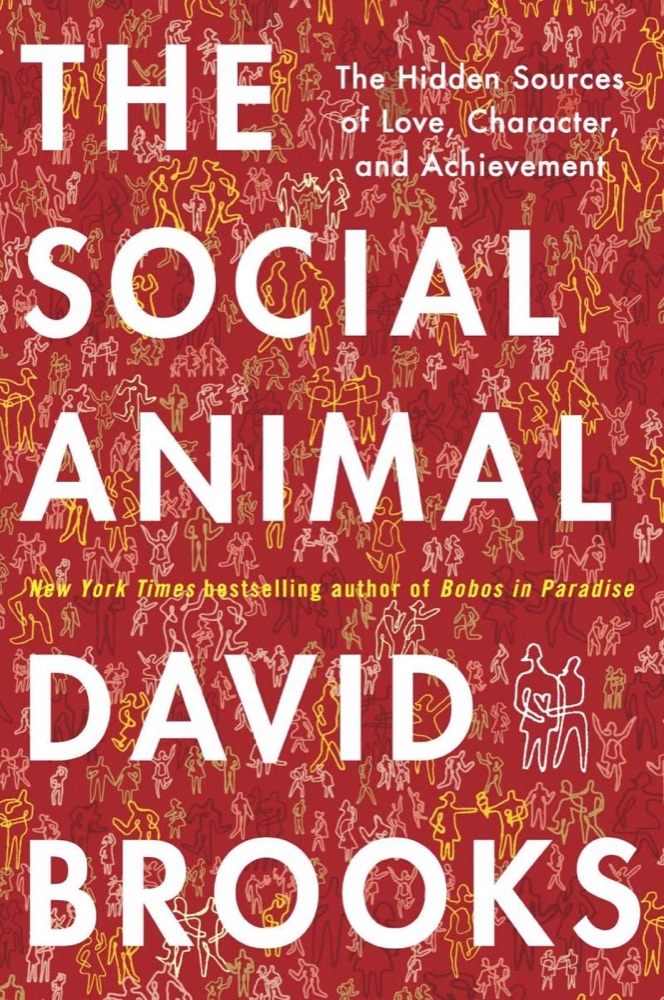
With unequaled insight and brio, David Brooks, the New York Times columnist and bestselling author of Bobos in Paradise, has long explored and explained the way we live. Now, with the intellectual curiosity and emotional wisdom that make his columns among the most read in the nation, Brooks turns to the building blocks of human flourishing in a multilayered, profoundly illuminating work grounded in everyday life.
This is the story of how success happens. It is told through the lives of one composite American couple, Harold and Erica—how they grow, push forward, are pulled back, fail, and succeed. Distilling a vast array of information into these two vividly realized characters, Brooks illustrates a fundamental new understanding of human nature. A scientific revolution has occurred—we have learned more about the human brain in the last thirty years than we had in the previous three thous
Book details
- First published
- 2011
- Author
- David Brooks
- Genre
- Nonfiction
- Goodreads rating
- 3.86 (24k ratings)
Keep reading
 Mastery
 Stumbling on Happiness
 Finding Flow: The Psychology of Engagement with Everyday Life
 The Element: How Finding Your Passion Changes Everything
 The Happiness Hypothesis: Finding Modern Truth in Ancient Wisdom
 Psych: The Story of the Human Mind
 Creativity: Flow and the Psychology of Discovery and Invention
 Flow: The Psychology of Optimal Experience
 The Vanishing American Adult: Our Coming-of-Age Crisis—and How to Rebuild a Culture of Self-Reliance
 How the Mind Works
 The 7 Habits of Highly Effective People: Personal Workbook
 The Elephant in the Brain: Hidden Motives in Everyday Life
 Even Cowgirls Get the Blues
 Figuring
 Social Intelligence: The New Science of Human Relationships
 The Spinoza Problem
 The Blank Slate: The Modern Denial of Human Nature
 Maps of Meaning: The Architecture of Belief
 The School of Life: An Emotional Education
 The Laws of Human Nature
 The Consolations of Philosophy
 Finding Meaning in the Second Half of Life: How to Finally, Really Grow Up
 Social: Why Our Brains Are Wired to Connect
 A Circle of Quiet
 A Hunter-Gatherer's Guide to the 21st Century: Evolution and the Challenges of Modern Life
 Humankind: A Hopeful History
 The Tao of Pooh
The Second Mountain
How to Know a Person: The Art of Seeing Others Deeply and Being Deeply Seen
The Tao of Pooh
The Second Mountain
How to Know a Person: The Art of Seeing Others Deeply and Being Deeply Seen
 The Age of Magical Overthinking: Notes on Modern Irrationality
 Shop Class as Soulcraft: An Inquiry Into the Value of Work
 The Philosopher and the Wolf
 Barking Up the Wrong Tree: The Surprising Science Behind Why Everything You Know About Success Is (Mostly) Wrong
 Antifragile: Things That Gain from Disorder
 A General Theory of Love
 God's Debris: A Thought Experiment
 The Book: On the Taboo Against Knowing Who You Are
 The Socrates Express: In Search of Life Lessons from Dead Philosophers
 What the Dog Saw and Other Adventures
 How to Be Perfect: The Correct Answer to Every Moral Question
 Stories of Your Life and Others
 How We Decide
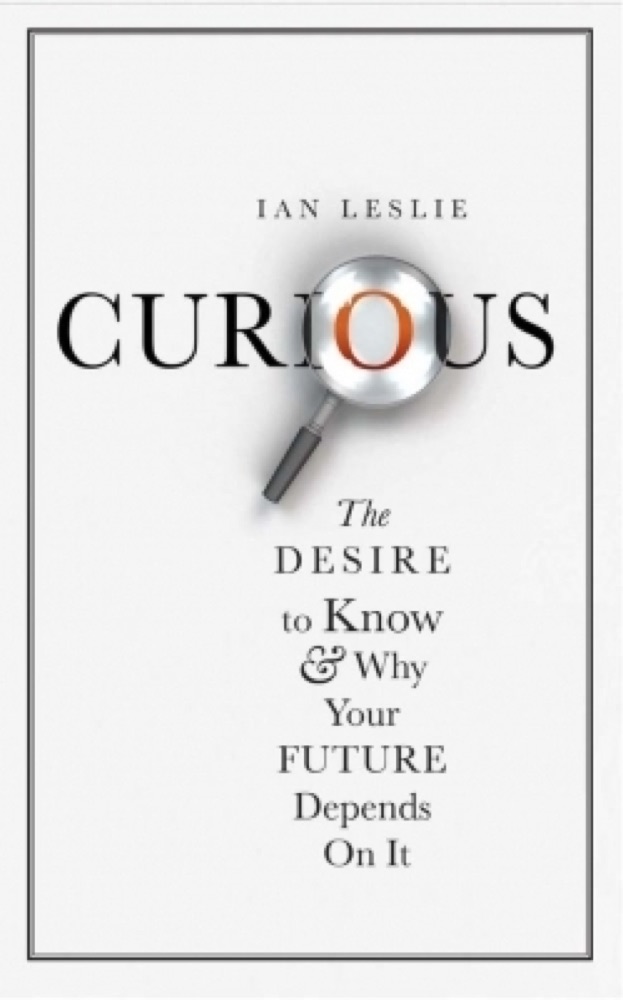 Curious: The Desire to Know and Why Your Future Depends On It
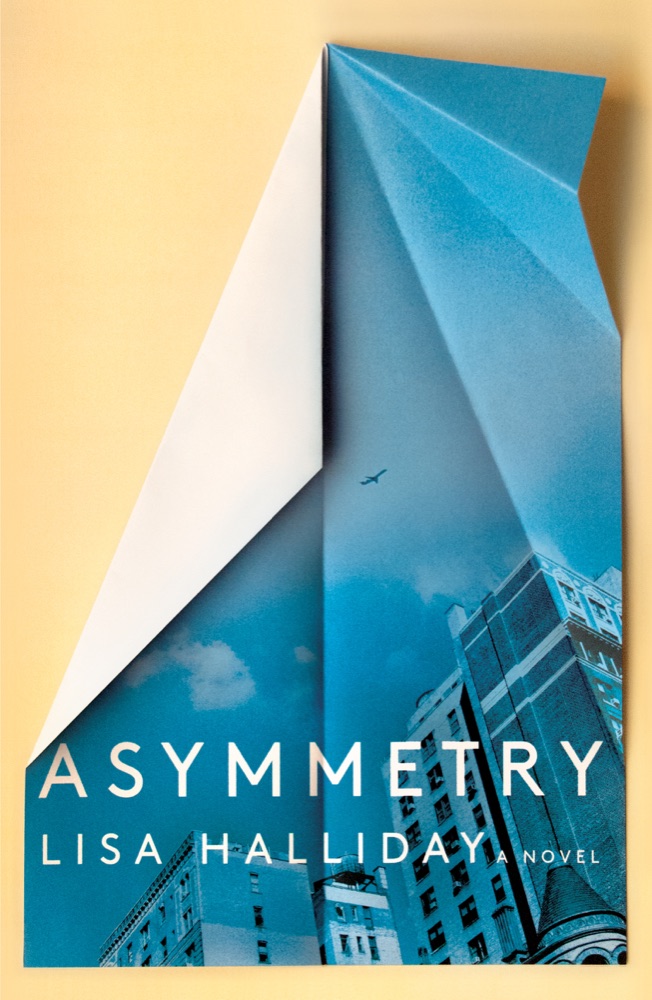 Asymmetry
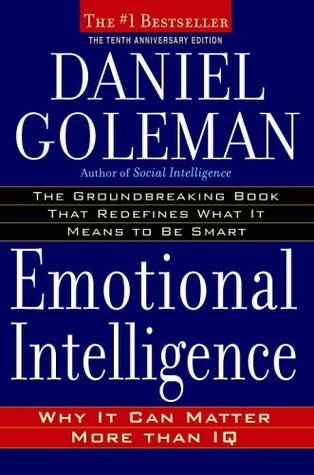 Emotional Intelligence: Why It Can Matter More Than IQ
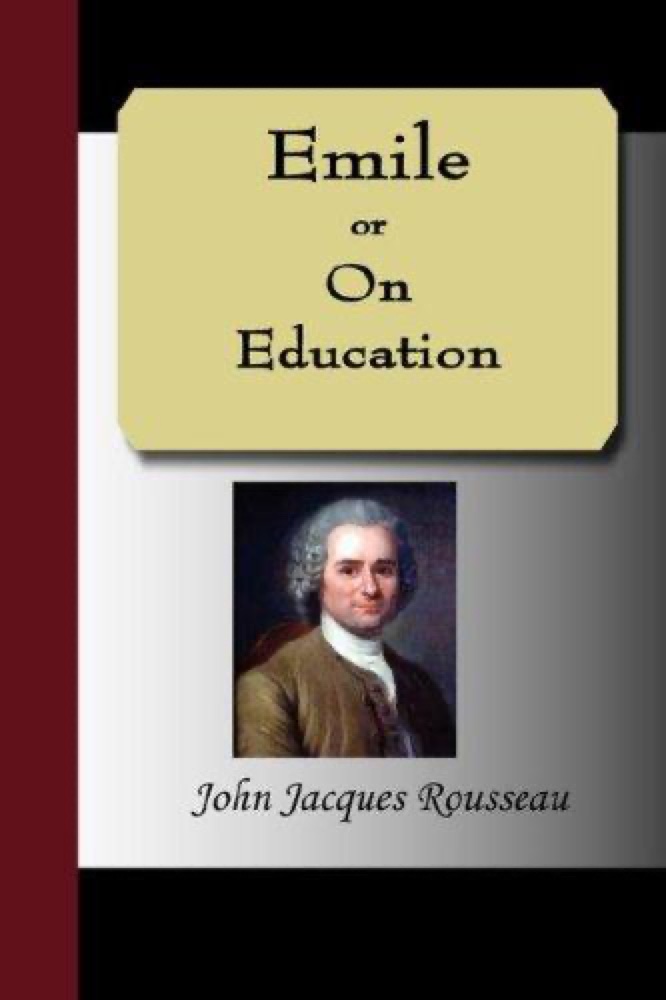 Emile or On Education
 The Humans
 You Are Now Less Dumb: How to Conquer Mob Mentality, How to Buy Happiness, and All the Other Ways to Outsmart Yourself
 Toward a Psychology of Being
 21 Lessons for the 21st Century
 Walden Two
 All the Birds in the Sky
 The Moral Animal: Why We Are the Way We Are - The New Science of Evolutionary Psychology
 Letters from an Astrophysicist
 Homo Deus: A History of Tomorrow
 12 Rules for Life: An Antidote to Chaos
 The Art of Seduction
 The New Psycho-Cybernetics: The Original Science of Self-Improvement and Success That Has Changed the Lives of 30 Million People
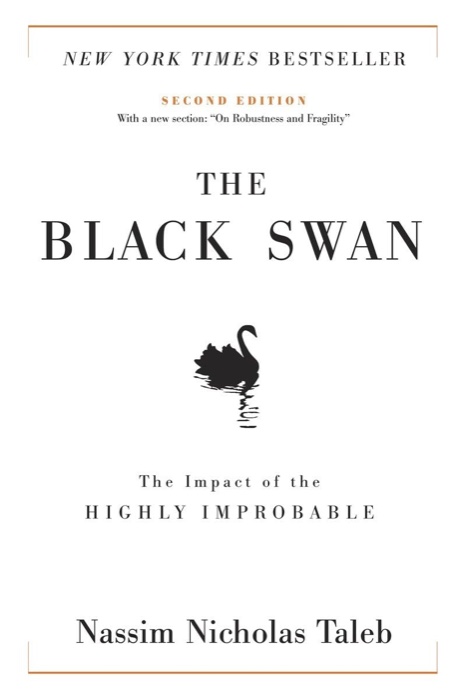 The Black Swan: The Impact of the Highly Improbable
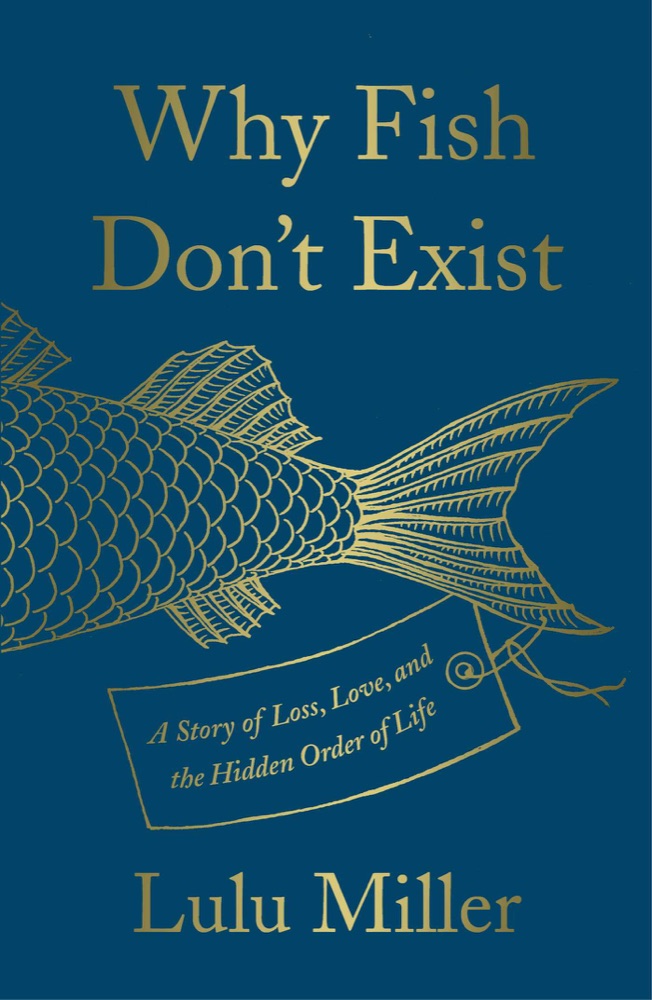 Why Fish Don’t Exist: A Story of Loss, Love, and the Hidden Order of Life