
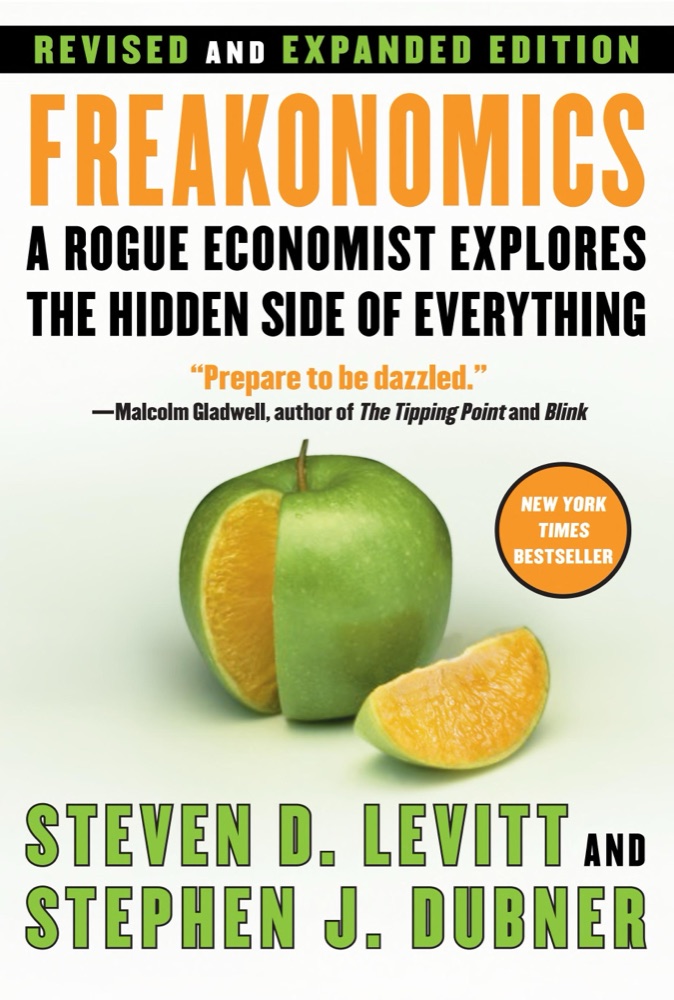
 Freakonomics: A Rogue Economist Explores the Hidden Side of Everything
Quotes from the Book
Don’t listen to what people say; watch what they do.
100
Solving a problem is hard enough; it gets that much harder if you’ve decided beforehand it can’t be done.
57
The key to learning is feedback. It is nearly impossible to learn anything without it.
42
Why is it so important to have fun? Because if you love your work (or your activism or your family time), then you’ll want to do more of it. You’ll think about it before you go to sleep and as soon as you wake up; your mind is always in gear. When you’re that engaged, you’ll run circles around other people even if they are more naturally talented. From what we’ve seen personally, the best predictor of success among young economists and journalists is whether they absolutely love what they do. If they approach their job like—well, a job—they aren’t likely to thrive. But if they’ve somehow convinced themselves that running regressions or interviewing strangers is the funnest thing in the world, you know they have a shot.
37
When people don’t pay the true cost of something, they tend to consume it inefficiently.
33
It has long been said that the three hardest words to say in the English language are I love you. We heartily disagree! For most people, it is much harder to say I don’t know.
29
One thing we’ve learned is that when people, especially politicians, start making decisions based on a reading of their moral compass, facts tend to be among the first casualties.
28
But a mountain of recent evidence suggests that teacher skill has less influence on a student's performance than a completely different set of factors: namely, how much kids have learned from their parents, how hard they work at home, and whether the parents have instilled an appetite for education.
26
If it takes a lot of courage to admit you don’t know all the answers, just imagine how hard it is to admit you don’t even know the right question.
25
But as history clearly shows, most people, whether because of nature or nurture, generally put their own interests ahead of others’. This doesn’t make them bad people; it just makes them human.
22
He found himself one night in a bar standing beside a gorgeous woman. “Would you be willing to sleep with me for $1 million?” he asked her. She looked him over. There wasn’t much to see—but still, $1 million! She agreed to go back to his room. “All right then, “ he said. “Would you be willing to sleep with me for $100?” “A hundred dollars!” she shot back. “What do you think I am, a prostitute?” “We’ve already established that. Now we’re just negotiating the price.
20
If you really want to persuade someone who doesn’t wish to be persuaded, you should tell him a story.
19
While one might expect that suicide is highest among people whose lives are the hardest, research by Lester and others suggests the opposite: suicide is more common among people with a higher quality of life. “If you’re unhappy and you have something to blame your unhappiness on—if it’s the government, or the economy, or something—then that kind of immunizes you against committing suicide,” he says. “It’s when you have no external cause to blame for your unhappiness that suicide becomes more likely.
18
Few people think more than two or three times a year,” Shaw reportedly said. “I have made an international reputation for myself by thinking once or twice a week.
17
The plural of anecdote is not data.
15
But being confident you are right is not the same as being right.
14
Why do so many frown so sternly at the idea of having fun? Perhaps out of fear that it connotes you aren’t serious. But best as we can tell, there is no correlation between appearing to be serious and actually being good at what you do. In fact an argument can be made that the opposite is true.
14
Ideas nearly always seem brilliant when they’re hatched, so we never act on a new idea for at least twenty-four hours.
13
When failure is demonized, people will try to avoid it at all costs—even when it represents nothing more than a temporary setback.
11
The takeaway here is simple but powerful: just because you’re great at something doesn’t mean you’re good at everything. Unfortunately, this fact is routinely ignored by those who engage in—take a deep breath—ultracrepidarianism, or “the habit of giving opinions and advice on matters outside of one’s knowledge or competence.
10
Figure out what people really care about, not what they say they care about.
10
1. Figure out what people really care about, not what they say they care about. 2. Incentivize them on the dimensions that are valuable to them but cheap for you to provide. 3. Pay attention to how people respond; if their response surprises or frustrates you, learn from it and try something different. 4. Whenever possible, create incentives that switch the frame from adversarial to cooperative. 5. Never, ever think that people will do something just because it is the “right” thing to do. 6. Know that some people will do everything they can to game the system, finding ways to win that you never could have imagined. If only to keep yourself sane, try to applaud their ingenuity rather than curse their greed.
9
But wouldn’t it be nice if we all smuggled a few childlike instincts across the border into adulthood? We’d spend more time saying what we mean and asking questions we care about;
9
Prediction,” as Niels Bohr liked to say, “is very difficult, especially if it’s about the future.
9
Thinking like a Freak may sometimes sound like an exercise in using clever means to get exactly what you want, and there’s nothing wrong with that. But if there is one thing we’ve learned from a lifetime of designing and analyzing incentives, the best way to get what you want is to treat other people with decency. Decency can push almost any interaction into the cooperative frame.
9
Have fun, think small, don’t fear the obvious.
8
Colleges and universities, meanwhile, have no such qualms about torturing their applicants. Think about how much work a high-school student must do to even be considered for a spot at a decent college. The difference in college and job applications is especially striking when you consider that a job applicant will be getting paid upon acceptance while a college applicant will be paying for the privilege to attend.
8
The best way to increase wolves in America, rabbits in Australia, and snakes in India is to pay a bounty on their scalps. Then every patriot goes to raising them.
8
Most people are too busy to rethink the way they think—or to even spend much time thinking at all.
7
Trying to keep a public men’s room clean? Sure, go ahead and put up signs urging people to pee neatly—or, better, paint a housefly on the urinal and watch the male instinct for target practice take over.
6
Watch on YouTube
About Steven D. Levitt
We have collected 86 quotes from 3 books by Steven D. Levitt on BookQuoters.
More about the author →More by Steven D. Levitt
Freakonomics: A Rogue Economist Explores the Hidden Side of Everything
 SuperFreakonomics: Global Cooling, Patriotic Prostitutes And Why Suicide Bombers Should Buy Life Insurance
About the book
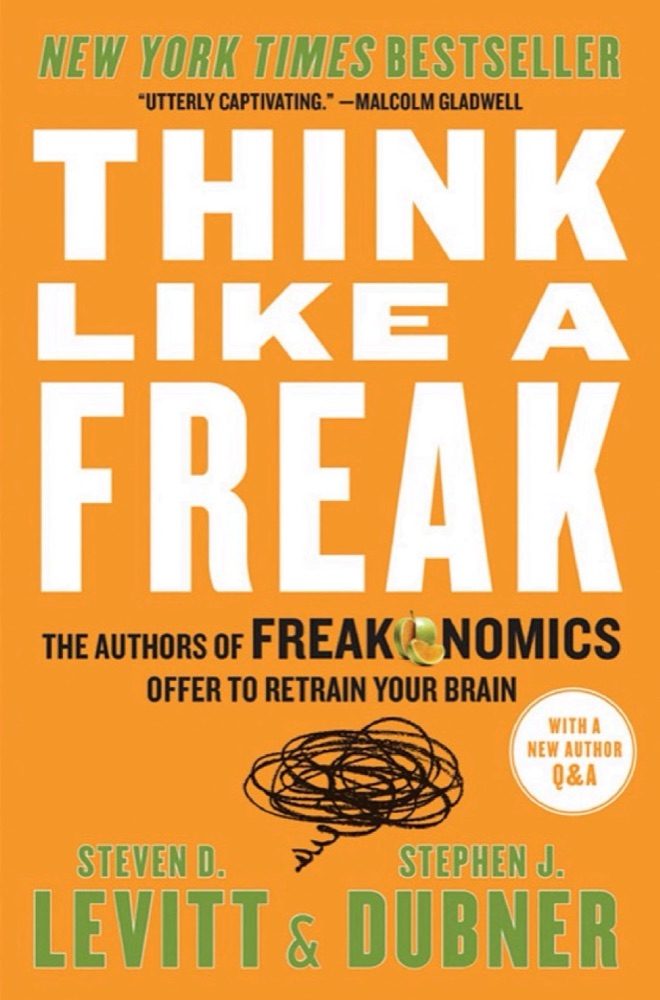
The New York Times bestselling Freakonomics changed the way we see the world, exposing the hidden side of just about everything. Then came SuperFreakonomics, a documentary film, an award-winning podcast, and more.
Now, with Think Like a Freak, Steven D. Levitt and Stephen J. Dubner have written their most revolutionary book yet. With their trademark blend of captivating storytelling and unconventional analysis, they take us inside their thought process and teach us all to think a bit more productively, more creatively, more rationally—to think, that is, like a Freak.
Levitt and Dubner offer a blueprint for an entirely new way to solve problems, whether your interest lies in minor lifehacks or major global reforms. As always, no topic is off-limits. They range from business to philanthropy to sports to politics, all with the goal of retraining your brain. Along the way, you’ll learn
Book details
- First published
- 2014
- Author
- Steven D. Levitt
- Genre
- Nonfiction
- Goodreads rating
- 3.86 (57k ratings)
Keep reading
 The Art of Thinking Clearly
 The Black Swan: The Impact of the Highly Improbable
 Barking Up the Wrong Tree: The Surprising Science Behind Why Everything You Know About Success Is (Mostly) Wrong
 Skin in the Game: The Hidden Asymmetries in Daily Life
 Predictably Irrational: The Hidden Forces That Shape Our Decisions
Freakonomics: A Rogue Economist Explores the Hidden Side of Everything
Predictably Irrational: The Hidden Forces That Shape Our Decisions
Freakonomics: A Rogue Economist Explores the Hidden Side of Everything
 Antifragile: Things That Gain from Disorder
 What the Dog Saw and Other Adventures
 Made to Stick: Why Some Ideas Survive and Others Die
 Same as Ever: A Guide to What Never Changes
 The Undoing Project: A Friendship That Changed Our Minds
 The Last Lecture
 How to Win Friends & Influence People
 Excellent Advice for Living: Wisdom I Wish I'd Known Earlier
 Influence: The Psychology of Persuasion
 Rationality: From AI to Zombies
 You Are Not So Smart
 Principles: Life and Work
 The 7 Habits of Highly Effective People: Personal Workbook
 Alchemy: The Surprising Power of Ideas That Don't Make Sense
 Rework
 Tools of Titans: The Tactics, Routines, and Habits of Billionaires, Icons, and World-Class Performers
 How to Fail at Almost Everything and Still Win Big: Kind of the Story of My Life
 Thinking, Fast and Slow
 Algorithms to Live By: The Computer Science of Human Decisions
 Do Epic Shit
 You Are Now Less Dumb: How to Conquer Mob Mentality, How to Buy Happiness, and All the Other Ways to Outsmart Yourself
 Superforecasting: The Art and Science of Prediction
 Originals: How Non-Conformists Move the World
 Creativity, Inc.: Overcoming the Unseen Forces That Stand in the Way of True Inspiration
 Hackers & Painters: Big Ideas from the Computer Age
 Do Over: Rescue Monday, Reinvent Your Work, and Never Get Stuck
 The Elephant in the Brain: Hidden Motives in Everyday Life
 Stumbling on Happiness
 The Age of Magical Overthinking: Notes on Modern Irrationality
 Independent Study
 David and Goliath: Underdogs, Misfits, and the Art of Battling Giants
 Trump: The Art of the Deal
 Mistakes Were Made (But Not by Me): Why We Justify Foolish Beliefs, Bad Decisions, and Hurtful Acts
 The Tao of Pooh
 The Social Animal: The Hidden Sources of Love, Character, and Achievement
 It's Not How Good You Are, It's How Good You Want To Be
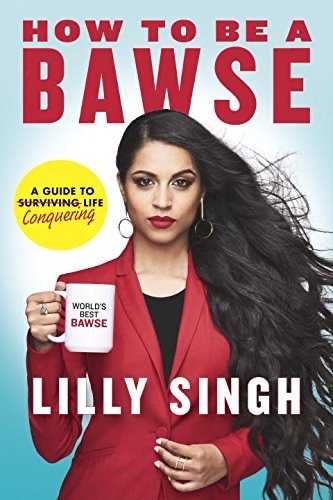 How to Be a Bawse: A Guide to Conquering Life
 Black Box Thinking: Why Some People Never Learn from Their Mistakes - But Some Do
 Smartcuts: How Hackers, Innovators, and Icons Accelerate Success
 Magic of Thinking Big
 The Tipping Point: How Little Things Can Make a Big Difference
 Think Like a Rocket Scientist: Simple Strategies You Can Use to Make Giant Leaps in Work and Life
 Think Again: The Power of Knowing What You Don't Know
 Smarter Faster Better: The Secrets of Being Productive in Life and Business
 What Do You Care What Other People Think?
 The 4-Hour Workweek
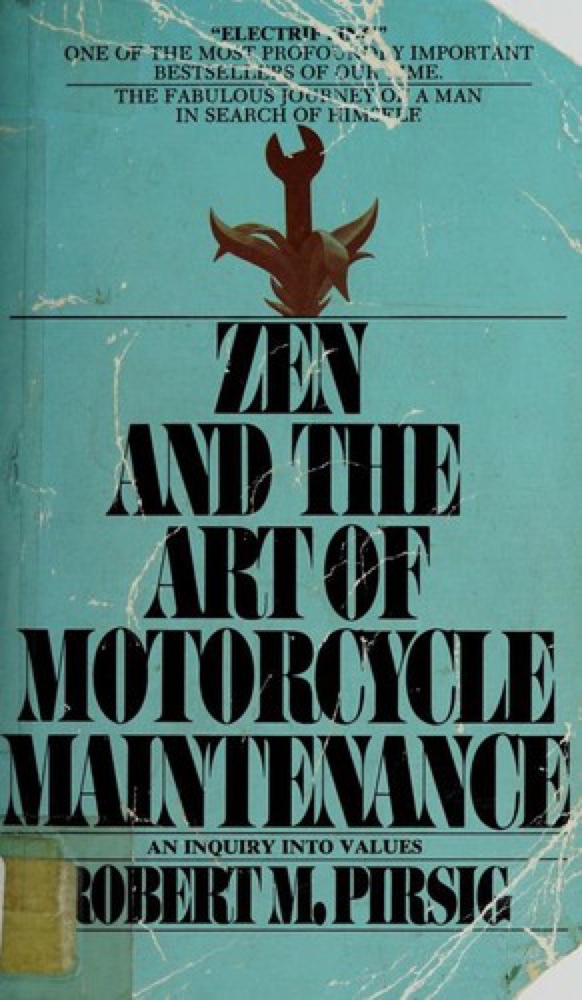 Zen and the Art of Motorcycle Maintenance
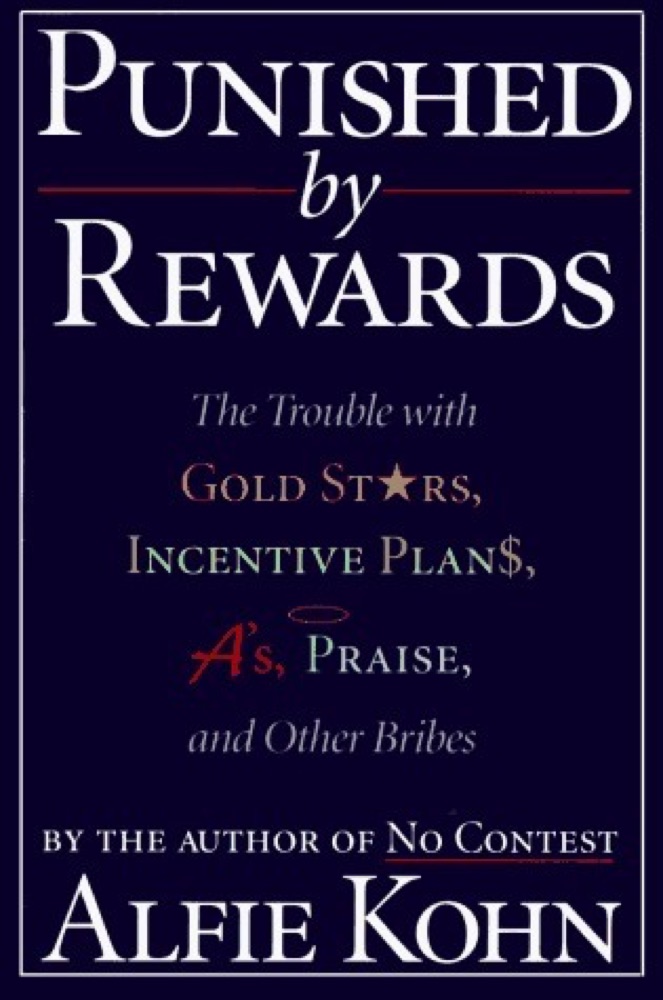 Punished by Rewards: The Trouble with Gold Stars, Incentive Plans, A's, Praise and Other Bribes
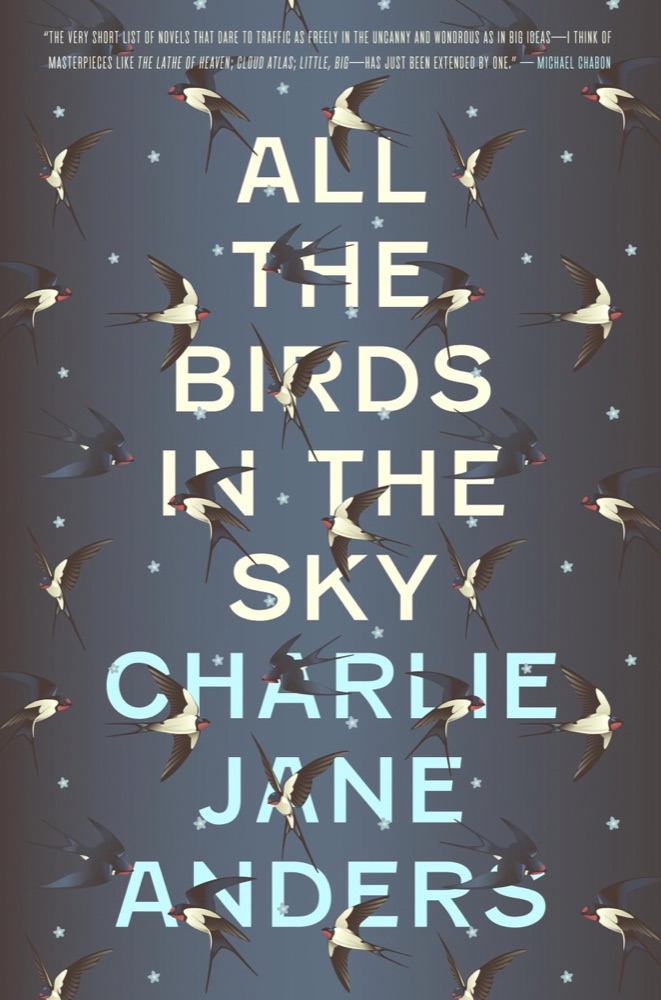 All the Birds in the Sky
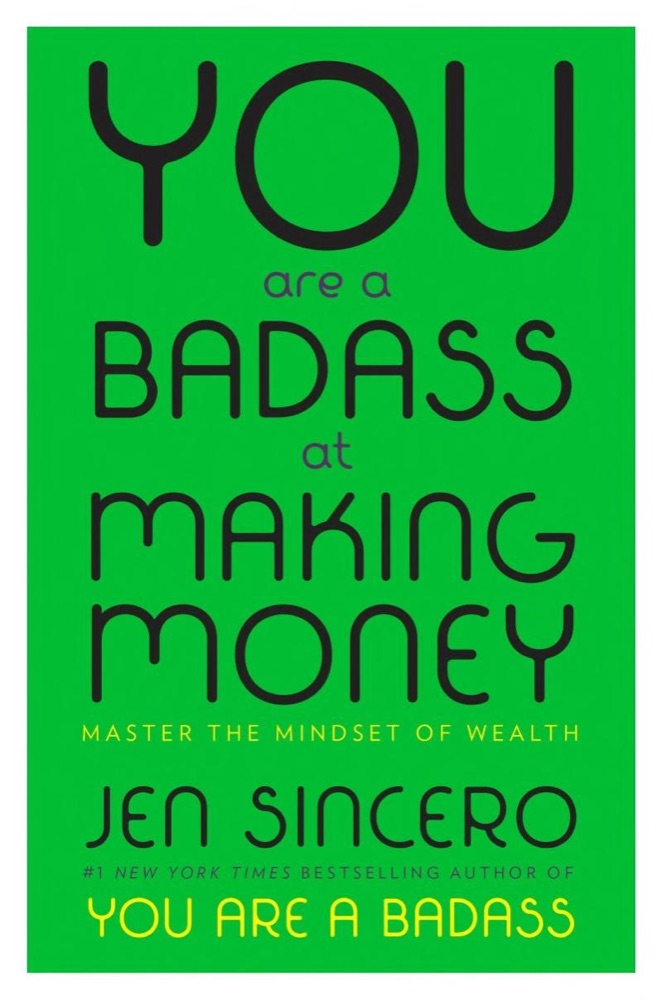 You Are a Badass at Making Money: Master the Mindset of Wealth
 Rich Dad Poor Dad
 The Nix
 Range: Why Generalists Triumph in a Specialized World
 Crucial Conversations: Tools for Talking When Stakes are High