
 Selfie: How the West Became Self-Obsessed
Quotes from the Book
The world we experience as ‘out there’ is actually a reconstruction of reality that is built inside our heads. It’s an act of creation by the storytelling brain. This is how it works. You walk into a room. Your brain predicts what the scene should look and sound and feel like, then it generates a hallucination based on these predictions. It’s this hallucination that you experience as the world around you. It’s this hallucination you exist at the centre of, every minute of every day. You’ll never experience actual reality because you have no direct access to it.
10
Locked inside the black vault of our skulls, stuck forever in the solitude of our own hallucinated universe, story is a portal, a hallucination within the hallucination, the closest we'll ever really come to escape.
9
The gift of story is wisdom
6
We experience our day-to-day lives in story mode. The brain creates a world for us to live in and populates it with allies and villains. It turns the chaos and bleakness of reality into a simple, hopeful tale, and at the centre it places its star – wonderful, precious me – who it sets on a series of goals that become the plots of our lives. Story is what brain does. It is a ‘story processor’, writes the psychologist Professor Jonathan Haidt, ‘not a logic processor’. Story emerges from human minds as naturally as breath emerges from between human lips.
4
Unpredictable humans. This is the stuff of story.
4
As the psychologist Professor Brian Little writes, ‘All individuals are essentially scientists erecting and testing their hypotheses about the world and revising them in the light of their experience.
2
The only thing we’ll ever really know are those electrical pulses that are sent up by our senses.
2
Stories work on multiple evolved systems in the brain and a skilled storyteller activates these networks like the conductor of an orchestra, a little trill of moral outrage here, a fanfare of status play over there, a tintinnabulation of tribal identification, a rumble of threatening antagonism, a tantara of wit, a parp of sexual allure, a crescendo of unfair trouble, a warping and wefting hum as the dramatic question is posed and reposed in new and interesting ways – all instruments by which masses of brains can be captivated and manipulated.
2
story, are often badly led astray by this inner voice, which is generated by word and speech-making circuitry that is mostly located in the brain’s left hemisphere. This voice is not to be trusted. This isn’t simply because it’s relaying all those flattering hero-making half-truths to us. The narrator can’t be trusted because it has no direct access to the truth of who we really are. It feels as if that voice is the thing that’s in control of us. It feels as if that voice is us. But it’s not. ‘We’ are our neural models. Our narrator is just observing what’s happening in the controlled hallucination in our skulls – including our own behaviour – and explaining it. It’s tying all the events together into a coherent tale that tells us who we are, why we’re doing what we’re doing and feeling what we’re feeling. It’s helping us feel in control of our thrilling neural show. And it’s not lying, exactly. It’s confabulating.
2
human consciousness works on two levels. There’s the top level on which occurs the drama of our day-to-day lives – that meeting of sight, sound, touch, taste and smell which is narrated by the hero-making inner voice. And then, beneath that, there’s the subconscious level of the neural models, a stewing night ocean of feelings, urges and broken memories in which competing urges engage in a constant struggle for control.
1
Estimates vary, but it’s believed the brain processes around 11 million bits of information at any given moment, but makes us consciously aware of no more than forty. The brain sorts through an abundance of information and decides what salient information to include in its stream of consciousness.
1
Causes and effects should be shown rather than told; suggested rather than explained. If they’re not, curiosity will be extinguished and readers and viewers will become bored.
1
I’m blind to any other reasonable argument – I can’t perceive them – because they’re not part of my perception.
1
If tribal thinking is original sin, then story is prayer. At its best, it reminds us that, beneath our many differences, we remain beasts of one species.
1
Identifying and accepting our flaws, and then changing who we are, means breaking down the very structure of our reality before rebuilding it in a new and improved form. This is not easy. It’s painful and disturbing. We’ll often fight with all we have to resist this kind of profound change. This is why we call those who manage it ‘heroes’.
1
The ‘most frequently occurring and important theme’ of bestsellers was ‘human closeness and human connection’, an apposite interest for a hyper-social species.
Story artist’ Austin Madison, who’s worked on blockbusters including Ratatouille, Wall-E and Up, has shared a structure he says all Pixar films must adhere to. The action starts with a protagonist who has a goal, living in a settled world. Then a challenge comes that forces them into a cause-and-effect sequence of events that eventually builds to a climax that demonstrates the triumph of good over evil and the revelation of the story’s moral.
The job of the plot is to plot against the protagonist. Its causes and effects always revolve around some sort of story event – an episode that brings the character into a new psychological realm.
In order to be maximally compelling, protagonists should be active, the principal causer of effects in the plot that follows. Textual analyses reveal the words ‘do’, ‘need’ and ‘want’ appear twice as often in novels that feature in the New York Times bestseller list as those that don’t. A character in a drama who isn’t reacting, making decisions, choosing and trying somehow to impose control on the chaos isn’t truly a protagonist. Without action, the answer to the dramatic question never really changes. Who they are is who they always were, but slowly, dully sinking.
Without Brunetière’s will striving towards a goal being present in the scene of a story, there’s no drama, only description.
The simple addition of a human goal transformed the gobbledegook into something clear. They remembered twice as much.
What we see and feel, at any given moment, depends on what we’re trying to get – when we’re caught in the street in a downpour, we don’t see shops and trees and doorways and awnings, we see places of shelter. Goal-direction is so important to human cognition that when information about it is absent we can enter a state of bafflement.
the one inviolable rule of drama: ‘What we ask of the theatre is the spectacle of a will striving towards a goal.’ Fundamental to successful stories and successful lives is the fact that we don’t passively endure the chaos that erupts around us.
Harmful childhood experiences damage our ability to control the environment of other people. And for us domesticated creatures the environment of other people is everything.
Great storytelling, like great psychology and great neuroscience, is a deep investigation into human behaviour. Literary storytelling is often dominated not by surface action as much as by the laying out of extensive clues as to why the characters behave as they do.
It’s sometimes assumed that we root for characters who are simply kind. This is a nice idea, but it’s not true. As literary critic Adam Kirsch has observed, goodness is ‘infertile terrain for a writer’. If a hero starts out in perfect selfless shape there’s going to be no tale to tell. For the story theorist Professor Bruno Bettelheim, the storyteller’s challenge isn’t so much one of arousing the reader’s moral respect for the protagonist, but their sympathy.
As Professor William Flesch writes, ‘We may hate the villain, but our hatred is meaningless. We want him unmasked to people in his world.
Shakespeare understood that there’s nothing more likely to make a person mad, desperate and dangerous than the removal of their status. The play is a tragedy, a form that frequently shows how hubris – which can be viewed as the making of an unsound claim to status – can bring personal destruction.
Evolutionary psychologists argue we have two wired-in ambitions: to get along with people, so they like us and consider us non-selfish members of the tribe, and also get ahead of them, so we’re on top. Humans are driven to connect and dominate.
Watch on YouTube
About Will Storr
We have collected 66 quotes from 3 books by Will Storr on BookQuoters.
More about the author →More by Will Storr
Selfie: How the West Became Self-Obsessed
 The Status Game: On Human Life and How to Play It
About the book
Stories mould who we are, from our character to our cultural identity. They drive us to act out our dreams and ambitions, and shape our politics and beliefs. We use them to construct our relationships, to keep order in our law courts, to interpret events in our newspapers and social media. Storytelling is an essential part of what makes us human.
There have been many attempts to understand what makes a good story – from Joseph Campbell’s well-worn theories about myth and archetype to recent attempts to crack the ‘Bestseller Code’. But few have used a scientific approach. This is curious, for if we are to truly understand storytelling in its grandest sense, we must first come to understand the ultimate storyteller – the human brain.
In this scalpel-sharp, thought-provoking book, Will Storr demonstrates how master storytellers manipulate and compel us, leading us on a journey from th
Book details
- First published
- 2019
- Author
- Will Storr
- Genre
- Nonfiction
- Goodreads rating
- 4.05 (9k ratings)
Keep reading
 Wired for Story: The Writer's Guide to Using Brain Science to Hook Readers from the Very First Sentence
 Story Genius: How to Use Brain Science to Go Beyond Outlining and Write a Riveting Novel
 Story: Substance, Structure, Style, and the Principles of Screenwriting
 Maps of Meaning: The Architecture of Belief
 The Social Animal: The Hidden Sources of Love, Character, and Achievement
 Dæmon Voices
 The Hero's Journey: Joseph Campbell on His Life & Work
 Into the Woods: A Five Act Journey Into Story
 Aspects of the Novel
 The Master and His Emissary: The Divided Brain and the Making of the Western World
 Genesis
 Psych: The Story of the Human Mind
 How to Read Literature Like a Professor
 Myths to Live By
 The Tell-Tale Brain: A Neuroscientist's Quest for What Makes Us Human
 Figuring
 The Anatomy of Story: 22 Steps to Becoming a Master Storyteller
 The Writer's Journey: Mythic Structure for Writers
 Eating the Dinosaur
 Toward Eternity
 The Paper Menagerie and Other Stories
 Homo Deus: A History of Tomorrow
 Wonderbook: The Illustrated Guide to Creating Imaginative Fiction
 Creativity: Flow and the Psychology of Discovery and Invention
 A Million Miles in a Thousand Years: What I Learned While Editing My Life
 The Book of Form and Emptiness
 The View from the Cheap Seats: Selected Nonfiction
 How to Read Literature
 The Language of the Night: Essays on Writing, Science Fiction, and Fantasy
 Screenplay: The Foundations of Screenwriting
 Burning Questions: Essays and Occasional Pieces, 2004 to 2021
 The Braindead Megaphone
 The Mountain in the Sea
 The Truth About Stories: A Native Narrative
 The Unlikely Escape of Uriah Heep
 Drive Your Plow Over the Bones of the Dead
 A Fisherman of the Inland Sea
 Gnomon
 Arcadia
 21 Lessons for the 21st Century
 Understanding Media: The Extensions of Man
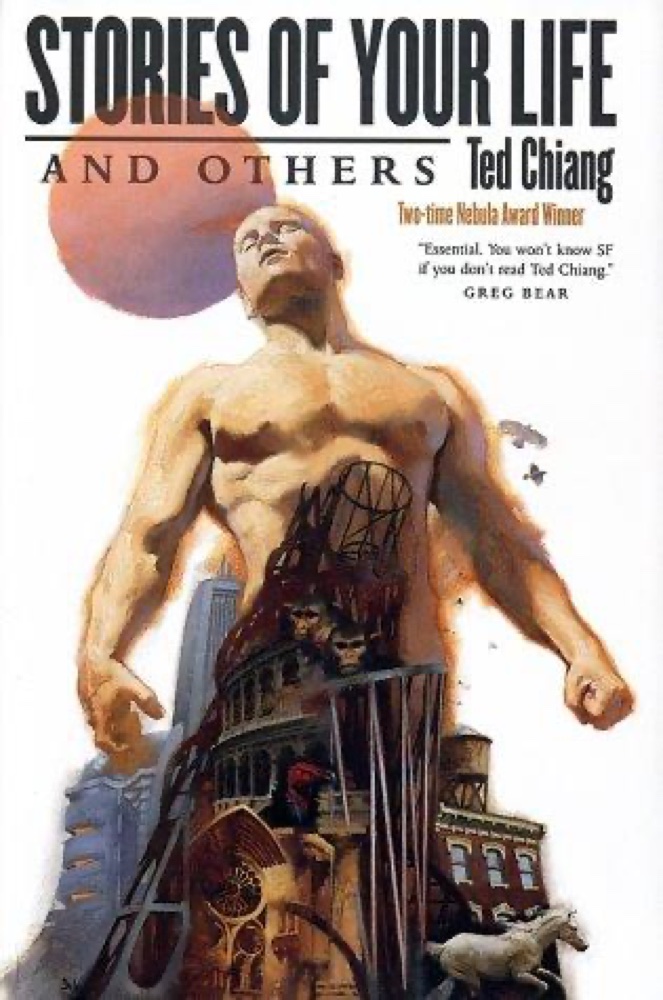 Stories of Your Life and Others
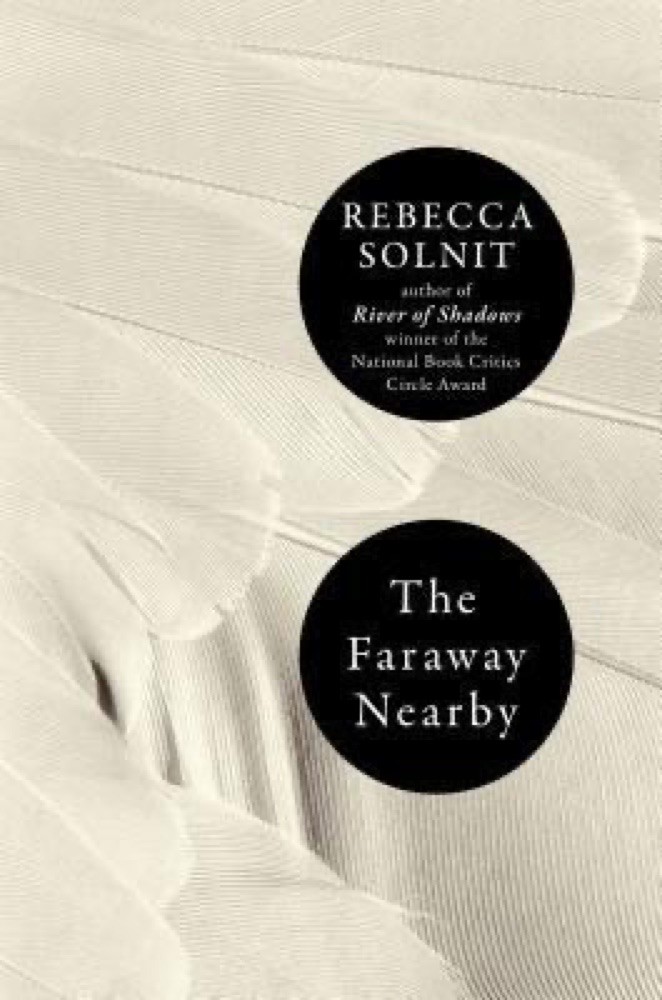 The Faraway Nearby
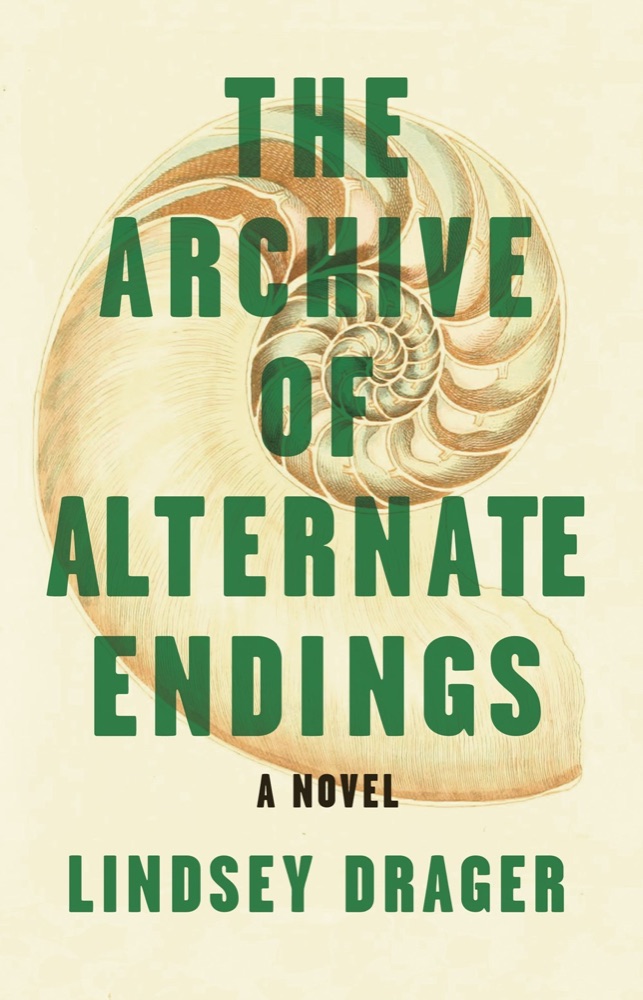 The Archive of Alternate Endings
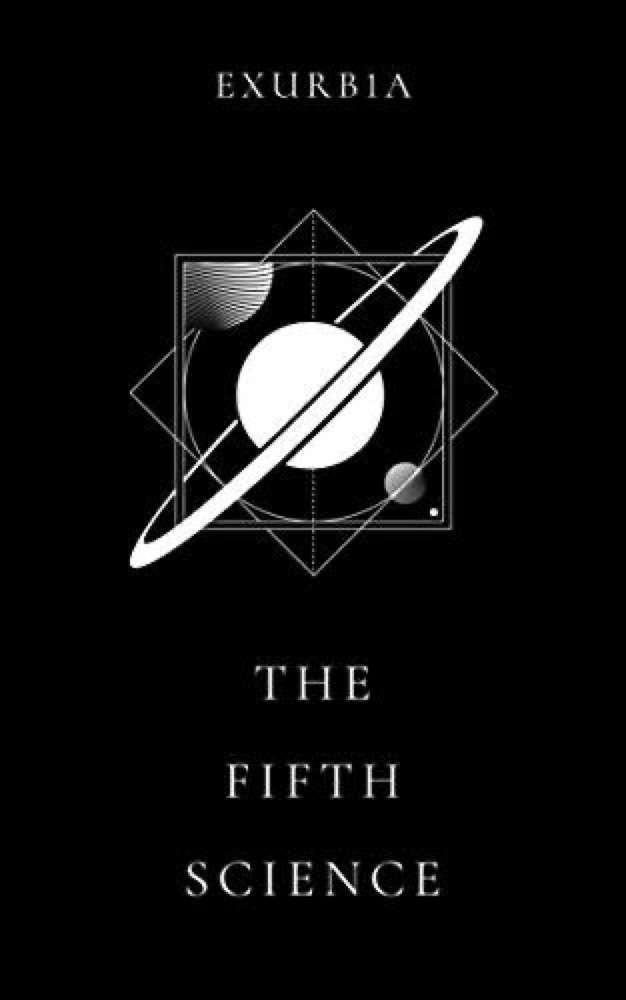 The Fifth Science
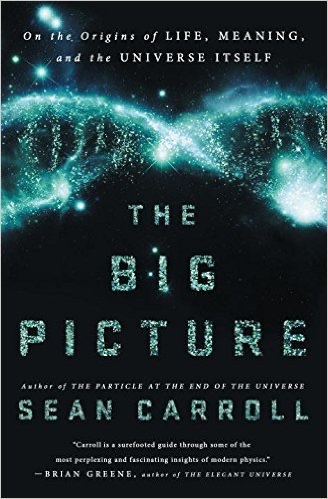 The Big Picture: On the Origins of Life, Meaning, and the Universe Itself
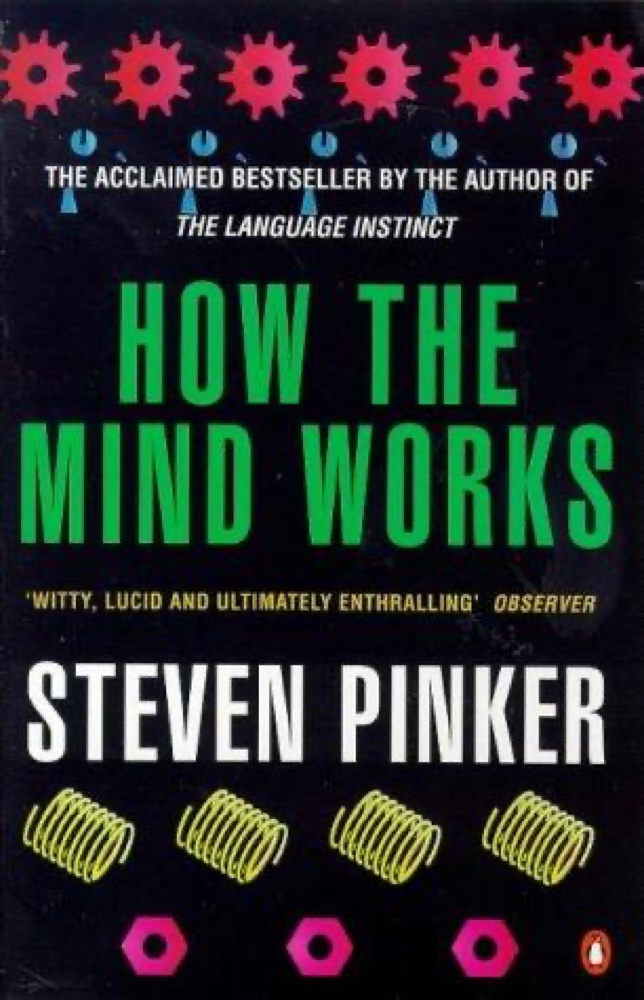 How the Mind Works
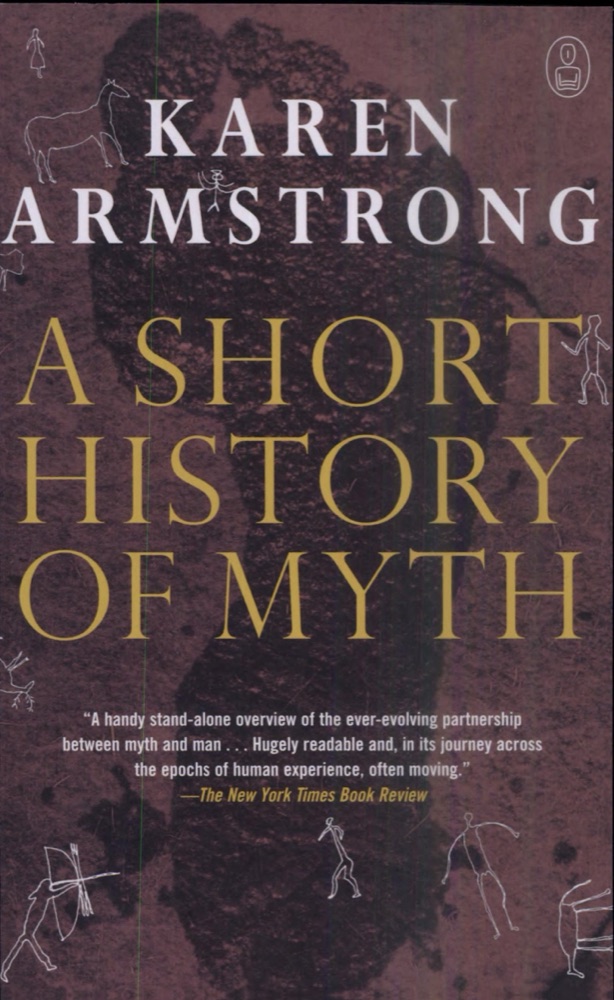 A Short History of Myth
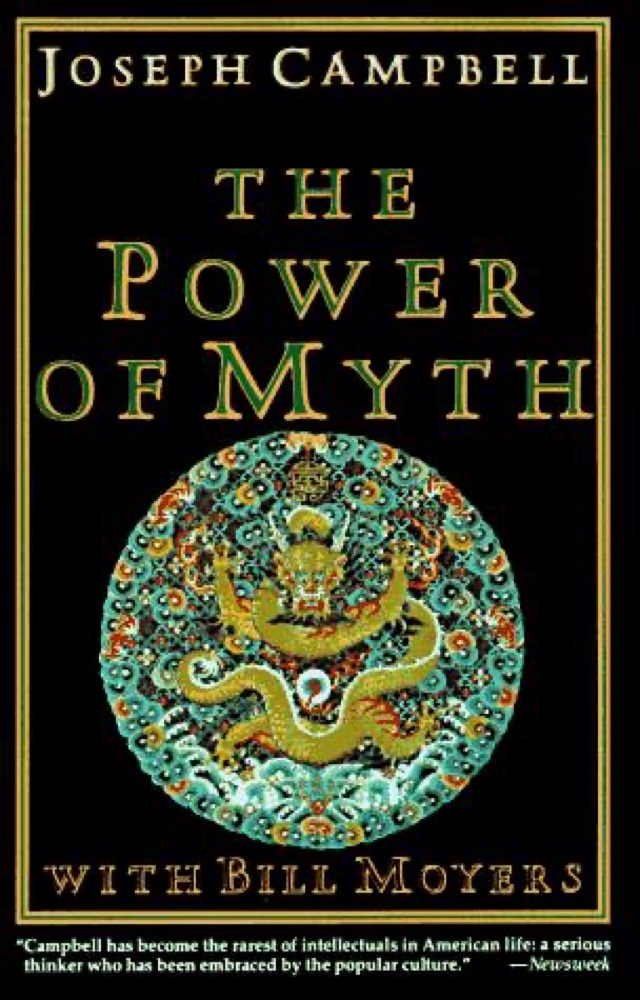 The Power of Myth
 The Book of Dreams
 The Wave in the Mind: Talks and Essays on the Writer, the Reader and the Imagination
 The Neverending Story
 Reality Hunger: A Manifesto
 Player One: What Is to Become of Us
 Consider This: Moments in My Writing Life After Which Everything Was Different
 Until the End of Time: Mind, Matter, and Our Search for Meaning in an Evolving Universe
 Mystery and Manners: Occasional Prose
 The Laws of Human Nature
 The Book of Joan
 The Library of the Unwritten