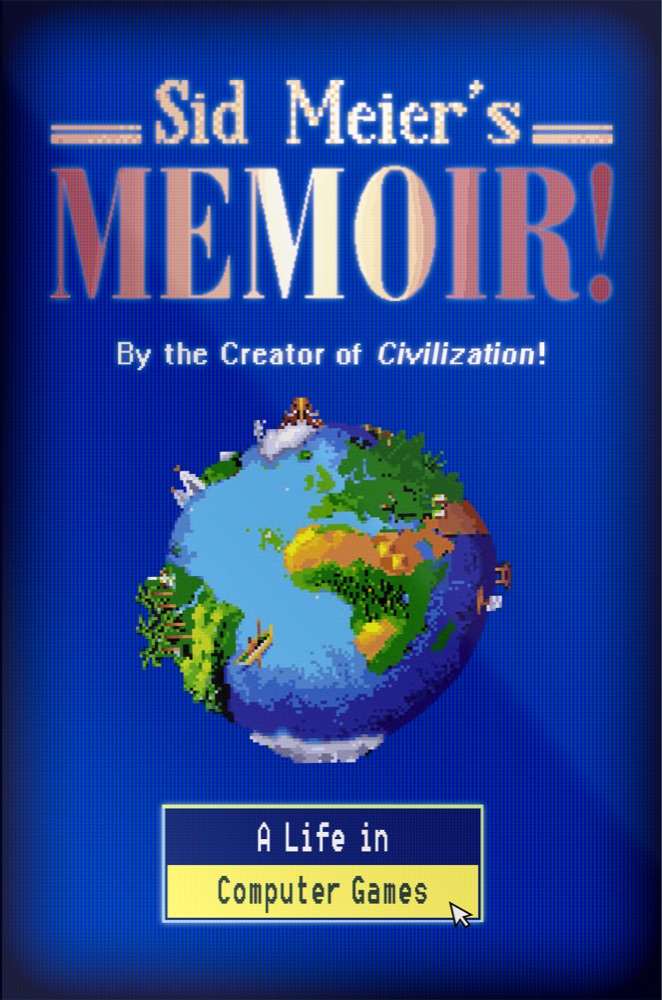
 Extra Lives: Why Video Games Matter
Quotes from the Book
Whatever it is you want to be good at, you have to make sure you continue to read, and learn, and seek joy elsewhere, because you never know where inspiration will strike.
9
Separately is probably how I work best with everyone, to be honest. I'm an introvert who likes people: I want to collaborate on the whole, but do my part individually.
7
I think that in life, as in game design, you have to find the fun. There is joy out there waiting to be discovered, but it might not be where you expected. You can’t decide what something’s going to be before you embark on it, and you shouldn’t stick with a bad idea just because you’re fond of it. Take action as quickly and repeatedly as possible, take advantage of what you already know, and take liberties with tradition. But most importantly, take the time to appreciate the possibilities, and make sure all of your decisions are interesting ones.
6
Games were not just a diversion, I realized. Games could make you feel. If great literature could would its power through nothing but black squiggles on a page, how much more could be done with movement, sound, and color?
5
No subject is universally boring; everything contains a core of fascination somewhere, and the primary job of a game designer is not to make something fun, but to find the fun.
1
The dichotomy between someone else’s talent and your own is a cause for celebration, because the further apart you are, the more you can offer each other.
1
A racing game doesn’t need a fictional driver with a predetermined back story; it needs that unique combination of emotional and psychological hooks that make you believe, however fleetingly, that you yourself are the driver.
1
But it’s not the countless callbacks and references that make the nuclear Gandhi story so funny to me. It’s the fact that none of it is true. The overflow error never happened at all.
1
I feel the same way about awards. I once received a star on the “Walk of Game” in San Francisco, with press photos and speeches and everything, and six years later the whole thing was demolished and turned into a Target.
The truth is I never really give up on anything. The ideas just sit in stasis, sometimes for decades, until I can figure out the right way to make them work.
Someday, if we’re lucky, an entirely new industry will steal from us. They’ll transform our work into something so unimaginably different, we’ll feel like Errol Flynn confronted with his future pixelated form.
Business and creativity were both necessary components, but they ought to keep their distance.
they had no particular use for the originals, and eventually began selling them as scrap paper to wrap fish and other market goods in.
Insignificant decisions take just as much brain power as interesting ones, but without any of the satisfaction.
the ability of players to exert free will over their surroundings rather than obediently following a narrative—is what sets games apart from other media,
Though the educational overlap is entirely logical, I’ve always been uncomfortable with the label “educational software.” I’ve always preferred the word “learning,” myself. Education is somebody else telling you what to think, while learning is opening yourself to new possibilities, and grasping a concept because you understand it on a personal level. To chastise us for our lack of historical accuracy is fair in the educational sense, but misses the point entirely when it comes to learning. Are Aesop’s fables meaningless because real mice can’t talk? What we encourage is knowledge-seeking in itself, and ownership of one’s beliefs. We want you to understand that choices have consequences, that a country’s fate can turn on a single act of diplomacy, and that historical figures were not black-and-white paragons of good and evil—not because we’ve told you, but because you’ve faced those complex dilemmas for yourself.
All I could do was keep asking myself, “Would I want to play this game?” As long as the answer was yes, the idea stayed in.
In the right context, a game is not just a vehicle for fun, but an exercise in self-determination and confidence.
Watch on YouTube
About Sid Meier
About the book
The life and career of the legendary developer celebrated as the “godfather of computer gaming,” and creator of Civilization.
Over his four-decade career, Sid Meier has produced some of the world’s most popular video games, including Sid Meier’s Civilization, which has sold more than 51 million units worldwide and accumulated more than one billion hours of play. Sid Meier’s Memoir! is the story of an obsessive young computer enthusiast who helped launch a multibilliondollar industry. Writing with warmth and ironic humor, Meier describes the genesis of his influential studio, MicroProse, founded in 1982 after a trip to a Las Vegas arcade, and recounts the development of landmark games, from vintage classics like Pirates! and Railroad Tycoon, to Civilization and beyond.
Articulating his philosophy that a videogame should be “a series of interesting decisions,” Meier also shares his p
Book details
- First published
- 2020
- Author
- Sid Meier
- Genre
- Nonfiction
- Goodreads rating
- 4.17 (4k ratings)
Keep reading
Extra Lives: Why Video Games Matter
 The Player of Games
 Reality is Broken: Why Games Make Us Better and How They Can Change the World
 Hackers & Painters: Big Ideas from the Computer Age
 You
You
 Math with Bad Drawings
 The Creative Habit: Learn It and Use It for Life
 Tomorrow, and Tomorrow, and Tomorrow
 Shoe Dog: A Memoir by the Creator of NIKE
 What the Dog Saw and Other Adventures
 Ignore Everybody: and 39 Other Keys to Creativity
 Originals: How Non-Conformists Move the World
 The Game
 Creativity: Flow and the Psychology of Discovery and Invention
 The Art of Impossible: A Peak Performance Primer
 Playground
 Chaos Monkeys: Obscene Fortune and Random Failure in Silicon Valley
 Story Engineering: Character Development, Story Concept, Scene Construction
 The Happiness of Pursuit: Finding the Quest That Will Bring Purpose to Your Life
 Things a Little Bird Told Me: Confessions of the Creative Mind
 Trump: The Art of the Deal
 Becoming Steve Jobs: The Evolution of a Reckless Upstart into a Visionary Leader
 The Accidental Creative: How to Be Brilliant at a Moment's Notice
 The Art of Creative Thinking
 Made to Stick: Why Some Ideas Survive and Others Die
 Think Like a Freak
 The Art of Thinking Clearly
 Hit Makers: The Science of Popularity in an Age of Distraction
 The Most Human Human: What Talking with Computers Teaches Us About What It Means to Be Alive
 Creativity, Inc.: Overcoming the Unseen Forces That Stand in the Way of True Inspiration
 Linchpin: Are You Indispensable?
 Yumi and the Nightmare Painter
 Every Tool's a Hammer: Life Is What You Make It
 How to Be Everything
 The Element: How Finding Your Passion Changes Everything
 Ender's Game
 The Icarus Deception: How High Will You Fly?
 I, Steve: Steve Jobs In His Own Words
 Tress of the Emerald Sea
 Big Magic: Creative Living Beyond Fear
 Finite and Infinite Games: A Vision of Life as Play and Possibility
 A Slip of the Keyboard: Collected Non-Fiction
 Creative Quest
 A Whack on the Side of the Head: How You Can Be More Creative
 Middlegame
 Nova
Nova
 The Last Lecture
 The City in the Middle of the Night
 Wonderbook: The Illustrated Guide to Creating Imaginative Fiction
 How to Fly a Horse: The Secret History of Creation, Invention, and Discovery
 Novelist as a Vocation
 Steve Jobs
 Ready Player One
 Makers
 Pour Your Heart Into It: How Starbucks Built a Company One Cup at a Time
 Making Ideas Happen: Overcoming the Obstacles Between Vision and Reality
 A Closed and Common Orbit
 Distrust That Particular Flavor
 Imagine: How Creativity Works
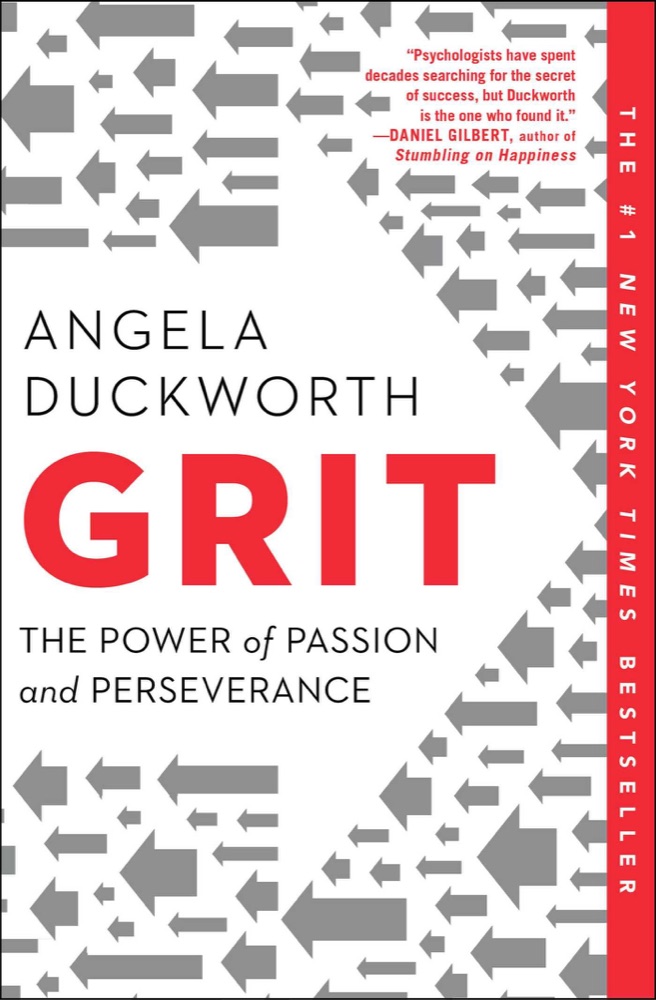 Grit: The Power of Passion and Perseverance