
 The Artist's Way
Quotes from the Book
I read for growth, firmly believing that what you are today and what you will be in five years depends on two things: the people you meet and the books you read.
142
Reading, conversation, environment, culture, heroes, mentors, nature – all are lottery tickets for creativity. Scratch away at them and you’ll find out how big a prize you’ve won.
67
When I walk into [the studio] I am alone, but I am alone with my body, ambition, ideas, passions, needs, memories, goals, prejudices, distractions, fears. These ten items are at the heart of who I am. Whatever I am going to create will be a reflection of how these have shaped my life, and how I've learned to channel my experiences into them. The last two -- distractions and fears -- are the dangerous ones. They're the habitual demons that invade the launch of any project. No one starts a creative endeavor without a certain amount of fear; the key is to learn how to keep free-floating fears from paralyzing you before you've begun. When I feel that sense of dread, I try to make it as specific as possible. Let me tell you my five big fears: 1. People will laugh at me. 2. Someone has done it before. 3. I have nothing to say. 4. I will upset someone I love. 5. Once executed, the idea will never be as good as it is in my mind. "There are mighty demons, but they're hardly unique to me. You probably share some. If I let them, they'll shut down my impulses ('No, you can't do that') and perhaps turn off the spigots of creativity altogether. So I combat my fears with a staring-down ritual, like a boxer looking his opponent right in the eye before a bout. 1. People will laugh at me? Not the people I respect; they haven't yet, and they're not going to start now.... 2. Someone has done it before? Honey, it's all been done before. Nothing's original. Not Homer or Shakespeare and certainly not you. Get over yourself. 3. I have nothing to say? An irrelevant fear. We all have something to say. 4. I will upset someone I love? A serious worry that is not easily exorcised or stared down because you never know how loved ones will respond to your creation. The best you can do is remind yourself that you're a good person with good intentions. You're trying to create unity, not discord. 5. Once executed, the idea will never be as good as it is in my mind? Toughen up. Leon Battista Alberti, the 15th century architectural theorist, said, 'Errors accumulate in the sketch and compound in the model.' But better an imperfect dome in Florence than cathedrals in the clouds.
58
Before you can think out of the box, you have to start with a box
40
When you're in a rut, you have to question everything except your ability to get out of it.
29
You may wonder which came first: the skill or the hard work. But that's a moot point. The Zen master cleans his own studio. So should you.
23
A lot of habitually creative people have preparation rituals linked to the setting in which they choose to start their day. By putting themselves into that environment, they start their creative day. The composer Igor Stravinsky did the same thing every morning when he entered his studio to work: He sat at the piano and played a Bach fugue. Perhaps he needed the ritual to feel like a musician, or the playing somehow connected him to musical notes, his vocabulary. Perhaps he was honoring his hero, Bach, and seeking his blessing for the day. Perhaps it was nothing more than a simple method to get his fingers moving, his motor running, his mind thinking music. But repeating the routine each day in the studio induced some click that got him started. In the end, there is no ideal condition for creativity. What works for one person is useless for another. The only criterion is this: Make it easy on yourself. Find a working environment where the prospect of wrestling with your muse doesn't scare you, doesn't shut you down. It should make you want to be there, and once you find it, stick with it. To get the creative habit, you need a working environment that's habit-forming. All preferred working states, no matter how eccentric, have one thing in common: When you enter into them, they compel you to get started.
18
Remember this when you're struggling for a big idea. You're much better off scratching for a small one.
13
You are never lonely when the mind is engaged.
12
But obligation, I eventually saw, is not the same as commitment, and it's certainly not an acceptable reason to stick with something that isn't working
12
Our ability to grow is directly proportional to an ability to entertain the uncomfortable.
11
Creativity is not just for artists. It’s for businesspeople looking for a new way to close a sale; it’s for engineers trying to solve a problem; it’s for parents who want their children to see the world in more than one way.
10
You don’t get lucky without preparation, and there’s no sense in being prepared if you’re not open to the possibility of a glorious accident.
10
Destiny, quite often, is a determined parent. Mozart was hardly some naive prodigy who sat down at the keyboard and, with God whispering in his ears, let music flow from his fingertips. It's a nice image for selling tickets to movies, but whether or not God has kissed your brow, you still have to work. Without learning and preparation, you won't know how to harness the power of that kiss.
10
We get into ruts when we run with the first idea that pops into our head, not the last one.
9
If you're at a dead end, take a deep breath, stamp your foot, and shout "Begin!" You never know where it will take you.
8
Venturing out of your comfort zone may be dangerous, yet do it anyways because our ability to grow is directly proportional to an ability to entertain the uncomfortable.
8
Your Creative Autobiography 1. What is the first creative moment you remember? 2. Was anyone there to witness or appreciate it? 3. What is the best idea you’ve ever had? 4. What made it great in your mind? 5. What is the dumbest idea? 6. What made it stupid? 7. Can you connect the dots that led you to this idea? 8. What is your creative ambition? 9. What are the obstacles to this ambition? 10. What are the vital steps to achieving this ambition? 11. How do you begin your day? 12. What are your habits? What patterns do you repeat? 13. Describe your first successful creative act. 14. Describe your second successful creative act. 15. Compare them. 16. What are your attitudes toward: money, power, praise, rivals, work, play? 17. Which artists do you admire most? 18. Why are they your role models? 19. What do you and your role models have in common? 20. Does anyone in your life regularly inspire you? 21. Who is your muse? 22. Define muse. 23. When confronted with superior intelligence or talent, how do you respond? 24. When faced with stupidity, hostility, intransigence, laziness, or indifference in others, how do you respond? 25. When faced with impending success or the threat of failure, how do you respond? 26. When you work, do you love the process or the result? 27. At what moments do you feel your reach exceeds your grasp? 28. What is your ideal creative activity? 29. What is your greatest fear? 30. What is the likelihood of either of the answers to the previous two questions happening? 31. Which of your answers would you most like to change? 32. What is your idea of mastery? 33. What is your greatest dream?
8
The goal is to connect with something old so it becomes new. Look and imagine.
7
Better an imperfect dome in Florence than cathedrals in the clouds.
6
Creativity is a habit and the best creativity is the result of good work habits
5
Remember at all times that you're the one who'll be judged by the final product.
5
Do them anyway - you can never spend enough time on the basics.
5
Reading is your first line of defense against an empty head.
5
I am magnetically drawn to images, whether they’re paintings, photographs, film, or video. They are all lodestones of inspiration to me.
5
In those long and sleepless nights when I’m unable to shake my fears sufficiently, I borrow a biblical epigraph from Dostoyevsky’s The Demons: I see my fears being cast into the bodies of wild boars and hogs, and I watch them rush to a cliff where they fall to their deaths.
5
I start every dance with a box. I write the project name on the box, and as the piece progresses I fill it up with every item that went into the making of the dance.
5
Without learning and preparation, you won't know how to harness the power of that kiss
5
There's nothing wrong with fear; the only mistake is to let it stop you in your tracks.
4
As Mozart himself wrote to a friend, “People err who think my art comes easily to me. I assure you, dear friend, nobody has devoted so much time and thought to composition as I. There is not a famous master whose music I have not industriously studied through many times.
4
Watch on YouTube
About Twyla Tharp
We have collected 30 quotes from 1 book by Twyla Tharp on BookQuoters.
More about the author →About the book
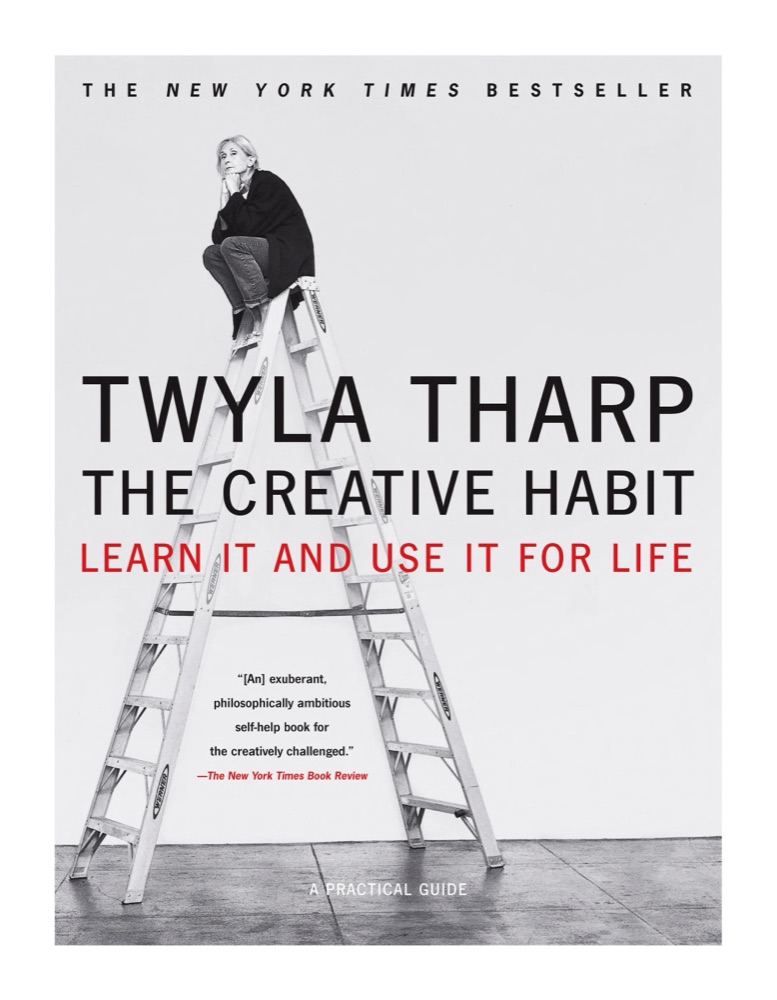
Creativity is not a gift from the gods, says Twyla Tharp, bestowed by some divine and mystical spark. It is the product of preparation and effort, and it's within reach of everyone who wants to achieve it. All it takes is the willingness to make creativity a habit, an integral part of your life: In order to be creative, you have to know how to prepare to be creative. In The Creative Habit, Tharp takes the lessons she has learned in her remarkable thirty-five-year career and shares them with you, whatever creative impulses you follow -- whether you are a painter, composer, writer, director, choreographer, or, for that matter, a businessperson working on a deal, a chef developing a new dish, a mother wanting her child to see the world anew. When Tharp is at a creative dead end, she relies on a lifetime of exercises to help her get out of the rut, and The Creative Habit contains more than t
Book details
- First published
- 2003
- Author
- Twyla Tharp
- Genre
- Nonfiction
- Goodreads rating
- 4.10 (43k ratings)
Keep reading
The Artist's Way
 Big Magic: Creative Living Beyond Fear
 The Accidental Creative: How to Be Brilliant at a Moment's Notice
 Embrace Your Weird: Face Your Fears and Unleash Creativity
 The Art of Creative Thinking
 Every Tool's a Hammer: Life Is What You Make It
 Improv Wisdom: Don't Prepare, Just Show Up
 Ignore Everybody: and 39 Other Keys to Creativity
 Creativity, Inc.: Overcoming the Unseen Forces That Stand in the Way of True Inspiration
 The Practice: Shipping Creative Work
 Steal Like an Artist: 10 Things Nobody Told You About Being Creative
 Creative Quest
 You Are a Badass at Making Money: Master the Mindset of Wealth
 The Promise of a Pencil: How an Ordinary Person Can Create Extraordinary Change
 Imagine: How Creativity Works
 The Happiness of Pursuit: Finding the Quest That Will Bring Purpose to Your Life
 How to Write One Song: Loving the Things We Create and How They Love Us Back
 Getting Things Done: The Art of Stress-Free Productivity
 The Daily Laws: 366 Meditations
 Tribe Of Mentors: Transformative Wisdom From Icons and Innovators to Help You Navigate Life's Challenges
 Be Useful: Seven Tools for Life
 Creativity: Flow and the Psychology of Discovery and Invention
 Tools of Titans: The Tactics, Routines, and Habits of Billionaires, Icons, and World-Class Performers
 How to Be Here: A Guide to Creating a Life Worth Living
 Things a Little Bird Told Me: Confessions of the Creative Mind
 The 5 AM Club: Own Your Morning. Elevate Your Life
 The Art of Thinking Clearly
 Originals: How Non-Conformists Move the World
 A Mind for Numbers: How to Excel at Math and Science
 The War of Art
 Mastery
 Show Your Work!: 10 Ways to Share Your Creativity and Get Discovered
 Shoe Dog: A Memoir by the Creator of NIKE
 The Art of Work
 How to Fly a Horse: The Secret History of Creation, Invention, and Discovery
 A Whack on the Side of the Head: How You Can Be More Creative
 Ready for Anything: 52 Productivity Principles for Getting Things Done
 Zen in the Art of Writing
 Linchpin: Are You Indispensable?
 The Art of Impossible: A Peak Performance Primer
 The Icarus Deception: How High Will You Fly?
 It's Not How Good You Are, It's How Good You Want To Be
 Grit: The Power of Passion and Perseverance
 The Fire Starter Sessions: A Soulful + Practical Guide to Creating Success on Your Own Terms
 Will
Will
 How to Be a Bawse: A Guide to Conquering Life
 The Bullet Journal Method: Track Your Past, Order Your Present, Plan Your Future
 Limitless: Upgrade Your Brain, Learn Anything Faster, and Unlock Your Exceptional Life
 Stillness Is the Key
 Creativity: Unleashing the Forces Within
 Failing Up: How to Take Risks, Aim Higher, and Never Stop Learning
 How to Be Everything
 Do Epic Shit
 Art Before Breakfast: A Zillion Ways to be More Creative No Matter How Busy You Are
 Awaken The Giant Within
 How to Fail at Almost Everything and Still Win Big: Kind of the Story of My Life
 Made to Stick: Why Some Ideas Survive and Others Die
 The Element: How Finding Your Passion Changes Everything