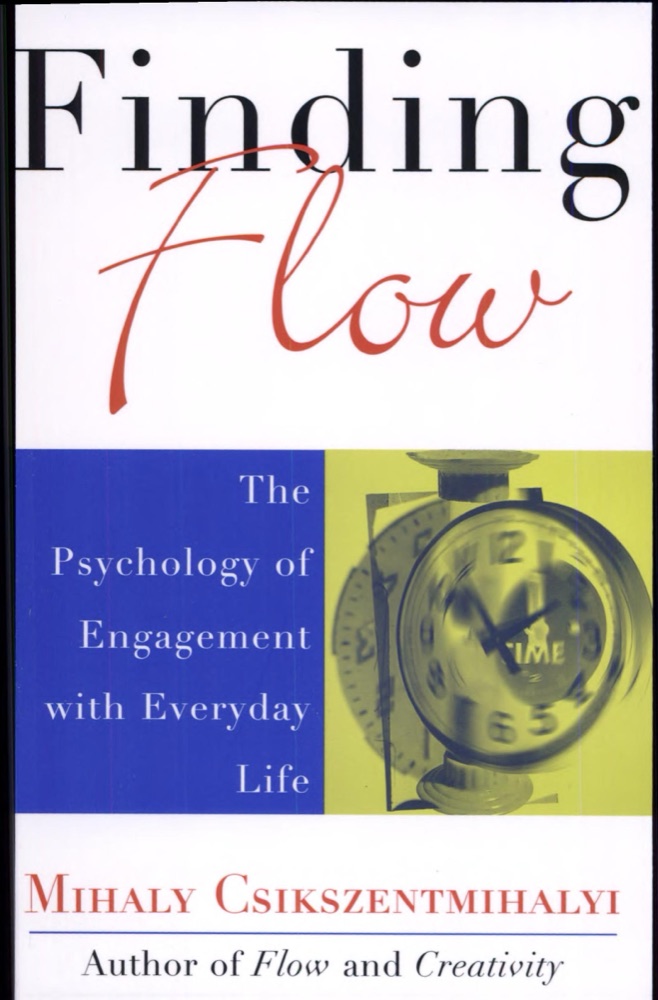
 Finding Flow: The Psychology of Engagement with Everyday Life
Quotes from the Book
Try to be surprised by something every day. It could be something you see, hear, or read about. Stop to look at the unusual car parked at the curb, taste the new item on the cafeteria menu, actually listen to your colleague at the office. How is this different from other similar cars, dishes or conversations? What is its essence? Don't assume that you already know what these things are all about, or that even if you knew them, they wouldn't matter anyway. Experience this once thing for what it is, not what you think it is. Be open to what the world is telling you. Life is nothing more than a stream of experiences - the more widely and deeply you swim in it, the richer your life will be.
17
I mean, we’re only here for a short while. And I think it’s such a lucky accident, having been born, that we’re almost obliged to pay attention. In some ways, this is getting far afield. I mean, we are—as far as we know—the only part of the universe that’s self-conscious. We could even be the universe’s form of consciousness.
16
The second reason creativity is so fascinating is that when we are involved in it, we feel that we are living more fully than during the rest of life.
11
Human beings are the only creatures who are allowed to fail. If an ant fails, it’s dead.
10
Wake up in the morning with a specific goal to look forward to. Creative individuals don’t have to be dragged out of bed; they are eager to start the day. This is not because they are cheerful, enthusiastic types. Nor do they necessarily have something exciting to do. But they believe that there is something meaningful to accomplish each day, and they can’t wait to get started on it. Most of us don’t feel our actions are that meaningful. Yet everyone can discover at least one thing every day that is worth waking up for. It could be meeting a certain person, shopping for a special item, potting a plant, cleaning the office desk, writing a letter, trying on a new dress. It is easier if each night before falling asleep, you review the next day and choose a particular task that, compared to the rest of the day, should be relatively interesting and exciting. Then next morning, open your eyes and visualize the chosen event—play it out briefly in your mind, like an inner videotape, until you can hardly wait to get dressed and get going. It does not matter if at first the goals are trivial and not that interesting. The important thing is to take the easy first steps until you master the habit, and then slowly work up to more complex goals. Eventually most of the day should consist of tasks you look forward to, until you feel that getting up in the morning is a privilege, not a chore.
9
Second, to have a good life, it is not enough to remove what is wrong from it. We also need a positive goal, otherwise why keep going?
7
In other words, if Dostoyevsky and Tolstoy showed more than their fair share of pathology it was due less to the requirements of their creative work than to the personal sufferings caused by the unhealthy conditions of a Russian society nearing collapse. If so many American poets and playwrights committed suicide or ended up addicted to drugs and alcohol it was not their creativity that did it but an artistic scene that promised much, gave few rewards and left nine out of ten artists neglected if not ignored.
7
It has been said that all the stories have already been told, that there is nothing left to say. At best, a writer’s job is to pour new wine in old bottles, to retell in a new way the same emotional predicaments that humans have felt since the beginnings of time. Yet many authors find this a worthwhile challenge; they think of themselves as gardeners whose task is to cultivate perennial ideas generation after generation. The same flowers will bloom each spring, but if the gardener slacks off, weeds will take over.
6
But consuming culture is never as rewarding as producing it.
6
All our contemporaries...had some big ideology to live for. Everybody thought he had to either fight in Spain or die for something else, and most of us had to be in prison for one reason or another. And then at the end it turns out that none of these great ideologies was worth your sacrificing anything for. Even doing personal good is very difficult to be absolutely sure about. It's very difficult to know exactly whether to live for an ideology or even to live for doing good. But there cannot be anything wrong in making a pot, I'll tell you. When making a pot you can't bring any evil into the world. - Eva Zeisel, ceramist.
6
After curiosity, this quality of concentrated attention is what creative individuals mention most often as having set them apart in college from their peers. Without this quality, they could not have sustained the hard work, the ‘perspiration.’ Curiosity and drive are in many ways the yin and the yang that need to be combined in order to achieve something new.
5
While we cannot foresee the eventual results of creativity—of the attempt to impose our desires on reality, to become the main power that decides the destiny of every form of life on the planet—at least we can try to understand better what this force is and how it works. Because for better or for worse, our future is now closely tied to human creativity. The result will be determined in large part by our dreams and by the struggle to make them real.
5
Neither parents nor schools are very effective at teaching the young to find pleasure in the right things. Adults, themselves often deluded by infatuation with fatuous models, conspire in the deception. They make serious tasks seem dull and hard, and frivolous ones exciting and easy. Schools generally fial to teach how exciting, how mesmerizingly beautiful science or mathematics can be; they teach the routine of literature or history rather than the adventure.
4
no worthwhile effort in one’s life is either a success or a failure.
4
Freeman Dyson said: “It is characteristic of scientific life that it is easy when you have a problem to work on. The hard part is finding your problem.
4
Stern endorses Pascal’s maxim “To understand is to forgive.” In fact, one of the most exciting opportunities in being a writer, he feels, is to take a villain or criminal character and make him human by showing what caused him to be so.
3
Wisdom and integrity cannot be found in any single domain. A broader viewpoint that breaks across disciplinary boundaries is needed, a way of understanding that combines knowing and sensing, feeling and judging. In facing this task one cannot expect to succeed in the public eye, as one can when a field of culture recognizes one’s contributions to art, business, or science. But by this time a person aspiring to wisdom knows that the bottom line of a well-lived life is not so much success but the certainty we reach, in the most private fibers of our being, that our existence is linked in a meaningful way with the rest of the universe.
3
For Mark Strand, the poet’s responsibility to be a witness, a recorder of experience, is part of the broader responsibility we all have for keeping the universe ordered through our consciousness:
3
When people are asked to choose from a list the best description of how they feel when doing whatever they enjoy doing most—reading, climbing mountains, playing chess, whatever—the answer most frequently chosen is “designing or discovering something new.
3
The insight presumably occurs when a subconscious connection between ideas fits so well that it is forced to pop out into awareness, like a cork held underwater breaking out into the air after it is released.
3
A large majority of our respondents were inspired by a tension in their domain that became obvious when looked at from the perspective of another domain. Even though they do not think of themselves as interdisciplinary, their best work bridges realms of ideas. Their histories tend to cast doubt on the wisdom of overspecialization, where bright young people are trained to become exclusive experts in one field and shun breadth like the plague.
3
I am fooling around not doing anything, which probably means that this is a creative period, although of course you don’t know until afterward. I think that it is very important to be idle. I mean, they always say that Shakespeare was idle between plays. I am not comparing myself to Shakespeare, but people who keep themselves busy all of the time are generally not creative. So I am not ashamed of being idle.
2
what drove me on to be my own boss was that the thing that I wanted most was to be able to have a nap every day
2
creative persons definitely know both extremes and experience both with equal intensity and without inner conflict.
2
When do we get to the interesting part—the tortured souls, the impossible dreams, the agony and the ecstasy of creation?
2
Creative individuals are remarkable for their ability to adapt to almost any situation and to make do with whatever is at hand to reach their goals.
2
Stern responds to the question about what was the main obstacle he encountered in his life: I think it’s that rubbishy part of myself, that part which is described by such words as vanity, pride, the sense of not being treated as I should be, comparison with others, and so on. I’ve tried rather hard to discipline that. And I’ve been lucky that there has been enough that’s positive to enable me to counter a kind of biliousness and resentment—ressentiment—which I’ve seen paralyze colleagues of mine, peers who are more gifted than I. I’ve felt it in myself. And I’ve had to learn to counter that. I would say that the chief obstacle is—oneself.
2
a constant alternation between a highly concentrated critical assessment and a relaxed, receptive, nonjudgmental openness to experience. His attention coils and uncoils, its focus sharpens and softens, like the systolic and diastolic beat of the heart. It is out of this dynamic change of perspective that a good new work arises.
2
Strand sees his main skill as just paying attention to the textures and rhythms of life, being receptive to the multifaceted, constantly changing yet ever recurring stream of experiences. The secret of saying something new is to be patient. If one reacts too quickly, it is likely that the reaction will be superficial, a cliché. “Keep your eyes and ears open,” he says, “and your mouth shut. For as long as possible.” Yet life is short, so patience is painful to the poet. Poetry is about slowing down, I think. It’s about reading the same thing again and again, really savoring it, living inside the poem. There’s no rush to find out what happens in a poem. It’s really about feeling one syllable rubbing against another, one word giving way to another, and sensing the justice of that relationship between one word, the next, the next, the next.
2
Now in his nineties, Spock is writing a book on spirituality. But his understanding of spirituality is a far cry from that of institutionalized religions: Spirituality, unfortunately, is not a stylish word. It’s not a word that gets used. That’s because we’re such an unspiritual country that we think of it as somewhat corny to talk about spirituality. “What is that?” people say. Spirituality, to me, means the nonmaterial things. I don’t want to give the idea that it’s something mystical; I want it to apply to ordinary people’s ordinary lives: things like love, and helpfulness, and tolerance, and enjoyment of the arts or even creativity in the arts. I think that creativity in the arts is very special. It takes a high degree and a high type of spirituality to want to express things in terms of literature or poetry, plays, architecture, gardens, creating beauty any way. And if you can’t create beauty, at least it’s good to appreciate beauty and get some enjoyment and inspiration out of it. So it’s just things that aren’t totally materialistic. And that would include religion.
2
Watch on YouTube
About Mihály Csíkszentmihályi
We have collected 58 quotes from 2 books by Mihály Csíkszentmihályi on BookQuoters.
More about the author →More by Mihály Csíkszentmihályi
Finding Flow: The Psychology of Engagement with Everyday Life
About the book
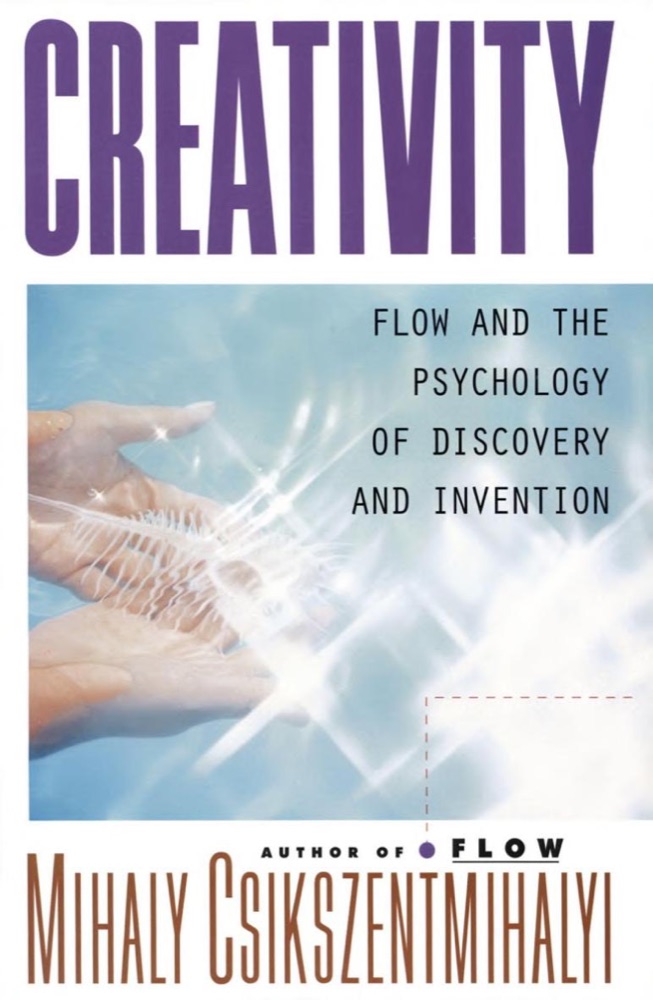
Creativity is about capturing those moments that make life worth living. The author's objective is to offer an understanding of what leads to these moments, be it the excitement of the artist at the easel or the scientist in the lab, so that knowledge can be used to enrich people's lives. Drawing on 100 interviews with exceptional people, from biologists and physicists to politicians and business leaders, poets and artists, as well as his 30 years of research on the subject, Csikszentmihalyi uses his famous theory to explore the creative process. He discusses such ideas as why creative individuals are often seen as selfish and arrogant, and why the tortured genius is largely a myth. Most important, he clearly explains why creativity needs to be cultivated and is necessary for the future of our country, if not the world.
Book details
- First published
- 1996
- Author
- Mihály Csíkszentmihályi
- Genre
- Nonfiction
- Goodreads rating
- 4.06 (6k ratings)
Keep reading
Finding Flow: The Psychology of Engagement with Everyday Life
 The Art of Creative Thinking
 Creativity: Unleashing the Forces Within
 Mastery
 The Courage to Create
 How to Fly a Horse: The Secret History of Creation, Invention, and Discovery
 The Social Animal: The Hidden Sources of Love, Character, and Achievement
 The Artist's Way
 Creative Quest
 The Element: How Finding Your Passion Changes Everything
 Imagine: How Creativity Works
 Flow: The Psychology of Optimal Experience
 Finding Your Element: How to Discover Your Talents and Passions and Transform Your Life
 The Happiness Hypothesis: Finding Modern Truth in Ancient Wisdom
 The Intellectual Life: Its Spirit, Conditions, Methods
 The Socrates Express: In Search of Life Lessons from Dead Philosophers
 Asymmetry
 Figuring
 A Circle of Quiet
 The Spinoza Problem
 Big Magic: Creative Living Beyond Fear
 Originals: How Non-Conformists Move the World
 Ignore Everybody: and 39 Other Keys to Creativity
 Shop Class as Soulcraft: An Inquiry Into the Value of Work
 How to Be Perfect: The Correct Answer to Every Moral Question
 On Connection
 Psych: The Story of the Human Mind
 Novelist as a Vocation
 Every Tool's a Hammer: Life Is What You Make It
 The Rise of Superman: Decoding the Science of Ultimate Human Performance
 Linchpin: Are You Indispensable?
 The Pleasures and Sorrows of Work
 The Practice: Shipping Creative Work
 Becoming Wise: An Inquiry into the Mystery and Art of Living
 Grit: The Power of Passion and Perseverance
 Why Fish Don’t Exist: A Story of Loss, Love, and the Hidden Order of Life
 The Creative Habit: Learn It and Use It for Life
 The War of Art
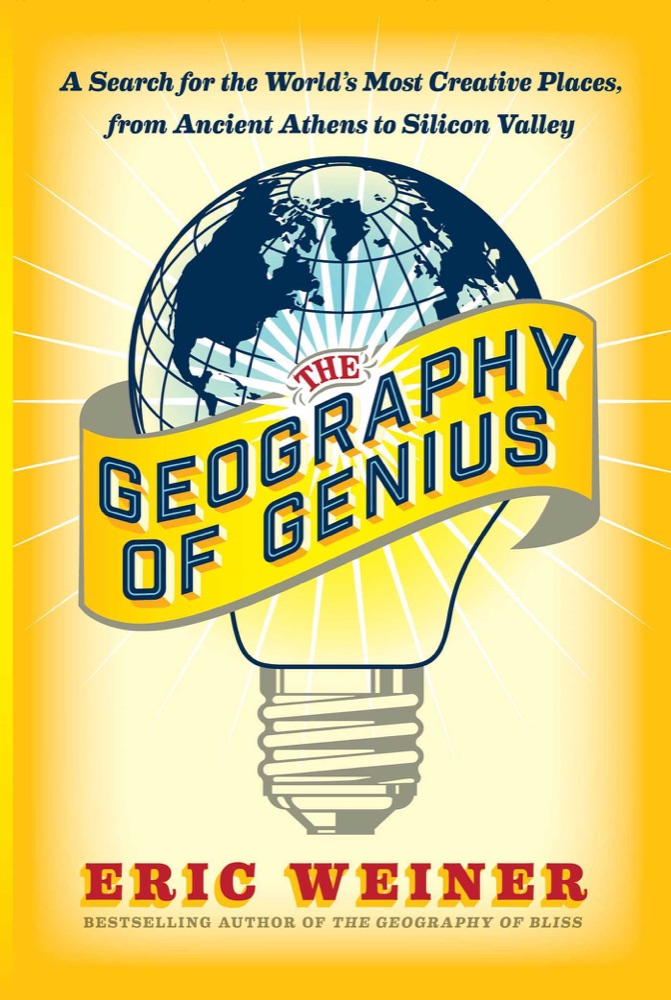 The Geography of Genius: A Search for the World's Most Creative Places from Ancient Athens to Silicon Valley
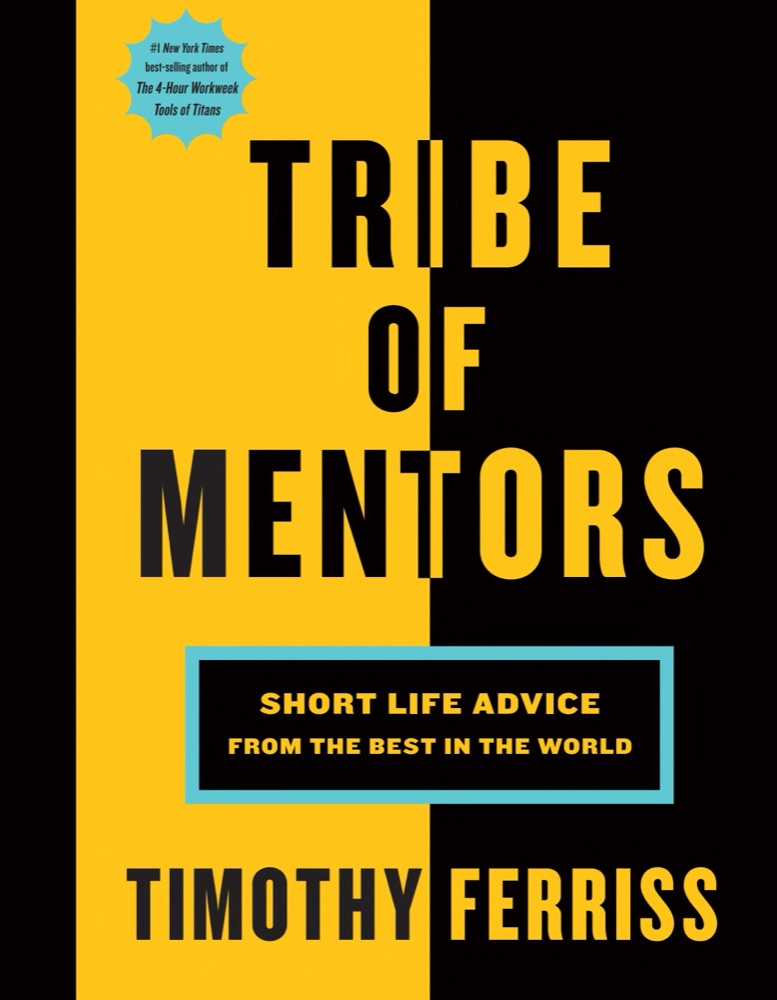 Tribe Of Mentors: Transformative Wisdom From Icons and Innovators to Help You Navigate Life's Challenges
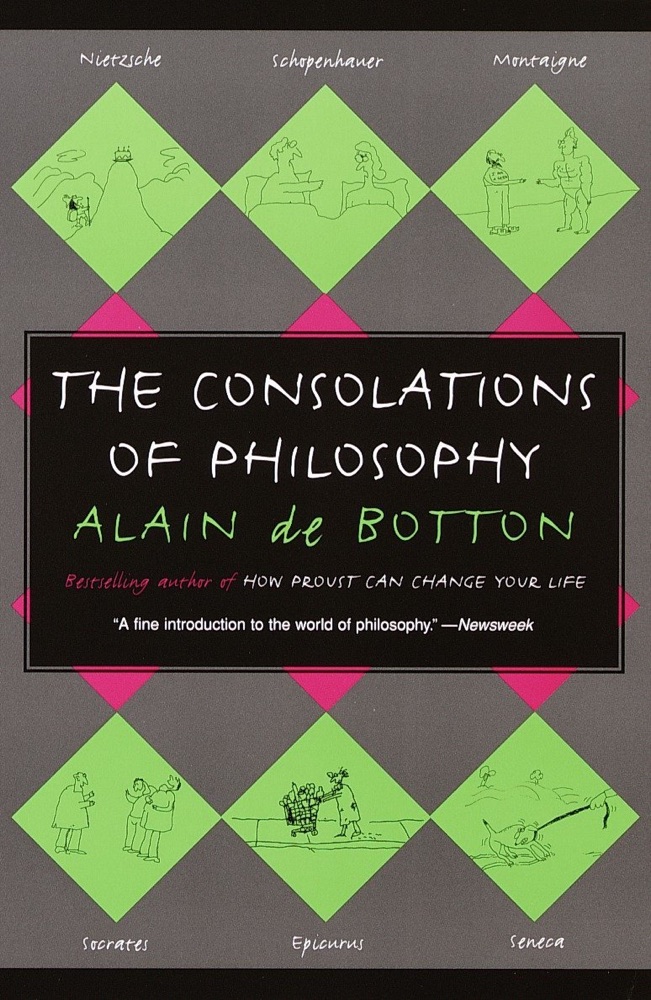 The Consolations of Philosophy
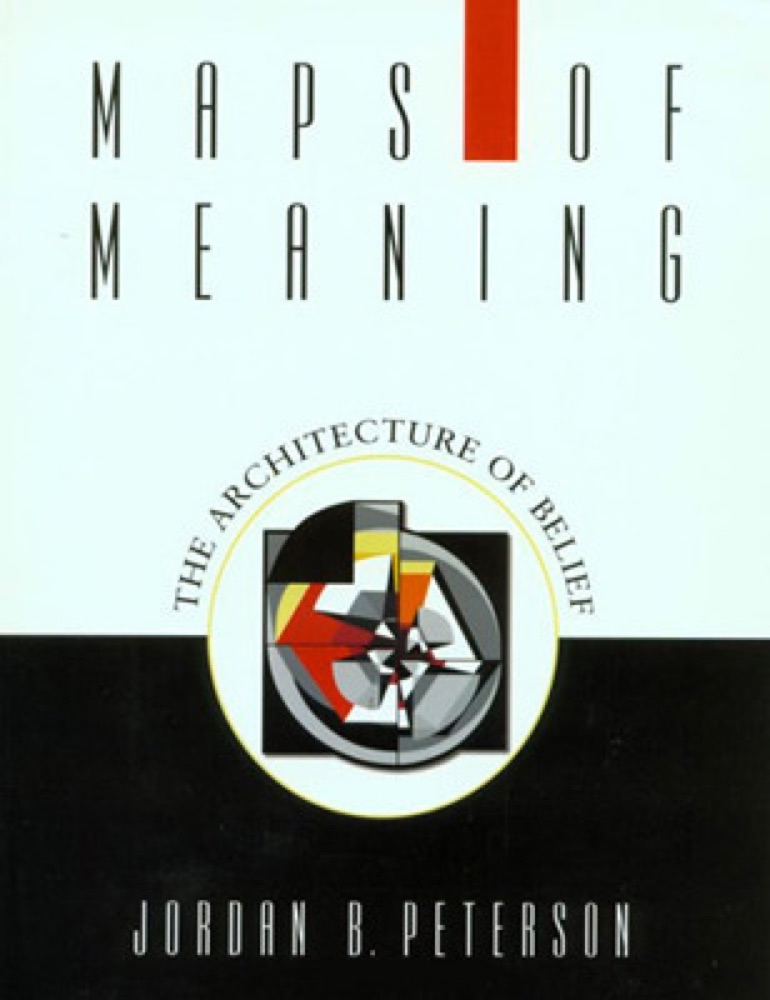 Maps of Meaning: The Architecture of Belief
 The Hero's Journey: Joseph Campbell on His Life & Work
 If You Want to Write: A Book about Art, Independence and Spirit
 Stories of Your Life and Others
 The Age of Absurdity: Why Modern Life makes it Hard to be Happy
 Think: A Compelling Introduction to Philosophy
 The Art of Impossible: A Peak Performance Primer
 A Whack on the Side of the Head: How You Can Be More Creative
 Be Water, My Friend: The Teachings of Bruce Lee
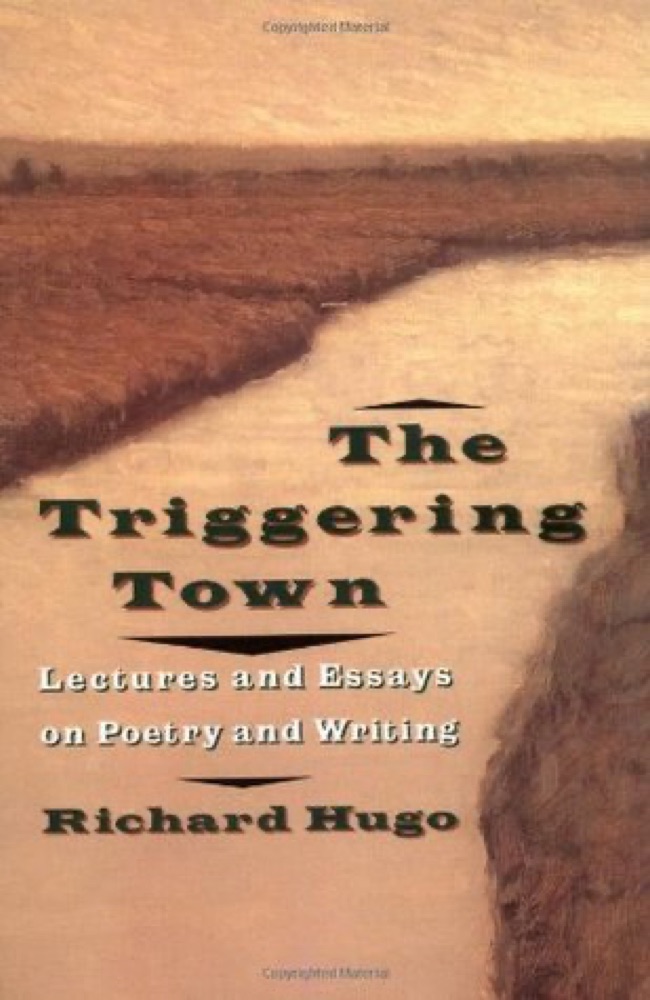 The Triggering Town: Lectures and Essays on Poetry and Writing
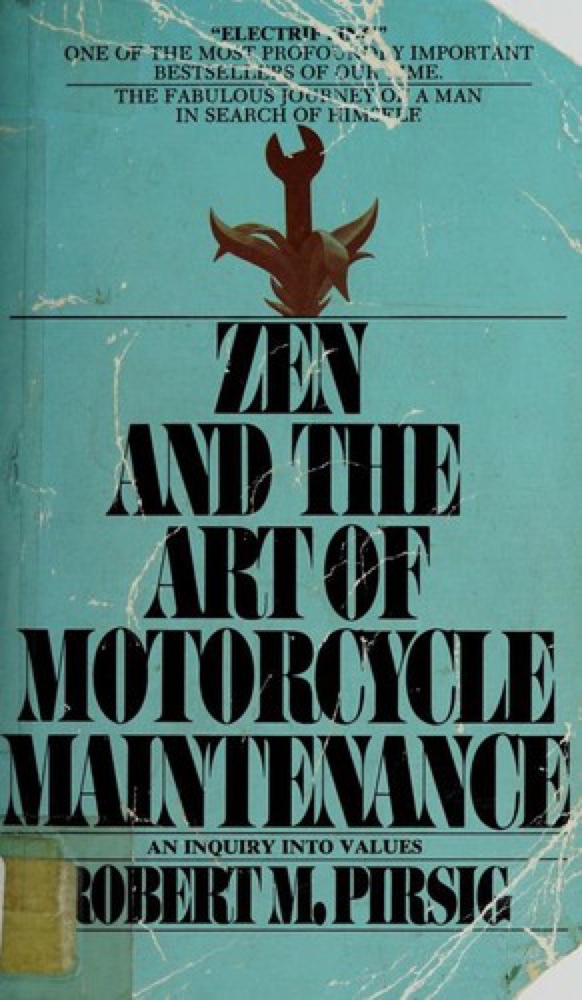 Zen and the Art of Motorcycle Maintenance
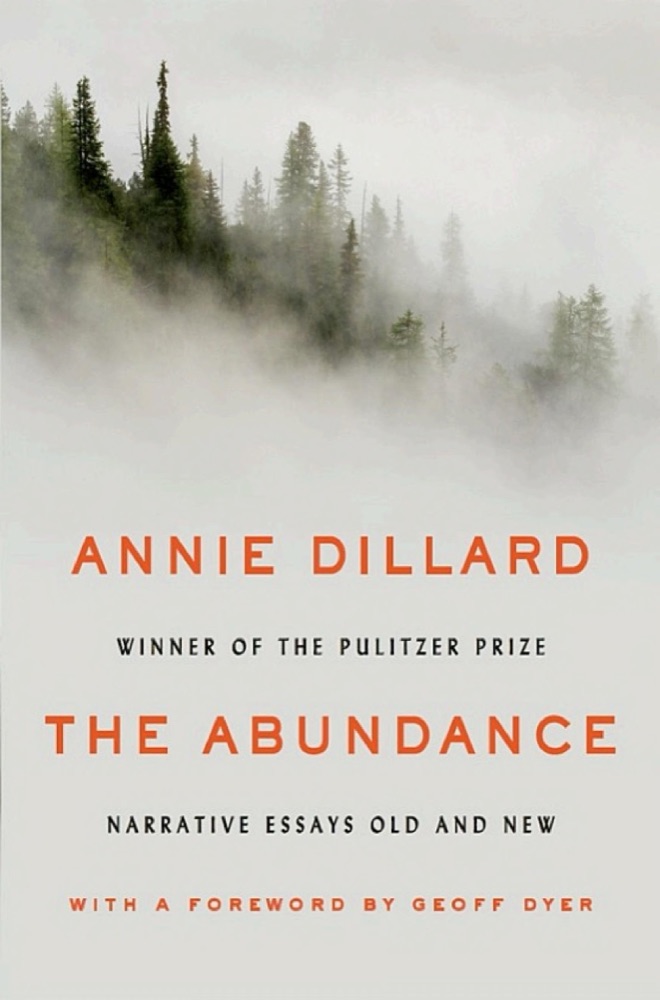 The Abundance
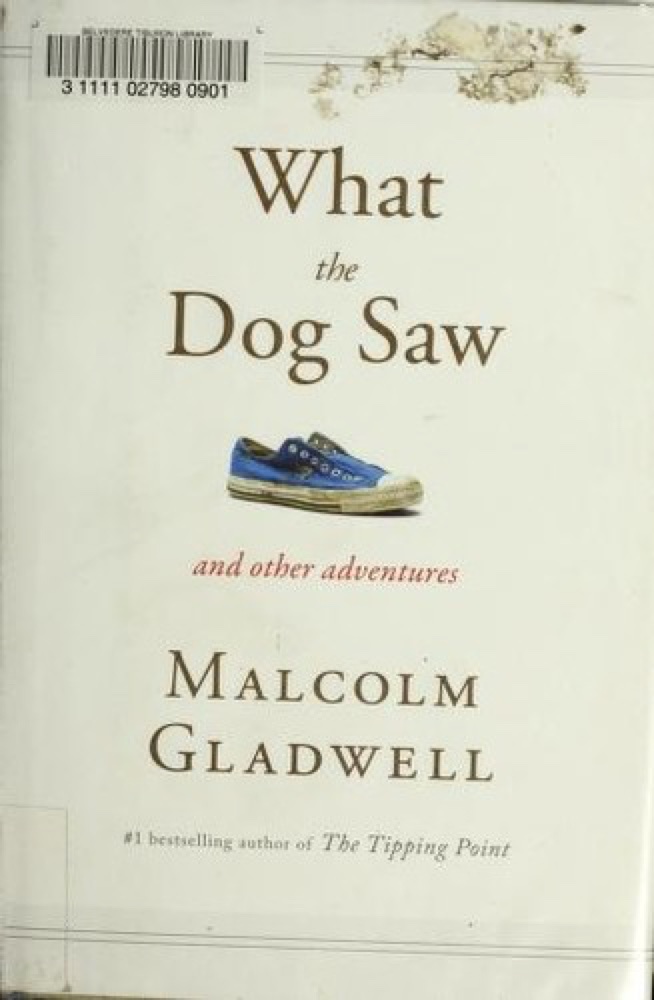 What the Dog Saw and Other Adventures
 The Path: What Chinese Philosophers Can Teach Us About the Good Life
 The Writing Life
 Striking Thoughts: Bruce Lee's Wisdom for Daily Living
 Waking Up: A Guide to Spirituality Without Religion
 Myths to Live By