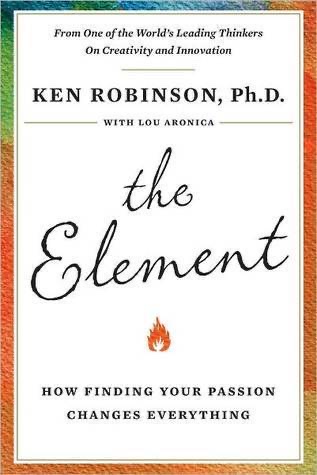

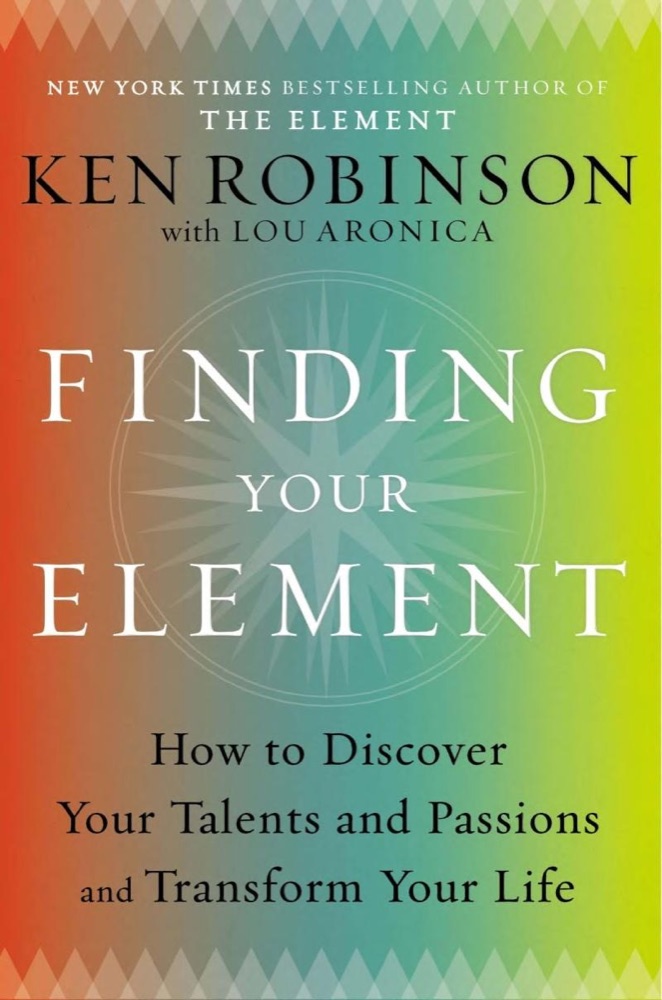
 Finding Your Element: How to Discover Your Talents and Passions and Transform Your Life
Quotes from the Book
If you're not prepared to be wrong, you'll never come up with anything original.
The fact is that given the challenges we face, education doesn't need to be reformed -- it needs to be transformed. The key to this transformation is not to standardize education, but to personalize it, to build achievement on discovering the individual talents of each child, to put students in an environment where they want to learn and where they can naturally discover their true passions.
For most of us the problem isn’t that we aim too high and fail - it’s just the opposite - we aim too low and succeed.
When my son, James, was doing homework for school, he would have five or six windows open on his computer, Instant Messenger was flashing continuously, his cell phone was constantly ringing, and he was downloading music and watching the TV over his shoulder. I don’t know if he was doing any homework, but he was running an empire as far as I could see, so I didn’t really care.
Our task is to educate their (our students) whole being so they can face the future. We may not see the future, but they will and our job is to help them make something of it.
The Element is about discovering your self, and you can't do this if you're trapped in a compulsion to conform. You can't be yourself in a swarm.
What you do for yourself dies with you when you leave this world, what you do for others lives on forever.
Public schools were not only created in the interests of industrialism—they were created in the image of industrialism. In many ways, they reflect the factory culture they were designed to support. This is especially true in high schools, where school systems base education on the principles of the assembly line and the efficient division of labor. Schools divide the curriculum into specialist segments: some teachers install math in the students, and others install history. They arrange the day into standard units of time, marked out by the ringing of bells, much like a factory announcing the beginning of the workday and the end of breaks. Students are educated in batches, according to age, as if the most important thing they have in common is their date of manufacture. They are given standardized tests at set points and compared with each other before being sent out onto the market. I realize this isn’t an exact analogy and that it ignores many of the subtleties of the system, but it is close enough.
young children are wonderfully confident in their own imaginations ... Most of us lose this confidence as we grow up
We are all born with extraordinary powers of imagination, intelligence, feeling, intuition, spirituality, and of physical and sensory awareness. (p.9)
Never underestimate the vital importance of finding early in life the work that for you is play. This turns possible underachievers into happy warriors.
To be creative you actually have to do something.
One of the essential problems for education is that most countries subject their schools to the fast-food model of quality assurance when they should be adopting the Michelin model instead. The future for education is not in standardizing but in customizing; not in promoting groupthink and “deindividuation” but in cultivating the real depth and dynamism of human abilities of every sort.
One Size Does Not Fit All Some of the most brilliant, creative people I know did not do well at school. Many of them didn’t really discover what they could do—and who they really were—until they’d left school and recovered from their education.
The greatest danger for most of us is not that our aim is too high and we miss it, but that it is too low and we reach it.
People over the age of thirty were born before the digital revolution really started. We’ve learned to use digital technology—laptops, cameras, personal digital assistants, the Internet—as adults, and it has been something like learning a foreign language. Most of us are okay, and some are even expert. We do e-mails and PowerPoint, surf the Internet, and feel we’re at the cutting edge. But compared to most people under thirty and certainly under twenty, we are fumbling amateurs. People of that age were born after the digital revolution began. They learned to speak digital as a mother tongue.
As the physicist John Wheeler said, “If you don’t kick things around with people, you are out of it. Nobody, I always say, can be anybody without somebody being around.
Robert Sternberg is a professor of psychology at Tufts University and a past president of the American Psychological Association. He is a long-term critic of traditional approaches to intelligence testing and IQ. He argues that there are three types of intelligence: analytic intelligence, the ability to solve problems using academic skills and to complete conventional IQ tests; creative intelligence, the ability to deal with novel situations and to come up with original solutions; and practical intelligence, the ability to deal with problems and challenges in everyday life.
A FEW YEARS AGO, I heard a wonderful story, which I’m very fond of telling. An elementary school teacher was giving a drawing class to a group of six-year-old children. At the back of the classroom sat a little girl who normally didn’t pay much attention in school. In the drawing class she did. For more than twenty minutes, the girl sat with her arms curled around her paper, totally absorbed in what she was doing. The teacher found this fascinating. Eventually, she asked the girl what she was drawing. Without looking up, the girl said, “I’m drawing a picture of God.” Surprised, the teacher said, “But nobody knows what God looks like.” The girl said, “They will in a minute.
One of the enemies of creativity and innovation, especially in relation to our own development, is common sense.
As soon as we have the power to release our minds from the immediate here and now, in a sense we are free. We are free to revisit the past, free to reframe the present, and free to anticipate a whole range of possible futures. Imagination is the foundation of everything that is uniquely and distinctively human. It is the basis of language, the arts, the sciences, systems of philosophy, and the all the vast intricacies of human culture.
The most powerful method of improving education is to invest in the improvement of teaching and the status of great teachers.
Great creative teams are diverse. They are composed of very different sorts of people with different but complementary talents.
The dominant Western worldview is not based on seeing synergies and connections but on making distinctions and seeing differences.
Education is the system that’s supposed to develop our natural abilities and enable us to make our way in the world. Instead, it is stifling the individual talents and abilities of too many students and killing their motivation to learn. There’s a huge irony in the middle of all of this.
Ironically, Alfred Binet, one of the creators of the IQ test, intended the test to serve precisely the opposite function. In fact, he originally designed it (on commission from the French government) exclusively to identify children with special needs so they could get appropriate forms of schooling. He never intended it to identify degrees of intelligence or “mental worth.” In fact, Binet noted that the scale he created “does not permit the measure of intelligence, because intellectual qualities are not superposable, and therefore cannot be measured as linear surfaces are measured.” Nor did he ever intend it to suggest that a person could not become more intelligent over time. “Some recent thinkers,” he said, “[have affirmed] that an individual’s intelligence is a fixed quantity, a quantity that cannot be increased. We must protest and react against this brutal pessimism; we must try to demonstrate that it is founded on nothing.
Languages are the bearers of the cultural genes. As we learn a language, accents, and ways of speaking, we also learn ways of thinking, feeling, and relating.
When people are in their Element, they connect with something fundamental to their sense of identity, purpose, and well-being.
The second role of a mentor is encouragement. Mentors lead us to believe that we can achieve something that seemed improbable or impossible to us before we met them. They don’t allow us to succumb to self-doubt for too long, or the notion that our dreams are too large for us. They stand by to remind us of the skills we already possess and what we can achieve if we continue to work hard.
Watch on YouTube
About Ken Robinson
We have collected 87 quotes from 3 books by Ken Robinson on BookQuoters.
More about the author →More by Ken Robinson
Finding Your Element: How to Discover Your Talents and Passions and Transform Your Life
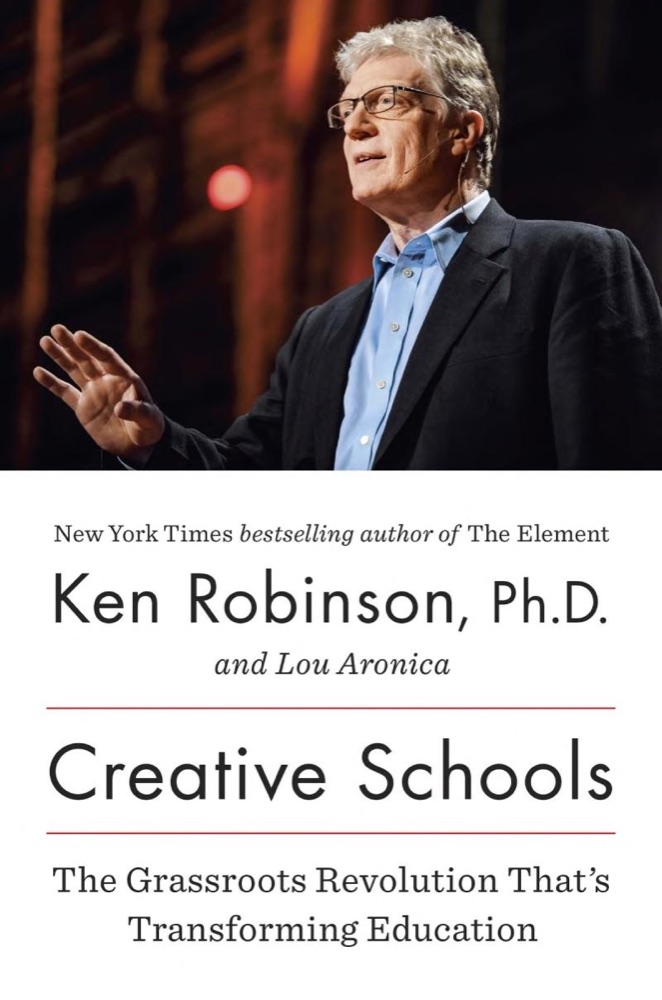 Creative Schools: The Grassroots Revolution That's Transforming Education
Book details
- Author
- Ken Robinson
- Genre
- Nonfiction
- Goodreads rating
- 3.86 (19k ratings) →
Keep reading
 Mastery
 The Art of Creative Thinking
 The Social Animal: The Hidden Sources of Love, Character, and Achievement
Creative Schools: The Grassroots Revolution That's Transforming Education
The Social Animal: The Hidden Sources of Love, Character, and Achievement
Creative Schools: The Grassroots Revolution That's Transforming Education
 Range: Why Generalists Triumph in a Specialized World
 Creativity: Flow and the Psychology of Discovery and Invention
 Excellent Sheep: The Miseducation of the American Elite and the Way to a Meaningful Life
 Originals: How Non-Conformists Move the World
 Grit: The Power of Passion and Perseverance
 The Vanishing American Adult: Our Coming-of-Age Crisis—and How to Rebuild a Culture of Self-Reliance
 Shop Class as Soulcraft: An Inquiry Into the Value of Work
 Barking Up the Wrong Tree: The Surprising Science Behind Why Everything You Know About Success Is (Mostly) Wrong
 How to Fly a Horse: The Secret History of Creation, Invention, and Discovery
 What the Dog Saw and Other Adventures
 Linchpin: Are You Indispensable?
 Imagine: How Creativity Works
 The 7 Habits of Highly Effective People: Personal Workbook
 Creativity, Inc.: Overcoming the Unseen Forces That Stand in the Way of True Inspiration
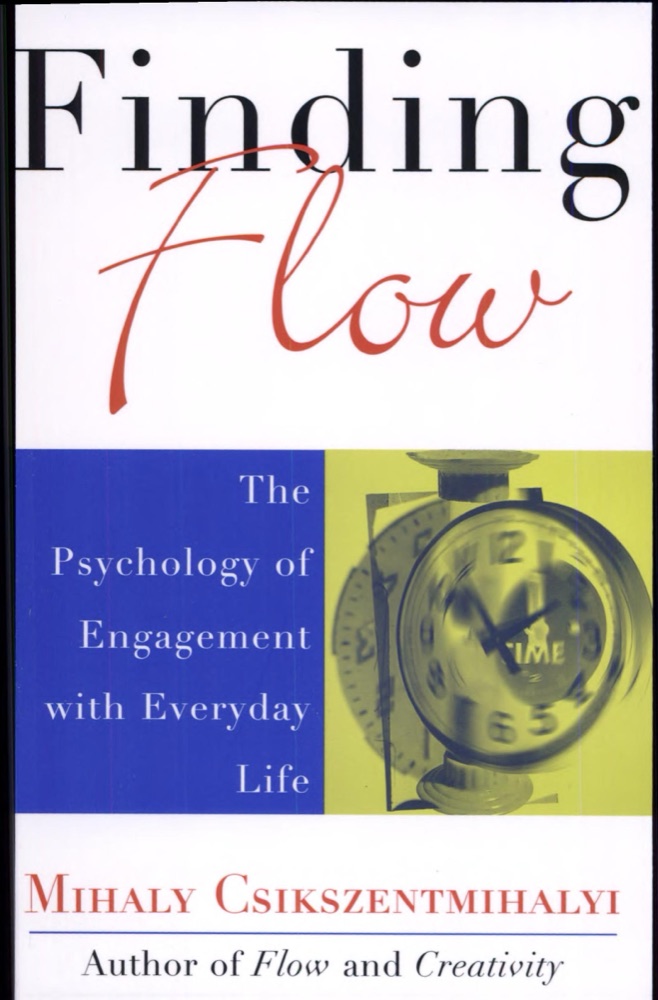 Finding Flow: The Psychology of Engagement with Everyday Life
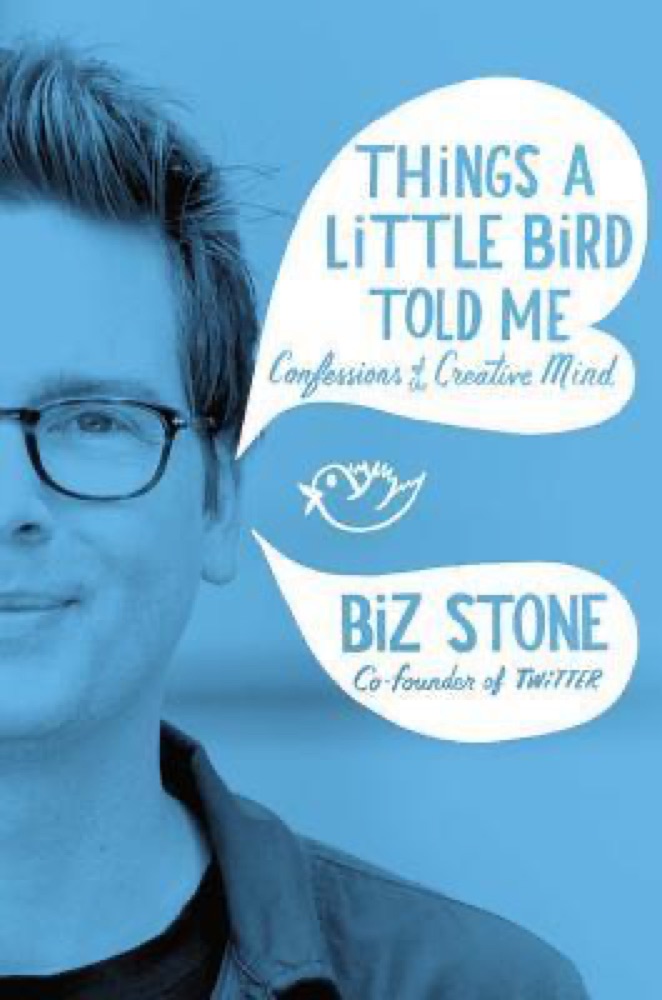 Things a Little Bird Told Me: Confessions of the Creative Mind
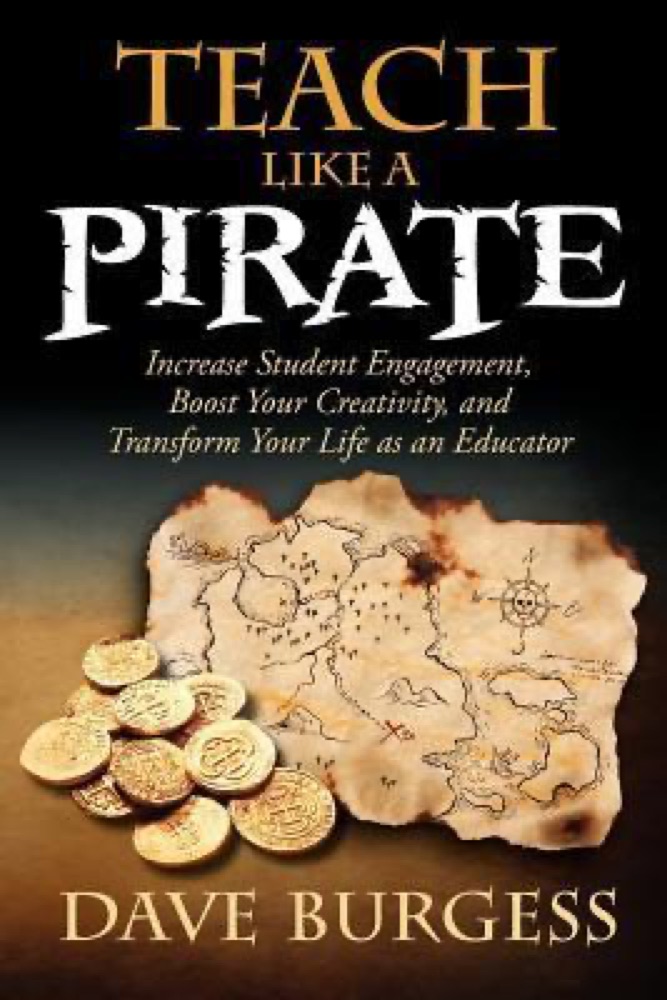 Teach Like a PIRATE: Increase Student Engagement, Boost Your Creativity, and Transform Your Life as an Educator
Finding Your Element: How to Discover Your Talents and Passions and Transform Your Life
Teach Like a PIRATE: Increase Student Engagement, Boost Your Creativity, and Transform Your Life as an Educator
Finding Your Element: How to Discover Your Talents and Passions and Transform Your Life
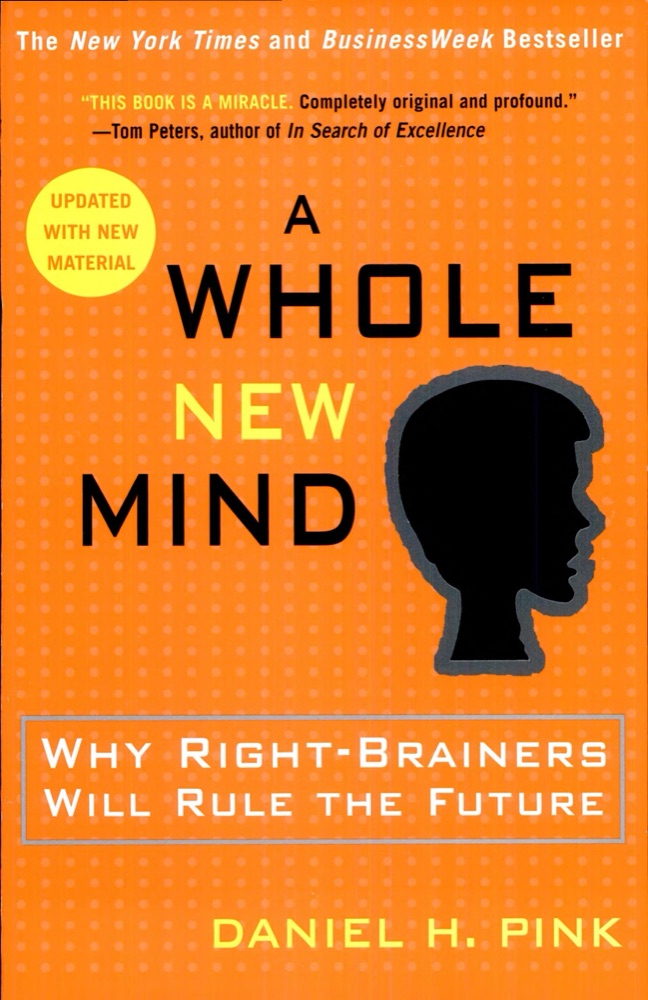 A Whole New Mind: Why Right-Brainers Will Rule the Future
 Drive: The Surprising Truth About What Motivates Us
 Smartcuts: How Hackers, Innovators, and Icons Accelerate Success
 The Art of Thinking Clearly
 Letters from an Astrophysicist
 The Fifth Discipline: The Art & Practice of The Learning Organization
 We Make the Road by Walking: Conversations on Education and Social Change
 The Core
 How to Be Everything
 Late Bloomers: The Power of Patience in a World Obsessed with Early Achievement
 Limitless: Upgrade Your Brain, Learn Anything Faster, and Unlock Your Exceptional Life
 The World Is Flat: A Brief History of the Twenty-first Century
 Walking on Water: Reading, Writing, and Revolution
 Outliers: The Story of Success
 Flow: The Psychology of Optimal Experience
 The Promise of a Pencil: How an Ordinary Person Can Create Extraordinary Change
 A Whack on the Side of the Head: How You Can Be More Creative
 David and Goliath: Underdogs, Misfits, and the Art of Battling Giants
 How to Fail at Almost Everything and Still Win Big: Kind of the Story of My Life
 Delivering Happiness: A Path to Profits, Passion, and Purpose
 Ignore Everybody: and 39 Other Keys to Creativity
 The Accidental Creative: How to Be Brilliant at a Moment's Notice
 Hackers & Painters: Big Ideas from the Computer Age
 Antifragile: Things That Gain from Disorder
 The Creative Habit: Learn It and Use It for Life
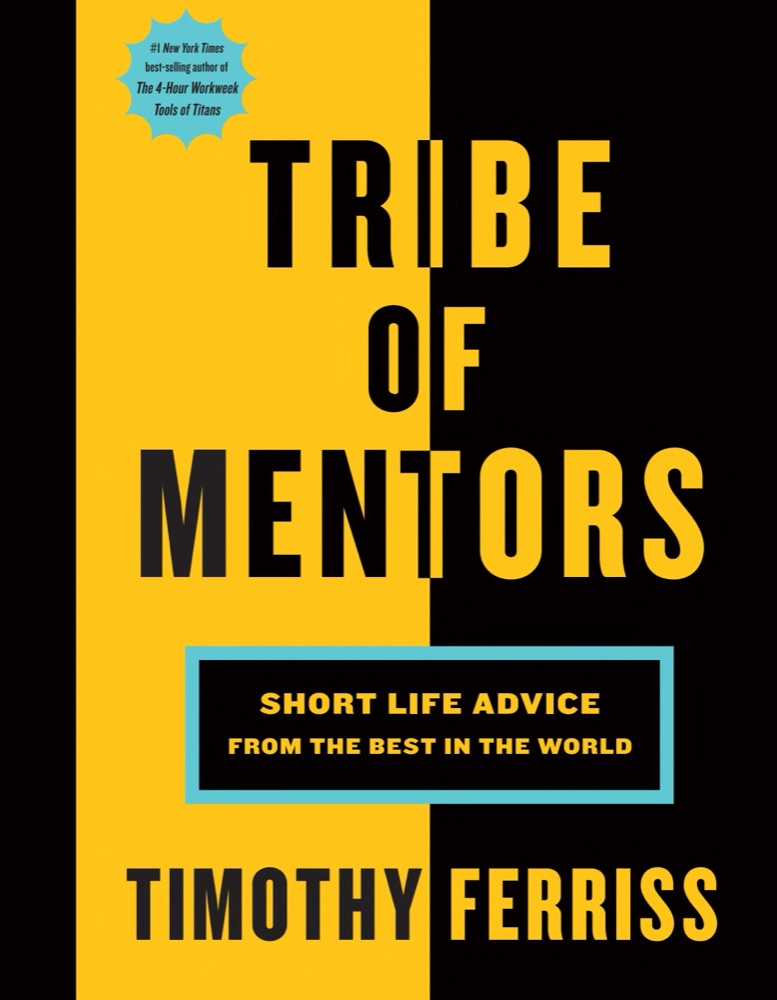 Tribe Of Mentors: Transformative Wisdom From Icons and Innovators to Help You Navigate Life's Challenges
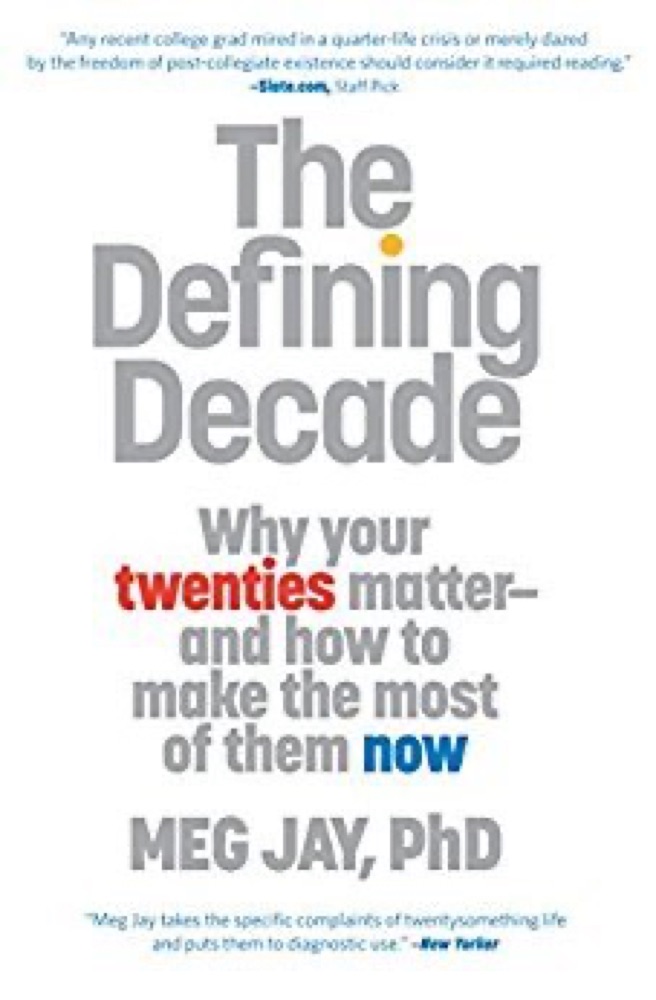 The Defining Decade: Why Your Twenties Matter—And How to Make the Most of Them Now
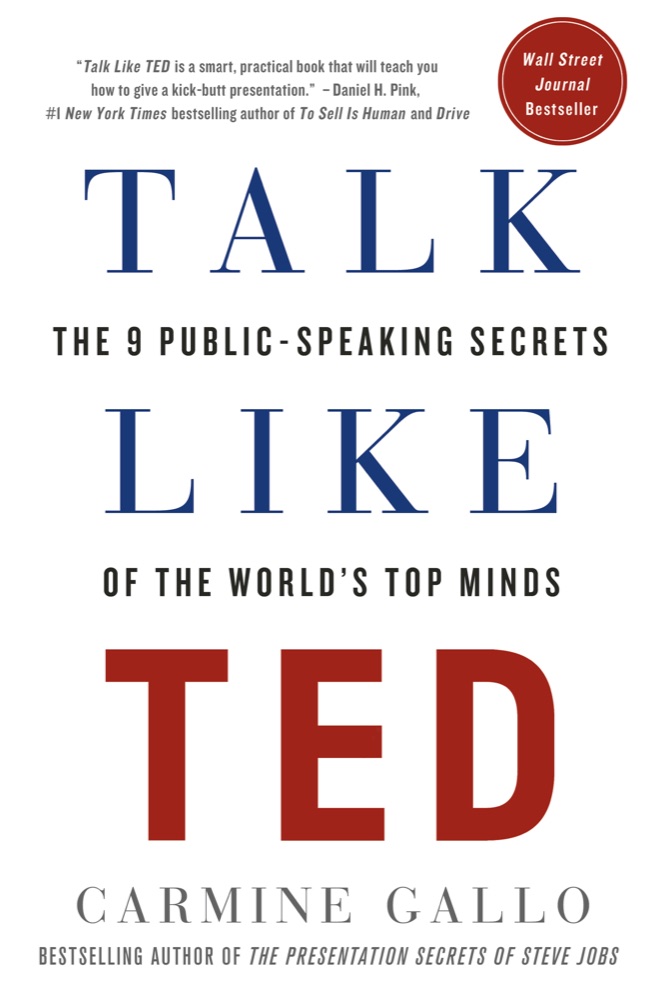 Talk Like TED: The 9 Public-Speaking Secrets of the World's Top Minds
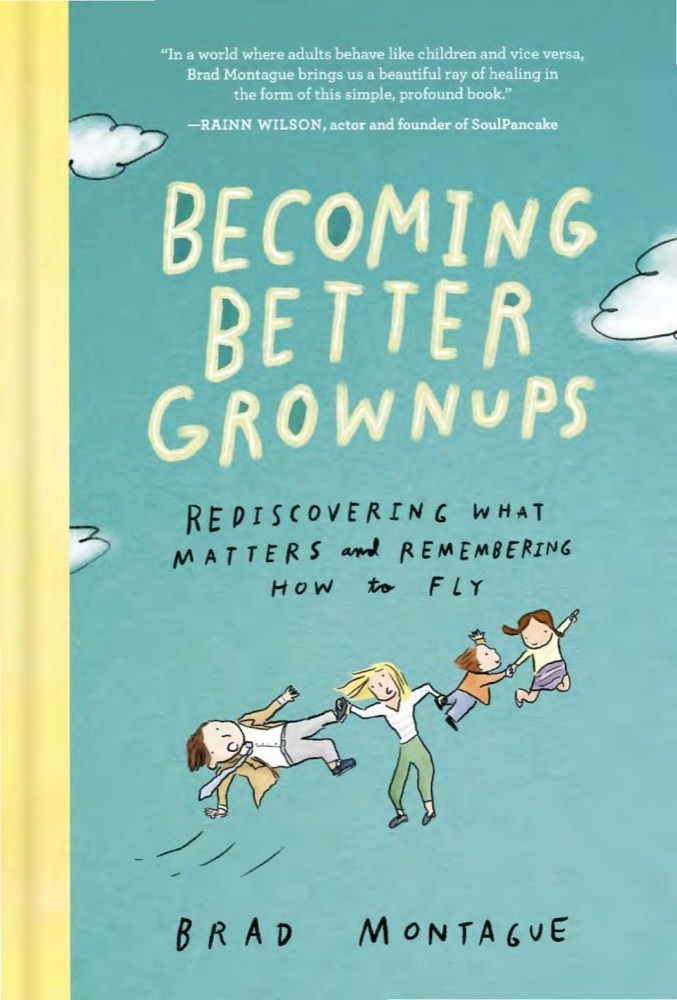 Becoming Better Grownups: Rediscovering What Matters and Remembering How to Fly
 Beginners: The Joy and Transformative Power of Lifelong Learning
 Emile or On Education
 The Tao of Pooh
 Curious: The Desire to Know and Why Your Future Depends On It
 A Circle of Quiet
 You Learn by Living: Eleven Keys for a More Fulfilling Life
 Principles: Life and Work
 Think Like a Freak