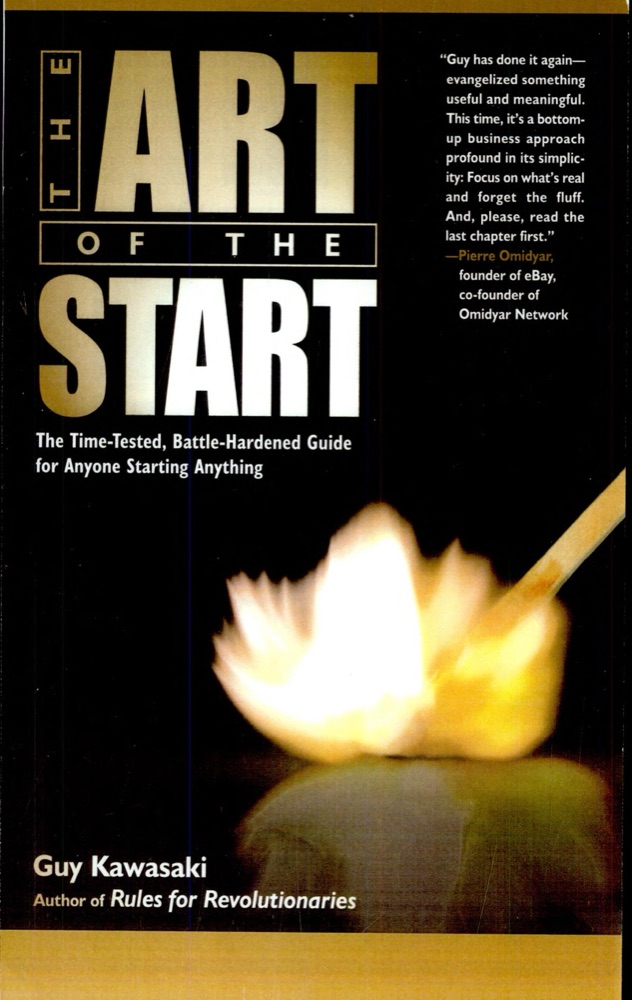
 The Art of the Start: The Time-Tested, Battle-Hardened Guide for Anyone Starting Anything
Quotes from the Book
To paraphrase the very quotable Silicon Valley venture capitalist Marc Andreessen, in the future there will be two types of jobs: people who tell computers what to do, and people who are told by computers what to do. Wall
15
It’s not the rats who first abandon a sinking ship. It’s the crew members who know how to swim.
12
To quote one Valley sage, if your idea is any good, it won’t get stolen, you’ll have to jam it down people’s throats instead.
12
Investors are people with more money than time. Employees are people with more time than money. Entrepreneurs are simply the seductive go-betweens. Startups are business experiments performed with other people’s money. Marketing is like sex: only losers pay for it.” “Company culture is what goes without saying. There are no real rules, only laws. Success forgives all sins. People who leak to you, leak about you. Meritocracy is the propaganda we use to bless the charade. Greed and vanity are the twin engines of bourgeois society. Most managers are incompetent and maintain their jobs via inertia and politics. Lawsuits are merely expensive feints in a well-scripted conflict narrative between corporate entities. Capitalism is an amoral farce in which every player—investor, employee, entrepreneur, consumer—is complicit.
10
Here is a key insight for any startup: You may think yourself a puny midget among giants when you stride out into a marketplace, and suddenly confront such a giant via litigation or direct competition. But the reality is that larger companies often have much more to fear from you than you from them. For starters, their will to fight is less than yours. Their employees are mercenaries who don’t deeply care, and suffer from the diffuse responsibility and weak emotional investment of a larger organization. What’s an existential struggle to you is merely one more set of tasks to a tuned-out engineer bored of his own product, or another legal hassle to an already overworked legal counsel thinking more about her next stock-vesting date than your suit. Also, large companies have valuable public brands they must delicately preserve, and which can be assailed by even small companies such as yours, particularly in a tight-knit, appearances-conscious ecosystem like that of Silicon Valley. America still loves an underdog, and you’ll be surprised at how many allies come out of the woodwork when some obnoxious incumbent is challenged by a scrappy startup with a convincing story. So long as you maintain unit cohesion and a shared sense of purpose, and have the basic rudiments of living, you will outlast, outfight, and out-rage any company that sets out to destroy you. Men with nothing to lose will stop at nothing to win.
10
Dedication To all my enemies: I could not have done it without you.
10
Here’s some startup pedagogy for you: When confronted with any startup idea, ask yourself one simple question: How many miracles have to happen for this to succeed?
7
Ideas without implementation, or without an exceptional team to implement them, are like assholes and opinions: everyone’s got one.
7
Incidentally, it helps to have enemies. While love is a beautiful emotion, far more empires have been built, books written, wrongs righted, fights won, and ambitions realized out of vengeful desire to prove some critic wrong, or existential dread of some perceived enemy, than all the love in the world. Love is grand, but hate and fear last longer.
5
Real-life experience is instructive, but the tuition is high.
5
As in life, so in business: maintain a bias for action over inaction.
5
What is writing? It’s me, the author, taking the state inside my mind and, via the gift of language, grafting it onto yours. But man invented language in order to better deceive, not inform. That state I’m transmitting is often a false one, but you judge it not by the depth of its emotion in my mind, but by the beauty and pungency of the thought in yours. Thus the best deceivers are called articulate, as they make listeners and readers fall in love with the thoughts projected into their heads. It’s the essential step in getting men to write you large checks, women to take off their clothes, and the crowd to read and repeat what you’ve thought. All with mere words: memes of meaning strung together according to grammar and good taste. Astonishing when you think about it.
5
If everything seems under control, you’re just not going fast enough. —Mario Andretti, Formula One driver
4
Growth for the sake of growth is the ideology of the cancer cell. —Edward Abbey, The Journey Home
4
The reality is that Facebook has been so successful, it’s actually running out of humans on the planet. Ponder the numbers: there are about three billion people on the Internet, where the latter is broadly defined as any sort of networked data, texts, browser, social media, whatever. Of these people, six hundred million are Chinese, and therefore effectively unreachable by Facebook. In Russia, thanks to Vkontakte and other copycat social networks, Facebook’s share of the country’s ninety million Internet users is also small, though it may yet win that fight. That leaves about 2.35 billion people ripe for the Facebook plucking. While Facebook seems ubiquitous to the plugged-in, chattering classes, its usage is not universal among even entrenched Internet users. In the United States, for example, by far the company’s most established and sticky market, only three-quarters of Internet users are actively on FB. That ratio of FB to Internet user is worse in other countries, so even full FB saturation in a given market doesn’t imply total Facebook adoption. Let’s (very) optimistically assume full US-level penetration for any market. Without China and Russia, and taking a 25 percent haircut of people who’ll never join or stay (as is the case in the United States), that leaves around 1.8 billion potential Facebook users globally. That’s it. In the first quarter of 2015, Facebook announced it had 1.44 billion users. Based on its public 2014 numbers, FB is growing at around 13 percent a year, and that pace is slowing. Even assuming it maintains that growth into 2016, that means it’s got one year of user growth left in it, and then that’s it: Facebook has run out of humans on the Internet. The company can solve this by either making more humans (hard even for Facebook), or connecting what humans there are left on the planet. This is why Internet.org exists, a vaguely public-spirited, and somewhat controversial, campaign by Facebook to wire all of India with free Internet, with regions like Brazil and Africa soon to follow. In early 2014 Facebook acquired a British aerospace firm, Ascenta, which specialized in solar-powered unmanned aerial vehicles. Facebook plans on flying a Wi-Fi-enabled air force of such craft over the developing world, giving them Internet. Just picture ultralight carbon-fiber aircraft buzzing over African savannas constantly, while locals check their Facebook feeds as they watch over their herds.
4
As Geoff Ralston, a YC partner, told us: people don’t really change, they just become better actors.
3
You make what you measure, so measure carefully.
2
A man occasionally reaches a fork in life’s path. One road leads to doing something, to making an impact on his organization and his world. To being true to his values and vision, and standing with the other men who’ve helped build that vision. He will have to trust himself when all men doubt him, and as a reward, he will have the scorn of his professional circle heaped on his head. He will not be favored by his superiors, nor win the polite praise of his conformist peers. But maybe, just maybe, he has the chance to be right, and create something of lasting value that will transcend the consensus mediocrity inherent in any organization, even supposedly disruptive ones. The other road leads to being someone. He will receive the plum products, the facile praise afforded to the organization man who checks off the canonical list of petty virtues that define moral worth in his world. He will receive the applause of his peers, though it will be striking how rarely that traffic in official praise leads to actual products anybody remembers, much less advances the overall cause of the organization.
2
lawyers. An error at the hour of signing a big contract, or negotiating an acquisition, could easily cost you millions, or be the deciding factor between summers in Ibiza with your model girlfriend or taking a consolation-prize job as product manager at Oracle instead (look,
2
The receptionists were jaw-droppingly hot. I’m talking “got lost on the way to New York Fashion Week” hot. They took our names and escorted us into a conference room. Then
2
As I observed more than once at Facebook, and as I imagine is the case in all organizations from business to government, high-level decisions that affected thousands of people and billions in revenue would be made on gut feel, the residue of whatever historical politics were in play, and the ability to cater persuasive messages to people either busy, impatient, or uninterested (or all three).
2
The amnesiac tech press weaves the narrative fallacy around the proceedings, fabricating a make-believe dramatic arc from steely-eyed product ideation to flawless and unhesitating technical execution. What was an improbable bonanza at the hands of the flailing half-blind becomes the inevitable coup of the assured visionary.
1
Together we may arrive at the set of mutually agreed-upon lies called history.
1
An empty pageant; a stage play; flocks of sheep, herds of cattle; a bone flung among a pack of dogs; a crumb tossed into a pond of fish; ants, loaded and laboring; mice, scared and scampering; puppets, jerking on their strings; that is life. In the midst of it all you must take your stand, good-temperedly and without disdain, yet always aware that a man’s worth is no greater than the worth of his ambitions. —Marcus Aurelius, Meditations
1
Managing a combined deal between Facebook and Twitter was like trying to engineer simultaneous orgasm between a premature ejaculator and a frigid woman: nigh impossible, fraught with danger, and requiring a very steady hand.
1
In general, be it at startups or aggressive companies like Facebook, there should be a cultural bias for launching. The perfect is very often the enemy of the good, and as the Facebook poster screamed from every wall: DONE IS BETTER THAN PERFECT. Very few companies have died due to launching early; at worst, you’ll have a one time product embarrassment (as Apple did with the first version of its iPhone Maps app). However, countless companies have died by losing the nerve to ship, and freezing into a coma of second-guessing, hesitation, and internal indecision. As in life, so in business: maintain a bias for action over inaction.
1
What’s an IPO, exactly? A company decides it wants to “float” part of its equity on the public markets, allowing employees and founders to sell private shares to pay them off for years of service, as well as sell shares out of the corporate treasury to have some money in the bank. Large investment banks (such as my former employer Goldman Sachs) form what’s called a “syndicate” (“mafia” might be a better term) wherein they offer to effectively buy those shares from Facebook, and then sell them into the capital markets, usually by pushing it via their sales force onto wealthy clients or institutional investors. That syndicate either guarantees a price (“firm commitment”) or promises to get the best price it can (“best effort”). In the former case, the bank is taking real execution risk, and stands to lose money if it doesn’t engineer a “pop” in the stock on opening day. To mitigate the risk, the bank convinces the offering company to expect a lower price, while simultaneously jacking up what real price the market will bear with a zealous sales pitch to the market’s deepest pockets. Thus, it is absolutely jejune to think that a stock’s rise on opening day is due to clamoring and unexpected interest. Similar to Captain Renault in Casablanca, Wall Street bankers are shocked—shocked!—that there should be such a large and positive price dislocation in the market they just rigged.
1
As PM, if you can convince engineers to build things you stipulate, you are golden. But if you can’t, then you are like the dictator who has lost control of his army.
1
What man has bent o’er his son’s sleep, to brood How that face shall watch his when cold it lies? Or thought, as his own mother kiss’d his eyes, Of what her kiss was when his father woo’d? —Dante Gabriel Rossetti, The House of Life
1
Watch on YouTube
About Antonio García Martínez
About the book
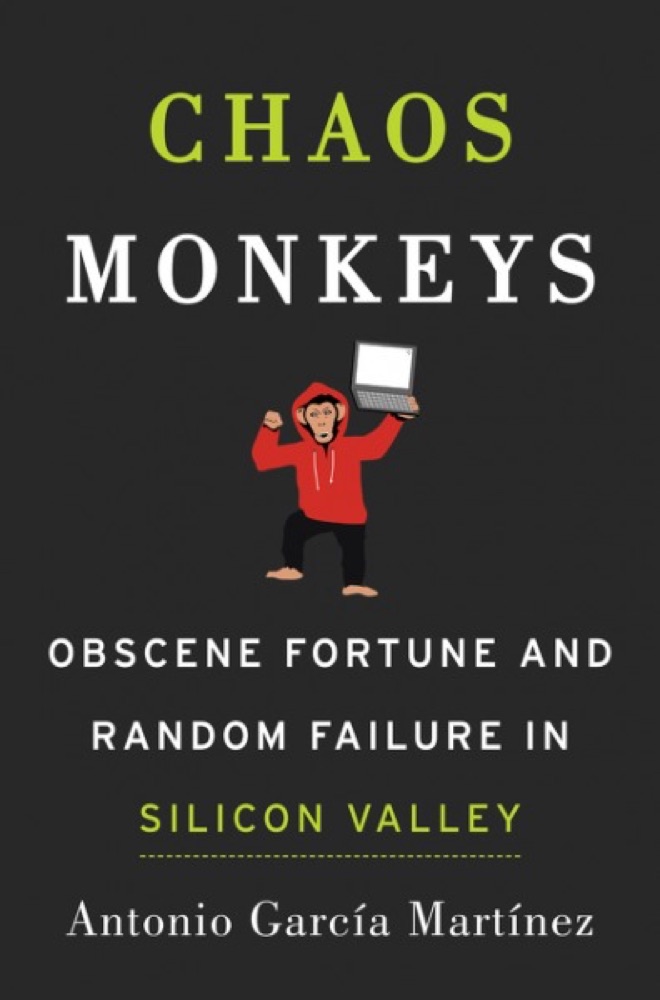
Liar’s Poker meets The Social Network in an irreverent exposé of life inside the tech bubble, from industry provocateur Antonio García Martínez, a former Twitter advisor, Facebook product manager and startup founder/CEO.
The reality is, Silicon Valley capitalism is very simple:
Investors are people with more money than time.
Employees are people with more time than money.
Entrepreneurs are the seductive go-between.
Marketing is like sex: only losers pay for it.
Imagine a chimpanzee rampaging through a datacenter powering everything from Google to Facebook. Infrastructure engineers use a software version of this “chaos monkey” to test online services’ robustness—their ability to survive random failure and correct mistakes before they actually occur. Tech entrepreneurs are society’s chaos monkeys, disruptors testing and transforming every aspect of our lives, from transp
Book details
- First published
- 2016
- Author
- Antonio García Martínez
- Genre
- Nonfiction
- Goodreads rating
- 3.71 (14k ratings)
Keep reading
The Art of the Start: The Time-Tested, Battle-Hardened Guide for Anyone Starting Anything
 Hackers & Painters: Big Ideas from the Computer Age
 Pour Your Heart Into It: How Starbucks Built a Company One Cup at a Time
 The Art of Thinking Clearly
 Zero to One: Notes on Startups, or How to Build the Future
 Things a Little Bird Told Me: Confessions of the Creative Mind
 The E-myth Revisited
 Invent and Wander: The Collected Writings of Jeff Bezos
 Unscripted: Life, Liberty, and the Pursuit of Entrepreneurship
 The Startup of You: Adapt to the Future, Invest in Yourself, and Transform Your Career
 Smartcuts: How Hackers, Innovators, and Icons Accelerate Success
 The Hard Thing About Hard Things: Building a Business When There Are No Easy Answers―Straight Talk on the Challenges of Entrepreneurship
 Managing Humans: Biting and Humorous Tales of a Software Engineering Manager
 Founders at Work: Stories of Startups' Early Days
 Steve Jobs
 Getting There: A Book of Mentors
 The Snowball: Warren Buffett and the Business of Life
 Winning
 What the Dog Saw and Other Adventures
 I, Steve: Steve Jobs In His Own Words
 The Monk and the Riddle: The Education of a Silicon Valley Entrepreneur
 Amp It Up: Leading for Hypergrowth by Raising Expectations, Increasing Urgency, and Elevating Intensity
 The Black Swan: The Impact of the Highly Improbable
 Rework
 Do Over: Rescue Monday, Reinvent Your Work, and Never Get Stuck
 Half Asleep in Frog Pajamas
 Stay Hungry Stay Foolish
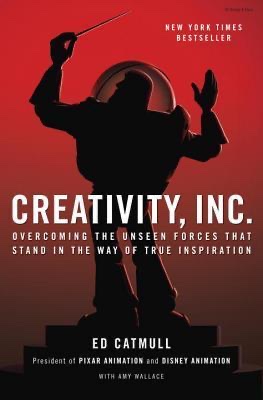 Creativity, Inc.: Overcoming the Unseen Forces That Stand in the Way of True Inspiration
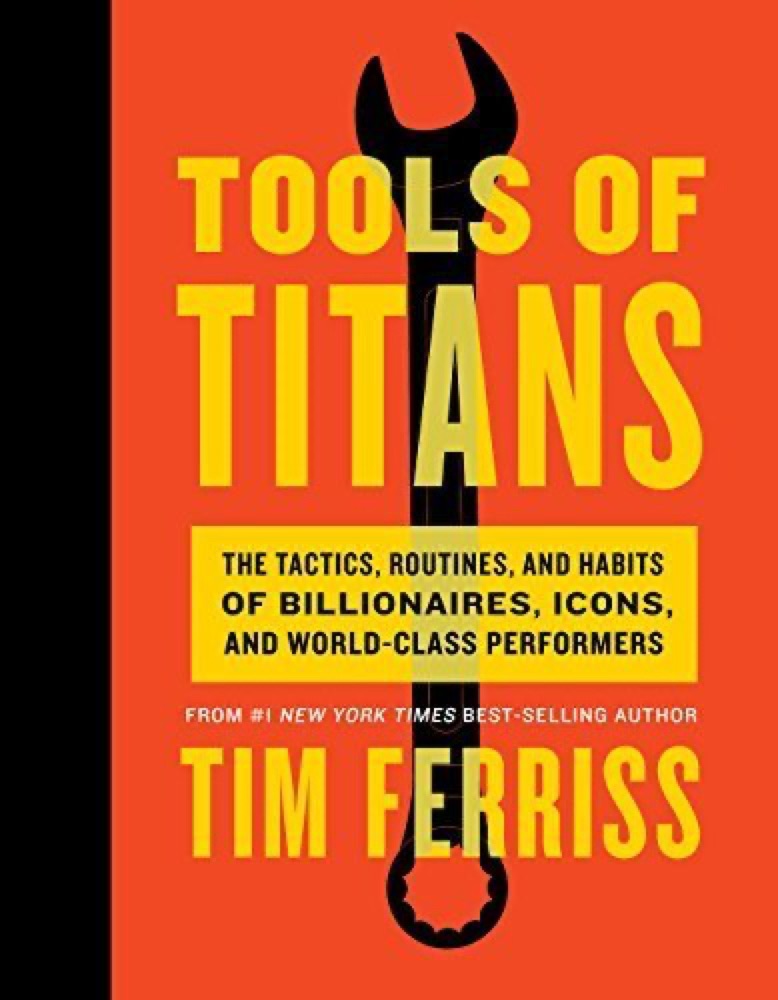 Tools of Titans: The Tactics, Routines, and Habits of Billionaires, Icons, and World-Class Performers
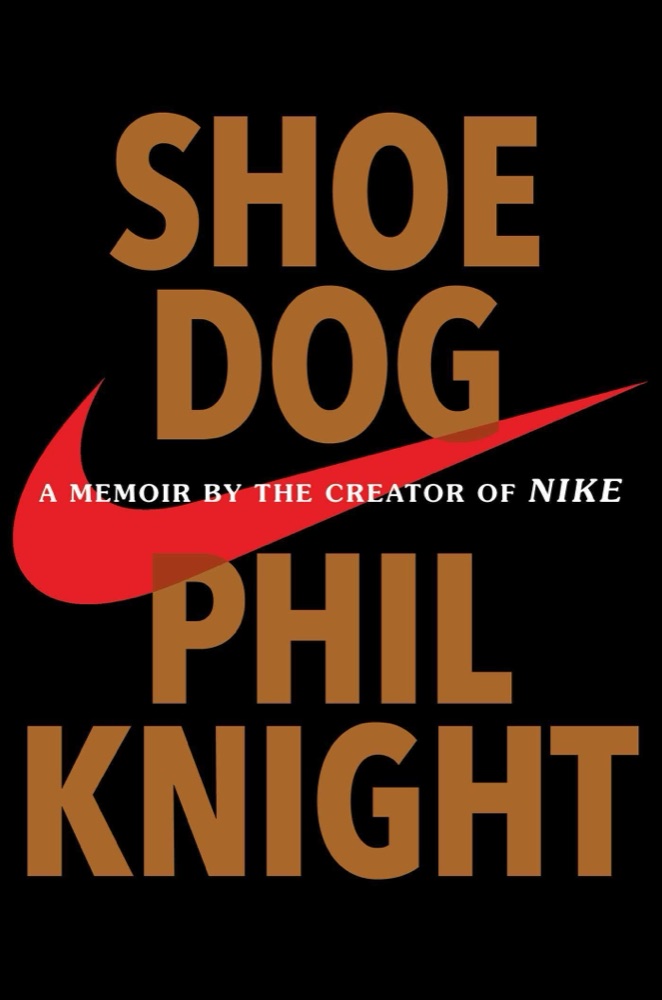 Shoe Dog: A Memoir by the Creator of NIKE
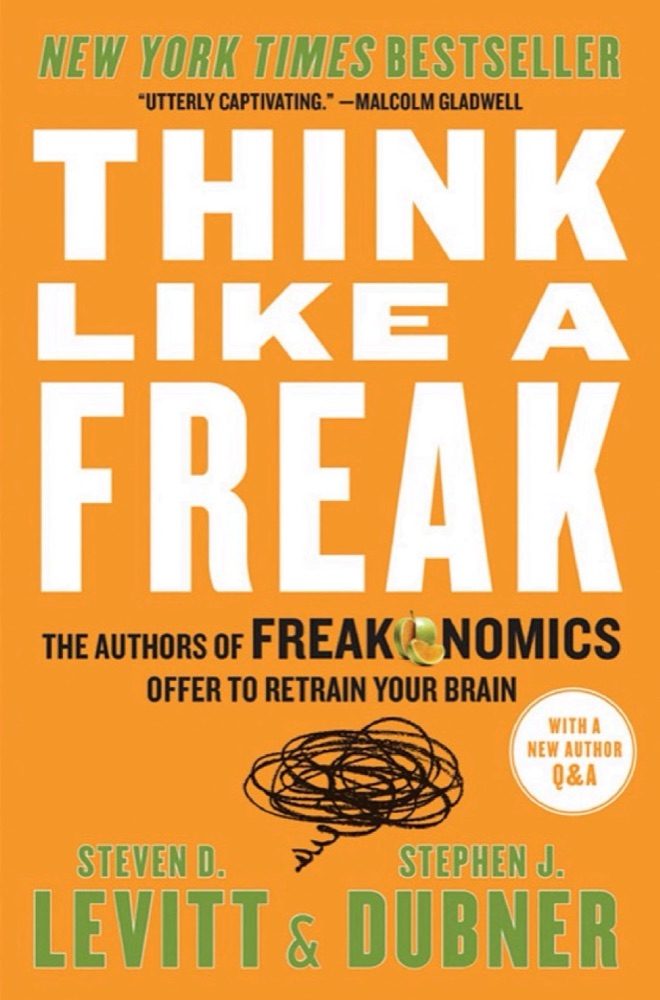 Think Like a Freak
 The Leader Who Had No Title: A Modern Fable on Real Success in Business and in Life
 Built to Last: Successful Habits of Visionary Companies
 The Price of Tomorrow: Why Deflation is the Key to an Abundant Future
 The World Is Flat: A Brief History of the Twenty-first Century
 The Algebra of Wealth: A Simple Formula for Financial Security
 Barking Up the Wrong Tree: The Surprising Science Behind Why Everything You Know About Success Is (Mostly) Wrong
 Trump: The Art of the Deal
 Good to Great: Why Some Companies Make the Leap... and Others Don't
 Same as Ever: A Guide to What Never Changes
 The Intern's Handbook
 Originals: How Non-Conformists Move the World
 Ignore Everybody: and 39 Other Keys to Creativity
 Adapt: Why Success Always Starts with Failure
 Loonshots: How to Nurture the Crazy Ideas That Win Wars, Cure Diseases, and Transform Industries
 Elon Musk: Inventing the Future
 Skin in the Game: The Hidden Asymmetries in Daily Life
 The Ride of a Lifetime: Lessons Learned from 15 Years as CEO of the Walt Disney Company
 It Worked for Me: In Life and Leadership
 Hatching Twitter: A True Story of Money, Power, Friendship, and Betrayal
 Made to Stick: Why Some Ideas Survive and Others Die
 Hit Refresh: The Quest to Rediscover Microsoft's Soul and Imagine a Better Future for Everyone
 The Halo Effect: ... and the Eight Other Business Delusions That Deceive Managers
 Delivering Happiness: A Path to Profits, Passion, and Purpose
 Do Epic Shit
 In the Beginning...Was the Command Line
 Conscious Capitalism
 How To Get Rich
 Confessions of an Advertising Man