
 Creativity, Inc.: Overcoming the Unseen Forces That Stand in the Way of True Inspiration
Quotes from the Book
Being right is based upon knowledge and experience and is often provable. Knowledge comes from the past, so it's safe. It is also out of date. It's the opposite of originality. Experience is built from solutions to old situations and problems. The old situations are probably different from the present ones, so that old solutions will have to be bent to fit new problems (and possibly fit badly). Also the likelihood is that, if you've got the experience, you'll probably use it. This is lazy. Experience is the opposite of being creative. If you can prove you're right you're set in concrete. You cannot move with the times or with other people. Being right is also being boring. Your mind is closed. You are not open to new ideas. You are rooted in your own rightness, which is arrogant. Arrogance is a valuable tool, but only if used very sparingly. Worst of all, being right has a tone of morality about it. To be anything else sounds weak or fallible, and people who are right would hate to be thought fallible. So: it's wrong to be right, because people who are right are rooted in the past, rigid-minded, dull and smug. There's no talking to them.
64
If you can't solve a problem, it's because you're playing by the rules
47
Risks are a measure of people. People who won't take them are trying to preserve what they have. People who do take them often end up having more. Some risks have a future, and some people call them wrong. But being right may be like walking backwards proving where you've been. Being wrong isn't in the future, or in the past. Being wrong isn't anywhere but being here. Best place to be, eh?
34
Your vision of where or who you want to be is the greatest asset you have. Without having a goal it’s difficult to score.
32
Don't be afraid of silly ideas.
25
How you perceive yourself is how others will see you.
17
Don't look for the next opportunity. The one you have in hand is the opportunity.
15
Have you noticed how the cleverest people at school are not those who make it in life? People who are conventionally clever get jobs on their qualifications (the past), not on their desire to succeed (the future). Very simply, they get overtaken by those who continually strive to be better than they are.
12
High creativity is responding to situations without critical thought.' - John Cleese
10
Change your tools, it may free your thinking.
3
The more strikingly visual your presentation is, the more people will remember it.
3
To be original, seek your inspiration from unexpected sources.
2
The perosn who doesn't make mistakes is unlikely to make anything.
2
If, instead of seeking approval, you ask, 'What's wrong with it? How can I make it better?', you are more likely to get a truthful, critical answer.
2
Be true to your subject and you will be far more likely to create something that is timeless.
1
Experience is the opposite of being creative.
1
Failure was a major contributor to its success.
1
Successful solutions are often made by people rebelling against bad briefs.
1
The point is that, whatever other people's failings might be, you are the one to shoulder the responsibility.
1
All creative people need something to rebel against, it's what gives their lives excitement, and it's creative people who make the clients' lives exciting.
1
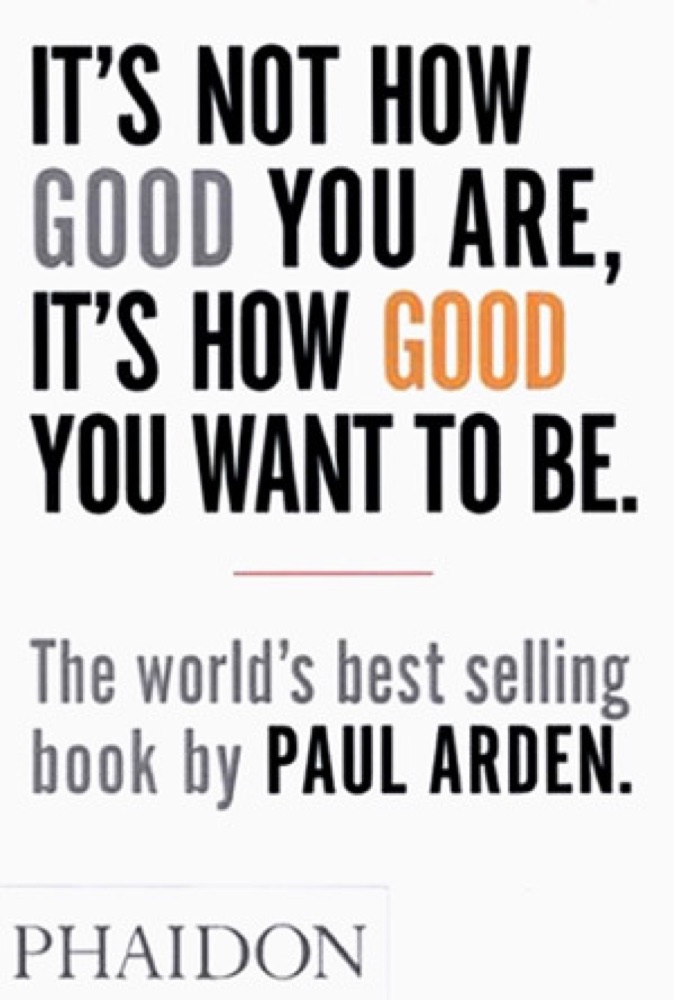
It's not how good you are, It's how good you want to be.
1
The point is we are all selling. We are all in advertising. It is part of life.
1
Do not covet your ideas. Give away everything you know and more will come back to you.
1
You need to aim beyond what you are capable of.
1
Talent helps, but it won't take you as far as ambition.
1
Nearly all rich an powerful people are not notably talented, educated, charming or good-looking. They become rich and powerful by wanting to be rich and powerful.
1
If you think you're unable to be on the cover of Time magazine, make your business to be there.
1
It's not how good you are, it's how good you want to be.
1
Watch on YouTube
About Paul Arden
We have collected 28 quotes from 1 book by Paul Arden on BookQuoters.
More about the author →About the book
It’s Not How Good You Are, It’s How Good You Want to Be is a handbook of how to succeed in the world: a pocket bible for the talented and timid alike to help make the unthinkable thinkable and the impossible possible.
The world’s top advertising guru, Paul Arden, offers up his wisdom on issues as diverse as problem solving, responding to a brief, communicating, playing your cards right, making mistakes, and creativity – all endeavors that can be applied to aspects of modern life.
This uplifting and humorous little book provides a unique insight into the world of advertising and is a quirky compilation of quotes, facts, pictures, wit and wisdom – all packed into easy-to-digest, bite-sized spreads. If you want to succeed in life or business, this book is a must.
Book details
- First published
- 2003
- Author
- Paul Arden
- Genre
- Nonfiction
- Goodreads rating
- 3.62 (18k ratings)
Keep reading
Creativity, Inc.: Overcoming the Unseen Forces That Stand in the Way of True Inspiration
 Tools of Titans: The Tactics, Routines, and Habits of Billionaires, Icons, and World-Class Performers
 How to Fail at Almost Everything and Still Win Big: Kind of the Story of My Life
 Getting There: A Book of Mentors
 The Accidental Creative: How to Be Brilliant at a Moment's Notice
 You Are a Badass at Making Money: Master the Mindset of Wealth
 Rework
 Excellent Advice for Living: Wisdom I Wish I'd Known Earlier
 Think and Grow Rich
 Do Epic Shit
 The Leader Who Had No Title: A Modern Fable on Real Success in Business and in Life
 Be Useful: Seven Tools for Life
 Principles: Life and Work
 The Success Principles: How to Get from Where You Are to Where You Want to Be
 How to Be a Bawse: A Guide to Conquering Life
 High Performance Habits: How Extraordinary People Become That Way
 You Can Win: A Step by Step Tool for Top Achievers
 The Power of Focus
 Originals: How Non-Conformists Move the World
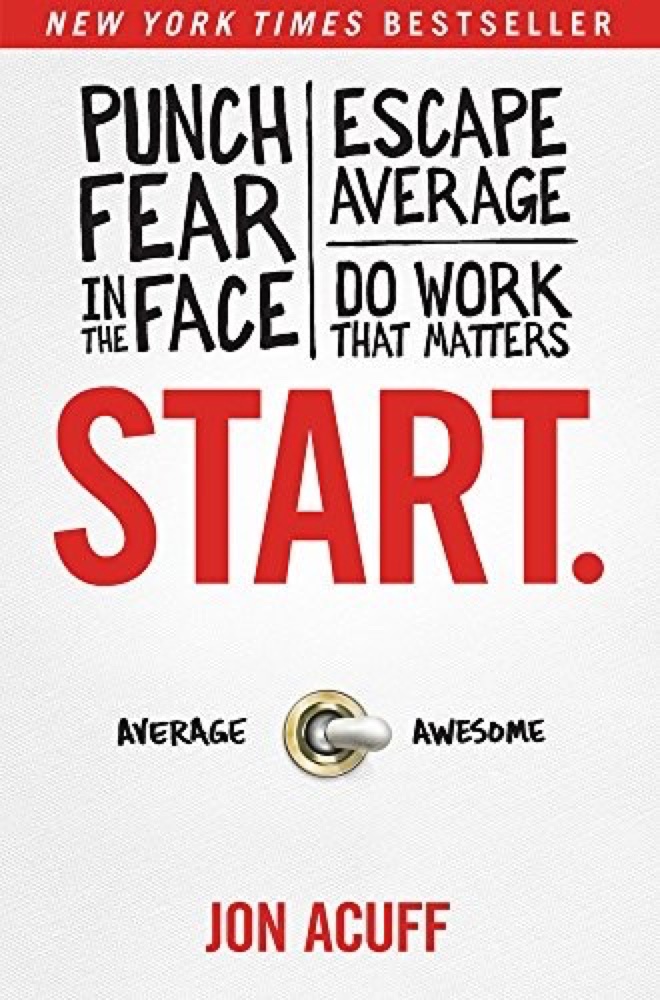 Start: Punch Fear in the Face, Escape Average and Do Work that Matters
 The Art of Creative Thinking
 Secrets of the Millionaire Mind: Mastering the Inner Game of Wealth
 Think Like a Freak
 Ignore Everybody: and 39 Other Keys to Creativity
 Targeting Success, Develop the Right Business Attitude to be Successful in the Workplace
 Your Next Five Moves: Master the Art of Business Strategy
 The Creative Habit: Learn It and Use It for Life
 The Dip: A Little Book That Teaches You When to Quit (and When to Stick)
 Magic of Thinking Big
 The Art of the Start: The Time-Tested, Battle-Hardened Guide for Anyone Starting Anything
 The Art of Thinking Clearly
 Wooden: A Lifetime of Observations and Reflections On and Off the Court
 Linchpin: Are You Indispensable?
 The Algebra of Happiness: Notes on the Pursuit of Success, Love, and Meaning
 Grit: The Power of Passion and Perseverance
 Things a Little Bird Told Me: Confessions of the Creative Mind
 Make Good Art
 Do Over: Rescue Monday, Reinvent Your Work, and Never Get Stuck
 The Startup of You: Adapt to the Future, Invest in Yourself, and Transform Your Career
 Shoe Dog: A Memoir by the Creator of NIKE
 The 4-Hour Workweek
 Limitless: Upgrade Your Brain, Learn Anything Faster, and Unlock Your Exceptional Life
 The 7 Habits of Highly Effective People: Personal Workbook
 The Compound Effect: Jumpstart Your Income, Your Life, Your Success
 Winning
 Illusions: The Adventures of a Reluctant Messiah
 What Color Is Your Parachute? A Practical Manual for Job-Hunters and Career-Changers
 Maximum Achievement: Strategies and Skills That Will Unlock Your Hidden Powers to Succeed
 The Last Lecture
 The 360 Degree Leader: Developing Your Influence from Anywhere in the Organization
 Improv Wisdom: Don't Prepare, Just Show Up
 Show Your Work!: 10 Ways to Share Your Creativity and Get Discovered
 The Happiness of Pursuit: Finding the Quest That Will Bring Purpose to Your Life
 The Ride of a Lifetime: Lessons Learned from 15 Years as CEO of the Walt Disney Company
 Talk Like TED: The 9 Public-Speaking Secrets of the World's Top Minds
 Ego Is the Enemy
 Steal Like an Artist: 10 Things Nobody Told You About Being Creative
 Psycho-Cybernetics
 Good to Great: Why Some Companies Make the Leap... and Others Don't