 Becoming
Quotes from the Book
Logic is a seductive excuse for setting low expectations.
16
Never tell yourself no. Let someone else do it.
10
It’s frustrating to realize we’re taught to be humble in a way that men are not.
7
From the moment I enter a room, I am clear about how I intend to be treated and how I intend to engage. I do not tell self-deprecating jokes about my race or gender, though I will do so about my personal idiosyncrasies. I can be charmingly humble or playfully self-effacing without pandering to stereotypes in order to make others comfortable. For example, my attire, my hairstyle, even my presentation style, reflect me rather than aping the behavior of others. I know that when I offer criticism of men in the workplace, I may be seen as a man-hater. I know because I am not married, I may be seen as a lesbian. I know because I will never be less than curvaceous and wear my hair natural
7
Logic is a seductive excuse for setting low expectations. Its cool, rational precision urges you to believe that it makes sense to limit yourself. And when your goal means you’ll be the first, or one of the few, as I desired, logic tells you that if it were possible, someone else would have done it by now.
4
The best allies own their privilege not as a badge of honor but as a reminder to be constantly listening and learning to become better at offering support to others.
4
Because I suddenly saw opportunity where I had never been brave enough to look before, and I found that failure wasn’t fatal, that otherness held an extraordinary power for clarity and invention.
4
At its most complex, ambition should be an animation of soul. Not simply a job, but a disquiet that requires you to take action.
3
I confronted the expected stereotypes by knowing what they were and building an alternate narrative about myself.
3
Defeating fear of otherness means knowing who you are and what you’re trying to accomplish and leveraging that otherness to our benefit. Knowing I’d never be invited into smoke-filled rooms or to the golf course, I instead requested individual meetings with political colleagues where I asked questions and learned about their interests, creating a similar sense of camaraderie. In business, I take full advantage of opportunities afforded to minorities but then always offer to share my learning with other groups that have similar needs—expanding the circle rather than closing myself off. Like most who are underestimated, I have learned to over-perform and find soft but key ways to take credit. Because, ultimately, leadership and power require the confidence to effectively wield both.
3
What’s not right is giving credence to bad actions, and thereby becoming complicit.
3
Being a token is real, and sometimes the urge to take a backseat so we don’t have to be “the one” is tempting. But denying fear of disappointing everyone to avoid responsibility for everyone doesn’t do anyone any good either.
3
No one born into the minority has the luxury of giving up, even if we do not win enough of the time.
2
When we refuse to name our obstacles, we can never find a way around them. Worse, we accept their inevitability, believing we deserve what we get.
1
The goal is to stretch ourselves, to explore our potential, even when we know we won’t be first or the best.
1
People already in power almost never have to think about whether they belong in the room, much less if they would be listened to once inside. These men—and they are usually men and typically white—do not have to grapple with low expectations based on gender or race or class. Ambition for them begins with reminiscences of old times and older friendships or newer alliances. The ends have already been decided, with only the means to be discussed.
1
good government should be a tool that helps where it can and gets out of the way when it should. It must work for everyone, protect our investments, and defend the civil rights of all.
1
We are, by our natures, often required to manufacture our own breaks, identify new openings even before others know they exist. The best hack is to know this is the case, accept it, and move on, prepared to take full advantage. And then do it all over again.
1
I revered the civil rights movement and appreciated the laws that granted us the right to ride buses, to sit at lunch counters, to cast ballots. But the slowness of real change fueled the riots’ intensity, from coast to coast. Decades later, inequality still ravaged poor and black communities. Then toss in the continued international struggle to end apartheid, the skyrocketing incarceration rates that scooped up too many of black folks’ cousins, and a youth poverty rate that defied the wealth of the era. I knew the truth behind their rage.
1
To put the gap in stark racial terms, in America in 2013, the average wealth per household was $81,000. But averages have highs and lows. When you disaggregate the numbers, white families average $142,000 in wealth, Latinos come in at $13,700, and black families bring up the rear at $11,000.
1
to rewrite the rules of power, never allow the position to limit your sphere of influence and control.
I have to speak up because silence is not only dangerous, it is corrosive. When we refuse to name our obstacles, we can never find a way around them. Worse, we accept their inevitability, believing we deserve what we get.
Finding the truth requires three simple questions, she explained, and they must be answered in any investigation: (1) What is the problem? (2) Why is it a problem? (3) How do you solve it?
Six weeks could not erase the difference in upbringing and access. But I learned from them, in our classes and beyond. I learned to mimic their sense of self-confidence and certainty. I didn’t lie about what I knew, but I began to carry myself differently and speak with more authority.
My dad told me to get comfortable with not being anywhere near the smartest person in the room. I had to accept that I simply did not have the background or education the others did, and it was up to me to decide if that mattered.
Race and sexual orientation shared common threats, but not identical ones, and when she stood too firmly on one side, she stood accused of ignoring the other. I watched with admiration as Simone came to the conclusion that the
Watch on YouTube
About Stacey Abrams
We have collected 26 quotes from 1 book by Stacey Abrams on BookQuoters.
More about the author →About the book
A previously published edition of this ISBN can be found here.
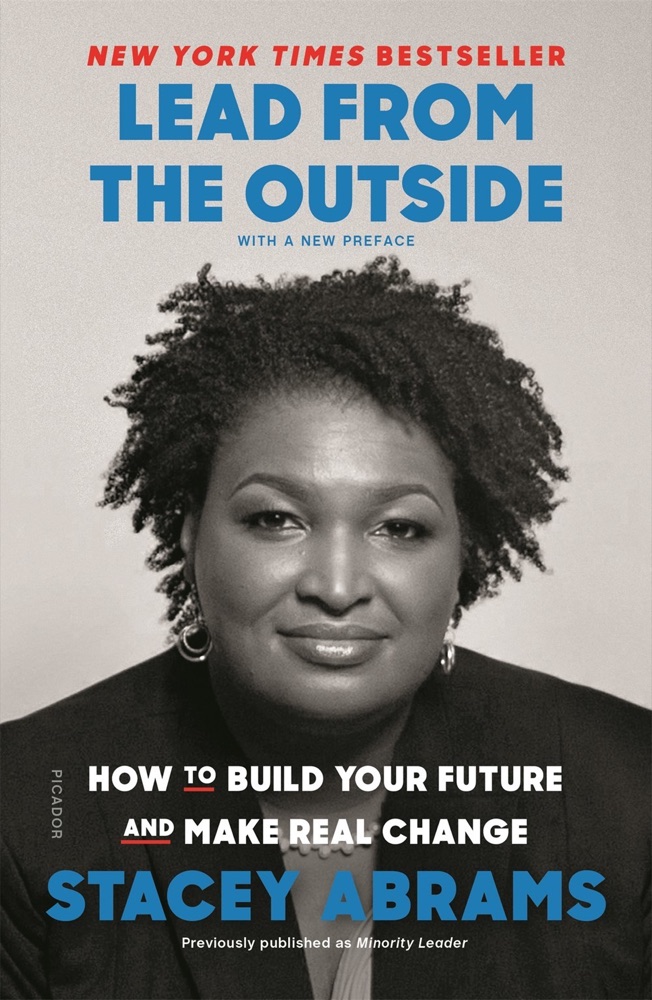
Leadership is hard. Convincing others—and yourself—that you are capable of taking charge and achieving more requires insight and courage. Lead from the Outside is the handbook for outsiders, written with an eye toward the challenges that hinder women, people of color, members of the LGBTQ community, and millennials ready to make change. Stacey uses her hard-won insights to break down how ambition, fear, money, and failure function in leadership, and she includes practical exercises to help you realize your own ambition and hone your skills. Lead from the Outside discusses candidly what Stacey has learned over the course of her impressive career in politics, business and the nonprofit world: that differences in race, gender, and class provide vital strength, which we can employ to rise to the top and create real and lasting
Book details
- First published
- 2018
- Author
- Stacey Abrams
- Genre
- Nonfiction
- Goodreads rating
- 4.24 (7k ratings)
Keep reading
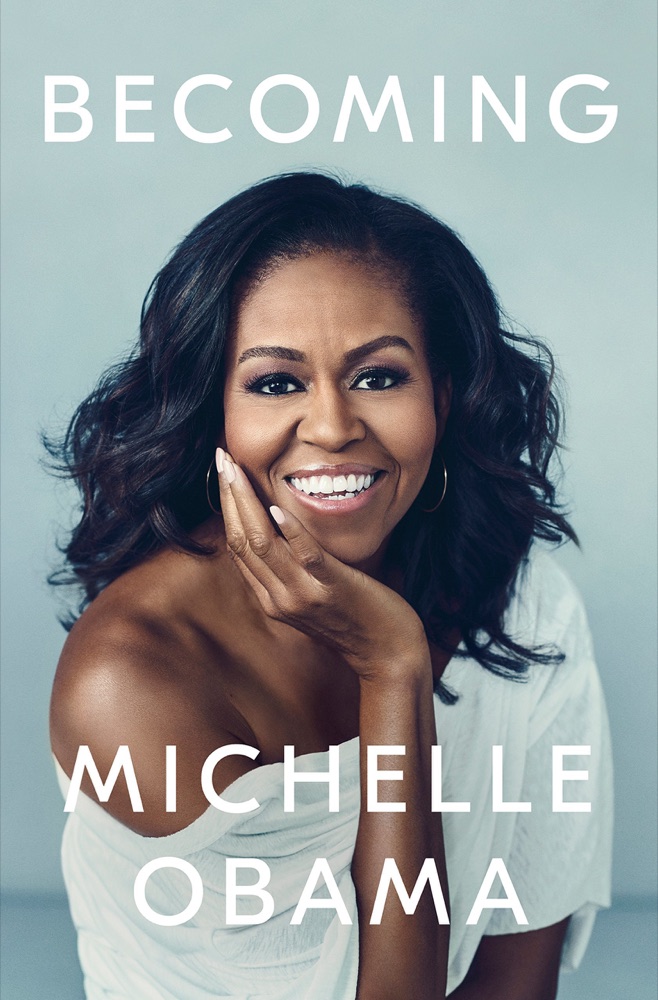
Becoming
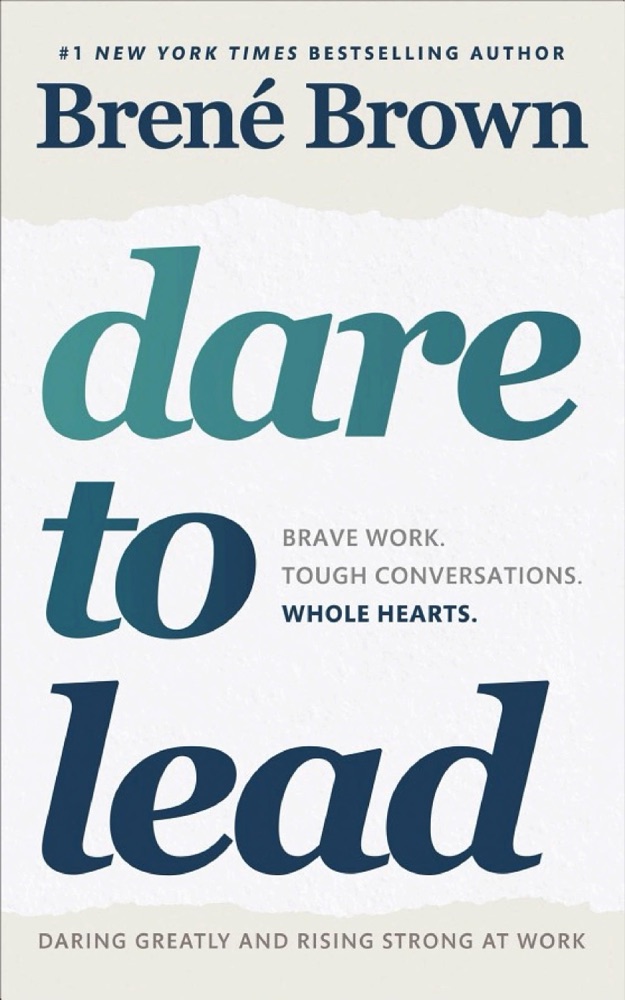 Dare to Lead
 The Blue Sweater: Bridging the Gap Between Rich and Poor in an Interconnected World
 My Beloved World
 The Person You Mean to Be: How Good People Fight Bias
 The Light We Carry: Overcoming in Uncertain Times
 More Than Enough: Claiming Space for Who You Are
 It Worked for Me: In Life and Leadership
 The Truths We Hold: An American Journey
 Girl, Stop Apologizing: A Shame-Free Plan for Embracing and Achieving Your Goals
 Independent Study
 The 7 Habits of Highly Effective People: Personal Workbook
 Sister Outsider: Essays and Speeches
 A Promised Land
 A Higher Loyalty: Truth, Lies, and Leadership
 The Leader Who Had No Title: A Modern Fable on Real Success in Business and in Life
 Gifted Hands: The Ben Carson Story
 The 7 Habits Of Highly Effective Teens
 You Learn by Living: Eleven Keys for a More Fulfilling Life
 Greenlights
 The Downstairs Girl
 On Our Best Behavior: The Seven Deadly Sins and the Price Women Pay to Be Good
 How to Be a Bawse: A Guide to Conquering Life
 My Government Means to Kill Me
 Lean In: Women, Work, and the Will to Lead
 Make Trouble: Standing Up, Speaking Out, and Finding the Courage to Lead
 Creativity, Inc.: Overcoming the Unseen Forces That Stand in the Way of True Inspiration
 Believe It: How to Go from Underestimated to Unstoppable
 Do Epic Shit
 If You Have to Cry, Go Outside: And Other Things Your Mother Never Told You
 Speak: Find Your Voice, Trust Your Gut, and Get from Where You Are to Where You Want to Be
 My Life on the Road
 Revolution from Within: A Book of Self-Esteem
 Brave, Not Perfect: Fear Less, Fail More, and Live Bolder
 The Promise of a Pencil: How an Ordinary Person Can Create Extraordinary Change
 Professional Troublemaker: The Fear-Fighter Manual
 An Absolutely Remarkable Thing
 David and Goliath: Underdogs, Misfits, and the Art of Battling Giants
 Tribe Of Mentors: Transformative Wisdom From Icons and Innovators to Help You Navigate Life's Challenges
 What the Dog Saw and Other Adventures
 Against the Grain: A Coach's Wisdom on Character, Faith, Family, and Love
 The Power of One
 The Game: Penetrating the Secret Society of Pickup Artists
 Think and Grow Rich
 Principles: Life and Work
 QBQ! The Question Behind the Question: Practicing Personal Accountability in Work and in Life
 Skin in the Game: The Hidden Asymmetries in Daily Life
 Rising Strong
 Karamo: My Story of Embracing Purpose, Healing, and Hope
 The Art of Thinking Clearly
 Mentors: How to Help and Be Helped
 Leadership on the Line: Staying Alive through the Dangers of Leading
 Letters to a Young Contrarian
 Originals: How Non-Conformists Move the World
 Small Great Things
 This Bridge Called My Back: Writings by Radical Women of Color
 Six Pillars of Self-Esteem
 #Girlboss
 Hell and Other Destinations: A 21st-Century Memoir
 The Ride of a Lifetime: Lessons Learned from 15 Years as CEO of the Walt Disney Company