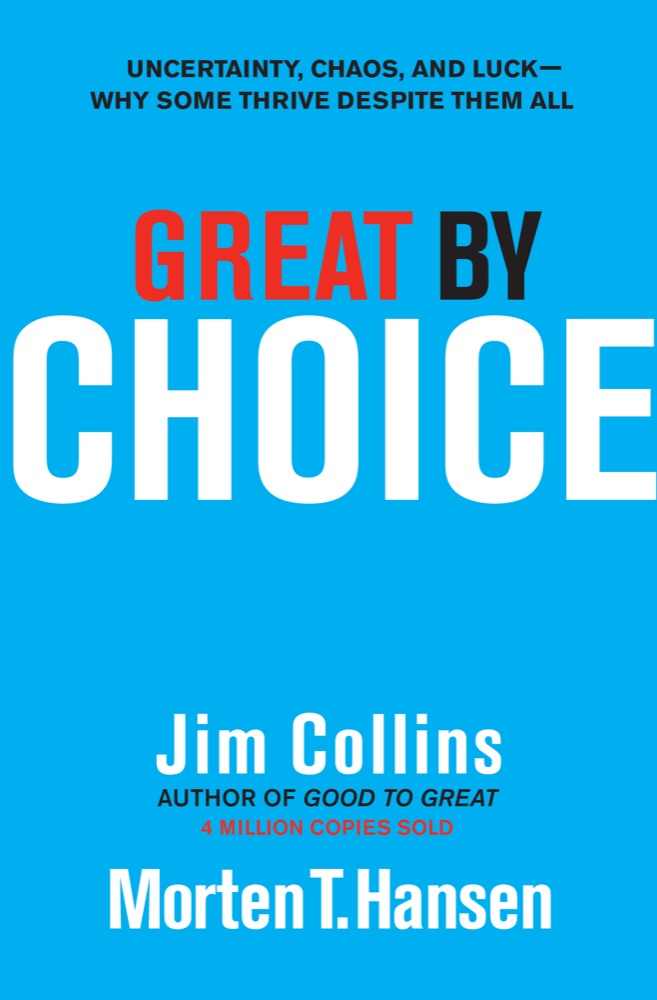

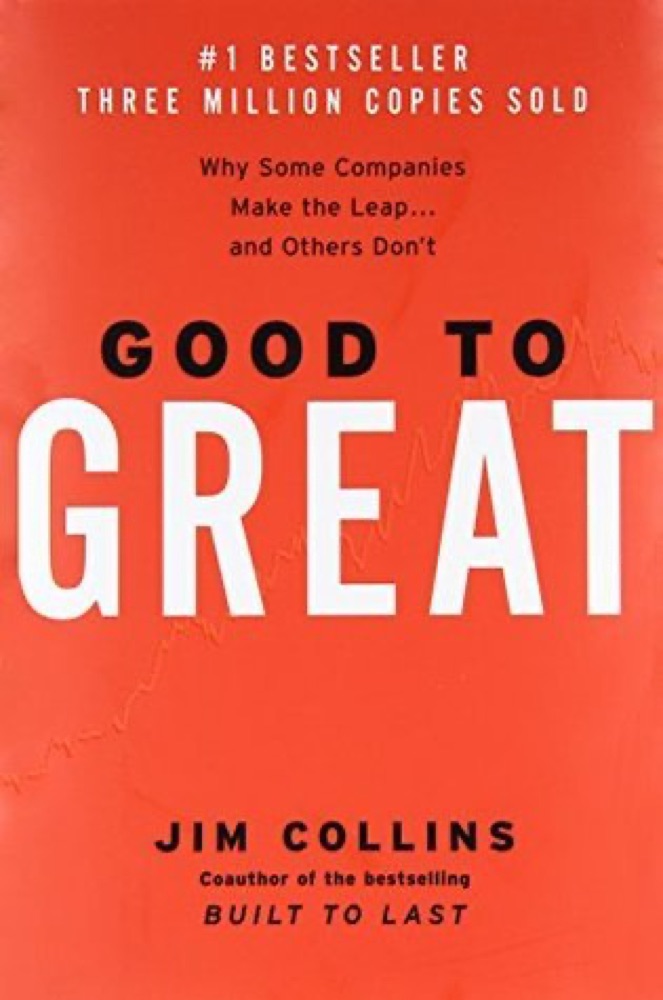
 Good to Great: Why Some Companies Make the Leap... and Others Don't
Quotes from the Book
Look, if you had one shot, or one opportunity To seize everything you ever wanted in one moment Would you capture it? Or just let it slip?” —Marshall Bruce Mathers III, “Lose Yourself
8
Victory awaits him who has everything in order—luck people call it. Defeat is certain for him who has neglected to take the necessary precautions in time; this is called bad luck.” —Roald Amundsen, The South Pole
4
greatness is first and foremost a matter of conscious choice and discipline.
4
None of us can predict with certainty the twists and turns our lives will take.
2
Far more difficult than implementing change is figuring out what works, understanding why it works, grasping when to change, and knowing when not to.
2
if you want to achieve consistent performance, you need both parts of a 20 Mile March: a lower bound and an upper bound, a hurdle that you jump over and a ceiling that you will not rise above, the ambition to achieve and the self-control to hold back.
2
When you marry operating excellence with innovation, you multiply the value of your creativity.
2
No human enterprise can succeed at the highest levels without consistency; if you bring no coherent unifying concept and disciplined methodology to your endeavors, you’ll be whipsawed by changes in your environment and cede your fate to forces outside your control.
1
Goals live on the other side of obstacles and challenges,” said Bourque. “Along
1
Entrenched myth: Successful leaders in a turbulent world are bold, risk-seeking visionaries. Contrary finding: The best leaders we studied did not have a visionary ability to predict the future. They observed what worked, figured out why it worked, and built upon proven foundations. They were not more risk taking, more bold, more visionary, and more creative than the comparisons. They were more disciplined, more empirical, and more paranoid. Entrenched myth: Innovation distinguishes 10X companies in a fast-moving, uncertain, and chaotic world. Contrary finding: To our surprise, no. Yes, the 10X cases innovated, a lot. But the evidence does not support the premise that 10X companies will necessarily be more innovative than their less successful comparisons; and in some surprise cases, the 10X cases were less innovative. Innovation by itself turns out not to be the trump card we expected; more important is the ability to scale innovation, to blend creativity with discipline. Entrenched myth: A threat-filled world favors the speedy; you’re either the quick or the dead. Contrary finding: The idea that leading in a “fast world” always requires “fast decisions” and “fast action”—and that we should embrace an overall ethos of “Fast! Fast! Fast!”—is a good way to get killed. 10X leaders figure out when to go fast, and when not to. Entrenched myth: Radical change on the outside requires radical change on the inside. Contrary finding: The 10X cases changed less in reaction to their changing world than the comparison cases. Just because your environment is rocked by dramatic change does not mean that you should inflict radical change upon yourself. Entrenched myth: Great enterprises with 10X success have a lot more good luck. Contrary finding: The 10X companies did not generally have more luck than the comparisons. Both sets had luck—lots of luck, both good and bad—in comparable amounts. The critical question is not whether you’ll have luck, but what you do with the luck that you get.
1
The idea that leading in a “fast world” always requires “fast decisions” and “fast action”—and that we should embrace an overall ethos of “Fast! Fast! Fast!”—is a good way to get killed. 10X leaders figure out when to go fast, and when not to.
1
WHY 20 MILE MARCHERS WIN 20 Mile Marching helps turn the odds in your favor for three reasons: 1. It builds confidence in your ability to perform well in adverse circumstances. 2. It reduces the likelihood of catastrophe when you’re hit by turbulent disruption. 3. It helps you exert self-control in an out-of-control environment.
1
The difficult task is to marry relentless discipline with creativity, neither letting discipline inhibit creativity nor letting creativity erode discipline.
1
If you deplete your resources
Fire bullets. Assess: Did your bullets hit anything? Consider: Do any of your successful bullets merit conversion to a big cannonball? Convert: Concentrate resources and fire a cannonball once calibrated. Don’t fire uncalibrated cannonballs. Terminate bullets that show no evidence of eventual success.
Interestingly, we instinctively chase after pleasure believing it to be the source of sustainable happiness. Many of us spend most of our time and energy chasing pleasure, sometimes enjoying flow, and once in a while, we think about higher purpose. We should be doing the reverse. This is the most logical path towards sustainable happiness, at least in relation to our work.
Discipline, in essence, is consistency of action—consistency with values, consistency with long-term goals, consistency with performance standards, consistency of method, consistency over time. Discipline is not the same as regimentation. Discipline is not the same as measurement. Discipline is not the same as hierarchical obedience or adherence to bureaucratic rules. True discipline requires the independence of mind to reject pressures to conform in ways incompatible with values, performance standards, and long-term aspirations. For a 10Xer, the only legitimate form of discipline is self-discipline, having the inner will to do whatever it takes to create a great outcome, no matter how difficult.
10Xers embrace a paradox of control and non-control. On the one hand, 10Xers understand that they face continuous uncertainty and that they cannot control, and cannot accurately predict, significant aspects of the world around them. On the other hand, 10Xers reject the idea that forces outside their control or chance events will determine their results; they accept full responsibility for their own fate. 10Xers then bring this idea to life by a triad of core behaviors: fanatic discipline, empirical creativity, and productive paranoia. Animating these three core behaviors is a central motivating force, Level 5 ambition.
A vitória aguarda aquele que tem tudo em ordem – ou sorte, como as pessoas costumam dizer. A derrota é certa para aquele que deixa de tomar as precauções necessárias a tempo; a isso as pessoas chamam má sorte.” Roald Amundsen, Polo sula
Everyone gets luck, good and bad, but 10X winners make more of the luck they get.
SMaC recipe is a set of durable operating practices that create a replicable and consistent success formula. The word “SMaC” stands for Specific, Methodical, and Consistent. You can use the term “SMaC” as a descriptor in any number of ways: as an adjective (“Let’s build a SMaC system”), as a noun (“SMaC lowers risk”), and as a verb (“Let’s SMaC this project”). A solid SMaC recipe is the operating code for turning strategic concepts into reality, a set of practices more enduring than mere tactics. Tactics change from situation to situation, whereas SMaC practices can last for decades and apply across a wide range of circumstances.
10Xers distinguish themselves by an ability to recognize defining moments that call for disrupting their plans, changing the focus of their intensity, and/or rearranging their agenda, because of opportunity or peril, or both.
Accomplishing a 20 Mile March, consistently, in good times and bad, builds confidence. Tangible achievement in the face of adversity reinforces the 10X perspective: we are ultimately responsible for improving performance. We never blame circumstance; we never blame the environment.
[that if] you created the right type of corporate community, the right type of autonomous congregation, genius would flower.
As the influential management thinker Peter Drucker taught, the best—perhaps even the only—way to predict the future is to create it.
Watch on YouTube
About Jim Collins
We have collected 95 quotes from 4 books by Jim Collins on BookQuoters.
More about the author →More by Jim Collins
Good to Great: Why Some Companies Make the Leap... and Others Don't
 Built to Last: Successful Habits of Visionary Companies
 Good to Great and the Social Sectors: A Monograph to Accompany Good to Great
About the book
Ten years after the worldwide bestseller Good to Great, Jim Collins returns withanother groundbreaking work, this time to why do some companies thrive inuncertainty, even chaos, and others do not? Based on nine years of research,buttressed by rigorous analysis and infused with engaging stories, Collins andhis colleague Morten Hansen enumerate the principles for building a truly greatenterprise in unpredictable, tumultuous and fast-moving times. This book isclassic contrarian, data-driven and uplifting.
Book details
- First published
- 2011
- Author
- Jim Collins
- Genre
- Nonfiction
- Goodreads rating
- 4.11 (22k ratings)
Keep reading
 The Art of Impossible: A Peak Performance Primer
 High Performance Habits: How Extraordinary People Become That Way
 The Compound Effect: Jumpstart Your Income, Your Life, Your Success
Built to Last: Successful Habits of Visionary Companies
The Compound Effect: Jumpstart Your Income, Your Life, Your Success
Built to Last: Successful Habits of Visionary Companies
 The Score Takes Care of Itself: My Philosophy of Leadership
Good to Great: Why Some Companies Make the Leap... and Others Don't
The Score Takes Care of Itself: My Philosophy of Leadership
Good to Great: Why Some Companies Make the Leap... and Others Don't
 The Monk and the Riddle: The Education of a Silicon Valley Entrepreneur
 You Can Win: A Step by Step Tool for Top Achievers
 The Rise of Superman: Decoding the Science of Ultimate Human Performance
 Grit: The Power of Passion and Perseverance
 The Fifth Discipline: The Art & Practice of The Learning Organization
 Winning
 The Success Principles: How to Get from Where You Are to Where You Want to Be
 Creativity, Inc.: Overcoming the Unseen Forces That Stand in the Way of True Inspiration
 Delivering Happiness: A Path to Profits, Passion, and Purpose
 Legacy: What the All Blacks Can Teach Us About the Business of Life
 Measure What Matters
 Principles: Life and Work
 Originals: How Non-Conformists Move the World
 The Happiness of Pursuit: Finding the Quest That Will Bring Purpose to Your Life
 Pour Your Heart Into It: How Starbucks Built a Company One Cup at a Time
 The Ride of a Lifetime: Lessons Learned from 15 Years as CEO of the Walt Disney Company
 The Power of Focus
 Smarter Faster Better: The Secrets of Being Productive in Life and Business
 The Leader Who Had No Title: A Modern Fable on Real Success in Business and in Life
 It Takes What It Takes: How to Think Neutrally and Gain Control of Your Life
 Things a Little Bird Told Me: Confessions of the Creative Mind
 Your Next Five Moves: Master the Art of Business Strategy
 EntreLeadership: 20 Years of Practical Business Wisdom from the Trenches
 Think and Grow Rich
 How to Fail at Almost Everything and Still Win Big: Kind of the Story of My Life
 Getting There: A Book of Mentors
 Atomic Habits: An Easy & Proven Way to Build Good Habits & Break Bad Ones
 Drive: The Surprising Truth About What Motivates Us
 Barking Up the Wrong Tree: The Surprising Science Behind Why Everything You Know About Success Is (Mostly) Wrong
 First Things First
 Same as Ever: A Guide to What Never Changes
 The Art of Thinking Clearly
 Tools of Titans: The Tactics, Routines, and Habits of Billionaires, Icons, and World-Class Performers
 Tribe Of Mentors: Transformative Wisdom From Icons and Innovators to Help You Navigate Life's Challenges
 Do Epic Shit
 Adapt: Why Success Always Starts with Failure
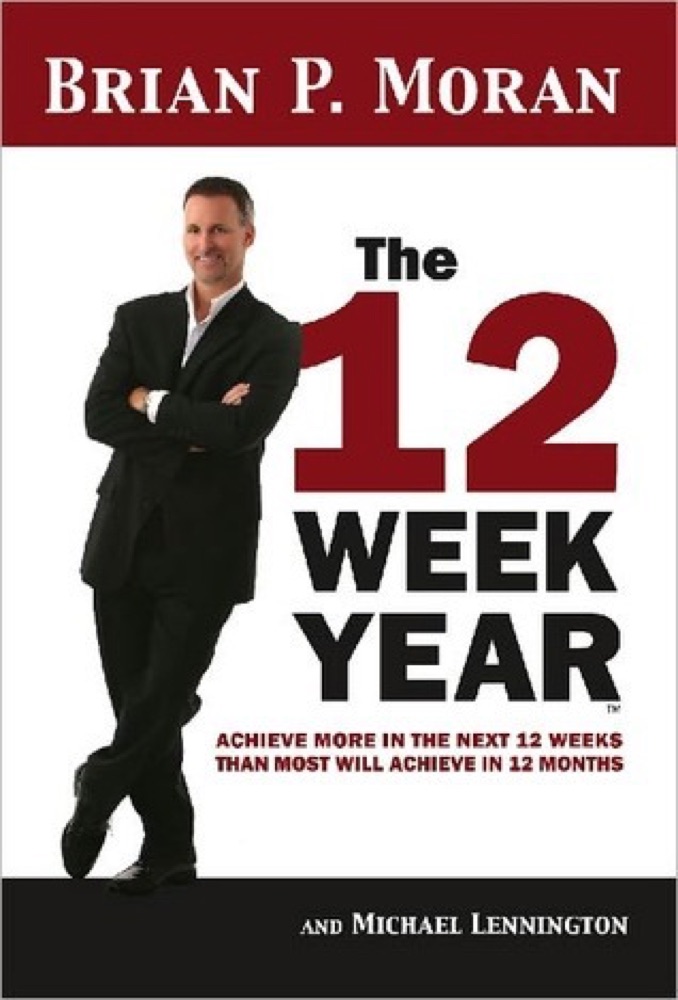 The 12 Week Year
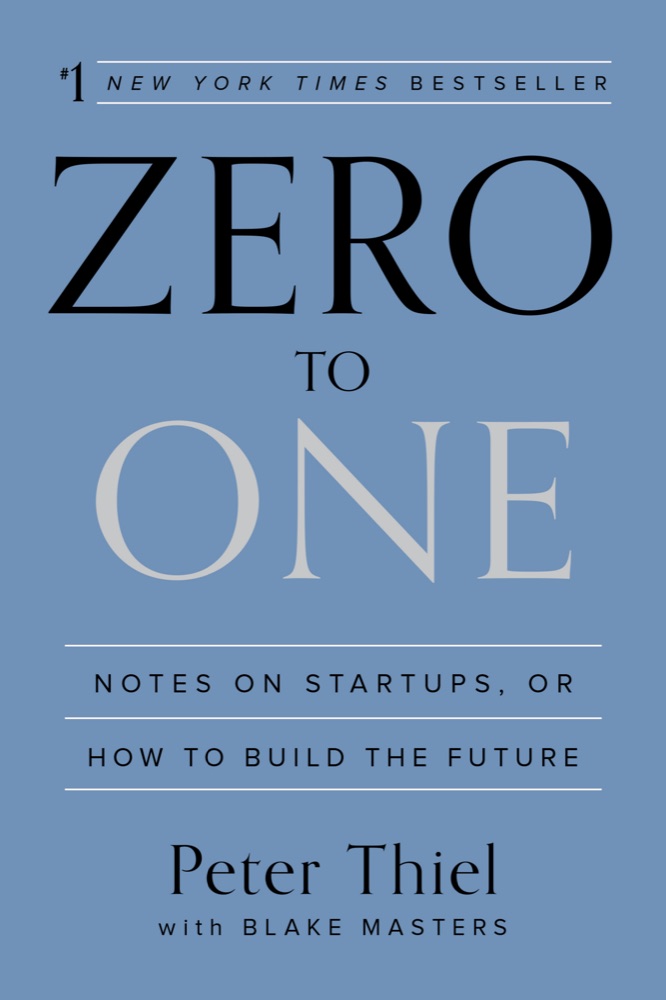 Zero to One: Notes on Startups, or How to Build the Future
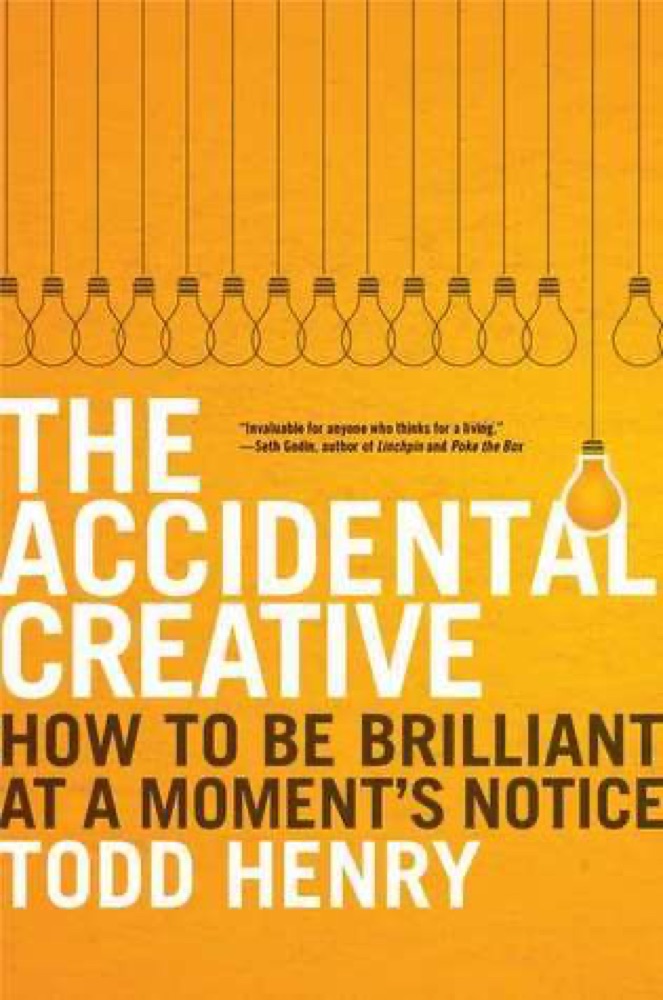 The Accidental Creative: How to Be Brilliant at a Moment's Notice
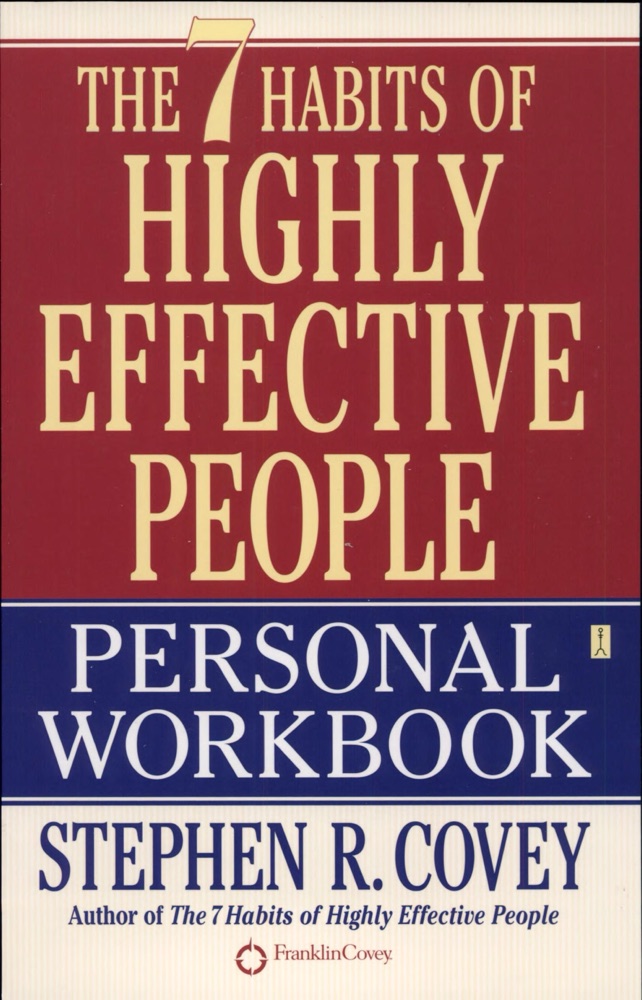 The 7 Habits of Highly Effective People: Personal Workbook
 The 80/20 Principle: The Secret to Achieving More with Less
 Smartcuts: How Hackers, Innovators, and Icons Accelerate Success
 The 360 Degree Leader: Developing Your Influence from Anywhere in the Organization
 The Gap and The Gain: The High Achievers' Guide to Happiness, Confidence, and Success
 The Art of Creative Thinking
 Think Like a Rocket Scientist: Simple Strategies You Can Use to Make Giant Leaps in Work and Life
 Ready for Anything: 52 Productivity Principles for Getting Things Done
 Shoe Dog: A Memoir by the Creator of NIKE
 Right Kind of Wrong: The Science of Failing Well
 The Algebra of Wealth: A Simple Formula for Financial Security
 How Will You Measure Your Life?
 No Excuses!: The Power of Self-Discipline
 Be Your Future Self Now: The Science of Intentional Transformation