
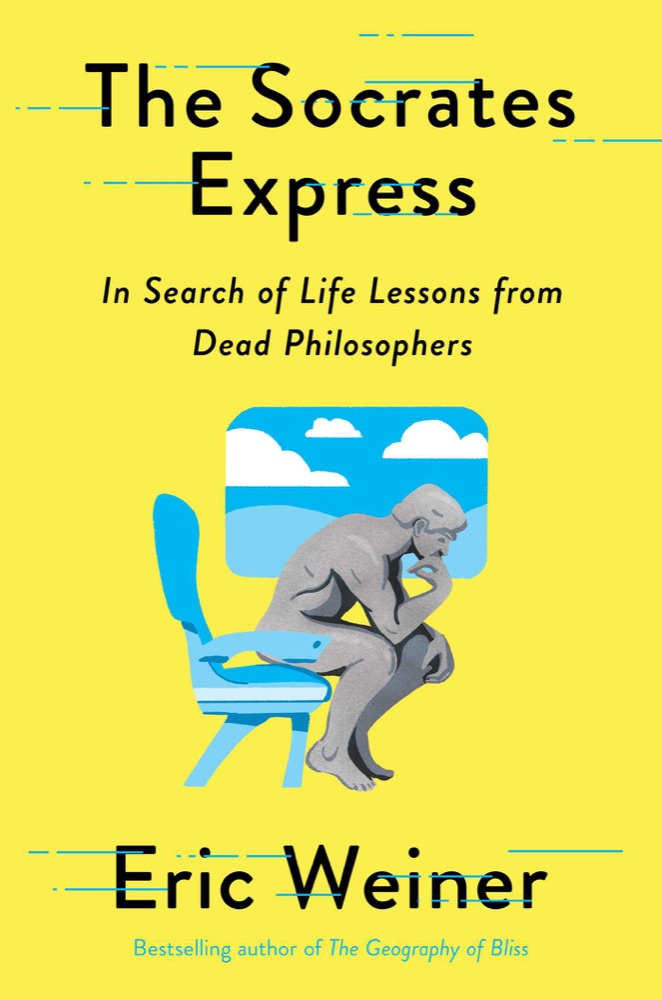
 The Socrates Express: In Search of Life Lessons from Dead Philosophers
Quotes from the Book
The story of the world is not the story of coups and revolutions. It is the story of lost keys and burnt coffee and a sleeping child in your arms. History is the untallied sum of a million everyday moments.
22
Geniuses are always marginalized to one degree or another. Someone wholly invested in the status quo is unlikely to disrupt it.
16
What is honored in a country will be cultivated there.
16
All genuinely creative ideas are initially met with rejection, since they necessarily threaten the status quo. An enthusiastic reception for a new idea is a sure sign that it is not original.
15
We are at our most creative when we have something to push against. Creativity does not require perfect conditions. In fact, it thrives in imperfect ones. The block of marble from which Michelangelo carved his masterpiece, the David, had been discarded by other artists. They considered it defective, and they were right. But Michelangelo saw that defect as a challenge, not a disqualifier.
15
Just as not all butterflies produce a hurricane, not all outbreaks of bubonic plague produce a Renaissance.
12
If you’ve ever had a rational thought or asked Why? or gazed at the night sky in silent wonder, then you have had a Greek moment.
12
Civic life, though, was not optional, and Aristotle tells me the Athenians had a word for those who refused to participate in public affairs: idiotes. It is where we get our word idiot.
10
Studies have found that creative people have an especially high tolerance for ambiguity. I suspect this holds true for places of genius as well. Cities such as Athens and Florence and Edinburgh created atmospheres that accepted, and even celebrated, ambiguity.
8
This less-is-more phenomenon holds true not only for individuals but for entire nations. A good example is the “oil curse,” also known as the paradox of plenty. Nations rich in natural resources, especially oil, tend to stagnate culturally and intellectually, as even a brief visit to Saudi Arabia or Kuwait reveals. The citizens of these nations have everything so they create nothing. China
8
British philosopher Alan Watts observed, a sense of wonder “distinguishes men from other animals, and intelligent and sensitive people from morons.
8
One of the biggest misperceptions about places of genius, I’m discovering, is that they are akin to paradise. They are not. Paradise is antithetical to genius. Paradise makes no demands, and creative genius takes root through meeting demands in new and imaginative ways. “The Athenians matured because they were challenged on all fronts,” said Nietzsche, in a variation of his famous “what doesn’t kill you will make you stronger” line.
8
Philosophy is like wine. There are good years and bad years but, in general, the older the better.
8
Socrates says. Recognizing your ignorance is the beginning of all wisdom.
6
There’s a simple reason for this. The more shots you get at the target, the more likely you’ll eventually score a bull’s-eye, but the more misses you’ll accrue as well. The bull’s-eyes end up in museums and on library shelves, not the misses. Which, when you think about it, is a shame. It feeds the myth that geniuses get it right the first time, that they don’t make mistakes, when, in fact, they make more mistakes than the rest of us. What
6
Reason, Hume argued, doesn’t determine what we want but only how we obtain it.
5
See what is before you, the thing itself. Analyze later.
5
Cosimo was the Bill Gates of his day. He spent the first half of his life making a fortune and the second half giving it away. He found the latter half much more satisfying, once confiding in a friend that his greatest regret was that he did not begin giving away his wealth ten years earlier. Cosimo recognized money for what it is: potential energy, with a limited shelf life. Either spend it or watch it slowly deplete, like yesterday’s birthday balloon. Under
4
The expectation of a reward or evaluation, even a positive evaluation, squelched creativity.
4
Normally, we don’t consider the audience in the genius equation. We assume that they are merely the passive recipients of the gifts that the genius bestows. They are much more than that, though. They are the appreciators of genius, and as art critic Clive Bell said, “The essential characteristic of a highly civilized society is not that it is creative but that it is appreciative.” By that measure, Vienna was the most highly civilized society to grace the planet. Mozart
4
Brainstorming sounds like a great idea, but it doesn’t work. Dozens of studies have demonstrated this conclusively. People produce more good ideas—twice as many—alone than they do together. One problem with brainstorming is
4
When people from similar backgrounds get together, are isolated from dissenting views, and are trying to please a strong leader, the result is consensus around the preferred position, even if it is clearly wrongheaded.
4
They are the appreciators of genius, and as art critic Clive Bell said, “The essential characteristic of a highly civilized society is not that it is creative but that it is appreciative.” By that measure, Vienna was the most highly civilized society to grace the planet. Mozart didn’t compose for an audience but for audiences. One audience was the wealthy patrons—nobles, typically, including the emperor himself. Another audience was the city’s finicky music critics. A third was the public at large, middle-class concertgoers or dust-caked street sweepers attending an open-air, and free, performance. Musical Vienna was not a solo performance. It was a symphony, often harmonious, occasionally discordant, never dull. Mozart was no freak of nature. He was part of a milieu, a musical ecosystem so rich and varied it practically
4
It is a fatal fault to reason whilst observing.
4
The Scots studied the past to understand the present, and of course improve it. Like the ancient Greeks and the Chinese, they knew that those who lack a keen awareness of history are destined to “remain forever children in understanding,” as David Hume put it. Genius requires not only an accelerator but also a rearview mirror.
3
Toward the end of his life, Fred Terman wrote that he had no regrets: “If I had my life to live over again, I would play the same record.
3
A team of researchers, led by Ravi Mehta of the University of Illinois at Urbana-Champaign, found that those exposed to moderate noise levels (seventy decibels) performed better on a creative-thinking exam than those exposed to either high levels of noise or complete silence. Moderate noise, Mehta believes, allows us to enter “a state of distracted, or diffused, focus.” Again, the ideal state for creative breakthroughs.
3
This dynamic explains why we see spikes in professions at certain times and in certain places. The number of geniuses who appear in any given field at any given time is a function not of the pool of talent available but, rather, the attractiveness of the field.
3
The bull’s-eyes end up in museums and on library shelves, not the misses. Which, when you think about it, is a shame. It feeds the myth that geniuses get it right the first time, that they don’t make mistakes, when, in fact, they make more mistakes than the rest of us.
3
Watch on YouTube
About Eric Weiner
We have collected 96 quotes from 4 books by Eric Weiner on BookQuoters.
More about the author →More by Eric Weiner
The Socrates Express: In Search of Life Lessons from Dead Philosophers
 The Geography of Bliss: One Grump's Search for the Happiest Places in the World
 Man Seeks God: My Flirtations with the Divine
About the book
New York Times Bestseller
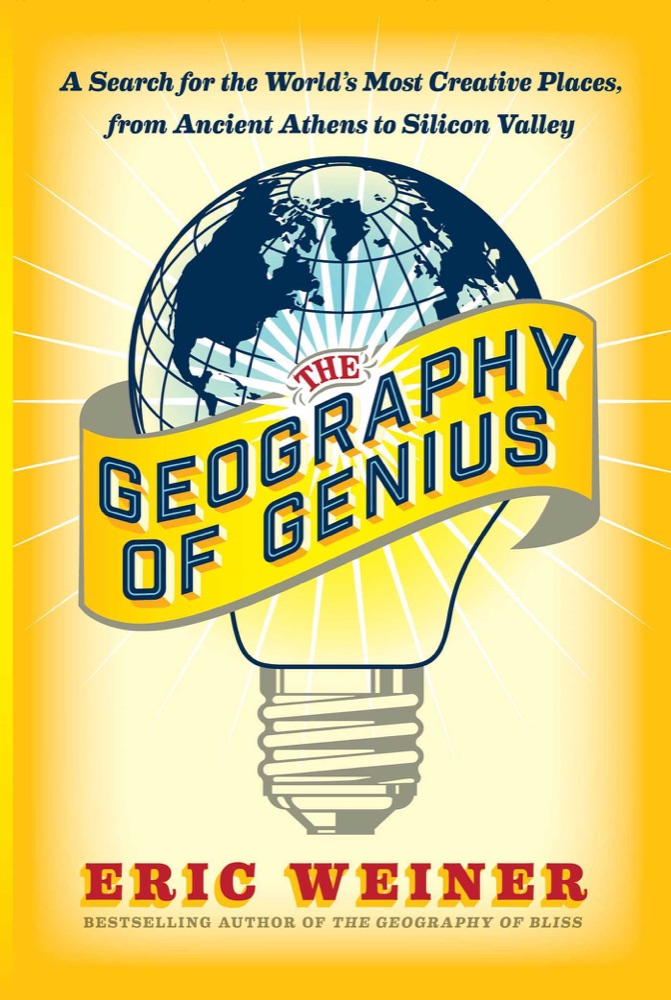
Travel the world with Eric Weiner, the New York Times bestselling author of The Geography of Bliss, as he journeys from Athens to Silicon Valley—and throughout history, too—to show how creative genius flourishes in specific places at specific times.In The Geography of Genius, acclaimed travel writer Weiner sets out to examine the connection between our surroundings and our most innovative ideas. He explores the history of places, like Vienna of 1900, Renaissance Florence, ancient Athens, Song Dynasty Hangzhou, and Silicon Valley, to show how certain urban settings are conducive to ingenuity. And, with his trademark insightful humor, he walks the same paths as the geniuses who flourished in these settings to see if the spirit of what inspired figures like Socrates, Michelangelo, and Leonardo remains. In these places, Weiner asks, “What was in the air, and can
Book details
- First published
- 2016
- Author
- Eric Weiner
- Genre
- Nonfiction
- Goodreads rating
- 3.80 (4k ratings)
The buzz
- The New York TimesReview in The New York Timesprofessional review (via Book Marks)
- The Washington PostReview in The Washington Postprofessional review (via Book Marks)
- The Wall Street JournalReview in The Wall Street Journalprofessional review (via Book Marks)
- CsmonitorReview in Csmonitorprofessional review (via Book Marks)
Keep reading
 The Art of Creative Thinking
 How to Fly a Horse: The Secret History of Creation, Invention, and Discovery
 Creativity: Flow and the Psychology of Discovery and Invention
 The Art of Thinking Clearly
 From Dawn to Decadence: 500 Years of Western Cultural Life, 1500 to the Present
The Socrates Express: In Search of Life Lessons from Dead Philosophers
From Dawn to Decadence: 500 Years of Western Cultural Life, 1500 to the Present
The Socrates Express: In Search of Life Lessons from Dead Philosophers
 Think Like a Rocket Scientist: Simple Strategies You Can Use to Make Giant Leaps in Work and Life
 Originals: How Non-Conformists Move the World
 The Meaning of It All: Thoughts of a Citizen-Scientist
 What the Dog Saw and Other Adventures
 The Spinoza Problem
 The Undoing Project: A Friendship That Changed Our Minds
 The Ascent of Man
 The Social Animal: The Hidden Sources of Love, Character, and Achievement
 Walden Two
 Smartcuts: How Hackers, Innovators, and Icons Accelerate Success
 The Greek Way
 Imagine: How Creativity Works
 Where Good Ideas Come From: The Natural History of Innovation
 The Element: How Finding Your Passion Changes Everything
 Black Box Thinking: Why Some People Never Learn from Their Mistakes - But Some Do
 The Fifth Science
 Asymmetry
 Rationality: From AI to Zombies
 A Whack on the Side of the Head: How You Can Be More Creative
 Barking Up the Wrong Tree: The Surprising Science Behind Why Everything You Know About Success Is (Mostly) Wrong
 But What If We're Wrong? Thinking About the Present As If It Were the Past
 Genesis
 In the Light of What We Know
 Skinny Legs and All
 Ignore Everybody: and 39 Other Keys to Creativity
 Zen and the Art of Motorcycle Maintenance
 The Wave in the Mind: Talks and Essays on the Writer, the Reader and the Imagination
 Think: A Compelling Introduction to Philosophy
 Arcadia
 Galileo
 Homo Deus: A History of Tomorrow
 My Ishmael
 Curious: The Desire to Know and Why Your Future Depends On It
 Same as Ever: A Guide to What Never Changes
 The World Is Flat: A Brief History of the Twenty-first Century
 Flaubert's Parrot
 How to Be Perfect: The Correct Answer to Every Moral Question
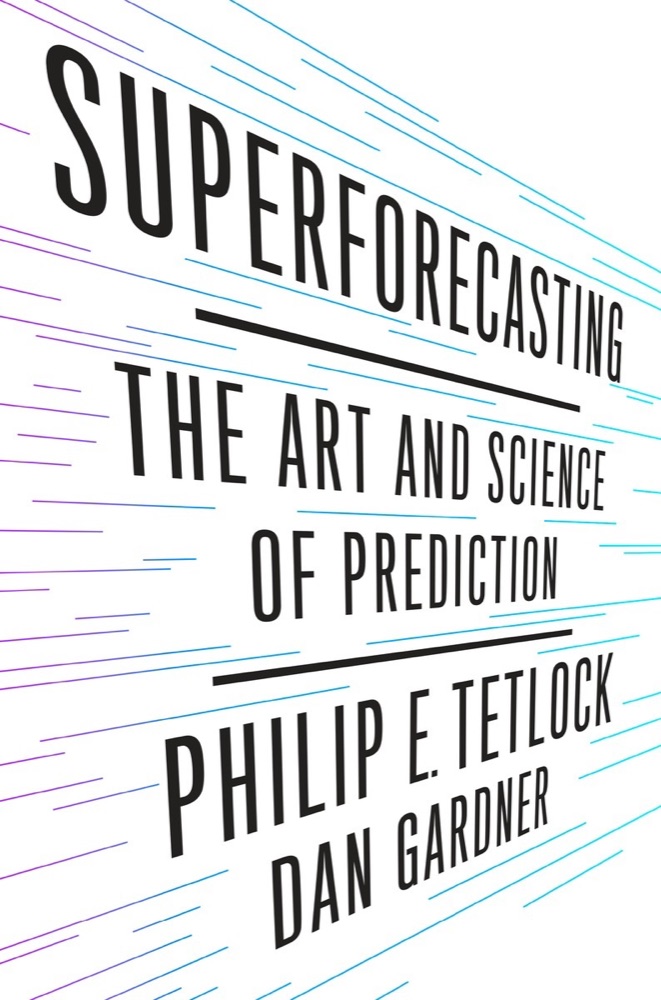 Superforecasting: The Art and Science of Prediction
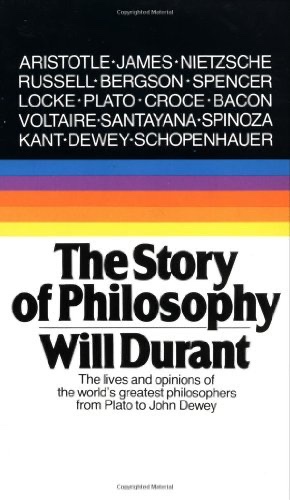 The Story of Philosophy: The Lives and Opinions of the World's Greatest Philosophers
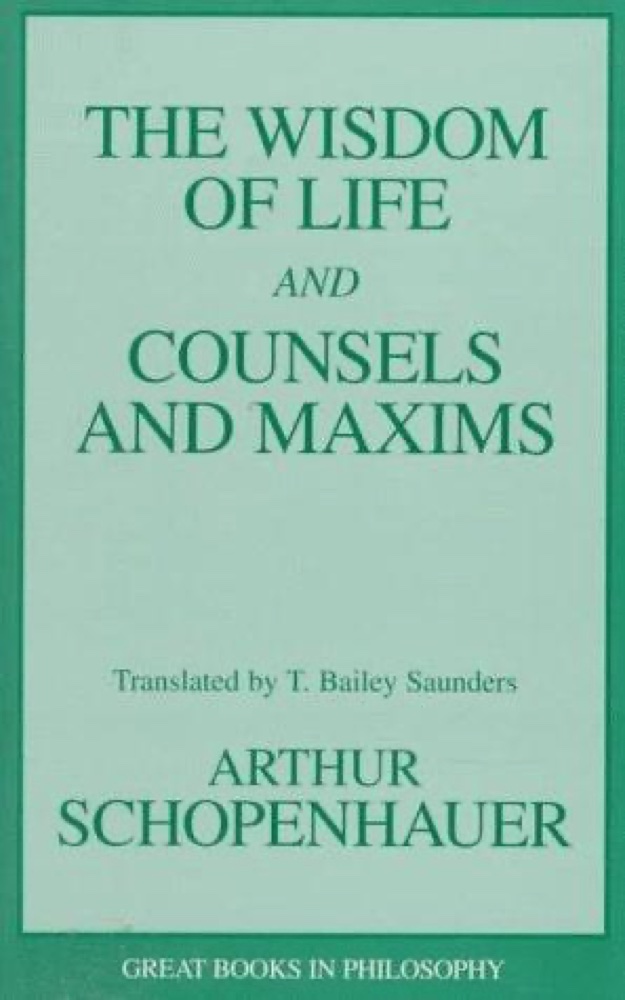 The Wisdom of Life
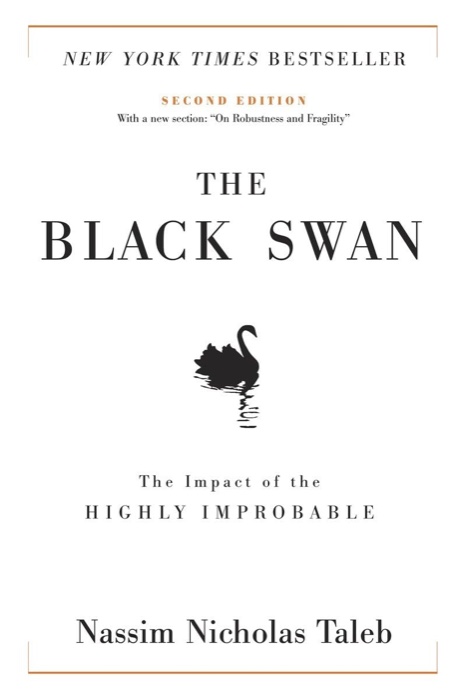 The Black Swan: The Impact of the Highly Improbable
 Think Like a Freak
 A Whole New Mind: Why Right-Brainers Will Rule the Future
 Heretics
 Enlightenment Now: The Case for Reason, Science, Humanism, and Progress
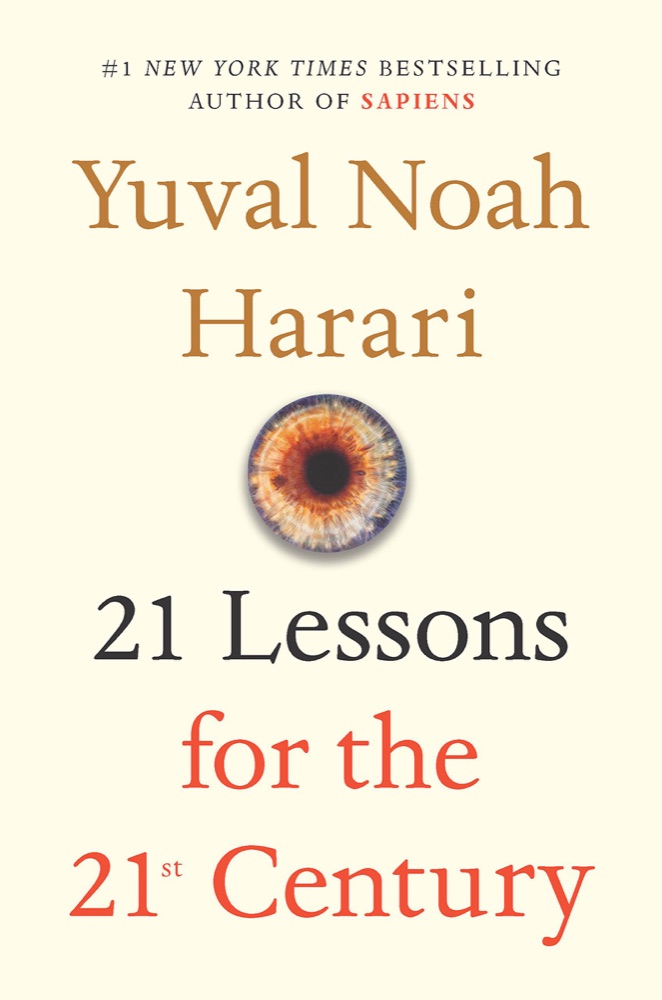 21 Lessons for the 21st Century
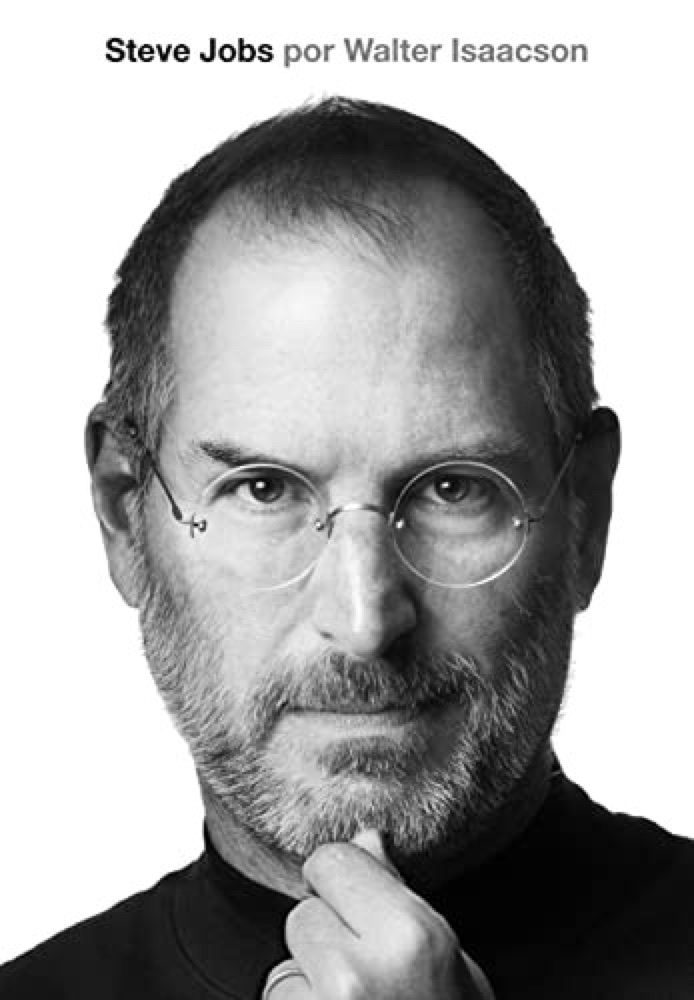 Steve Jobs
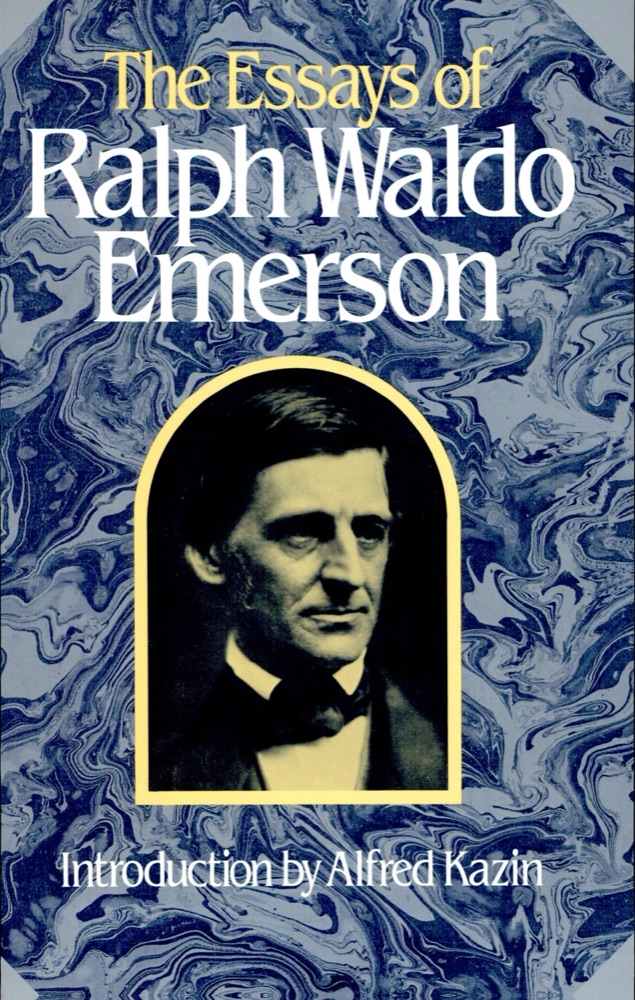 The Essays of Ralph Waldo Emerson
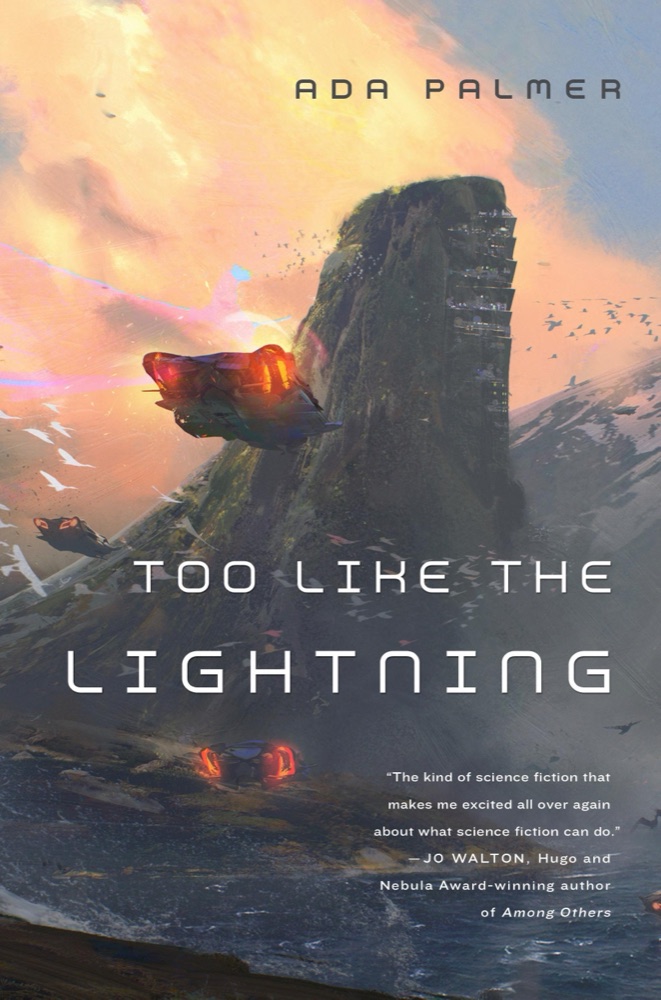 Too Like the Lightning
 The Age of Absurdity: Why Modern Life makes it Hard to be Happy
 The Story of B: An Adventure of the Mind and Spirit
 Last and First Men
 Creativity: Unleashing the Forces Within