
 The Art of Thinking Clearly
Quotes from the Book
it’s far better to be uncomfortably uncertain than comfortably wrong. In the end, it’s the confused apes—the connoisseurs of uncertainty—that transform the world.
12
our obsession with certainty leads us astray and why all progress takes place in uncertain conditions.
6
Over time, our beliefs begin to blend into our identity. Your belief in CrossFit makes you a CrossFitter, your belief in climate change makes you an environmentalist, and your belief in primal eating makes you paleo. When your beliefs and your identity are one and the same, changing your mind means changing your identity—which is why disagreements often turn into existential death matches.
4
scientific development often begins by someone noticing an anomaly and saying, “That’s funny…”50 The discovery of quantum mechanics, X-rays, DNA, oxygen, penicillin, and others, all occurred when the scientists embraced, rather than disregarded, anomalies.
4
The path, as the mystic poet Rumi writes, won’t appear until you start walking. William Herschel started walking, grinding mirrors, and reading astronomy-for-dummies books even though he had no idea he would discover Uranus. Andrew Wiles started walking when he picked up a book on Fermat’s last theorem as a teenager, not knowing where his curiosity might lead. Steve Squyres started walking in search of his blank canvas, even though he had no idea it would one day lead him to Mars. The secret is to start walking before you see a clear path. Start walking, even though there will be stuck wheels, broken drills, and exploding oxygen tanks ahead. Start walking because you can learn to walk backward if your wheel gets stuck or you can use duct tape to block catastrophe. Start walking, and as you become accustomed to walking, watch your fear of dark places disappear. Start walking because, as Newton’s first law goes, objects in motion tend to stay in motion—once you get going, you will keep going. Start walking because your small steps will eventually become giant leaps. Start walking, and if it helps, bring a bag of peanuts with you for good luck. Start walking, not because it’s easy, but because it’s hard. Start walking because it’s the only way forward.
3
Critical thinking and creativity don’t come naturally to us. We’re hesitant to think big, reluctant to dance with uncertainty, and afraid of failure. These were necessary during the Paleolithic Period, keeping us safe from poisonous foods and predators. But here in the information age, they’re bugs.
3
Charlie Munger, vice chairman of Berkshire Hathaway, is a major proponent of this idea. “You’re not entitled to take a view,” he cautions, “unless and until you can argue better against that view than the smartest guy who holds that opposite view.
2
Moonshots force you to reason from first principles. If your goal is 1 percent improvement, you can work within the status quo. But if your goal is to improve tenfold, the status quo has to go. Pursuing a moonshot puts you in a different league—and often an entirely different game—from that of your competitors, making the established plays and routines largely irrelevant.
2
Walking,” he explains, “has a very good effect in that you’re in this state of relaxation, but at the same time you’re allowing the sub-conscious to work on you.
2
Remember, the thought experiment is the starting point, not the end. The process is messy and nonlinear. And the answer, as we’ll see in the next section, will often come when you’re least expecting it.
2
Let’s pause there for a moment. As shocking as it sounds, we can generate breakthroughs simply by thinking. No Google. No self-help books. No focus groups or surveys. No advice from a self-proclaimed life coach or an expensive consultant. No copying from competitors. This external search for answers impedes first-principles thinking by focusing our attention on how things are rather than how they could be.
2
Our ability to make the most out of uncertainty is what creates the most potential value.
2
Here’s the problem. Process, by definition, is backward looking. It was developed in response to yesterday’s troubles. If we treat it like a sacred pact—if we don’t question it—process can impede forward movement. Over time, our organizational arteries get clogged with outdated procedures.
2
Talent hits a target no one else can hit,” philosopher Arthur Schopenhauer said, but “genius hits a target no one else can see.” When
2
When you try to improve on existing techniques,” says Astro Teller, the head of X, Google’s moonshot factory, “you’re in a smartness contest with everyone who came before you. Not a good contest to be in.
2
Much as in life, if you like someone, you’ll tend to overlook their flaws. You’ll find signals from a love interest—or a spacecraft—even when they’re not sending any.
1
Be careful if you spend your days finding right answers by following a straight path to the light switch. If the drugs you’re developing were certain to work, if your client were certain to be acquitted in court, or if your Mars rover were certain to land, your jobs wouldn’t exist.
1
...Teller doesn’t buy it: “Taking good, smart risks is something that anyone can do, whether you’re on a team of 5 or in a company of 50,000.”18 Bezos would agree. “Given a ten percent chance of a 100 times payoff, you should take that bet every time,” he wrote...
1
Do we own the process or does the process own us?
1
The great obstacle to discovering,” historian Daniel J. Boorstin writes, “was not ignorance but the illusion of knowledge.
1
Without an informed public willing to question confident claims, democracy decays and misinformation spreads. Once alternative facts are reported and retweeted, they become the truth. Pseudoscience becomes indistinguishable from real science.
1
Vested interests also reinforce the status quo. High-level executives at Fortune 500 companies shun innovation because their compensation is tied to short-term quarterly outcomes that may be temporarily disrupted by forging a new path. “It’s difficult to get a man to understand something,” Upton Sinclair said, “when his salary depends on his not understanding it.
She went from selling fax machines door-to-door to becoming the world’s youngest self-made woman billionaire. She credits her success partly to a question that her father would ask her every week when she was growing up. “What have you failed at this week?” If Sara didn’t have an answer, her father would be disappointed. To her father, failing to try was far more disappointing than failure itself.
We’ve all been in that meeting before. People are gathered around a conference table, with half-empty cups of lukewarm coffee strewn around, to “brainstorm ideas” and “explore options.” But instead of exploring ideas, everyone’s busy shooting them down. “We’ve tried that before.” “We don’t have the budget.” “The management would never approve.” Idea generation stops before it even begins. As a result, instead of trying something new, we end up doing what we did yesterday. The goal should be to resist the tendency to activate convergent thinking through a “This can’t be done” attitude. Instead, begin with a divergent “This could be done if …” mindset.
THERE’S A DIFFERENCE, as Morpheus said, between knowing the path and walking the path. Once you’ve stress-tested your ideas by trying to prove yourself wrong, it’s now time to collide those ideas with reality in tests and experiments.
Pursuing a thought experiment—even one that leads nowhere—can lead to breakthroughs. Fantasies, as Walter Isaacson writes, can be “paths to reality.
In the popular children’s book Harold and the Purple Crayon, the four-year-old protagonist has the power to create things just by drawing them. There’s no path to walk on, so he draws a path. There’s no moon to light his path, so he draws the moon. There are no trees to climb on, so he draws an apple tree. Throughout the story, his imagination brings things into existence.
Instead of letting your original vision—or the visions of others—shape the path forward, you abandon all allegiances to them. You hack through existing assumptions as if you’re hacking through a jungle until you’re left with the fundamental components.
Unless you consider the best-case scenario along with the worst, your brain will steer you toward the seemingly safest path—inaction. But as a Chinese proverb goes, many a false step was made by standing still. You’re more likely to take that first step into the unknown when there’s the proverbial pot of gold awaiting at the end.
Watch on YouTube
About Ozan Varol
We have collected 29 quotes from 1 book by Ozan Varol on BookQuoters.
More about the author →About the book
Named a "must read" by Susan Cain, "endlessly fascinating" by Daniel Pink, and "bursting with practical insights" by Adam Grant. A former rocket scientist reveals the habits, ideas, and strategies that will empower you to turn the seemingly impossible into the possible. Rocket science is often celebrated as the ultimate triumph of technology. But it's not. Rather, it's the apex of a certain thought process -- a way to imagine the unimaginable and solve the unsolvable. It's the same thought process that enabled Neil Armstrong to take his giant leap for mankind, that allows spacecraft to travel millions of miles through outer space and land on a precise spot, and that brings us closer to colonizing other planets. Fortunately, you don't have to be a rocket scientist to think like one. In this accessible and practical book, Ozan Varol reveals nine simple strategies from rocket science that y
Book details
- First published
- 2020
- Author
- Ozan Varol
- Genre
- Nonfiction
- Goodreads rating
- 4.17 (5k ratings)
Keep reading
The Art of Thinking Clearly
 Superforecasting: The Art and Science of Prediction
 Black Box Thinking: Why Some People Never Learn from Their Mistakes - But Some Do
 Barking Up the Wrong Tree: The Surprising Science Behind Why Everything You Know About Success Is (Mostly) Wrong
 How to Fly a Horse: The Secret History of Creation, Invention, and Discovery
 The Art of Creative Thinking
 Smartcuts: How Hackers, Innovators, and Icons Accelerate Success
 Creativity, Inc.: Overcoming the Unseen Forces That Stand in the Way of True Inspiration
 Invent and Wander: The Collected Writings of Jeff Bezos
 The Black Swan: The Impact of the Highly Improbable
 A Whack on the Side of the Head: How You Can Be More Creative
 Algorithms to Live By: The Computer Science of Human Decisions
 Rationality: From AI to Zombies
 Things a Little Bird Told Me: Confessions of the Creative Mind
 Same as Ever: A Guide to What Never Changes
 Adapt: Why Success Always Starts with Failure
 Originals: How Non-Conformists Move the World
 Range: Why Generalists Triumph in a Specialized World
 The Art of Impossible: A Peak Performance Primer
 Think Again: The Power of Knowing What You Don't Know
 The Rise of Superman: Decoding the Science of Ultimate Human Performance
 Be Your Future Self Now: The Science of Intentional Transformation
 Think Like a Freak
 Smarter Faster Better: The Secrets of Being Productive in Life and Business
 The Undoing Project: A Friendship That Changed Our Minds
 The Meaning of It All: Thoughts of a Citizen-Scientist
 You Are Not So Smart
 The Geography of Genius: A Search for the World's Most Creative Places from Ancient Athens to Silicon Valley
 How to Fail at Almost Everything and Still Win Big: Kind of the Story of My Life
 Zen and the Art of Motorcycle Maintenance
 Principles: Life and Work
 Made to Stick: Why Some Ideas Survive and Others Die
 Math with Bad Drawings
 Tribe Of Mentors: Transformative Wisdom From Icons and Innovators to Help You Navigate Life's Challenges
 Built to Last: Successful Habits of Visionary Companies
 Imagine: How Creativity Works
 Fooled by Randomness: The Hidden Role of Chance in Life and in the Markets
 Right Kind of Wrong: The Science of Failing Well
 Creativity: Flow and the Psychology of Discovery and Invention
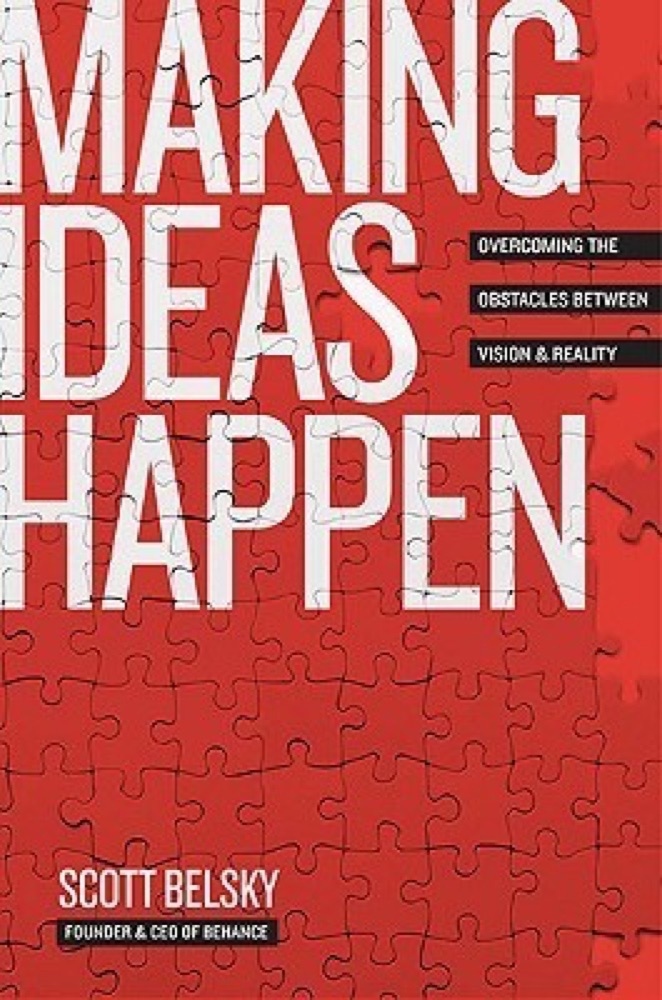 Making Ideas Happen: Overcoming the Obstacles Between Vision and Reality
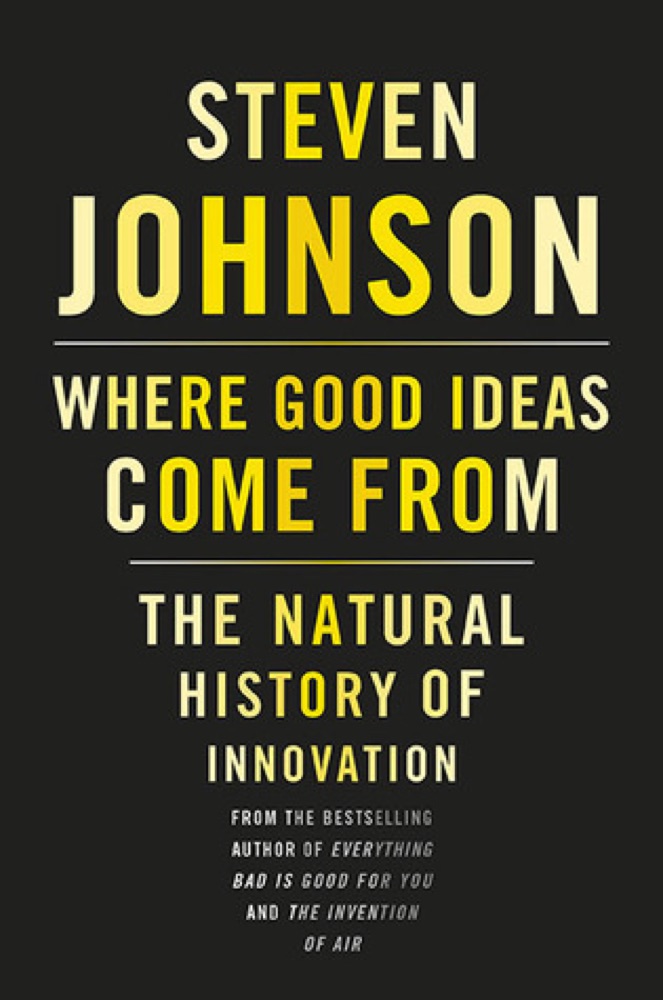 Where Good Ideas Come From: The Natural History of Innovation
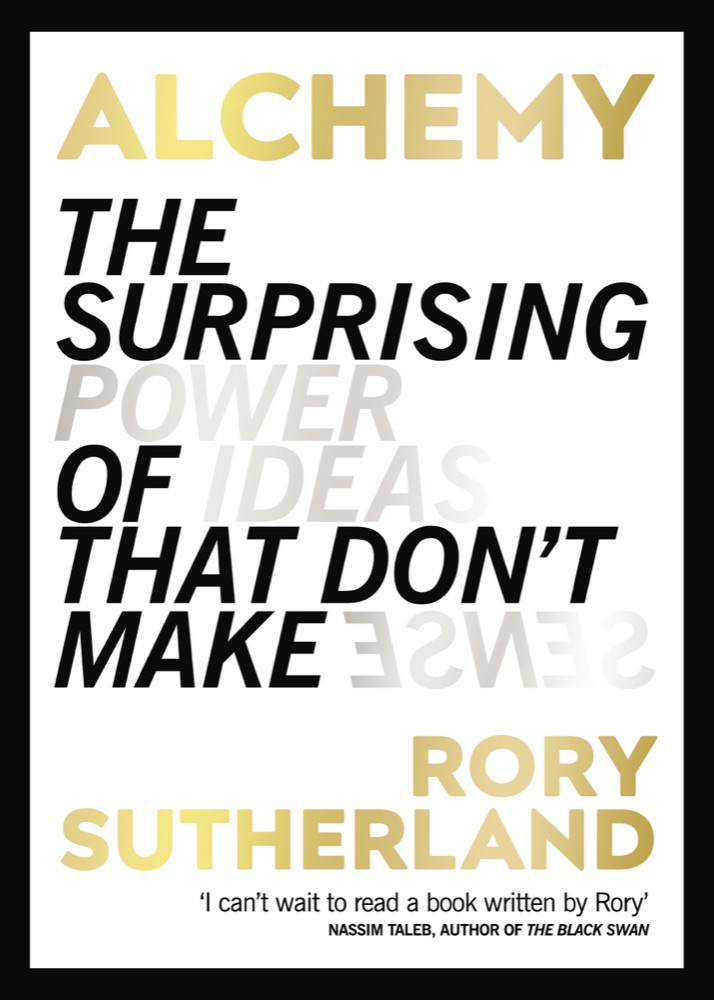 Alchemy: The Surprising Power of Ideas That Don't Make Sense
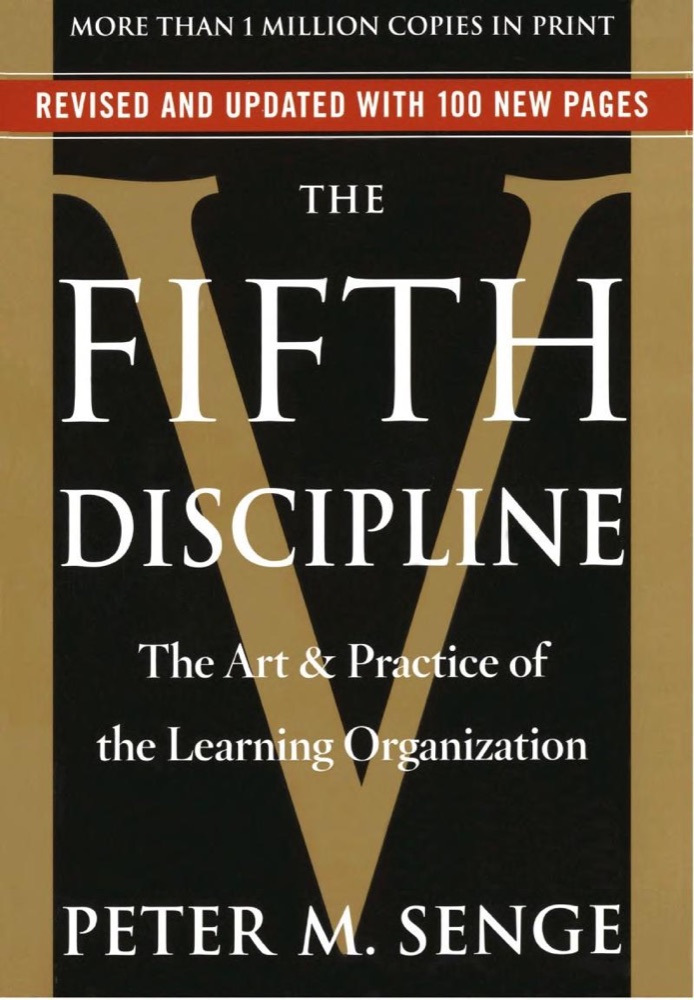 The Fifth Discipline: The Art & Practice of The Learning Organization
 Brief Answers to the Big Questions
 The Price of Tomorrow: Why Deflation is the Key to an Abundant Future
 Antifragile: Things That Gain from Disorder
 Magic of Thinking Big
 Great by Choice: Uncertainty, Chaos, and Luck—Why Some Thrive Despite Them All
 But What If We're Wrong? Thinking About the Present As If It Were the Past
 The Element: How Finding Your Passion Changes Everything
 Hackers & Painters: Big Ideas from the Computer Age
 God's Debris: A Thought Experiment
 21 Lessons for the 21st Century
 What the Dog Saw and Other Adventures
 Mastermind: How to Think Like Sherlock Holmes
 My Ishmael
 Zero to One: Notes on Startups, or How to Build the Future
 The Obstacle Is the Way: The Timeless Art of Turning Trials into Triumph
 Travels