
 Downtown Owl
Quotes from the Book
Every time I learn the truth about something, I’m disappointed
71
It doesn't matter what you can do if you don't know why you're doing it.
36
If you've spent any time trolling the blogosphere, you've probably noticed a peculiar literary trend: the pervasive habit of writers inexplicably placing exclamation points at the end of otherwise unremarkable sentences. Sort of like this! This is done to suggest an ironic detachment from the writing of an expository sentence! It's supposed to signify that the writer is self-aware! And this is idiotic. It's the saddest kind of failure. F. Scott Fitzgerald believed inserting exclamation points was the literary equivalent of an author laughing at his own jokes, but that's not the case in the modern age; now, the exclamation point signifies creative confusion. All it illustrates is that even the writer can't tell if what they're creating is supposed to be meaningful, frivolous, or cruel. It's an attempt to insert humor where none exists, on the off chance that a potential reader will only be pleased if they suspect they're being entertained. Of course, the reader isn't really sure, either. They just want to know when they're supposed to pretend to be amused. All those extraneous exclamation points are like little splatters of canned laughter: They represent the "form of funny," which is more easily understood (and more easily constructed) than authentic funniness.
34
If you stare long enough at anything, you will start to find similarities. The word “coincidence” exists in order to stop people from seeing meaning where none exists.
28
The deeper reality is that I’m not sure if what I do is real. I usually believe that I’m certain about how I feel, but that seems naive. How do we know how we feel?…There is almost certainly a constructed schism between (a) how I feel, and (b) how I think I feel. There’s probably a third level, too—how I want to think I feel.
25
Observing someone without context amplifies the experience. The more we know, the less we are able to feel.
24
The message of "The Winner Takes It All" is straightforward: It argues that the concept of relationships ending on mutual terms is an emotional fallacy. One person is inevitably okay and the other is inevitably devastated.
21
We assume that all statements must be mild inversions of the truth, because it's too weird to imagine people who aren't casually lying, pretty much all the time.
18
The only people who think the Internet is a calamity are people whose lives have been hurt by it; the only people who insist the Internet is wonderful are those who need it to give their life meaning.
15
What are the things that make adults depressed? The master list is too comprehensive to quantify (plane crashes, unemployment, killer bees, impotence, Stringer Bell's murder, gambling addictions, crib death, the music of Bon Iver, et al.) But whenever people talk about their personal bouts of depression in the abstract, there are two obstructions I hear more than any other. The possibility that one's life is not important, and the mundane predictability of day-to-day existence. Talk to a depressed person (particularly one who's nearing midlife), and one (or both) of these problems will inevitably be described. Since the end of World War II, every generation of American children has been endlessly conditioned to believe that their lives are supposed to be great -- a meaningful life is not just possible, but required. Part of the reason forward-thinking media networks like Twitter succeed is because people want to believe that every immaterial thing they do is pertinent by default; it's interesting because it happened to them, which translates as interesting to all. At the same time, we concede that a compelling life is supposed to be spontaneous and unpredictable-- any artistic depiction of someone who does the same thing every day portrays that character as tragically imprisoned (January Jones on Mad Men, Ron Livingston in Office Space, the lyrics to "Eleanor Rigby," all novels set in affluent suburbs, pretty much every project Sam Mendes has ever conceived, etc.) If you know exactly what's going to happen tomorrow, the voltage of that experience is immediately mitigated. Yet most lives are the same, 95 percent of the time. And most lives aren't extrinsically meaningful, unless you're delusionally self-absorbed or authentically Born Again. So here's where we find the creeping melancholy of modernity: The one thing all people are supposed to inherently deserve- a daily subsistence that's both meaningful and unpredictable-- tends to be an incredibly rare commodity. If it's not already there, we cannot manufacture it.
14
If you asked me what makes the world go round, I would say self-deception. Self-deception allows us to create a consistent narrative for ourselves that we actually believe. I’m not saying that the truth doesn’t matter. It does. But self-deception is how we survive.
13
There’s one kind of writing that’s always easy: Picking out something obviously stupid and reiterating how stupid it obviously is. This is the lowest form of criticism, easily accomplished by anyone. And for most of my life, I have tried to avoid this. In fact, I’ve spend an inordinate amount of time searching for the underrated value in ostensibly stupid things. I understand Turtle’s motivation and I would have watched Medelin in the theater. I read Mary Worth every day for a decade. I’ve seen Korn in concert three times and liked them once. I went to The Day After Tomorrow on opening night. I own a very expensive robot that doesn’t do anything. I am open to the possibility that everyting has metaphorical merit, and I see no point in sardonically attacking the most predictable failures within any culture.
10
Instead, we were given a publication called the Weekly Reader, which was like a newspaper for four-foot illiterates.
7
F. Scott Fitzgerald believed inserting exclamation points was the literary equivalent of an author laughing at his own jokes, but that's not the case in the modern age; now, the exclamation point signifies creative confusion. All it illustrates is that even the writer can't tell if what they're creating is supposed to be meaningful, frivolous, or cruel. It's an attempt to insert humor where none exists, on the off chance that a potential reader will only be pleased if they suspect they're being entertained. Of course, the reader isn't really sure, either. They just want to know when they're supposed to pretend to be amused.
6
Ignorance is not bliss. That platitude is totally wrong. You will not be intellectually happier if you know fewer things. Learning should be a primary goal of living. But what if ignorance feels better—not psychologically, but physically? That would explain a lot of human incongruities.
5
I think the larger sect of liars are people who think they are telling the truth, but who really have no idea what the truth is.
4
As a rule, people who classify art as “irrelevant” are trying to position themselves above the entity; it’s a way of pretending they’re more in step with contemporary culture than the artist himself, which is mostly a way of saying they can’t find a tangible reason for disliking what something intends to embody. Moreover, the whole argument is self-defeating: If you classify something as “irrelevant,” you’re (obviously) using it as a unit of comparison against whatever is “relevant,” so it (obviously) does have meaning and merit. Truly irrelevant art wouldn’t even be part of the conversation.
3
One of the minor tragedies of human memory is our inability to unwatch movies we’d love to see (again) for the first time.
3
But when you’re naturally better than everyone else, and when that talent is so utterly obvious, being quiet doesn’t translate as humble. It translates as boredom.
3
I believe that time is like a train, with men hanging out in front of the engine and off the back of the caboose; the man in front is laying down new tracks the moment before the train touches them and the man in the caboose is tearing up the rails the moment they are passed. There is no linear continuation: The past disappears, the future is unimagined, and the present is ephemeral. It cannot be traversed.
3
So if you’ve seen Twelve Monkeys more than twice, you’re probably a Calvinist.
3
When Arthur Schlesinger Sr. pioneered the 'presidential greatness poll' in 1948, the top five were Lincoln, Washington, Franklin D. Roosevelt, Woodrow Wilson, and Jefferson. Only Wilson appears to be seriously fading, probably because his support for the World War I-era Sedition Act now seems outrageous; in this analogy, Woodrow is like the Doors and the Sedition Act is Oliver Stone.
3
Not all crazy people are brilliant, but almost all brilliant people are crazy.
2
The mere recognition of an extrinsic reality damages the intrinsic merits of one’s own reality. In other words, it’s a mistake to (consciously) do what everyone else is doing, just as it’s a mistake to (consciously) do the opposite.
2
Nothing is completely authentic. Even the guys who kill themselves are partially acting.
2
Part of the reason forward-thinking media networks like Twitter succeed is because people3 want to believe that every immaterial thing they do is pertinent by default; it’s interesting because it happened to them, which translates as interesting to all.
2
This is a consistent theme in stories about traveling to the future: Things are always worse when you get there. And I suspect this is because the kind of writer who’s intrigued by the notion of moving forward in time can’t see beyond their own pessimism about being alive. People who want to travel through time are both (a) unhappy and (b) unwilling to compromise anything about who they are. They would rather change every element of society except themselves.
2
The defining line from Frank Herbert’s Dune argues that the mystery of life “is not a question to be answered but a reality to be experienced.” My fantasy offers the opposite. Nothing would be experienced. Nothing would feel new or unknown or jarring. It’s a fantasy for people who want to solve life’s mysteries without having to do the work.
2
But regardless of the direction you move, the central problem is still there: Why do it? What’s the best reason for exploding the parameters of reality? With the possible exception of eating a dinosaur, I don’t think there is one.
2
Twelve Monkeys makes a lot of references to the “Cassandra complex” (named for a Greek myth about a young woman’s inability to convince others that her prophetic warnings are accurate), but it’s mostly about predestination—in Twelve Monkeys, the assumption is that anyone who travels into the past will do exactly what history dictates. Nothing can be altered. What this implies is that everything about life (including the unforeseen future) is concrete and predetermined. There is no free will. So if you’ve seen Twelve Monkeys more than twice, you’re probably a Calvinist.
2
Watch on YouTube
About Chuck Klosterman
We have collected 153 quotes from 6 books by Chuck Klosterman on BookQuoters.
More about the author →
About the book
Chuck Klosterman has chronicled rock music, film, and sports for almost fifteen years. He's covered extreme metal, extreme nostalgia, disposable art, disposable heroes, life on the road, life through the television, urban uncertainty and small-town weirdness. Through a variety of mediums and with a multitude of motives, he's written about everything he can think of (and a lot that he's forgotten). The world keeps accelerating, but the pop ideas keep coming.
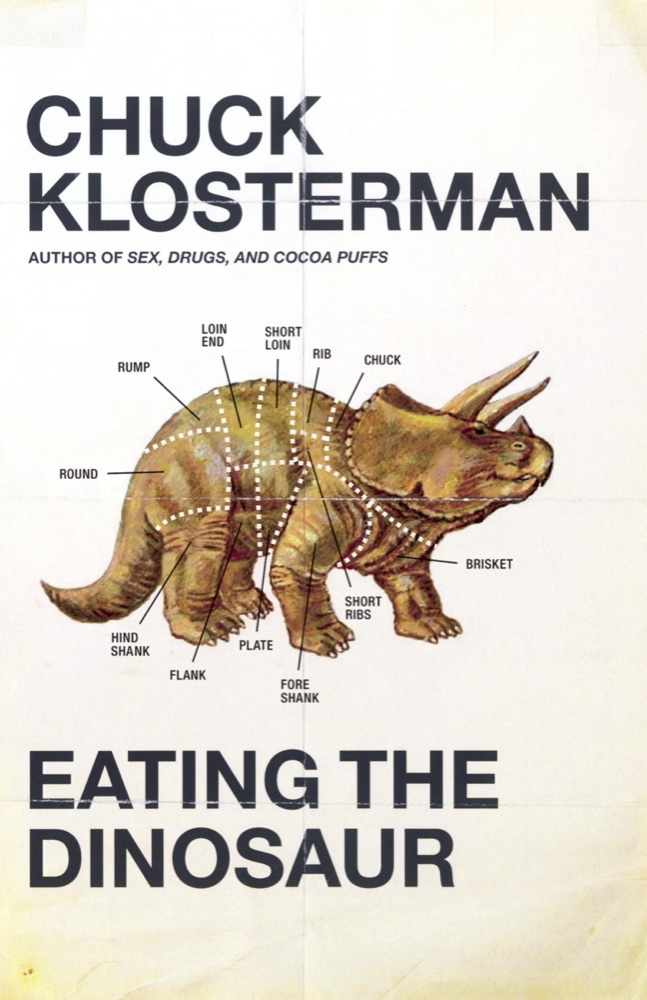
In Eating the Dinosaur, Klosterman is more entertaining and incisive than ever. Whether he's dissecting the boredom of voyeurism, the reason why music fans inevitably hate their favorite band's latest album, or why we love watching can't-miss superstars fail spectacularly, Klosterman remains obsessed with the relationship between expectation, reality, and living history. It's amateur anthropology for the present tense, and sometime
Book details
- First published
- 2009
- Author
- Chuck Klosterman
- Genre
- Nonfiction
- Goodreads rating
- 3.77 (16k ratings)
Keep reading
 But What If We're Wrong? Thinking About the Present As If It Were the Past
 Wampeters, Foma and Granfalloons
 Sex, Drugs, and Cocoa Puffs: A Low Culture Manifesto
 All Our Wrong Todays
 The Braindead Megaphone
 Gnomon
 Infinite Jest
 Half Asleep in Frog Pajamas
 You Are Not So Smart
 Player One: What Is to Become of Us
 The Meaning of It All: Thoughts of a Citizen-Scientist
 The Universe Versus Alex Woods
 Villa Incognito
 We Learn Nothing
 You Are Now Less Dumb: How to Conquer Mob Mentality, How to Buy Happiness, and All the Other Ways to Outsmart Yourself
 A Language Older Than Words
 Consider the Lobster and Other Essays
 The Age of Magical Overthinking: Notes on Modern Irrationality
 Flaubert's Parrot
 The Fry Chronicles
 Rationality: From AI to Zombies
 Asymmetry
 The Salmon of Doubt
 The Pale King
 The Magic Mountain
 Foucault's Pendulum
 The Gone-Away World
 Living with a Wild God: A Nonbeliever's Search for the Truth about Everything
 21 Lessons for the 21st Century
 The Wave in the Mind: Talks and Essays on the Writer, the Reader and the Imagination
 Just a Couple of Days
 The Anomaly
 Even Cowgirls Get the Blues
 The Gum Thief
 Point Omega
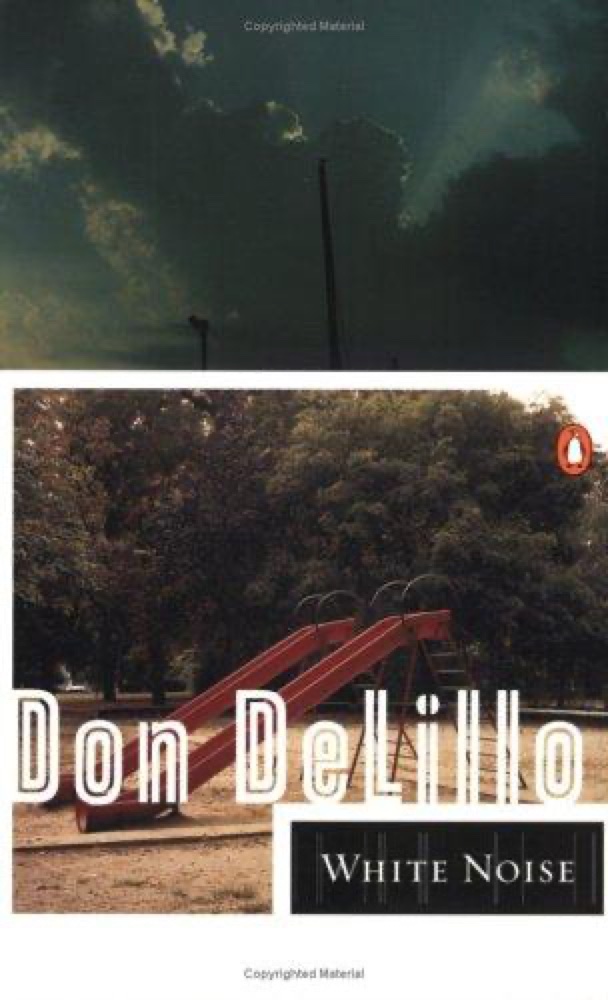 White Noise
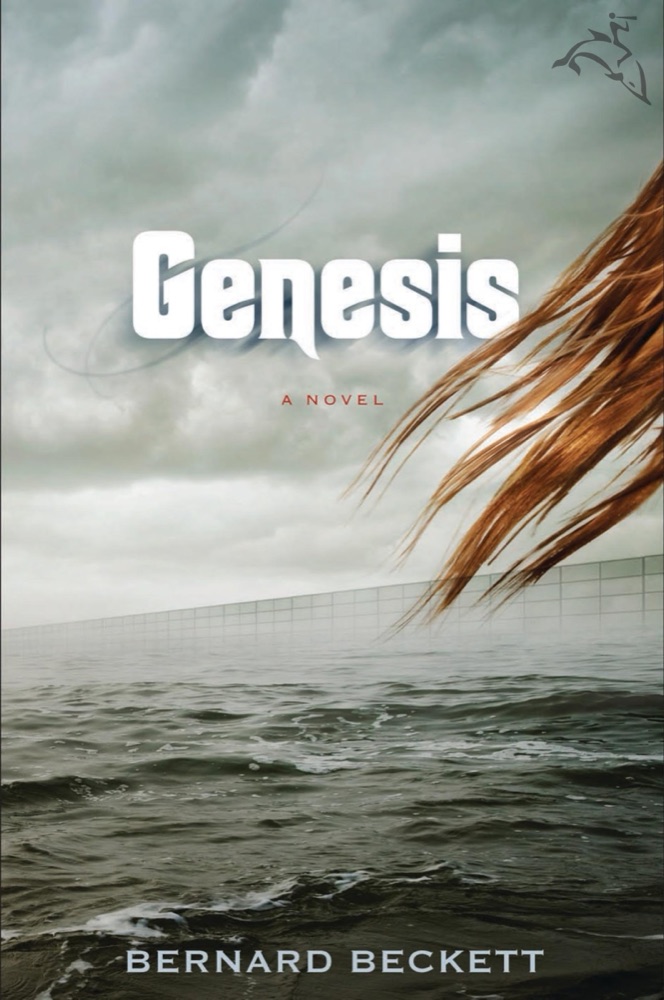 Genesis
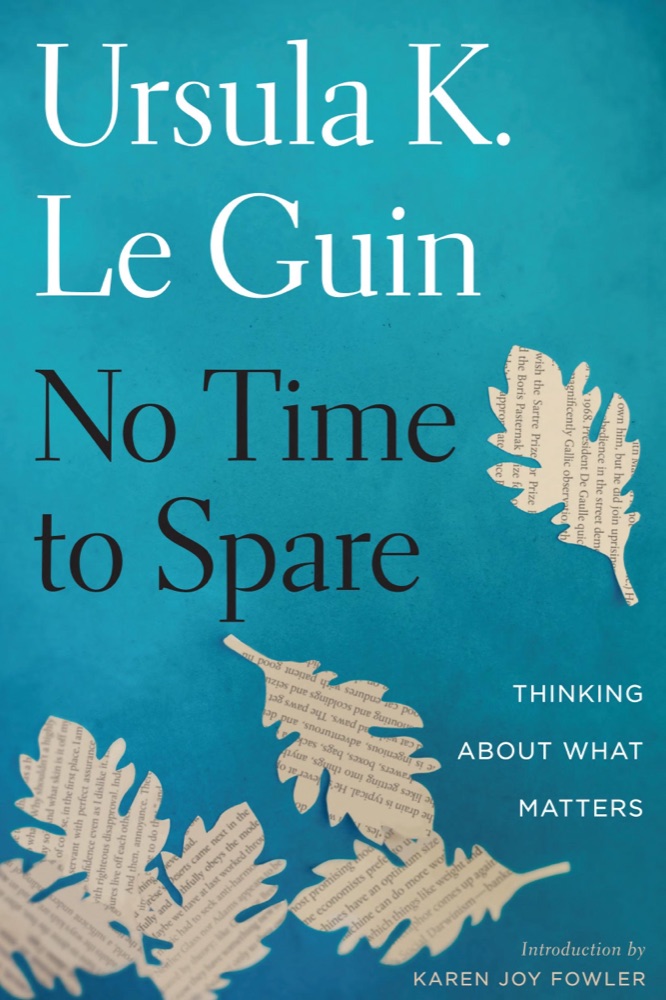 No Time To Spare: Thinking About What Matters
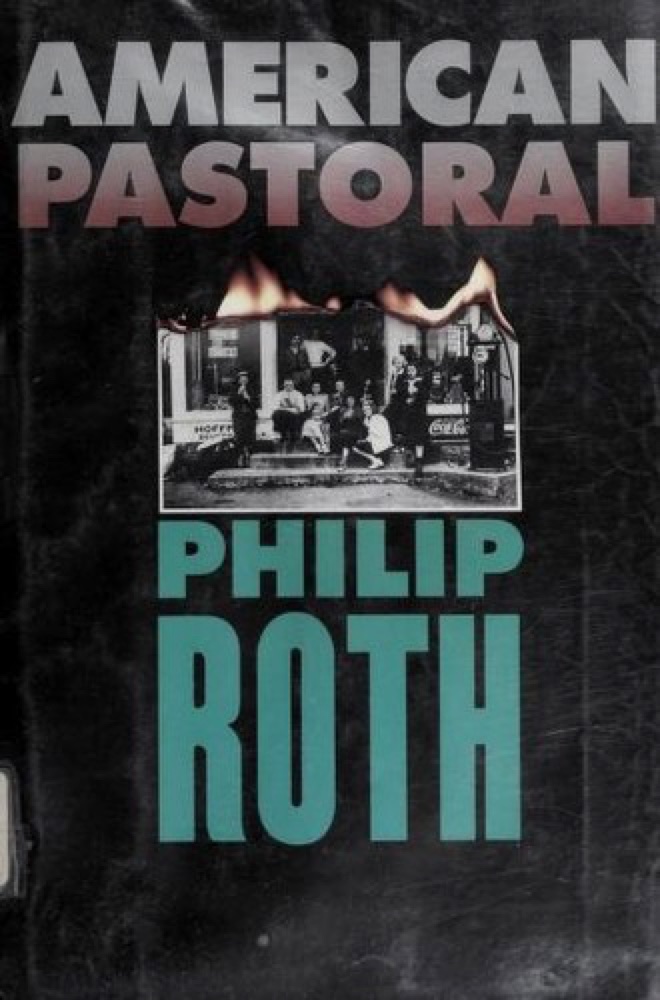 American Pastoral
 Experimental Film
 Nothing to Be Frightened Of
 Underground: The Tokyo Gas Attack and the Japanese Psyche
 Arcadia
 Drive Your Plow Over the Bones of the Dead
 God's Debris: A Thought Experiment
 Stories of Your Life and Others
 The Fifth Science
 Dæmon Voices
 The Aosawa Murders
 All the Birds in the Sky
 Special Topics in Calamity Physics
 The Myth of Sisyphus
 Psych: The Story of the Human Mind
 Nutshell
 The Boy on the Bridge
 The Nix
 Fall; or, Dodge in Hell
 The Fall of Babel
 Echopraxia
 The Humans