
 Harry Potter and the Methods of Rationality
Quotes from the Book
Since the beginning not one unusual thing has ever happened.
Oops is the sound we make when we improve our beliefs and strategies; so to look back at a time and not see anything you did wrong means that you haven’t learned anything or changed your mind since then.
Many philosophers—particularly amateur philosophers, and ancient philosophers—share a dangerous instinct: If you give them a question, they try to answer it.
What is true is already so. Owning up to it doesn’t make it worse. Not being open about it doesn’t make it go away. And because it’s true, it is what is there to be interacted with. Anything untrue isn’t there to be lived. People can stand what is true, for they are already enduring it. —Eugene Gendlin
Logic stays true, wherever you may go, So logic never tells you where you live.
When you find yourself in philosophical difficulties, the first line of defense is not to define your problematic terms, but to see whether you can think without using those terms at all. Or any of their short synonyms. And be careful not to let yourself invent a new word to use instead. Describe outward observables and interior mechanisms; don’t use a single handle, whatever that handle may be.
The actual consumers of knowledge are the children—who can’t pay, can’t vote, can’t sit on the committees. Their parents care for them, but don’t sit in the classes themselves; they can only hold politicians responsible according to surface images of “tough on education.” Politicians are too busy being re-elected to study all the data themselves; they have to rely on surface images of bureaucrats being busy and commissioning studies—it may not work to help any children, but it works to let politicians appear caring. Bureaucrats don’t expect to use textbooks themselves, so they don’t care if the textbooks are hideous to read, so long as the process by which they are purchased looks good on the surface. The textbook publishers have no motive to produce bad textbooks, but they know that the textbook purchasing committee will be comparing textbooks based on how many different subjects they cover, and that the fourth-grade purchasing committee isn’t coordinated with the third-grade purchasing committee, so they cram as many subjects into one textbook as possible. Teachers won’t get through a fourth of the textbook before the end of the year, and then the next year’s teacher will start over. Teachers might complain, but they aren’t the decision-makers, and ultimately, it’s not their future on the line, which puts sharp bounds on how much effort they’ll spend on unpaid altruism . . .
So the next time you doubt the strangeness of the future, remember how you were born in a hunter-gatherer tribe ten thousand years ago, when no one knew of Science at all. Remember how you were shocked, to the depths of your being, when Science explained the great and terrible sacred mysteries that you once revered so highly. Remember how you once believed that you could fly by eating the right mushrooms, and then you accepted with disappointment that you would never fly, and then you flew. Remember how you had always thought that slavery was right and proper, and then you changed your mind. Don't imagine how you could have predicted the change, for that is amnesia. Remember that, in fact, you did not guess. Remember how, century after century, the world changed in ways you did not guess. Maybe then you will be less shocked by what happens next.
If you once tell a lie, the truth is ever after your enemy.
Listen to hypotheses as they plead their cases before you, but remember that you are not a hypothesis, you are the judge. Therefore do not seek to argue for one side or another, for if you knew your destination, you would already be there.
A random key does not open a random lock just because they are “both random.
If you see your activities and situation originally, you will be able to originally see your goals as well. If you can look with fresh eyes, as though for the first time, you will see yourself doing things that you would never dream of doing if they were not habits.
What does it mean to call for a “democratic” solution if you don’t have a conflict-resolution mechanism in mind? I think it means that you have said the word “democracy,” so the audience is supposed to cheer. It’s not so much a propositional statement, as the equivalent of the “Applause” light that tells a studio audience when to clap.
John Kenneth Galbraith said: “Faced with the choice of changing one’s mind and proving that there is no need to do so, almost everyone gets busy on the proof.
If the box contains a diamond, I desire to believe that the box contains a diamond; If the box does not contain a diamond, I desire to believe that the box does not contain a diamond; Let me not become attached to beliefs I may not want.
The police officer who puts their life on the line with no superpowers, no X-Ray vision, no super-strength, no ability to fly, and above all no invulnerability to bullets, reveals far greater virtue than Superman—who is a mere superhero.
But in probability theory, absence of evidence is always evidence of absence. If E is a binary event and P(H|E) > P(H), i.e., seeing E increases the probability of H, then P(H|¬E) < P(H), i.e., failure to observe E decreases the probability of H. The probability P(H) is a weighted mix of P(H|E) and P(H|¬E), and necessarily lies between the two.
Paolo Freire said, “Washing one’s hands of the conflict between the powerful and the powerless means to side with the powerful, not to be neutral.
If science is a religion, it is the religion that heals the sick and reveals the secrets of the stars.
Asimov’s “The Relativity of Wrong”:3 When people thought the earth was flat, they were wrong. When people thought the earth was spherical, they were wrong. But if you think that thinking the earth is spherical is just as wrong as thinking the earth is flat, then your view is wronger than both of them put together.
Why would you pay attention to your own thoughts, if you knew you were trying to manipulate yourself
The point of thinking is to shape our plans; if you’re going to keep the same plans anyway, why bother going to all that work to justify it? When
To be humble is to take specific actions in anticipation of your own errors. To confess your fallibility and then do nothing about it is not humble; it is boasting of your modesty.
It’s amazing how many Noble Liars and their ilk are eager to embrace ethical violations—with all due bewailing of their agonies of conscience—when they haven’t spent even five minutes by the clock looking for an alternative.
If the joy of scientific discovery is one-shot per discovery, then, from a fun-theoretic perspective, Newton probably used up a substantial increment of the total Physics Fun available over the entire history of Earth-originating intelligent life. That selfish bastard explained the orbits of planets and the tides.
If there is no black and white, there is yet lighter and darker, and not all grays are the same.
When you think about nonviolence, you think of Gandhi—not an anonymous protestor in one of Gandhi’s marches who faced down riot clubs and guns, and got beaten, and had to be taken to the hospital, and walked with a limp for the rest of her life, and no one ever remembered her name.
Once you tell a lie, the truth is your enemy; and every truth connected to that truth, and every ally of truth in general; all of these you must oppose, to protect the lie. Whether you’re lying to others, or to yourself.
If what you believe doesn't depend om what you see, you've been blinded as effectively as by poking out your eyeballs.
Watch on YouTube
About Eliezer Yudkowsky
We have collected 79 quotes from 3 books by Eliezer Yudkowsky on BookQuoters.
More about the author →More by Eliezer Yudkowsky
Harry Potter and the Methods of Rationality
 If Anyone Builds It, Everyone Dies: Why Superhuman AI Would Kill Us All
Book details
- Author
- Eliezer Yudkowsky
- Genre
- Philosophy
- Goodreads rating
- 4.32 (2k ratings) →
Keep reading
 The Art of Thinking Clearly
 God's Debris: A Thought Experiment
 You Are Not So Smart
 Think: A Compelling Introduction to Philosophy
 Children of Dune
 What Do You Care What Other People Think?
 Genesis
 The Meaning of It All: Thoughts of a Citizen-Scientist
 Zen and the Art of Motorcycle Maintenance
 The Black Swan: The Impact of the Highly Improbable
 21 Lessons for the 21st Century
 Foucault's Pendulum
 Echopraxia
 Letters to a Young Contrarian
 Mistakes Were Made (But Not by Me): Why We Justify Foolish Beliefs, Bad Decisions, and Hurtful Acts
 Alchemy: The Surprising Power of Ideas That Don't Make Sense
 Hunters of Dune
 You Are Now Less Dumb: How to Conquer Mob Mentality, How to Buy Happiness, and All the Other Ways to Outsmart Yourself
 Chapterhouse: Dune
 Being Wrong: Adventures in the Margin of Error
 But What If We're Wrong? Thinking About the Present As If It Were the Past
 Think Like a Freak
 Antifragile: Things That Gain from Disorder
 God Emperor of Dune
 Imager
 Blindsight
 Fooled by Randomness: The Hidden Role of Chance in Life and in the Markets
 Ancillary Justice
 Stranger in a Strange Land
 12 Rules for Life: An Antidote to Chaos
 Starry Messenger: Cosmic Perspectives on Civilization
 Logicomix: An Epic Search for Truth
 Mostly Harmless
 House Corrino
 Eating the Dinosaur
 Breaking the Spell: Religion as a Natural Phenomenon
 How the Mind Works
 The Resistance
 The Undoing Project: A Friendship That Changed Our Minds
 Finite and Infinite Games: A Vision of Life as Play and Possibility
 The Story of My Experiments With Truth
 Think Again: The Power of Knowing What You Don't Know
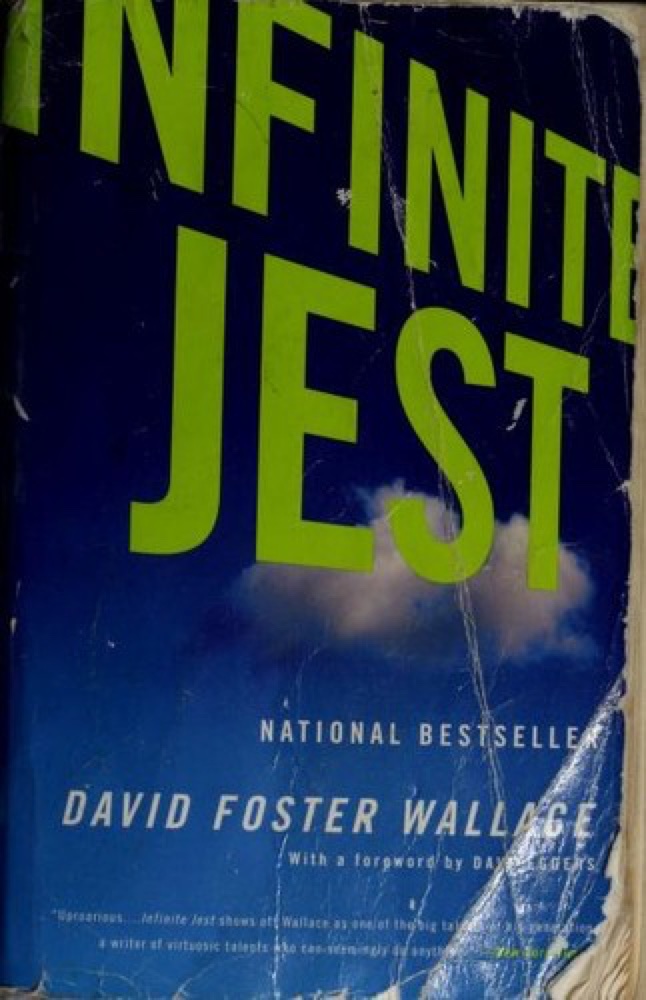 Infinite Jest
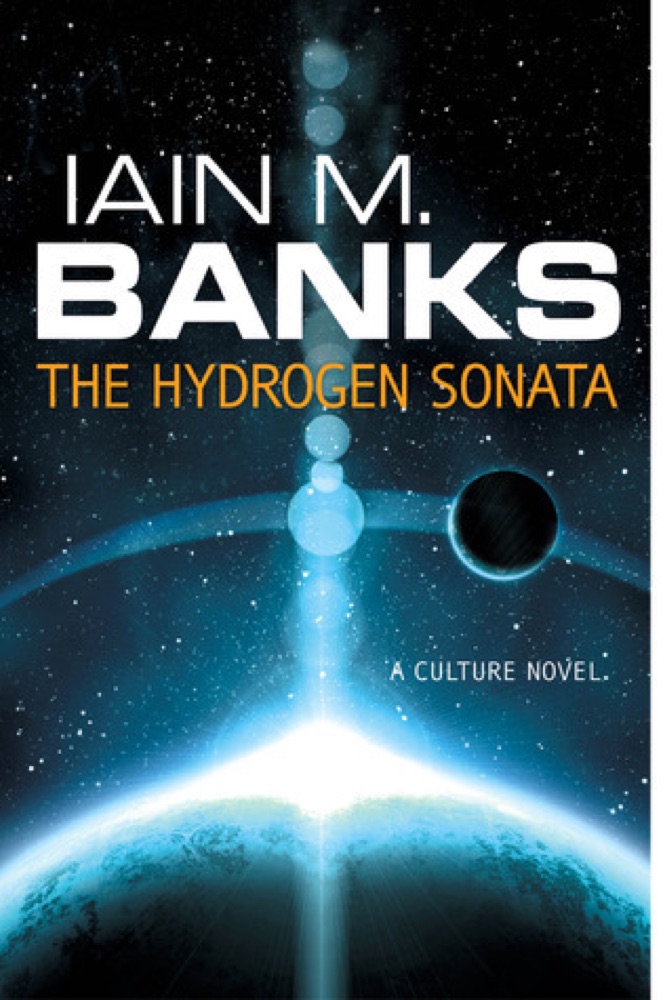 The Hydrogen Sonata
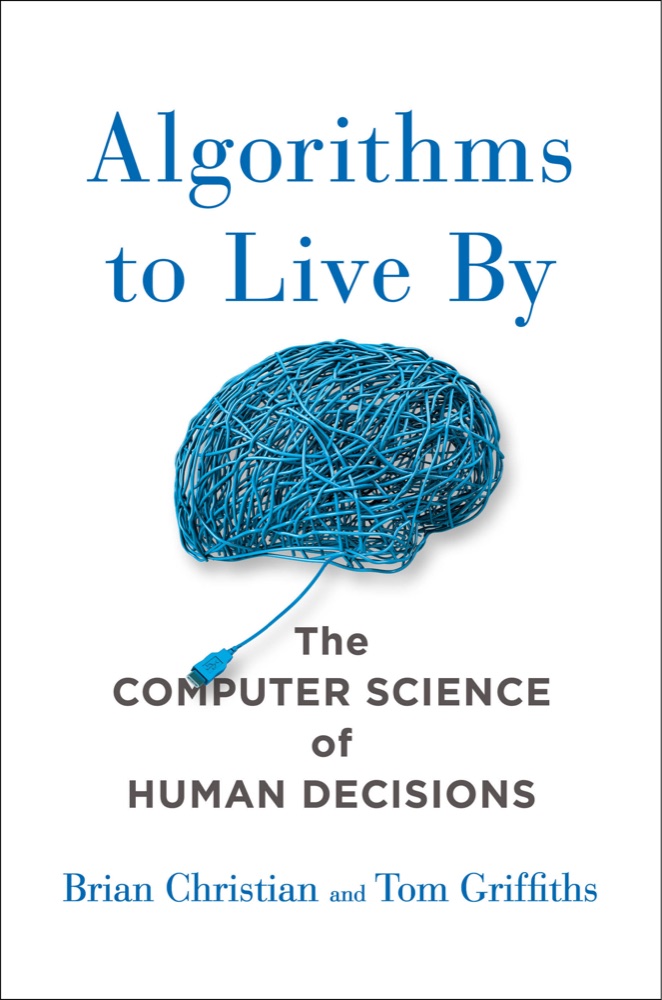 Algorithms to Live By: The Computer Science of Human Decisions
 The Wisdom of Insecurity: A Message for an Age of Anxiety
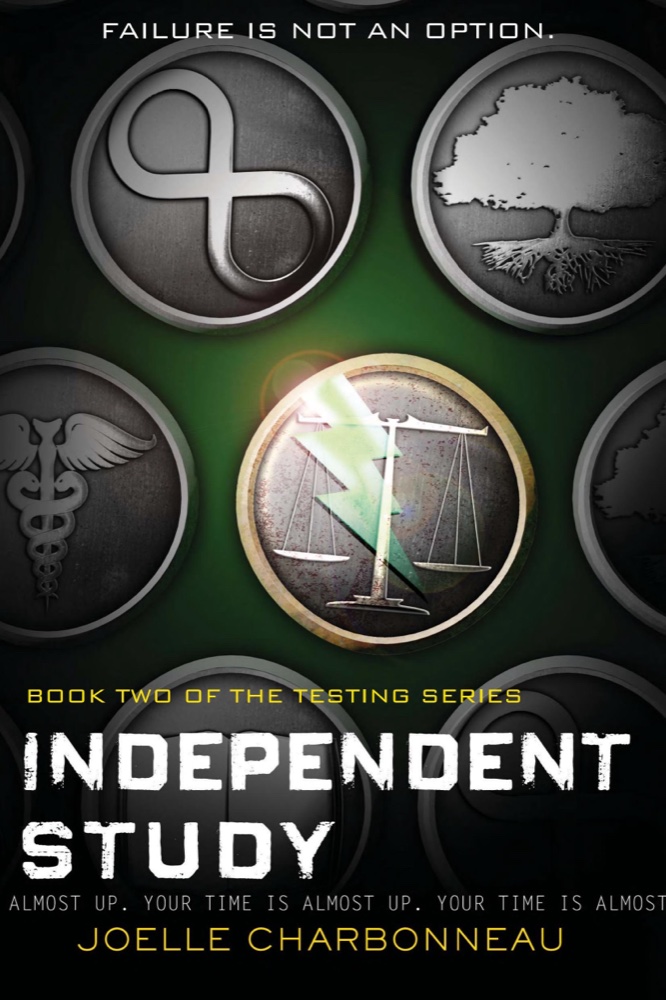 Independent Study
 Gnomon
 Why People Believe Weird Things: Pseudoscience, Superstition, and Other Confusions of Our Time
 1984
1984
 In the Light of What We Know
 On Certainty
 Daybreak: Thoughts on the Prejudices of Morality
 The Left Hand of Darkness
 Xenocide
 Stories of Your Life and Others
 Illusions: The Adventures of a Reluctant Messiah
 All Our Wrong Todays
 Freedom Evolves