
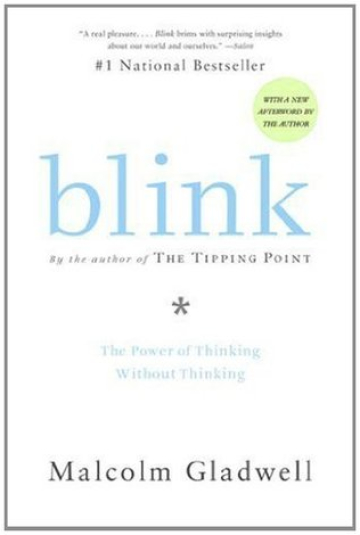
 Blink: The Power of Thinking Without Thinking
Quotes from the Book
A reliable way to make people believe in falsehoods is frequent repetition, because familiarity is not easily distinguished from truth. Authoritarian institutions and marketers have always known this fact.
Nothing in life is as important as you think it is, while you are thinking about it
Our comforting conviction that the world makes sense rests on a secure foundation: our almost unlimited ability to ignore our ignorance.
The psychologist, Paul Rozin, an expert on disgust, observed that a single cockroach will completely wreck the appeal of a bowl of cherries, but a cherry will do nothing at all for a bowl of cockroaches.
Intelligence is not only the ability to reason; it is also the ability to find relevant material in memory and to deploy attention when needed.
If you care about being thought credible and intelligent, do not use complex language where simpler language will do.
The idea that the future is unpredictable is undermined every day by the ease with which the past is explained.
Odd as it may seem, I am my remembering self, and the experiencing self, who does my living, is like a stranger to me.
A general “law of least effort” applies to cognitive as well as physical exertion. The law asserts that if there are several ways of achieving the same goal, people will eventually gravitate to the least demanding course of action. In the economy of action, effort is a cost, and the acquisition of skill is driven by the balance of benefits and costs. Laziness is built deep into our nature.
I have always believed that scientific research is another domain where a form of optimism is essential to success: I have yet to meet a successful scientist who lacks the ability to exaggerate the importance of what he or she is doing, and I believe that someone who lacks a delusional sense of significance will wilt in the face of repeated experiences of multiple small failures and rare successes, the fate of most researchers.
A reliable way of making people believe in falsehoods is frequent repetition, because familiarity is not easily distinguished from truth.
This is the essence of intuitive heuristics: when faced with a difficult question, we often answer an easier one instead, usually without noticing the substitution.
The confidence that individuals have in their beliefs depends mostly on the quality of the story they can tell about what they see, even if they see little.
We are prone to overestimate how much we understand about the world and to underestimate the role of chance in events.
we can be blind to the obvious, and we are also blind to our blindness.
You are more likely to learn something by finding surprises in your own behavior than by hearing surprising facts about people in general.
Mood evidently affects the operation of System 1: when we are uncomfortable and unhappy, we lose touch with our intuition. These findings add to the growing evidence that good mood, intuition, creativity, gullibility, and increased reliance on System 1 form a cluster. At the other pole, sadness, vigilance, suspicion, an analytic approach, and increased effort also go together. A happy mood loosens the control of System 2 over performance: when in a good mood, people become more intuitive and more creative but also less vigilant and more prone to logical errors.
The world makes much less sense than you think. The coherence comes mostly from the way your mind works.
Nothing in life is as important as you think it is when you are thinking about it.
The illusion that we understand the past fosters overconfidence in our ability to predict the future.
acquisition of skills requires a regular environment, an adequate opportunity to practice, and rapid and unequivocal feedback about the correctness of thoughts and actions.
People tend to assess the relative importance of issues by the ease with which they are retrieved from memory—and this is largely determined by the extent of coverage in the media. Frequently mentioned topics populate the mind even as others slip away from awareness. In turn, what the media choose to report corresponds to their view of what is currently on the public’s mind. It is no accident that authoritarian regimes exert substantial pressure on independent media. Because public interest is most easily aroused by dramatic events and by celebrities, media feeding frenzies are common
The test of learning psychology is whether your understanding of situations you encounter has changed, not whether you have learned a new fact.
Confidence is a feeling, which reflects the coherence of the information and the cognitive ease of processing it. It is wise to take admissions of uncertainty seriously, but declarations of high confidence mainly tell you that an individual has constructed a coherent story in his mind, not necessarily that the story is true.
We are prone to blame decision makers for good decisions that worked out badly and to give them too little credit for successful moves that appear obvious only after the fact.
The premise of this book is that it is easier to recognize other people’s mistakes than our own.
We focus on our goal, anchor on our plan, and neglect relevant base rates, exposing ourselves to the planning fallacy. We focus on what we want to do and can do, neglecting the plans and skills of others. Both in explaining the past and in predicting the future, we focus on the causal role of skill and neglect the role of luck. We are therefore prone to an illusion of control. We focus on what we know and neglect what we do not know, which makes us overly confident in our beliefs.
Nothing in life is as important as you think it is when you are thinking of it.
Because we tend to be nice to other people when they please us and nasty when they do not, we are statistically punished for being nice and rewarded for being nasty.
Did you know?
- The book distinguishes between two modes of thought Kahneman labels System 1 (fast, automatic, intuitive) and System 2 (slow, deliberate, effortful).
- It summarizes decades of Kahneman's research, much of it conducted with his longtime collaborator Amos Tversky, who died in 1996.
- It draws heavily on prospect theory, the account of decision-making under uncertainty that helped earn Kahneman the 2002 Nobel Memorial Prize in Economic Sciences.
- The closing chapters contrast the 'experiencing self' with the 'remembering self' in how people evaluate their lives.
- It won the Los Angeles Times Book Prize for Current Interest and the National Academy of Sciences Best Book Award.
- Kahneman was awarded the U.S. Presidential Medal of Freedom in 2013, two years after the book's publication.
About Daniel Kahneman
Daniel Kahneman (1934-2024) was an Israeli-American psychologist whose work on judgment, decision-making, and behavioral economics earned him the 2002 Nobel Memorial Prize in Economic Sciences. With his collaborator Amos Tversky he developed prospect theory, and he later served as the Eugene Higgins Professor of Psychology at Princeton University.
More about the author →About the book
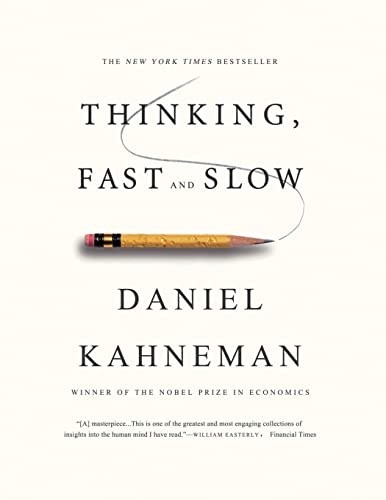
Thinking, Fast and Slow is Daniel Kahneman's 2011 synthesis of several decades of research in the psychology of judgment and decision-making. Its central framing distinguishes two modes of thought: System 1, which is fast, automatic, intuitive and emotional, and System 2, which is slower, deliberate, effortful and more logical. Kahneman argues that much of everyday thinking is governed by System 1, and that the mental shortcuts it relies on, while efficient, systematically lead us astray.
Building on his own work and his long collaboration with Amos Tversky, the book walks through a catalog of cognitive biases and heuristics, including anchoring, availability, the conjunction fallacy, overconfidence, and framing effects, as well as the loss aversion at the heart of their prospect theory. Kahneman shows how people struggle with statistical reasoning and place too much confidence in their own judgment. The closing sections draw a distinction between the experiencing self and the remembering self, examining how memory rather than moment-to-moment experience shapes the way we evaluate our lives.
The book became an international bestseller and a touchstone of the behavioral economics movement that Kahneman helped found, extending ideas that earned him the 2002 Nobel Memorial Prize in Economic Sciences. It won the Los Angeles Times Book Prize and the National Academy of Sciences Best Book Award and was named among the best books of 2011 by several major publications. Widely read far beyond academia, it reshaped how psychologists, economists, and general readers alike think about the limits of human rationality.
Book details
- First published
- 2011
- Length
- 499 pages
- Reading time
- 8 hours
- Author
- Daniel Kahneman
- Genre
- Nonfiction
- Goodreads rating
- 4.17 (607k ratings) →
If you liked this, read…
- 1Predictably IrrationalDan Ariely's accessible tour of the systematic irrationalities in human decision-making.
- 2NudgeThaler and Sunstein apply behavioral-economics findings to choice and policy.
- 3The Undoing ProjectMichael Lewis chronicles the Kahneman-Tversky partnership behind this book's ideas.
Keep reading
Blink: The Power of Thinking Without Thinking
 Stumbling on Happiness
 The Invisible Gorilla: And Other Ways Our Intuitions Deceive Us
 The Black Swan: The Impact of the Highly Improbable
 Fooled by Randomness: The Hidden Role of Chance in Life and in the Markets
 Influence: The Psychology of Persuasion
 You Are Now Less Dumb: How to Conquer Mob Mentality, How to Buy Happiness, and All the Other Ways to Outsmart Yourself
 The Art of Thinking Clearly
 Think Like a Freak
 The Undoing Project: A Friendship That Changed Our Minds
 God's Debris: A Thought Experiment
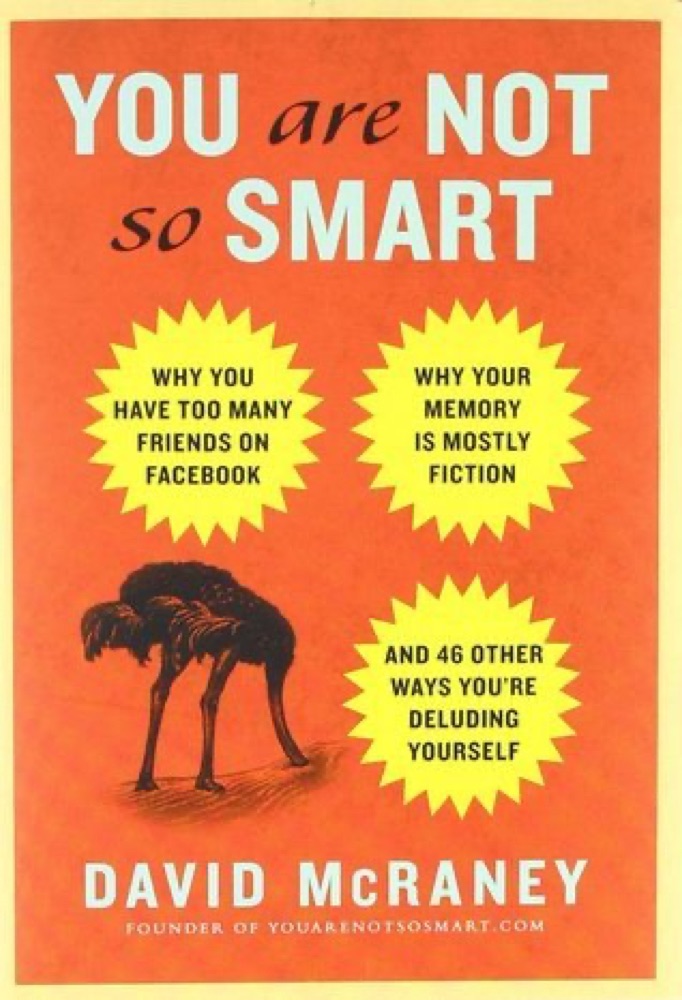 You Are Not So Smart
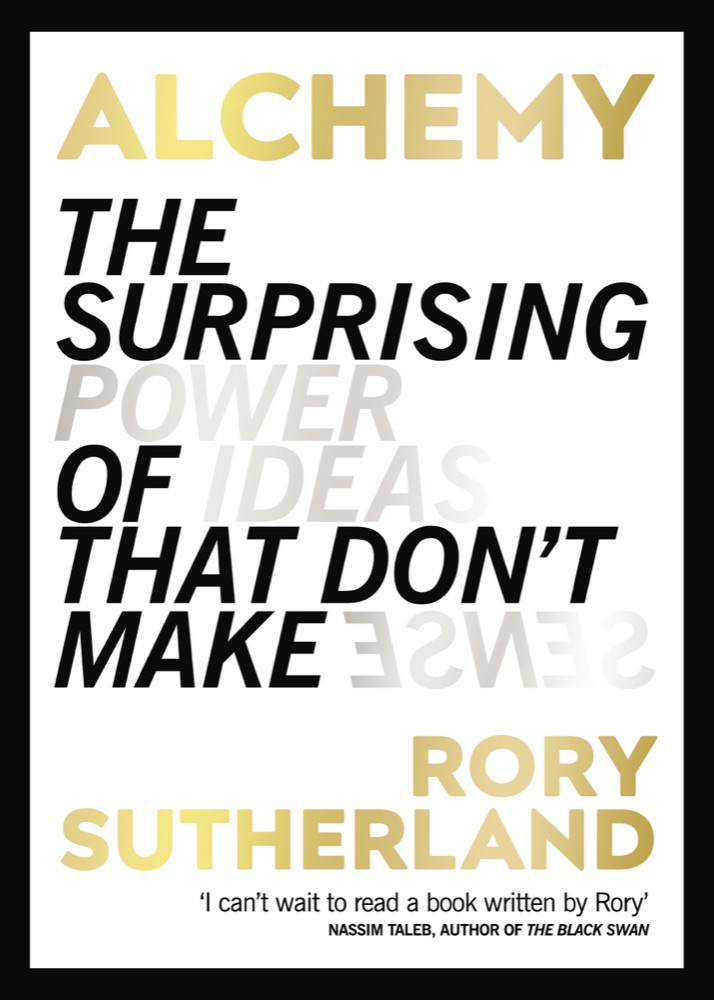 Alchemy: The Surprising Power of Ideas That Don't Make Sense
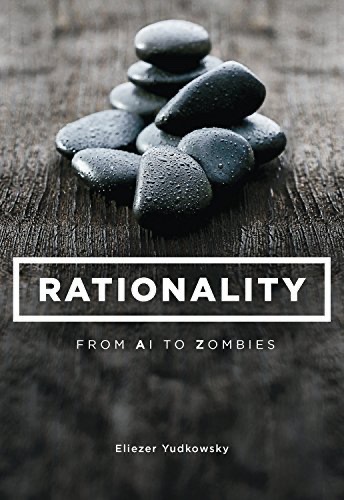 Rationality: From AI to Zombies
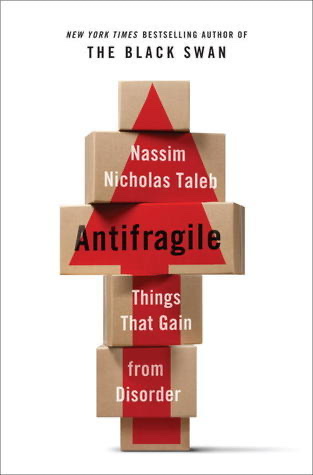 Antifragile: Things That Gain from Disorder
 Made to Stick: Why Some Ideas Survive and Others Die
 Incognito: The Secret Lives of the Brain
 Think Again: The Power of Knowing What You Don't Know
 Superforecasting: The Art and Science of Prediction
 Predictably Irrational: The Hidden Forces That Shape Our Decisions
 Algorithms to Live By: The Computer Science of Human Decisions
 The 7 Habits of Highly Effective People: Personal Workbook
 Curious: The Desire to Know and Why Your Future Depends On It
 Mastery
 The Social Animal: The Hidden Sources of Love, Character, and Achievement
 Mistakes Were Made (But Not by Me): Why We Justify Foolish Beliefs, Bad Decisions, and Hurtful Acts
 Zen and the Art of Motorcycle Maintenance
 How We Decide
 The Age of Magical Overthinking: Notes on Modern Irrationality
 Magic of Thinking Big
 The Drunkard's Walk: How Randomness Rules Our Lives
 The Tenth Insight: Holding the Vision
 How the Mind Works
 Limitless: Upgrade Your Brain, Learn Anything Faster, and Unlock Your Exceptional Life
 Getting Things Done: The Art of Stress-Free Productivity
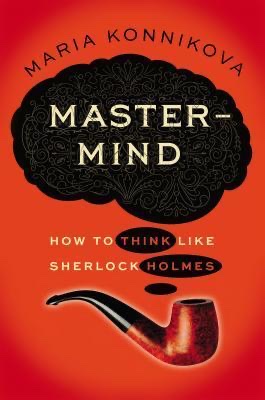 Mastermind: How to Think Like Sherlock Holmes
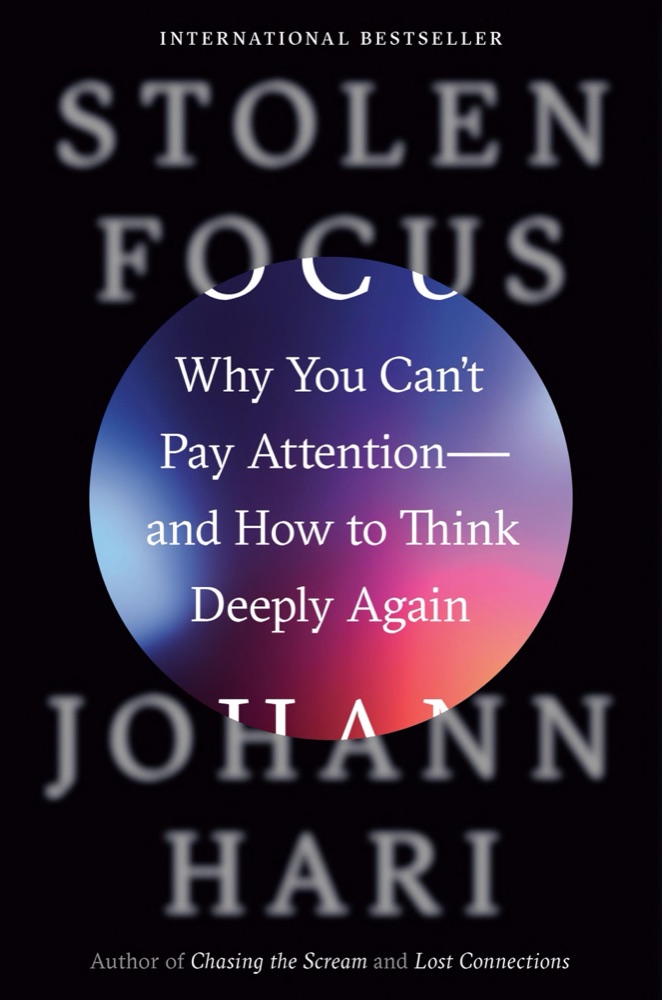 Stolen Focus: Why You Can't Pay Attention— and How to Think Deeply Again
 The Organized Mind: Thinking Straight in the Age of Information Overload
 What the Dog Saw and Other Adventures
 Do Epic Shit
 Being Wrong: Adventures in the Margin of Error
 Psycho-Cybernetics
 The Wisdom of Insecurity: A Message for an Age of Anxiety
 Flow: The Psychology of Optimal Experience
 What Do You Care What Other People Think?
 The Master and His Emissary: The Divided Brain and the Making of the Western World
 Black Box Thinking: Why Some People Never Learn from Their Mistakes - But Some Do
 No Self, No Problem: How Neuropsychology Is Catching Up to Buddhism
 Genesis
 Eating the Dinosaur
 Finding Flow: The Psychology of Engagement with Everyday Life
 Think: A Compelling Introduction to Philosophy
 How to Stay Sane
 Same as Ever: A Guide to What Never Changes
 The New Psycho-Cybernetics: The Original Science of Self-Improvement and Success That Has Changed the Lives of 30 Million People
 The Moral Landscape: How Science Can Determine Human Values
 Range: Why Generalists Triumph in a Specialized World
 The Lost Symbol