
 Liar's Poker
Quotes from the Book
When you are a pessimist and the bad thing happens, you live it twice,
3
Someone once said that education was knowing what to do when you don’t know,
3
By changing the context in which two things are compared, you submerge certain features and force others to the surface.
3
He who sees the past as surprise-free is bound to have a future full of surprises.
3
Things are grouped together for a reason, but, once they are grouped, their grouping causes them to seem more like each other than they otherwise would. That is, the mere act of classification reinforces stereotypes. If you want to weaken some stereotype, eliminate the classification. Amos’s
3
So many problems occur when people fail to be obedient when they are supposed to be obedient, and fail to be creative when they are supposed to be creative. The
3
What people remember about the past, they suggested, is likely to warp their judgment of the future. “We often decide that an outcome is extremely unlikely or impossible, because we are unable to imagine any chain of events that could cause it to occur. The defect, often, is in our imagination.”¶ The
3
The way the creative process works is that .you first say something, and later, sometimes years later, you understand what you said.
3
There were a great many interesting questions in the world to which the only honest answer was, “It’s impossible to know for sure.” “What will the price of oil be in ten years?” was such a question. That didn’t mean you gave up trying to find an answer; you just couched that answer in probabilistic terms.
3
Amos [Tversky] liked to say that if you are asked to do anything—go to a party, give a speech, lift a finger—you should never answer right away, even if you are sure that you want to do it. Wait a day, Amos said, and you’ll be amazed how many of those invitations you would have accepted yesterday you’ll refuse after you have had a day to think it over. A corollary to his rule for dealing with demands upon his time was his approach to situations from which he wished to extract himself. A human being who finds himself stuck at some boring meeting or cocktail party often finds it difficult to invent an excuse to flee. Amos’s rule, whenever he wanted to leave any gathering, was to just get up and leave. Just start walking and you’ll be surprised how creative you will become and how fast you’ll find the words for your excuse, he said. His attitude to the clutter of daily life was of a piece with his strategy for dealing with social demands. Unless you are kicking yourself once a month for throwing something away, you are not throwing enough away, he said. Everything that didn’t seem to Amos obviously important he chucked, and thus what he saved acquired the interest of objects that have survived a pitiless culling.
2
Because metaphors are vivid and memorable, and because they are not readily subjected to critical analysis, they can have considerable impact on human judgment even when they are inappropriate, useless, or misleading,” said Amos. “They replace genuine uncertainty about the world with semantic ambiguity. A metaphor is a cover-up.
2
Belief in the Law of Small Numbers” teased out the implications of a single mental error that people commonly made—even when those people were trained statisticians. People mistook even a very small part of a thing for the whole. Even statisticians tended to leap to conclusions from inconclusively small amounts of evidence. They did this, Amos and Danny argued, because they believed—even if they did not acknowledge the belief—that any given sample of a large population was more representative of that population than it actually was. The power of the belief could be seen in the way people thought of totally random patterns—like, say, those created by a flipped coin. People knew that a flipped coin was equally likely to come up heads as it was tails. But they also thought that the tendency for a coin flipped a great many times to land on heads half the time would express itself if it were flipped only a few times—an error known as “the gambler’s fallacy.” People seemed to believe that if a flipped coin landed on heads a few times in a row it was more likely, on the next flip, to land on tails—as if the coin itself could even things out. “Even the fairest coin, however, given the limitations of its memory and moral sense, cannot be as fair as the gambler expects it to be,” they wrote. In an academic journal that line counted as a splendid joke.
2
we are most often rewarded for punishing others, and punished for rewarding.
2
People often work hard to obtain information they already have
2
big choices we make are practically random. The small choices probably tell us more about who we are.
2
The human mind was just bad at seeing things it did not expect to see, and a bit too eager to see what it expected to see.
2
National Sarcasm Society: Like We Need Your Support.
2
You need to be so careful when there is one simple diagnosis that instantly pops into your mind that beautifully explains everything all at once. That's when you need to stop and check your thinking...Beware of the delirious guy in the emergency unit with the long history of alcoholism, because you will say, 'He's just drunk,' and you'll miss the subdural hematoma.
2
Knowledge is literally prediction,” said Morey. “Knowledge is anything that increases your ability to predict the outcome. Literally
2
counterfactual emotions,” or the feelings that spurred people’s minds to spin alternative realities in order to avoid the pain of the emotion. Regret was the most obvious counterfactual emotion, but frustration and envy shared regret’s essential trait. “The emotions of unrealized possibility,” Danny called them, in a letter to Amos. These emotions could be described using simple math. Their intensity, Danny wrote, was a product of two variables: “the desirability of the alternative” and “the possibility of the alternative.” Experiences that led to regret and frustration were not always easy to undo. Frustrated people needed to undo some feature of their environment, while regretful people needed to undo their own actions. “The basic rules of undoing, however, apply alike to frustration and regret,” he wrote. “They require a more or less plausible path leading to the alternative state.” Envy was different. Envy did not require a person to exert the slightest effort to imagine a path to the alternative state. “The availability of the alternative appears to be controlled by a relation of similarity between oneself and the target of envy. To experience envy, it is sufficient to have a vivid image of oneself in another person’s shoes; it is not necessary to have a plausible scenario of how one came to occupy those shoes.” Envy, in some strange way, required no imagination. Danny spent the
2
Many sentences popped out of Amos’s mouth that Redelmeier knew he would forever remember: A part of good science is to see what everyone else can see but think what no one else has ever said. The difference between being very smart and very foolish is often very small. So many problems occur when people fail to be obedient when they are supposed to be obedient, and fail to be creative when they are supposed to be creative. The secret to doing good research is always to be a little underemployed. You waste years by not being able to waste hours. It is sometimes easier to make the world a better place than to prove you have made the world a better place. Redelmeier
2
After Gell-Man was done, Amos said, “You know, Murray, there is no one in the world who is as smart as you think you are.
2
The trouble, Danny suspected, was that “the understanding of numbers is so weak that they don’t communicate anything. Everyone feels that those probabilities are not real—that they are just something on somebody’s mind.
2
The secret to doing good research is always to be a little underemployed. You waste years by not being able to waste hours.
1
Even so, most of the stories people told about Amos [Tversky] had less to do with what came out of his mouth than with the unusual way he moved through the world. He kept the hours of a vampire. He went to bed when the sun came up and woke up at happy hour. He ate pickles for breakfast and eggs for dinner. He minimized quotidian tasks he thought a waste of time—he could be found in the middle of the day, having just woken up, driving himself to work while shaving and brushing his teeth in the rearview mirror. “He never knew what time of the day it was,” said his daughter, Dona. “It didn’t matter. He’s living in his own sphere and you just happened to encounter him there.” He didn’t pretend to be interested in whatever others expected him to be interested in—God help anyone who tried to drag him to a museum or a board meeting. “For those who like that sort of thing, that is the sort of thing they like,” Amos liked to say, plucking a line from the Muriel Spark novel The Prime of Miss Jean Brodie. “He just skipped family vacations,” says his daughter. “He’d come if he liked the place. Otherwise he didn’t.” The children didn’t take it personally: They loved their father and knew that he loved them. “He loved people,” said his son Oren. “He just didn’t like social norms. A lot of things that most human beings would never think to do, to Amos simply made sense. For instance, when he wanted to go for a run he . . . went for a run. No stretching, no jogging outfit or, for that matter, jogging: He’d simply strip off his slacks and sprint out his front door in his underpants and run as fast as he could until he couldn’t run anymore. “Amos thought people paid an enormous price to avoid mild embarrassment,” said his friend Avishai Margalit, “and he himself decided very early on it was not worth it.” What all those who came to know Amos eventually realized was that the man had a preternatural gift for doing only precisely what he wanted to do. Varda Liberman recalled visiting him one day and seeing a table with a week’s worth of mail on it. There were tidy little stacks, one for each day, each filled with requests and entreaties and demands upon Amos’s time: job offers, offers of honorary degrees, requests for interviews and lectures, requests for help with some abstruse problem, bills. When the new mail came in Amos opened anything that interested him and left the rest in its daily pile. Each day the new mail arrived and shoved the old mail down the table. When a pile reached the end of the table Amos pushed it, unopened, off the edge into a waiting garbage can. “The nice thing about things that are urgent,” he liked to say, “is that if you wait long enough they aren’t urgent anymore.” “I would say to Amos I have to do this or I have to do that,” recalled his old friend Yeshu Kolodny. “And he would say, ‘No. You don’t.’ And I thought: lucky man!
1
Regret was the ham in the back of the deli that caused people to switch from turkey to roast beef.
1
People treated all remote probabilities as if they were possibilities. To create a theory that would predict what people actually did when faced with uncertainty, you had to “weight” the probabilities, in the way that people did, with emotion. Once you did that, you could explain not only why people bought insurance and lottery tickets. You could even explain the Allais paradox.*
1
His attitude to the clutter of daily life was of a piece with his strategy for dealing with social demands. Unless you are kicking yourself once a month for throwing something away, you are not throwing enough away, he said. Everything that didn’t seem to Amos obviously important he chucked, and thus what he saved acquired the interest of objects that have survived a pitiless culling.
1
The nice thing about things that are urgent,” he liked to say, “is that if you wait long enough they aren’t urgent anymore.” “I would say to Amos I have to do this or I have to do that,” recalled his old friend Yeshu Kolodny. “And he would say, ‘No. You don’t.’ And I thought: lucky man!
1
Watch on YouTube
About Michael Lewis
We have collected 252 quotes from 9 books by Michael Lewis on BookQuoters.
More about the author →More by Michael Lewis
Liar's Poker
 The Big Short: Inside the Doomsday Machine
 Boomerang: Travels in the New Third World
 Flash Boys: A Wall Street Revolt
About the book
“Brilliant. . . . Lewis has given us a spectacular account of two great men who faced up to uncertainty and the limits of human reason.” ―William Easterly, Wall Street Journal
Forty years ago, Israeli psychologists Daniel Kahneman and Amos Tversky wrote a series of breathtakingly original papers that invented the field of behavioral economics. One of the greatest partnerships in the history of science, Kahneman and Tversky’s extraordinary friendship incited a revolution in Big Data studies, advanced evidence-based medicine, led to a new approach to government regulation, and made much of Michael Lewis’s own work possible. In The Undoing Project, Lewis shows how their Nobel Prize–winning theory of the mind altered our perception of reality.
Book details
- First published
- 2016
- Author
- Michael Lewis
- Genre
- Nonfiction
- Goodreads rating
- 3.99 (65k ratings)
The buzz
- The New York TimesReview in The New York Timesprofessional review (via Book Marks)
- The New YorkerReview in The New Yorkerprofessional review (via Book Marks)
- The Washington PostReview in The Washington Postprofessional review (via Book Marks)
- The Wall Street JournalReview in The Wall Street Journalprofessional review (via Book Marks)
- The GuardianReview in The Guardianprofessional review (via Book Marks)
- The Boston GlobeReview in The Boston Globeprofessional review (via Book Marks)
Keep reading
 The Art of Thinking Clearly
 The Black Swan: The Impact of the Highly Improbable
 Fooled by Randomness: The Hidden Role of Chance in Life and in the Markets
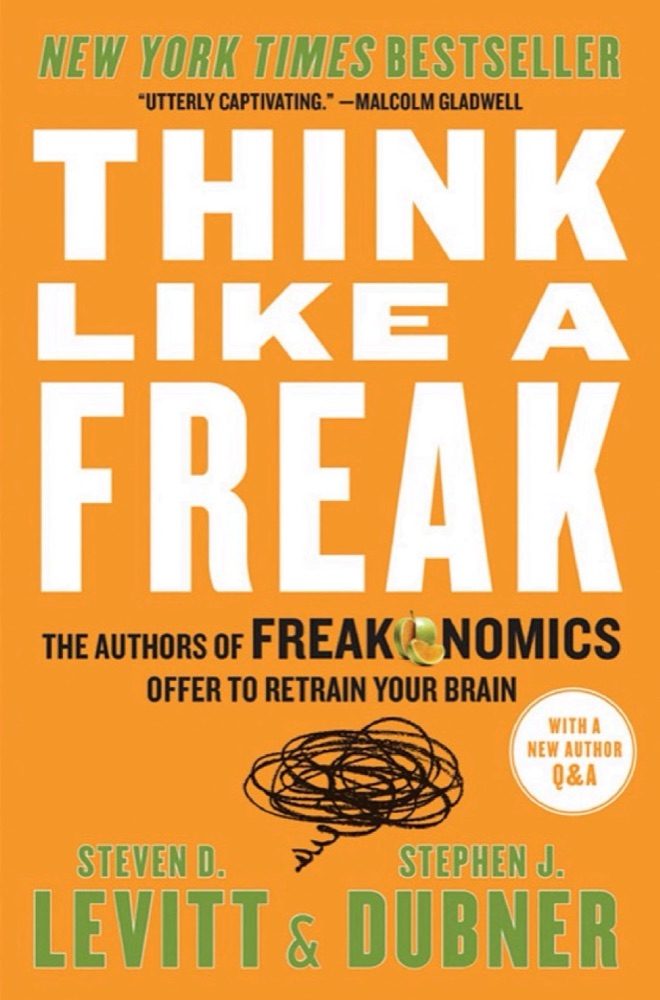 Think Like a Freak
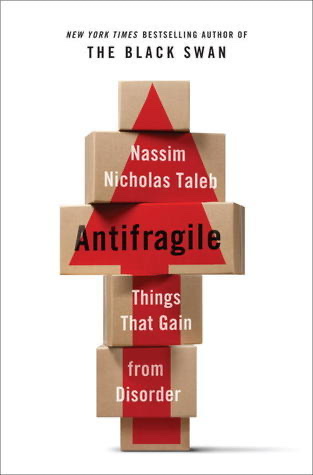 Antifragile: Things That Gain from Disorder
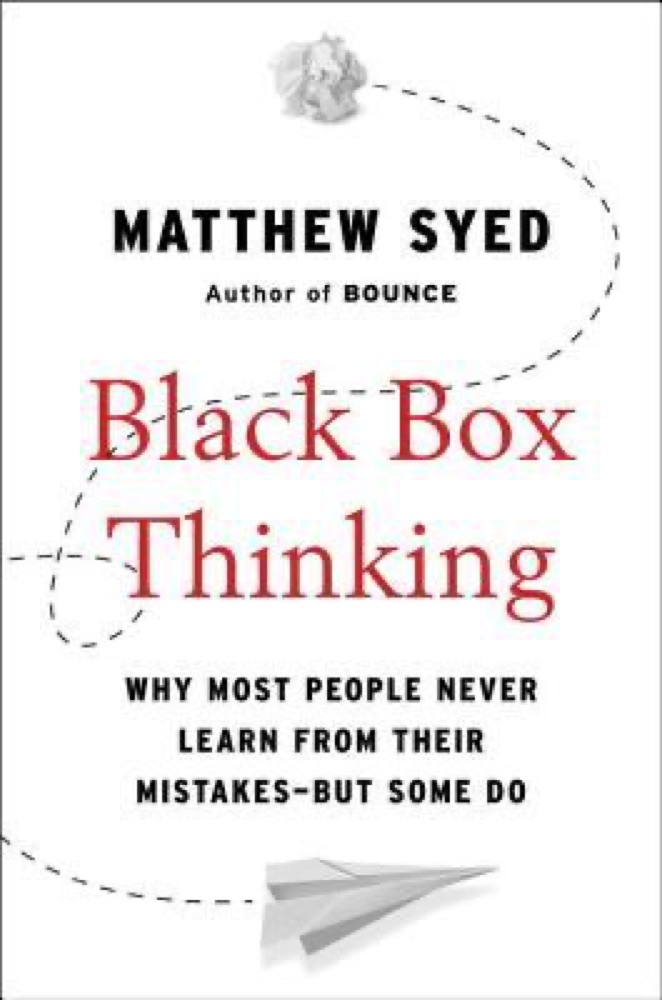 Black Box Thinking: Why Some People Never Learn from Their Mistakes - But Some Do
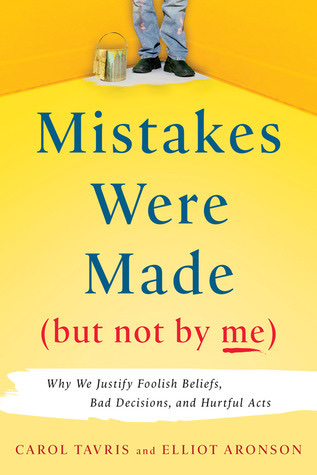 Mistakes Were Made (But Not by Me): Why We Justify Foolish Beliefs, Bad Decisions, and Hurtful Acts
 You Are Now Less Dumb: How to Conquer Mob Mentality, How to Buy Happiness, and All the Other Ways to Outsmart Yourself
 You Are Not So Smart
 The Drunkard's Walk: How Randomness Rules Our Lives
 Thinking, Fast and Slow
 Rationality: From AI to Zombies
 Made to Stick: Why Some Ideas Survive and Others Die
 What the Dog Saw and Other Adventures
 Stumbling on Happiness
 Superforecasting: The Art and Science of Prediction
 The Social Animal: The Hidden Sources of Love, Character, and Achievement
 Predictably Irrational: The Hidden Forces That Shape Our Decisions
 All the Birds in the Sky
 Algorithms to Live By: The Computer Science of Human Decisions
 Barking Up the Wrong Tree: The Surprising Science Behind Why Everything You Know About Success Is (Mostly) Wrong
 Eating the Dinosaur
 Influence: The Psychology of Persuasion
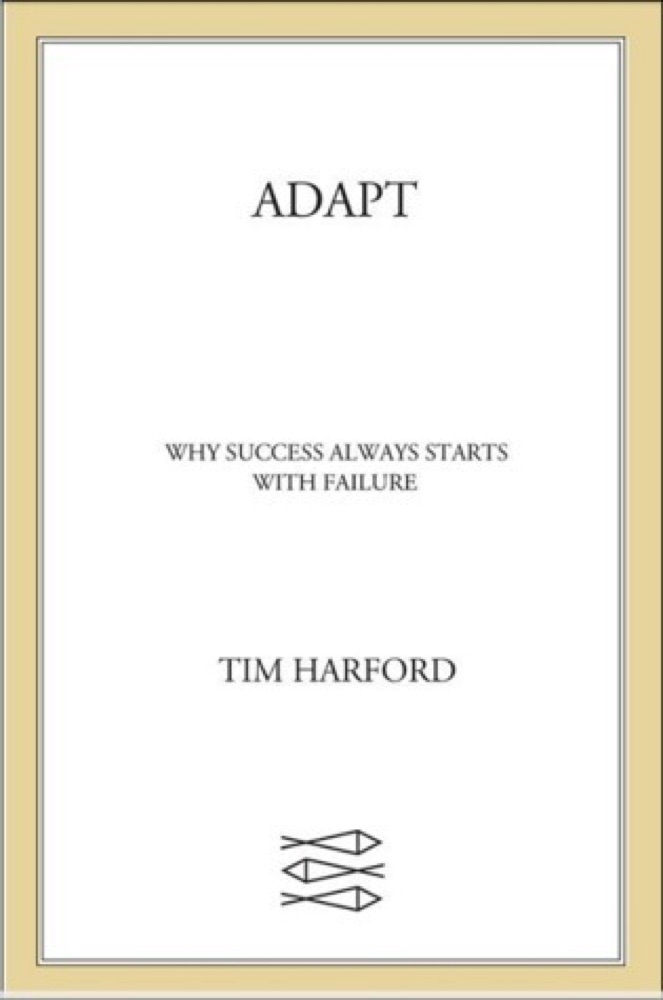 Adapt: Why Success Always Starts with Failure
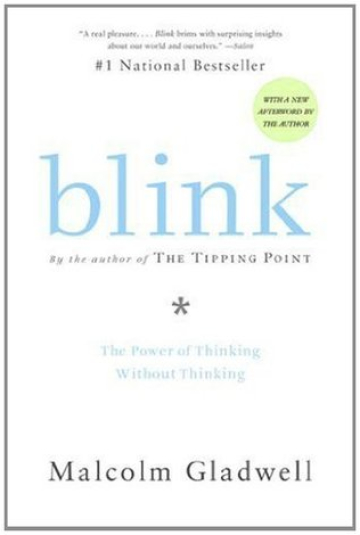 Blink: The Power of Thinking Without Thinking
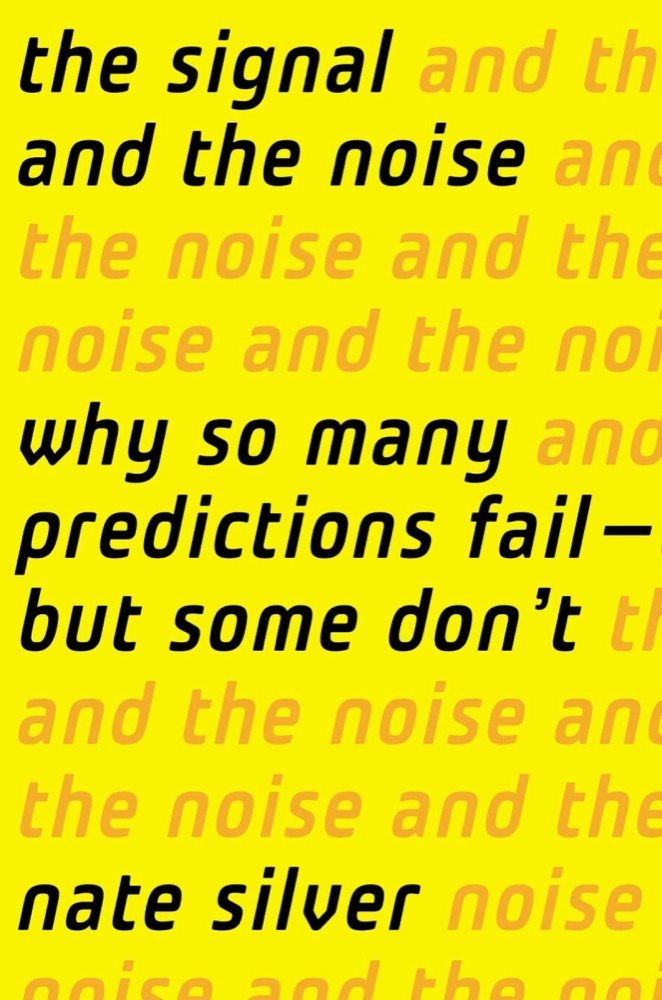 The Signal and the Noise: Why So Many Predictions Fail—But Some Don't
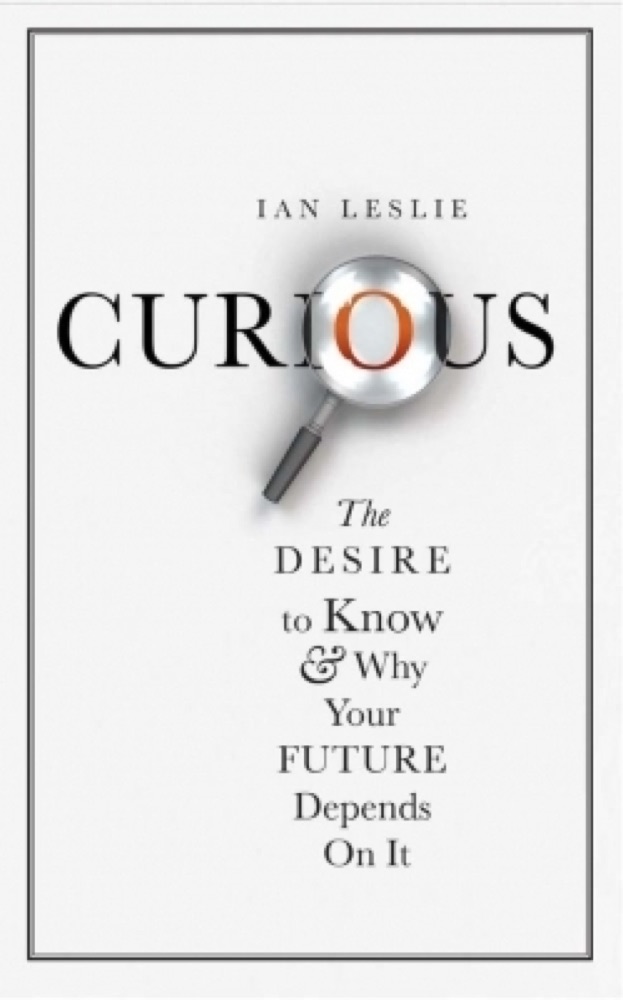 Curious: The Desire to Know and Why Your Future Depends On It
 How We Decide
 The Nix
 The Shockwave Rider
 Asymmetry
 The Meaning of It All: Thoughts of a Citizen-Scientist
 Same as Ever: A Guide to What Never Changes
 Think Like a Rocket Scientist: Simple Strategies You Can Use to Make Giant Leaps in Work and Life
 The Age of Magical Overthinking: Notes on Modern Irrationality
 God's Debris: A Thought Experiment
 In the Light of What We Know
 Influx
 Psych: The Story of the Human Mind
 Alchemy: The Surprising Power of Ideas That Don't Make Sense
 The Most Human Human: What Talking with Computers Teaches Us About What It Means to Be Alive
 Introductory Lectures on Psychoanalysis
 What Do You Care What Other People Think?
 Arcadia
 Freakonomics: A Rogue Economist Explores the Hidden Side of Everything
 Sometimes a Great Notion
 Prelude to Foundation
 Fall; or, Dodge in Hell
 The Geography of Genius: A Search for the World's Most Creative Places from Ancient Athens to Silicon Valley
 Being Wrong: Adventures in the Margin of Error
 The 7 Habits of Highly Effective People: Personal Workbook
 Hocus Pocus
 The Spinoza Problem
 The Fall of Babel
 But What If We're Wrong? Thinking About the Present As If It Were the Past
 Letters to a Young Contrarian
 The Rosie Effect
 Creativity: Flow and the Psychology of Discovery and Invention
 The Braindead Megaphone