
 David and Goliath: Underdogs, Misfits, and the Art of Battling Giants
Quotes from the Book
The key to good decision making is not knowledge. It is understanding. We are swimming in the former. We are desperately lacking in the latter.
We have, as human beings, a storytelling problem. We're a bit too quick to come up with explanations for things we don't really have an explanation for.
Insight is not a lightbulb that goes off inside our heads. It is a flickering candle that can easily be snuffed out.
In the act of tearing something apart, you lose its meaning.
our world requires that decisions be sourced and footnoted, and if we say how we feel, we must also be prepared to elaborate on why we feel that way...We need to respect the fact that it is possible to know without knowing why we know and accept that - sometimes - we're better off that way.
We live in a world that assumes that the quality of a decision is directly related to the time and effort that went into making it...We believe that we are always better off gathering as much information as possible an depending as much time as possible in deliberation. We really only trust conscious decision making. But there are moments, particularly in times of stress, when haste does not make waste, when our snap judgments and first impressions can offer a much better means of making sense of the world. The first task of Blink is to convince you of a simple fact: decisions made very quickly can be every bit as good as decisions made cautiously and deliberately.
There can be as much value in the blink of an eye as in months of rational analysis.
When we become expert in something, our tastes grow more esoteric and complex.
Anyone who has ever scanned the bookshelves of a new girlfriend or boyfriend- or peeked inside his or her medicine cabinet- understands this implicitly; you can learn as much - or more - from one glance at a private space as you can from hours of exposure to a public face.
[Research] suggests that what we think of as free will is largely an illusion: much of the time, we are simply operating on automatic pilot, and the way we think and act – and how well we think and act on the spur of the moment – are a lot more susceptible to outside influences than we realize.
We learn by example and by direct experience because there are real limits to the adequacy of verbal instruction.
being able to act intelligently and instinctively in the moment is possible only after a long and rigorous of education and experience
The answer is that we are not helpless in the face of our first impressions. They may bubble up from the unconscious - from behind a locked door inside of our brain - but just because something is outside of awareness doesn't mean it's outside of control.
Often a sign of expertise is noticing what doesn't happen.
...mediocre people find their way into positions of authority...because when it comes to even the most important positions, our selection decisions are a good deal less rational than we think.
People are in one of two states in a relationship,” Gottman went on. “The first is what I call positive sentiment override, where positive emotion overrides irritability. It’s like a buffer. Their spouse will do something bad, and they’ll say, ‘Oh, he’s just in a crummy mood.’ Or they can be in negative sentiment override, so that even a relatively neutral thing that a partner says gets perceived as negative.
Did they know why they knew? Not at all. But the Knew!
understanding the true nature of instinctive decision making requires us to be forgiving of those people trapped in circumstances where good judgment is imperiled.
Our world requires that decisions be sourced and footnoted, and if we say how we feel, we must also be prepared to elaborate on why we feel that way. I think that approach is a mistake, and if we are to learn to improve the quality of the decisions we make, we need to accept the mysterious nature of our snap judgements. We need to respect the fact that it is possible to know without knowing why we know and accept that — sometimes — we’re better off that way.
The entire principle of a blind taste test was ridiculous. They shouldn't have cared so much that they were losing blind taste tests with old Coke, and we shouldn't at all be surprised that Pepsi's dominance in blind taste tests never translated to much in the real world. Why not? Because in the real world, no one ever drinks Coca-Cola blind.
extreme visual clarity, tunnel vision, diminished sound, and the sense that time is slowing down. this is how the human body reacts to extreme stress.
our unconscious reactions come out of a locked room, and we can't look inside that room. but with experience we become expert at using our behavior and our training to interpret - and decode - what lies behind our snap judgment and first impressions.
In life, most of us are highly skilled at suppressing action. All the improvisation teacher has to do is to reverse this skill and he creates very ‘gifted’ improvisers. Bad improvisers block action, often with a high degree of skill. Good improvisers develop action.
The real me isn't the person I describe, no the real me is the me revealed by my actions.
Whenever we have something that we are good at--something we care about--that experience and passion fundamentally change the nature of our first impressions.
I've been in auditions without screens, and I can assure you that I was prejudiced. I began to listen with my eyes, and there is no way that your eyes don't affect your judgement. The only true way to listen is with your ears and your heart. (p.251)
But in the end it comes down to a matter of respect, and the simplest way that respect is communicated is through tone of voice, and the most corsive tone of voice that a doctor can assume is a dominant tone.
Some people look like they sound better than they actually sound, because they look confident and have good posture," once musician, a veteran of many auditions, says. "Other people look awful when they play but sound great. Other people have that belabored look when they play, but you can't hear it in the sound. There is always this dissonance between what you see and hear" (p.251).
our power of thin-slicing and snap judgment are extraordinary.but even the giant computer in our unconscious need a moment to do its work.
Did you know?
- The book's central concept is "thin-slicing," the ability to draw conclusions from very small amounts of experience or information.
- It opens with the case of the Getty kouros, a statue that several experts intuitively sensed was a forgery despite scientific tests suggesting authenticity.
- Gladwell cites psychologist John Gottman, who could predict whether a marriage would last after observing only a few minutes of conversation.
- The book discusses a military war game in which General Paul Van Riper's intuition-driven tactics beat an information-heavy opposing force.
- Blink also examines the darker side of snap judgment, including the 1999 police shooting of Amadou Diallo, to show how bias and stress distort rapid decisions.
- It was Gladwell's second book, following the success of The Tipping Point (2000).
About Malcolm Gladwell
Malcolm Gladwell (born September 3, 1963, in Fareham, England) is a British-Canadian journalist and author who has been a staff writer for The New Yorker since 1996. He is known for bestselling books that translate research in the social sciences for a general readership, including The Tipping Point, Outliers, and Blink.
More about the author →More by Malcolm Gladwell
David and Goliath: Underdogs, Misfits, and the Art of Battling Giants
 The Tipping Point: How Little Things Can Make a Big Difference
 Outliers: The Story of Success
 What the Dog Saw and Other Adventures
About the book
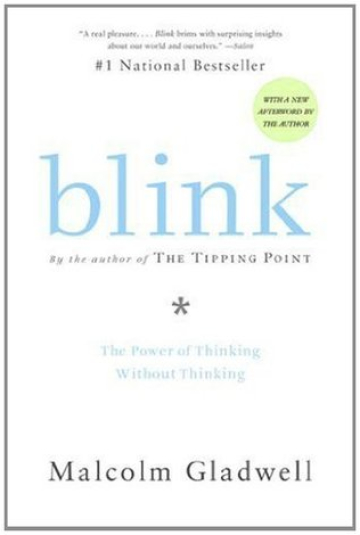
"Blink: The Power of Thinking Without Thinking" is Malcolm Gladwell's 2005 popular-psychology exploration of the split-second decisions we make without conscious deliberation. Drawing on research in psychology and behavioral economics, Gladwell argues that the mind performs a kind of rapid pattern recognition he calls "thin-slicing": the ability to use limited information from a very narrow slice of experience to reach a conclusion. He opens with the story of the Getty kouros, an ancient statue that fooled scientific analysis yet struck several art experts as a fake the instant they saw it, using it to show how snap judgments can outperform lengthy investigation.
Across a series of case studies, Gladwell examines both the power and the peril of the "adaptive unconscious." He describes psychologist John Gottman predicting divorce from a few minutes of a couple's conversation, the "halo effect" behind Warren Harding's rise, the collapse of New Coke, and a military war game in which General Paul Van Riper's intuitive tactics defeated a data-heavy opponent. But he also weighs the dark side of instinct: how priming, stereotypes, and stress can corrupt rapid cognition, most tragically in the 1999 police shooting of the unarmed Amadou Diallo.
Central to the book is the claim that the best decision-makers are not those who process the most information but those who have learned to filter the few factors that truly matter from an overwhelming number of variables. Following the runaway success of "The Tipping Point," "Blink" became an international bestseller and helped popularize ideas about intuition and cognitive bias for a general audience, while also drawing critical debate over how far its anecdotes support its conclusions.
Book details
- First published
- 2005
- Length
- 288 pages
- Reading time
- 5 hours
- Author
- Malcolm Gladwell
- Genre
- Nonfiction
- Goodreads rating
- 3.96 (628k ratings) →
If you liked this, read…
- 1Thinking, Fast and SlowDaniel Kahneman's deeper account of the fast, intuitive and slow, deliberate systems behind judgment.
- 2The Tipping PointGladwell's own earlier book applying social-science research to how ideas and behaviors spread.
- 3OutliersGladwell's follow-up examining the hidden factors behind exceptional success.
Keep reading
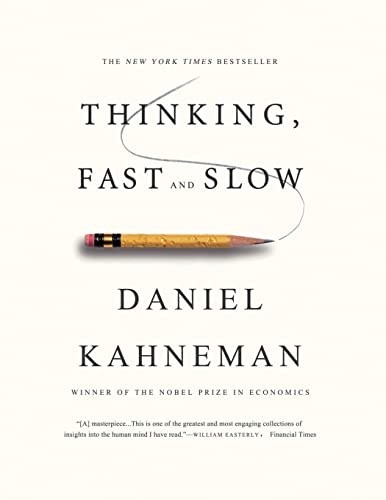 Thinking, Fast and Slow
 The Art of Thinking Clearly
 How We Decide
 Incognito: The Secret Lives of the Brain
 Mastery
 The Black Swan: The Impact of the Highly Improbable
 You Are Now Less Dumb: How to Conquer Mob Mentality, How to Buy Happiness, and All the Other Ways to Outsmart Yourself
 Stumbling on Happiness
 You Are Not So Smart
 Think Again: The Power of Knowing What You Don't Know
 The Invisible Gorilla: And Other Ways Our Intuitions Deceive Us
 The Undoing Project: A Friendship That Changed Our Minds
 Black Box Thinking: Why Some People Never Learn from Their Mistakes - But Some Do
 If I Understood You, Would I Have This Look on My Face?: My Adventures in the Art and Science of Relating and Communicating
 Alchemy: The Surprising Power of Ideas That Don't Make Sense
 Mastermind: How to Think Like Sherlock Holmes
 Influence: The Psychology of Persuasion
 Rationality: From AI to Zombies
 Think Like a Freak
 Made to Stick: Why Some Ideas Survive and Others Die
 The 7 Habits of Highly Effective People: Personal Workbook
 Antifragile: Things That Gain from Disorder
 God's Debris: A Thought Experiment
 Fooled by Randomness: The Hidden Role of Chance in Life and in the Markets
 Predictably Irrational: The Hidden Forces That Shape Our Decisions
 Blindsight
 The Social Animal: The Hidden Sources of Love, Character, and Achievement
 Superforecasting: The Art and Science of Prediction
 Zen and the Art of Motorcycle Maintenance
 The New Psycho-Cybernetics: The Original Science of Self-Improvement and Success That Has Changed the Lives of 30 Million People
 The Tenth Insight: Holding the Vision
 Stolen Focus: Why You Can't Pay Attention— and How to Think Deeply Again
 The Age of Magical Overthinking: Notes on Modern Irrationality
 How the Mind Works
 The Laws of Human Nature
What the Dog Saw and Other Adventures
The Laws of Human Nature
What the Dog Saw and Other Adventures
 Mistakes Were Made (But Not by Me): Why We Justify Foolish Beliefs, Bad Decisions, and Hurtful Acts
 How to Stay Sane
 Algorithms to Live By: The Computer Science of Human Decisions
 The Intern's Handbook
 The Art of Choosing
 Genesis
 The Drunkard's Walk: How Randomness Rules Our Lives
 Emotional Intelligence: Why It Can Matter More Than IQ
 Getting Things Done: The Art of Stress-Free Productivity
 Flow: The Psychology of Optimal Experience
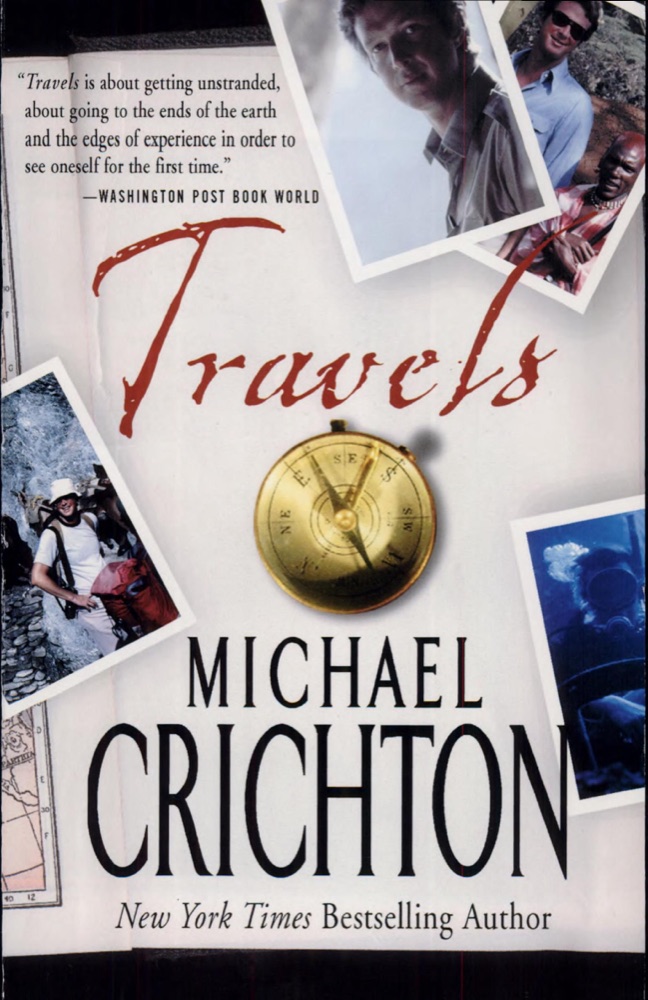 Travels
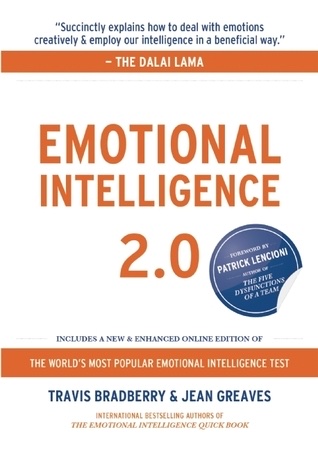 Emotional Intelligence 2.0: With Access Code
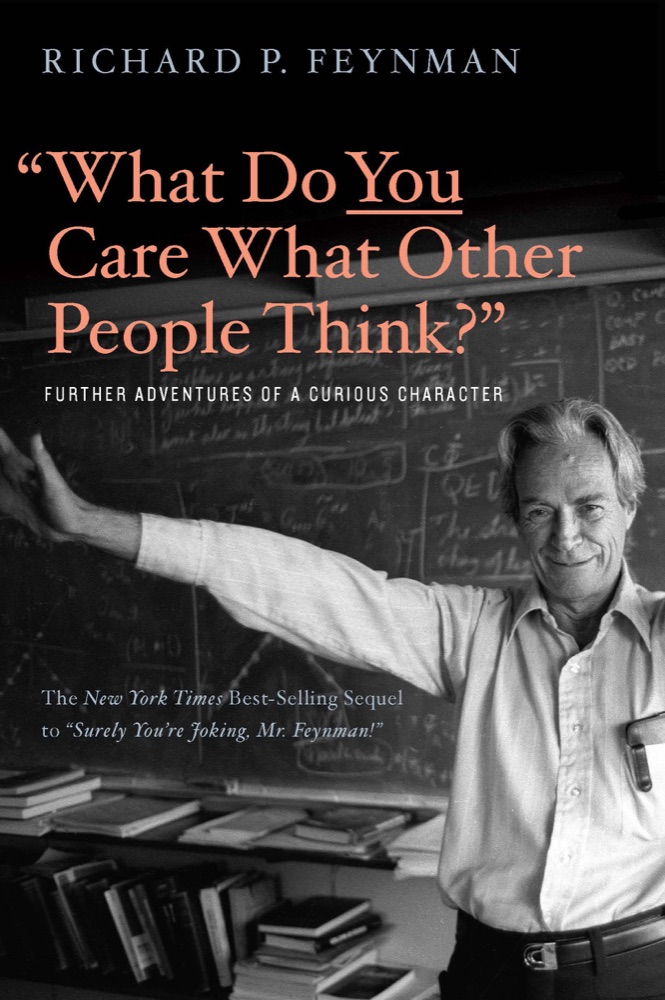 What Do You Care What Other People Think?
 The Electric Kool-Aid Acid Test
 Curious: The Desire to Know and Why Your Future Depends On It
 The Shockwave Rider
 Stories of Your Life and Others
 Why Has Nobody Told Me This Before?
 Imagine: How Creativity Works
 The Master and His Emissary: The Divided Brain and the Making of the Western World
 We Learn Nothing
 Awaken The Giant Within
 Psycho-Cybernetics