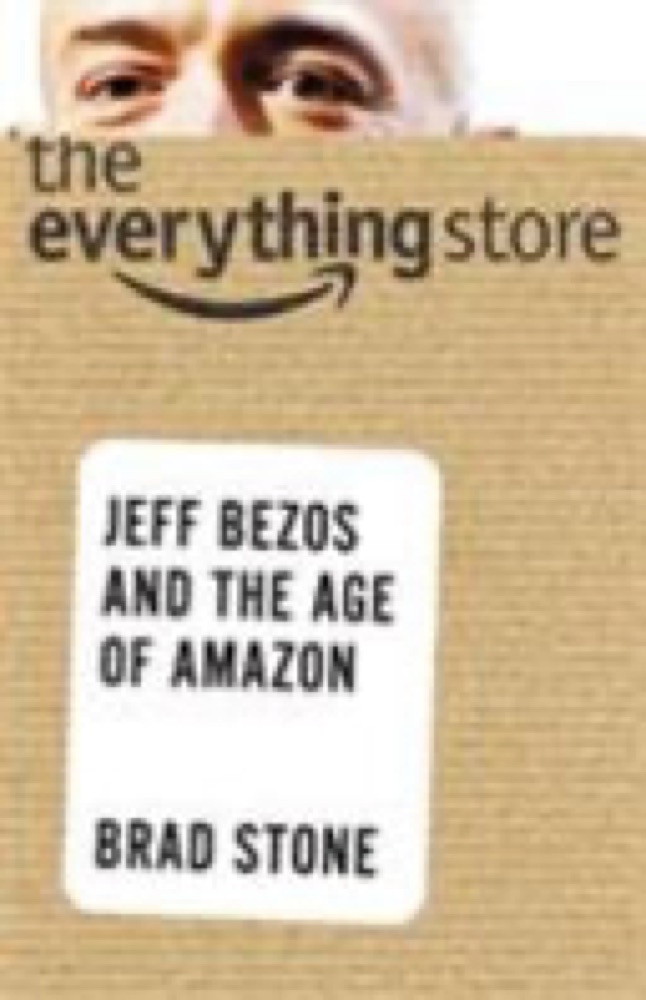
 The Everything Store: Jeff Bezos and the Age of Amazon
Quotes from the Book
People who love all fields of knowledge are the ones who can best spot the patterns that exist across nature.
13
Most big technology companies are competitor focused. They see what others are doing, and then work to fast follow. In contrast, 90 to 95 percent of what we build in AWS is driven by what customers tell us they want.
10
We humans coevolve with our tools. We change our tools, and then our tools change us.
10
Focus on the big decisions. “As a senior executive, what do you really get paid to do?” he asks. “You get paid to make a small number of high-quality decisions. Your job is not to make thousands of decisions every day.
9
My grandfather looked at me, and after a bit of silence, he gently and calmly said, “Jeff, one day you’ll understand that it’s harder to be kind than clever.
8
what’s good for customers is good for shareholders.
7
starter pack of essentials for Day 1 defense: customer obsession, a skeptical view of proxies, the eager adoption of external trends, and high-velocity decision making.
7
You know the business plan won’t survive its first encounters with reality,” he says. “But the discipline of writing the plan forces you to think through some of the issues and to get sort of mentally comfortable in the space. Then you start to understand, if you push on this knob, this will move over here and so on. So, that’s the first step.
7
Smart people are a dime a dozen and often don’t amount to much. What counts is being creative and imaginative.
6
As a company grows, everything needs to scale, including the size of your failed experiments. If the size of your failures isn’t growing, you’re not going to be inventing at a size that can actually move the needle.
6
One area where I think we are especially distinctive is failure. I believe we are the best place in the world to fail (we have plenty of practice!), and failure and invention are inseparable twins. To invent you have to experiment, and if you know in advance that it’s going to work, it’s not an experiment. Most large organizations embrace the idea of invention but are not willing to suffer the string of failed experiments necessary to get there.
6
As the famed investor Benjamin Graham said, “In the short term, the stock market is a voting machine; in the long term, it’s a weighing machine.
3
First, never use a one-size-fits-all decision-making process. Many decisions are reversible, two-way doors. Those decisions can use a light-weight process. For those, so what if you’re wrong? I wrote about this in more detail in last year’s letter. Second, most decisions should probably be made with somewhere around 70 percent of the information you wish you had. If you wait for 90 percent, in most cases, you’re probably being slow. Plus, either way, you need to be good at quickly recognizing and correcting bad decisions. If you’re good at course correcting, being wrong may be less costly than you think, whereas being slow is going to be expensive for sure. Third, use the phrase “disagree and commit.” This phrase will save a lot of time. If you have conviction on a particular direction even though there’s no consensus, it’s helpful to say, “Look, I know we disagree on this, but will you gamble with me on it? Disagree and commit?” By the time you’re at this point, no one can know the answer for sure, and you’ll probably get a quick yes.
3
As organizations get larger, there seems to be a tendency to use the heavy-weight Type 1 decision-making process on most decisions, including many Type 2 decisions. The end result of this is slowness, unthoughtful risk aversion, failure to experiment sufficiently, and consequently diminished invention.* We’ll have to figure out how to fight that tendency.
3
In 1994 very, very few people had heard of the internet. It was used at that time mostly by scientists and physicists. We used it a little bit at D. E. Shaw for some things but not much, and I came across the fact that the web—the World Wide Web—was growing at something like 2,300 percent a year. Anything growing that fast, even if it’s baseline usage today is tiny, is going to be big. I concluded that I should come up with a business idea based on the internet and then let the internet grow around it and keep working to improve it. So I made a list of products I might sell online. I started ranking them, and I picked books because books are super unusual in one respect: there are more items in the book category than in any other category. There are three million different books in print around the world at any given time. The biggest bookstores had only 150,000 titles. So the founding idea of Amazon was to build a universal selection of books in print. That’s what I did: I hired a small team, and we built the software. I moved to Seattle because the largest book warehouse in the world at that time was nearby in a town called Roseberg, Oregon, and also because of the recruiting pool available from Microsoft.
3
Will you choose a life of ease, or a life of service and adventure? Will you wilt under criticism, or will you follow your convictions? Will you bluff it out when you’re wrong, or will you apologize? Will you guard your heart against rejection, or will you act when you fall in love? Will you play it safe, or will you be a little bit swashbuckling? When it’s tough, will you give up, or will you be relentless? Will you be a cynic, or will you be a builder? Will you be clever at the expense of others, or will you be kind?
3
But Bezos had a rule, which was to use his heart and his intuition as well as empirical data in making a big decision. “There has to be risk taking. You have to have instinct. All the good decisions have to be made that way,
3
Theodor Seuss Geisel: “When something bad happens you have three choices. You can either let it define you, let it destroy you, or you can let it strengthen you.
3
I have no special talent,” Einstein once said. “I am only passionately curious
3
We’ve made mistakes, doozies like the Fire Phone and many other things that just didn’t work out. I won’t list all of our failed experiments, but the big winners pay for thousands of failed experiments.
2
Every time a seismic shift takes place in our economy, there are people who feel the vibrations long before the rest of us do, vibrations so strong they demand action—action that can seem rash, even stupid. Ferry owner Cornelius Vanderbilt jumped ship when he saw the railroads coming. Thomas Watson Jr., overwhelmed by his sense that computers would be everywhere even when they were nowhere, bet his father’s office-machine company on it: IBM. Jeffrey Preston Bezos had that same experience when he first peered into the maze of connected computers called the World Wide Web and realized that the future of retailing was glowing back at him.… Bezos’ vision of the online retailing universe was so complete, his Amazon.com site so elegant and appealing, that it became from Day One the point of reference for anyone who had anything to sell online. And that, it turns out, is everyone.
2
Most people,” he said, “think that if they work hard, they should be able to master a handstand in about two weeks. The reality is that it takes about six months of daily practice. If you think you should be able to do it in two weeks, you’re just going to end up quitting.
2
Second, most decisions should probably be made with somewhere around 70 percent of the information you wish you had. If you wait for 90 percent, in most cases, you’re probably being slow. Plus, either way, you need to be good at quickly recognizing and correcting bad decisions. If you’re good at course correcting, being wrong may be less costly than you think, whereas being slow is going to be expensive for sure.
2
You can work long, hard, or smart, but at Amazon.com you can’t choose two out of three”),
2
Einstein, likewise, realized how important it is to interweave the arts and the sciences. When he felt stymied in his quest for the theory of general relativity, he would pull out his violin and play Mozart, saying that the music helped connect him to the harmony of the spheres.
2
Until July, Amazon.com had been primarily built on two pillars of customer experience: selection and convenience. In July, as I already discussed, we added a third customer experience pillar: relentlessly lowering prices.
2
AWS is customer obsessed, inventive and experimental, long-term oriented, and cares deeply about operational excellence.
2
Why focus on cash flows? Because a share of stock is a share of a company’s future cash flows, and, as a result, cash flows more than any other single variable seem to do the best job of explaining a company’s stock price over the long term.
2
Watch on YouTube
About Jeff Bezos
We have collected 28 quotes from 1 book by Jeff Bezos on BookQuoters.
More about the author →About the book
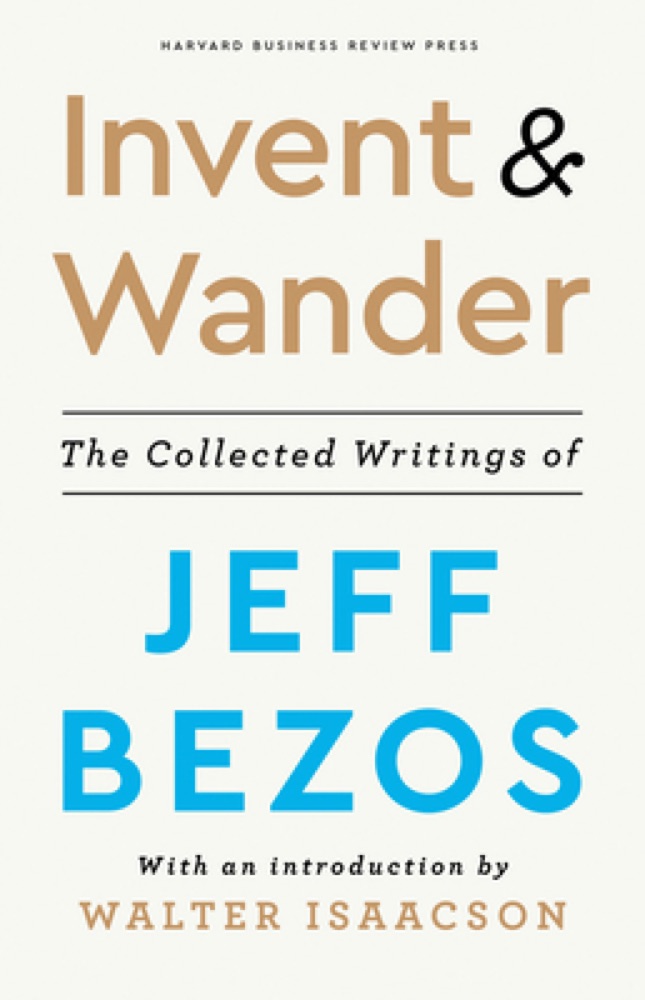
In this collection of Jeff Bezos’s writings—his unique and strikingly original annual shareholder letters, plus numerous speeches and interviews that provide insight into his background, his work, and the evolution of his ideas—you’ll gain an insider’s view of the why and how of his success. Spanning a range of topics across business and public policy, from innovation and customer obsession to climate change and outer space, this book provides a rare glimpse into how Bezos thinks about the world and where the future might take us.
Written in a direct, down-to-earth style, Invent and Wander offers readers a master class in business values, strategy, and execution: ● The importance of a Day 1 mindset ● Why “it’s all about the long term” ● What it really means to be customer obsessed ● How to start new businesses and create significant organic growth in an already successful company
Book details
- First published
- 2020
- Author
- Jeff Bezos
- Genre
- Nonfiction
- Goodreads rating
- 3.85 (7k ratings)
Keep reading
The Everything Store: Jeff Bezos and the Age of Amazon
 Founders at Work: Stories of Startups' Early Days
 Think Like a Rocket Scientist: Simple Strategies You Can Use to Make Giant Leaps in Work and Life
 The Art of Thinking Clearly
 Chaos Monkeys: Obscene Fortune and Random Failure in Silicon Valley
 Same as Ever: A Guide to What Never Changes
 Zero to One: Notes on Startups, or How to Build the Future
 I, Steve: Steve Jobs In His Own Words
 Things a Little Bird Told Me: Confessions of the Creative Mind
 Pour Your Heart Into It: How Starbucks Built a Company One Cup at a Time
 Smartcuts: How Hackers, Innovators, and Icons Accelerate Success
 Lean Analytics: Use Data to Build a Better Startup Faster
 The Snowball: Warren Buffett and the Business of Life
 Stay Hungry Stay Foolish
 Built to Last: Successful Habits of Visionary Companies
 The E-myth Revisited
 The Art of the Start: The Time-Tested, Battle-Hardened Guide for Anyone Starting Anything
 The Monk and the Riddle: The Education of a Silicon Valley Entrepreneur
 Originals: How Non-Conformists Move the World
 Adapt: Why Success Always Starts with Failure
 The Price of Tomorrow: Why Deflation is the Key to an Abundant Future
 Amp It Up: Leading for Hypergrowth by Raising Expectations, Increasing Urgency, and Elevating Intensity
 Steve Jobs
 Principles: Life and Work
 Hackers & Painters: Big Ideas from the Computer Age
 Smarter Faster Better: The Secrets of Being Productive in Life and Business
 The $100 Startup: Reinvent the Way You Make a Living, Do What You Love, and Create a New Future
 The Hard Thing About Hard Things: Building a Business When There Are No Easy Answers―Straight Talk on the Challenges of Entrepreneurship
 The Essays of Warren Buffett: Lessons for Corporate America
 Becoming Steve Jobs: The Evolution of a Reckless Upstart into a Visionary Leader
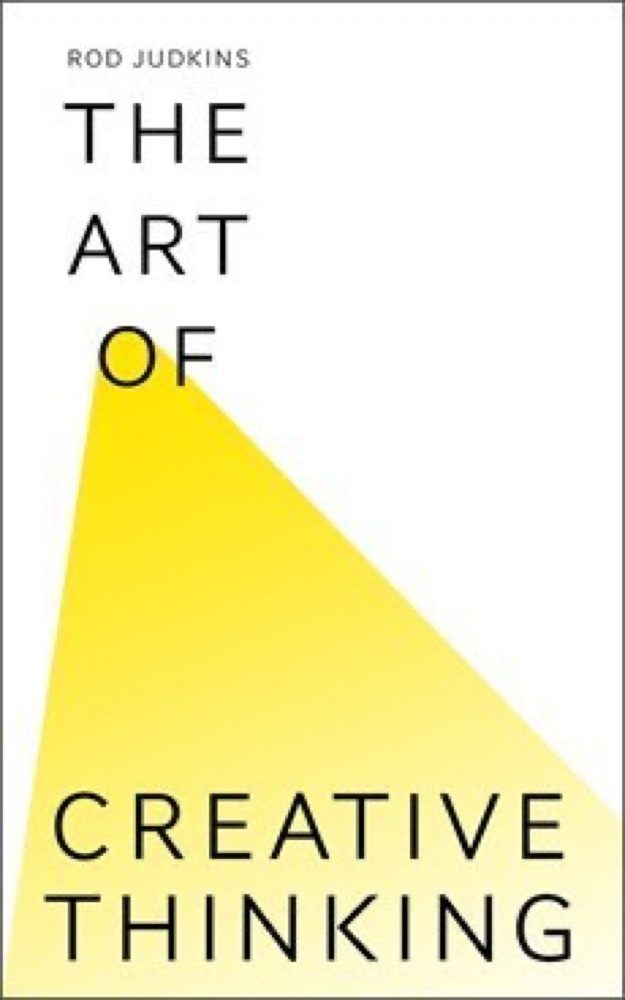 The Art of Creative Thinking
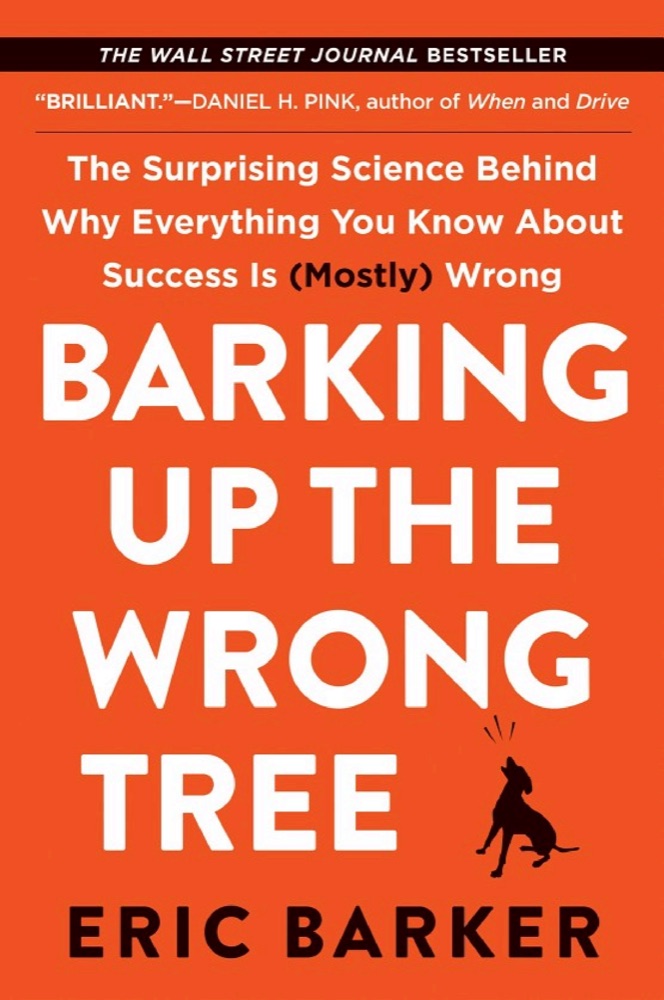 Barking Up the Wrong Tree: The Surprising Science Behind Why Everything You Know About Success Is (Mostly) Wrong
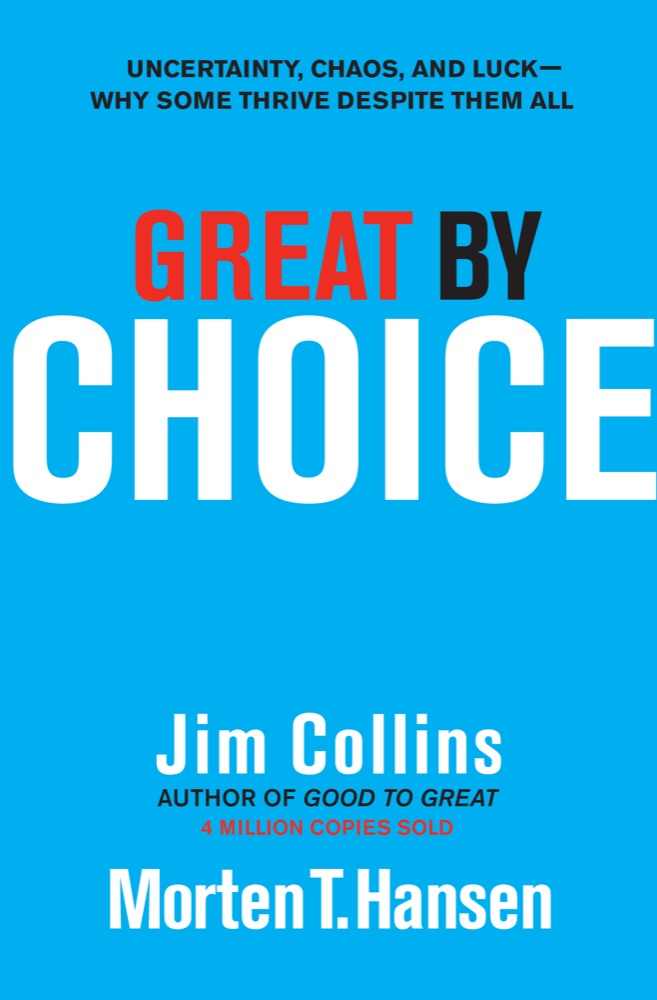 Great by Choice: Uncertainty, Chaos, and Luck—Why Some Thrive Despite Them All
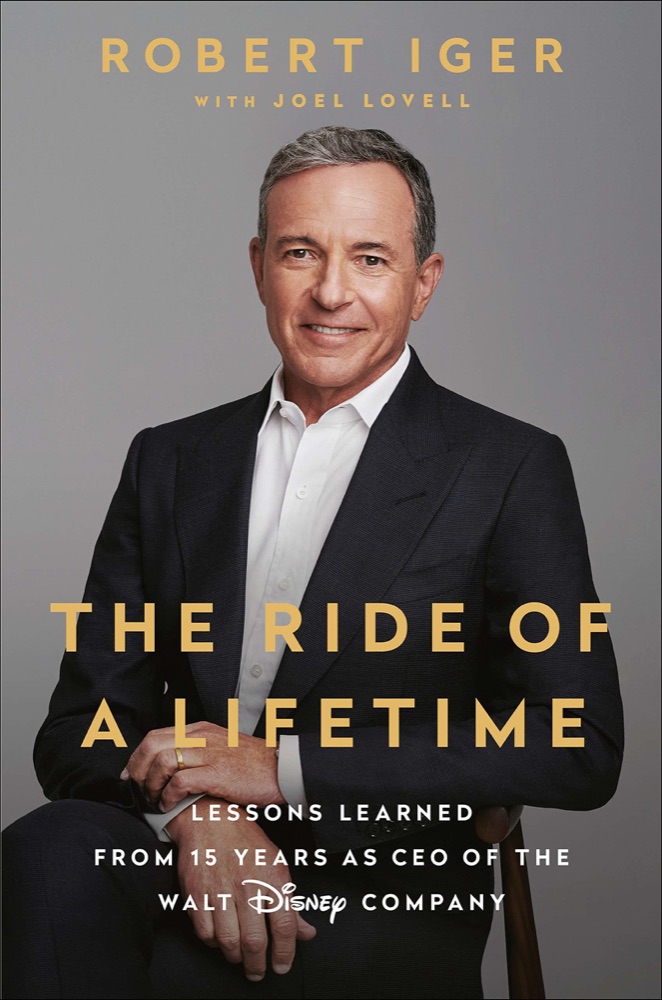 The Ride of a Lifetime: Lessons Learned from 15 Years as CEO of the Walt Disney Company
 Conscious Capitalism
 Think Like a Freak
 Creativity, Inc.: Overcoming the Unseen Forces That Stand in the Way of True Inspiration
 A Whole New Mind: Why Right-Brainers Will Rule the Future
 EntreLeadership: 20 Years of Practical Business Wisdom from the Trenches
 Managing Humans: Biting and Humorous Tales of a Software Engineering Manager
 Right Kind of Wrong: The Science of Failing Well
 Getting There: A Book of Mentors
 The 1-Page Marketing Plan: Get New Customers, Make More Money, And Stand out From The Crowd
 Elon Musk: Inventing the Future
 To Sell is Human: The Surprising Truth About Moving Others
 Where Good Ideas Come From: The Natural History of Innovation
 Making Ideas Happen: Overcoming the Obstacles Between Vision and Reality
 The Startup of You: Adapt to the Future, Invest in Yourself, and Transform Your Career
 Elon Musk
 Berkshire Hathaway Letters to Shareholders
 Algorithms to Live By: The Computer Science of Human Decisions
 Delivering Happiness: A Path to Profits, Passion, and Purpose
 Loonshots: How to Nurture the Crazy Ideas That Win Wars, Cure Diseases, and Transform Industries
 Trump: The Art of the Deal
 How to Fail at Almost Everything and Still Win Big: Kind of the Story of My Life
 Rework
 Hit Refresh: The Quest to Rediscover Microsoft's Soul and Imagine a Better Future for Everyone
 Your Next Five Moves: Master the Art of Business Strategy
 Tribe Of Mentors: Transformative Wisdom From Icons and Innovators to Help You Navigate Life's Challenges