
 The Ghost Map: The Story of London's Most Terrifying Epidemic - and How It Changed Science, Cities, and the Modern World
Quotes from the Book
The patterns are simple, but followed together, they make for a whole that is wiser than the sum of its parts. Go for a walk; cultivate hunches; write everything down, but keep your folders messy; embrace serendipity; make generative mistakes; take on multiple hobbies; frequent coffeehouses and other liquid networks; follow the links; let others build on your ideas; borrow, recycle; reinvent. Build a tangled bank.
80
Bill Gates (and his successor at Microsoft, Ray Ozzie) are famous for taking annual reading vacations. During the year they deliberately cultivate a stack of reading material—much of it unrelated to their day-to-day focus at Microsoft—and then they take off for a week or two and do a deep dive into the words they’ve stockpiled. By compressing their intake into a matter of days, they give new ideas additional opportunities to network among themselves, for the simple reason that it’s easier to remember something that you read yesterday than it is to remember something you read six months ago.
50
The trick to having good ideas is not to sit around in glorious isolation and try to think big thoughts. The trick is to get more parts on the table.
40
Being right keeps you in place. Being wrong forces you to explore.
38
This is not the wisdom of the crowd, but the wisdom of someone in the crowd. It’s not that the network itself is smart; it’s that the individuals get smarter because they’re connected to the network.
31
Good ideas may not want to be free, but they do want to connect, fuse, recombine. They want to reinvent themselves by crossing conceptual borders. They want to complete each other as much as they want to compete
22
Legendary innovators like Franklin, Snow, and Darwin all possess some common intellectual qualities—a certain quickness of mind, unbounded curiosity—but they also share one other defining attribute. They have a lot of hobbies.
21
When you don't have to ask for permission innovation thrives.
19
the more disorganized your brain is, the smarter you are.
13
Darwin was constantly rereading his notes, discovering new implications.
12
So part of the secret of hunch cultivation is simple: write everything down.
10
When it first emerged, Twitter was widely derided as a frivolous distraction that was mostly good for telling your friends what you had for breakfast. Now it is being used to organize and share news about the Iranian political protests, to provide customer support for large corporations, to share interesting news items, and a thousand other applications that did not occur to the founders when they dreamed up the service in 2006. This is not just a case of cultural exaptation: people finding a new use for a tool designed to do something else. In Twitter's case, the users have been redesigning the tool itself. The convention of replying to another user with the @ symbol was spontaneously invented by the Twitter user base. Early Twitter users ported over a convention from the IRC messaging platform and began grouping a topic or event by the "hash-tag" as in "#30Rock" or "inauguration." The ability to search a live stream of tweets - which is likely to prove crucial to Twitter's ultimate business model, thanks to its advertising potential - was developed by another start-up altogether. Thanks to these innovations, following a live feed of tweets about an event - political debates or Lost episodes - has become a central part of the Twitter experience. But for the first year of Twitter's existence, that mode of interaction would have been technically impossible using Twitter. It's like inventing a toaster oven and then looking around a year later and discovering that all your customers have, on their own, figured out a way to turn it into a microwave.
10
Keeping a slow hunch alive poses challenges on multiple scales. For starters, you have to preserve the hunch in your own memory,
6
A good idea is a network. A specific constellation of neurons—thousands of them—fire in sync with each other for the first time in your brain, and an idea pops into your consciousness.
6
We have a natural tendency to romanticize breakthrough innovations, imagining momentous ideas transcending their surroundings, a gifted mind somehow seeing over the detritus of old ideas and ossified tradition. But ideas are works of bricolage; they’re built out of that detritus.
6
when one looks at innovation in nature and in culture, environments that build walls around good ideas tend to be less innovative in the long run than more open-ended environments.
6
His research led him to one overwhelming conclusion, published in a seminal paper in 1975: big cities nurture subcultures much more effectively than suburbs or small towns.
5
And so, most great ideas first take shape in a partial, incomplete form. They have the seeds of something profound, but they lack a key element that can turn the hunch into something truly powerful. And more often than not, that missing element is somewhere else, living as another hunch in another person’s head. Liquid networks create an environment where those partial ideas can connect; they provide a kind of dating service for promising hunches. They make it easier to disseminate good ideas, of course, but they also do something more sublime: they help complete ideas.
4
Her research suggests a paradoxical truth about innovation: good ideas are more likely to emerge in environments that contain a certain amount of noise and error.
4
If there is a single maxim that runs through this book’s arguments, it is that we are often better served by connecting ideas than we are by protecting them.
4
The wetland created by the beaver, like the thriving platform created by the Twitter founders, invites variation because it is an open platform where resources are shared as much as they are protected.
4
The second analog-era mechanism that encourages serendipity involves the physical limitations of the print newspaper, which forces you to pass by a collection of artfully curated stories on a variety of topics before you open up the section that most closely matches your existing passions and knowledge.
4
Berners-Lee was supremely lucky in the work environment he had settled into, the Swiss particle physics lab CERN. It took him ten years to nurture his slow hunch about a hypertext information platform.
4
Silicon-based life may be impossible for one other reason: silicon bonds readily dissolve in water.
4
Babbage had most of this system sketched out by 1837, but the first true computer to use this programmable architecture didn’t appear for more than a hundred years.
4
A metropolis shares one key characteristic with the Web: both environments are dense, liquid networks where information easily flows along multiple unpredictable paths. Those interconnections nurture great ideas, because most great ideas come into the world half-baked, more hunch than revelation. Genuine insights are hard to come by;
3
Darwin’s world-changing idea unfolded inside his brain, but think of all the environments and tools he needed to piece it together: a ship, an archipelago, a notebook, a library, a coral reef. Our thought shapes the spaces we inhabit, and our spaces return the favor. The argument of this book is that a series of shared properties and patterns recur again and again in unusually fertile environments. I have distilled them down into seven patterns, each one occupying a separate chapter. The more we embrace these patterns—in our private work habits and hobbies, in our office environments, in the design of new software tools—the better we will be at tapping our extraordinary capacity for innovative thinking. 3
3
Watch on YouTube
About Steven Johnson
We have collected 85 quotes from 3 books by Steven Johnson on BookQuoters.
More about the author →More by Steven Johnson
The Ghost Map: The Story of London's Most Terrifying Epidemic - and How It Changed Science, Cities, and the Modern World
 How We Got to Now: Six Innovations That Made the Modern World
About the book
The printing press, the pencil, the flush toilet, the battery--these are all great ideas. But where do they come from? What kind of environment breeds them? What sparks the flash of brilliance? How do we generate the breakthrough technologies that push forward our lives, our society, our culture? Steven Johnson's answers are revelatory as he identifies the seven key patterns behind genuine innovation, and traces them across time and disciplines. From Darwin and Freud to the halls of Google and Apple, Johnson investigates the innovation hubs throughout modern time and pulls out the approaches and commonalities that seem to appear at moments of originality.
Book details
- First published
- 2010
- Author
- Steven Johnson
- Genre
- Nonfiction
- Goodreads rating
- 3.99 (16k ratings)
Keep reading
 The Innovators: How a Group of Hackers, Geniuses and Geeks Created the Digital Revolution
 Making Ideas Happen: Overcoming the Obstacles Between Vision and Reality
 Imagine: How Creativity Works
 Smartcuts: How Hackers, Innovators, and Icons Accelerate Success
 Hackers & Painters: Big Ideas from the Computer Age
How We Got to Now: Six Innovations That Made the Modern World
Hackers & Painters: Big Ideas from the Computer Age
How We Got to Now: Six Innovations That Made the Modern World
 Think Like a Rocket Scientist: Simple Strategies You Can Use to Make Giant Leaps in Work and Life
 The Art of Creative Thinking
 Originals: How Non-Conformists Move the World
 Made to Stick: Why Some Ideas Survive and Others Die
 A Whole New Mind: Why Right-Brainers Will Rule the Future
 The Geography of Genius: A Search for the World's Most Creative Places from Ancient Athens to Silicon Valley
 From Bacteria to Bach and Back: The Evolution of Minds
 The Information: A History, a Theory, a Flood
 How to Take Smart Notes
 Things a Little Bird Told Me: Confessions of the Creative Mind
 How to Fly a Horse: The Secret History of Creation, Invention, and Discovery
 Hit Makers: The Science of Popularity in an Age of Distraction
 Range: Why Generalists Triumph in a Specialized World
 Invent and Wander: The Collected Writings of Jeff Bezos
 What Technology Wants
 A Whack on the Side of the Head: How You Can Be More Creative
 A Technique for Producing Ideas
 Curious: The Desire to Know and Why Your Future Depends On It
 The Tipping Point: How Little Things Can Make a Big Difference
 Loonshots: How to Nurture the Crazy Ideas That Win Wars, Cure Diseases, and Transform Industries
 Chaos Monkeys: Obscene Fortune and Random Failure in Silicon Valley
 Zero to One: Notes on Startups, or How to Build the Future
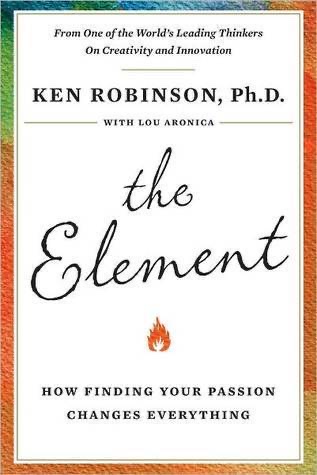 The Element: How Finding Your Passion Changes Everything
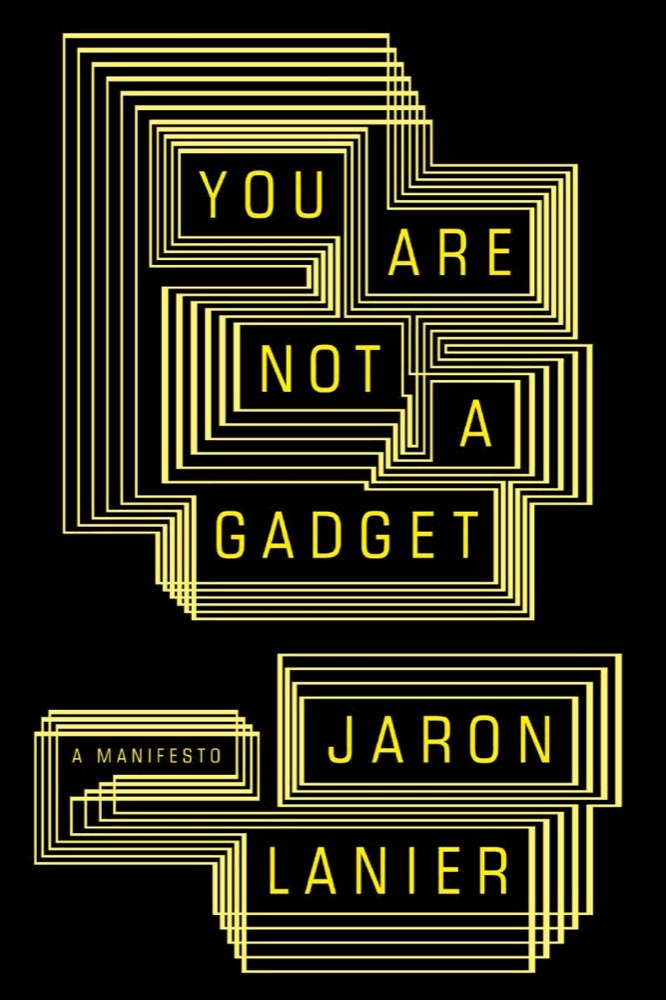 You Are Not a Gadget
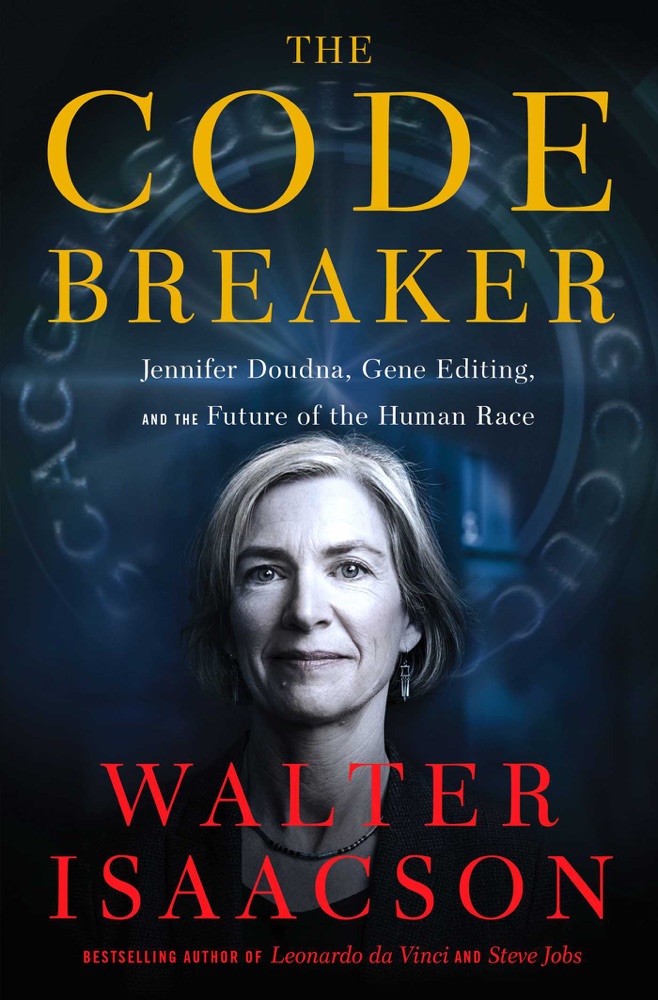 The Code Breaker: Jennifer Doudna, Gene Editing, and the Future of the Human Race
 The Art of Thinking Clearly
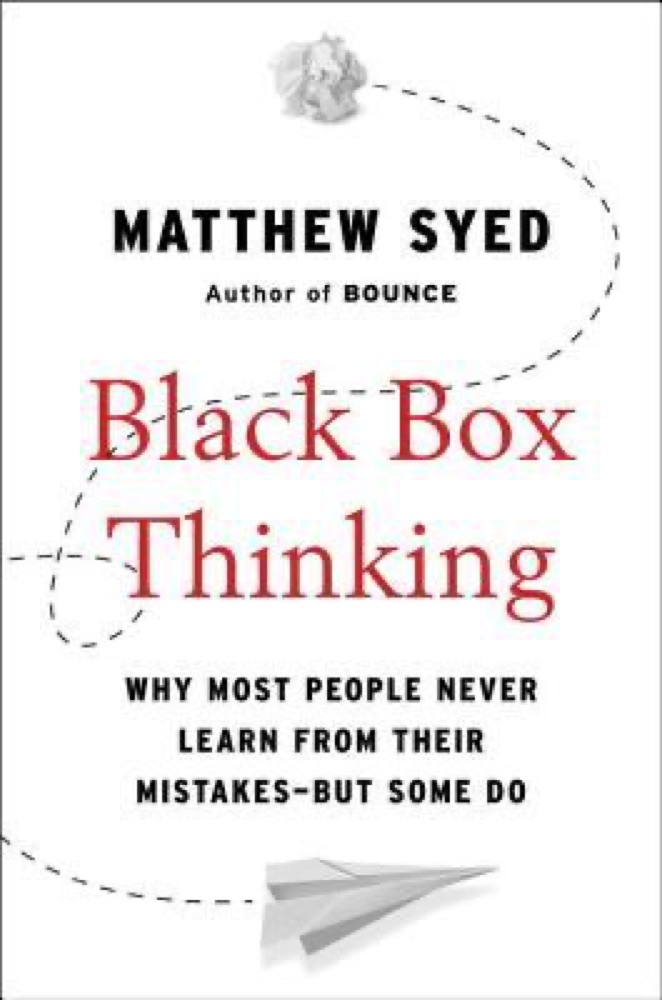 Black Box Thinking: Why Some People Never Learn from Their Mistakes - But Some Do
 Creativity: Flow and the Psychology of Discovery and Invention
 Algorithms to Live By: The Computer Science of Human Decisions
 The Rational Optimist: How Prosperity Evolves
 The Design of Everyday Things
 Creative Quest
 Hooked: How to Build Habit-Forming Products
 The Social Animal: The Hidden Sources of Love, Character, and Achievement
 Physics of the Future: How Science Will Shape Human Destiny and Our Daily Lives by the Year 2100
 Math with Bad Drawings
 Antifragile: Things That Gain from Disorder
 Adapt: Why Success Always Starts with Failure
 Founders at Work: Stories of Startups' Early Days
 The Undoing Project: A Friendship That Changed Our Minds
 What the Dog Saw and Other Adventures
 The Price of Tomorrow: Why Deflation is the Key to an Abundant Future
 The Creative Habit: Learn It and Use It for Life
 My Inventions
 Emotional Design: Why We Love (or Hate) Everyday Things
 Think Like a Freak
 Chaos: Making a New Science
 How the Mind Works
 The Signal and the Noise: Why So Many Predictions Fail—But Some Don't
 The Singularity is Near: When Humans Transcend Biology
 The Future of the Mind: The Scientific Quest to Understand, Enhance, and Empower the Mind
 My Ishmael
 Superforecasting: The Art and Science of Prediction