
 Black Box Thinking: Why Some People Never Learn from Their Mistakes - But Some Do
Quotes from the Book
Pluralism matters because life is not worth living without new experiences - new people, new places, new challenges. But discipline matters too; we cannot simply treat life as a psychedelic trip through a series of novel sensations.
22
Accepting trial and error means accepting error. It means taking problems in our stride when a decision doesn't work out, whether through luck or misjudgment. And that is not something human brains seem to be able to do without a struggle.
20
No plan survives first contact with the enemy. What matters is how quickly the leader is able to adapt.
18
The evolutionary algorithm--of variation and selection, repeated--searches for solutions in a world where the problems keep changing, trying all sorts of variants and doing more of what works.
11
The Most successful industry of the last forty years has been built on failure after failure after failure.
10
And the fundamental point of all these massively parallel experiments is the same: when a problem reaches a certain level of complexity, formal theory won’t get you nearly as far as an incredibly rapid, systematic process of trial and error.
6
Companies pay amazing amounts of money to get answers from consultants with overdeveloped confidence in their own intuition,’ he
3
Few human inventions are more complex and tightly coupled than the banking system; Charles
3
Here’s the thing about failure in innovation: it’s a price worth paying. We
3
In Iraq, the Army discovered that if the official hierarchy was on a disastrous course, it was vital to bypass it in order to adapt. Petraeus
3
Palchinsky principles’: first, seek out new ideas and try new things; second, when trying something new, do it on a scale where failure is survivable; third, seek out feedback and learn from your mistakes as you go along. The
3
Given the likely shape of these ever-shifting landscapes, the evolutionary mix of small steps and occasional wold gambles is the best possible way to search for solutions.
3
It may be satisfying to castigate the likes of Geithner and the heads of Lehman Brothers and AIG, but safety experts like Perrow know it is far more productive to design better systems than to hope for better people.
2
Ormerod’s discovery strongly implies that effective planning is rare in the modern economy.
1
The complexity of the society we have created for ourselves envelops us so completely that, instead of being dizzied, we take it for granted.
1
Doing foolish things in an attempt ‘to correct the past’, like marrying the man whose baby you just aborted, isn’t unusual at all.
A different psychological process, but with a similar effect on our ability to learn from our mistakes, is simply to reinterpret our failures as successes. We persuade ourselves that what we did was not that bad; in fact, everything worked out for the best.
While denial is the process of refusing to acknowledge a mistake, and loss-chasing is the process of causing more damage while trying to hastily erase the mistake, hedonic editing is a subtler process of convincing ourselves that the mistake doesn’t matter.
All because, to quote the psychologists Kahneman and Tversky, he had not ‘made peace with his losses’. Making peace with our losses can be unbearably difficult to do
First, try new things, expecting that some will fail. Second, make failure survivable: create safe spaces for failure or move forward in small steps. As we saw with banks and cities, the trick here is finding the right scale in which to experiment: significant enough to make a difference, but not such a gamble that you’re ruined if it fails. And third, make sure you know when you’ve failed, or you will never learn. As we shall see in the next chapter, this last one is especially difficult when it comes to adapting in our own lives.
As the biochemist Leslie Orgel famously remarked, ‘Evolution is cleverer than you are’, meaning that when an evolutionary process is let loose upon a problem, it will often find solutions that no human designer would have dreamed of.
It’s easy to see why the idea of controlled experiments on coronary care patients might make people queasy. What Archie Cochrane had the courage to understand is that the alternative to controlled experiments is uncontrolled experiments. These are worse, because they teach us little or nothing.
A doctor who wants to run a properly controlled trial to test these two options needs approval from an ethics committee. A doctor who prescribes one or the other arbitrarily (there being no other basis for the decision), and who makes no special note of the results, needs to satisfy no higher authority. He’s simply regarded as doing his job.
An empiricist, I was willing to learn by my mistakes and those of others.’ – Muhammad Yunus ‘The barrier to change is not too little caring; it is too much complexity.’ – Bill Gates
Hayek believed that most people overestimated the value of centralised knowledge, and tended to overlook ‘knowledge of the particular circumstances of time and place’.
Galvin told Petraeus that the most important part of the job was to criticise his boss: ‘It’s my job to run the division, and it’s your job to critique me.’ Petraeus protested but Galvin insisted, so each month the young captain would leave a report card in his boss’s in-tray. It was a vital lesson for an officer unwilling to admit mistakes.
And distinguishing success from failure, oddly, can be the hardest task of all: arrogant leaders can ignore the distinction; our own denial can blur it; and the sheer complexity of the world can make the distinction hard to draw even for the most objective judge.
Along the way, we’ll also be learning about the recipe for successfully adapting. The three essential steps are: to try new things, in the expectation that some will fail; to make failure survivable, because it will be common; and to make sure that you know when you’ve failed.
The great economic psychologists Daniel Kahneman and Amos Tversky summarised the behaviour in their classic analysis of the psychology of risk: ‘a person who has not made peace with his losses is likely to accept gambles that would be unacceptable to him otherwise’.
General Electric and Shell were also in the top ten both in 1912 and in 1995. But none of the other top-ten titans was in the top ten by 1995. More remarkably, none of them was even in the top hundred. Names such as Pullman and Singer recall a bygone age. Others, such as J&P Coats, Anaconda and International Harvester, are barely recognisable.
Watch on YouTube
About Tim Harford
We have collected 30 quotes from 1 book by Tim Harford on BookQuoters.
More about the author →About the book
Author Q&A with Tim Harford So are you an economic missionary, or is this just something that you love to do? It began as something that I love to do--and I think I am now starting to get a sense of it being a mission. People can use economics and they can use statistics and numbers to get at the truth and there is a real appetite for doing so. This is such a BBC thing to say--there’s almost a public service mission to be fulfilled in educating people about economics. When I wrote The Undercover Economist, it was all about my pure enthusiasm for the subject; the book is full of stuff I wanted to say and that is always the thing with the they are always such fun to write. Do you think that people these days are generally more economically literate? People are now aware of economics for various reasons. There are the problems with the economy--there is always more interest in economics whe
Book details
- First published
- 2011
- Author
- Tim Harford
- Genre
- Nonfiction
- Goodreads rating
- 3.88 (4k ratings)
Keep reading
Black Box Thinking: Why Some People Never Learn from Their Mistakes - But Some Do
 Algorithms to Live By: The Computer Science of Human Decisions
 Right Kind of Wrong: The Science of Failing Well
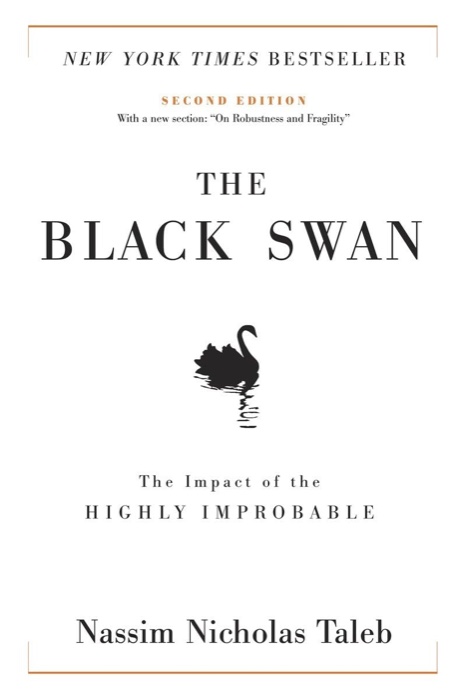 The Black Swan: The Impact of the Highly Improbable
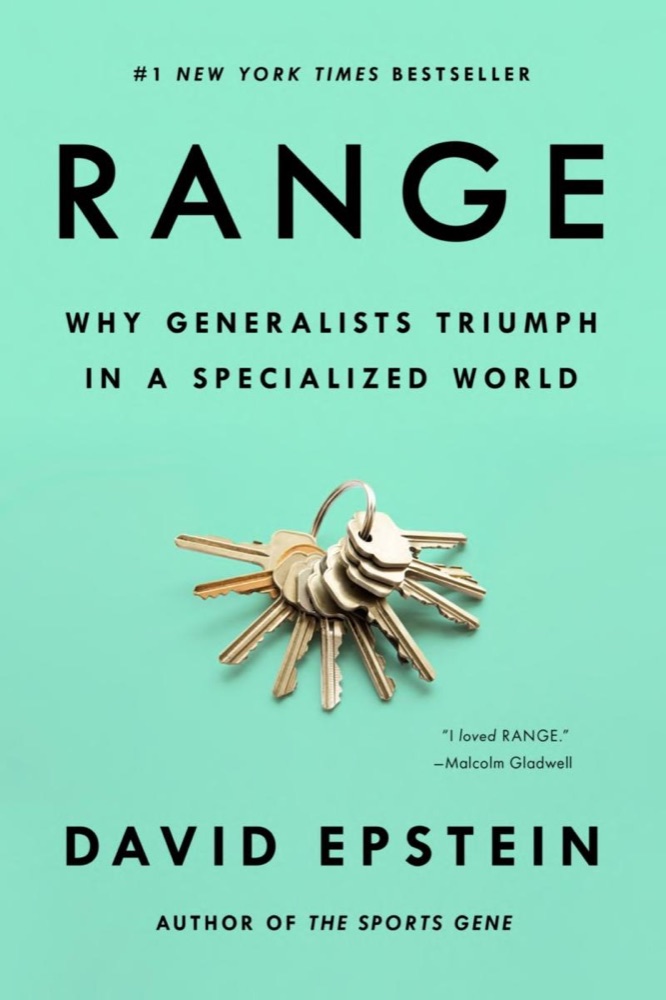 Range: Why Generalists Triumph in a Specialized World
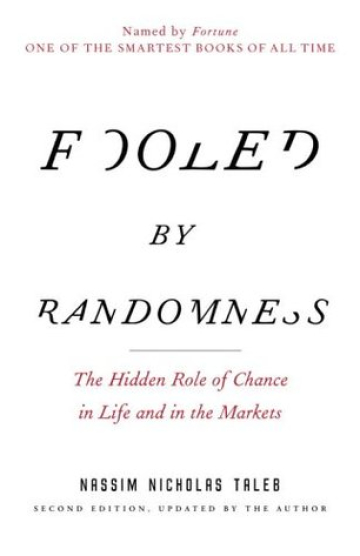 Fooled by Randomness: The Hidden Role of Chance in Life and in the Markets
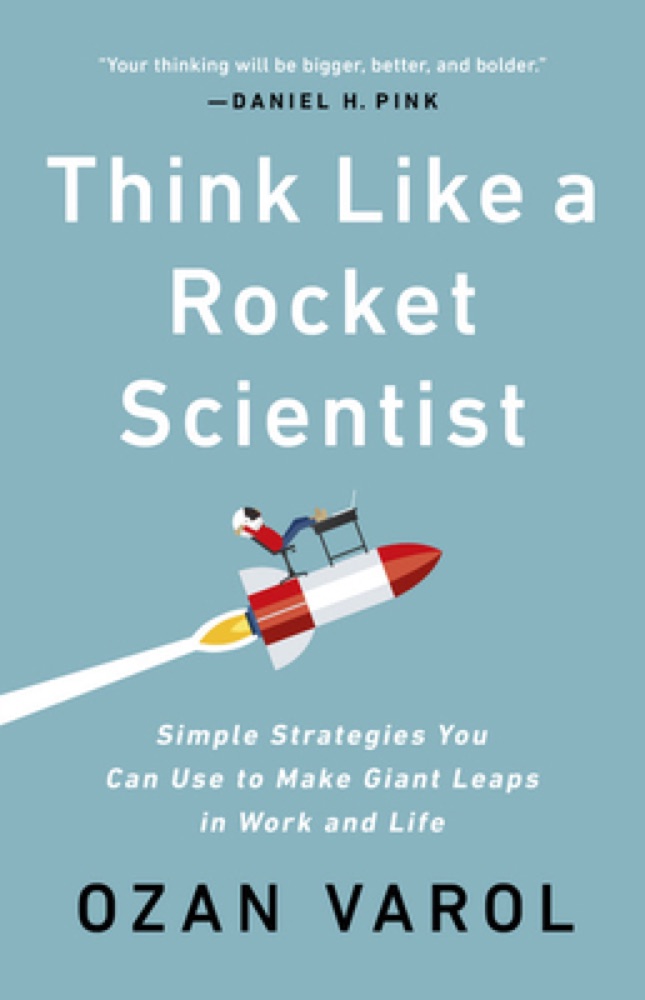 Think Like a Rocket Scientist: Simple Strategies You Can Use to Make Giant Leaps in Work and Life
 The Undoing Project: A Friendship That Changed Our Minds
 The Art of Thinking Clearly
 Antifragile: Things That Gain from Disorder
 Think Like a Freak
 Barking Up the Wrong Tree: The Surprising Science Behind Why Everything You Know About Success Is (Mostly) Wrong
 Creativity, Inc.: Overcoming the Unseen Forces That Stand in the Way of True Inspiration
 Superforecasting: The Art and Science of Prediction
 Great by Choice: Uncertainty, Chaos, and Luck—Why Some Thrive Despite Them All
 Chaos Monkeys: Obscene Fortune and Random Failure in Silicon Valley
 Originals: How Non-Conformists Move the World
 Smartcuts: How Hackers, Innovators, and Icons Accelerate Success
 Invent and Wander: The Collected Writings of Jeff Bezos
 The Price of Tomorrow: Why Deflation is the Key to an Abundant Future
 What the Dog Saw and Other Adventures
 Same as Ever: A Guide to What Never Changes
 Built to Last: Successful Habits of Visionary Companies
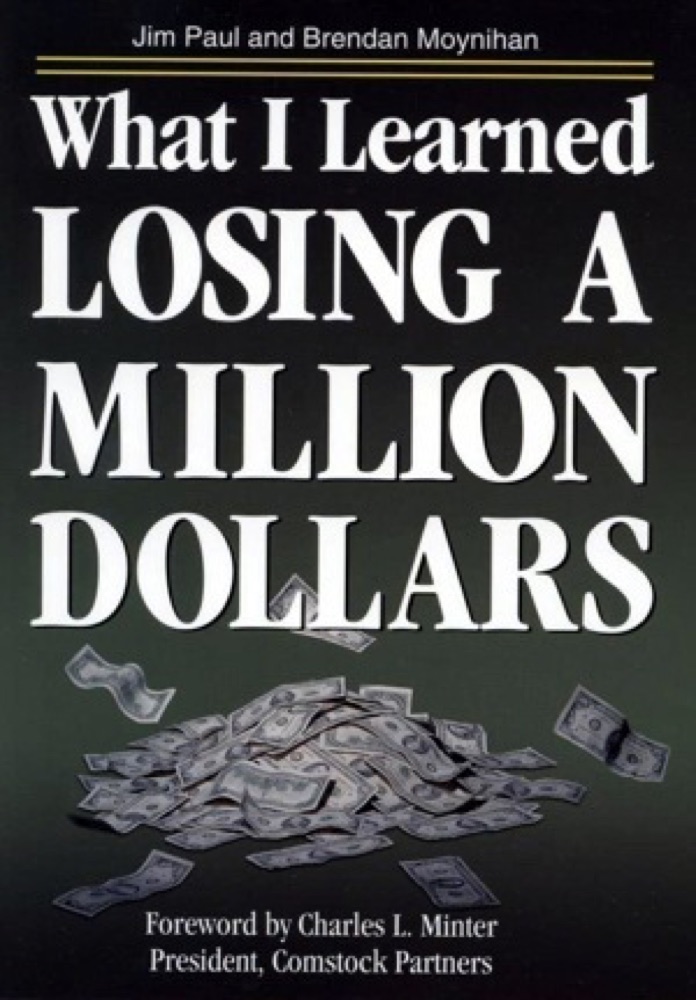 What I Learned Losing a Million Dollars
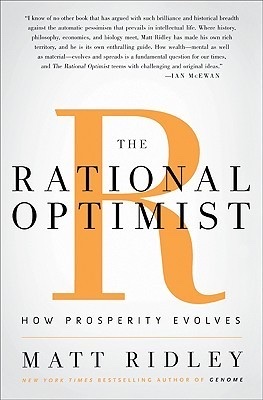 The Rational Optimist: How Prosperity Evolves
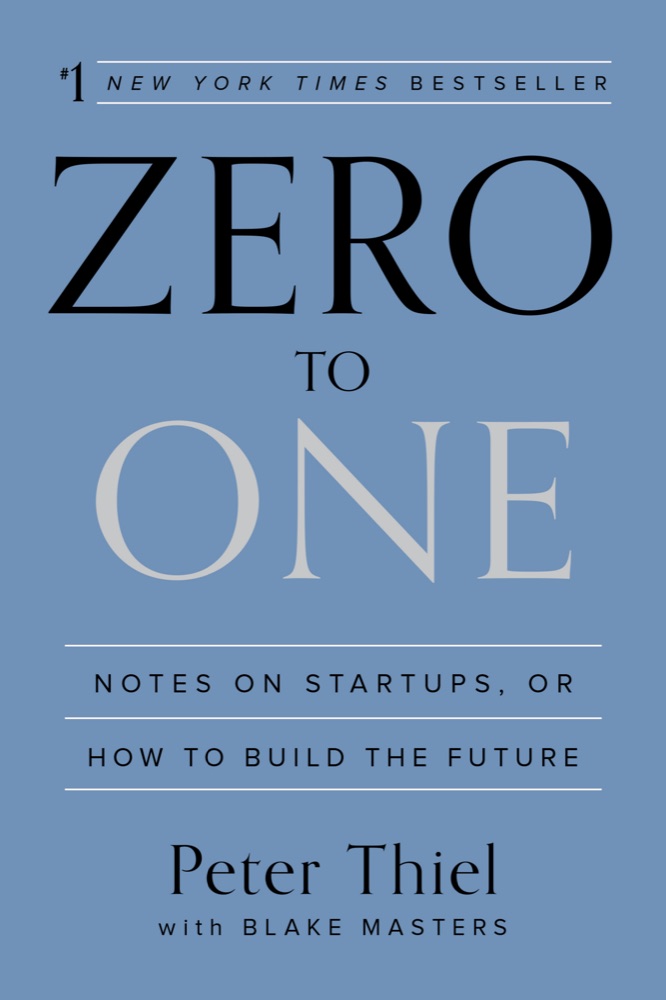 Zero to One: Notes on Startups, or How to Build the Future
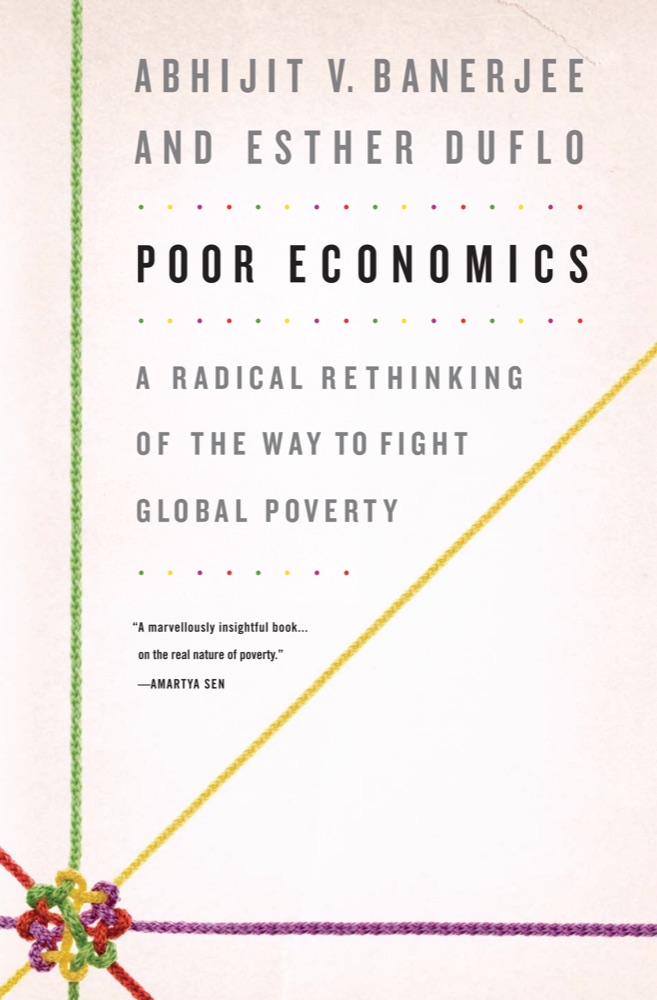 Poor Economics: A Radical Rethinking of the Way to Fight Global Poverty
 The Shockwave Rider
 Predictably Irrational: The Hidden Forces That Shape Our Decisions
 The Signal and the Noise: Why So Many Predictions Fail—But Some Don't
 Freakonomics: A Rogue Economist Explores the Hidden Side of Everything
 David and Goliath: Underdogs, Misfits, and the Art of Battling Giants
 The Monk and the Riddle: The Education of a Silicon Valley Entrepreneur
 Good to Great: Why Some Companies Make the Leap... and Others Don't
 Amp It Up: Leading for Hypergrowth by Raising Expectations, Increasing Urgency, and Elevating Intensity
 The Fifth Discipline: The Art & Practice of The Learning Organization
 My Ishmael
 Principles: Life and Work
 Hackers & Painters: Big Ideas from the Computer Age
 The Drunkard's Walk: How Randomness Rules Our Lives
 Pour Your Heart Into It: How Starbucks Built a Company One Cup at a Time
 Alchemy: The Surprising Power of Ideas That Don't Make Sense
 Loonshots: How to Nurture the Crazy Ideas That Win Wars, Cure Diseases, and Transform Industries
 Elon Musk
 Better: A Surgeon's Notes on Performance
 The Lean Startup
 How to Fail at Almost Everything and Still Win Big: Kind of the Story of My Life
 Independent Study
 Small Is Beautiful: Economics as if People Mattered
 The Art of Impossible: A Peak Performance Primer
 The Halo Effect: ... and the Eight Other Business Delusions That Deceive Managers
 Math with Bad Drawings
 Getting There: A Book of Mentors
 Do Epic Shit
 The Hard Thing About Hard Things: Building a Business When There Are No Easy Answers―Straight Talk on the Challenges of Entrepreneurship
 Hit Refresh: The Quest to Rediscover Microsoft's Soul and Imagine a Better Future for Everyone
 The Art of Creative Thinking
 SuperFreakonomics: Global Cooling, Patriotic Prostitutes And Why Suicide Bombers Should Buy Life Insurance
 Revenge of the Tipping Point