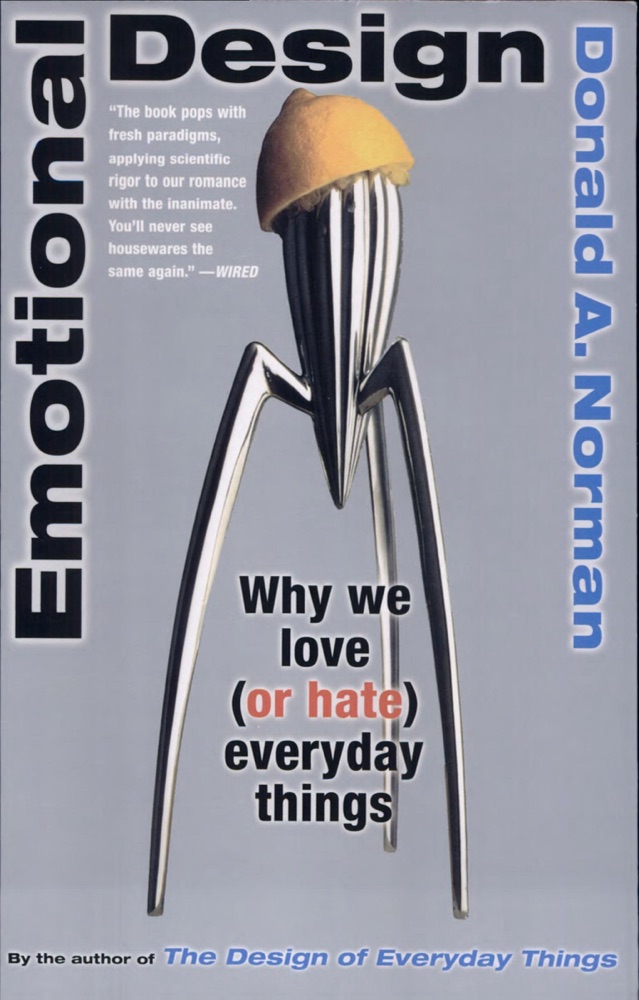

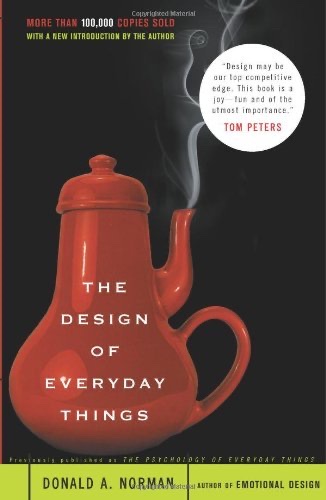
 The Design of Everyday Things
Quotes from the Book
Learning should take place when it is needed, when the learner is interested, not according to some arbitrary, fixed schedule
37
Will robot teachers replace human teachers? No, but they can complement them. Moreover, the could be sufficient in situations where there is no alternative––to enable learning while traveling, or while in remote locations, or when one wishes to study a topic for which there is not easy access to teachers. Robot teachers will help make lifelong learning a practicality. They can make it possible to learn no matter where one is in the world, no matter the time of day. Learning should take place when it is needed, when the learner is interested, not according to some arbitrary, fixed schedule
7
It is only at the reflective level that consciousness and the highest levels of feeling, emotions, and cognition reside. It is only here that the full impact of both thought and emotions are experienced. At the lower visceral and behavioral levels, there is only affect, but without interpretation or consciousness. Interpretation, understanding, and reasoning come from the reflective level.
3
Beauty comes from conscious reflection and experience. It is influenced by knowledge, learning, and culture. Objects that are unattractive on the surface can give pleasure. Discordant music, for example, can be beautiful. Ugly art can be beautiful.
2
Because visceral design is about initial reactions, it can be studied quite simply by putting people in front of a design and waiting for reactions. In the best of circumstances, the visceral reaction to appearance works so well that people take one look and say “I want it.” Then they might ask, “What does it do?” And last, “And how much does it cost?” This is the reaction the visceral designer strives for, and it can work. Much of traditional market research involves this aspect of design.
2
AFTER DINNER, WITH A GREAT FLOURISH, my friend Andrew brought out a lovely leather box. “Open it,” he said, proudly, “and tell me what you think.” I opened the box. Inside was a gleaming stainless-steel set of old mechanical drawing instruments: dividers, compasses, extension arms for the compasses, an assortment of points, lead holders, and pens that could be fitted onto the dividers and compasses. All that was missing was the T square, the triangles, and the table. And the ink, the black India ink. “Lovely,” I said. “Those were the good old days, when we drew by hand, not by computer.” Our eyes misted as we fondled the metal pieces. “But you know,” I went on, “I hated it. My tools always slipped, the point moved before I could finish the circle, and the India ink—ugh, the India ink—it always blotted before I could finish a diagram. Ruined it! I used to curse and scream at it. I once spilled the whole bottle all over the drawing, my books, and the table. India ink doesn’t wash off. I hated it. Hated it!” “Yeah,” said Andrew, laughing, “you’re right. I forgot how much I hated it. Worst of all was too much ink on the nibs! But the instruments are nice, aren’t they?” “Very nice,” I said, “as long as we don’t have to use them.
2
Engineers and designers simultaneously know too much and too little. They know too much about the technology and too little about how other people live their live and do their activities.
2
Engineers and designers who believe they do not need to watch the people who use their products are a major source of the many poor designs that confront us.
1
If you want a golden rule that will fit everybody, this is it: Have nothing in your houses that you do not know to be useful, or believe to be beautiful.
1
Fire,” yells someone in a theater. Immediately everyone stampedes toward the exits. What do they do at the exit door? Push. If the door doesn’t open, they push harder. But what if the door opens inward and must be pulled, not pushed? Highly anxious, highly focused people are very unlikely to think of pulling.
1
When people are anxious they tend to narrow their thought processes, concentration upon aspects directly relevant to a problem. This is a useful strategy in escaping from danger, but not in thinking of imaginative new approaches to a problem.
1
In the 1980s, in writing The Design of Everyday Things, I didn’t take emotions into account. I addressed utility and usability, function and form, all in a logical, dispassionate way—even though I am infuriated by poorly designed objects. But now I’ve changed. Why? In part because of new scientific advances in our understanding of the brain and of how emotion and cognition are thoroughly intertwined.
Proper customization does not come by further complicating an already complex system. No, proper customization comes about through combining multiple simple pieces. Invariably, if something is so complex that it requires the addition of multiple “preferences” or customization choices, it is probably too complex to use, too complex to be saved. I don’t customize my pen; I do customize how I use it. I don’t customize my furniture; I do customize through my choice of which piece to buy in the first place, where I put it, when I use it, and how.
But, in fact, the ready distractibility of attention is a biological necessity, developed through millions of years of evolution as a protective mechanism against unexpected danger: this is the primary function of the visceral level.
After all, these systems do not do a very good job of gathering trust. They lose files and they crash, oftentimes for no apparent reason. Moreover, they express no shame, no blame. They don’t apologize or say they are sorry. Worse, they appear to blame us, the poor unwitting users. Who is “they”? Why does it matter? We are angered, and appropriately so.
You build up expectations of behavior based upon prior experience, and if the items with which you interact fail to live up to expectations, that is a violation of trust, for which you assign blame, which can soon lead to anger.
Visceral design is what nature does.
Attractive things do work better—their attractiveness produces positive emotions, causing mental processes to be more creative, more tolerant of minor difficulties. The three levels of processing lead to three corresponding forms of design: visceral, behavioral, and reflective. Each plays a critical role in human behavior, each an equally critical role in the design, marketing, and use of products.
everything you do has both a cognitive and an affective component—cognitive to assign meaning, affective to assign value.
The behavioral level in human beings is especially valuable for well-learned, routine operations. This is where the skilled performer excels.
The highest layer is that of reflective thought. Note that it does not have direct access either to sensory input or to the control of behavior. Instead it watches over, reflects upon, and tries to bias the behavioral level.
The behavioral level is the site of most human behavior. Its actions can be enhanced or inhibited by the reflective layer and, in turn, it can enhance or inhibit the visceral layer.
The visceral level is fast: it makes rapid judgments of what is good or bad, safe or dangerous, and sends appropriate signals to the muscles (the motor system) and alerts the rest of the brain.
three different levels of the brain: the automatic, prewired layer, called the visceral level; the part that contains the brain processes that control everyday behavior, known as the behavioral level; and the contemplative part of the brain, or the reflective level.
happy people are more effective in finding alternative solutions and, as a result, are tolerant of minor difficulties.
attractive things make people feel good, which in turn makes them think more creatively. How does that make something easier to use? Simple, by making it easier for people to find solutions to the problems they encounter.
We have long known that when people are anxious they tend to narrow their thought processes, concentrating upon aspects directly relevant to a problem. This is a useful strategy in escaping from danger, but not in thinking of imaginative new approaches to a problem.
The psychologist Alice Isen and her colleagues have shown that being happy broadens the thought processes and facilitates creative thinking.
Science now knows that evolutionarily more advanced animals are more emotional than primitive ones, the human being the most emotional of all. Moreover, emotions play a critical role in daily lives, helping assess situations as good or bad, safe or dangerous.
Emotions, we now know, change the way the human mind solves problems—the emotional system changes how the cognitive system operates. So, if aesthetics would change our emotional state, that would explain the mystery.
Watch on YouTube
About Donald A. Norman
We have collected 59 quotes from 2 books by Donald A. Norman on BookQuoters.
More about the author →More by Donald A. Norman
The Design of Everyday Things
About the book
Did you ever wonder why cheap wine tastes better in fancy glasses? Why sales of Macintosh computers soared when Apple introduced the colorful iMac? New research on emotion and cognition has shown that attractive things really do work better, as Donald Norman amply demonstrates in this fascinating book, which has garnered acclaim everywhere from Scientific American to The New Yorker.Emotional Design articulates the profound influence of the feelings that objects evoke, from our willingness to spend thousands of dollars on Gucci bags and Rolex watches, to the impact of emotion on the everyday objects of tomorrow.Norman draws on a wealth of examples and the latest scientific insights to present a bold exploration of the objects in our everyday world. Emotional Design will appeal not only to designers and manufacturers but also to managers, psychologists, and general readers who love to thin
Book details
- First published
- 2003
- Author
- Donald A. Norman
- Genre
- Nonfiction
- Goodreads rating
- 3.95 (6k ratings)
Keep reading
 How the Mind Works
The Design of Everyday Things
How the Mind Works
The Design of Everyday Things
 A Whole New Mind: Why Right-Brainers Will Rule the Future
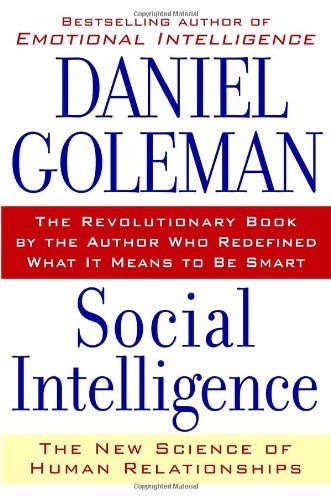 Social Intelligence: The New Science of Human Relationships
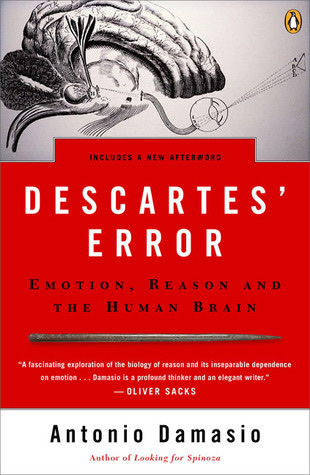 Descartes' Error: Emotion, Reason and the Human Brain
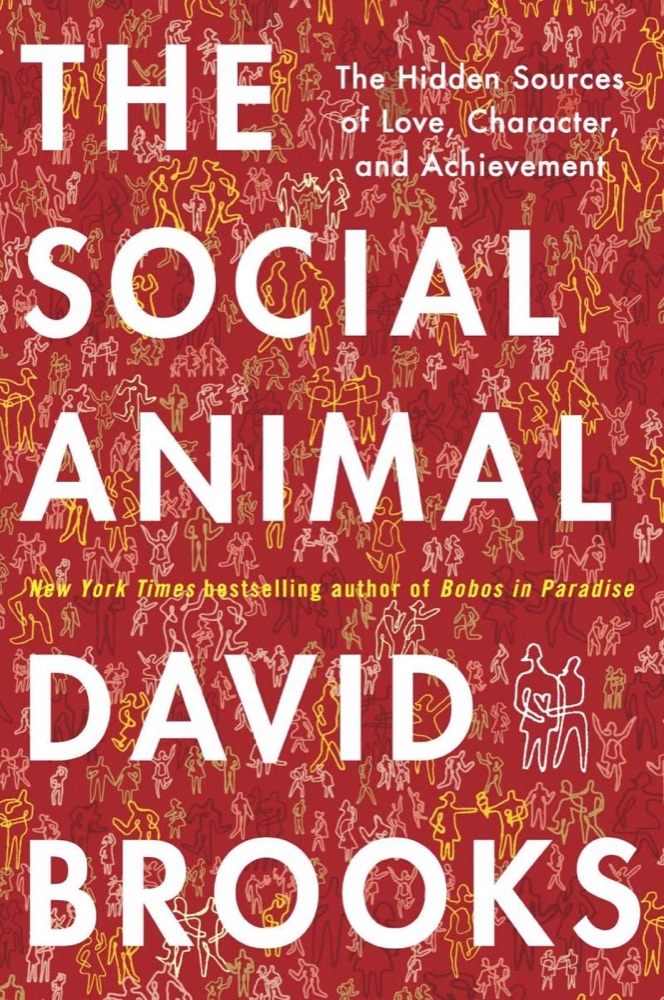 The Social Animal: The Hidden Sources of Love, Character, and Achievement
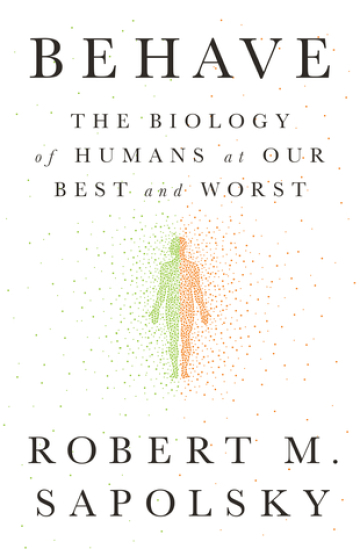 Behave: The Biology of Humans at Our Best and Worst
 How We Decide
 The Brain That Changes Itself: Stories of Personal Triumph from the Frontiers of Brain Science
 The Elephant in the Brain: Hidden Motives in Everyday Life
 The Happiness Hypothesis: Finding Modern Truth in Ancient Wisdom
 The Organized Mind: Thinking Straight in the Age of Information Overload
 Antifragile: Things That Gain from Disorder
 Blink: The Power of Thinking Without Thinking
 Emotional Intelligence: Why It Can Matter More Than IQ
 Mastery
 Good Reasons for Bad Feelings: Insights from the Frontier of Evolutionary Psychiatry
 Imagine: How Creativity Works
 The Future of the Mind: The Scientific Quest to Understand, Enhance, and Empower the Mind
 Stolen Focus: Why You Can't Pay Attention— and How to Think Deeply Again
 The Art of Thinking Clearly
 Smarter Faster Better: The Secrets of Being Productive in Life and Business
 Drive: The Surprising Truth About What Motivates Us
 Psych: The Story of the Human Mind
 Emotional Intelligence 2.0: With Access Code
 Creativity: Flow and the Psychology of Discovery and Invention
 Hooked: How to Build Habit-Forming Products
 Zen and the Art of Motorcycle Maintenance
 Flow: The Psychology of Optimal Experience
 A User's Guide to the Brain: Perception, Attention, and the Four Theaters of the Brain
 The Fourth Way
 Mama's Last Hug: Animal Emotions and What They Tell Us about Ourselves
 The Art of Creative Thinking
 Mindsight: The New Science of Personal Transformation
 How We Learn: Why Brains Learn Better Than Any Machine . . . for Now
 Black Box Thinking: Why Some People Never Learn from Their Mistakes - But Some Do
 A Mind for Numbers: How to Excel at Math and Science
 A General Theory of Love
 Livewired: The Inside Story of the Ever-Changing Brain
 Alchemy: The Surprising Power of Ideas That Don't Make Sense
 The Medium is the Massage
 The Laws of Human Nature
 The New Psycho-Cybernetics: The Original Science of Self-Improvement and Success That Has Changed the Lives of 30 Million People
 Evolve Your Brain: The Science of Changing Your Mind
 The Element: How Finding Your Passion Changes Everything
 Scarcity Brain: Fix Your Craving Mindset and Rewire Your Habits to Thrive with Enough
 The Art of Impossible: A Peak Performance Primer
 Why Has Nobody Told Me This Before?
 Homo Deus: A History of Tomorrow
 Successful Aging: A Neuroscientist Explores the Power and Potential of Our Lives
 Made to Stick: Why Some Ideas Survive and Others Die
 The 7 Habits of Highly Effective People: Personal Workbook
 How to Take Smart Notes
 A Hunter-Gatherer's Guide to the 21st Century: Evolution and the Challenges of Modern Life
 How to Fly a Horse: The Secret History of Creation, Invention, and Discovery
 Algorithms to Live By: The Computer Science of Human Decisions
 The Tipping Point: How Little Things Can Make a Big Difference
 Originals: How Non-Conformists Move the World
 Hackers & Painters: Big Ideas from the Computer Age
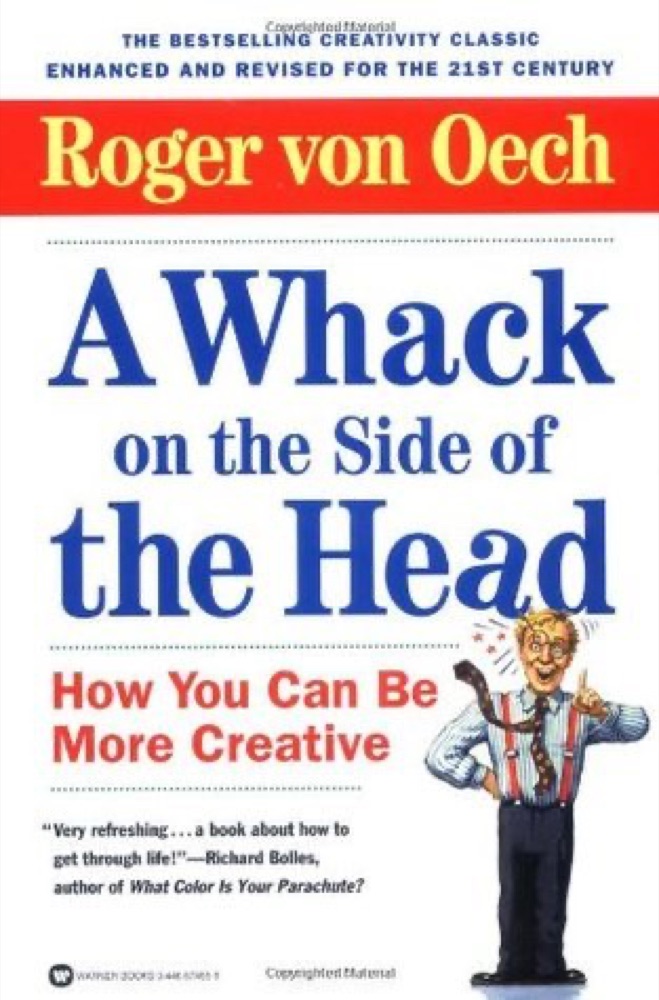 A Whack on the Side of the Head: How You Can Be More Creative