
 Einstein: His Life and Universe
Quotes from the Book
we have entered a third and even more momentous era, a life-science revolution. Children who study digital coding will be joined by those who study genetic code.
12
Hypocrisy in search of social acceptance erodes your self-respect.
12
Never do something that a thousand other people are doing.
11
Two revolutions coincided in the 1950s. Mathematicians, including Claude Shannon and Alan Turing, showed that all information could be encoded by binary digits, known as bits. This led to a digital revolution powered by circuits with on-off switches that processed information. Simultaneously, Watson and Crick discovered how instructions for building every cell in every form of life were encoded by the four-letter sequences of DNA. Thus was born an information age based on digital coding (0100110111001…) and genetic coding (ACTGGTAGATTACA…). The flow of history is accelerated when two rivers converge.
9
Men ought not to play God before they learn to be men.
8
The beauty of nature and the joy that comes from unstructured human engagement is a powerful combination.
8
I think my blunt and contrary nature helps my science, because I don’t simply accept things just because other people believe it,
6
Great inventions come from understanding basic science. Nature is beautiful that way.
6
How do we distinguish between traits that are true disabilities and ones that are disabilities mainly because society is not good at adapting for them?
4
Asilomar’s lack of focus on ethical issues bothered many religious leaders. That prompted a letter to President Jimmy Carter signed by the heads of three major religious organizations: the National Council of Churches, the Synagogue Council of America, and the U.S. Catholic Conference. “We are rapidly moving into a new era of fundamental danger triggered by the rapid growth of genetic engineering,” they wrote. “Who shall determine how human good is best served when new life forms are being engineered?”13 These decisions should not be left to scientists, the trio argued. “There will always be those who believe it appropriate to ‘correct’ our mental and social structures by genetic means. This becomes more dangerous when the basic tools to do so are finally at hand. Those who would play God will be tempted as never before.
4
Does empathy depend on believing that but for the grace of God, or the randomness of the natural lottery, we could have been born with a different set of endowments?
3
The second half of the twentieth century was an information-technology era, based on the idea that all information could be encoded by binary digits—known as bits—and all logical processes could be performed by circuits with on-off switches.
3
The first half of the twentieth century, beginning with Albert Einstein’s 1905 papers on relativity and quantum theory, featured a revolution driven by physics.
3
Just as bacteria have spent millennia evolving ways to develop immunity to viruses, perhaps we humans should use our ingenuity to do the same.
3
The evolutionary process cares little about what happens to us after we have children and get them to a safe age, so there are a whole bunch of middle-aged maladies, including Huntington’s and most forms of cancer, that we humans would want to eliminate, even though nature sees no need to.
3
Much of the attention paid to CRISPR these days involves its potential to make inheritable (germline) edits in humans that will be passed along to all the cells of all of our future descendants and have the potential to alter our species. These edits are done in reproductive cells or early-stage embryos. This is what occurred with the CRISPR baby twins in China in 2018, and it is the controversial topic that I will discuss later in this book.
3
I once asked Steve Jobs what his best product was, thinking he would say the Macintosh or iPhone. Instead he said that creating great products is important, but what’s even more important is creating a team that can continually make such products.
2
The scientist does not study nature because it is useful. He studies it because he takes pleasure in it, and he takes pleasure in it because it is beautiful.
2
Doudna deeply enjoyed being a bench scientist, a researcher who gets to the lab early, puts on latex gloves and a white coat, and begins working with pipettes and Petri dishes. For the first few years after setting up her lab at Berkeley, she was able to work at the bench half her time. “I didn’t want to give that up,” she says. “I think I was a pretty good experimenter. That’s how my mind works. I can see experiments in my mind, especially when I am working myself.” But by 2009, after her return from Genentech, Doudna realized that she had to spend more time cultivating her lab rather than her bacterial cultures. This transition from player to coach happens in many fields. Writers become editors, engineers become managers. When bench scientists become lab heads their new managerial duties include hiring the right young researchers, mentoring them, going over their results, suggesting new experiments, and offering up the insights that come from having been there.
2
It was a bad day for viruses,” Moderna’s chair Afeyan says about the Sunday in November 2020 when he got the first word of the clinical trial results. “There was a sudden shift in the evolutionary balance between what human technology can do and what viruses can do. We may never have a pandemic again.
2
The invention of CRISPR and the plague of COVID will hasten our transition to the third great revolution of modern times. These revolutions arose from the discovery, beginning just over a century ago, of the three fundamental kernels of our existence: the atom, the bit, and the gene.
2
Throughout human history, we have been subjected to wave after wave of viral and bacterial plagues. The first known one was the Babylon flu epidemic around 1200 BC. The plague of Athens in 429 BC killed close to 100,000 people, the Antonine plague in the second century killed ten million, the plague of Justinian in the sixth century killed fifty million, and the Black Death of the fourteenth century took almost 200 million lives, close to half of Europe’s population.
2
After more than three billion years of evolution of life on this planet, one species (us) had developed the talent and temerity to grab control of its own genetic future. There
2
We all see nature's wonders every day, whether it be a plant that moves or a sunset that reaches with pink fingers into a sky of deep blue. The key to true curiosity is pausing to ponder the causes. What makes a sky blue or a sunset pink or a leaf of sleeping grass curl?
2
We had to determine structures, because structures, the folds and shapes, are conserved over a longer evolutionary period than the nucleic acid sequences.
2
You have to be self-sufficient,” he told Wilson. “If you’re not self-motivated, Jennifer is not going to help you much or do the work for you. At times she will seem disengaged. But if you’re a self-starter, she will give you the chance to take risks, provide really smart guidance, and be there when you need her.
1
Watch on YouTube
About Walter Isaacson
We have collected 204 quotes from 8 books by Walter Isaacson on BookQuoters.
More about the author →More by Walter Isaacson
Einstein: His Life and Universe
 Benjamin Franklin: An American Life
 Steve Jobs
 The Innovators: How a Group of Hackers, Geniuses and Geeks Created the Digital Revolution
About the book
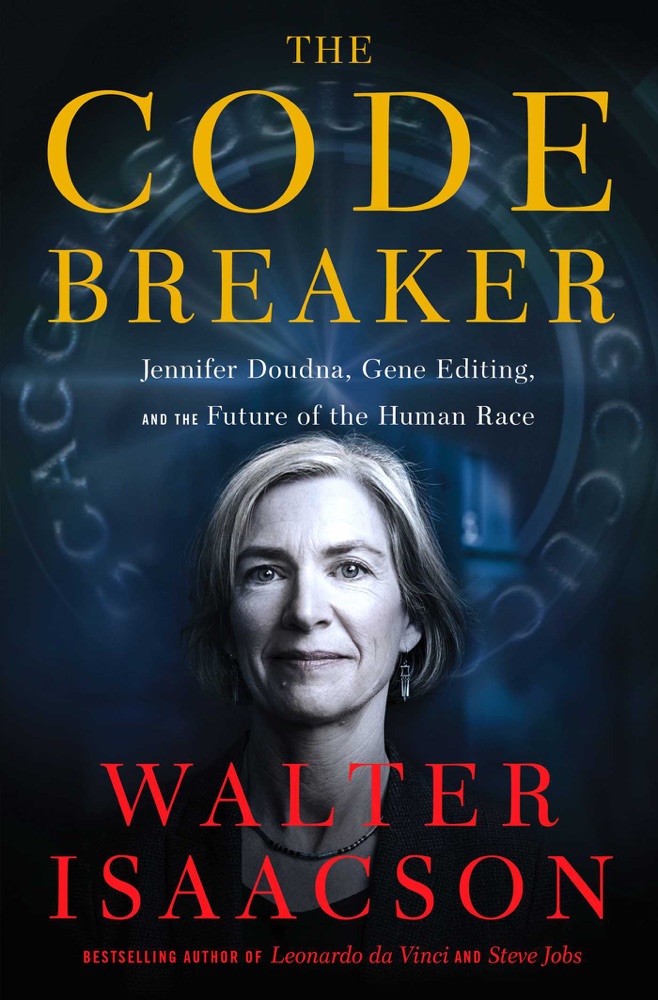
When Jennifer Doudna was in sixth grade, she came home one day to find that her dad had left a paperback titled The Double Helix on her bed. As she sped through the pages, she became enthralled by the intense drama behind the competition to discover the code of life. Even though her high school counselor told her girls didn’t become scientists, she decided she would.
Driven by a passion to understand how nature works and to turn discoveries into inventions, she would help to make what the book’s author, James Watson, told her was the most important biological advance since his co-discovery of the structure of DNA. She and her collaborators turned a curiosity of nature into an invention that will transform the human race: an easy-to-use tool that can edit DNA. Known as CRISPR, it opened a brave new world of medical miracles and moral questions. The development of CRISPR and the race
Book details
- First published
- 2021
- Author
- Walter Isaacson
- Genre
- Nonfiction
- Goodreads rating
- 4.28 (42k ratings)
The buzz
- The New York TimesReview in The New York Timesprofessional review (via Book Marks)
- The Washington PostReview in The Washington Postprofessional review (via Book Marks)
- The GuardianReview in The Guardianprofessional review (via Book Marks)
- NPRReview in NPRprofessional review (via Book Marks)
- Associated PressReview in Associated Pressprofessional review (via Book Marks)
- The TimesReview in The Timesprofessional review (via Book Marks)
Keep reading
 The Gene: An Intimate History
 Physics of the Future: How Science Will Shape Human Destiny and Our Daily Lives by the Year 2100
 Genome: the Autobiography of a Species in 23 Chapters
 Genome
 A Devil's Chaplain: Reflections on Hope, Lies, Science, and Love
 The Social Conquest of Earth
 What Technology Wants
 Darwin's Dangerous Idea: Evolution and the Meanings of Life
 The Song of the Cell: An Exploration of Medicine and the New Human
 Dragons of Eden: Speculations on the Evolution of Human Intelligence
 A Hunter-Gatherer's Guide to the 21st Century: Evolution and the Challenges of Modern Life
 From Bacteria to Bach and Back: The Evolution of Minds
 Undeniable: Evolution and the Science of Creation
 How We Got to Now: Six Innovations That Made the Modern World
 The Lost World
 The Ascent of Man
 The Future of Humanity: Terraforming Mars, Interstellar Travel, Immortality and Our Destiny Beyond Earth
 Homo Deus: A History of Tomorrow
 Shadows of Forgotten Ancestors
 The Biology of Belief: Unleashing the Power of Consciousness, Matter and Miracles
 The Singularity is Near: When Humans Transcend Biology
 The Big Picture: On the Origins of Life, Meaning, and the Universe Itself
 The Wizard and the Prophet: Two Remarkable Scientists and Their Dueling Visions to Shape Tomorrow's World
 The Blind Watchmaker: Why the Evidence of Evolution Reveals a Universe Without Design
 Space Chronicles: Facing the Ultimate Frontier
 How the Mind Works
 Billions & Billions: Thoughts on Life and Death at the Brink of the Millennium
 An Appetite for Wonder: The Making of a Scientist
 Sapiens: A Brief History of Humankind
 Echopraxia
 The Lives of a Cell: Notes of a Biology Watcher
 The Ghost Map: The Story of London's Most Terrifying Epidemic - and How It Changed Science, Cities, and the Modern World
 The Rational Optimist: How Prosperity Evolves
 Brief Answers to the Big Questions
 The Great Influenza: The Story of the Deadliest Pandemic in History
 The Information: A History, a Theory, a Flood
 The Tell-Tale Brain: A Neuroscientist's Quest for What Makes Us Human
 Soonish: Ten Emerging Technologies That'll Improve and/or Ruin Everything
 Why Fish Don’t Exist: A Story of Loss, Love, and the Hidden Order of Life
 The Grand Design
 How to Fly a Horse: The Secret History of Creation, Invention, and Discovery
 The Story of the Human Body: Evolution, Health, and Disease
 Letters from an Astrophysicist
 The Story of More: How We Got to Climate Change and Where to Go from Here
 2312
2312
 Consilience: The Unity of Knowledge
 Life 3.0: Being Human in the Age of Artificial Intelligence
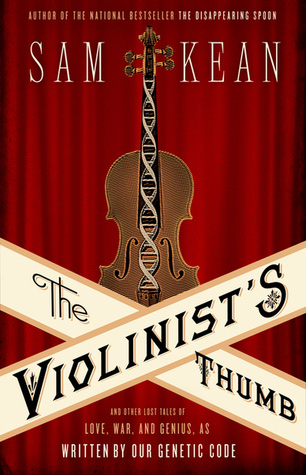 The Violinist's Thumb: And Other Lost Tales of Love, War, and Genius, as Written by Our Genetic Code
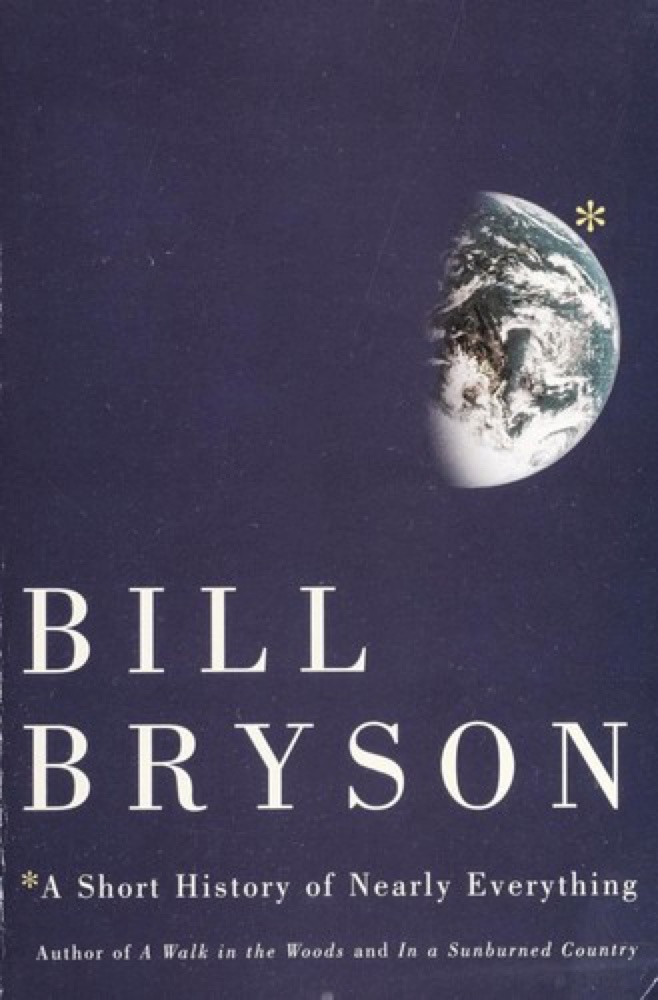 A Short History of Nearly Everything
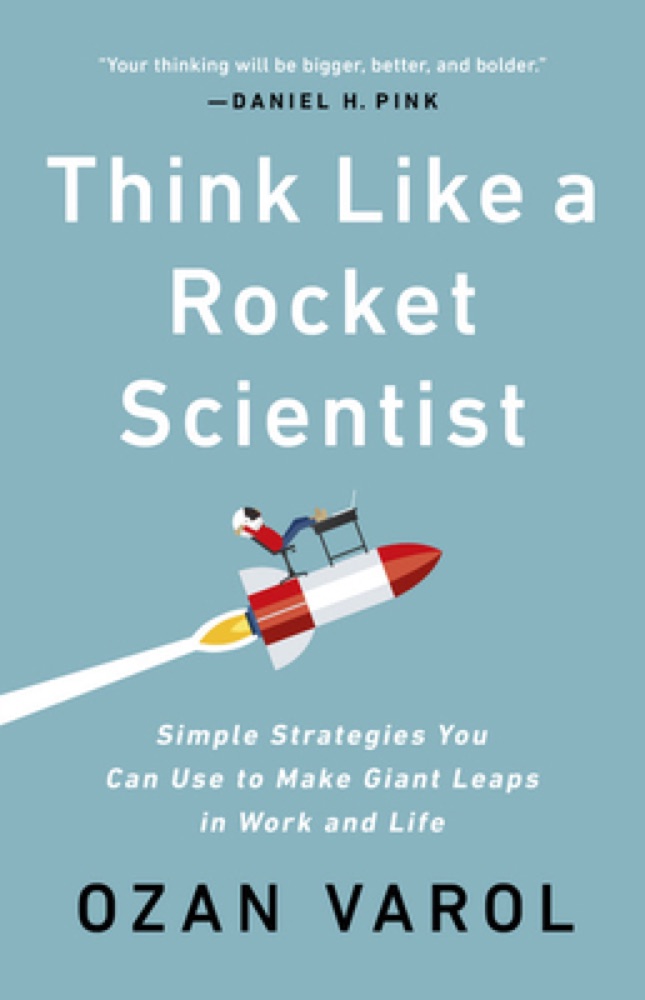 Think Like a Rocket Scientist: Simple Strategies You Can Use to Make Giant Leaps in Work and Life
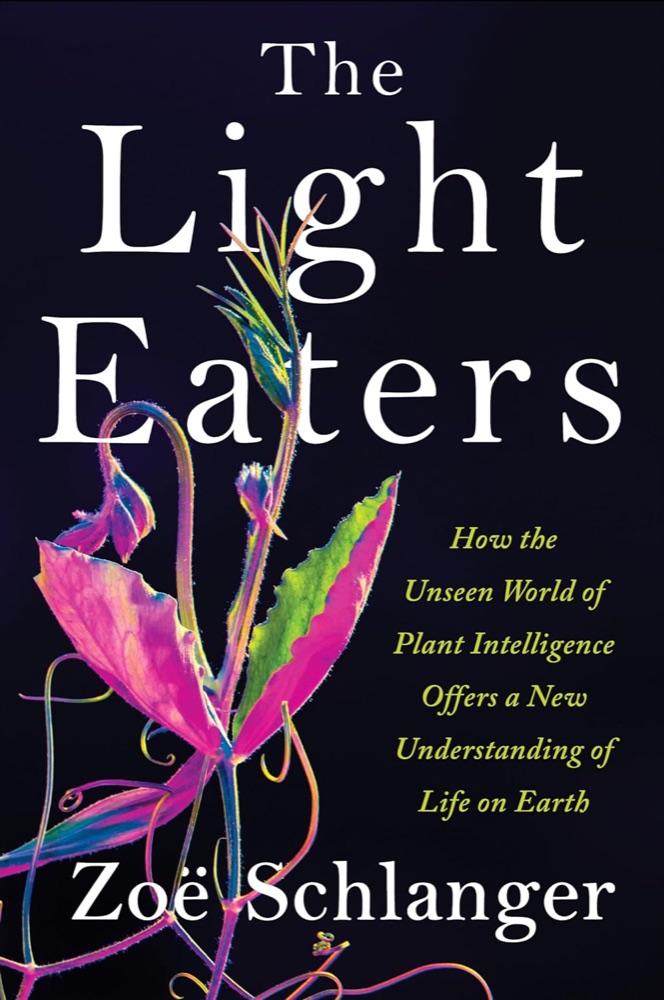 The Light Eaters: How the Unseen World of Plant Intelligence Offers a New Understanding of Life on Earth
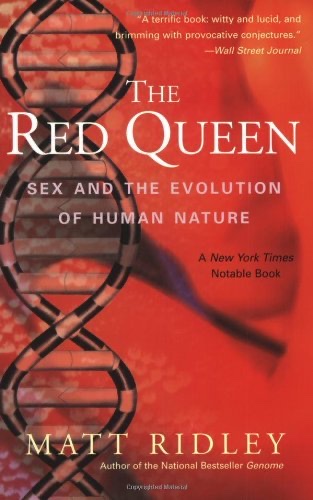 The Red Queen: Sex and the Evolution of Human Nature
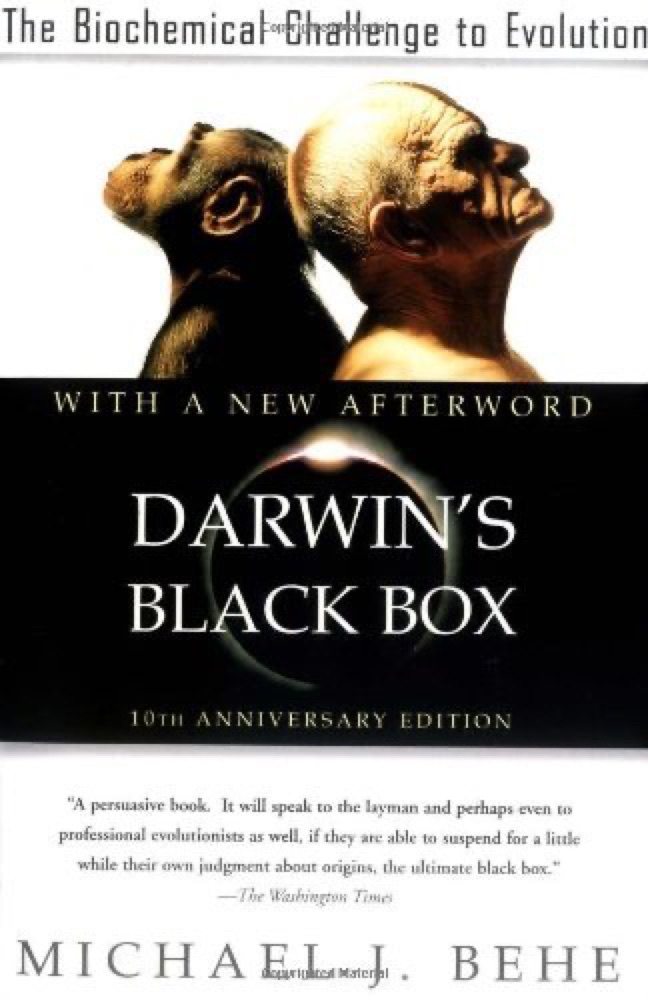 Darwin's Black Box: The Biochemical Challenge to Evolution
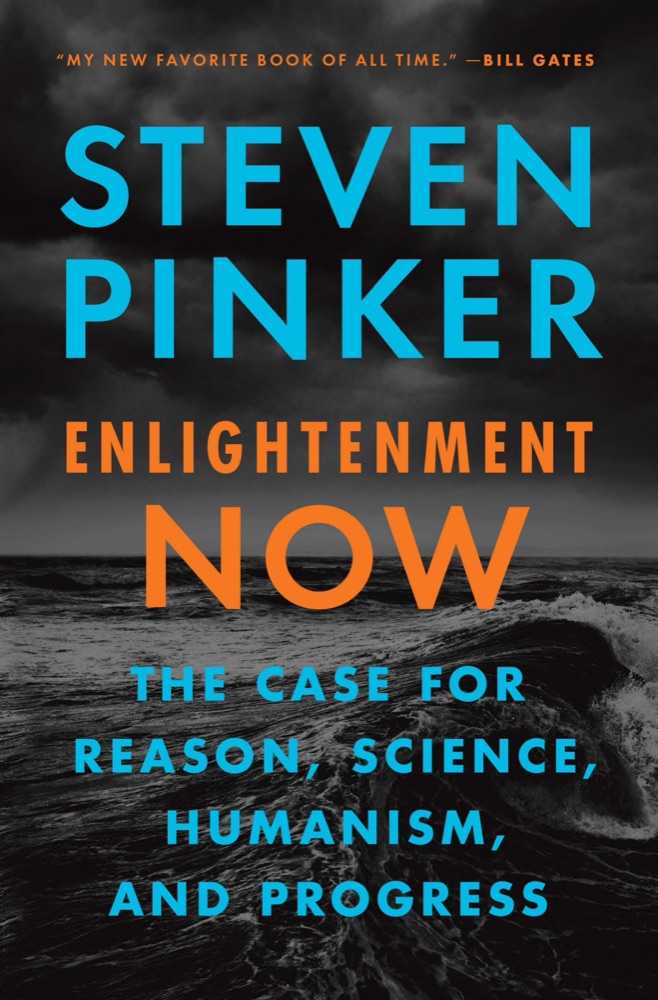 Enlightenment Now: The Case for Reason, Science, Humanism, and Progress
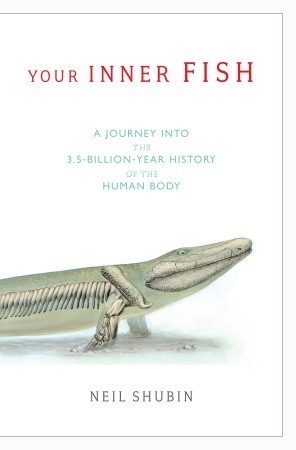 Your Inner Fish: A Journey Into the 3.5-Billion-Year History of the Human Body
 Black Holes and Baby Universes and Other Essays
 Silent Spring
 Starry Messenger: Cosmic Perspectives on Civilization
 The Secret Life of Plants: A Fascinating Account of the Physical, Emotional and Spiritual Relations Between Plants and Man
 The Language of God: A Scientist Presents Evidence for Belief