 The Art of Thinking Clearly
Quotes from the Book
If you don’t get this elementary, but mildly unnatural, mathematics of elementary probability into your repertoire, then you go through a long life like a one-legged man in an ass-kicking contest.
39
For superforecasters, beliefs are hypotheses to be tested, not treasures to be guarded.
31
For scientists, not knowing is exciting. It’s an opportunity to discover; the more that is unknown, the greater the opportunity.
20
Consensus is not always good; disagreement not always bad. If you do happen to agree, don’t take that agreement—in itself—as proof that you are right. Never stop doubting.
14
It is wise to take admissions of uncertainty seriously,” Daniel Kahneman noted, “but declarations of high confidence mainly tell you that an individual has constructed a coherent story in his mind, not necessarily that the story is true.
12
Churchill sent Keynes a cable reading, ‘Am coming around to your point of view.’ His Lordship replied, ‘Sorry to hear it. Have started to change my mind.’
12
If you have to plan for a future beyond the forecasting horizon, plan for surprise. That means, as Danzig advises, planning for adaptability and resilience.
11
The test of a first-rate intelligence is the ability to hold two opposed ideas in mind at the same time and still retain the ability to function,” F. Scott Fitzgerald
11
It’s very hard to master and if you’re not learning all the time, you will fail. That being said, humility in the face of the game is extremely different than humility in the face of your opponents.
10
It was the absence of doubt—and scientific rigor—that made medicine unscientific and caused it to stagnate for so long.
9
Knowing what we don’t know is better than thinking we know what we don’t.
8
It follows that the goal of forecasting is not to see what’s coming. It is to advance the interests of the forecaster and the forecaster’s tribe.
8
Fuzzy thinking can never be proven wrong. And only when we are proven wrong so clearly that we can no longer deny it to ourselves will we adjust our mental models of the world—producing a clearer picture of reality. Forecast, measure, revise: it is the surest path to seeing better.
6
There is no divinely mandated link between morality and competence.
6
All models are wrong,” the statistician George Box observed, “but some are useful.
6
Suppose someone says, “Unfortunately, the popularity of soccer, the world’s favorite pastime, is starting to decline.” You suspect he is wrong. How do you question the claim? Don’t even think of taking a personal shot like “You’re silly.” That only adds heat, not light. “I don’t think so” only expresses disagreement without delving into why you disagree. “What do you mean?” lowers the emotional temperature with a question but it’s much too vague. Zero in. You might say, “What do you mean by ‘pastime’?” or “What evidence is there that soccer’s popularity is declining? Over what time frame?” The answers to these precise questions won’t settle the matter, but they will reveal the thinking behind the conclusion so it can be probed and tested. Since Socrates, good teachers have practiced precision questioning, but still it’s often not used when it’s needed most. Imagine how events might have gone if the Kennedy team had engaged in precision questioning when planning the Bay of Pigs invasion: “So what happens if they’re attacked and the plan falls apart?” “They retreat into the Escambray Mountains, where they can meet up with other anti-Castro forces and plan guerrilla operations.” “How far is it from the proposed landing site in the Bay of Pigs to the Escambray Mountains?” “Eighty miles.” “And what’s the terrain?” “Mostly swamp and jungle.” “So the guerrillas have been attacked. The plan has fallen apart. They don’t have helicopters or tanks. But they have to cross eighty miles of swamp and jungle before they can begin to look for shelter in the mountains? Is that correct?” I suspect that this conversation would not have concluded “sounds good!” Questioning like that didn’t happen, so Kennedy’s first major decision as president was a fiasco. The lesson was learned, resulting in the robust but respectful debates of the Cuban missile crisis—which exemplified the spirit we encouraged among our forecasters.
5
Foresight isn’t a mysterious gift bestowed at birth. It is the product of particular ways of thinking, of gathering information, of updating beliefs. These habits of thought can be learned and cultivated by any intelligent, thoughtful, determined person.
5
Be careful about making assumptions of expertise, ask experts if you can find them, reexamine your assumptions from time to time.
5
I have been struck by how important measurement is to improving the human condition,” Bill Gates wrote. “You can achieve incredible progress if you set a clear goal and find a measure that will drive progress toward that goal….This may seem basic, but it is amazing how often it is not done and how hard it is to get right.
4
the facts change, I change my mind.
4
They aren’t gurus or oracles with the power to peer decades into the future, but they do have a real, measurable skill at judging how high-stakes events are likely to unfold three months, six months, a year, or a year and a half in advance. The other conclusion is what makes these superforecasters so good. It’s not really who they are. It is what they do. Foresight isn’t a mysterious gift bestowed at birth. It is the product of particular ways of thinking, of gathering information, of updating beliefs.
3
And yet this stagnation is a big reason why I am an optimistic skeptic. We know that in so much of what people want to predict—politics, economics, finance, business, technology, daily life—predictability exists, to some degree, in some circumstances. But there is so much else we do not know.
3
In the EPJ results, there were two statistically distinguishable groups of experts. The first failed to do better than random guessing, and in their longer-range forecasts even managed to lose to the chimp. The second group beat the chimp, though not by a wide margin, and they still had plenty of reason to be humble. Indeed, they only barely beat simple algorithms like “always predict no change” or “predict the recent rate of change.” Still, however modest their foresight was, they had some. So why did one group do better than the other? It wasn’t whether they had PhDs or access to classified information. Nor was it what they thought—whether they were liberals or conservatives, optimists or pessimists. The critical factor was how they thought. One group tended to organize their thinking around Big Ideas, although they didn’t agree on which Big Ideas were true or false. Some were environmental doomsters (“We’re running out of everything”); others were cornucopian boomsters (“We can find cost-effective substitutes for everything”). Some were socialists (who favored state control of the commanding heights of the economy); others were free-market fundamentalists (who wanted to minimize regulation). As ideologically diverse as they were, they were united by the fact that their thinking was so ideological. They sought to squeeze complex problems into the preferred cause-effect templates and treated what did not fit as irrelevant distractions. Allergic to wishy-washy answers, they kept pushing their analyses to the limit (and then some), using terms like “furthermore” and “moreover” while piling up reasons why they were right and others wrong. As a result, they were unusually confident and likelier to declare things “impossible” or “certain.” Committed to their conclusions, they were reluctant to change their minds even when their predictions clearly failed. They would tell us, “Just wait.” The other group consisted of more pragmatic experts who drew on many analytical tools, with the choice of tool hinging on the particular problem they faced. These experts gathered as much information from as many sources as they could. When thinking, they often shifted mental gears, sprinkling their speech with transition markers such as “however,” “but,” “although,” and “on the other hand.” They talked about possibilities and probabilities, not certainties. And while no one likes to say “I was wrong,” these experts more readily admitted it and changed their minds. Decades ago, the philosopher Isaiah Berlin wrote a much-acclaimed but rarely read essay that compared the styles of thinking of great authors through the ages. To organize his observations, he drew on a scrap of 2,500-year-old Greek poetry attributed to the warrior-poet Archilochus: “The fox knows many things but the hedgehog knows one big thing.” No one will ever know whether Archilochus was on the side of the fox or the hedgehog but Berlin favored foxes. I felt no need to take sides. I just liked the metaphor because it captured something deep in my data. I dubbed the Big Idea experts “hedgehogs” and the more eclectic experts “foxes.” Foxes beat hedgehogs. And the foxes didn’t just win by acting like chickens, playing it safe with 60% and 70% forecasts where hedgehogs boldly went with 90% and 100%. Foxes beat hedgehogs on both calibration and resolution. Foxes had real foresight. Hedgehogs didn’t.
3
Unpack the question into components. Distinguish as sharply as you can between the known and unknown and leave no assumptions unscrutinized. Adopt the outside view and put the problem into a comparative perspective that downplays its uniqueness and treats it as a special case of a wider class of phenomena. Then adopt the inside view that plays up the uniqueness of the problem. Also explore the similarities and differences between your views and those of others—and pay special attention to prediction markets and other methods of extracting wisdom from crowds. Synthesize all these different views into a single vision as acute as that of a dragonfly. Finally, express your judgment as precisely as you can, using a finely grained scale of probability.
3
Here’s a very simple example,” says Annie Duke, an elite professional poker player, winner of the World Series of Poker, and a former PhD-level student of psychology. “Everyone who plays poker knows you can either fold, call, or raise [a bet]. So what will happen is that when a player who isn’t an expert sees another player raise, they automatically assume that that player is strong, as if the size of the bet is somehow correlated at one with the strength of the other person’s hand.” This is a mistake.
3
Not knowing is exciting. It's an opportunity to discover.
2
The ultimate goal of science is uncertainty’s total eradication.
2
In describing how we think and decide, modern psychologists often deploy a dual-system model that partitions our mental universe into two domains. System 2 is the familiar realm of conscious thought. It consists of everything we choose to focus on. By contrast, System 1 is largely a stranger to us. It is the realm of automatic perceptual and cognitive operations—like those you are running right now to transform the print on this page into a meaningful sentence or to hold the book while reaching for a glass and taking a sip. We have no awareness of these rapid-fire processes but we could not function without them. We would shut down.
2
success can lead to acclaim that can undermine the habits of mind that produced the success.
2
Forget the old advice to think twice. Superforecasters often think thrice—and sometimes they are just warming up to do a deeper-dive analysis.
2
About Philip E. Tetlock
About the book
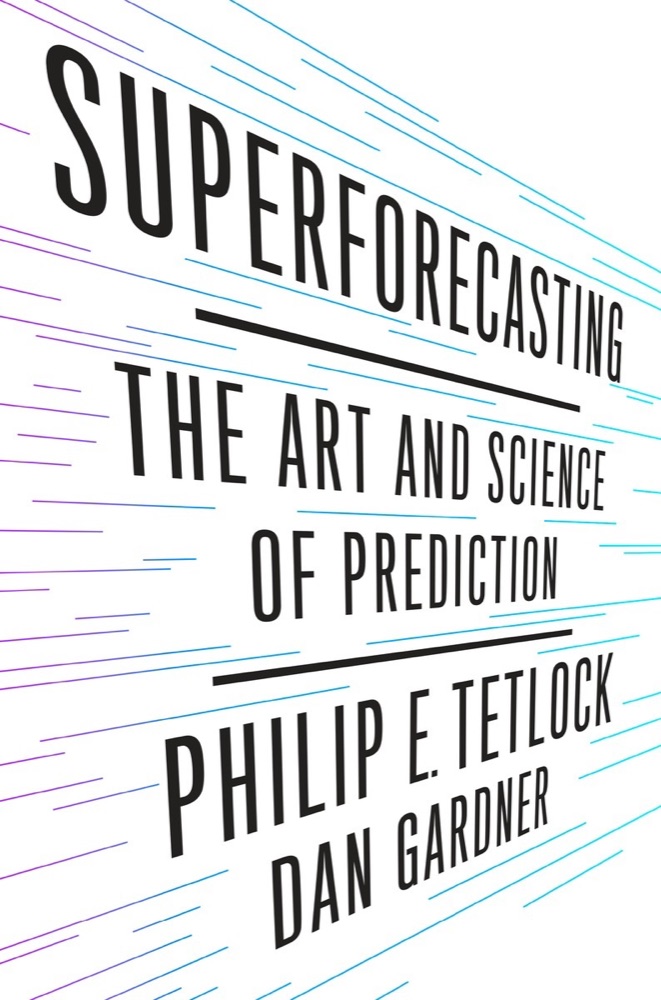
Everyone would benefit from seeing further into the future, whether buying stocks, crafting policy, launching a new product, or simply planning the week’s meals. Unfortunately, people tend to be terrible forecasters. As Wharton professor Philip Tetlock showed in a landmark 2005 study, even experts’ predictions are only slightly better than chance. However, an important and underreported conclusion of that study was that some experts do have real foresight, and Tetlock has spent the past decade trying to figure out why. What makes some people so good? And can this talent be taught? In Superforecasting, Tetlock and coauthor Dan Gardner offer a masterwork on prediction, drawing on decades of research and the results of a massive, government-funded forecasting tournament. The Good Judgment Project involves tens of thousands of ordinary people—including a Brooklyn filmmaker, a retired pipe
Book details
- First published
- 2015
- Author
- Philip E. Tetlock
- Genre
- Nonfiction
- Goodreads rating
- 4.08 (23k ratings)
Keep reading
The Art of Thinking Clearly
 The Signal and the Noise: Why So Many Predictions Fail—But Some Don't
 The Black Swan: The Impact of the Highly Improbable
 Think Like a Rocket Scientist: Simple Strategies You Can Use to Make Giant Leaps in Work and Life
 Fooled by Randomness: The Hidden Role of Chance in Life and in the Markets
 Think Like a Freak
 Algorithms to Live By: The Computer Science of Human Decisions
 Same as Ever: A Guide to What Never Changes
 The Undoing Project: A Friendship That Changed Our Minds
 Black Box Thinking: Why Some People Never Learn from Their Mistakes - But Some Do
 Rationality: From AI to Zombies
 Think Again: The Power of Knowing What You Don't Know
 Barking Up the Wrong Tree: The Surprising Science Behind Why Everything You Know About Success Is (Mostly) Wrong
 Thinking, Fast and Slow
 Range: Why Generalists Triumph in a Specialized World
 You Are Not So Smart
 You Are Now Less Dumb: How to Conquer Mob Mentality, How to Buy Happiness, and All the Other Ways to Outsmart Yourself
 The Meaning of It All: Thoughts of a Citizen-Scientist
 Blink: The Power of Thinking Without Thinking
 The Pleasure of Finding Things Out: The Best Short Works of Richard P. Feynman
 The Drunkard's Walk: How Randomness Rules Our Lives
 Adapt: Why Success Always Starts with Failure
 Antifragile: Things That Gain from Disorder
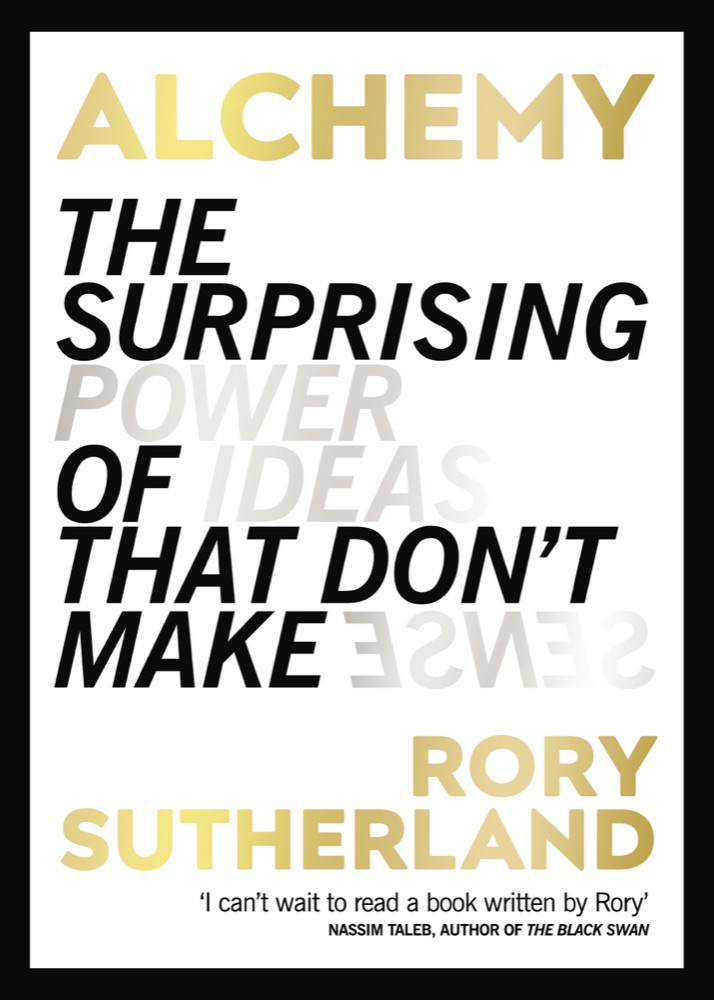 Alchemy: The Surprising Power of Ideas That Don't Make Sense
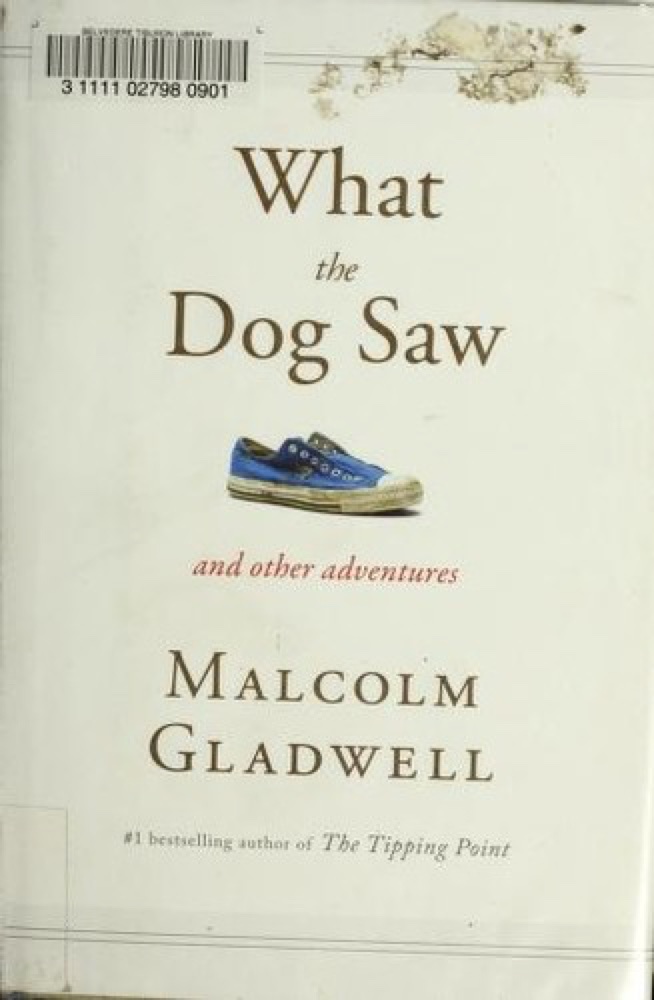 What the Dog Saw and Other Adventures
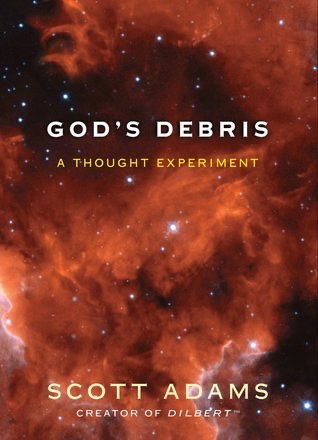 God's Debris: A Thought Experiment
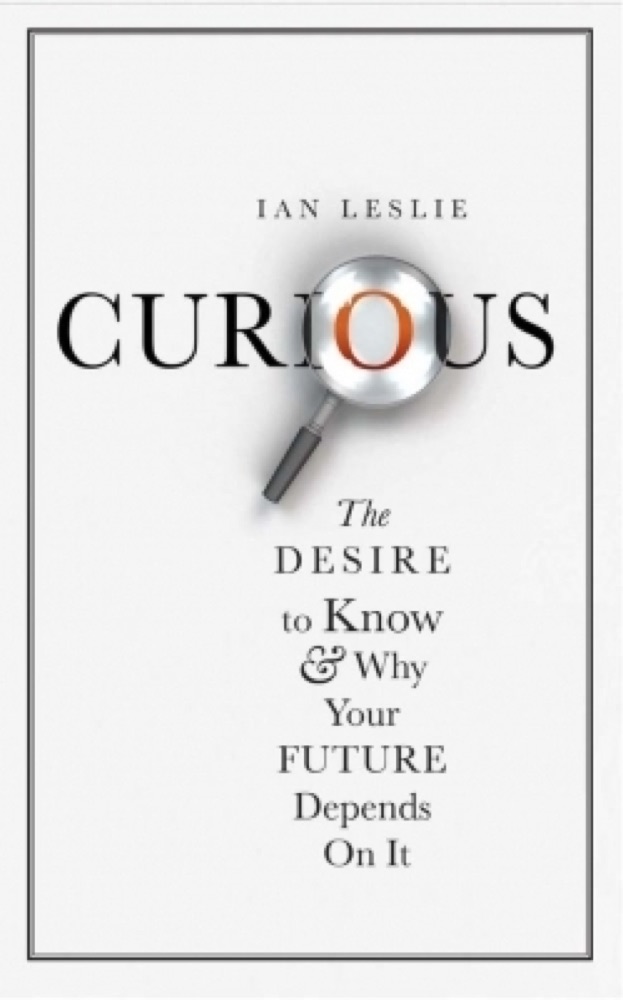 Curious: The Desire to Know and Why Your Future Depends On It
 Principles: Life and Work
 What Do You Care What Other People Think?
 What I Learned Losing a Million Dollars
 But What If We're Wrong? Thinking About the Present As If It Were the Past
 Freakonomics: A Rogue Economist Explores the Hidden Side of Everything
 How to Decide: Simple Tools for Making Better Choices
 My Ishmael
 21 Lessons for the 21st Century
 Zen and the Art of Motorcycle Maintenance
 Creativity, Inc.: Overcoming the Unseen Forces That Stand in the Way of True Inspiration
 Smartcuts: How Hackers, Innovators, and Icons Accelerate Success
 The Fifth Discipline: The Art & Practice of The Learning Organization
 The Most Important Thing: Uncommon Sense for the Thoughtful Investor
 Made to Stick: Why Some Ideas Survive and Others Die
 How We Decide
 How the Mind Works
 Stumbling on Happiness
 The Geography of Genius: A Search for the World's Most Creative Places from Ancient Athens to Silicon Valley
 How to Fail at Almost Everything and Still Win Big: Kind of the Story of My Life
 Predictably Irrational: The Hidden Forces That Shape Our Decisions
 SuperFreakonomics: Global Cooling, Patriotic Prostitutes And Why Suicide Bombers Should Buy Life Insurance
 Being Wrong: Adventures in the Margin of Error
 The Future of the Mind: The Scientific Quest to Understand, Enhance, and Empower the Mind
 Magic of Thinking Big
 Letters from an Astrophysicist
 Originals: How Non-Conformists Move the World
 A Whack on the Side of the Head: How You Can Be More Creative
 Math with Bad Drawings
 Invent and Wander: The Collected Writings of Jeff Bezos
 The Halo Effect: ... and the Eight Other Business Delusions That Deceive Managers