
 Parallel Worlds: A Journey Through Creation, Higher Dimensions, and the Future of the Cosmos
Quotes from the Book
The brain weighs only three pounds, yet it is the most complex object in the solar system.
For those who believe, no explanation is necessary; for those who do not believe, no explanation will suffice.
We have learned more about the brain in the last fifteen years than in all prior human history, and the mind, once considered out of reach, is finally assuming center stage.
Dr. Richard Davidson, a neuroscientist at the University of Wisconsin–Madison, concludes, “Your grades in school, your scores on the SAT, mean less for life success than your capacity to co-operate, your ability to regulate your emotions, your capacity to delay your gratification, and your capacity to focus your attention. Those skills are far more important—all the data indicate—for life success than your IQ or your grades.
Recent brain scans have shed light on how the brain simulates the future. These simulation are done mainly in the dorsolateral prefrontal cortex, the CEO of the brain, using memories of the past. On one hand, simulations of the future may produce outcomes that are desirable and pleasurable, in which case the pleasure centers of the brain light up (in the nucleus accumbens and the hypothalamus). On the other hand, these outcomes may also have a downside to them, so the orbitofrontal cortex kicks in to warn us of possible dancers. There is a struggle, then, between different parts of the brain concerning the future, which may have desirable and undesirable outcomes. Ultimately it is the dorsolateral prefrontal cortex that mediates between these and makes the final decisions. (Some neurologists have pointed out that this struggle resembles, in a crude way, the dynamics between Freud's ego, id, and superego.)
Something as superfluous as "play" is also an essential feature of our consciousness. If you ask children why they like to play, they will say, "Because it's fun." But that invites the next question: What is fun? Actually, when children play, they are often trying to reenact complex human interactions in simplified form. Human society is extremely sophisticated, much too involved for the developing brains of young children, so children run simplified simulations of adult society, playing games such as doctor, cops and robber, and school. Each game is a model that allows children to experiment with a small segment of adult behavior and then run simulations into the future. (Similarly, when adults engage in play, such as a game of poker, the brain constantly creates a model of what cards the various players possess, and then projects that model into the future, using previous data about people's personality, ability to bluff, etc. The key to games like chess, cards, and gambling is the ability to simulate the future. Animals, which live largely in the present, are not as good at games as humans are, especially if they involve planning. Infant mammals do engage in a form of play, but this is more for exercise, testing one another, practicing future battles, and establishing the coming social pecking order rather than simulating the future.)
sixteenth-century philosopher Michel de Montaigne once wrote, “When I play with my cat, how do I know that she is not playing with me rather than I with her?
Talent hits a target no one else can hit. Genius hits a target no one else can see.
Gossiping is essential for survival because the complex mechanics of social interactions are constantly changing, so we have to make sense of this ever-shifting social terrain. This is Level II consciousness at work. But once we hear a piece of gossip, we immediately run simulations to determine how this will affect our own standing in the community, which moves us to Level III consciousness. Thousands of years ago, in fact, gossip was the only way to obtain vital information about the tribe. One’s very life often depended on knowing the latest gossip.
It seems that the one characteristic most closely correlated with success in life, which has persisted over the decades, is the ability to delay gratification.
This means that, in some sense, free will is a fake. Decisions are made ahead of time by the brain, without the input of consciousness, and then later the brain tries to cover this up (as it’s wont to do) by claiming that the decision was conscious. Dr. Michael Sweeney concludes, “Libet’s findings suggested that the brain knows what a person will decide before the person does. … The world must reassess not only the idea of movements divided between voluntary and involuntary, but also the very idea of free will.” All this seems to indicate that free will, the cornerstone of society, is a fiction, an illusion created by our left brain. So are we masters of our fate, or just pawns in a swindle perpetuated by the brain?
To understand the precise point when the possible becomes the impossible, you have to appreciate and understand the laws of physics.
But on the question of whether the robots will eventually take over, he {Rodney A. Brooks} says that this will probably not happen, for a variety of reasons. First, no one is going to accidentally build a robot that wants to rule the world. He says that creating a robot that can suddenly take over is like someone accidentally building a 747 jetliner. Plus, there will be plenty of time to stop this from happening. Before someone builds a "super-bad robot," someone has to build a "mildly bad robot," and before that a "not-so-bad robot.
Your grades in school, your scores on the SAT, mean less for life success than your capacity to co-operate, your ability to regulate your emotions, your capacity to delay your gratification, and your capacity to focus your attention. Those skills are far more important—all the data indicate—for life success than your IQ or your grades.
intelligence seems to be correlated with the complexity with which we can simulate future events,
In science fiction, telepaths often communicate across language barriers, since thoughts are considered to be universal. However, this might not be true. Emotions and feelings may well be nonverbal and universal, so that one could telepathically send them to anyone, but rational thinking is so closely tied to language that it is very unlikely that complex thoughts could be sent across language barriers. Words will still be sent telepathically in their original language.
In 1967, the second resolution to the cat problem was formulated by Nobel laureate Eugene Wigner, whose work was pivotal in laying the foundation of quantum mechanics and also building the atomic bomb. He said that only a conscious person can make an observation that collapses the wave function. But who is to say that this person exists? You cannot separate the observer from the observed, so maybe this person is also dead and alive. In other words, there has to be a new wave function that includes both the cat and the observer. To make sure that the observer is alive, you need a second observer to watch the first observer. This second observer is called “Wigner’s friend,” and is necessary to watch the first observer so that all waves collapse. But how do we know that the second observer is alive? The second observer has to be included in a still-larger wave function to make sure he is alive, but this can be continued indefinitely. Since you need an infinite number of “friends” to collapse the previous wave function to make sure they are alive, you need some form of “cosmic consciousness,” or God. Wigner concluded: “It was not possible to formulate the laws (of quantum theory) in a fully consistent way without reference to consciousness.” Toward the end of his life, he even became interested in the Vedanta philosophy of Hinduism. In this approach, God or some eternal consciousness watches over all of us, collapsing our wave functions so that we can say we are alive. This interpretation yields the same physical results as the Copenhagen interpretation, so this theory cannot be disproven. But the implication is that consciousness is the fundamental entity in the universe, more fundamental than atoms. The material world may come and go, but consciousness remains as the defining element, which means that consciousness, in some sense, creates reality. The very existence of the atoms we see around us is based on our ability to see and touch them.
Indeed, brain scans done by scientists at Washington University in St. Louis indicate that areas used to recall memories are the same as those involved in simulating the future. In particular, the link between the dorsolateral prefrontal cortex and the hippocampus lights up when a person is engaged in planning for the future and remembering the past.
(There is a saying among women scientists who attend highly specialized engineering universities, where the girl-to-guy ratio is decidedly in their favor: “The odds are good, but the goods are odd.”)
It is remarkable that a gigantic, city-size computer is required to simulate a piece of human tissue that weighs three pounds, fits inside your skull, raises your body temperature by only a few degrees, uses twenty watts of power, and needs only a few hamburgers to keep it going.
The results of these and other studies were eye-opening. The children who exhibited delayed gratification scored higher on almost every measure of success in life: higher-paying jobs, lower rates of drug addiction, higher test scores, higher educational attainment, better social integration, etc.
Although consciousness is a patchwork of competing and often contradictory tendencies, the left brain ignores inconsistencies and papers over obvious gaps in order to give us a smooth sense of a single “I.” In other words, the left brain is constantly making excuses, some of them harebrained and preposterous, to make sense of the world. It is constantly asking “Why?” and dreaming up excuses even if the question has no answer.
It should also be pointed out that some of the strains of smart mice were exceptionally timid compared to normal mice. Some suspect that, if your memory becomes too great, you also remember all the failures and hurts as well, perhaps making you hesitant. So there is also a potential downside to remembering too much.
My fundamental premise about the brain is that its workings—what we sometimes call “mind”—are a consequence of its anatomy and physiology, and nothing more. —CARL SAGAN
THE SPLIT-BRAIN PARADOX One way in which this picture, based on the corporate hierarchy of a company, deviates from the actual structure of the brain can be seen in the curious case of split-brain patients. One unusual feature of the brain is that it has two nearly identical halves, or hemispheres, the left and right. Scientists have long wondered why the brain has this unnecessary redundancy, since the brain can operate even if one entire hemisphere is completely removed. No normal corporate hierarchy has this strange feature. Furthermore, if each hemisphere has consciousness, does this mean that we have two separate centers of consciousness inside one skull?
We can now give you a biological reason why cramming doesn’t work,” says Dr. Tully. The best way to prepare for a final exam is to mentally review the material periodically during the day, until the material becomes part of your long-term memory. This may also explain why emotionally charged memories are so vivid and can last for decades. The CREB repressor gene is like a filter, cleaning out useless information. But if a memory is associated with a strong emotion, it can either remove the CREB repressor gene or increase levels of the CREB activator gene.
Sometimes I think that the surest sign that intelligent life exists elsewhere in the universe is that none of it has tried to contact us. —BILL WATTERSON
your cell phone today has more computer power than all of NASA when it put two men on the moon in 1969.
(However, animals apparently dream differently than we do. In the dolphin, for example, only one hemisphere at a time sleeps in order to prevent drowning, because they are air-breathing mammals, not fish. So if they dream, it is probably in only one hemisphere at a time.)
Watch on YouTube
About Michio Kaku
We have collected 166 quotes from 6 books by Michio Kaku on BookQuoters.
More about the author →More by Michio Kaku
Parallel Worlds: A Journey Through Creation, Higher Dimensions, and the Future of the Cosmos
 Physics of the Impossible: A Scientific Exploration Into the World of Phasers, Force Fields, Teleportation, and Time Travel
 Hyperspace
 Physics of the Future: How Science Will Shape Human Destiny and Our Daily Lives by the Year 2100
Book details
- Author
- Michio Kaku
- Genre
- Nonfiction
- Goodreads rating
- 4.08 (16k ratings) →
Keep reading
 A Thousand Brains: A New Theory of Intelligence
 How the Mind Works
 Incognito: The Secret Lives of the Brain
 The Tell-Tale Brain: A Neuroscientist's Quest for What Makes Us Human
 Livewired: The Inside Story of the Ever-Changing Brain
 Consciousness and the Brain: Deciphering How the Brain Codes Our Thoughts
 The Brain That Changes Itself: Stories of Personal Triumph from the Frontiers of Brain Science
 The Singularity is Near: When Humans Transcend Biology
 No Self, No Problem: How Neuropsychology Is Catching Up to Buddhism
 How We Learn: Why Brains Learn Better Than Any Machine . . . for Now
 The Organized Mind: Thinking Straight in the Age of Information Overload
 Descartes' Error: Emotion, Reason and the Human Brain
 Dragons of Eden: Speculations on the Evolution of Human Intelligence
 The Social Animal: The Hidden Sources of Love, Character, and Achievement
 Superintelligence: Paths, Dangers, Strategies
 How We Decide
 Echopraxia
 The Master and His Emissary: The Divided Brain and the Making of the Western World
 The Big Picture: On the Origins of Life, Meaning, and the Universe Itself
 How to Change Your Mind: The New Science of Psychedelics
 The Biology of Belief: Unleashing the Power of Consciousness, Matter and Miracles
 Behave: The Biology of Humans at Our Best and Worst
Physics of the Future: How Science Will Shape Human Destiny and Our Daily Lives by the Year 2100
Behave: The Biology of Humans at Our Best and Worst
Physics of the Future: How Science Will Shape Human Destiny and Our Daily Lives by the Year 2100
 The Origin of Consciousness in the Breakdown of the Bicameral Mind
 The Tale of the Dueling Neurosurgeons: The History of the Human Brain as Revealed by True Stories of Trauma, Madness, and Recovery
 Life 3.0: Being Human in the Age of Artificial Intelligence
 The New Psycho-Cybernetics: The Original Science of Self-Improvement and Success That Has Changed the Lives of 30 Million People
 You Are Now Less Dumb: How to Conquer Mob Mentality, How to Buy Happiness, and All the Other Ways to Outsmart Yourself
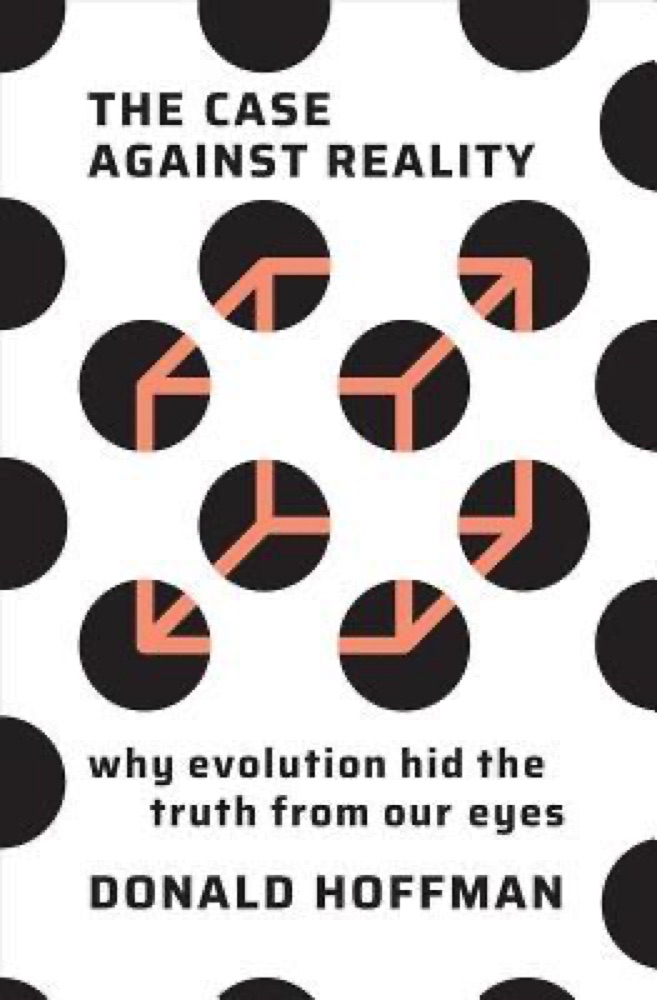 The Case Against Reality: Why Evolution Hid the Truth from Our Eyes
 Destination: Void
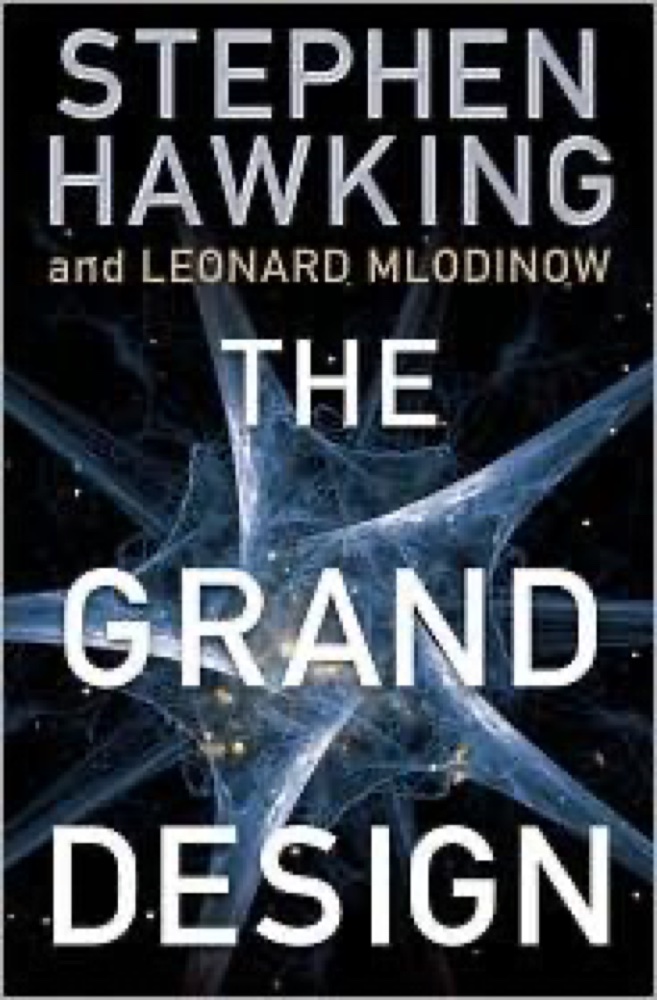 The Grand Design
 The Blind Watchmaker: Why the Evidence of Evolution Reveals a Universe Without Design
 Genome
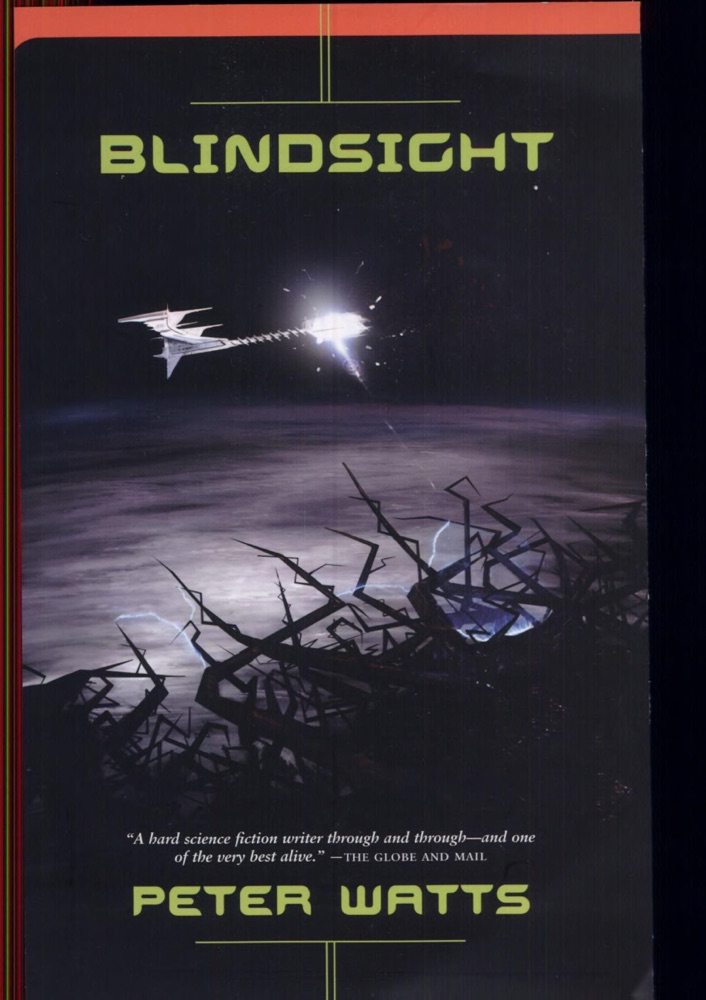 Blindsight
 A User's Guide to the Brain: Perception, Attention, and the Four Theaters of the Brain
 From Bacteria to Bach and Back: The Evolution of Minds
 God's Debris: A Thought Experiment
 A Devil's Chaplain: Reflections on Hope, Lies, Science, and Love
 The Future of Humanity: Terraforming Mars, Interstellar Travel, Immortality and Our Destiny Beyond Earth
 Homo Deus: A History of Tomorrow
 The Most Human Human: What Talking with Computers Teaches Us About What It Means to Be Alive
 The Society of Mind
 The Ego Tunnel: The Science of the Mind and the Myth of the Self
 My Stroke of Insight: A Brain Scientist's Personal Journey
 Thinking In Pictures: and Other Reports from My Life with Autism
 Exhalation
 The Art of Thinking Clearly
 Are We Smart Enough to Know How Smart Animals Are?
 Wired
Wired
 Stolen Focus: Why You Can't Pay Attention— and How to Think Deeply Again
 Psych: The Story of the Human Mind
 What Technology Wants
 The Master Key System
 The Lost World
 Evolve Your Brain: The Science of Changing Your Mind
 Emotional Design: Why We Love (or Hate) Everyday Things
 The Stuff of Thought: Language as a Window into Human Nature
 An Anthropologist on Mars
 Mastermind: How to Think Like Sherlock Holmes
 Think Like a Rocket Scientist: Simple Strategies You Can Use to Make Giant Leaps in Work and Life