
 Advice Not Given: A Guide to Getting Over Yourself
Quotes from the Book
We are all haunted by the lost perfection of the ego that contained everything, and we measure ourselves and our lovers against this standard. We search for a replica in external satisfactions, in food, comfort, sex, or success, but gradually learn, through the process of sublimation, that the best approximation of that lost feeling comes from creative acts that evoke states of being in which self-consciousness is temporarily relinquished. These are the states in which the artist, writer, scientist, or musician, like Freud’s da Vinci, dissolves into the act of creation.
6
In order to change conditions outside ourselves, whether they concern the environment or relations with others, we must first change within ourselves.
5
We reduce, concretize, or substantialize experiences or feelings, which are, in their very nature, fleeting or evanescent. In so doing, we define ourselves by our moods and by our thoughts. We do not just let ourselves be happy or sad, for instance; we must become a happy person or a sad one. This is the chronic tendency of the ignorant or deluded mind, to make “things” out of that which is no thing.
5
the Buddha may well have been the original psychoanalyst, or, at least, the first to use the mode of analytic inquiry that Freud was later to codify and develop.
3
When the psychologists Daniel Brown and Jack Engler studied experienced meditators, they found, to their surprise, that meditators were just as anxious as everyone else. There was no lessening of internal conflict, but only a “marked non-defensiveness in experiencing such conflicts”3 among their subjects. The implications of these findings are profound, because Brown and Engler discovered that meditation, on its own, is not particularly effective at solving people’s emotional problems. It
2
Buddhist meditation takes this untrained, everyday mind as its natural starting point, and it requires the development of one particular attentional posture—of naked, or bare, attention. Defined as “the clear and single-minded awareness of what actually happens to us and in us at the successive moments of perception,”1 bare attention takes this unexamined mind and opens it up, not by trying to change anything but by observing the mind, emotions, and body the way they are. It is the fundamental tenet of Buddhist psychology that this kind of attention is, in itself, healing: that by the constant application of this attentional strategy, all of the Buddha’s insights can be realized for oneself. As mysterious as the literature on meditation can seem, as elusive as the koans of the Zen master sometimes sound, there is but one underlying instruction that is critical to Buddhist thought. Common to all schools of thought, from Sri Lanka to Tibet, the unifying theme of the Buddhist approach is this remarkable imperative: “Pay precise attention, moment by moment, to exactly what you are experiencing, right now, separating out your reactions from the raw sensory events.” This is what is meant by bare attention: just the bare facts, an exact registering, allowing things to speak for themselves as if seen for the first time, distinguishing any reactions from the core event.
2
meditation is not just about creating states of well-being; it is about destroying the belief in an inherently existent self.
2
According to Buddhism, it is our fear at experiencing ourselves directly that creates suffering.
2
Taking my cue from the progress of meditation, I have found that the first task of working through from a Buddhist perspective is to uncover how the spatial metaphor of self is being used defensively to keep key aspects of the person at bay.
1
The Buddha was concerned with how to escape from just this kind of self-created suffering, with how to avoid the pitfalls of self-inflation or -debasement. It is here that the latter parts of the Second Noble Truth, the thirsts for existence and nonexistence, become relevant. Buddha, we must remember, did not teach a speculative psychology; he taught a practical one designed to liberate practitioners from dissatisfaction. “I do not teach theory,” he said, “I analyse.”2 He refused to answer questions that would feed either the tendency to cling to some kind of absolute romanticized ideal or that would enable nihilistic distancing, the two trends that are subsumed under the headings of existence and nonexistence and that become the basis for many powerful religious, psychological, and philosophical dogmas. There were, in fact, fourteen subjects that the Buddha repeatedly refused to discuss, all of them searching for absolute certainty: 1) Whether the world is eternal, or not, or both, or neither. 2) Whether the world is finite (in space), or infinite, or both, or neither. 3) Whether an enlightened being exists after death, or does not, or both, or neither. 4) Whether the soul is identical with the body or different from it. The Buddha taught that to attempt a definitive answer to these questions would give the wrong idea, that to do so would only feed the tendency to cling to an absolute or to nihilistically reject, neither of which he found useful. He never taught the existence of a true self, nor did he ever support the idea of a chaotic universe in which “nothing matters” and individual actions are of no importance. Rather, he encouraged a consistent doubting of all fixed assumptions about the nature of things. In a teaching that he gave to a skeptical follower named Malunkyaputta, he likened the asking of questions about the ultimate nature of things to a man wounded by an arrow refusing to have the arrow taken out until all of his questions about who the assassin was, where he came from, what he looked like, what kind of bow he was using, and what make of arrow had been shot had been addressed. “That man would die, Malunkyaputta,” emphasized the Buddha, “without ever having learnt this.
1
clear idea of who she was, but she began to feel more alive.
the Buddha’s teachings: the suffering of the false self derives from attachment to the two extremes of self-sufficiency and emptiness. By bringing awareness to those very attachments, they can be released. Dorothy was left, in fact, with much less of a
When asked the ultimate narcissistic question by another follower—“What is the nature of the self?”—the Buddha responded that there is neither self nor no-self. The question, itself, was flawed, the Buddha implied, for it was being asked from a place that already assumed that the self was an entity.
They are, in fact, the two poles of the false self: namely, the grandiose self developed in compliance with the parents’ demands and in constant need of admiration, and the empty self, alone and impoverished, alienated and insecure, aware only of the love that was never given.
We wish to know ourselves securely, to be sure of who or what we are, but we are frustrated from the beginning by one essential contradiction. Just as modern physics has shown that the observer inevitably distorts that which is observed, so too, we, as experiencing subjects, can never know ourselves satisfactorily as object.
there is no separate Buddha realm apart from worldly existence, that release from suffering is won through a change in perception, not through a migration to some kind of heavenly abode.
focus on how patients are uncomfortable with themselves because, in some fundamental way, they do not know who they are, the question of the self has emerged as the common focus of Buddhism
them. With this insight, psychoanalysis and Buddhism are of a piece.
The crises in our lives inevitably reveal how impossible our attempts to control our destinies really are.
This is the sense in which the enlightened person is said to be in the world but not of it.
When we refuse to acknowledge the presence of unwanted feelings, we are as bound to them as when we give ourselves over to them indignantly and self-righteously
The fabric of self is stitched together out of just these holes in our emotional experience.
Although Winnicott wrote extensively about the importance of mother-child attunement, he also came to a profound appreciation of how vital it is for a mother to be able to let her child down. A parent has to be willing to disappoint, he found, because disappointment, as the Buddha also said, is inevitable. In so doing, in letting a child down, in being truthful about one’s inability to meet all of one’s child’s needs, a disappointing parent moves a child toward a capacity to cope with everyday life. In one of his final papers, Winnicott wrote movingly of how a child’s primitive anger at his parent’s imperfections can turn into empathy. The critical ingredient for this transformation is the parent’s ability not to take the child’s anger personally, a Buddhist idea if there ever was one. If all goes well, at the beginning an infant is led to believe that his mother is an extension of himself, magically appearing to assuage every need. Over time this perfection comes under attack. No parent can keep it up forever. There is difficulty inherent to the relationship, and the child gradually comes to realize that the parent is a separate person, with his or her own limitations. When a parent is “good-enough,” in Winnicott’s language, the child’s anger (and/or the parent’s response) does not destabilize the relationship too much. The child comes to see that his parents are not destroyed by his outrage, that his parents survive, and he begins to develop considerate feelings for them as separate—if flawed—individuals. Those considerate feelings do not negate the angry ones, but they do mitigate them. Appreciation and frustration come to coexist.
When the ego is not able to “unravel its structure,” when the capacity for love is shut down because of fear, insecurity, or confusion, then the person becomes isolated by and imprisoned in individuality. Where there is no unburdening and no rhythm of tension and relaxation, there can be no freedom to bond, no surrender of ego boundaries, and no merging of the kind that characterizes all forms of love.
We do not want to admit our lack of substance to ourselves and, instead, strive to project an image of completeness, or self-sufficiency. The paradox is that, to the extent that we succumb to this urge, we are estranged from ourselves and are not real. Our narcissism requires that we keep the truth about our selves at bay.
No matter what we do, he taught, we cannot sustain the illusion of our self-sufficiency. We are all subject to decay, old age, and death, to disappointment, loss, and disease.
In psychological terms, the Buddha’s first truth, for instance, is really about the inevitability of our own humiliation. His insights challenge us to examine ourselves with a candor that we would prefer to avoid.
From a Buddhist perspective, there is really nothing but resistance to be analyzed; there is no true self waiting in the wings to be released. Only by revealing the insecurity can a measure of freedom be gained. When we can know our fear as fear and surround it with the patience of Buddha, we can begin to rest in our own minds and approach those to whom we would like to feel close.
Thus, anger can be seen as one’s inability or unwillingness to use aggression to overcome a frustrating obstacle, while anxiety can be understood as an inability or unwillingness to admit hunger or desire.
It is a fundamental tenet of Buddhist thought that before emptiness of self can be realized, the self must be experienced fully, as it appears. It is the task of therapy, as well as of meditation, to return those split-off elements to a person’s awareness—to make the person see that they are not, in fact, split-off elements at all, but essential aspects of his or her own being.
Watch on YouTube
About Mark Epstein
We have collected 85 quotes from 3 books by Mark Epstein on BookQuoters.
More about the author →More by Mark Epstein
Advice Not Given: A Guide to Getting Over Yourself
 Going to Pieces without Falling Apart: A Buddhist Perspective on Wholeness
About the book
Traditional distinctions between matters of the mind and matters of the spirit are increasingly being questioned, and people are searching for alternate perspectives on these issues. Thoughts Without a Thinker is a major contribution to today's exploding discussion of how Eastern spirituality can enhance Western psychology. In it, Mark Epstein argues that the contemplative traditions of the East can be extremely beneficial to patients, not just in helping them recognize their problems, but by giving them the strength to heal. Clearly written and very accessible, this enlightening guide explains the unique psychological contributions of the teachings of Buddhism, describes the path of meditation in contemporary psychological language, and lays out the possibility of a meditation-inspired psychotherapy.
Book details
- First published
- 1995
- Author
- Mark Epstein
- Genre
- Nonfiction
- Goodreads rating
- 3.97 (4k ratings)
Keep reading
Advice Not Given: A Guide to Getting Over Yourself
Going to Pieces without Falling Apart: A Buddhist Perspective on Wholeness
 In Love with the World: A Monk's Journey Through the Bardos of Living and Dying
 The Joy of Living: Unlocking the Secret and Science of Happiness
 The Wise Heart: A Guide to the Universal Teachings of Buddhist Psychology
 Why Buddhism Is True: The Science and Philosophy of Meditation and Enlightenment
 Cutting Through Spiritual Materialism
 How to See Yourself As You Really Are
 No Self, No Problem: How Neuropsychology Is Catching Up to Buddhism
 The Art of Being
 Living Beautifully with Uncertainty and Change
 Eastern Body, Western Mind: Psychology and the Chakra System as a Path to the Self
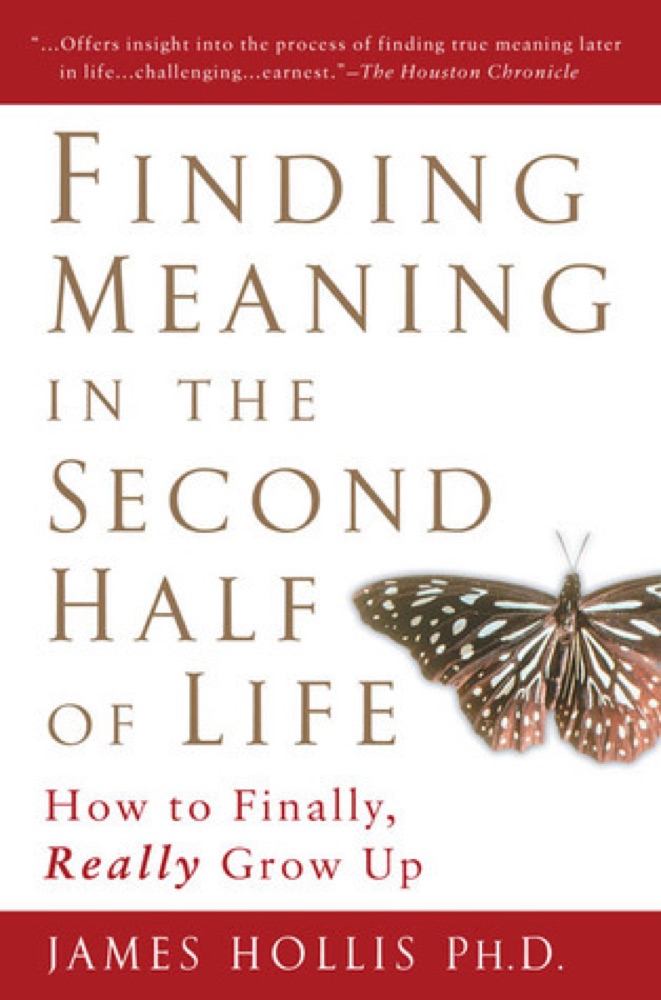 Finding Meaning in the Second Half of Life: How to Finally, Really Grow Up
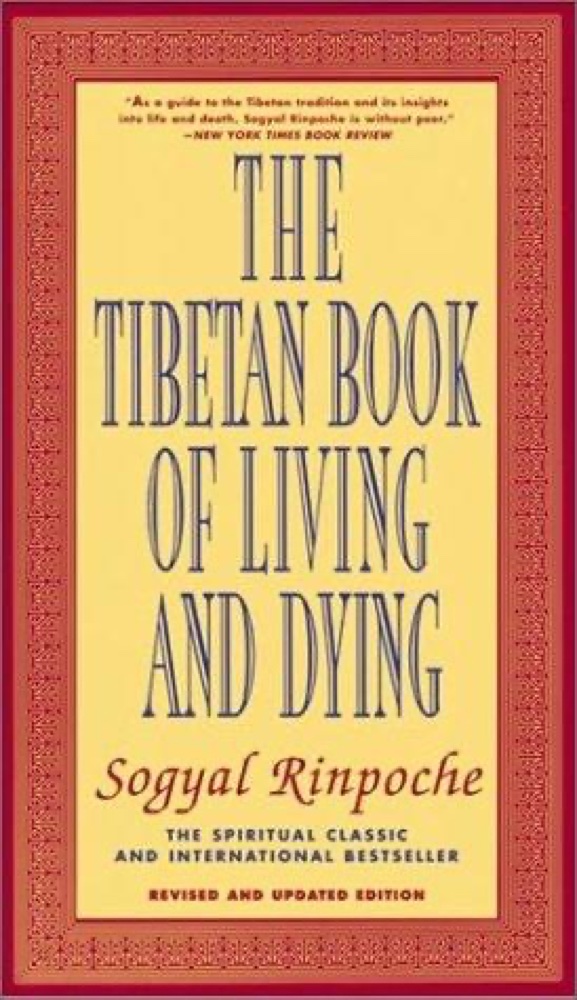 The Tibetan Book of Living and Dying
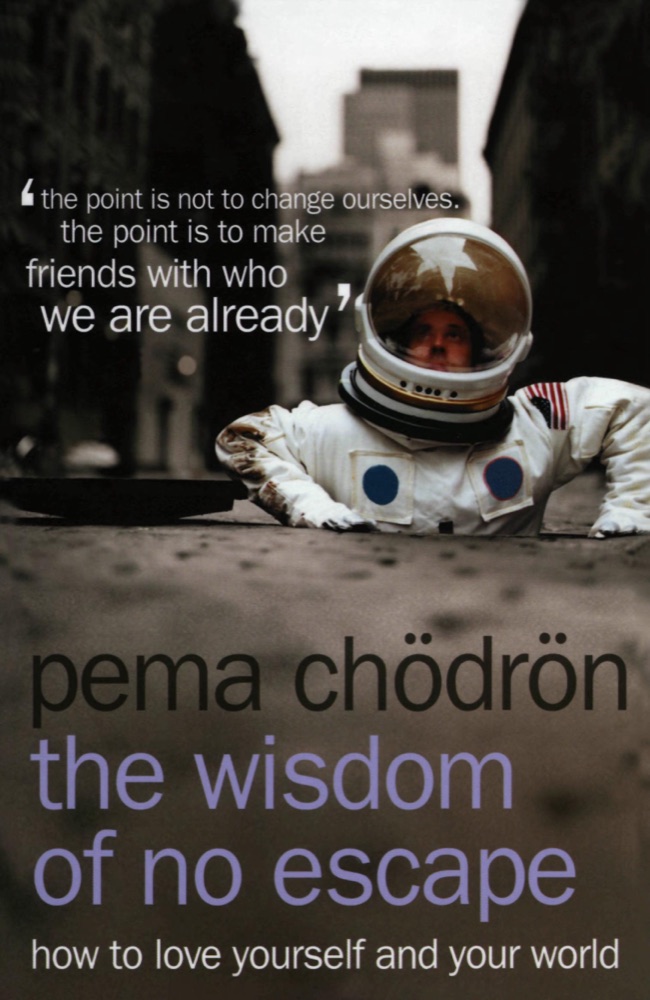 The Wisdom of No Escape: How to Love Yourself and Your World
 Ego and Archetype: Individuation and the Religious Function of the Psyche
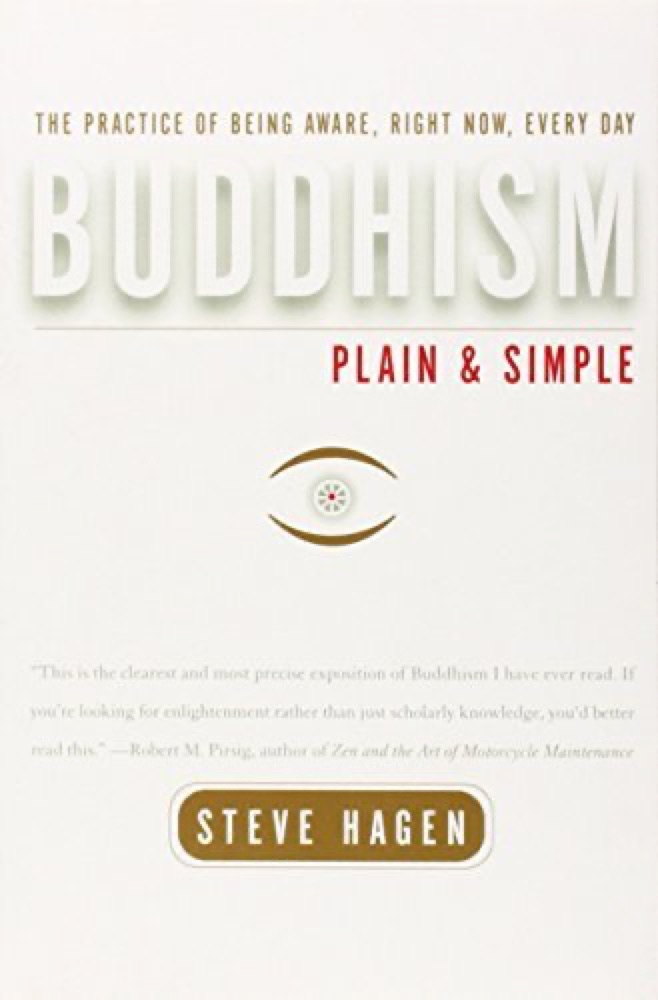 Buddhism Plain & Simple: The Practice of Being Aware, Right Now, Every Day
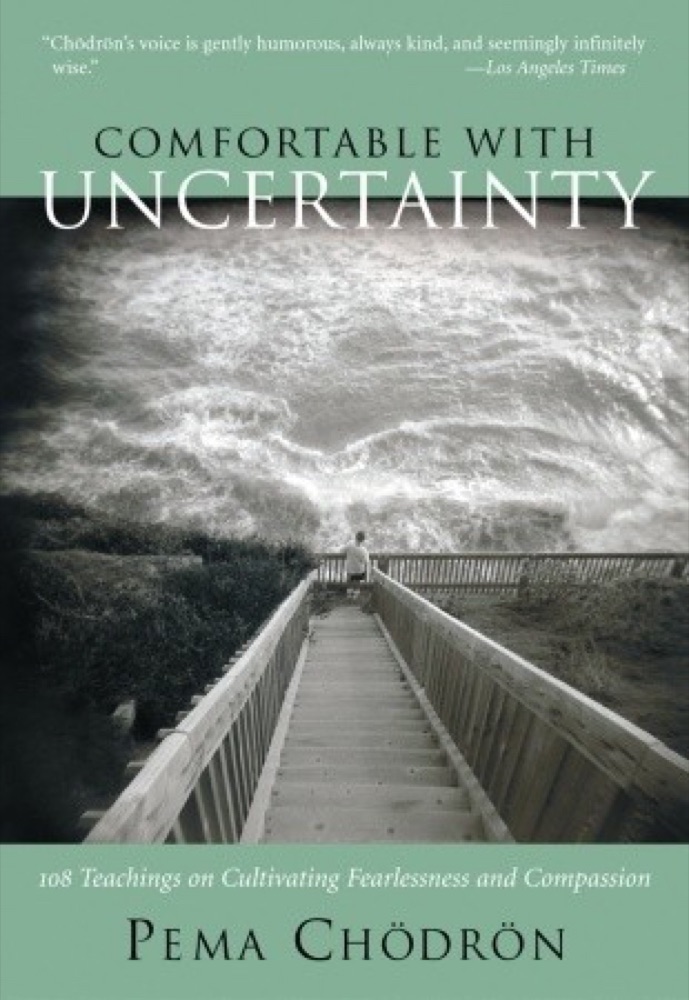 Comfortable with Uncertainty: 108 Teachings on Cultivating Fearlessness and Compassion
 Love's Executioner and Other Tales of Psychotherapy
 Existential Psychotherapy
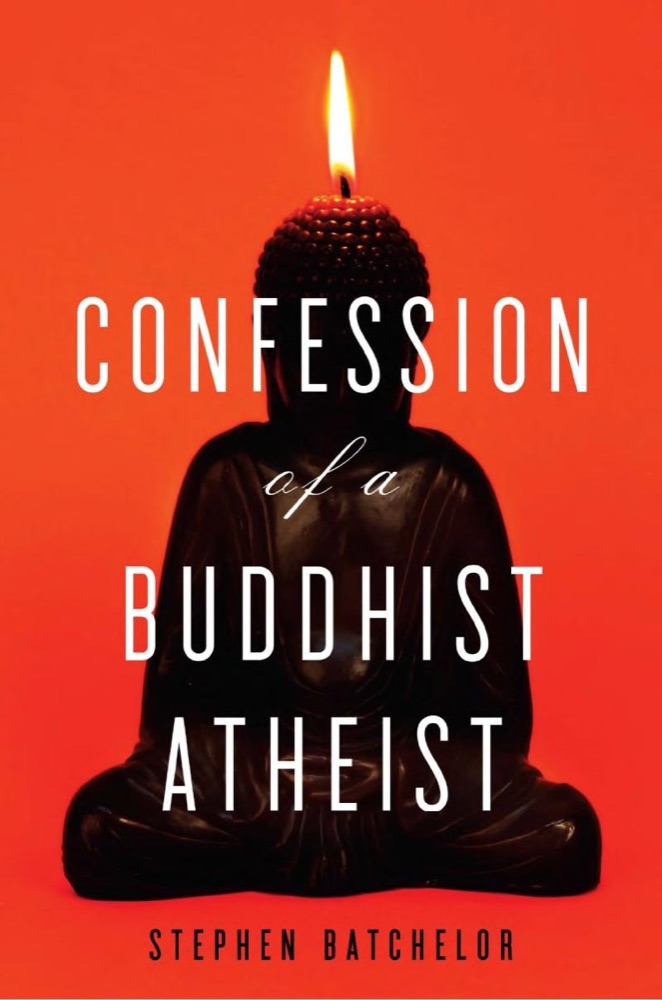 Confession of a Buddhist Atheist
 Letting Go: The Pathway To Surrender
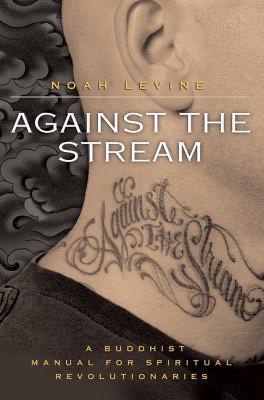 Against the Stream: A Buddhist Manual for Spiritual Revolutionaries
 Man's Search for Himself
 Toward a Psychology of Being
 The Dalai Lama's Cat and the Power of Meow
 Waking Up: A Guide to Spirituality Without Religion
 Everyday Zen: Love & Work
 The Book: On the Taboo Against Knowing Who You Are
 True Refuge: Finding Peace and Freedom in Your Own Awakened Heart
 Buddhism: A Very Short Introduction
 Modern Man in Search of a Soul
 The Divided Self: An Existential Study in Sanity and Madness
 The Way of Zen
 Myths to Live By
 Awakening the Buddha Within
 Happiness: A Guide to Developing Life's Most Important Skill
 Full Catastrophe Living: Using the Wisdom of Your Body and Mind to Face Stress, Pain, and Illness
 If You Meet the Buddha on the Road, Kill Him! The Pilgrimage of Psychotherapy Patients
 Tibetan Book of the Dead
 Anatomy of the Spirit: The Seven Stages of Power and Healing
 Mindfulness in Plain English
 Letting Go of the Person You Used to Be: Lessons on Change, Loss, and Spiritual Transformation
 The Complete Enneagram: 27 Paths to Greater Self-Knowledge
 Maps of Meaning: The Architecture of Belief
 The Buddha Walks into a Bar . . .: A Guide to Life for a New Generation
 The Middle Passage: From Misery to Meaning in Midlife
 The Antidote: Happiness for People Who Can't Stand Positive Thinking
 The Book of Secrets
 The Wisdom of Insecurity: A Message for an Age of Anxiety
 The Yoga Sutras of Patanjali
 Total Freedom: The Essential Krishnamurti
 What the Buddha Taught
 Solitude: A Return to the Self
 Lovingkindness: The Revolutionary Art of Happiness
 My Spiritual Journey: Personal Reflections, Teachings, and Talks
 The Drama of the Gifted Child: The Search for the True Self