
 When Things Fall Apart: Heart Advice for Difficult Times
Quotes from the Book
Nothing ever goes away until it has taught us what we need to know.
108
Be grateful to everyone" is about making peace with the aspects of ourselves that we have rejected... If we were to make a list of people we don't like - people we find obnoxious, threatening, or worthy of contempt - we would discover much about those aspects of ourselves that we can't face... other people trigger the karma that we haven't worked out.
61
Our habitual patterns are, of course, well established, seductive, and comforting. Just wishing for them to be ventilated isn’t enough. Mindfulness and awareness are key. Do we see the stories that we’re telling ourselves and question their validity? When we are distracted by a strong emotion, do we remember that it is part of our path? Can we feel the emotion and breathe it into our hearts for ourselves and everyone else? If we can remember to experiment like this even occasionally, we are training as a warrior. And when we can’t practice when distracted but know that we can’t, we are still training well. Never underestimate the power of compassionately recognizing what’s going on.
36
Pain is not a punishment, pleasure is not a reward.
36
There was once a lady who was arrogant and proud. Determined to attain enlightenment, she asked all the authorities how to go about it. She was told, "Well, if you climb to the top of this very high mountain, you'll find a cave there. Sitting inside that cave is a wise old woman. She will tell you." Having endured great hardships, the lady finally found this cave. Sure enough, sitting there was a gentle spiritual-looking old woman in white clothing, who smiled beatifically. Overcome with awe and respect, the lady prostrated at the feet of this woman and said, "I want to attain enlightenment. Show me how." This wise woman looked at her and asked sweetly, "Are you sure you want to attain enlightenment?" And the woman said, "Of course I'm sure." Whereupon the smiling woman turned into a demon, stood up brandishing a great big stick, and started chasing her, saying, "Now! Now! Now!" For the rest of her life, that lady could never get away from the demon who was always saying, Now! Now--that's the key. Mindfulness trains us to be awake and alive, fully curious, about now.
34
The root of suffering is resisting the certainty that no matter what the circumstances, uncertainty is all we truly have.
20
Patience is not learned in safety.
20
Nothing in its essence is one way or the other.
20
There are many changes in the weather of a day.
14
Egolessness means that the fixed idea that we have about ourselves as solid and separate from each other is painfully limiting. That we take ourselves so seriously, that we are so absurdly important in our own minds, is a problem. Self-importance is like a prison for us, limiting us to the world of our likes and dislikes.
13
We spend all our energy and waste our lives trying to re-create these zones of safety, which are always falling apart. That's the essence of samsara - the cycle of suffering that comes from continuing to seek happiness in all the wrong places.
11
May all sentient beings enjoy happiness and the root of happiness. May we be free from suffering and the root of suffering. May we not be separated from the great happiness devoid of suffering. May we dwell in the great equanimity free from passion, aggression, and prejudice.
10
Compassion is not a relationship between the healer and the wounded. It’s a relationship between equals. Only when we know our own darkness well can we be present with the darkness of others.
10
Without loving-kindness, staying in pain is just warfare.
9
What you do for yourself, any gesture of kindness, any gesture of gentleness, any gesture of honesty and clear seeing toward yourself, will affect how you experience your world. In fact, it will transform how you experience the world. What you do for yourself, you’re doing for others, and what you do for others, you’re doing for yourself.
8
As long as we believe that there is something that will permanently satisfy our hunger for security, suffering is inevitable.
7
Tonglen practice has four stages: Rest your mind for a second or two in a state of openness or stillness. This is called flashing absolute bodhichitta, or suddenly opening to the basic spaciousness and clarity of the awakened heart. Work with texture. Breathe in a feeling of hot, dark, and heavy—a sense of claustrophobia—and breathe out a feeling of cool, bright, and light—a sense of freshness. Breathe in through all the pores of your body and radiate out completely, through all the pores of your body. Do this until your visualization feels synchronized with your in and out-breaths. Now contemplate any painful situation that’s real to you. For example, you can breathe in the hot, dark, constricted feeling of sadness that you feel, and breathe out a light, cool sense of joy or space or whatever might provide relief. Widen the circle of compassion by connecting with all those who feel this kind of pain, and extending the wish to help everyone.
7
We don’t sit in meditation to become good meditators. We sit in meditation so that we’ll be more awake in our lives.
7
Right now, can you make an unconditional relationship with yourself? Just at the height you are, the weight you are, with the intelligence that you have, and your current burden of pain? Can you enter into an unconditional relationship with that?
5
As we practice moving into the present moment this way, we become more familiar with groundlessness, a fresh state of being that is available to us on an ongoing basis. This moving away from comfort and security, this stepping out into what is unknown, uncharted, and shaky—that’s called liberation.
5
Bodhichitta is our heart—our wounded, softened heart. Right down there in the thick of things, we discover the love that will not die. This love is bodhichitta. It is gentle and warm; it is clear and sharp; it is open and spacious. The awakened heart of bodhichitta is the basic goodness of all beings.
5
In order to be gentle and create an atmosphere of compassion for yourself, it’s necessary to stop talking to yourself about how wrong everything is—or how right everything is, for that matter.
3
Comfortable with Uncertainty THOSE WHO TRAIN wholeheartedly in awakening bodhichitta are called bodhisattvas or warriors—not warriors who kill but warriors of nonaggression who hear the cries of the world. Warrior-bodhisattvas enter challenging situations in order to alleviate suffering. They are willing to cut through personal reactivity and self-deception. They are dedicated to uncovering the basic, undistorted energy of bodhichitta. A warrior accepts that we can never know what will happen to us next. We can try to control the uncontrollable by looking for security and predictability, always hoping to be comfortable and safe. But the truth is that we can never avoid uncertainty. This not-knowing is part of the adventure. It’s also what makes us afraid. Wherever we are, we can train as a warrior. Our tools are sitting meditation, tonglen, slogan practice, and cultivating the four limitless qualities of loving-kindness, compassion, joy, and equanimity. With the help of these practices, we will find the tenderness of bodhichitta in sorrow and in gratitude, behind the hardness of rage and in the shakiness of fear. In loneliness as well as in kindness, we can uncover the soft spot of basic goodness. But bodhichitta training offers no promise of happy endings. Rather, this “I” who wants to find security—who wants something to hold on to—will finally learn to grow up. If we find ourselves in doubt that we’re up to being a warrior-in-training, we can contemplate this question: “Do I prefer to grow up and relate to life directly, or do I choose to live and die in fear?
3
The pith instruction is, whatever you do, don’t try to make the poisons go away. When you’re trying to make them go away, you’re losing your wealth along with your neurosis. The irony is that what we most want to avoid in our lives is crucial to awakening bodhichitta. These juicy emotional spots are where a warrior gains wisdom and compassion. Of course, we’ll want to get out of those spots far more often than we’ll want to stay. That’s why self-compassion and courage are vital. Without loving-kindness, staying with pain is just warfare.
3
I take refuge in the Buddha,” that means I take refuge in the courage and the potential of fearlessness, of removing all the armor that covers this awakeness of mine. I am awake; I will spend my life taking this armor off. Nobody else can take it off because nobody else knows where all the little locks are, nobody else knows where it’s sewed up tight, where it’s going to take a lot of work to get that particular iron thread untied.
3
Meditation practice isn’t about trying to throw ourselves away and become something better. It’s about befriending who we are already. The ground of practice is you or me or whoever we are right now, just as we are. That’s what we come to know with tremendous curiosity and interest.
2
egolessness is a flexible identity. It manifests as inquisitiveness, as adaptability, as humor, as playfulness. It is our capacity to relax with not knowing, not figuring everything out, with not being at all sure about who we are, or who anyone else is, either. Every moment is unique, unknown, completely fresh. For a warrior-in-training, egolessness is a cause of joy rather than a cause of fear.
2
THE ESSENCE of generosity is letting go.
2
In sitting meditation, our practice is to watch our thoughts arise, label them "thinking", and return to the breath.
2
We train in the bodhichitta practices in order to become so open that we can take the pain of the world in, let it touch our hearts, and turn it into compassion.
2
Watch on YouTube
About Pema Chödrön
We have collected 206 quotes from 8 books by Pema Chödrön on BookQuoters.
More about the author →More by Pema Chödrön
When Things Fall Apart: Heart Advice for Difficult Times
 The Pocket Pema Chodron
 Living Beautifully with Uncertainty and Change
 The Places That Scare You: A Guide to Fearlessness in Difficult Times
About the book
Comfortable with Uncertainty offers short, stand-alone teachings designed to help us cultivate compassion and awareness amid the challenges of daily living. Gleaned from Pema Chdrn's best-selling books, these passages explore topics of loving-kindness, mindfulness, "nowness," letting go, and working with painful emotions. They also offer meditation instructions for heightening awareness and overcoming habitual patterns that block happiness. By the end of the cycle of teachings, the listener will have completed the basic training for becoming a "warrior-bodhisattva," one who courageously takes up the path of awakening compassion.
Book details
- First published
- 2002
- Author
- Pema Chödrön
- Genre
- Nonfiction
- Goodreads rating
- 4.24 (8k ratings)
Keep reading
The Places That Scare You: A Guide to Fearlessness in Difficult Times
Living Beautifully with Uncertainty and Change
 The Wisdom of No Escape: How to Love Yourself and Your World
 The Heart of the Buddha's Teaching: Transforming Suffering into Peace, Joy, and Liberation
 The Wise Heart: A Guide to the Universal Teachings of Buddhist Psychology
 True Refuge: Finding Peace and Freedom in Your Own Awakened Heart
 Everyday Zen: Love & Work
 Full Catastrophe Living: Using the Wisdom of Your Body and Mind to Face Stress, Pain, and Illness
 Against the Stream: A Buddhist Manual for Spiritual Revolutionaries
 Reconciliation: Healing the Inner Child
 Buddha's Brain: The Practical Neuroscience of Happiness, Love, and Wisdom
 Mindfulness in Plain English
 Fear: Essential Wisdom for Getting Through the Storm
 Letting Go of the Person You Used to Be: Lessons on Change, Loss, and Spiritual Transformation
 Advice Not Given: A Guide to Getting Over Yourself
 Nothing Special: A Zen Buddhist Guide to Awakening Through Daily Life's Feelings, Relationships, and Work
 The Tibetan Book of Living and Dying
 Lovingkindness: The Revolutionary Art of Happiness
 Meditation for Beginners
 How to See Yourself As You Really Are
 How to Practice: The Way to a Meaningful Life
 The Joy of Living: Unlocking the Secret and Science of Happiness
 Radical Acceptance: Embracing Your Life With the Heart of a Buddha
 Going to Pieces without Falling Apart: A Buddhist Perspective on Wholeness
 Shambhala: The Sacred Path of the Warrior
 The Dalai Lama's Cat and the Power of Meow
 Buddhism Plain & Simple: The Practice of Being Aware, Right Now, Every Day
 Awakening the Buddha Within
 Wherever You Go, There You Are: Mindfulness Meditation in Everyday Life
 Happiness: A Guide to Developing Life's Most Important Skill
 How to Be an Adult in Relationships: The Five Keys to Mindful Loving
 The Book of Awakening: Having the Life You Want by Being Present to the Life You Have
 Cutting Through Spiritual Materialism
 The Book of Secrets: Unlocking the Hidden Dimensions of Your Life
 The Buddha Walks into a Bar . . .: A Guide to Life for a New Generation
 The Book of Joy: Lasting Happiness in a Changing World
 The Yoga Sutras of Pantanjali
 Real Happiness: A 28-Day Program to Realize the Power of Meditation
 Living Untethered: Beyond the Human Predicament
 The Book of Secrets
 Practicing the Power of Now: Essential Teachings, Meditations, and Exercises from the Power of Now
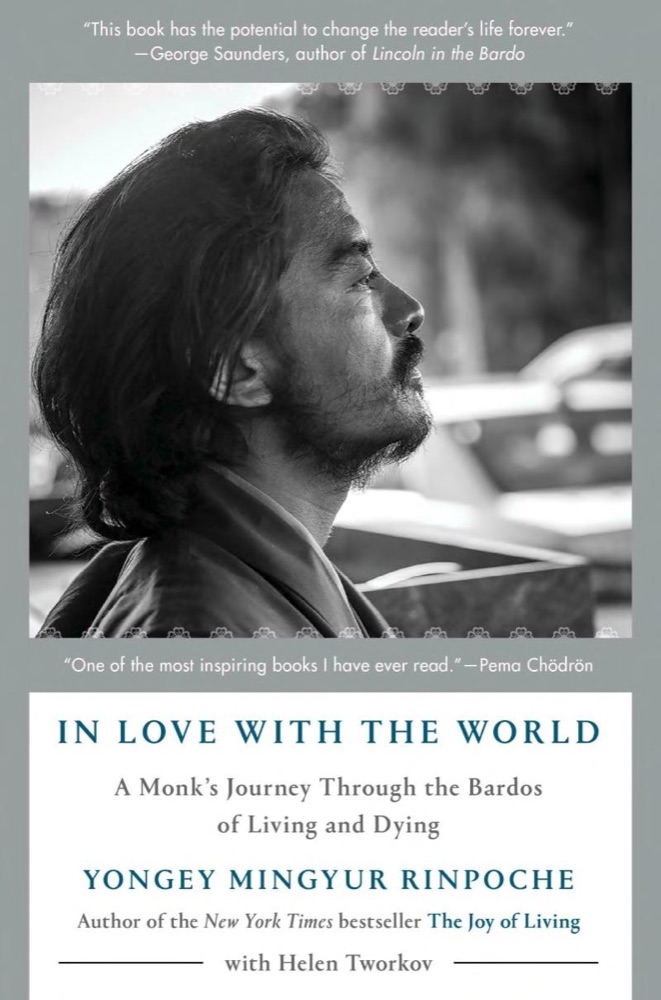 In Love with the World: A Monk's Journey Through the Bardos of Living and Dying
 Kitchen Table Wisdom: Stories that Heal
 Meditation
 The Power of Now: A Guide to Spiritual Enlightenment
 Buddhist Boot Camp
 Change Your Thoughts - Change Your Life: Living the Wisdom of the Tao
 Striking Thoughts: Bruce Lee's Wisdom for Daily Living
 Letting Go: The Pathway To Surrender
 Self-Compassion: The Proven Power of Being Kind to Yourself
 Waking Up: A Guide to Spirituality Without Religion
 365 Tao: A Study of Taoist Wisdom for Daily Life
 A Return to Love: Reflections on the Principles of "A Course in Miracles"
 Eastern Body, Western Mind: Psychology and the Chakra System as a Path to the Self
 Total Freedom: The Essential Krishnamurti
 The Yoga Sutras of Patanjali
 The Gifts of Imperfection