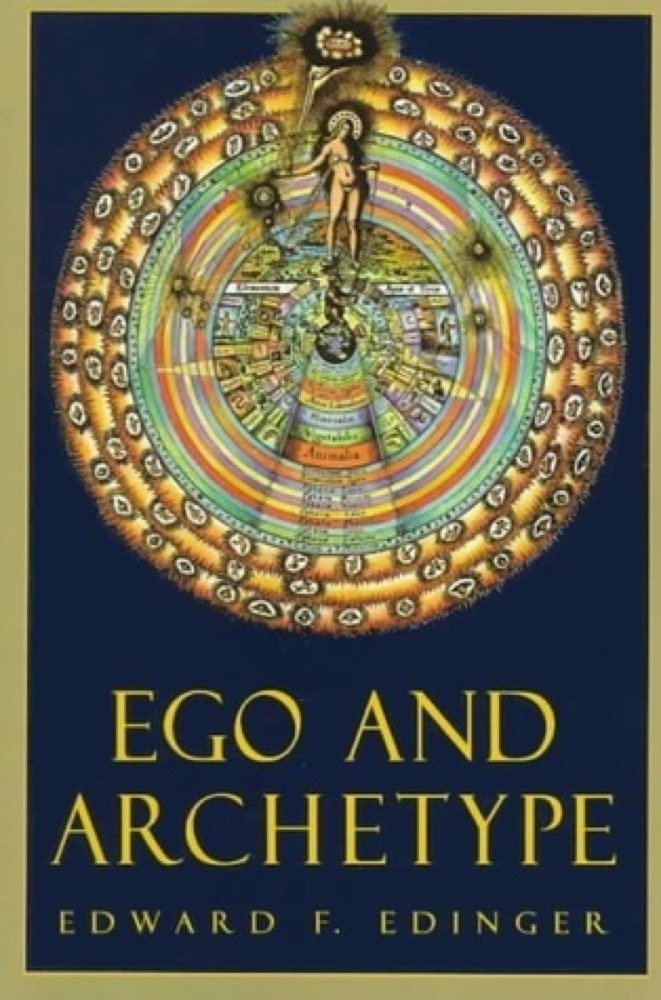
Quotes from the Book
the experience of the self is always a defeat for the ego.
9
And if it is true that we acquired our knowledge before our birth, and lost it at the moment of birth, but afterward, by the exercise of our senses upon sensible objects, recover the knowledge which we had once before, I suppose that what we call learning will be the recovery of our own knowledge . . . PLATO*
8
Through his researches, we now know that the individual psyche is not just a product of personal experience. It also has a pre-personal or transpersonal dimension which is manifested in universal patterns and images such as are found in all the world’s religions and mythologies.
6
He must give up his identification with original unconscious wholeness and voluntarily accept being a real fragment instead of an unreal whole.
5
In my experience, the basis of almost all psychological problems is an unsatisfactory relation to one's urge to individuality. And the healing process often involves an acceptance of what is commonly called selfish, power-seeking or autoerotic. The majority of patients in psychotherapy need to learn how to be more effectively selfsh and more effective in the use of their own personal power; they need to accept responsibility for the fact of being centers of power and effectiveness. So-called selfish or egocentric behavior which expresses itself in demands made on others is not effective conscious self-centeredness or conscious individuality. We demand from others only what we fail to give ourselves. If we have insufficient self-love or self-prestige, our need expresses itself unconsciously by coercive tactics toward others. And often the coercion occurs under the guise of virtue, love, or altruism. Such unconscious selfishness is ineffectual and destructive to oneself and others. It fails to achieve its purpose because it is blind, without awareness of itself. What is required is not the extirpation of selfishness, which is impossible but rather that it be wedded to consciousness and thus becomes effective. All the facts of biology and psychology teach us that every individual unit of life is self-centered to the core. The only varying factor is the degree of consciousness which accompanies that fact.
3
Carlyle has put it cleverly. He says that happiness is inversely proportionate to the quantity of our expectations, i.e., how much we think we are entitled to. Happiness equals what we have, divided by what we expect.
3
This means that it is a mistake to identify our individuality with any particular talent, function, or aspect of ourselves. However, very often this is just what we do. If a person feels inferior and depressed in the presence of people who are more intelligent, who have read more books, who have traveled more, who are more famous, or who are more skillful or knowledgeable in art, music, politics, or any other human endeavor, then that person is making the mistake of identifying some particular aspect or function of himself with his essential individuality. Because a particular capacity is inferior to that of another person, he feels himself to be inferior. This feeling then leads either to depressive withdrawal or to defensive, competitive efforts to prove he is not inferior. If such a person can experience the fact that his individuality and personal worth are beyond all particular manifestation his security will no longer be threatened by the accomplishments of others. This sense of innate worth prior to and irrespective of deeds and accomplishments is the precious deposit that is left in the psyche by the experience of genuine parental love.
1
Blood spilled requires more blood to pay the debt. The books must be balanced. Such thinking illustrates the law of the conservation of psychic energy. There is so much psychic life to be lived. If it is denied fulfillment in one area, it must be made up elsewhere. There must be blood for blood. Repression, which is internal murder, will out. It is a crime against life for which payment will be extracted.
1
One of the essential features of the Christian myth and the teaching of Jesus is the attitude taken toward weakness and suffering. A real transvaluation of ordinary values is brought about. Strength, power, fullness and success, the usual conscious values, are denied. Instead, weakness, suffering, poverty, and failure are given special dignity. This point is developed throughout Jesus’ teachings and is given its supreme representation in the crucifixion itself where God is degradingly scourged and dies the shameful death of a criminal on the cross. This is what was beyond the comprehension of the Romans, for whom, honor, strength, and manly virtue were the supreme values. Psychologically understood, we have here, I think, a clash between the goals and values of two different phases of ego development. Preoccupation with personal honor and strength and the despising of weakness is inevitable and necessary in the early stages of ego development. The ego must learn to assert itself in order to come into existence at all. Hence the Christian myth has little place in the psychology of the young.
1
Whereas the Mosaic Law recognized only the reality of deeds, Jesus recognized the reality of inner psychic states. For example: You have heard that it was said to the men of old, "You shall not kill; and whoever kills shall be liable to judgment." But I say to you that everyone who is angry with his brother shall be liable to judgment ...(Matt. 5:21-22, RSV) And again: You have heard that it was said, "You shall not commit adultery." But I say to you that every one who looks at a woman lustfully has already committed adultery with her in his heart. (Ibid. 5:27-28) These passages have a major psychological import. They represent a transition from a kind of crude behavioristic psychology to one which is aware of the reality of the psyche as such without concrete actions. The gospel accounts abound in many other major psychological discoveries. Jesus formulated the conception of psychological projection two thousand years before depth psychology: Why do you look at the speck of sawdust in your bother's eye with never a thought for the great plank in your own eye? (Matt. 7:3, New English Bible)
1
Chance as a category of experience is a symptom of the alienated life. For the Self-connected man, as for the child and the primitive, chance does not exist. Perhaps this is the meaning of Jesus' saying, "Unless you tum and become like children you will never enter the Kingdom of Heaven.
1
[The Self is] expressed by certain typical symbolic images called mandalas. All images that emphasize a circle with a center and usually with the additional feature of a square, cross, or some other representation of quaternity, fall into this category…There are also a number of other associated themes and images that refer to the Self. Such themes as wholeness, totality, the union of opposites, the central generative point, the world naval, the axis of the universe. . .the elixir of life – all refer to the Self, the central source of life energy, the fountain of our being which is most simply described as God. Indeed, the richest sources of the phenomenological study of the Self are in the innumerable representations that man has made of the deity.
1
The Self is the ordering and unifying center of the total psyche (conscious and unconscious) just as the ego is the center of the conscious personality. Or, put in other words, the ego is the seat of subjective identity while the Self is the seat of objective identity. The Self is thus the supreme psychic authority and subordinates the ego to it. The Self is most simply described as the inner empirical deity and is identical with the imago Dei.
1
Theology without alchemy is like a noble body without its right hand. Our Art, its theory as well as its practice, is altogether a gift of God, Who gives it when and to whom He elects: It is not of him that wills, or of him that runs, but simply through the mercy of God.
In order to relate to the mentality of the child and primitive consciously, rather than unconsciously and inflatedly, we must learn how to incorporate primitive categories of experience into our world view without denying or damaging our conscious, scientific categories of space, time and causality. We must learn how to apply primitive modes of experience psychologically, to the inner world, rather than physically in relation to the outer world. To be primitive in our relation to the outer world is to be superstitious; but to be primitive in relation to the inner world of the psyche is to be wise.
Jonah tried to escape his vocation by flight; Saul attempted to escape his by persecuting the representatives of his own destiny. The very intensity of his attack against the Christians betrayed his involvement with their cause, for, as Jung says, “The important thing is what (a man) talks about, not whether he agrees with it or not.
The same question applies to the problems of child-rearing. How can we successfully remove the child from his inflated state and give him a realistic and responsible notion of his relation to the world, while at the same time maintaining that living link with the archetypal psyche which is needed in order to make his personality strong and resilient? The problem is to maintain the integrity of the ego-Self axis while dissolving the ego's identification with the Self. On this question rest all the disputes of permissiveness versus discipline in child rearing. Permissiveness emphasizes acceptance and encouragement of the child's spontaneity and nourishes his contact with the source of life energy with which he is born. But it also maintains and encourages the inflation of the child, which is unrealistic to the demands of outer life. Discipline, on the other hand, emphasizes strict limits of behavior, encourages dissolution of the ego-Self identity and treats the inflation quite successfully; but at the same time it tends to damage the vital, necessary connection between the growing ego and its roots in the unconscious. There is no choice between these --they are a pair of opposites, and must operate together.
We are born in a state of inflation. In earliest infancy, no ego or consciousness exists. All is in the unconscious. The latent ego is in complete identification with the Self. The Self is born, but the ego is made; and in the beginning all is Self. This state is described by Neumann as the uroborus (the tail-eating serpent). Since the Self is the center and totality of being, the ego totally identified with the Self experiences itself as a deity. We can put it in these terms retrospectively although, of course, the infant does not think in this way. He cannot yet think at all, but his total being and experience are ordered around the a priori assumption of deity. This is the original state of unconscious wholeness and perfection which is responsible for the nostalgia we all have toward our origins, both personal and historical.
Watch on YouTube
About Edward F. Edinger
We have collected 18 quotes from 1 book by Edward F. Edinger on BookQuoters.
More about the author →About the book
This book is about the individual's journey to psychological wholeness, known in analytical psychology as the process of individuation. Edward Edinger traces the stages in this process and relates them to the search for meaning through encounters with symbolism in religion, myth, dreams, and art. For contemporary men and women, Edinger believes, the encounter with the self is equivalent to the discovery of God. The result of the dialogue between the ego and the archetypal image of God is an experience that dramatically changes the individual's worldview and makes possible a new and more meaningful way of life.
Edward F. Edinger, M.D., a founding member of the C.G. Jung Foundation for Analytical Psychology in New York, is the author of many books on Jungian psychology, including The Eternal Drama and Anatomy of the Psyche: Alchemical Symbolism in Psychotherapy.
Book details
- First published
- 1972
- Author
- Edward F. Edinger
- Genre
- Nonfiction
- Goodreads rating
- 4.33 (2k ratings)
Keep reading
 The Perennial Philosophy
 Myths to Live By
 Maps of Meaning: The Architecture of Belief
 Man and His Symbols
 Finding Meaning in the Second Half of Life: How to Finally, Really Grow Up
 The Book: On the Taboo Against Knowing Who You Are
 The Soul's Code: In Search of Character and Calling
 Cutting Through Spiritual Materialism
 Modern Man in Search of a Soul
 The Varieties of Religious Experience
 The Divided Self: An Existential Study in Sanity and Madness
 Eastern Body, Western Mind: Psychology and the Chakra System as a Path to the Self
 Thoughts Without A Thinker: Psychotherapy From A Buddhist Perspective
 Seth Speaks: The Eternal Validity of the Soul
 The Yoga Sutras of Patanjali
 Daybreak: Thoughts on the Prejudices of Morality
 The Sane Society
 The Ego and Its Own
 Love and Will
 Toward a Psychology of Being
 Twilight of the Idols/The Anti-Christ
 Man's Search for Ultimate Meaning
 The Convoluted Universe, Book 1
 The World's Religions
 How to Know Higher Worlds: A Modern Path of Initiation
 The Occult
 The Will to Meaning: Foundations and Applications of Logotherapy
 In Love with the World: A Monk's Journey Through the Bardos of Living and Dying
 Solitude: A Return to the Self
 No Man Is an Island
 The Book of Secrets: Unlocking the Hidden Dimensions of Your Life
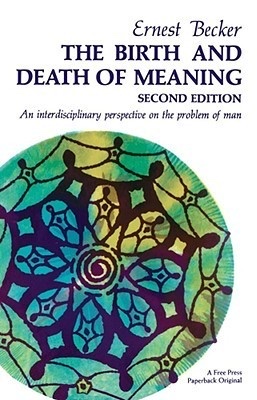 The Birth and Death of Meaning: An Interdisciplinary Perspective on the Problem of Man
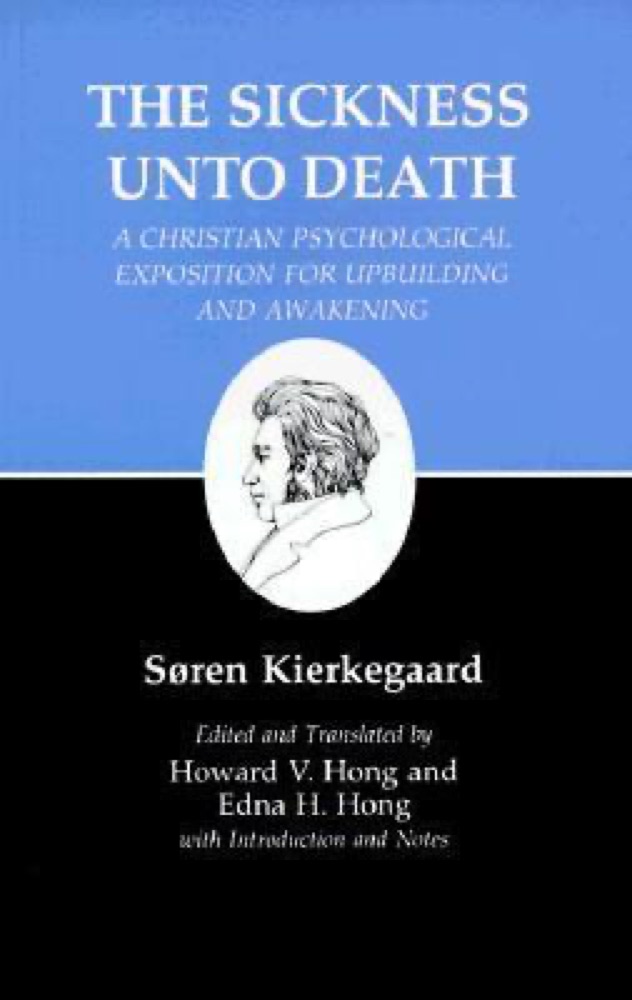 The Sickness Unto Death: A Christian Psychological Exposition for Upbuilding and Awakening
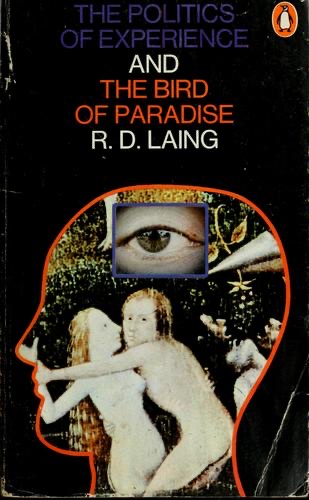 The Politics of Experience/The Bird of Paradise
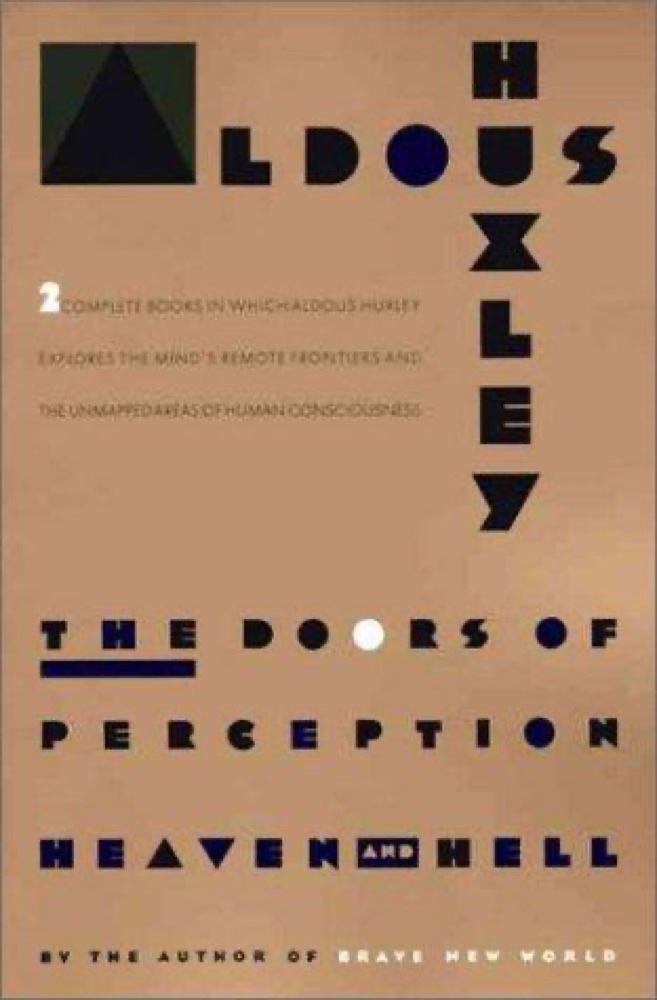 The Doors of Perception & Heaven and Hell
 The Doors of Perception
 Existential Psychotherapy
 Advice Not Given: A Guide to Getting Over Yourself
 The Ego Tunnel: The Science of the Mind and the Myth of the Self
 Love's Executioner and Other Tales of Psychotherapy
 The Mind of the Maker: Dorothy L. Sayers' Witty Classic on the Trinity, Christianity, and Human Creativity
 Anatomy of the Spirit: The Seven Stages of Power and Healing
 Many Lives, Many Masters: The True Story of a Prominent Psychiatrist, His Young Patient, and the Past Life Therapy That Changed Both Their Lives
 Messages from the Masters: Tapping into the Power of Love
 The God Who Weeps: How Mormonism Makes Sense of Life
 Food of the Gods: The Search for the Original Tree of Knowledge
 My Spiritual Journey: Personal Reflections, Teachings, and Talks
 Total Freedom: The Essential Krishnamurti
 The Art of Being
 He: Understanding Masculine Psychology
 The Second Mountain
 Thou Art That: Transforming Religious Metaphor
 The Ego and the Id
 Letting Go: The Pathway To Surrender
 The Upanishads
 The Wisdom of Insecurity: A Message for an Age of Anxiety
 Freedom from the Known
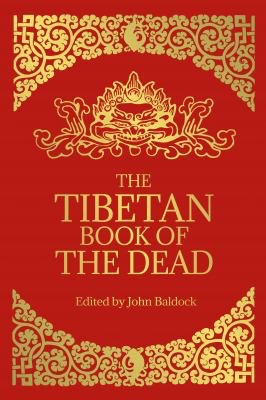 Tibetan Book of the Dead