

 Love and Will
Quotes from the Book
Many people suffer from the fear of finding oneself alone, and so they don't find themselves at all.
509
Finding the center of strength within ourselves is in the long run the best contribution we can make to our fellow men. ... One person with indigenous inner strength exercises a great calming effect on panic among people around him. This is what our society needs — not new ideas and inventions; important as these are, and not geniuses and supermen, but persons who can "be", that is, persons who have a center of strength within themselves.
176
One of the few blessings of living in an age of anxiety is that we are forced to become aware of ourselves.
69
The human being cannot live in a condition of emptiness for very long: if he is not growing toward something, he does not merely stagnate; the pent-up potentialities turn into morbidity and despair, and eventually into destructive activities.
66
when men at last accept the fact that they cannot successfully lie to themselves, and at last learn to take themselves seriously, they discover previously unknown and often remarkable recuperative powers within themselves.
35
I’m just a collection of mirrors, reflecting what everyone else expects of me.
33
Loneliness is such an omnipotent and painful threat to many persons that they have little conception of the positive values of solitude, and even at times are very frightened at the prospect of being alone. Many people suffer from “the fear of finding oneself alone,” remarks André Gide, “and so they don’t find themselves at all.
23
When Spinoza in the seventeenth century used the word reason, he meant an attitude toward life in which the mind united the emotions with the ethical goals and other aspects of the “whole man.” When people today use the term they almost always imply a splitting of the personality. They ask in one form or another: “Should I follow reason or give way to sensual passions and needs or be faithful to my ethical duty?
20
In other words, the most common problem now is not social taboos on sexual activity or guilt feeling about sex in itself, but the fact that sex for so many people is an empty, mechanical and vacuous experience.
20
Self-inflation and conceit are generally the external signs of inner emptiness and self-doubt; a show of pride is one of the most common covers for anxiety.
19
Along with the loss of the sense of self has gone a loss of our language for communicating deeply personal meanings to each other.
15
Much self-condemnation is a cloak for arrogance. Those who think they overcome pride by condemning themselves could well ponder Spinoza's remark "One who despises himself is the nearest to a proud man.
13
Tremendous pride was exhibited in fascism, as everyone knows who has seen the pictures of the strutting Mussolini and psychopathic Hitler; but fascism is a development in people who are empty, anxious and despairing, and therefore seize on megalomaniac promises.
12
Anxiety, the other characteristic of modern man, is even more basic than emptiness and loneliness. For being “hollow” and lonely would not bother us except that it makes us prey to that peculiar psychological pain and turmoil called anxiety.
12
When people feel threatened and anxious they become more rigid, and when in doubt they tend to become dogmatic; and then they lose their own vitality. They use the remnants of traditional values to build a protective encasement and then shrink behind it; or they make an outright panicky retreat into the past. But
11
condemning ourselves is the quickest way to get a substitute sense of worth. People who have almost, but not quite, lost their feeling of worth generally have very strong needs to condemn themselves, for that is the most ready way of drowning the bitter ache of feelings of worthlessness and humiliation. It is as though the person were saying to himself, “I must be important that I am so worth condemning,” or “Look how noble I am: I have such high ideals and I am so ashamed of myself that I fall short.” A psychoanalyst once pointedly remarked that when someone in psychoanalysis berates himself at great length for picayune sins, he feels like asking, “Who do you think you are?” The self-condemning person is very often trying to show how important he is that God is so concerned with punishing him.
11
This is a time, as Herman Hesse puts it, “when a whole generation is caught . . . between two ages, two modes of life, with the consequence that it loses all power to understand itself and has no standards, no security, no simple acquiescence.
9
Another root of our malady is our loss of the sense of the worth and dignity of the human being. Nietzsche predicted this when he pointed out that the individual was being swallowed up in the herd, and that we were living by a “slave-morality.” Marx also predicted it when he proclaimed that modern man was being “de-humanized,” and Kafka showed in his amazing stories how people literally can lose their identity as persons.
8
Bertrand Russell writes that the painful thing “about our time is that those who feel certainty are stupid, and those with any imagination and understanding are filled with doubt and indecision.
7
And it is permissible to want to be alone temporarily to “get away from it all.” But if one mentioned at a party that he liked to be alone, not for a rest or an escape, but for its own joys, people would think that something was vaguely wrong with him—that some pariah aura of untouchability or sickness hovered round him. And if a person is alone very much of the time, people tend to think of him as a failure, for it is inconceivable to them that he would choose to be alone.
7
Much self-condemnation, thus, is a cloak for arrogance. Those who think they overcome pride by condemning themselves could well ponder Spinoza's remark, 'One who despises himself is the nearest to a proud man'. In ancient Athens, when a politician was trying to get the votes of the working class by appearing very humble in a tattered coat with big holes in it, Socrates unmasked his hypocrisy by exclaiming, 'Your vanity shows forth from every whole in your coat'.
6
One cannot laugh when in an anxiety panic, for then one is swallowed up, one has lost the distinction between himself as subject and the objective world around him. So long as one can laugh, furthermore, he is not completely under the domination of anxiety or fear—hence the accepted belief in folklore that to be able to laugh in times of danger is a sign of courage. In cases of borderline psychotics, so long as the person has genuine humor—so long, that is, as he can laugh, or look at himself with the thought, as one person put it, “What a crazy person I’ve been!”—he is preserving his identity as a self. When any of us, neurotic or not, get insights into our psychological problems, our spontaneous reaction is normally a little laugh—the “aha” of insight, as it is called. The humor occurs because of a new appreciation of one’s self as a subject acting in an objective world.
6
We find a giant like Picasso shifting in his own lifetime from style to style, partly as a reflection of the shifting character of the last four decades in Western society, and partly like a man dialing a ship’s radio on the ocean, trying vainly to find the wave length on which he can talk to his fellow men. But the artists, and the rest of us too, remain spiritually isolated and at sea, and so we cover up our loneliness by chattering with other people about the things we do have language for—the world series, business affairs, the latest news reports. Our deeper emotional experiences are pushed further away, and we tend, thus, to become emptier and lonelier.
5
What is important is not what is said, but that some talk be continually going on. Silence is the great crime, for silence is lonely and frightening. One shouldn’t feel much, nor put much meaning into what one says: what you say seems to have more effect if you don’t try to understand. One has the strange impression that these people are all afraid of something—what is it? It is as if the “yatata” were a primitive tribal ceremony, a witch dance calculated to appease some god. There is a god, or rather a demon, they are trying to appease: it is the specter of loneliness which hovers outside like the fog drifting in from the sea. One will have to meet this specter’s leering terror for the first half-hour one is awake in the morning anyway, so let one do everything possible to keep it away now.
5
Courage is the capacity to meet the anxiety which arises as one achieves freedom. It is the willingness to differentiate, to move from the protecting realms of parental dependence to new levels of freedom and integration.
4
If, when he first begins tentatively to say “No,” his parents beat him down rather than love and encourage him, he thereafter will say “No” not as a form of true independent strength but as a mere rebellion.
4
But in our age of emptiness, tragedies are relatively rare. Or if they are written, the tragic aspect is the very fact that human life is so empty, as in Eugene O’Neill’s drama, The Iceman Cometh. This play is set in a saloon, and its dramatis personae—alcoholics, prostitutes, and, as the chief character, a man who in the course of the play goes psychotic—can dimly recall the periods in their lives when they did believe in something. It is this echo of human dignity in a great void of emptiness that gives this drama the power to elicit the emotions of pity and terror of classical tragedy.
4
A young man came for psychotherapy because, though he was intellectually very competent and seemed superficially to be very successful, his spontaneity was almost completely blocked.
3
In anxiety, however, we are threatened without knowing what steps to take to meet the danger. Anxiety is the feeling of being “caught,” “overwhelmed”; and instead of becoming sharper, our perceptions generally become blurred or vague.
3
Watch on YouTube
About Rollo May
We have collected 89 quotes from 3 books by Rollo May on BookQuoters.
More about the author →More by Rollo May
Love and Will
 The Courage to Create
About the book
"Analyzes life as we are living it, and the analysis is truthful and profound."--New York Times
Loneliness, boredom, These are the complaints that Rollo May encountered over and over from his patients. In response, he probes the hidden layers of personality to reveal the core of man's integration--a basic and inborn sense of value. Man's Search for Himself is an illuminating view of our predicament in an age of overwhelming anxieties and gives guidance on how to choose, judge, and act during such times.
Book details
- First published
- 1953
- Author
- Rollo May
- Genre
- Nonfiction
- Goodreads rating
- 4.21 (4k ratings)
Keep reading
 Toward a Psychology of Being
 The Art of Being
 Escape from Freedom
 Finding Meaning in the Second Half of Life: How to Finally, Really Grow Up
 The Denial of Death
 The Consolations of Philosophy
 The School of Life: An Emotional Education
 Status Anxiety
 The Dice Man
 Civilization and Its Discontents
 The Wisdom of Insecurity: A Message for an Age of Anxiety
 The Sane Society
 Selfie: How the West Became Self-Obsessed
 Love's Executioner and Other Tales of Psychotherapy
 The Examined Life: How We Lose and Find Ourselves
 The Culture of Narcissism: American Life in An Age of Diminishing Expectations
 The Middle Passage: From Misery to Meaning in Midlife
 The Man Without Qualities
 Six Pillars of Self-Esteem
 The Empusium
 The Divided Self: An Existential Study in Sanity and Madness
 Solitude: A Return to the Self
 When Things Fall Apart: Heart Advice for Difficult Times
 Man's Search for Ultimate Meaning
 Man and His Symbols
 The Laws of Human Nature
 Modern Man in Search of a Soul
 The Antidote: Happiness for People Who Can't Stand Positive Thinking
 Letting Go: The Pathway To Surrender
Love and Will
Letting Go: The Pathway To Surrender
Love and Will
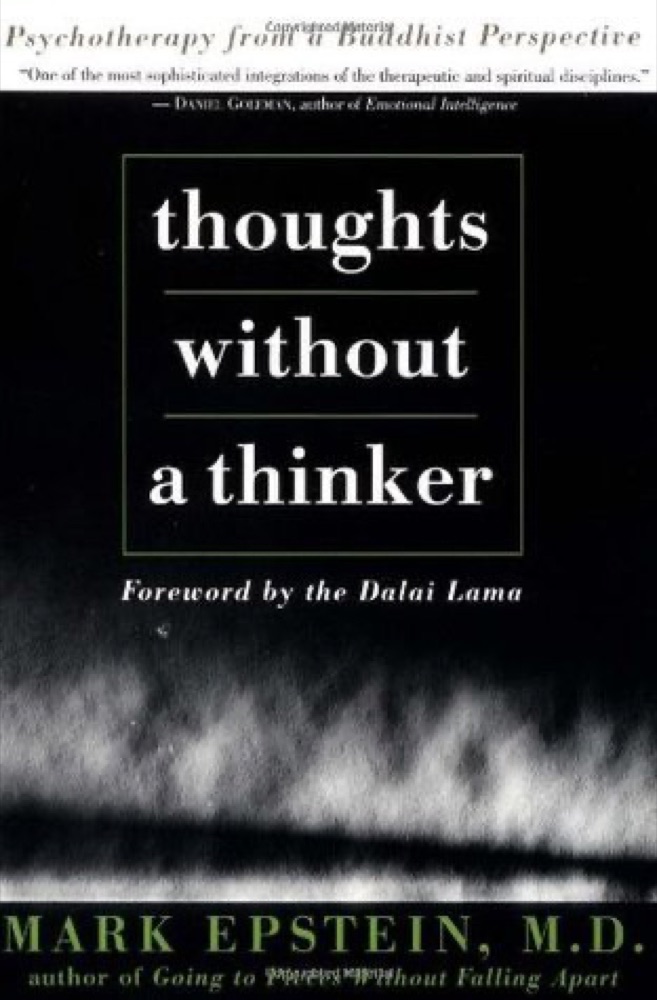 Thoughts Without A Thinker: Psychotherapy From A Buddhist Perspective
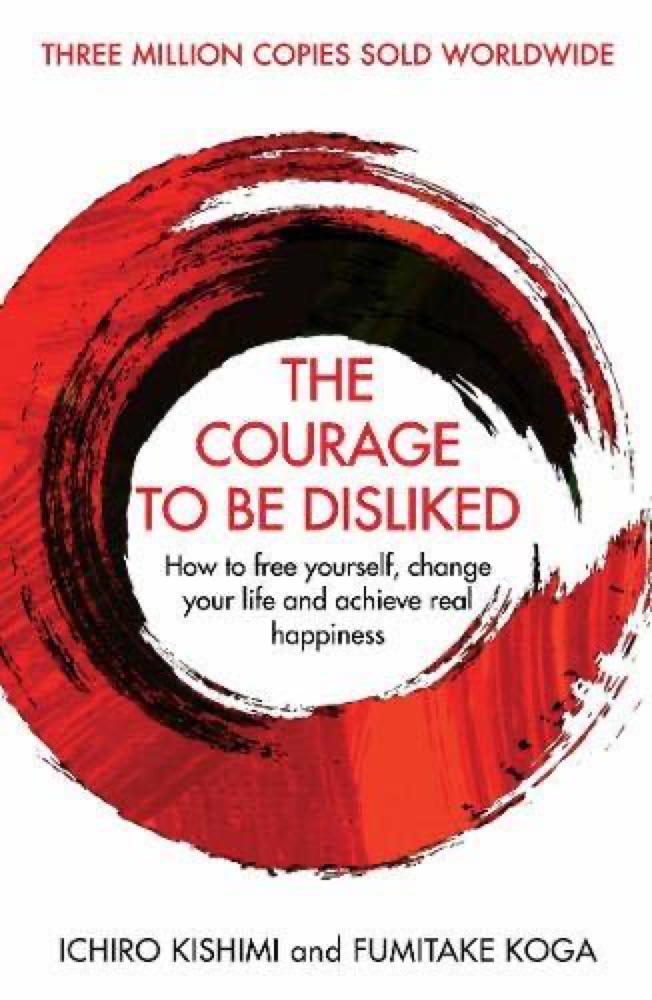 The Courage to Be Disliked: How to Free Yourself, Change Your Life and Achieve Real Happiness
 How to Stay Sane in an Age of Division
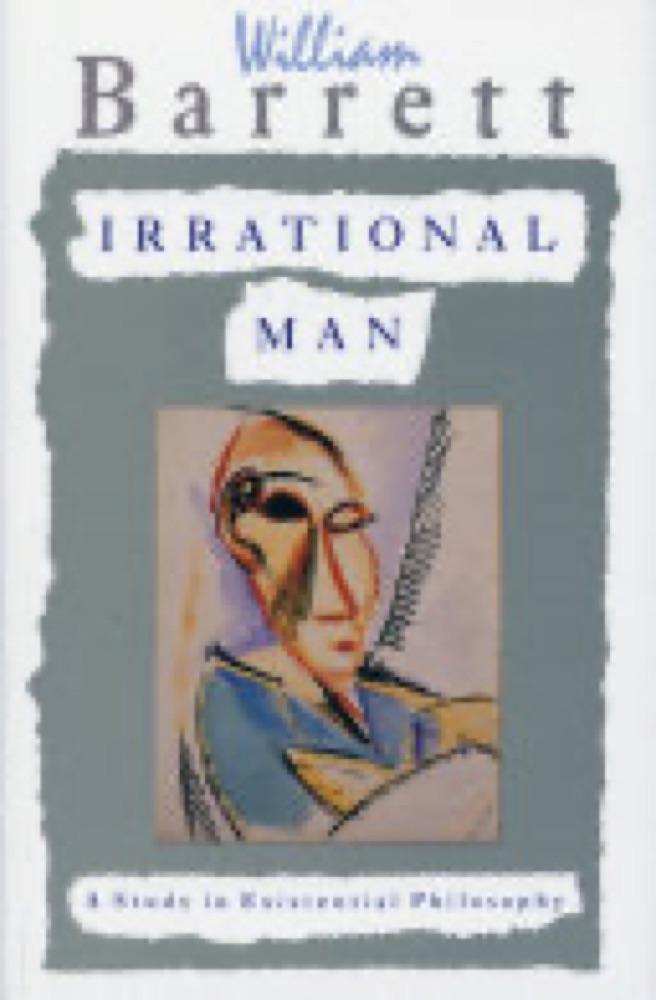 Irrational Man: A Study in Existential Philosophy
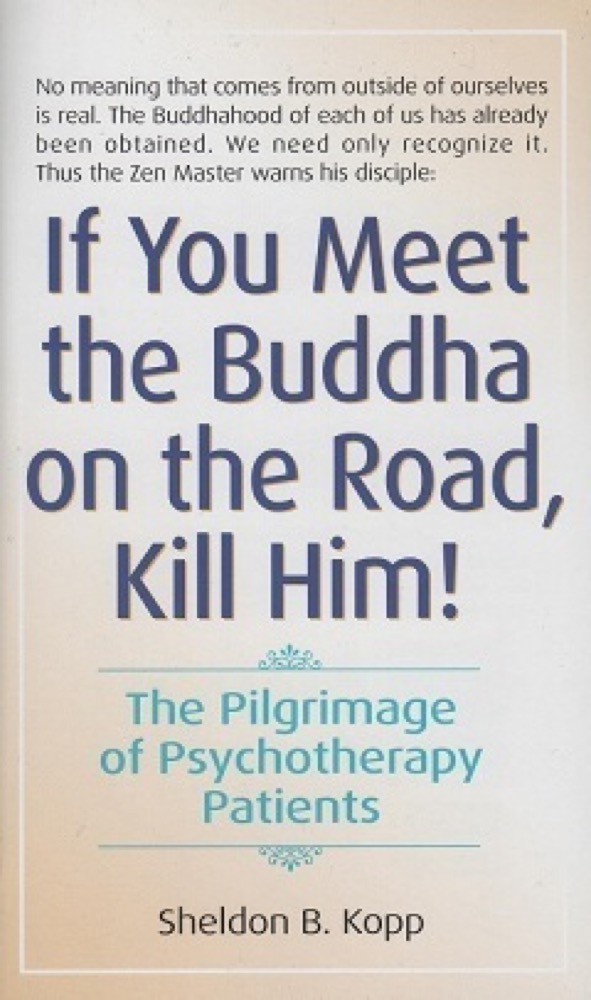 If You Meet the Buddha on the Road, Kill Him! The Pilgrimage of Psychotherapy Patients
 How to Be Alone
 Revolution from Within: A Book of Self-Esteem
 The Dance of Fear: Rising Above Anxiety, Fear, and Shame to Be Your Best and Bravest Self
 The Drama of the Gifted Child: The Search for the True Self
 Daybreak: Thoughts on the Prejudices of Morality
 The Birth and Death of Meaning: An Interdisciplinary Perspective on the Problem of Man
 The Politics of Experience/The Bird of Paradise
 Freedom from the Known
 The Doors of Perception
 Untimely Meditations
 Man's Search for Meaning
 When Nietzsche Wept
 The Sickness Unto Death: A Christian Psychological Exposition for Upbuilding and Awakening
 Everything Is F*cked: A Book About Hope
 No Longer Human
 Advice Not Given: A Guide to Getting Over Yourself
 Human, All Too Human
 The Book: On the Taboo Against Knowing Who You Are
 The Interpretation of Murder
 Night Train to Lisbon
 Existential Psychotherapy
 The Doors of Perception & Heaven and Hell
 The Varieties of Religious Experience