 When Things Fall Apart: Heart Advice for Difficult Times
Quotes from the Book
When we resist change, it’s called suffering. But when we can completely let go and not struggle against it, when we can embrace the groundlessness of our situation and relax into its dynamic quality, that’s called enlightenment
99
We have a choice. We can spend our whole life suffering because we can't relax with how things really are, or we can relax and embrace the open-endedness of the human situation, which is fresh, unfixated, unbiased.
68
If your mind is expansive and unfettered, you will find yourself in a more accommodating world, a place that's endlessly interesting and alive. That quality isn't inherent in the place but in your state of mind.
22
The everyday practice is simply to develop a complete acceptance and openness to all situations and emotions, and to all people, experiencing everything totally without mental reservations and blockages, so that one never withdraws or centralizes into oneself.
9
Ego or fixed identity doesn’t just mean we have a fixed idea about ourselves. It also means that we have a fixed idea about everything we perceive. I have a fixed idea about you; you have a fixed idea about me. And once there is that feeling of separation, it gives rise to strong emotions. In Buddhism, strong emotions like anger, craving, pride, and jealousy are known as kleshas—conflicting emotions that cloud the mind. The kleshas are our vehicle for escaping groundlessness, and therefore every time we give in to them, our preexisting habits are reinforced. In Buddhism, going around and around, recycling the same patterns, is called samsara. And samsara equals pain. We keep trying to get away from the fundamental ambiguity of being human, and we can’t. We can’t escape it any more than we can escape change, any more than we can escape death. The cause of our suffering is our reaction to the reality of no escape: ego clinging and all the trouble that stems from it, all the things that make it difficult for us to be comfortable in our own skin and get along with one another. If the way to deal with those feelings is to stay present with them without fueling the story line, then it begs the question: How do we get in touch with the fundamental ambiguity of being human in the first place? In fact, it’s not difficult, because underlying uneasiness is usually present in our lives. It’s pretty easy to recognize but not so easy to interrupt. We may experience this uneasiness as anything from slight edginess to sheer terror. Anxiety makes us feel vulnerable, which we generally don’t like. Vulnerability comes in many guises. We may feel off balance, as if we don’t know what’s going on, don’t have a handle on things. We may feel lonely or depressed or angry. Most of us want to avoid emotions that make us feel vulnerable, so we’ll do almost anything to get away from them. But if, instead of thinking of these feelings as bad, we could think of them as road signs or barometers that tell us we’re in touch with groundlessness, then we would see the feelings for what they really are: the gateway to liberation, an open doorway to freedom from suffering, the path to our deepest well-being and joy. We have a choice. We can spend our whole life suffering because we can’t relax with how things really are, or we can relax and embrace the open-endedness of the human situation, which is fresh, unfixated, unbiased. So the challenge is to notice the emotional tug of shenpa when it arises and to stay with it for one and a half minutes without the story line. Can you do this once a day, or many times throughout the day, as the feeling arises? This is the challenge. This is the process of unmasking, letting go, opening the mind and heart.
7
It’s not impermanence per se, or even knowing we’re going to die, that is the cause of our suffering, the Buddha taught. Rather, it’s our resistance to the fundamental uncertainty of our situation. Our discomfort arises from all of our efforts to put ground under our feet, to realize our dream of constant okayness. When we resist change, it’s called suffering. But when we can completely let go and not struggle against it, when we can embrace the groundlessness of our situation and relax into its dynamic quality, that’s called enlightenment, or awakening to our true nature, to our fundamental goodness. Another word for that is freedom—freedom from struggling against the fundamental ambiguity of being human.
6
But as we let go of our repetitive stories and fixed ideas about ourselves--particularly deep-seated feelings of "I'm not okay"--the armor starts to fall apart, and we open into the spaciousness of our true nature, into who we really are beyond the transitory thoughts and emotions. We see that our armor is made up of nothing more than habits and fears, and we begin to feel that we can let those go.
6
Once we have the fixed idea “this is me,” then we see everything as a threat or a promise—or something we couldn’t care less about.
6
Awakening is not a process of building ourselves up but a process of letting go. It’s a process of relaxing in the middle—the paradoxical, ambiguous middle, full of potential, full of new ways of thinking and seeing—with absolutely no money-back guarantee of what will happen next.
6
Chaos should be regarded as extremely good news.” – Chogyam Trungpa Rinpoche
5
Most of us have physical or mental conditions that have caused us distress in the past. And when we get a whiff of one coming—an incipient asthma attack, a symptom of chronic fatigue, a twinge of anxiety—we panic. Instead of relaxing with the feeling and letting it do its minute and a half while we’re fully open and receptive to it, we say, “Oh no, oh no, here it is again.” We refuse to feel fundamental ambiguity when it comes in this form, so we do the thing that will be most detrimental to us: we rev up our thoughts about it. What if this happens? What if that happens? We stir up a lot of mental activity. Body, speech, and mind become engaged in running away from the feeling, which only keeps it going and going and going. We
4
May we all learn that pain is not the end of the journey, and neither is delight. We can hold them both—indeed hold it all—at the same time, remembering that everything in these quixotic, unpredictable, unsettled and unsettling, exhilarating and heart-stirring times is a doorway to awakening in sacred world.
4
The root of these fundamentalist tendencies, these dogmatic tendencies, is a fixed identity—a fixed view we have of ourselves as good or bad, worthy or unworthy, this or that. With a fixed identity, we have to busy ourselves with trying to rearrange reality, because reality doesn’t always conform to our view.
4
Leonard Cohen once said about the benefits of many years of meditation, “The less there was of me, the happier I got.” Letting
4
If you acknowledge what’s happening and refrain from acting, that opens up some space in your mind. Clinging to views and opinions, thinking you’re always right and lording it over others, keeps you endlessly stuck.
3
Refraining is very powerful because it gives us an opportunity to acknowledge when we’re caught and then to get unstuck.
3
The problem with most people is that they are always trying to give out the bad and take in the good. That has been the problem of society in general and the world altogether.” The time has come for us to try the opposite approach: to take in the bad and give out the good. Compassion is not a matter of pity or the strong helping the weak; it’s a relationship between equals, one of mutual support. Practicing tonglen, we come to realize that other people’s welfare is just as important as our own. In helping them, we help ourselves. In helping ourselves, we help the world.
3
It points out how we continually try to avoid the uncertainty inherent in our condition, how we continually try to get solid ground under our feet. The eight worldly concerns are presented as four pairs of opposites: pleasure and pain, gain and loss, fame and disgrace, praise and blame.
3
So the challenge is to notice the emotional tug of shenpa when it arises and to stay with it for one and a half minutes without the story line. Can you do this once a day, or many times throughout the day, as the feeling arises? This is the challenge. This is the process of unmasking, letting go, opening the mind and heart.
3
Living is a form of not being sure, not knowing what next or how. The moment you know how, you begin to die a little. The artist never entirely knows. We guess. We may be wrong, but we take leap after leap in the dark. —AGNES DE MILLE
3
our tendencies with their habitual story lines are described as seeds in the unconscious. When the right causes and conditions come together, these preexisting propensities pop up like flowers in the springtime. It’s helpful to contemplate that it’s these propensities and not what triggers them that are the real cause of our suffering.
3
For one thing, I let go much more easily: knowing that it’s all passing so quickly makes everything I encounter exceedingly precious. I know that every taste, every smell, every day, every meeting, every parting, could be my last. When I see people bent over, shuffling along on walkers, I know what could be ahead for me. I’ve begun to identify with the very elderly so intimately that instead of recoiling, I feel immense compassion.
2
Without the words, without the repetitive thoughts, the emotions don’t last longer than one and a half minutes.
2
Still, the tendency to scramble for security will try to reassert itself and gain some ground. We can’t underestimate the very real (and very fleeting) comfort it provides. The meditation teacher Tara Brach, in her book Radical Acceptance, describes a practice she uses at such times. It’s based on the Buddha’s encounters with his nemesis, Mara, a demon who kept appearing to tempt the Buddha to give up his spiritual resolve and go back to his old unaware ways. Psychologically, Mara represents the false promise of happiness and security offered by our habitual responses. So whenever Mara appeared, often with beautiful women or other temptations in tow, the Buddha would say, “I see you, Mara. I know you’re a trickster. I know what you’re trying to do.” And then he’d invite his nemesis to sit down for tea. When we’re tempted to go back to our habitual ways of avoiding groundlessness, we can look temptation in the eye and say, “I see you, Mara,” then sit down with the fundamental ambiguity of being human without any judgment of right or wrong.
2
The practice is to train in not following the thoughts, not in getting rid of thought altogether. That would be impossible. You may have thought-free moments and, as your meditation practice deepens, longer expanses of time that are thought free, but thoughts always come back. That’s the nature of mind. You don’t have to make thoughts the villain, however. You can just train in interrupting their momentum. The basic instruction is to let the thoughts go—or to label them “thinking”—and stay with the immediacy of your experience. Everything in you will want to do the habitual thing, will want to pursue the story line. The story line is associated with certainty and comfort. It bolsters your very limited, static sense of self and holds out the promise of safety and happiness. But the promise is a false one; any happiness it brings is only temporary. The more you practice not escaping into the fantasy world of your thoughts and instead contacting the felt sense of groundlessness, the more accustomed you’ll become to experiencing emotions as simply sensation—free of concept, free of story line, free of fixed ideas of bad and good.
2
One popular way of relating to physical pain is mindfulness meditation. It involves directing your full attention to the pain and breathing in and out of the spot that hurts. Instead of trying to avoid the discomfort, you open yourself completely to it. You become receptive to the painful sensation without dwelling on the story your mind has concocted: It’s bad; I shouldn’t feel this way; maybe it will never go away.
2
Good or bad, happy or sad, all thoughts vanish into emptiness like the imprint of a bird in the sky.
2
But we don’t have to close down when we feel groundlessness in any form. Instead, we can turn toward it and say, “This is what freedom from fixed mind feels like. This is what freedom from closed-heartedness feels like. This is what unbiased, unfettered goodness feels like. Maybe I’ll get curious and see if I can go beyond my resistance and experience the goodness.” Buddhism holds
2
Taking the . . . vow to help others implies that instead of holding our own individual territory and defending it tooth and nail, we become open to the world that we are living in. It means we are willing to take on greater responsibility, immense responsibility. In fact, it means taking a big chance. —CHÖGYAM TRUNGPA RINPOCHE
2
Watch on YouTube
About Pema Chödrön
We have collected 206 quotes from 8 books by Pema Chödrön on BookQuoters.
More about the author →More by Pema Chödrön
When Things Fall Apart: Heart Advice for Difficult Times
 The Pocket Pema Chodron
 The Places That Scare You: A Guide to Fearlessness in Difficult Times
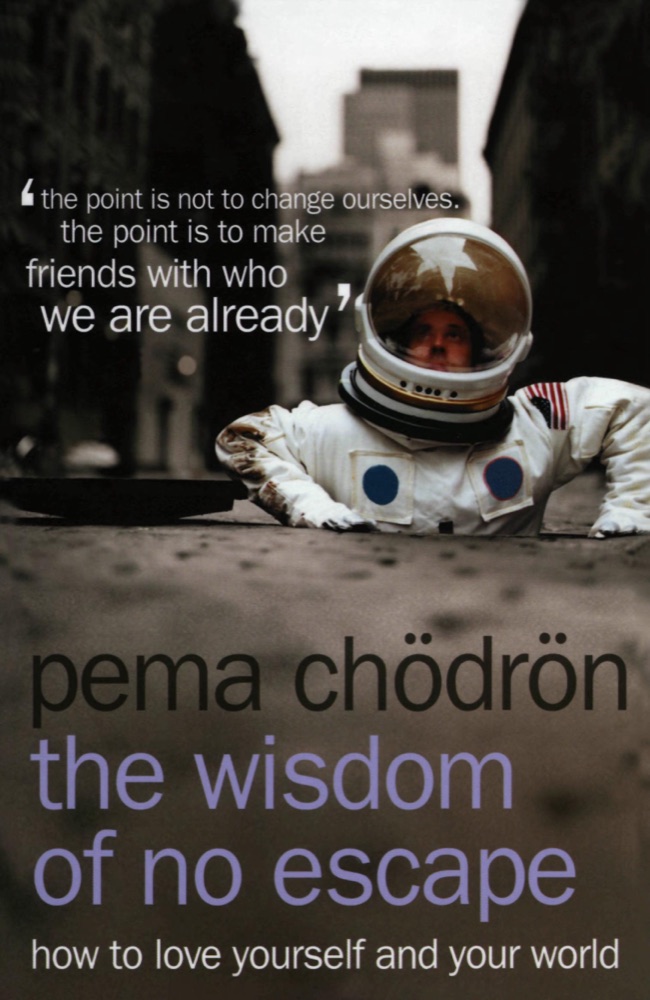 The Wisdom of No Escape: How to Love Yourself and Your World
About the book
Cuộc sống như một dòng sông chảy xiết, đe dọa cuốn trôi và vùi lấp tất cả. Thế nhưng, chúng ta không thể cứ bám vào bờ sông để tìm sự chắc chắn, vì sự bám víu do sợ hãi sẽ là chướng ngại không cho chúng ta có được một cuộc sống đầy đủ và trọn vẹn. Các giáo lý trình bày trong sách - gọi là Ba Hạnh Nguyện - giải thích vì sao chúng ta phải bước hẳn vào trong dòng sông, sẵn sàng hiện diện trước mọi thời điểm khó khăn và những tình huống gay go nhất. Khi biết từ bỏ những cung cách tự vệ quen thuộc, chúng ta sẽ thấy cuộc sống tốt đẹp hơn và đáng sống hơn rất nhiều, và từ đó có thể tìm thấy hạnh phúc cho chính mình và cho những người khác.
Pema Chodron đưa ra những hướng dẫn thiết thực về cách sống lạc quan và hữu ích trong một thế giới đầy bấp bênh và hụt hẫng, kèm theo là những ví dụ cụ thể và xác đáng. Đây là những bài học quan trọng được rút ra từ các truyền thống tôn giáo phương Đông, n
Book details
- First published
- 2012
- Author
- Pema Chödrön
- Genre
- Nonfiction
- Goodreads rating
- 4.25 (7k ratings)
Keep reading
The Places That Scare You: A Guide to Fearlessness in Difficult Times
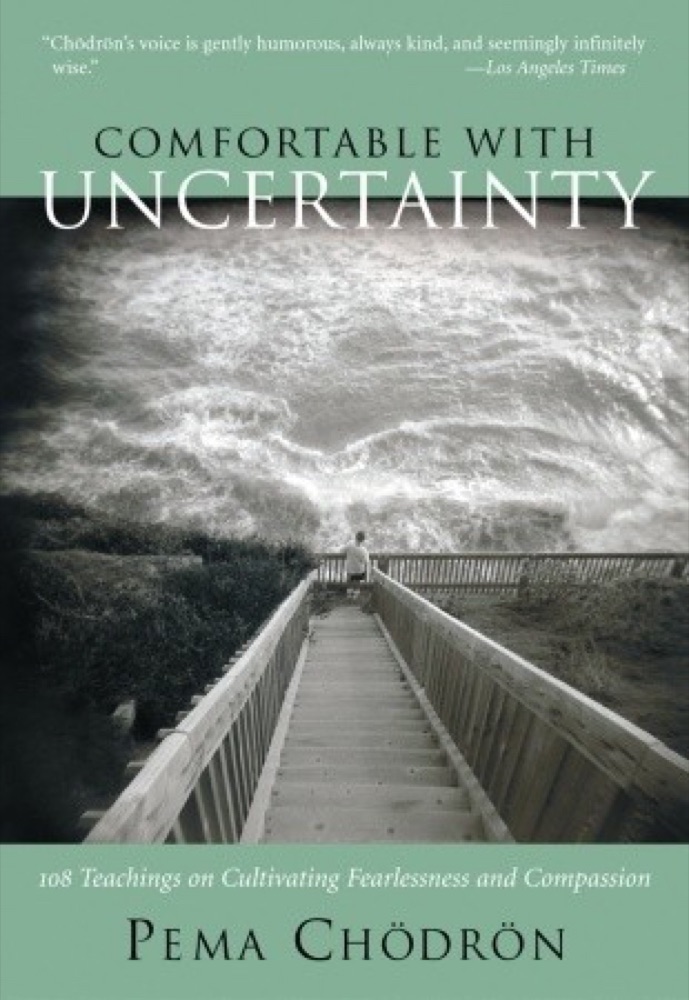 Comfortable with Uncertainty: 108 Teachings on Cultivating Fearlessness and Compassion
The Wisdom of No Escape: How to Love Yourself and Your World
Comfortable with Uncertainty: 108 Teachings on Cultivating Fearlessness and Compassion
The Wisdom of No Escape: How to Love Yourself and Your World
 The Tibetan Book of Living and Dying
 The Wise Heart: A Guide to the Universal Teachings of Buddhist Psychology
 True Refuge: Finding Peace and Freedom in Your Own Awakened Heart
 Full Catastrophe Living: Using the Wisdom of Your Body and Mind to Face Stress, Pain, and Illness
 Everyday Zen: Love & Work
 Letting Go of the Person You Used to Be: Lessons on Change, Loss, and Spiritual Transformation
 The Heart of the Buddha's Teaching: Transforming Suffering into Peace, Joy, and Liberation
 Advice Not Given: A Guide to Getting Over Yourself
 Radical Acceptance: Embracing Your Life With the Heart of a Buddha
 The Joy of Living: Unlocking the Secret and Science of Happiness
 Going to Pieces without Falling Apart: A Buddhist Perspective on Wholeness
 In Love with the World: A Monk's Journey Through the Bardos of Living and Dying
 Letting Go: The Pathway To Surrender
 Buddha's Brain: The Practical Neuroscience of Happiness, Love, and Wisdom
 Fear: Essential Wisdom for Getting Through the Storm
 Against the Stream: A Buddhist Manual for Spiritual Revolutionaries
 Peace Is Every Step: The Path of Mindfulness in Everyday Life
 Nothing Special: A Zen Buddhist Guide to Awakening Through Daily Life's Feelings, Relationships, and Work
 Meditation for Beginners
 Happiness: A Guide to Developing Life's Most Important Skill
 Mindfulness in Plain English
 The Book of Awakening: Having the Life You Want by Being Present to the Life You Have
 Waking Up: A Guide to Spirituality Without Religion
 Real Happiness: A 28-Day Program to Realize the Power of Meditation
 The Buddha Walks into a Bar . . .: A Guide to Life for a New Generation
 How to See Yourself As You Really Are
 Awakening the Buddha Within
 Loving What Is: Four Questions That Can Change Your Life
 Living Untethered: Beyond the Human Predicament
 The Book of Secrets: Unlocking the Hidden Dimensions of Your Life
 The Power of Now: A Guide to Spiritual Enlightenment
 Buddhist Boot Camp
 Awareness: Conversations with the Masters
 Wherever You Go, There You Are: Mindfulness Meditation in Everyday Life
 101 Essays That Will Change The Way You Think
 The Antidote: Happiness for People Who Can't Stand Positive Thinking
 The Dalai Lama's Cat and the Power of Meow
 The Things You Can See Only When You Slow Down: How to Be Calm in a Busy World
 Kitchen Table Wisdom: Stories that Heal
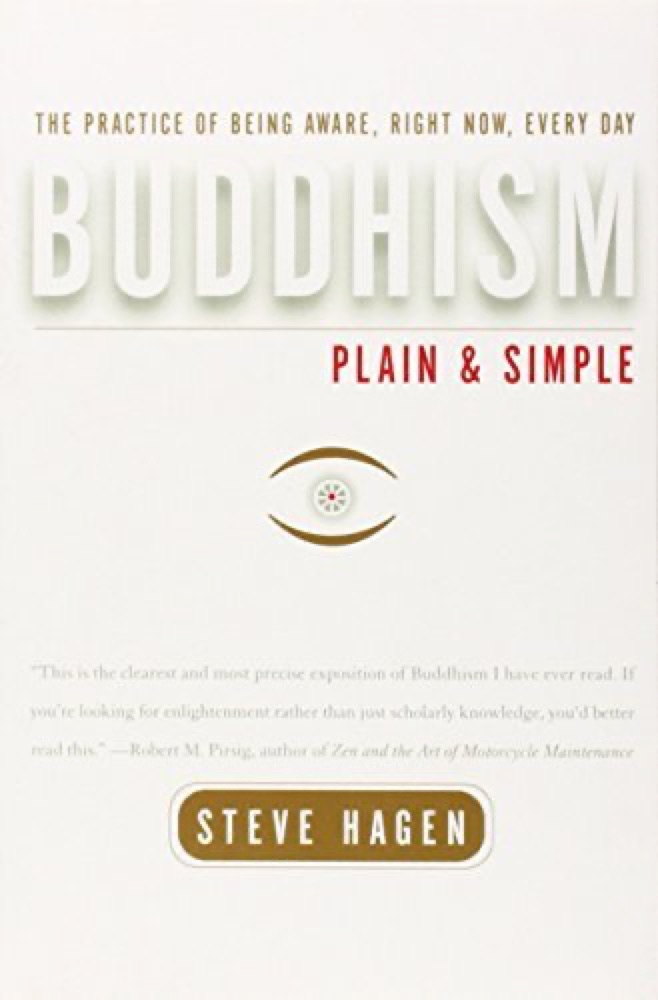 Buddhism Plain & Simple: The Practice of Being Aware, Right Now, Every Day
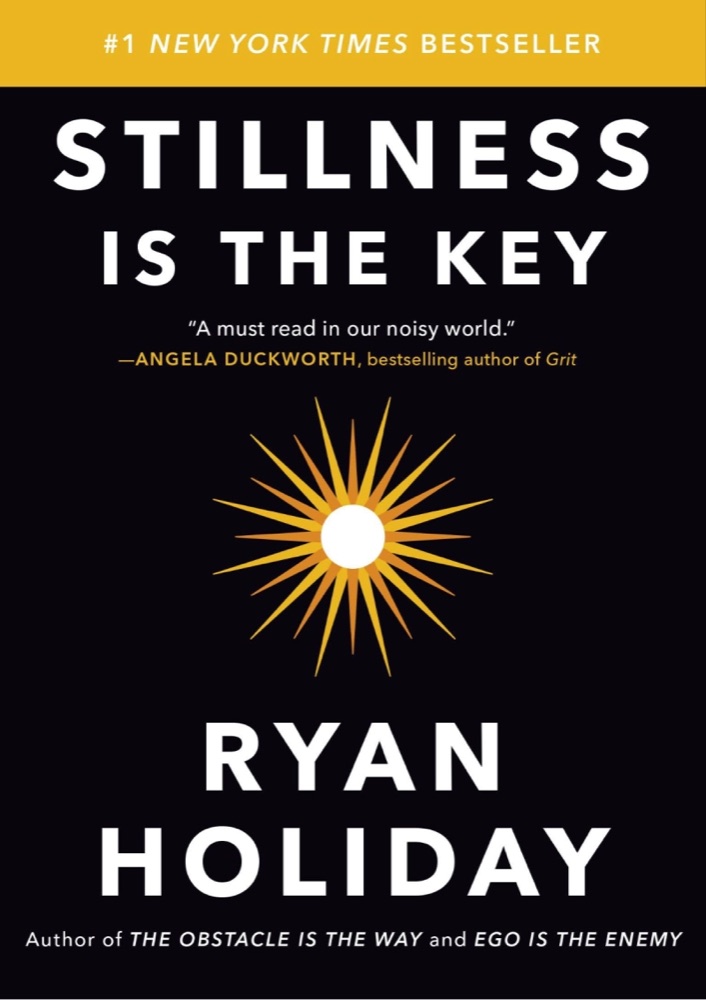 Stillness Is the Key
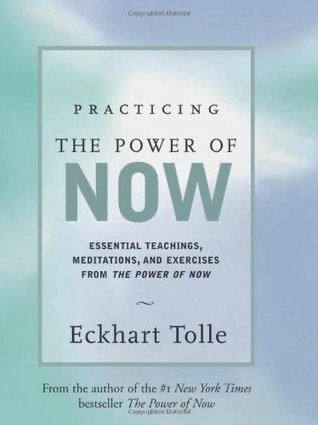 Practicing the Power of Now: Essential Teachings, Meditations, and Exercises from the Power of Now
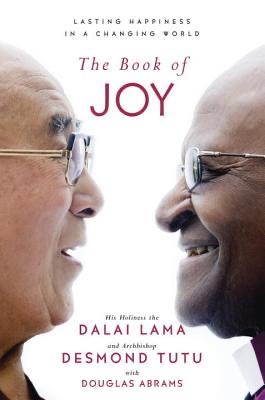 The Book of Joy: Lasting Happiness in a Changing World
 Change Your Thoughts - Change Your Life: Living the Wisdom of the Tao
 The Way to Love: The Last Meditations of Anthony de Mello
 Maybe You Should Talk to Someone: A Therapist, Her Therapist, and Our Lives Revealed
 How to Be an Adult in Relationships: The Five Keys to Mindful Loving
 The Wisdom of Insecurity: A Message for an Age of Anxiety
 You Can Heal Your Life
 How to Practice: The Way to a Meaningful Life
 The Comfort Book
 The Untethered Soul: The Journey Beyond Yourself
 Meditation for Fidgety Skeptics: A 10% Happier How-To Book
 Cutting Through Spiritual Materialism