 The Laws of Human Nature
Quotes from the Book
Between stimulus and response, there is a space. In the space there is the power to choose our response. In our response lies our growth and our freedom. —Victor Frankl
16
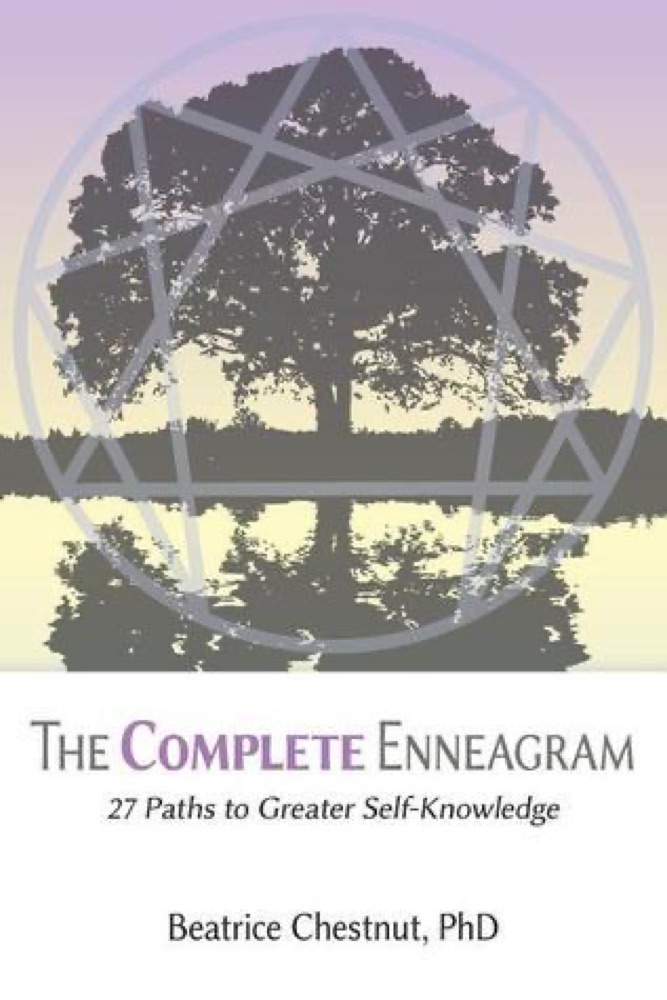
specifically and the perennial philosophy generally. Before we do the conscious work of self-development, we are the seeds of what we may become. To transform from our “acorn-self” into our “oak tree–Self,” we must traverse our underground territory—allow our defenses to crack open and break down—and consciously integrate our disowned feelings, blind spots, and Shadow traits so that we can shake off the limiting outer shell of our personality and grow into all that we are meant to be. Nature brings us part of the way, but to fully manifest our potential, we need to make conscious efforts to grow—and the Enneagram can guide us in this transformation.
3
One of our deepest unconscious patterns is the false belief that we already know ourselves well enough to understand why we think, feel, and act the way we do.
2
This “waking sleep” is also the starting point for the crucial process of waking up. The ability to wake up is not only possible, but also an inherent part of being human. We fall asleep as we come into this world and acquire a personality, but the potential for conscious growth and transformation is part of our makeup. In fact, many ancient wisdom traditions say that this task of waking up to become aware of who we are represents the purpose of human life on earth.
2
We don’t always understand what we don’t understand and we are limited to the degree that we don’t recognize our limitations.
2
Being blind to parts of ourselves means that there is often a difference between the person we think we are—or the person we would like to see ourselves as—and who we really are as we walk through the world.
2
The Shadow represents everything we refuse to acknowledge about ourselves that nonetheless impacts the way we behave.
2
Social Eights are more loyal, more overtly friendly, and less aggressive. They are helpful Eights—people who are nurturing, protective, and concerned with the injustices that happen to people. Male Social Eights can look like Type Nines, and female Social Eights may resemble Type Twos. However, these Eights can be distinguished from Nines and Twos because they act in more direct, powerful ways, engage more readily in conflict, and express more power and control in seeking to protect and support other people.
1
Social Nines can look like Type Threes because they work very hard and accomplish a lot without showing the stress of it. But they differ from Threes in that they are much more reluctant to be in the spotlight and they don’t support the group to create an image or to win admiration from others. They may also be mistaken for Twos because they are active in meeting the needs of others, but they have much less need for approval and appreciation than Twos, and are generally more emotionally steady.
1
I will argue that, in fact, we don’t; and that thinking we do know who we are is part of the problem.
1
My roommate in graduate school once observed that I never got angry. I was surprised by this at first, but then I realized it was true. To serve my main life strategy of getting along with others and avoiding any kind of problem in relationships, I had lost touch with the natural flow of my emotions and the ability to know what I needed and wanted. And, for a long time, I didn’t even know this was happening.
1
In psychological terms, this “dimming of consciousness” expresses the fact that as a basic survival mechanism, the human psyche automatically “goes to sleep to,” or dissociates from painful experiences as a way of surviving or staying safe in the world.
As in Western psychology, the Enneagram views the personality as a “false self” that develops to allow your (vulnerable and young) “true self” to adapt, fit in, and survive among other humans. This perspective holds that personality is a “defensive” or a “compensatory” self whose coping strategies developed to help us fulfill our needs and reduce our anxieties.
This misalignment between our ingrained habits and our yearning to live authentically and spontaneously becomes a source for all kinds of suffering, dissatisfaction, and unhappiness. The early coping strategies we don’t need anymore become unseen prisons that constrain how we think, feel, and act in ways that feel so familiar and integral that we forget we have the capacity to choose other options.
Being able to change your behavior is central to any personal growth effort, and at the same time it’s incredibly difficult, given the power of our unconscious habits. In order to change behavior to achieve personal growth, we must develop one capacity: We must develop the ability to create the mental and emotional space inside ourselves to observe and understand what we are doing and think about why we do it.
But because Calypso’s main motive in the relationship is something she wants for herself rather than the true interest of the other person, she can’t get what she really needs.
In order to change behavior to achieve personal growth, we must develop one capacity: We must develop the ability to create the mental and emotional space inside ourselves to observe and understand what we are doing and think about why we do it.
Once upon a time, in a not-so-far-away land, there was a kingdom of acorns, nestled at the foot of a grand old oak tree. Since the citizens of this kingdom were modern, fully Westernized acorns, they went about their business with purposeful energy; and since they were midlife, baby-boomer acorns, they engaged in a lot of self-help courses. There were seminars called “Getting All You Can out of Your Shell.” There were woundedness and recovery groups for acorns who had been bruised in their original fall from the tree. There were spas for oiling and polishing those shells and various acornopathic therapies to enhance longevity and well-being. One day in the midst of this kingdom there suddenly appeared a knotty little stranger, apparently dropped “out of the blue” by a passing bird. He was capless and dirty, making an immediate negative impression on his fellow acorns. And crouched beneath the oak tree, he stammered out a wild tale. Pointing upward at the tree, he said, “We… are… that!” Delusional thinking, obviously, the other acorns concluded, but one of them continued to engage him in conversation: “So tell us, how would we become that tree?” “Well,” he said, pointing downward, “it has something to do with going into the ground …and cracking open the shell.” “Insane,” they responded. “Totally morbid! Why, then we wouldn’t be acorns anymore.” 3
The passions are emotional (and often unconscious) drivers based on an implicit view about what you need to survive and how you can get it. Because the passions are motivated by a sense of lack, they create a basic dilemma or trap around which the personality is organized while striving to meet a basic need that never gets fulfilled.
Our human (egoic) tendency is to want to feel good (and to avoid feeling bad) about ourselves. But without a way of recognizing, accepting, and addressing all of who we are, including the Shadow side and difficult parts of our experience, our personal growth stops and we remain asleep to our potential. The Enneagram reveals the truth of what we might see as the “good” and the “bad” parts of our habitual programming, allowing us to compassionately address the disowned and “fixated” (stuck) parts of our personalities and to embrace ourselves as we truly are.
As a Self-Preservation Six his central issue was that he had not developed a strong sense of inner authority (because his father threatened and abused him and didn’t protect or support him); therefore, he had become stuck in and ruled by a defensive strategy run amok. In trying to think his way to certainty and safety using his strong analytical mind, he got caught in an endless loop of fear and questioning and was unable to find a way to feel safe and powerful. He was able to address his heightened anxiety and move forward in his life as he learned to see his thinking patterns from a larger perspective and engage specific practices that worked against these tendencies.
It turns out that the many coping strategies we use to get along in life can be grouped into a finite number of categories, or personality types. By providing detailed descriptions of the typical thoughts, emotions, and behaviors that make up nine basic personality types (and the three subtypes of each of those nine types), the Enneagram highlights how these habitual patterns get enacted so you can start to see them for yourself.
More recently, author Carolyn Myss defines “our own personal archetypes” as “the psychic lenses through which we view ourselves and the world around us.
The practice of self-observation consists of putting your attention on your thoughts, feelings, and actions in the present moment and bringing your focus back over and over again from wherever it inevitably wanders. Studying your own thinking, feeling, or doing in the present moment without judgment becomes your chosen “object of attention,” rather than allowing your mind to continue being preoccupied with its usual reactive, habitual patterns. This mindfulness activity is an exercise in becoming more conscious to what is going on inside you and remembering to be more purposeful in tuning in to yourself more often. As with repetition in physical exercise, the “attentional muscle” strengthens through a consistent effort to notice where your attention goes and then shift it back to a focus you have chosen consciously.
Self-reflection and self-inquiry—asking yourself, “What am I paying attention to and why?”—allow you to answer deeper questions about the “what, why, and how” of your thoughts, feelings, and actions, instead of just taking them all for granted.
This self-observation creates a separation between your patterns and your consciousness so that you can watch automatic thoughts, feelings, and actions unfold without “being one” with them or judging them (or yourself) as good or bad. You need this separation to have the mental space to detach from these habits of mind—to let them go and make other choices more consciously.
We can become more conscious (and wake up) by learning how to observe and study ourselves more objectively. This process gradually deepens self-knowledge by building our conscious understanding of who we really are and what is really going on. But while the capacity to wake up is part of our nature, doing the work it takes to awaken requires consistent effort. If we get lazy, we are in danger of falling asleep again.
Watch on YouTube
About Beatrice Chestnut
About the book
The Enneagram―a universal symbol of human purpose and possibility―is an excellent tool for doing the hardest part of consciousness realizing, owning, and accepting your strengths and weaknesses. In this comprehensive handbook, Beatrice Chestnut, PhD, traces the development of the personality as it relates to the nine types of the Enneagram, the three different subtype forms each type can take, and the path each of us can take toward liberation. With her guidance, readers will learn to observe themselves, face their fears and disowned Shadow aspects, and work to manifest their highest potential.
Book details
- First published
- 2013
- Author
- Beatrice Chestnut
- Genre
- Nonfiction
- Goodreads rating
- 4.33 (3k ratings)
Keep reading
The Laws of Human Nature
 Six Pillars of Self-Esteem
 Mastery
 Social Intelligence: The New Science of Human Relationships
 Letting Go: The Pathway To Surrender
 Eastern Body, Western Mind: Psychology and the Chakra System as a Path to the Self
 Selfie: How the West Became Self-Obsessed
 Toward a Psychology of Being
 Finding Meaning in the Second Half of Life: How to Finally, Really Grow Up
 Bonds That Make Us Free: Healing Our Relationship, Coming to Ourselves
 The Social Animal: The Hidden Sources of Love, Character, and Achievement
 Thoughts Without A Thinker: Psychotherapy From A Buddhist Perspective
 How to Stay Sane
 On Becoming a Person: A Therapist's View of Psychotherapy
 The Art of Being
 No Self, No Problem: How Neuropsychology Is Catching Up to Buddhism
 The 7 Habits of Highly Effective People: Personal Workbook
 Breaking the Habit of Being Yourself: How to Lose Your Mind and Create a New One
 101 Essays That Will Change The Way You Think
 Evolve Your Brain: The Science of Changing Your Mind
 The Dalai Lama's Cat and the Power of Meow
 Self-Compassion: The Proven Power of Being Kind to Yourself
 Becoming Supernatural: How Common People are Doing the Uncommon
 Advice Not Given: A Guide to Getting Over Yourself
 The Tools: Transform Your Problems into Courage, Confidence, and Creativity
 The Wisdom of Your Body: Finding Healing, Wholeness, and Connection through Embodied Living
 No Bad Parts: Healing Trauma & Restoring Wholeness with the Internal Family Systems Model
 When the Body Says No: The Cost of Hidden Stress
 The Book: On the Taboo Against Knowing Who You Are
 Mindsight: The New Science of Personal Transformation
 Revolution from Within: A Book of Self-Esteem
 Good Morning, Monster: A Therapist Shares Five Heroic Stories of Emotional Recovery
 Atlas of the Heart: Mapping Meaningful Connection and the Language of Human Experience
 Full Catastrophe Living: Using the Wisdom of Your Body and Mind to Face Stress, Pain, and Illness
 Psycho-Cybernetics
 Man's Search for Himself
 Maps of Meaning: The Architecture of Belief
 Seth Speaks: The Eternal Validity of the Soul
 The Joy of Living: Unlocking the Secret and Science of Happiness
 Anatomy of the Spirit: The Seven Stages of Power and Healing
 Nonviolent Communication: A Language of Life
 Changes That Heal: How to Understand the Past to Ensure a Healthier Future
 On Connection
 The Mountain Is You: Transforming Self-Sabotage Into Self-Mastery
 Descartes' Error: Emotion, Reason and the Human Brain
 Ego and Archetype: Individuation and the Religious Function of the Psyche
 Going to Pieces without Falling Apart: A Buddhist Perspective on Wholeness
 The Courage to Be Disliked: How to Free Yourself, Change Your Life and Achieve Real Happiness
 Emotional Intelligence 2.0: With Access Code
 The Things You Can See Only When You Slow Down: How to Be Calm in a Busy World
 Personality Isn't Permanent: Break Free from Self-Limiting Beliefs and Rewrite Your Story
 Waking Up: A Guide to Spirituality Without Religion
 How to Know a Person: The Art of Seeing Others Deeply and Being Deeply Seen
 The Book of Secrets: Unlocking the Hidden Dimensions of Your Life
 The Wise Heart: A Guide to the Universal Teachings of Buddhist Psychology
 A General Theory of Love
 The Antidote: Happiness for People Who Can't Stand Positive Thinking
 The Fourth Way
 Everyday Zen: Love & Work