

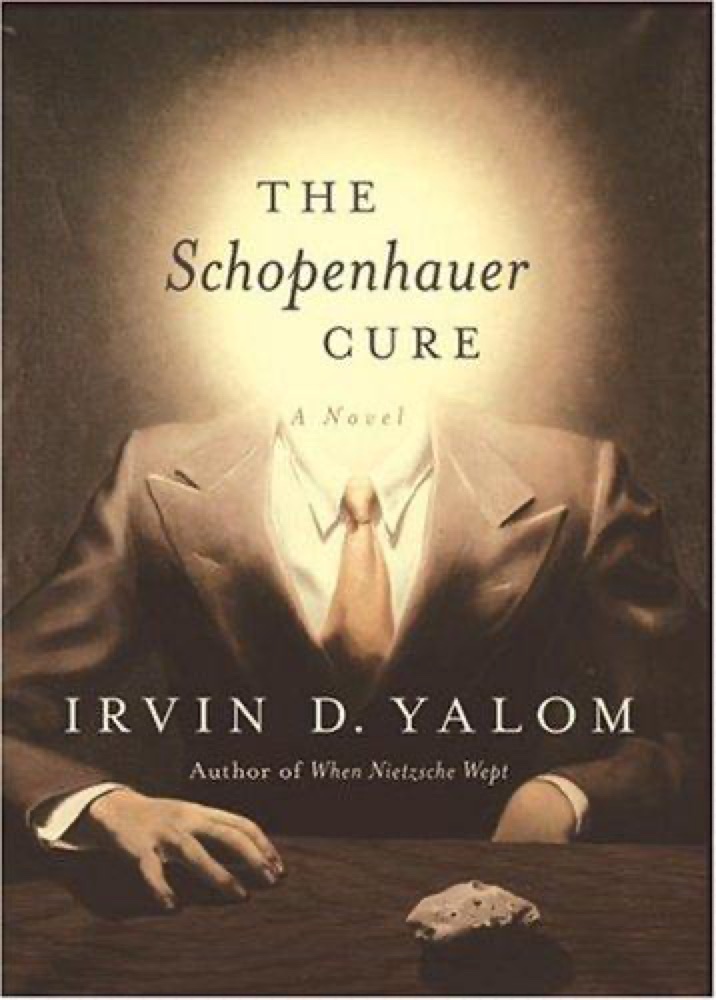
 The Schopenhauer Cure
Quotes from the Book
To love means to be actively concerned for the life and the growth of another.
164
Mature love is loving, not being loved.
124
To care of another individual means to know and to experience the other as fully as possible.
80
To the extent that one is responsible for one's life, one is alone.
28
she attempted to deal with her terror in a most ineffective and magical mode-a mode that I have seen many patients use: she attempted to elude death by refusing to live.
10
Surely this sense of betrayal is what Robert Frost had in mind when he wrote: "Forgive, O Lord, my little jokes on Thee/And I'll forgive Thy great big one on me." io
10
Wish" gives the warmth, the content, the imagination, the child's play, the freshness, and the richness to "will." "Will" gives the self-direction, the maturity, to "wish." Without "wish," "will" loses its life-blood, its viability, and tends to expire in self-contradiction. If you have only "will" and no "wish," you have the dried-up, Victorian, neopuritan man. If you have only "wish" and no "will," you have the driven, unfree, infantile person who, as an adult-remaining-an-infant, may become the robot man.
8
Death and life are interdependent: though the physicality of death destroys us, the idea of death saves us.
7
The same point is made by the Hasidic Rabbi, Susya, who shortly before his death said, "When I get to heaven they will not ask me, 'Why were you not Moses?' Instead they will ask 'Why were you not Susya? Why did you not become what only you could become?
7
Life cannot be lived nor can death be faced without anxiety. Anxiety is guide as well as enemy and can point the way to authentic existence. The task of the therapist is to reduce anxiety to comfortable levels and then to use this existing anxiety to increase a patient's awareness and vitality.
6
By keeping death in mind, one passes into a state of gratitude, of appreciation for the countless givens of existence. This is what the Stoics meant when they said, “Contemplate death if you would learn how to live.
5
The enemies of conformity are, of course, freedom and self awareness
4
This book deals with four ultimate concerns: death, freedom, isolation, and meaninglessness. The individual's confrontation with each of these facts of life constitutes the content of the existential dynamic conflict. Death. The most obvious, the most easily apprehended ultimate concern is death. We exist now, but one day we shall cease to be. Death will come, and there is no escape from it. It is a terrible truth, and we respond to it with mortal terror. "Everything," in Spinoza's words, "endeavors to persist in its own being";3 and a core existential conflict is the tension between the awareness of the inevitability of death and the wish to continue to be. Freedom. Another ultimate concern, a far less accessible one, is freedom. Ordinarily we think of freedom as an unequivocally positive concept. Throughout recorded history has not the human being yearned and striven for freedom? Yet freedom viewed from the perspective of ultimate ground is riveted to dread. In its existential sense "freedom" refers to the absence of external structure. Contrary to everyday experience, the human being does not enter (and leave) a well-structured universe that has an inherent design. Rather, the individual is entirely responsible for-that is, is the author of-his or her own world, life design, choices, and actions. "Freedom" in this sense, has a terrifying implication: it means that beneath us there is no ground-nothing, a void, an abyss. A key existential dynamic, then, is the clash between' our confrontation with groundlessness and our wish for ground and structure. Existential Isolation. A third ultimate concern is isolation-not interpersonal isolation with its attendant loneliness, or intrapersonal isolation (isolation from parts of oneself), but a fundamental isolation-an isolation both from creatures and from world-which cuts beneath other isolation. No matter how close each of us becomes to another, there remains a final, unbridgeable gap; each of us enters existence alone and must depart from it alone. The existential conflict is thus the tension between our awareness of our absolute isolation and our wish for contact, for protection, our wish to be part of a larger whole. Meaninglessness. A fourth ultimate concern or given of existence is meaninglessness. If we must die, if we constitute our own world, if each is ultimately alone in an indifferent universe, then what meaning does life have? Why do we live? How shall we live? If there is no preordained design for us, then each of us must construct' our own meanings in life. Yet can a meaning of one's own creation be sturdy enough to bear one's life? This existential dynamic conflict stems from the dilemma of a meaning-seeking creature who is thrown into a universe that has no meaning.
4
If parents teach the child that all free impulse expression is undesirable and all counter will is bad, the child suffers two consequences: suppression of his or her entire emotional life, and stunted, guilt-laden will. The child then grows into an adult who suppresses his or her emotions and regards the very act of willing as evil and forbidden.
3
It is a matter of no small importance that one be able to explain and order the events in our lives into some coherent and predictable pattern. To name something, to locate its place in a causal sequence, is to begin to experience it as under our control. No longer, then, is our internal experience or behavior frightening, alien or out of control; instead, we behave (or have a particular inner experience) because of something we can name or identify. The "because" offers one mastery (or a sense of mastery that phenomenologically is tantamount to mastery). I believe that the sense of potency that flows from understanding occurs even in the matter of our basic existential situation: each of us feels less futile, less helpless, and less alone, even when, ironically, what we come to understand is the fact that each of us is basically helpless and alone in the face of cosmic indifference.
3
Mass consumerism requires that a product be attractive, well packaged, and, most important of all, easily and quickly consumed. Unfortunately these requirements are generally incompatible with the effort and the thoughtfulness that are needed if one is truly to examine and alter one's life and world perspective.
2
No matter how close each of us becomes to another, there remains a final, unbridgeable gap; each of us enters existence alone and must depart from it alone. The existential conflict is thus the tension between our awareness of our absolute isolation and our wish for contact, for protection, our wish to be part of a larger whole.
2
A denial of death at any level is a denial of one’s basic nature and begets an increasingly pervasive restriction of awareness and experience. The integration of the idea of death saves us; rather than sentence us to existences of terror or bleak pessimism, it acts as a catalyst to plunge us into more authentic life modes, and it enhances our pleasure in the living of life.
2
Watch on YouTube
About Irvin D. Yalom
We have collected 227 quotes from 11 books by Irvin D. Yalom on BookQuoters.
More about the author →More by Irvin D. Yalom
The Schopenhauer Cure
 Lying on the Couch
 The Spinoza Problem
 Love's Executioner and Other Tales of Psychotherapy
About the book
The noted Stanford University psychiatrist distills the essence of a wide range of therapies into a masterful, creative synthesis, opening up a new way of understanding each person's confrontation with four ultimate concerns: isolation, meaninglessness, death, and freedom.
Book details
- First published
- 1980
- Author
- Irvin D. Yalom
- Genre
- Nonfiction
- Goodreads rating
- 4.46 (7k ratings)
Keep reading
Love's Executioner and Other Tales of Psychotherapy
 Staring at the Sun: Overcoming the Terror of Death
 The Wisdom of Insecurity: A Message for an Age of Anxiety
 The Book: On the Taboo Against Knowing Who You Are
 Finding Meaning in the Second Half of Life: How to Finally, Really Grow Up
 Toward a Psychology of Being
 The Ethics of Ambiguity
 When Nietzsche Wept
 Man's Search for Ultimate Meaning
 Love and Will
 Immortality
 If You Meet the Buddha on the Road, Kill Him! The Pilgrimage of Psychotherapy Patients
 Total Freedom: The Essential Krishnamurti
 Man's Search for Meaning
 The Denial of Death
 The Tibetan Book of Living and Dying
 The Art of Being
 The Divided Self: An Existential Study in Sanity and Madness
 The Myth of Sisyphus
 How to See Yourself As You Really Are
 Striking Thoughts: Bruce Lee's Wisdom for Daily Living
 The Wise Heart: A Guide to the Universal Teachings of Buddhist Psychology
 The Road Less Travelled
 Nothing to Be Frightened Of
 Hiking with Nietzsche: On Becoming Who You Are
 Maps of Meaning: The Architecture of Belief
 The Varieties of Religious Experience
 Many Lives, Many Masters: The True Story of a Prominent Psychiatrist, His Young Patient, and the Past Life Therapy That Changed Both Their Lives
 At the Existentialist Café
 A Joseph Campbell Companion: Reflections on the Art of Living
 The Way to Love: The Last Meditations of Anthony de Mello
 The World as Will and Representation, Vol 1
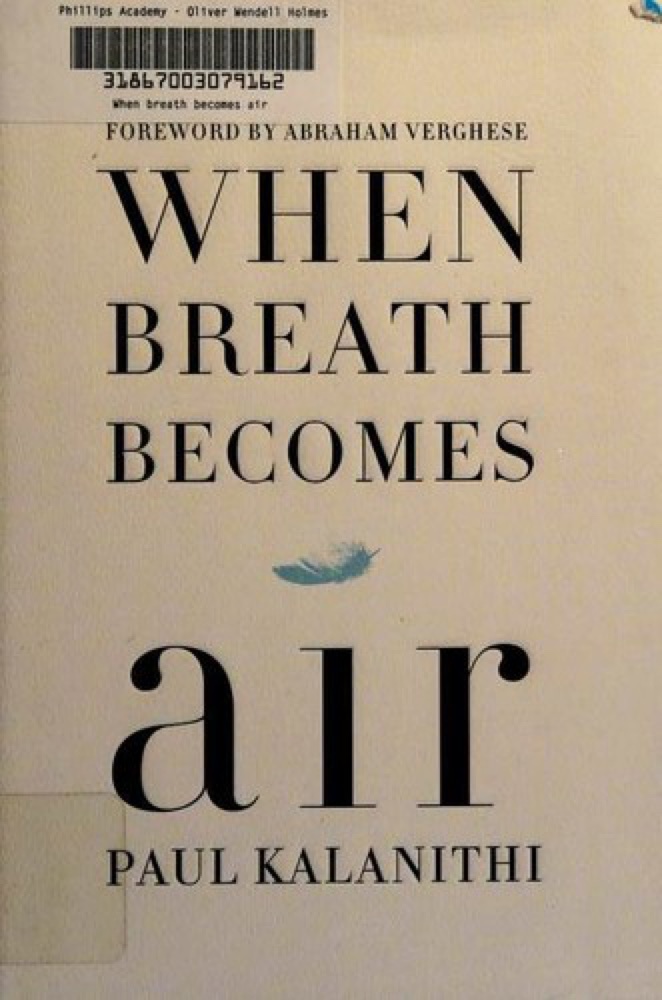 When Breath Becomes Air
 Twilight of the Idols
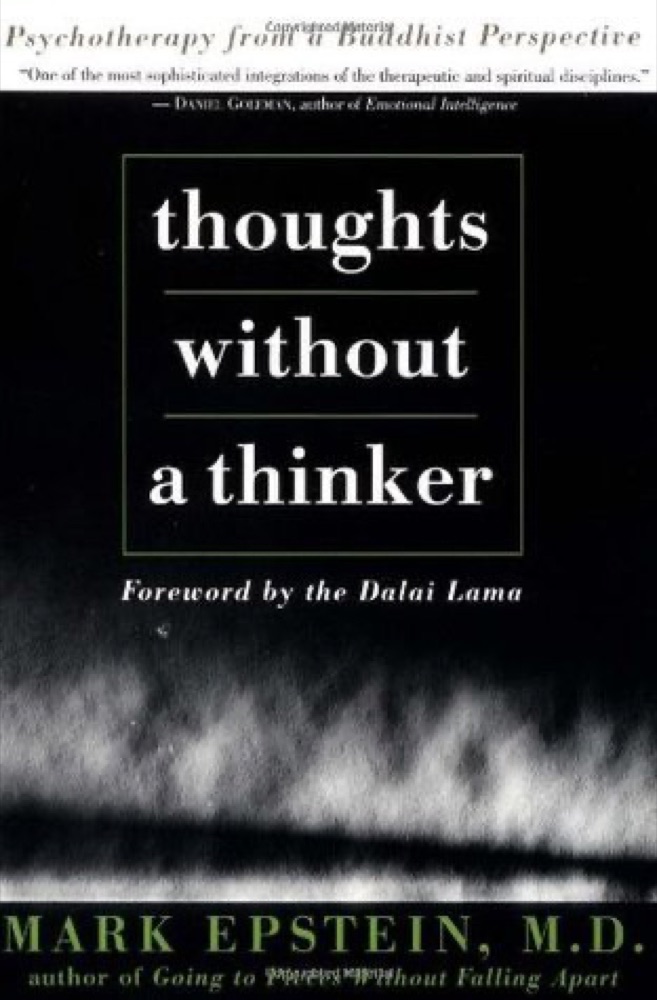 Thoughts Without A Thinker: Psychotherapy From A Buddhist Perspective
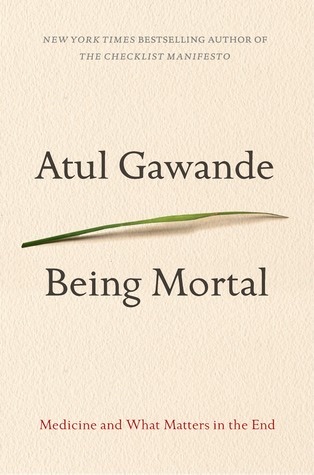 Being Mortal: Medicine and What Matters in the End
 On the Suffering of the World
 The Sickness Unto Death: A Christian Psychological Exposition for Upbuilding and Awakening
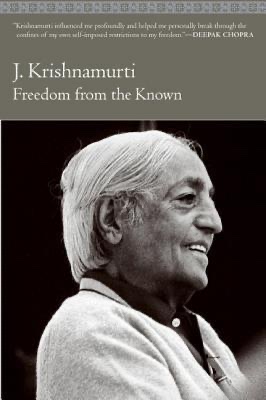 Freedom from the Known
 Untimely Meditations
 Escape from Freedom
 The Sane Society
 Myths to Live By
 Confessor
 The Doors of Perception & Heaven and Hell
 The Middle Passage: From Misery to Meaning in Midlife
 The Conspiracy Against the Human Race
 Gravity and Grace
 Loving What Is: Four Questions That Can Change Your Life
 Conversations with God: An Uncommon Dialogue, Book 1
 Natural Causes: An Epidemic of Wellness, the Certainty of Dying, and Killing Ourselves to Live Longer
 The Consolations of Philosophy
 The Myth of Sisyphus and Other Essays
 The Doors of Perception
 Briefly Perfectly Human: Making an Authentic Life by Getting Real About the End
 The Perennial Philosophy
 Messages from the Masters: Tapping into the Power of Love
 Six Pillars of Self-Esteem