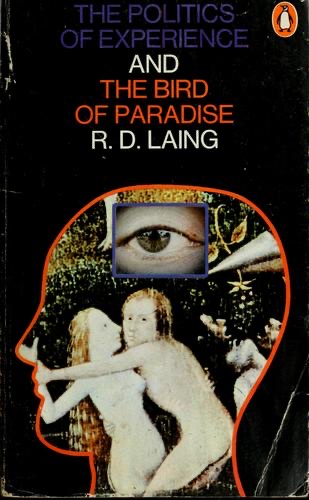
 The Politics of Experience/The Bird of Paradise
Quotes from the Book
In a world full of danger, to be a potentially seeable object is to be constantly exposed to danger. Self-consciousness, then, may be the apprehensive awareness of oneself as potentially exposed to danger by the simple fact of being visible to others. The obvious defence against such a danger is to make oneself invisible in one way or another.
91
There are good reasons for being obedient, but being unable to be disobedient is not one of the best reasons.
38
The term schizoid refers to an individual the totality of whose experience is split in two main ways: in the first place, there is a rent in his relation with his world and, in the second, there is a disruption of his relation with himself. Such a person is not able to experience himself 'together with' others or 'at home in' the world, but, on the contrary, he experiences himself in despairing aloneness and isolation; moreover, he does not experience himself as a complete person but rather as 'split' in various ways, perhaps as a mind more or less tenuously linked to a body, as two or more selves, and so on.
24
A little girl of seventeen in a mental hospital told me she was terrified because the Atom Bomb was inside her. That is a delusion. The statesmen of the world who boast and threaten that they have Doomsday weapons are far more dangerous, and far more estranged from 'reality' than many of the people on whom the label 'psychotic' is fixed.
18
This last possibility [of developing psychosis] is aways present if the individual begins to identify himself too exclusively with that part of him which feels unembodied.
16
We all know from our personal experience that we can be ourselves only in and through our world and there is a sense in which 'our' world will die with us although 'the' world will go on without us.
13
He had all along felt that he was, in his own words (which incidentally are also Heidegger's), 'on the fringe of being', with only one foot in life and with no right even to that. He felt that he was not really alive and that anyway he was of no value and had hardly the right to the pretension of having life.
12
One may see his behaviour as 'signs' of a 'disease'; one may see his behaviour as expressive of his existence. The existential-phenomenological construction is an inference about the way the other is feeling and acting [...] The clinical psychiatrist, wishing to be more 'scientific' or 'objective', may propose to confine himself to the 'objectively' observable behaviour of the patient before him. The simplest reply to this is that it is impossible. To see 'signs' of 'disease' is not to see neutrally. Nor is it neutral to see a smile as contractions of the circumoral muscles.
10
I am not fond of the word psychological. There is no such thing as the psychological. Let us say that one can improve the biography of the person. JEAN-PAUL SARTRE
9
It seems also that the preferred method of attack on the other is based on the same principle as the attack felt to be implicit in the other's relationship to oneself. Thus, the man who is frightened of his own subjectivity being swamped, impinged upon, or congealed by the other is frequently to be found attempting to swamp, to impinge upon, or to kill the other person's subjectivity.
7
The reason I suggest that one speaks of a false-self system is that the 'personality', false self, mask, 'front', or persona that such individuals wear may consist in an amalgam of various part-selves, none of which is so fully developed as to have a comprehensive 'personality' of its own.
7
The greatest psychopathologist has been Freud. Freud was a hero. He descended to the “Underworld” and met there stark terrors. He carried with him his theory as a Medusa's head which turned these terrors to stone. We who follow Freud have the benefit of the knowledge he brought back with him and conveyed to us. He survived. We must see if we now can survive without using a theory that is in some measure an instrument of defense.
5
When I certify someone insane, I am not equivocating when I write that he is of unsound mind, may be dangerous to himself and others, and requires care and attention in a mental hospital. However, at the same time, I am also aware that, in my opinion, there are other people who are regarded as sane, whose minds are as radically unsound, who may be equally or more dangerous to themselves and others and whom society does not regard as psychotic and fit persons to be in a madhouse.
4
Even when the [schizophrenic] patient is striving to tell us, in as clear and straightforward a way as he knows how, the nature of his anxieties and his experiences, structured as they are in a radically different way from ours, the speech content is necessarily difficult to follow. Moreover, the formal elements of speech are in themselves ordered in unusual ways, and these formal peculiarities seem, at least to some extent, to be the reflection in language of the alternative ordering of his experience, with splits in it where we take coherence for granted, and the running together (confusion) of elements that we keep apart.
4
A man without a mask’ is indeed very rare. One even doubts the possibility of such a man. Everyone in some measure wears a mask, and there are many things we do not put ourselves into fully. In ‘ordinary’ life it seems hardly possible for it to be otherwise. The false self of the schizoid individual differs, however, in certain important respects from the mask worn by the ‘normal’ person, and also from the false front that is characteristically maintained by the hysteric.
3
For such a patient it would probably be a complete non sequitur to attempt to kill his self, by cutting his throat, since his self and his throat may be felt to bear only a tenuous and remote relationship to each other, sufficiently remote for what happens to the one to have little bearing on the other.
3
The girl was not specifically religious; [...] yet although her faith was nameless her way of living was somehow an affirmation of life rather than a negation of it.
3
I, for instance, regard any particular man as finite, as one who has had a beginning and who will have an end. He has been born, and he is going to die. In the meantime, he has a body that roots him to this time and this place.
3
All that you can see is not me,' he says to himself. But only in and through all that we do see can he be anyone (in reality). If these actions are not his real self, he is irreal; wholly symbolical and equivocal; a purely virtual, potential, imaginary person, a 'mythical' man; nothing 'really'. If, then, he once stops pretending to be what he is not, and steps out as the person he has come to be, he emerges as Christ, or as a ghost, but not as a man: by existing with no body, he is no-body.
2
His whole life has been torn between his desire to reveal himself and his desire to conceal himself. [...] We have our secrets and our needs to confess. We may remember how, in childhood, adults at first were able to look right through us, and into us, and what an accomplishment it was when we, in fear and trembling, could tell our first lie, and make, for ourselves, the discovery that we are irredeemably alone in certain respects, and know that within the territory of ourselves there can be only our footprints.
2
the schizophrenic ceases to be schizophrenic when he meets someone by whom he feels understood. When this happens most of the bizarrerie which is taken as the ‘signs’ of the ‘disease’ simply evaporates.
2
Personal relatedness can exist only between beings who are separate but who are not isolates. We are not isolates and we are not parts of the same physical body. Here we have the paradox, the potentially tragic paradox, that our relatedness to others is an essential aspect of our being, as is our separateness, but any particular person is not a necessary part of our being.
1
[...] if you are sitting opposite me, I can see you as another person like myself; without you changing or doing anything differently, I can now see you as a complex physical chemical system, perhaps with its own idiosyncrasies but chemical none the less for that; seen in this way, you are no longer a person but an organism [...]. There is no dualism in the sense of the coexistence of two different essences or substances there in the object, psyche and soma; there are two different experiential Gestalts: person and organism.
1
[...] our 'normal' 'adjusted' state is too often the abdication of ecstasy, the betrayal of our true potentialities, that many of us are only too successful in acquiring a false self to adapt to false realities.
1
Freud insisted that our civilization is a repressive one. There is a conflict between the demands of conformity and the demands of our instinctive energies, explicitly sexual. Freud could see no easy resolution of this antagonism, and he came to believe that in our time the possibility of simple natural love between human beings had already been abolished.
1
If I am older, I am now also younger.
A most curious phenomenon of the personality, [...] is that in which the individual seems to be the vehicle of a personality that is not his own. Someone else's personality seems to 'possess' him and to be finding expression through his words and actions, whereas the individual's own personality is temporarily 'lost' or 'gone'. This phenomenon is one of the most important in occasioning disruption in the sense of one's own identity when it occurs unwanted and compulsively. [...] The way in which the individual's self and personality is profoundly modified even to the point of threatened loss of his or her own identity and sense of reality by engulfment by such an alien sub-identity [Ontological insecurity].
A man says he is dead but he is alive. But his 'truth' is that he is dead. He expresses it perhaps in the only way common (i.e. the communal) sense allows him. He means that he is 'really' and quite 'literally' dead, not merely symbolically or 'in a sense' or 'as it were', and is seriously bent on communicating his truth. [...] He either is God, or the Devil, or in hell, estranged from God. When someone says he is an unreal man or that he is dead, in all seriousness, expressing in radical terms the stark truth of his existence as he experiences it, that is - insanity. [...] What is required of us? Understand him? [...] As long as we are sane and he is insane, it will remain so. [...] We have to recognize all the time his distinctiveness and differentness, his separateness and loneliness and despair.
[...] such an impudent, shameless, miserable, lousy fellow I've never met with.
When I tell him to look he does not look properly. You there, just look! What is it?What is the matter? Attend; he attends not. I say, what is it, then? Why do you give me no answer? Are you getting impudent again? How can you be so impudent? I'm coming! I'll show you! You don't whore for me. You mustn't be smart either; you're an impudent, lousy fellow, such an impudent, lousy fellow I've never met with. Is he beginning again? You understand nothing at all, nothing at all; nothing at all does he understand. If you follow now, he won't follow, will not follow. Are you getting still more impudent? Are you getting impudent still more? How they attend, they do attend,' and so on. At the end, he scolds in quite inarticulate sounds.
Watch on YouTube
About R.D. Laing
We have collected 45 quotes from 2 books by R.D. Laing on BookQuoters.
More about the author →More by R.D. Laing
The Politics of Experience/The Bird of Paradise
About the book
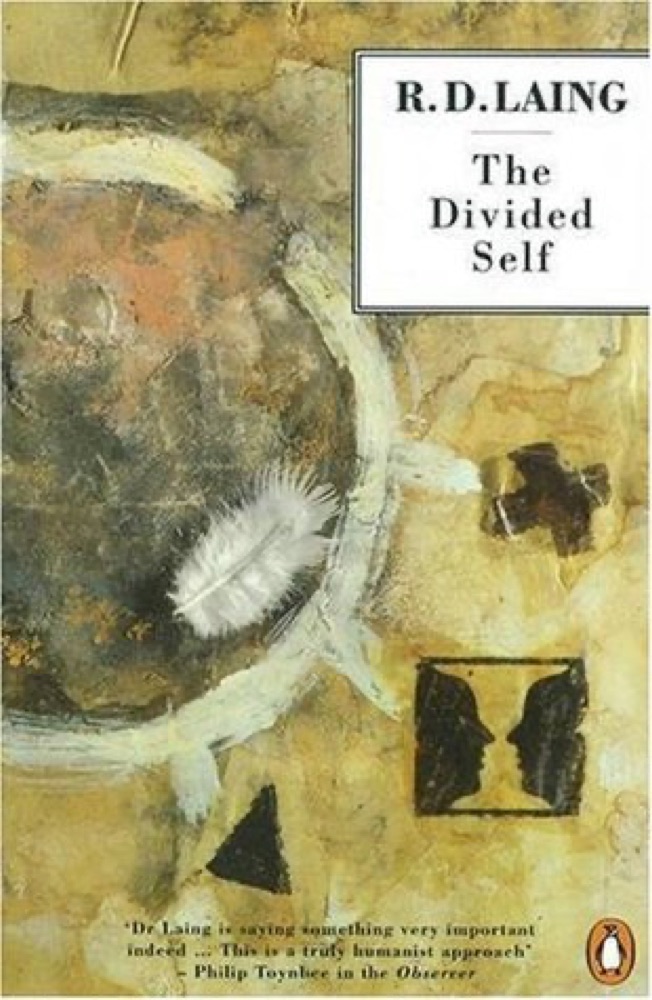
The Divided Self is a unique study of the human situation.
Dr. Laing's first purpose is to make madness and the process of going mad comprehensible. In this, with case studies of schizophrenic patients, he succeeds brilliantly, but he does more: through a vision of sanity and madness as 'degrees of conjunction and disjunction between two persons where the one is sane by common consent' he offers a rich existential analysis of personal alienation.
The outsider, estranged from himself and society, cannot experience either himself or others as 'real.' He invents a false self and with it he confronts both the outside world and his own despair. The disintegration of his real self keeps pace with the growing unreality of his false self until, in the extremes of his schizophrenic breakdown, the whole personality disintegrates.
Book details
- First published
- 1960
- Author
- R.D. Laing
- Genre
- Nonfiction
- Goodreads rating
- 4.11 (7k ratings)
Keep reading
The Politics of Experience/The Bird of Paradise
 Man and His Symbols
 The Sane Society
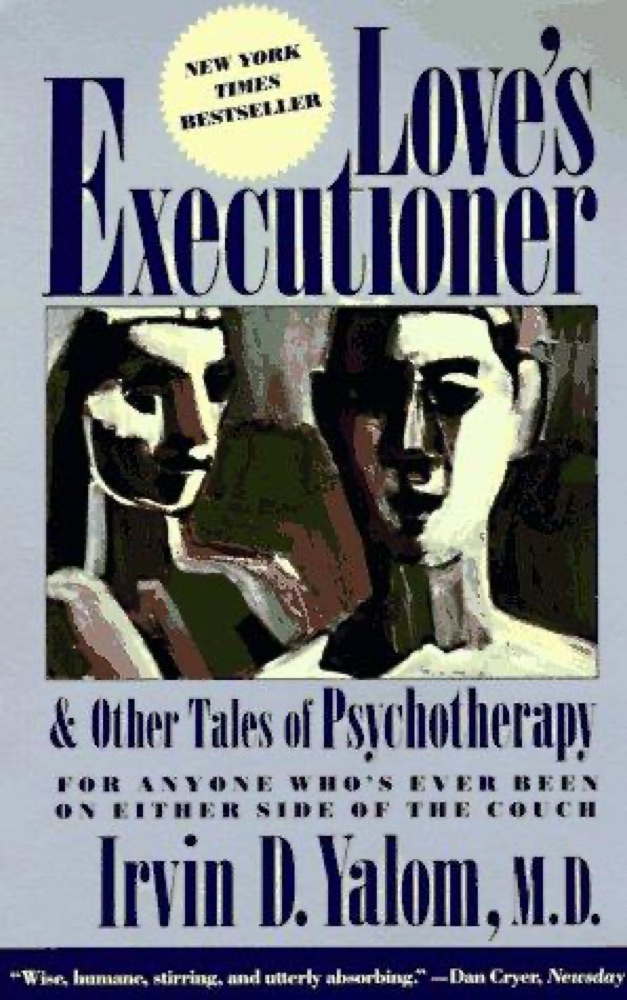 Love's Executioner and Other Tales of Psychotherapy
 The Collected Schizophrenias: Essays
 The Man Who Mistook His Wife for a Hat and Other Clinical Tales
 The Art of Being
 The Denial of Death
 Existential Psychotherapy
 The Man Without Qualities
 A Way of Being
 Ego and Archetype: Individuation and the Religious Function of the Psyche
 Solitude: A Return to the Self
 The Book: On the Taboo Against Knowing Who You Are
 Man's Search for Himself
 Man's Search for Ultimate Meaning
 The Will to Meaning: Foundations and Applications of Logotherapy
 Toward a Psychology of Being
 The Dice Man
 The Center Cannot Hold: My Journey Through Madness
 Modern Man in Search of a Soul
 Underground: The Tokyo Gas Attack and the Japanese Psyche
 If You Meet the Buddha on the Road, Kill Him! The Pilgrimage of Psychotherapy Patients
 The Undiscovered Self
 Seth Speaks: The Eternal Validity of the Soul
 Daybreak: Thoughts on the Prejudices of Morality
 The Doors of Perception
 Maps of Meaning: The Architecture of Belief
 Thoughts Without A Thinker: Psychotherapy From A Buddhist Perspective
 Demian
 The Varieties of Religious Experience
 The Ego and Its Own
 Myths to Live By
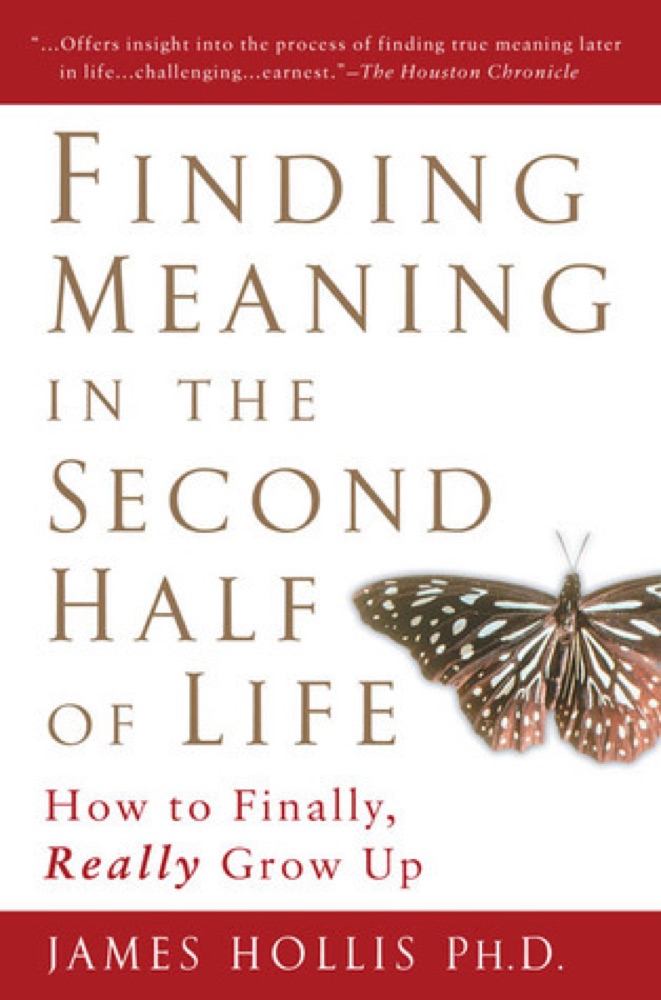 Finding Meaning in the Second Half of Life: How to Finally, Really Grow Up
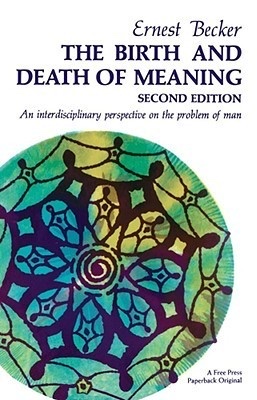 The Birth and Death of Meaning: An Interdisciplinary Perspective on the Problem of Man
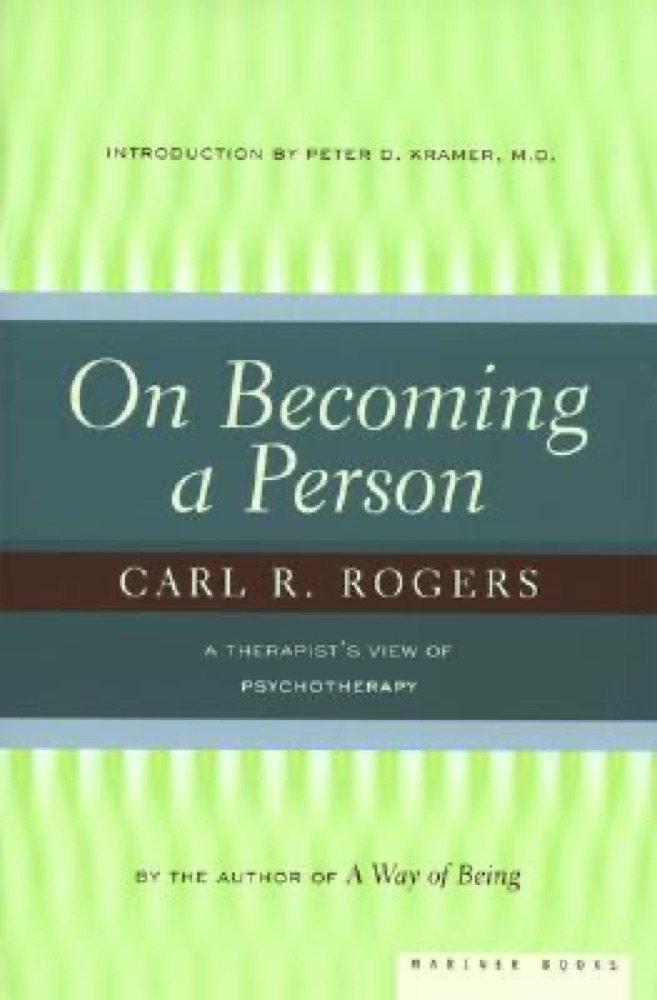 On Becoming a Person: A Therapist's View of Psychotherapy
 Seven Types of Ambiguity
 The Wisdom of Insecurity: A Message for an Age of Anxiety
 The Face of Another
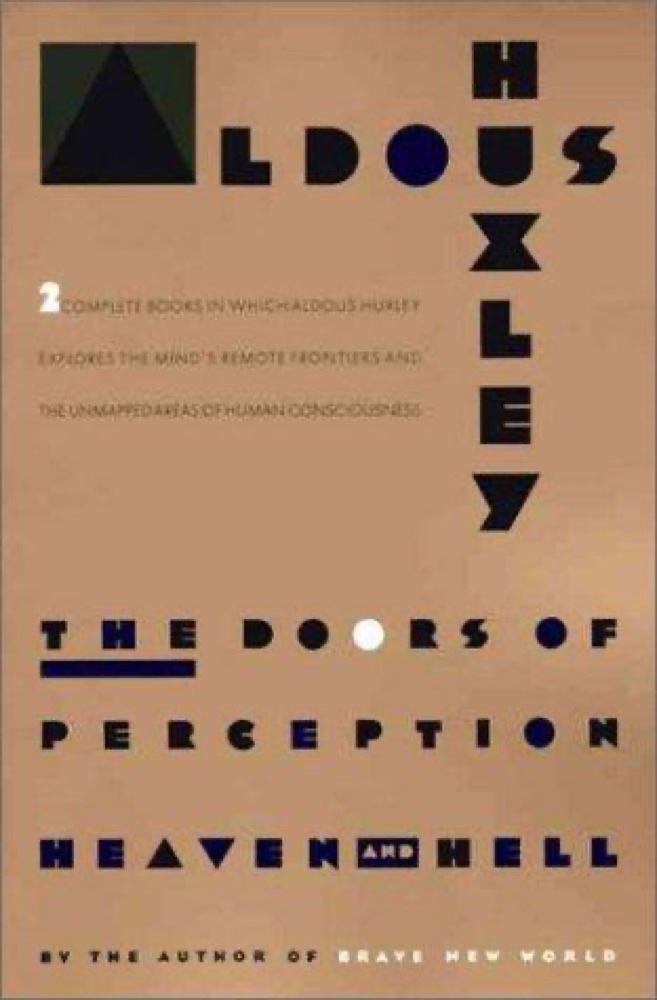 The Doors of Perception & Heaven and Hell
 Escape from Freedom
 Stories of Your Life and Others
 Identity
 Freedom from the Known
 Twilight of the Idols/The Anti-Christ
 The Empusium
 Six Characters in Search of an Author
 Immortality
 The Invention of Solitude
 Anti-Oedipus: Capitalism and Schizophrenia
 In Love with the World: A Monk's Journey Through the Bardos of Living and Dying
 Eyeless in Gaza
 American Pastoral
 Sexus
Sexus
 Under the Net
 The Myth of Sisyphus
 Living on Your Own Terms: What Is Real Rebellion?
 Lila: An Inquiry Into Morals