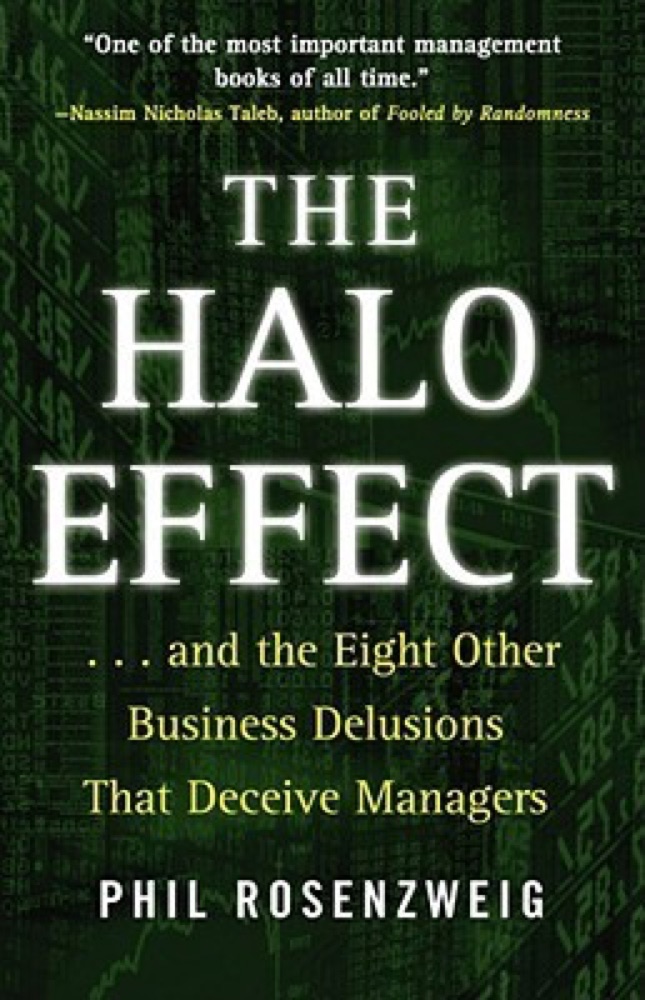
 Amp It Up: Leading for Hypergrowth by Raising Expectations, Increasing Urgency, and Elevating Intensity
Quotes from the Book
They have to say SOMETHING. Maria Bartiromo can't exactly look into the camera and say that the Dow is down half a percent today because of random Brownian motion.
3
Any good strategy involves risk. If you think your strategy is foolproof, the fool may well be you.
2
The answer to the question What really works? is simple: Nothing really works, at least not all the time. That’s not the nature of the business world. But that insight, however accurate, isn’t of much comfort. Management
2
Business is full of mysteries, but none greater than this: What really works?
2
Winners are confident, losers are arrogant.
2
Picture a group where people express their views vigorously and passionately, even arguing with one another. If the group performs well, participants might reasonably look back and say that open and forthright expressions of opinion were a key reason for success. They’ll say: We were honest, we didn’t hold back—and that’s why we did so well! We had a good process! But what if the group’s performance turned out to be poor? Now people might recall things differently. We argued and fought. We were dysfunctional. Next time we should follow a respectful and disciplined process. But now imagine a group where people are calm, polite, and respectful of one another. They speak quietly and in turn. If the group does well, participants might look back and credit their courteous and cooperative nature. We respected one another. We didn’t fight. We had a good process! But if the same group’s performance was poor, people might say: We were too polite. We censored ourselves. Next time, we should be more direct and open, not so concerned about one another’s feelings. The fact is, a wide variety of behaviors can lead to good decisions. There’s no precise way to engineer an “optimal” discussion process. We may try to avoid extremes, sure, but between those extremes is a wide range of behavior that might be conducive to success. And because we really don’t know what makes an optimal decision process, we tend to make attributions based on other things that are relevant and seemingly objective—namely, what we’re told about performance outcomes.
1
The Delusion of Lasting Success promises that building an enduring company is not only achievable but a worthwhile objective. Yet companies that have outperformed the market for long periods of time are not just rare, they are statistical artifacts that are observable only in retrospect. Companies that achieved lasting success may be best understood as having strung together many short-term successes. Pursuing a dream of enduring greatness may divert attention from the pressing need to win immediate battles. The Delusion of Absolute Performance diverts our attention from the fact that success and failure always take place in a competitive environment. It may be comforting to believe that our success is entirely up to us, but as the example of Kmart demonstrated, a company can improve in absolute terms and still fall further behind in relative terms. Success in business means doing things better than rivals, not just doing things well. Believing that performance is absolute can cause us to take our eye off rivals and to avoid decisions that, while risky, may be essential for survival given the particular context of our industry and its competitive dynamics. The Delusion of the Wrong End of the Stick lets us confuse causes and effects, actions and outcomes. We may look at a handful of extraordinarily successful companies and imagine that doing what they did can lead to success — when it might in fact lead mainly to higher volatility and a lower overall chance of success. Unless we start with the full population of companies and examine what they all did — and how they all fared — we have an incomplete and indeed biased set of information. The Delusion of Organizational Physics implies that the business world offers predictable results, that it conforms to precise laws. It fuels a belief that a given set of actions can work in all settings and ignores the need to adapt to different conditions: intensity of competition, rate of growth, size of competitors, market concentration, regulation, global dispersion of activities, and much more. Claiming that one approach can work everywhere, at all times, for all companies, has a simplistic appeal but doesn’t do justice to the complexities of business. These points, taken together, expose the principal fiction at the heart of so many business books — that a company can choose to be great, that following a few key steps will predictably lead to greatness, that its success is entirely of its own making and not dependent on factors outside its control.
1
Successful companies will almost always be described in terms of a clear strategy, good organization, strong corporate culture, and customer focus. But whether these things drive company performance, or whether they’re mainly attributions based on performance, is a different matter.
1
In fact, for all the secrets and formulas, for all the self-proclaimed thought leadership, success in business is as elusive as ever.
1
There will always be a temptation to tell a neat story that makes everything sensible and logical and that suggests why the deserving succeeded while the wicked or arrogant failed.
Collins’s understanding of the Fox-Hedgehog parable is questionable from the start. He suggests that people who have had the greatest impact on humanity—including Darwin, Marx, and Einstein—were Hedgehogs, consumed with a single and simple idea, then pursuing it with dogged focus. But Isaiah Berlin made no such claim, observing only that Foxes and Hedgehogs were two different ways of looking at human experience. There have been great people in both categories. According to Berlin, Plato was a Hedgehog but Aristotle a Fox; Dante a Hedgehog but Shakespeare a Fox; Dostoyevsky and Nietzsche were Hedgehogs while Goethe and Joyce were Foxes. Collins’s assertion about Darwin is also doubtful: After all, Charles Darwin was raised as a conventional Christian and arrived at his revolutionary ideas about natural selection after decades of careful observation and reflection—challenging conventional dogma is not the sort of thing a Hedgehog normally does. It’s not even clear that Marx was a Hedgehog, as his favorite epigram—De omnibus disputandum (Everything must be doubted)—has a distinctly Foxlike ring. Many so-called Marxists may be Hedgehogs, but of course that’s a different matter.
If you select companies on the basis of outcomes—whether success or failure—and then gather data that are biased by those outcomes, you’ll never know what drives performance. You’ll only know how high performers or low performers are described.
Watch on YouTube
About Philip M. Rosenzweig
About the book
Much of our business thinking is shaped by delusions -- errors of logic and flawed judgments that distort our understanding of the real reasons for a company's performance. In a brilliant and unconventional book, Phil Rosenzweig unmasks the delusions that are commonly found in the corporate world. These delusions affect the business press and academic research, as well as many bestselling books that promise to reveal the secrets of success or the path to greatness. Such books claim to be based on rigorous thinking, but operate mainly at the level of storytelling. They provide comfort and inspiration, but deceive managers about the true nature of business success.The most pervasive delusion is the Halo Effect. When a company's sales and profits are up, people often conclude that it has a brilliant strategy, a visionary leader, capable employees, and a superb corporate culture. When perfor
Book details
- First published
- 2007
- Author
- Philip M. Rosenzweig
- Genre
- Nonfiction
- Goodreads rating
- 3.89 (6k ratings)
Keep reading
Amp It Up: Leading for Hypergrowth by Raising Expectations, Increasing Urgency, and Elevating Intensity
 Built to Last: Successful Habits of Visionary Companies
 Good to Great: Why Some Companies Make the Leap... and Others Don't
 Zero to One: Notes on Startups, or How to Build the Future
 Chaos Monkeys: Obscene Fortune and Random Failure in Silicon Valley
 The Art of Thinking Clearly
 Barking Up the Wrong Tree: The Surprising Science Behind Why Everything You Know About Success Is (Mostly) Wrong
 Winning
 Fooled by Randomness: The Hidden Role of Chance in Life and in the Markets
 The Black Swan: The Impact of the Highly Improbable
 Black Box Thinking: Why Some People Never Learn from Their Mistakes - But Some Do
 Pour Your Heart Into It: How Starbucks Built a Company One Cup at a Time
 The Essays of Warren Buffett: Lessons for Corporate America
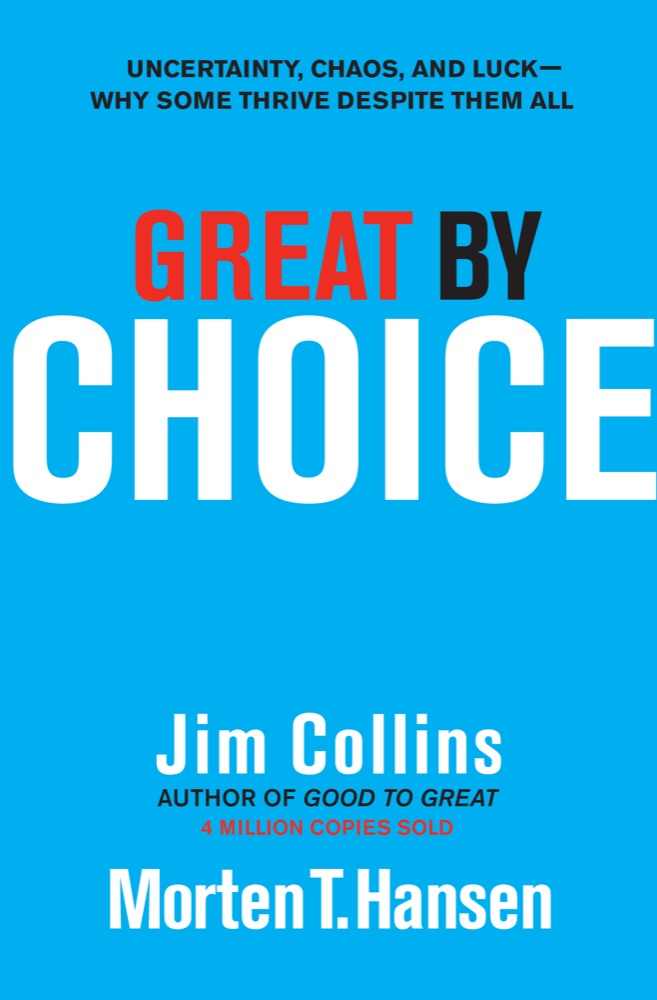 Great by Choice: Uncertainty, Chaos, and Luck—Why Some Thrive Despite Them All
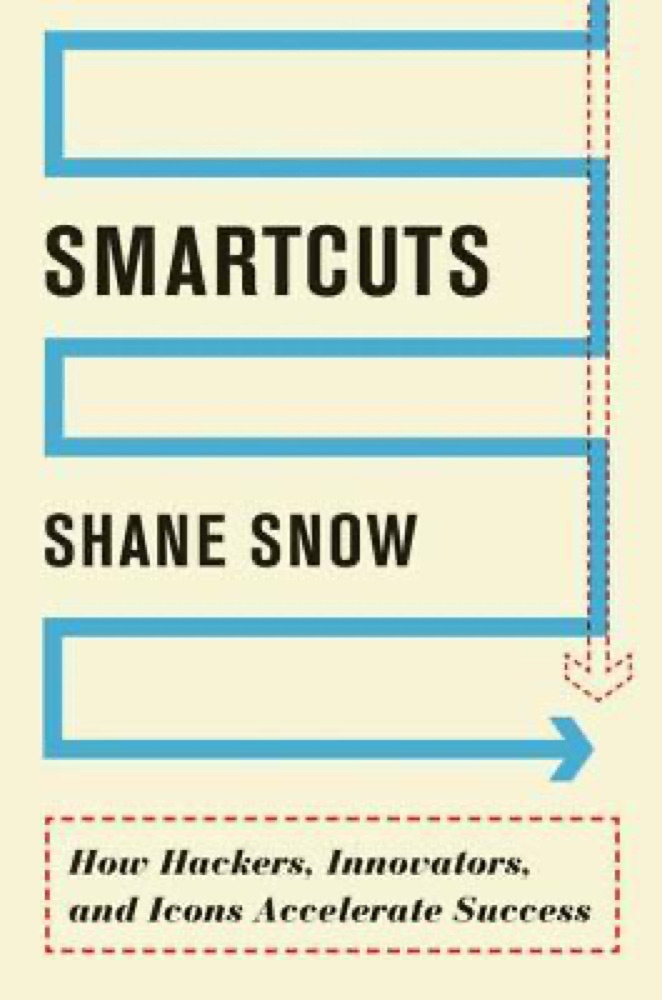 Smartcuts: How Hackers, Innovators, and Icons Accelerate Success
 Creativity, Inc.: Overcoming the Unseen Forces That Stand in the Way of True Inspiration
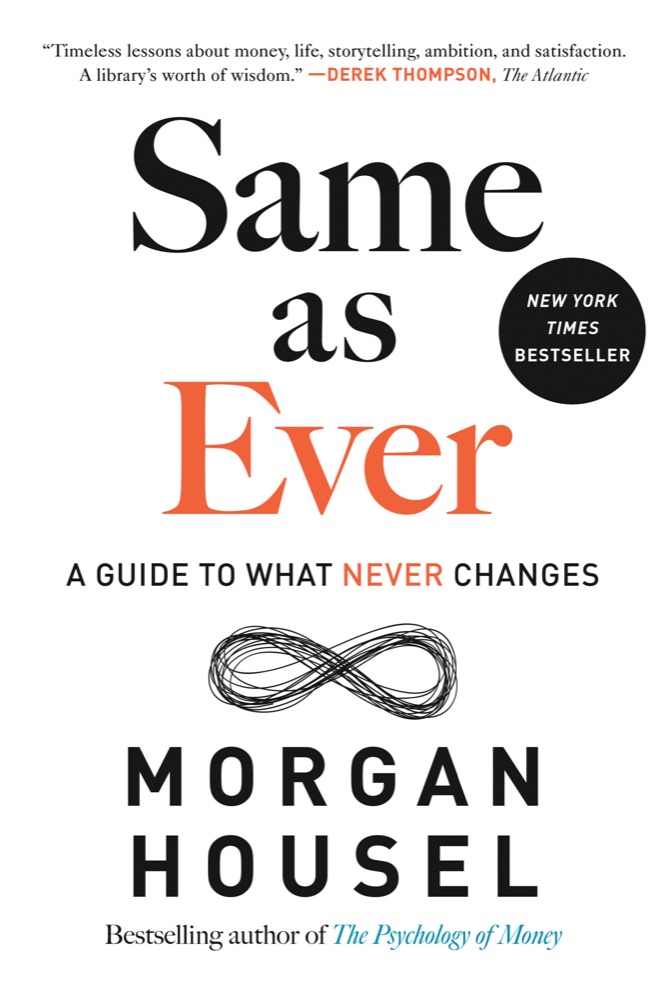 Same as Ever: A Guide to What Never Changes
 The E-myth Revisited
 Think Like a Freak
 The Score Takes Care of Itself: My Philosophy of Leadership
 Superforecasting: The Art and Science of Prediction
 The Hard Thing About Hard Things: Building a Business When There Are No Easy Answers―Straight Talk on the Challenges of Entrepreneurship
 The Fifth Discipline: The Art & Practice of The Learning Organization
 Adapt: Why Success Always Starts with Failure
 Managing Humans: Biting and Humorous Tales of a Software Engineering Manager
 Invent and Wander: The Collected Writings of Jeff Bezos
 Start with Why: How Great Leaders Inspire Everyone to Take Action
 Trump: The Art of the Deal
 The Essential Drucker
 The Effective Executive: The Definitive Guide to Getting the Right Things Done
 Alchemy: The Surprising Power of Ideas That Don't Make Sense
 Your Next Five Moves: Master the Art of Business Strategy
 Think Like a Rocket Scientist: Simple Strategies You Can Use to Make Giant Leaps in Work and Life
 The Monk and the Riddle: The Education of a Silicon Valley Entrepreneur
 The Ride of a Lifetime: Lessons Learned from 15 Years as CEO of the Walt Disney Company
 HBR's 10 Must Reads on Strategy
 What I Learned Losing a Million Dollars
 The Innovator's Solution: Creating and Sustaining Successful Growth
 Rework
 How to Fail at Almost Everything and Still Win Big: Kind of the Story of My Life
 Founders at Work: Stories of Startups' Early Days
 How To Get Rich
 Predictably Irrational: The Hidden Forces That Shape Our Decisions
 You Can Win: A Step by Step Tool for Top Achievers
 Measure What Matters
 What the Dog Saw and Other Adventures
 Principles: Life and Work
 Made to Stick: Why Some Ideas Survive and Others Die
 Lean Analytics: Use Data to Build a Better Startup Faster
 The Most Important Thing: Uncommon Sense for the Thoughtful Investor
 The Oz Principle: Getting Results Through Individual and Organizational Accountability
 Legacy: What the All Blacks Can Teach Us About the Business of Life
 EntreLeadership: 20 Years of Practical Business Wisdom from the Trenches
 The 360 Degree Leader: Developing Your Influence from Anywhere in the Organization
 Skin in the Game: The Hidden Asymmetries in Daily Life
 The Little Book of Behavioral Investing: How not to be your own worst enemy
 Blue Ocean Strategy: How to Create Uncontested Market Space and Make the Competition Irrelevant
 Getting There: A Book of Mentors
 The Price of Tomorrow: Why Deflation is the Key to an Abundant Future
 Smarter Faster Better: The Secrets of Being Productive in Life and Business