
 Blue Ocean Strategy: How to Create Uncontested Market Space and Make the Competition Irrelevant
Quotes from the Book
Competition on dimensions other than price - on product features, support services, delivery time, or brand image, for instance - is less likely to erode profitability because it improves customer value and can support higher prices. p.
19
Competitive strategy is about being different. It means deliberately choosing a different set of activities to deliver a unique mix of value.
15
Strategy is the creation of a unique and valuable position, involving a different set of activities.
12
Understanding the competitive forces, and their underlying causes, reveals the roots of an industry’s current profitability while providing a framework for anticipating and influencing competition (and profitability) over time. P. 26
11
Strategy is making trade-offs in competing. The essence of strategy is choosing what not to do.
10
The strongest competitive force or forces determine the profitability of an industry and become the most important to strategy formulation. The most salient force, however, is not always obvious. P. 26
9
Blue oceans are right next to you in every industry.
9
Operational effectiveness: necessary but not sufficient Operational effectiveness and strategy are both essential to superior performance, which, after all, is the primary goal of any enterprise. But they work in very different ways. A company can outperform rivals only if it can establish a difference that it can preserve. It must deliver greater value to customers or create comparable value at a lower cost, or do both. The arithmetic of superior profitability then follows: delivering greater value allows a company to charge higher average unit prices; greater efficiency results in lower average unit costs. Ultimately, all differences between companies in cost or price derive from the hundreds of activities required to create, produce, sell, and deliver their products or services, such as calling on customers, assembling final products, and training employees. Cost is generated by performing activities, and cost advantage arises from performing particular activities more
4
High rivalry limits the profitability of an industry P.
3
Substitutes are always present, but they are easy to overlook because they may appear to be very different from the industry’s product p.
3
In essence, the job of the strategist is to understand and cope with competition. P. 25
3
The letters in RAPID stand for the primary roles in any decision-making process, although these roles are not performed exactly in this order: recommend, agree, perform, input, and decide—the “D.
2
Purpose (which should last at least 100 years) should not be confused with specific goals or business strategies (which should change many times in 100 years). Whereas you might achieve a goal or complete a strategy, you cannot fulfill a purpose; it is like a guiding star on the horizon—forever pursued but never reached. Yet although purpose itself does not change, it does inspire change. The very fact that purpose can never be fully realized means that an organization can never stop stimulating change and progress.
2
Understanding industry structure is also essential to effective strategic positioning P. 26
2
Truly transformative businesses are never exclusively about the discovery and commercialization of a great technology. Their success comes from enveloping the new technology in an appropriate, powerful business model. Bob Higgins, the founder and general partner of Highland Capital Partners, has seen his share of venture success and failure in his 20 years in the industry. He sums up the importance and power of business model innovation this way: “I think historically where we [venture capitalists] fail is when we back technology. Where we succeed is when we back new business models.
1
Companies will almost always need to integrate their key resources and processes in a unique way to get a job done perfectly for a set of customers. When they do, they almost always create enduring competitive advantage.
1
Neglect to focus on one job (customer need); they dilute their efforts by attempting to do lots of things. In doing lots of things, they do nothing really well.
1
A successful company is one that has found a way to create value for customers—that is, a way to help customers get an important job done. By “job” we mean a fundamental problem in a given situation that needs a solution.
1
To create an effective envisioned future requires a certain level of unreasonable confidence and commitment. Keep in mind that a BHAG is not just a goal; it is a Big, Hairy, Audacious Goal.
1
The envisioned future should be so exciting in its own right that it would continue to keep the organization motivated even if the leaders who set the goal disappeared.
1
A true BHAG (Big, Hairy, Audacious Goals) is clear and compelling, serves as a unifying focal point of effort, and acts as a catalyst for team spirit. It has a clear finish line, so the organization can know when it has achieved the goal; people like to shoot for finish lines. A BHAG engages people—it reaches out and grabs them. It is tangible, energizing, highly focused. People get it right away; it takes little or no explanation.
1
This rare ability to manage continuity and change—requiring a consciously practiced discipline—is closely linked to the ability to develop a vision.
1
The point of industry analysis is not to declare the industry attractive or unattractive but to understand the underpinnings of competition and the root causes of profitability. P.
1
As important as the dimensions of rivalry is whether rivals compete on the same dimensions. When all or many competitors aim to meet the same needs or compete on the same attributes, the result is zero-sum competition. P. 33
1
If the forces are intense, (..) almost no company earns attractive returns on investment. If the forces are benign, (..) many companies are profitable. P. 25
1
In many industries, however, what some call hypercompetition is a self-inflicted wound, not the inevitable outcome of a changing paradigm of competition. The root of the problem is the failure to distinguish between operational effectiveness and strategy. The quest for productivity, quality, and speed has spawned a remarkable number of management tools and techniques: total quality management, benchmarking, time-based competition, outsourcing, partnering, reengineering, change management. Although the resulting operational improvements have often been dramatic, many companies have been frustrated by their inability to translate those gains into sustainable profitability. And bit by bit, almost imperceptibly, management tools have taken the place of strategy. As managers push to improve on all fronts, they move farther away from viable competitive positions. Operational effectiveness: necessary
1
Our research suggests that companies on average deliver only 63% of the financial performance their strategies promise.
1
The most important attribute of a customer value proposition is its precision: how perfectly it nails the customer job to be done—and nothing else.
1
Indeed, one of the most important functions of an explicit, communicated strategy is to guide employees in making choices that arise because of trade-offs in their individual activities and in day-to-day decisions. Improving
1
Watch on YouTube
About Michael E. Porter
We have collected 29 quotes from 1 book by Michael E. Porter on BookQuoters.
More about the author →About the book
Is your company spending too much time on strategy development—with too little to show for it?If you read nothing else on strategy, read these 10 articles (featuring “What Is Strategy?” by Michael E. Porter). We've combed through hundreds of Harvard Business Review articles and selected the most important ones to help you catalyze your organization's strategy development and execution.HBR's 10 Must Reads on Strategy will inspire you to:• Distinguish your company from rivals• Clarify what your company will and won't do• Craft a vision for an uncertain future• Create blue oceans of uncontested market space• Use the Balanced Scorecard to measure your strategy• Capture your strategy in a memorable phrase• Make priorities explicit• Allocate resources early• Clarify decision rights for faster decision making"This collection of best-selling articles includes: featured article "What Is Strategy?
Book details
- First published
- 2010
- Author
- Michael E. Porter
- Genre
- Nonfiction
- Goodreads rating
- 4.02 (3k ratings)
Keep reading
Blue Ocean Strategy: How to Create Uncontested Market Space and Make the Competition Irrelevant
 The Innovator's Solution: Creating and Sustaining Successful Growth
 Built to Last: Successful Habits of Visionary Companies
 The Essential Drucker
 Running Lean: Iterate from Plan A to a Plan That Works
 Zero to One: Notes on Startups, or How to Build the Future
 Amp It Up: Leading for Hypergrowth by Raising Expectations, Increasing Urgency, and Elevating Intensity
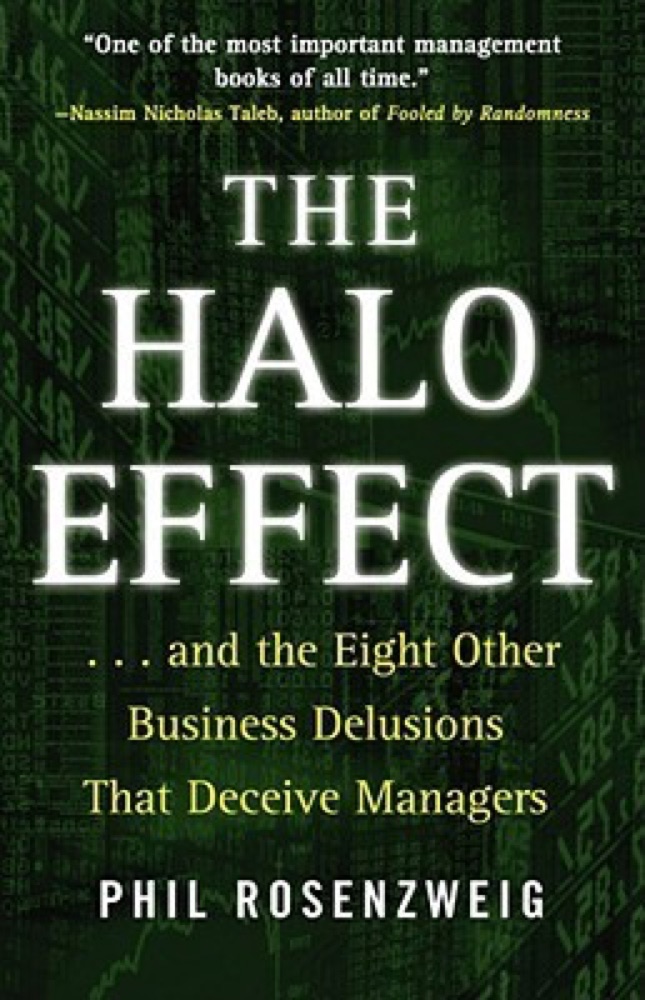 The Halo Effect: ... and the Eight Other Business Delusions That Deceive Managers
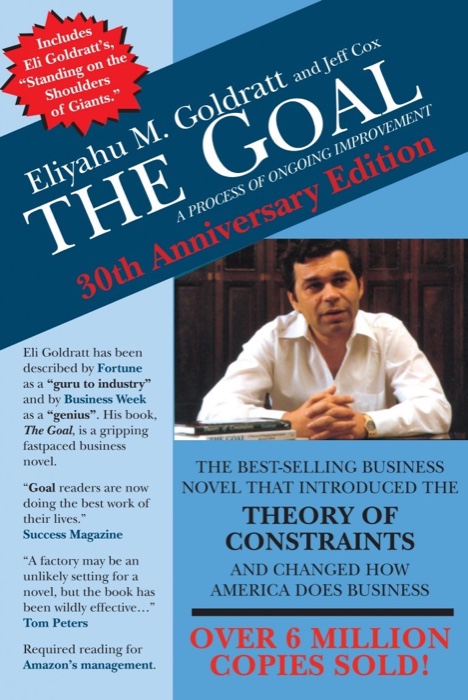 The Goal: A Process of Ongoing Improvement
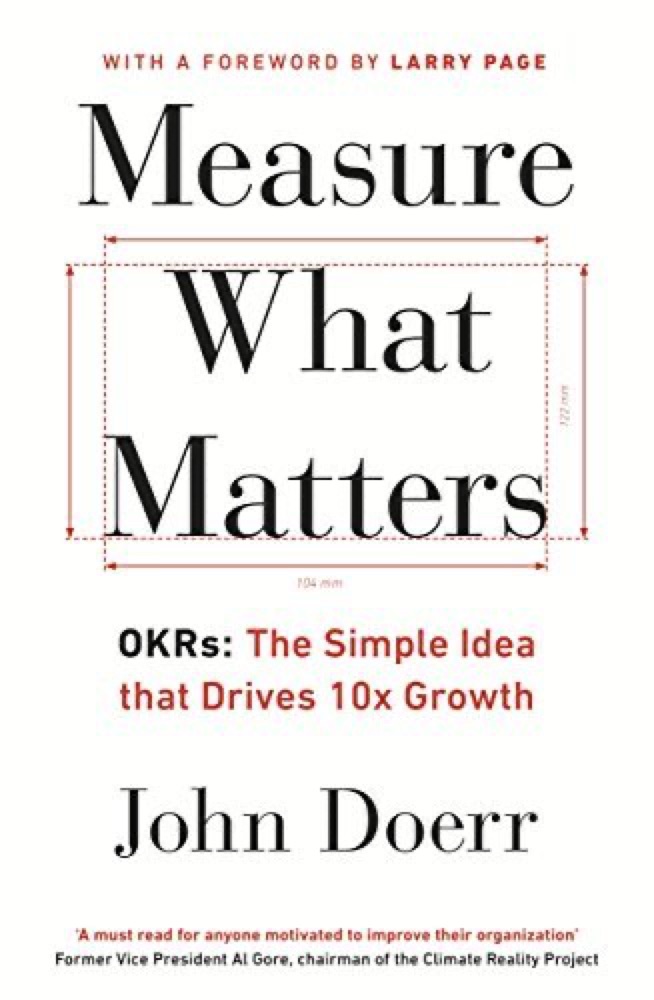 Measure What Matters
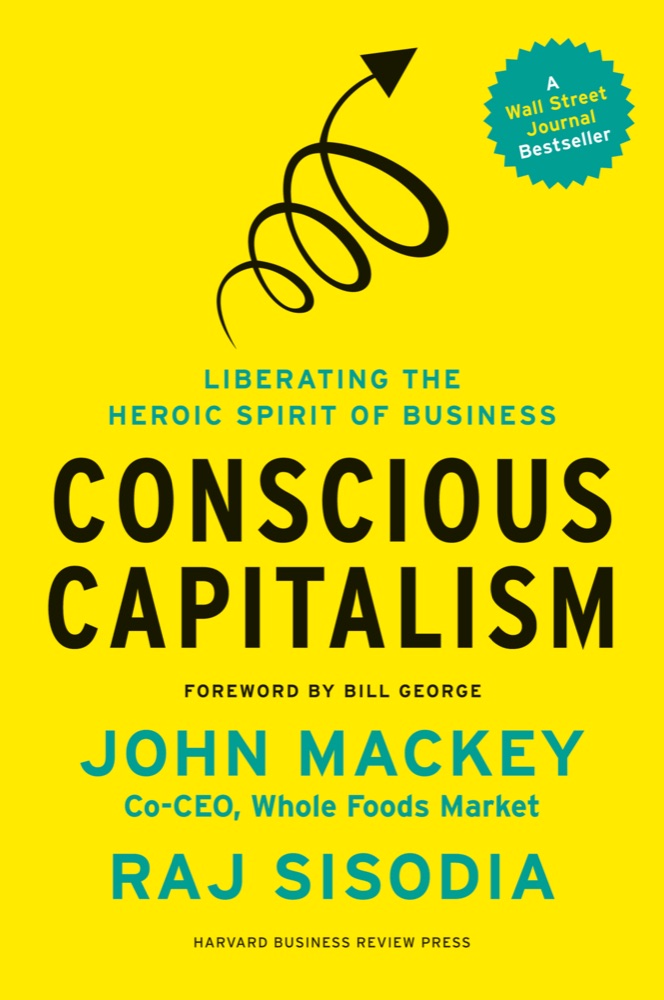 Conscious Capitalism
 The 1-Page Marketing Plan: Get New Customers, Make More Money, And Stand out From The Crowd
 Lean Analytics: Use Data to Build a Better Startup Faster
 Managing Humans: Biting and Humorous Tales of a Software Engineering Manager
 The Fifth Discipline: The Art & Practice of The Learning Organization
 The Win Without Pitching Manifesto
 Great by Choice: Uncertainty, Chaos, and Luck—Why Some Thrive Despite Them All
 Accelerate: Building and Scaling High Performing Technology Organizations
 Winning
 Good to Great: Why Some Companies Make the Leap... and Others Don't
 The Lean Startup
 Invent and Wander: The Collected Writings of Jeff Bezos
 The E-myth Revisited
 The Effective Executive: The Definitive Guide to Getting the Right Things Done
 The Hard Thing About Hard Things: Building a Business When There Are No Easy Answers―Straight Talk on the Challenges of Entrepreneurship
 Pour Your Heart Into It: How Starbucks Built a Company One Cup at a Time
 Legacy: What the All Blacks Can Teach Us About the Business of Life
 The 80/20 Principle: The Secret to Achieving More with Less
 Innovation and Entrepreneurship
 Your Next Five Moves: Master the Art of Business Strategy
 Peopleware: Productive Projects and Teams
 The Art of Startup Fundraising
 Software Engineering at Google: Lessons Learned from Programming Over Time
 Smartcuts: How Hackers, Innovators, and Icons Accelerate Success
 The Monk and the Riddle: The Education of a Silicon Valley Entrepreneur
 Right Kind of Wrong: The Science of Failing Well
 The Essays of Warren Buffett: Lessons for Corporate America
 Founders at Work: Stories of Startups' Early Days
 Making Ideas Happen: Overcoming the Obstacles Between Vision and Reality
 Delivering Happiness: A Path to Profits, Passion, and Purpose
 The Score Takes Care of Itself: My Philosophy of Leadership
 The 22 Immutable Laws of Marketing: Violate Them at Your Own Risk
 A Whole New Mind: Why Right-Brainers Will Rule the Future
 Loonshots: How to Nurture the Crazy Ideas That Win Wars, Cure Diseases, and Transform Industries
 EntreLeadership: 20 Years of Practical Business Wisdom from the Trenches
 Hit Refresh: The Quest to Rediscover Microsoft's Soul and Imagine a Better Future for Everyone
 The Price of Tomorrow: Why Deflation is the Key to an Abundant Future
 Chaos Monkeys: Obscene Fortune and Random Failure in Silicon Valley
 The Ride of a Lifetime: Lessons Learned from 15 Years as CEO of the Walt Disney Company
 The Art of the Start: The Time-Tested, Battle-Hardened Guide for Anyone Starting Anything
 The Startup of You: Adapt to the Future, Invest in Yourself, and Transform Your Career
 Hackers & Painters: Big Ideas from the Computer Age
 Vision to Reality: Stop Working, Start Living
 Drive: The Surprising Truth About What Motivates Us
 Selling the Invisible: A Field Guide to Modern Marketing
 The Everything Store: Jeff Bezos and the Age of Amazon
 Smarter Faster Better: The Secrets of Being Productive in Life and Business
 Positioning: The Battle for Your Mind: How to Be Seen and Heard in the Overcrowded Marketplace
 Start with Why: How Great Leaders Inspire Everyone to Take Action
 Creativity, Inc.: Overcoming the Unseen Forces That Stand in the Way of True Inspiration