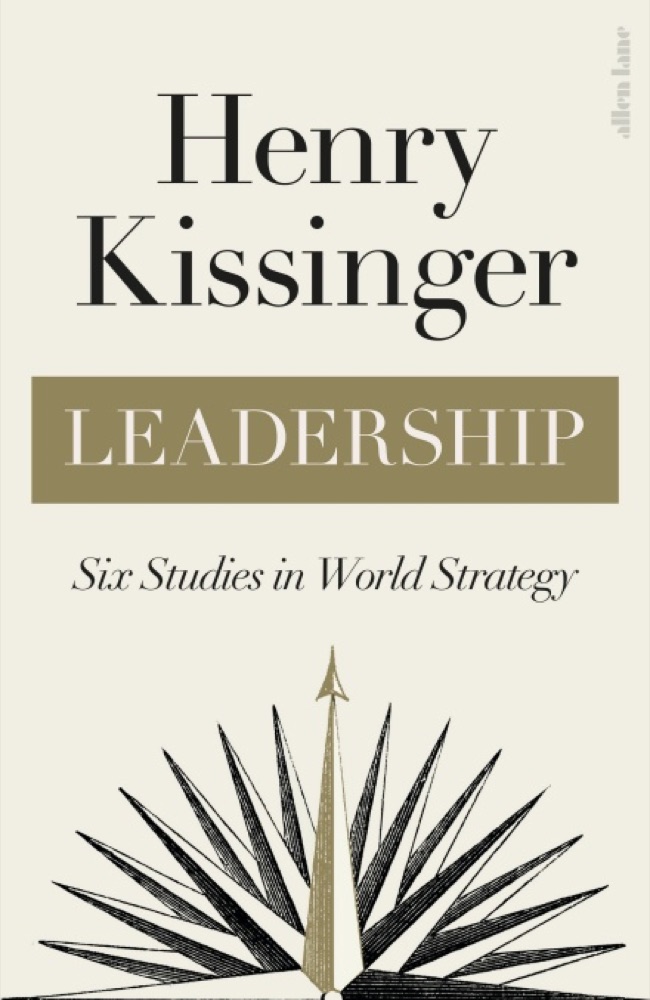
 Leadership : Six Studies in World Strategy
Quotes from the Book
In his essay, ‘Perpetual Peace,’ the philosopher, Immanuel Kant, argued that perpetual peace would eventually come to the world in one of two ways, by human insight or by conflicts and catastrophes of a magnitude that left humanity no other choice. We are at such a juncture.
36
It is one of history's ironies that Communism, advertised as a classless society, tended to breed a privileged class of feudal proportions.
34
What distinguishes Sun Tzu from Western writers on strategy is the emphasis on the psychological and political elements over the purely military.
14
The Soviet Union would never be bound by agreements, Deng warned; it understood only the language of countervailing force.
11
Chinese thinkers developed strategic thought that placed a premium on victory through psychological advantage and preached the avoidance of direct conflict.
10
If Chinese exceptionalism represented the claims of a universal empire, Japanese exceptionalism sprang from the insecurities of an island nation borrowing heavily from its neighbor, but fearful of being dominated by it.
10
Chess teaches the Clausewitzian concepts of “center of gravity” and the “decisive point”—the game usually beginning as a struggle for the center of the board. Wei qi teaches the art of strategic encirclement.
9
If chess is about the decisive battle, wei qi is about the protracted campaign. The chess player aims for total victory. The wei qi player seeks relative advantage.
9
Almost all empires were created by force, but none can be sustained by it. Universal rule, to last, needs to translate force into obligation. Otherwise, the energies of the rulers will be exhausted in maintaining their dominance at the expense of their ability to shape the future, which is the ultimate task of statesmanship. Empires persist if repression gives way to consensus.
7
Revolutionaries are, by their nature, powerful and single-minded personalities. Almost invariably they start from a position of weakness vis-à-vis the political environment and rely for their success on charisma and on an ability to mobilize resentment and to capitalize on the psychological weakness of adversaries in decline.
7
But Japan drew from the challenge the opposite conclusion as China: it threw open its doors to foreign technology and overhauled its institutions in an attempt to replicate the Western powers’ rise.
7
Balance-of-power diplomacy was less a choice than an inevitability. No state was strong enough to impose its will; no religion retained sufficient authority to sustain universality. The concept of sovereignty and the legal equality of states became the basis of international law and diplomacy. China, by contrast, was never engaged in sustained contact with another country on the basis of equality for the simple reason that it never encountered societies of comparable culture or magnitude.
6
But unlike Machiavelli, Confucius was concerned more with the cultivation of social harmony than with the machinations of power. His themes were the principles of compassionate rule, the performance of correct rituals, and the inculcation of filial piety.
6
The art of crisis management is to raise the stakes to where the adversary will not follow, but in a manner that avoids a tit for tat.
6
[l]ove of kindness, without a love to learn, finds itself obscured by foolishness. Love of knowledge, without a love to learn, finds itself obscured by loose speculation. Love of honesty, without a love to learn, finds itself obscured by harmful candour. Love of straightforwardness, without a love to learn, finds itself obscured by misdirected judgment. Love of daring, without a love to learn, finds itself obscured by insubordination. And love for strength of character, without a love to learn, finds itself obscured by intractability
5
The highest form of warfare Is to attack [the enemy’s] Strategy itself; The next, To attack [his] Alliances. The next, To attack Armies;
5
When the Chinese court deigned to send envoys abroad, they were not diplomats, but “Heavenly Envoys” from the Celestial Court.
5
American exceptionalism is missionary. It holds that the United States has an obligation to spread its values to every part of the world. China’s exceptionalism is cultural.
4
Like the United States, China thought of itself as playing a special role. But it never espoused the American notion of universalism to spread its values around the world. It
4
In other words, each side could arm itself with whatever ideological slogans fulfilled its own domestic necessities, so long as it did not let them interfere with the need for cooperation against the Soviet danger. Ideology would be relegated to domestic management; it took a leave from foreign policy. The ideological armistice was, of course, valid only so long as objectives remained compatible.
3
His mentor, Zeng Guofan, a top-ranking Confucian scholar and veteran commander of the Taiping campaigns, had advised Li in 1862 how to use the basic Confucian value of self-restraint as a diplomatic tool: “In your association with foreigners, your manner and deportment should not be too lofty, and you should have a slightly vague, casual appearance. Let their insults, deceitfulness, and contempt for everything appear to be understood by you and yet seem not understood, for you should look somewhat stupid.
3
Since no grand resolution was available, the Gong memorial established a priority among the dangers, in effect based on the principle of defeating the near barbarians with the assistance of the far barbarians. It was a classical Chinese strategy that would be revisited roughly a hundred years later by Mao.
3
Hence the task of a strategist is less to analyze a particular situation than to determine its relationship to the context in which it occurs. No particular constellation is ever static; any pattern is temporary and in essence evolving. The strategist must capture the direction of that evolution and make it serve his ends. Sun Tzu uses the word “shi” for that quality, a concept with no direct Western counterpart.
3
With these distinctive traditions and millennial habits of superiority, China entered the modern age a singular kind of empire: a state claiming universal relevance for its culture and institutions but making few efforts to proselytize; the wealthiest country in the world but one that was indifferent to foreign trade and technological innovation; a culture of cosmopolitanism overseen by a political elite oblivious to the onset of the Western age of exploration; and a political unit of unparalleled geographic extent that was unaware of the technological and historical currents that would soon threaten its existence.
3
Where Western strategists reflect on the means to assemble superior power at the decisive point, Sun Tzu addresses the means of building a dominant political and psychological position, such that the outcome of a conflict becomes a foregone conclusion. Western strategists test their maxims by victories in battles; Sun Tzu tests by victories where battles have become unnecessary.
3
Well, you can just stop and think of what could happen if anybody with a decent system of government got control of that mainland. Good God.… There’d be no power in the world that could even—I mean, you put 800 million Chinese to work under a decent system… and they will be the leaders of the world.
3
In recent years, as personal memories have faded, another perspective is beginning to make a tentative appearance in China. This view acknowledges the colossal wrongs committed during the Cultural Revolution, but it begins to inquire whether perhaps Mao raised an important question, even if his answer to it proved disastrous. The problem Mao is said to have identified is the relationship of the modern state—especially the Communist state—to the people it governs. In largely agricultural—and even incipient industrial—societies, governance concerns issues within the capacity of the general public to understand. Of course, in aristocratic societies, the relevant public is limited. But whatever the formal legitimacy, some tacit consensus by those who are to carry out directives is needed—unless governance is to be entirely by imposition, which is usually unsustainable over a historic period.
3
Especially when ultimate decisions of peace and war are involved, a strategist must be aware that bluffs may be called and must take into account the impact on his future credibility of an empty threat.
3
Cold War. China, though technically an ally of the Soviet Union, was in quest of maneuvering
3
Relations between China and the United States need not - and should not - become a zero-sum game ... Key issues on the international front are global in nature. Consensus may prove difficult, but confronation on these issues is self-defeating.
2
Watch on YouTube
About Henry Kissinger
We have collected 82 quotes from 3 books by Henry Kissinger on BookQuoters.
More about the author →More by Henry Kissinger
Leadership : Six Studies in World Strategy
 World Order
About the book
In this sweeping and insightful history, Henry Kissinger turns for the first time at book-length to a country he has known intimately for decades, and whose modern relations with the West he helped shape. Drawing on historical records as well as his conversations with Chinese leaders over the past forty years, Kissinger examines how China has approached diplomacy, strategy, and negotiation throughout its history, and reflects on the consequences for the global balance of power in the 21st century. Since no other country can claim a more powerful link to its ancient past and classical principles, any attempt to understand China's future world role must begin with an appreciation of its long history. For centuries, China rarely encountered other societies of comparable size and sophistication; it was the "Middle Kingdom," treating the peoples on its periphery as vassal states. At the same
Book details
- First published
- 2011
- Author
- Henry Kissinger
- Genre
- History
- Goodreads rating
- 4.19 (10k ratings)
Keep reading
World Order
 Principles for Dealing with the Changing World Order: Why Nations Succeed and Fail
 Quotations from Chairman Mao Tsetung
 The Next 100 Years: A Forecast for the 21st Century
 The Next Decade: Where We've Been . . . and Where We're Going
Leadership : Six Studies in World Strategy
The Next Decade: Where We've Been . . . and Where We're Going
Leadership : Six Studies in World Strategy
 Stilwell and the American Experience in China, 1911-45
 Upheaval: Turning Points for Nations in Crisis
 Prisoners of Geography: Ten Maps That Tell You Everything You Need to Know About Global Politics
 American Shaolin: Flying Kicks, Buddhist Monks, and the Legend of Iron Crotch: An Odyssey in the New China
 Civilization: The West and the Rest
 Modern Times: The World from the Twenties to the Nineties
 A World Without Islam
 The Machiavellians: Defenders of Freedom
 The Revenge Of Geography: What the Map Tells Us About Coming Conflicts and the Battle Against Fate
 Imperial Ambitions: Conversations on the Post-9/11 World
 Life and Death in Shanghai
 Flashpoints: The Emerging Crisis in Europe
 Seeing Like a State: How Certain Schemes to Improve the Human Condition Have Failed
 The Coldest Winter: America and the Korean War
 Genghis Khan and the Making of the Modern World
 Reflections on the Revolution in France
 Closing the Ring
 A History of the World in 100 Objects
 The Lessons of History
 Rules for Radicals: A Pragmatic Primer for Realistic Radicals
 Thrawn
 Understanding Power: The Indispensable Chomsky
 Conspirators' Hierarchy: The Story of the Committee of 300
 The Origins of Totalitarianism
 River of Smoke
 The End of History and the Last Man
 The Discovery of India
 Fascism: A Warning
 This Kind of War: A Study in Unpreparedness
 Political Theology: Four Chapters on the Concept of Sovereignty
 The Argumentative Indian: Writings on Indian History, Culture and Identity
 The Untold History of The United States
 On Tyranny: Twenty Lessons from the Twentieth Century
 A People's History of the United States
 Imperium
 On Revolution
 Human Action: A Treatise on Economics
 The Trial of Henry Kissinger
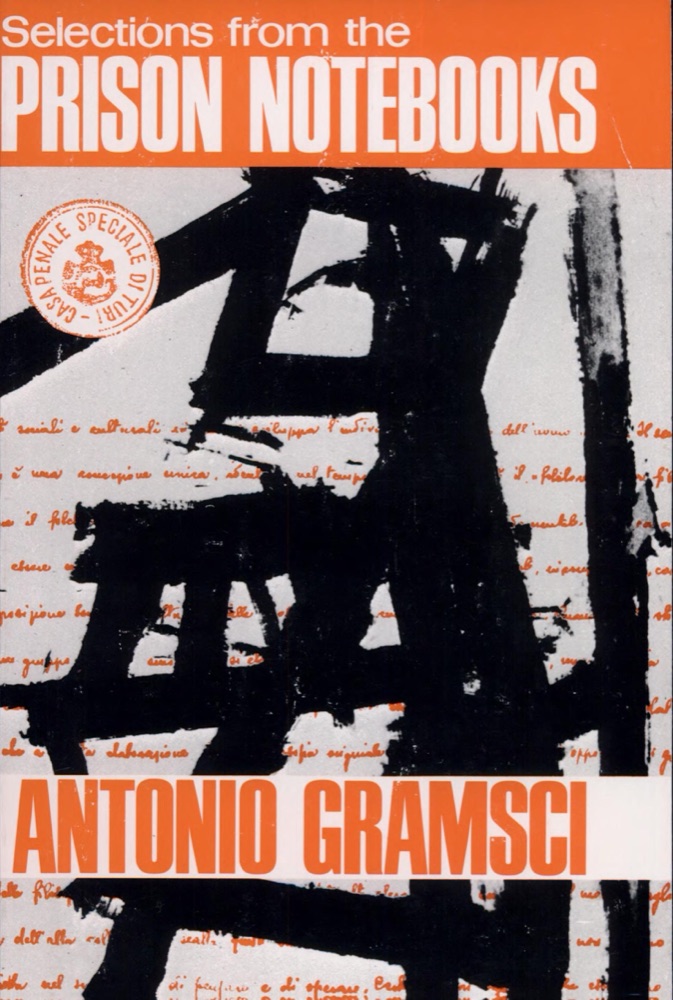 Selections from the Prison Notebooks
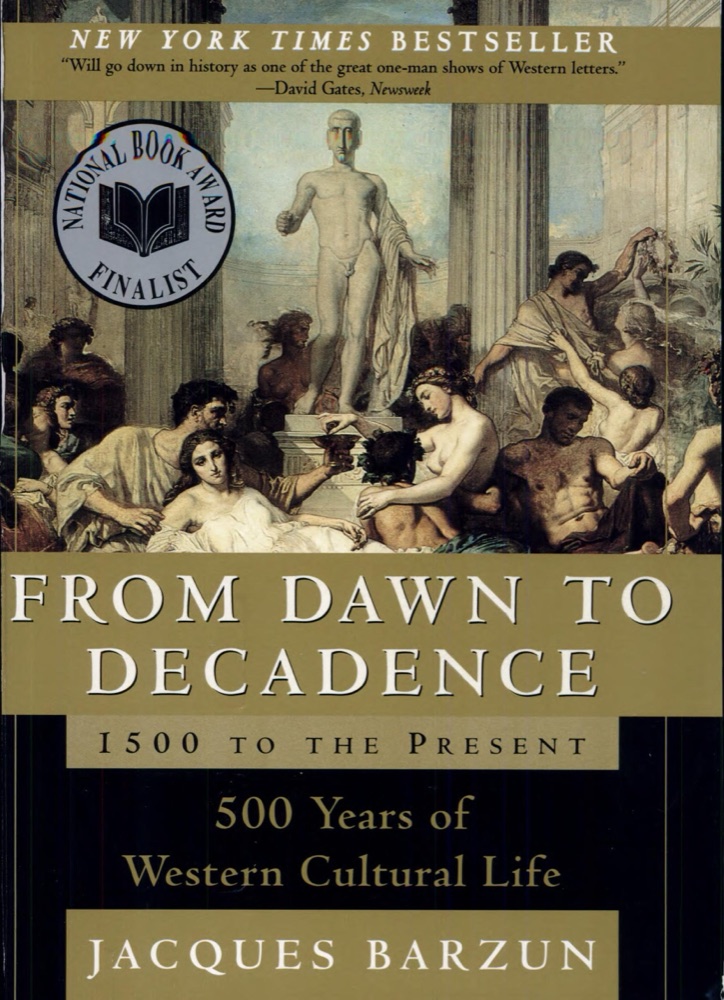 From Dawn to Decadence: 500 Years of Western Cultural Life, 1500 to the Present
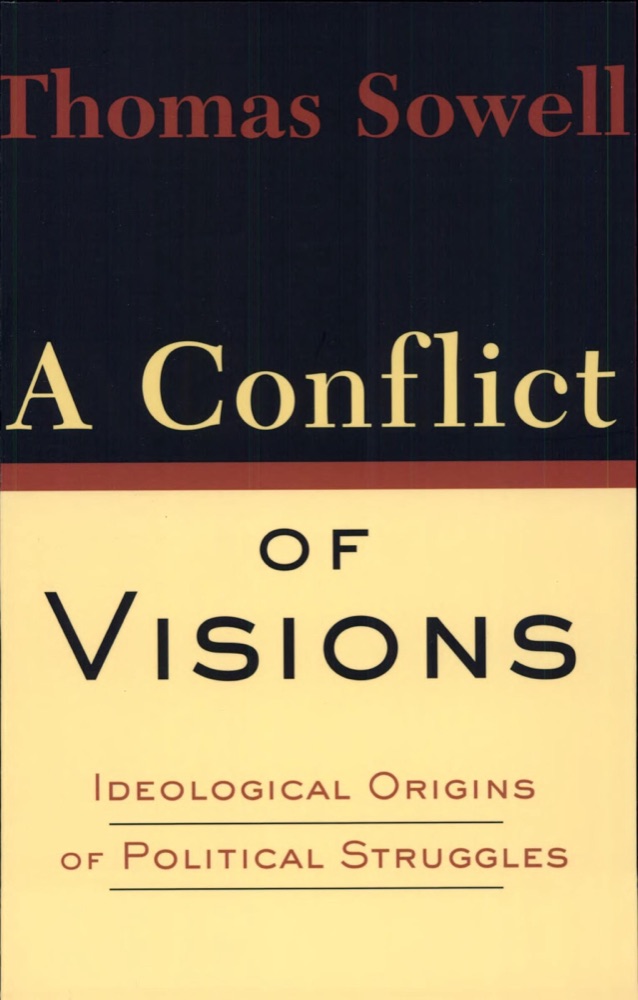 A Conflict of Visions: Ideological Origins of Political Struggles
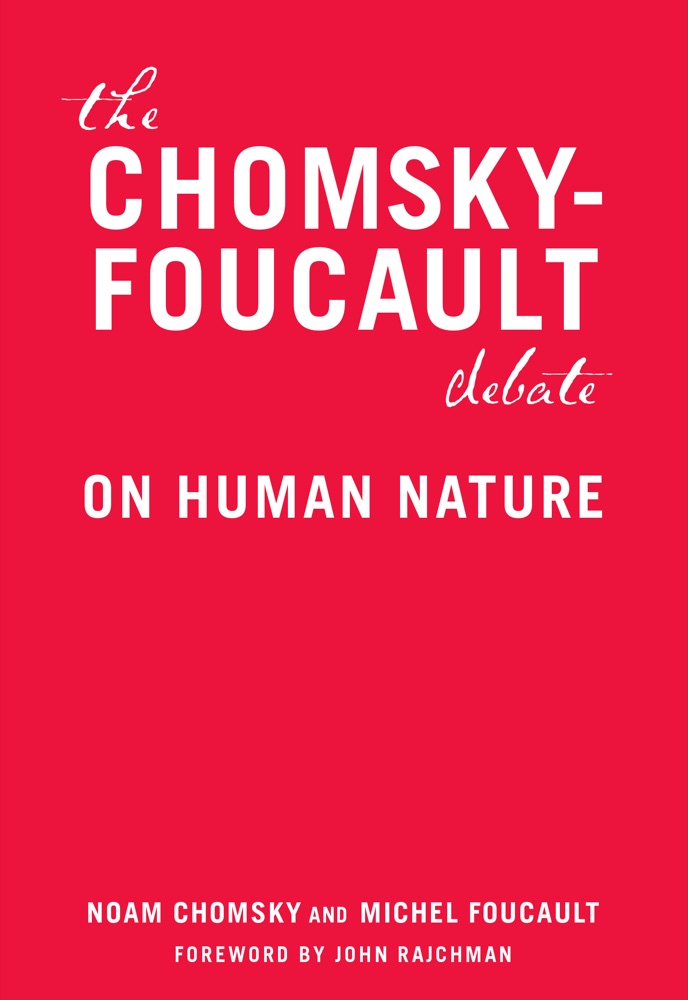 The Chomsky-Foucault Debate: On Human Nature
 The Autobiography of Eleanor Roosevelt
 Three Kingdoms
 Riding the Iron Rooster: By Train Through China
 Wild Swans: Three Daughters of China
 Postwar: A History of Europe Since 1945
 Tao: The Watercourse Way
 The Muqaddimah: An Introduction to History
 Political Order and Political Decay: From the Industrial Revolution to the Globalization of Democracy
 How Should We Then Live? The Rise and Decline of Western Thought and Culture
 Walden Two
 The Will to Battle
 The First Salute : View of the American Revolution