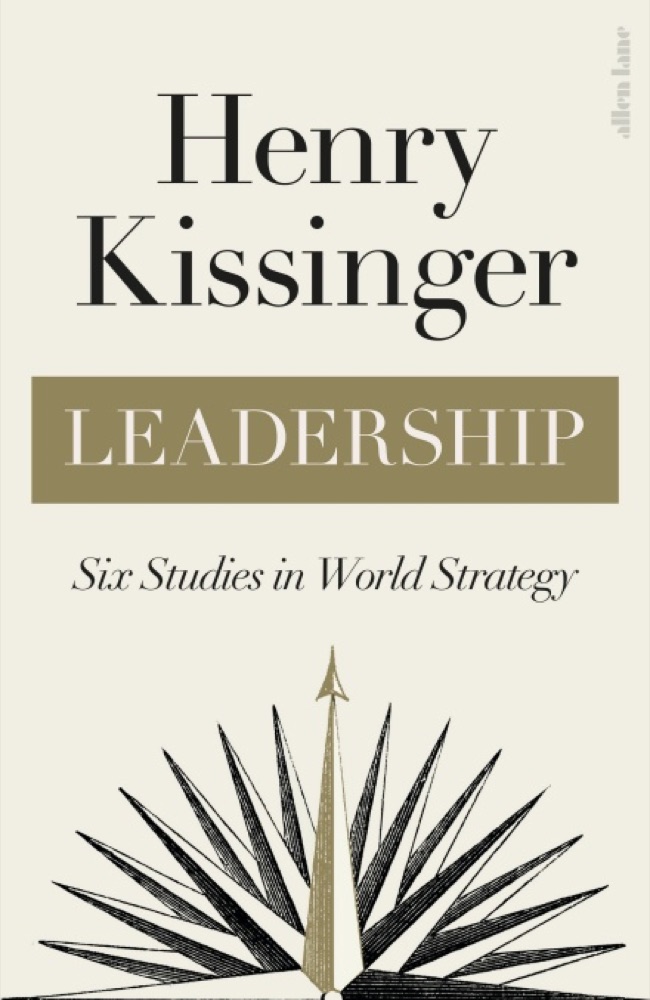
Quotes from the Book
Leadership is most essential during periods of transition, when values and institutions are losing their relevance, and the outlines of a worthy future are in controversy. In such times, leaders are called upon to think creatively and diagnostically: what are the sources of the society’s well-being? Of its decay? Which inheritances from the past should be preserved, and which adapted or discarded? Which objectives deserve commitment, and which prospects must be rejected no matter how tempting? And, at the extreme, is one’s society sufficiently vital and confident to tolerate sacrifice as a waystation to a more fulfilling future?
7
Leaders think and act at the intersection of two axes: the first, between the past and the future; the second, between the abiding values and aspirations of those they lead. Their first challenge is analysis, which begins with a realistic assessment of their society based on its history, mores, and capacities. Then they must balance what they know, which is necessarily drawn from the past, with what they intuit about the future, which is inherently conjectural and uncertain. It is this intuitive grasp of direction that enables leaders to set objectives and lay down a strategy.
6
The penalty for excessive ambition – what the Greeks called hubris – is exhaustion, while the price for resting on one’s laurels is progressive insignificance and eventual decay.
5
Moreover, events often move too quickly to allow for precise calculation; leaders have to make judgments based on intuitions and hypotheses that cannot be proven at the time of decision. Management of risk is as critical to the leader as analytical skill.
4
Good character does not assure worldly success, or triumph in statecraft, but it does provide firm grounding in victory and consolation in failure.
3
Well before the end of the 20th century however print had lost its former dominance. This resulted in, among other things, a different kind of person getting elected as leader. One who can present himself and his programs in a polished way, as Lee Quan Yu you observed in 2000, adding, “Satellite television has allowed me to follow the American presidential campaign. I am amazed at the way media professionals can give a candidate a new image and transform him, at least superficially, into a different personality. Winning an election becomes, in large measure, a contest in packaging and advertising. Just as the benefits of the printed era were inextricable from its costs, so it is with the visual age. With screens in every home entertainment is omnipresent and boredom a rarity. More substantively, injustice visualized is more visceral than injustice described. Television played a crucial role in the American Civil rights movement, yet the costs of television are substantial, privileging emotional display over self-command, changing the kinds of people and arguments that are taken seriously in public life. The shift from print to visual culture continues with the contemporary entrenchment of the Internet and social media, which bring with them four biases that make it more difficult for leaders to develop their capabilities than in the age of print. These are immediacy, intensity, polarity, and conformity. Although the Internet makes news and data more immediately accessible than ever, this surfeit of information has hardly made us individually more knowledgeable, let alone wiser, as the cost of accessing information becomes negligible, as with the Internet, the incentives to remember it seem to weaken. While forgetting anyone fact may not matter, the systematic failure to internalize information brings about a change in perception, and a weakening of analytical ability. Facts are rarely self-explanatory; their significance and interpretation depend on context and relevance. For information to be transmuted into something approaching wisdom it must be placed within a broader context of history and experience. As a general rule, images speak at a more emotional register of intensity than do words. Television and social media rely on images that inflamed the passions, threatening to overwhelm leadership with the combination of personal and mass emotion. Social media, in particular, have encouraged users to become image conscious spin doctors. All this engenders a more populist politics that celebrates utterances perceived to be authentic over the polished sound bites of the television era, not to mention the more analytical output of print. The architects of the Internet thought of their invention as an ingenious means of connecting the world. In reality, it has also yielded a new way to divide humanity into warring tribes. Polarity and conformity rely upon, and reinforce, each other. One is shunted into a group, and then the group polices once thinking. Small wonder that on many contemporary social media platforms, users are divided into followers and influencers. There are no leaders. What are the consequences for leadership? In our present circumstances, Lee's gloomy assessment of visual media's effects is relevant. From such a process, I doubt if a Churchill or Roosevelt or a de Gaulle can emerge. It is not that changes in communications technology have made inspired leadership and deep thinking about world order impossible, but that in an age dominated by television and the Internet, thoughtful leaders must struggle against the tide.
3
Certain basics about human nature do not change. Man needs a certain moral sense of right and wrong. There is such a thing called evil, and it is not the result of being a victim of society. You are just an evil man, prone to do evil things, and you have to be stopped from doing them.[125]
3
To understand a man,’ Napoleon is said to have observed, ‘look at the world when he was twenty.’ Thatcher had turned twenty in 1945.
2
The scientist thus learns truth experimentally or mathematically; the strategist reasons at least partly by analogy with the past – first establishing which events are comparable and which prior conclusions remain relevant.
2
As Charles de Gaulle observed in his meditation on leadership, The Edge of the Sword (1932), the artist ‘does not renounce the use of his intelligence’ – which is, after all, the source of ‘lessons, methods, and knowledge’. Instead, the artist adds to these foundations ‘a certain instinctive faculty which we call inspiration’, which alone can provide the ‘direct contact with nature from which the vital spark must leap’.
2
Statesmen are not called upon only to settle easy questions. These often settle themselves. It is where the balance quivers, and the proportions are veiled in mist, that the opportunity for world-saving decisions presents itself.
2
Ambitious but not revolutionary, they work within what they perceive as the grain of history, moving their societies forward while viewing their political institutions and fundamental values as an inheritance to be transmitted to future generations (albeit with modifications that sustain their essence). Wise leaders in the statesman mode will recognize when novel circumstances require existing institutions and values to be transcended. But they understand that, for their societies to thrive, they will have to ensure that change does not go beyond what it can sustain. Such statesmen include the seventeenth-century leaders who fashioned the Westphalian state system[*] as well as nineteenth-century European leaders such as Palmerston, Gladstone, Disraeli and Bismarck. In the twentieth century, Theodore and Franklin Roosevelt, Mustafa Kemal Ataturk and Jawaharlal Nehru were all leaders in the statesman mode.
1
Most leaders are not visionary but managerial.
1
Como líder de la oposición, Thatcher rechazó el agotado consenso y conjuró una visión optimista del futuro. Y luego, cuando se convirtió en primera ministra, llevó a su sociedad a un lugar en el que nunca antes había estado. Esto exigía coraje y carácter: coraje para alejarse de una manera tan radical de los lugares comunes de la época; carácter para mantener el rumbo de forma coherente mientras su dura medicina provocaba intensas quejas de los pacientes. Thatcher demostró una y otra vez su calma y un compromiso inquebrantable
1
con sus convicciones. También cuando las condiciones eran ambiguas, había grandes riesgos y el apoyo público parecía disminuir. Nunca se retractó de su estrategia, al comienzo de su mandato, de reducir la oferta de dinero para frenar la inflación.
1
El renacimiento que experimentó Reino Unido gracias a Thatcher fue un proyecto económico y espiritual. Cuando se convirtió en primera ministra, la decadencia nacional no solo se debía a una economía
1
the PAP’s first nine years in power, Lee set aside nearly one-third of Singapore’s budget for education – an astonishing proportion in relation to neighboring countries, or indeed any country in the world.[59]
1
scientist James Q. Wilson: ‘habits of moderate action; more specifically, acting with due restraint on one’s impulses, due regard for the rights of others, and reasonable concern for distant consequences’.[
French playwright Pierre Corneille suggested was the price of statesmanship: ‘To whom can I confide / The secrets of my soul and the cares of mylife?
French playwright PierreCorneille suggested was the price of statesmanship: 'To whomcan I confide / The secrets of my soul and the cares of mylife?
recuperar su importancia e incluir materias como la filosofía, la política, la geografía humana, las lenguas modernas, la historia, el pensamiento económico, la literatura e incluso, tal vez, la antigüedad clásica, cuyo estudio fue durante mucho tiempo la cuna de los estadistas.
I have come to you so that together we shall build a durable peace based on justice to avoid the shedding of one single drop of blood by both sides. It is for this reason that I have proclaimed my readiness to go to the farthest corner of the earth.[156]
Today we honor a great statesman who, with foresight and skill, gave our country perspective and stability after the failure of the Weimar Republic and the horrors of National Socialism. We bow to Konrad Adenauer with great gratitude. We also take his merit as an obligation for our tasks in a confusing, difficult world. In view of what Konrad Adenauer and his contemporaries have achieved, we should have the courage to continue this work.[83]
Watch on YouTube
About Henry Kissinger
We have collected 82 quotes from 3 books by Henry Kissinger on BookQuoters.
More about the author →More by Henry Kissinger
 World Order
About the book
Henry Kissinger analyses how six extraordinary leaders he has known have shaped their countries and the world'Leaders,' writes Henry Kissinger in this compelling book, 'think and act at the intersection of two the first, between the past and the future; the second between the abiding values and aspirations of those they lead. They must balance what they know, which is necessarily drawn from the past, with what they intuit about the future, which is inherently conjectural and uncertain. It is this intuitive grasp of direction that enables leaders to set objectives and lay down a strategy.'In Leadership , Kissinger analyses the lives of six extraordinary leaders through the distinctive strategies of statecraft which he believes they embodied. After the Second World War, Konrad Adenauer brought defeated and morally bankrupt Germany back into the community of nations by what Kissinger calls
Book details
- First published
- 2022
- Author
- Henry Kissinger
- Genre
- Nonfiction
- Goodreads rating
- 4.24 (3k ratings)
The buzz
- The GuardianReview in The Guardianprofessional review (via Book Marks)
- The TimesReview in The Timesprofessional review (via Book Marks)
- Publishers WeeklyReview in Publishers Weeklyprofessional review (via Book Marks)
- New StatesmanReview in New Statesmanprofessional review (via Book Marks)
- OpenlettersreviewReview in Openlettersreviewprofessional review (via Book Marks)
- AirmailReview in Airmailprofessional review (via Book Marks)
Keep reading
World Order
 The Discovery of India
 The Autobiography of Eleanor Roosevelt
 The Next Decade: Where We've Been . . . and Where We're Going
 The Machiavellians: Defenders of Freedom
 Profiles in Courage
 Reflections on the Revolution in France
 Upheaval: Turning Points for Nations in Crisis
 Selections from the Prison Notebooks
 Rules for Radicals: A Pragmatic Primer for Realistic Radicals
 Independent Study
 Human Action: A Treatise on Economics
 Dictator
 The Lessons of History
 Children of Dune
 A History of the World in 100 Objects
 From Dawn to Decadence: 500 Years of Western Cultural Life, 1500 to the Present
 The Will to Battle
 Conversations With Myself
 Quotations from Chairman Mao Tsetung
 A Promised Land
 How to Be a Stoic: Using Ancient Philosophy to Live a Modern Life
 Principles for Dealing with the Changing World Order: Why Nations Succeed and Fail
 Democracy in America
 The New Penguin History of The World
 The American Spirit: Who We Are and What We Stand For
 God Emperor of Dune
 The Ides of March
 Ill Fares the Land
 After Virtue
 Closing the Ring
 The Will to Power
 In the Light of What We Know
 The Road to Serfdom
 Civil Disobedience and Other Essays
 The Proud Tower: A Portrait of the World Before the War, 1890-1914
 Walden Two
 Collapse: How Societies Choose to Fail or Succeed
 The Last Lion: Winston Spencer Churchill: Alone, 1932-40
 The Last Lion 3: Winston Spencer Churchill: Defender of the Realm, 1940-1965
 How Should We Then Live? The Rise and Decline of Western Thought and Culture
 Hell and Other Destinations: A 21st-Century Memoir
 The Mask of Dimitrios
 De la Démocratie en Amérique, tome II
 The Wizard and the Prophet: Two Remarkable Scientists and Their Dueling Visions to Shape Tomorrow's World
 The Age of Absurdity: Why Modern Life makes it Hard to be Happy
 The March of Folly: From Troy to Vietnam
 Thrawn
 First As Tragedy, Then As Farce
 Conspirators' Hierarchy: The Story of the Committee of 300
 Brave New World Revisited
 The Hands of the Emperor
 Enlightenment Now: The Case for Reason, Science, Humanism, and Progress
 Power vs. Force
 House Corrino
 Confidence Men: Wall Street, Washington, and the Education of a President
 The Fatal Conceit: The Errors of Socialism
 The Argumentative Indian: Writings on Indian History, Culture and Identity
 Small Is Beautiful: Economics as if People Mattered