
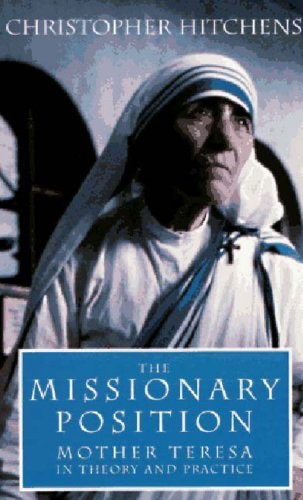
 The Missionary Position: Mother Teresa in Theory and Practice
Quotes from the Book
The burden therefore rests with the American legal community and with the American human-rights lobbies and non-governmental organizations. They can either persist in averting their gaze from the egregious impunity enjoyed by a notorious war criminal and lawbreaker, or they can become seized by the exalted standards to which they continually hold everyone else. The current state of suspended animation, however, cannot last. If the courts and lawyers of this country will not do their duty, we shall watch as the victims and survivors of this man pursue justice and vindication in their own dignified and painstaking way, and at their own expense, and we shall be put to shame.
22
Kissinger projects a strong impression of a man at home in the world and on top of his brief. But there are a number of occasions when it suits him to pose as a sort of Candide: naive, and ill-prepared for and easily unhorsed by events. No doubt this pose costs him something in point of self-esteem. It is a pose, furthermore, which he often adopts at precisely the time when the record shows him to be knowledgeable, and when knowledge or foreknowledge would also confront him with charges of responsibility or complicity.
12
[T]hose who willed the means and wished the ends are not absolved from guilt by the refusal of reality to match their schemes.
10
Some statements are too blunt for everyday, consensual discourse. In national “debate,” it is the smoother pebbles that are customarily gathered from the stream, and used as projectiles. They leave less of a scar, even when they hit. Occasionally, however, a single hard-edged remark will inflict a deep and jagged wound, a gash so ugly that it must be cauterized at once. In
2
Before Admiral Guzzetti traveled to Washington to see Kissinger in October 1976, Hill had met him and told him that “murdering priests and dumping forty-seven bodies in the street in one day could not be seen in the context of defeating the terrorists quickly; on the contrary such acts were probably counterproductive. What the USG [United States Government] hoped was that the GOA [Government of Argentina] could soon defeat terrorists, yes, but as nearly as possible within the law.” Even this admonition, which might be seen by some as containing a loophole or two, was considered too harsh by Kissinger. Guzzetti
2
After the collapse of the Portuguese fascist regime in Lisbon in April 1974, that country’s colonial empire deliquesced with extraordinary speed. The metropolitan power retained control only in the enclave of Macau, on the coast of China, and later remitted this territory to Beijing under treaty in 2000. In Africa, after many vicissitudes, power was inherited by the socialist-leaning liberation movements which had, by their tactic of guerrilla warfare, brought about the Portuguese revolution in the first place and established warm relations with its first generation of activists.
1
Not all the elements of this partitionist policy can be charged to Kissinger personally; he inherited the Greek junta and the official dislike of Makarios. However, even in the dank obfuscatory prose of his own memoirs, he does admit what can otherwise be concluded from independent sources. Using covert channels, and short-circuiting the democratic process in his own country, he made himself an accomplice in a plan of political assassination which, when it went awry, led to the deaths of thousands of civilians, the violent uprooting of almost 200,000 refugees, and the creation of an unjust and unstable amputation of Cyprus which constitutes a serious threat to peace a full quarter-century later.
1
Watch on YouTube
About Christopher Hitchens
We have collected 184 quotes from 9 books by Christopher Hitchens on BookQuoters.
More about the author →More by Christopher Hitchens
The Missionary Position: Mother Teresa in Theory and Practice
 Letters to a Young Contrarian
 god is Not Great: How Religion Poisons Everything
 Hitch-22: A Memoir
About the book
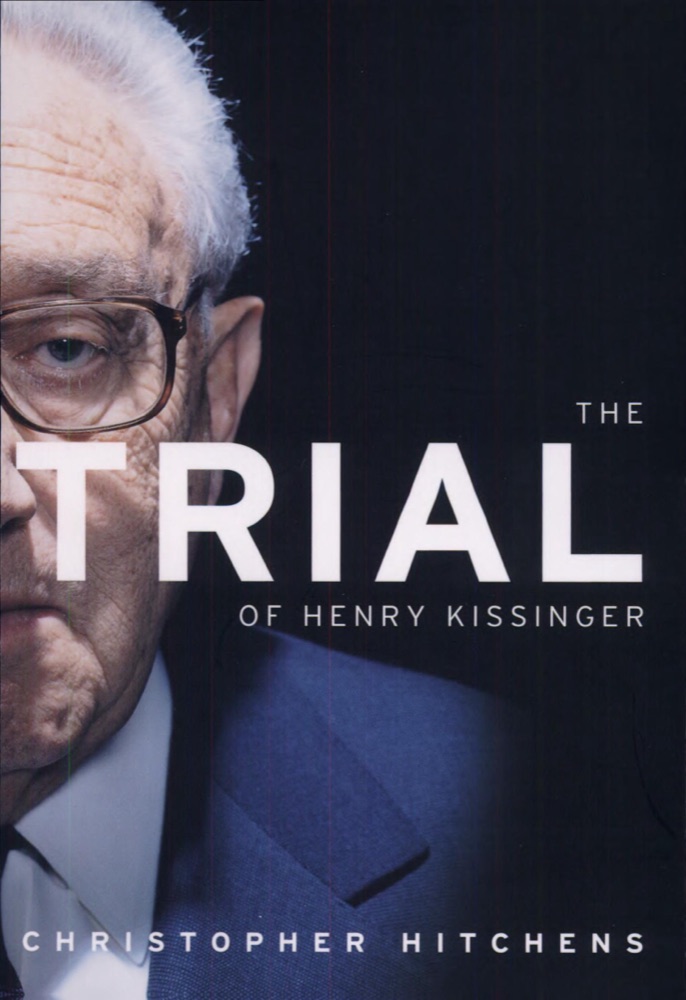
With the detention of Augusto Pinochet, and intense international pressure for the arrest of Slobodan Milosovic, the possibility of international law acting against tyrants around the world is emerging as a reality. In this incendiary book, Hitchens takes the floor as prosecuting counsel and mounts a devastating indictment of a man whose ambitions and ruthlessness have directly resulted in both individual murders and widespread, indiscriminate slaughter. He investigates and reveals Kissingers' involvement in: the deliberate mass killings of civilian populations in Indochina; the deliberate collusion in mass murder and assassination in Bangladesh; the personal suborning and planning of a murder, of a senior constitutional officer in a democratic nation that the USA was not war with - Chile; the incitement and enabling of a mass genocide in East Timor; and the personal involvement in the k
Book details
- First published
- 2001
- Author
- Christopher Hitchens
- Genre
- Nonfiction
- Goodreads rating
- 3.96 (5k ratings)
Keep reading
 The Mask of Dimitrios
 Imperial Ambitions: Conversations on the Post-9/11 World
 Vietnam: An Epic Tragedy, 1945-1975
 The Jakarta Method: Washington's Anticommunist Crusade and the Mass Murder Program that Shaped Our World
 Arguably: Selected Essays
 One Day, Everyone Will Have Always Been Against This
 World Order
 Closing the Ring
 Modern Times: The World from the Twenties to the Nineties
 The Invisible Bridge: The Fall of Nixon and the Rise of Reagan
 Koba the Dread: Laughter and the Twenty Million
 No Name in the Street
 Fascism: A Warning
 A People's History of the United States
 Dead Fall
 Radio Free Albemuth
 Hidden History: An Exposé of Modern Crimes, Conspiracies, and Cover-Ups in American Politics
 Eichmann in Jerusalem: A Report on the Banality of Evil
 The Strange Death of Europe: Immigration, Identity, Islam
 Conspirators' Hierarchy: The Story of the Committee of 300
 What's Left?
 Understanding Power: The Indispensable Chomsky
 The Last Lion: Winston Spencer Churchill: Alone, 1932-40
 Leadership : Six Studies in World Strategy
 The Message
 Flashpoints: The Emerging Crisis in Europe
 The Black Wolf
 The Secret Agent
 The Honourable Schoolboy
 The Machiavellians: Defenders of Freedom
 Postwar: A History of Europe Since 1945
 The Final Days
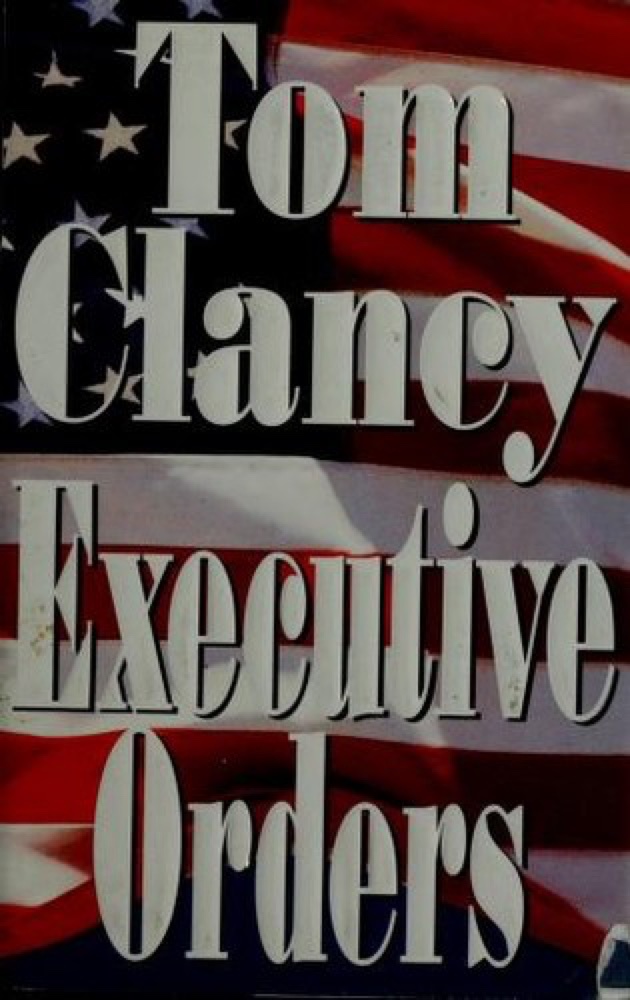 Executive Orders
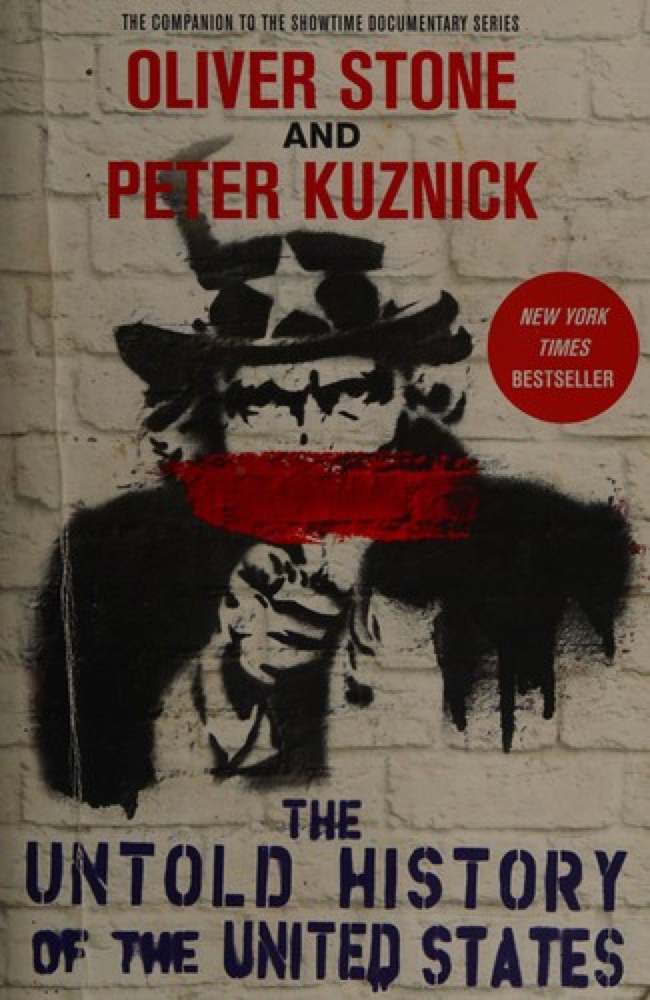 The Untold History of The United States
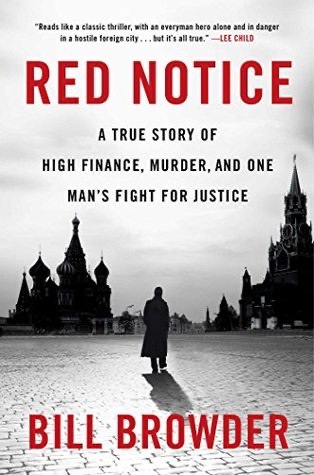 Red Notice: A True Story of High Finance, Murder, and One Man's Fight for Justice
 Behold a Pale Horse
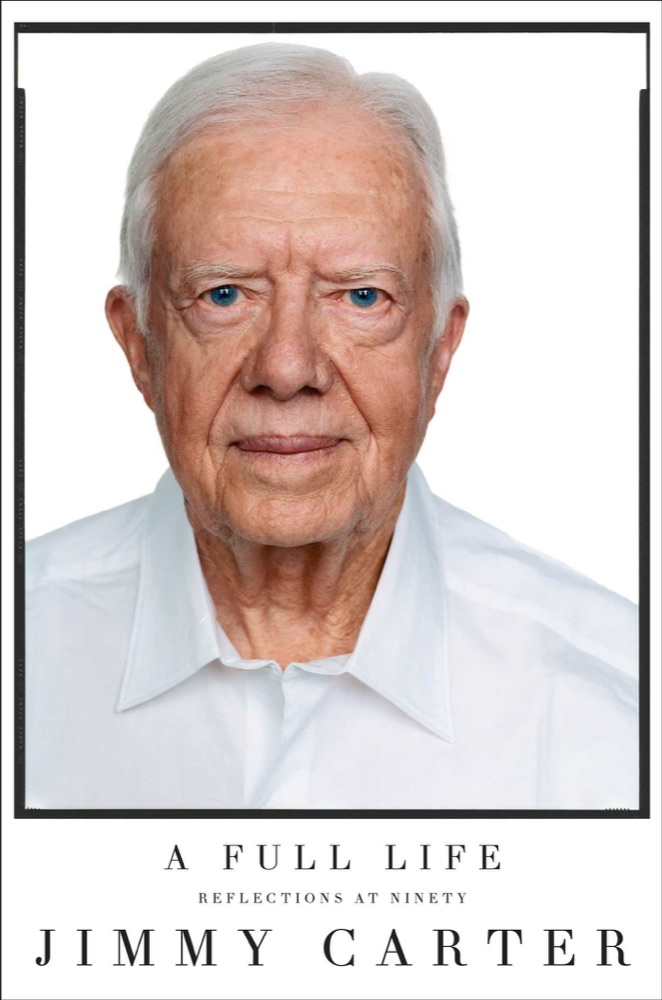 A Full Life: Reflections at Ninety
 Nixonland: The Rise of a President and the Fracturing of America
 Perfect Victims and the Politics of Appeal
 We Wish to Inform You That Tomorrow We Will Be Killed with Our Families
 Epitaph for a Spy
 The Will to Battle
 The Chomsky-Foucault Debate: On Human Nature
 Patriot: A Memoir
 A World Without Islam
 On Tyranny: Twenty Lessons from the Twentieth Century
 It Can't Happen Here
 Recognizing the Stranger: On Palestine and Narrative
 The Spy Who Came In from the Cold
 Darkness at Noon
 Witness
 Joseph Anton: A Memoir
 King Leopold's Ghost
 The Gulag Archipelago 1918-1956
 Defying Hitler
 Transition
 A Russian Journal
 First As Tragedy, Then As Farce
 They Called Us Enemy
 This Kind of War: A Study in Unpreparedness