
 Reflections on the Revolution in France
Quotes from the Book
There is no one force, no group, and no class that is the preserver of liberty. Liberty is preserved by those who are against the existing chief power. Oppositions which do not express genuine social forces are as trivial, in relation to entrenched power, as the old court jesters.
16
He does no dreaming about a “perfect state” or “absolute justice.” In fact, Mosca suggests what I had occasion to mention in connection with Dante: namely, that political doctrines which promise utopias and absolute justice are very likely to lead to much worse social effects than doctrines less entrancing in appearance; that utopian programs may even be the most convenient of cloaks for those whose real aims are most rightly suspect.
7
If the political truths stated or approximated by Machiavelli were widely known by men, the success of tyranny and all the other forms of oppressive political rule would become much less likely. A deeper freedom would be possible in society than Machiavelli himself believed attainable.
2
Independence, the first condition of liberty, can be secured in the last analysis only by the armed strength of the citizenry itself, never by mercenaries or allies or money; consequently arms are the first foundation of liberty. There is no lasting safeguard for liberty in anything but one’s own strength.
2
Political analysis becomes, like other dreams, the expression of human wish or the admission of practical failure.
1
Formally, a new election for an office many be held every year or two. But, in practice, the moere fact that an invidual has held the office in the past is thought by him and by the members to give him a moral claim on it for the future; or, if not on the same office, then on some other leadership post in the organization. It becomes almost unthinkable that those who have served the organization so well, or even not so well, in the past should be thrown aside. If the vagaries of elections by chance turn out wrong, then a niche is found in an embassy or bureau or post-office, or, at the end, in the pension list.
1
Gods, whether of Progress or the Old Testament, ghosts of saintly, or revolutionary, ancestors, abstracted moral imperatives, ideals cut wholly off from mere earth and mankind, utopias beckoning from the marshes of their never-never-land—these, and not the facts of social life together with probable generalizations based on those facts, exercise the final controls over arguments and conclusions. Political analysis becomes, like other dreams, the expression of human wish or the admission of practical failure.
1
Similarly, we may observe that various groups can profess the same goals and yet take differing and often directly conflicting lines of action. Reformist, syndicalist, Trotskyist, and Stalinist parties of the labor movement all cite the same texts of Marx while cutting each others’ throats; all Christian nations have the New Testament and the Fathers on their clashing sides. In one state, the Seventh Commandment forbids capital punishment; in its neighbor, the same Commandment justifies capital punishment. England and the United States both believe in freedom of the seas; but for England this can mean capturing United States ships as contraband, and for the United States, sending them through the blockade. A belief in the immortality of the soul is compatible with a total disregard of material goods (this short life counting nothing against eternity) or total concentration on them (thus attesting, as Calvin taught, that the active soul is elected to blessedness in after life).
If our interest is in man as he is on this earth, so far as we can learn from the facts of history and experience, we must conclude that he has no natural aspiration for peace or harmony, he does not form states in order to achieve an ideally good society, nor does he accept mutual organization to secure the maximum social welfare.
Burke remarked more than a century ago that any political system that assumes the existence of superhuman or heroic virtues can result only in vice and corruption.” (P. 288.)
Dante, whom commentators willing to judge from surfaces are so fond of calling “the first modern man,” “the precursor of the Renaissance,” was their spokesman. His practical political aims toward his country were traitorous; his sociological allegiance was reactionary, backward-looking. Without his exile, true enough, it may well be that he would never have written his poem.
Nobility, it was said, became a disgrace in the commercially based democracy of the Florentine Republic.
After a number of experiments in internal administration, the government of the city, firmly Guelph, gravitated into the hands of the Merchant Guilds, now representing the chief social force in the town. Membership in a Guild became a prerequisite of political office.
Third, the many arguments that Dante uses in favor of his position are, from a purely formal point of view, both good and bad, mostly bad; but, from the point of view of actual political conditions in the actual world of space and time and history, they are almost without exception completely irrelevant
Second, the lesser goals derived from the ultimate goal—the development of the full potentialities of all men, universal peace, and a single unified world-state—though they are perhaps not inconceivable, are nevertheless altogether utopian and materially impossible.
In the first place, we may note that Dante’s ultimate goal (eternal salvation in Heaven) is meaningless since Heaven exists, if at all, outside of space and time, and can therefore have no bearing on political action.
The intent of sincere humanitarians is to do good to society, just as the intent of the child who kills a bird by too much fondling is to do good to the bird.
social man is not, as he has been defined for so many centuries, a primarily “rational animal.” When the reformers tell us that society can be improved
Through the Machiavellians I began to understand more thoroughly what I had long felt: that only by renouncing all ideology can we begin to see the world and man. James Burnham
for money cannot find good soldiers, but good soldiers will be sure to find money.…
By examples from Roman and Greek and Carthaginian and Italian and French history, he shows that the “middle way” in such cases almost invariably works out badly; that the enemy should be either completely crushed or completely conciliated, that a mixture of the two simply guarantees both the continuation of a cause for resentment and revenge and the possibility for later translating these into action.
We believe we are disputing the merits of a balanced budget and a sound currency when the real conflict is deciding what group shall regulate the distribution of the currency. We imagine we are arguing over the moral and legal status of the principle of the freedom of the seas when the real question is who is to control the seas.
There is, he says, a fairly small number of relatively constant factors (or “nuclei”) which change little or not at all from age to age or from culture to culture. These constant factors he calls “residues.” Along with these there are other factors which are variable, change rapidly, and are different from age to age and nation to nation. These variable factors he calls “derivations.
Watch on YouTube
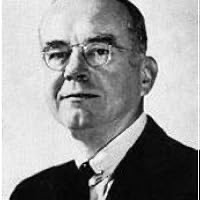
About James Burnham
We have collected 23 quotes from 1 book by James Burnham on BookQuoters.
More about the author →About the book
This classic work of political theory and practice offers an account of the modern Machiavellians, a remarkable group who have been influential in Europe and practically unknown in the United States. The book devotes a long section to Machiavelli himself as well as to such modern Machiavellians as Gaetano Mosca, Georges Sorel, Robert Michels and Vilfredo Pareto. Burnham contends that the writings of these men hold the key both to the truth about politics and to the preservation of political liberty.
Book details
- First published
- 1943
- Author
- James Burnham
- Genre
- Nonfiction
- Goodreads rating
- 4.27 (2k ratings)
Keep reading
Reflections on the Revolution in France
 Liberalism: The Classical Tradition
 Ameritopia: The Unmaking of America
 Rules for Radicals: A Pragmatic Primer for Realistic Radicals
 Political Theology: Four Chapters on the Concept of Sovereignty
 The Road to Serfdom
 The Spirit of the Laws
 The Constitution of Liberty
 The Discourses
 Democracy in America
 Civil Disobedience and Other Essays
 Capitalism: The Unknown Ideal
 A Conflict of Visions: Ideological Origins of Political Struggles
 Politics
 The Iron Heel
 Human Action: A Treatise on Economics
 First As Tragedy, Then As Farce
 The Old Regime and the French Revolution
 The Lessons of History
 Ill Fares the Land
 Chomsky On Anarchism
 Rights of Man
 Common Sense
 Civil Disobedience
 Selections from the Prison Notebooks
 A People's History of the United States
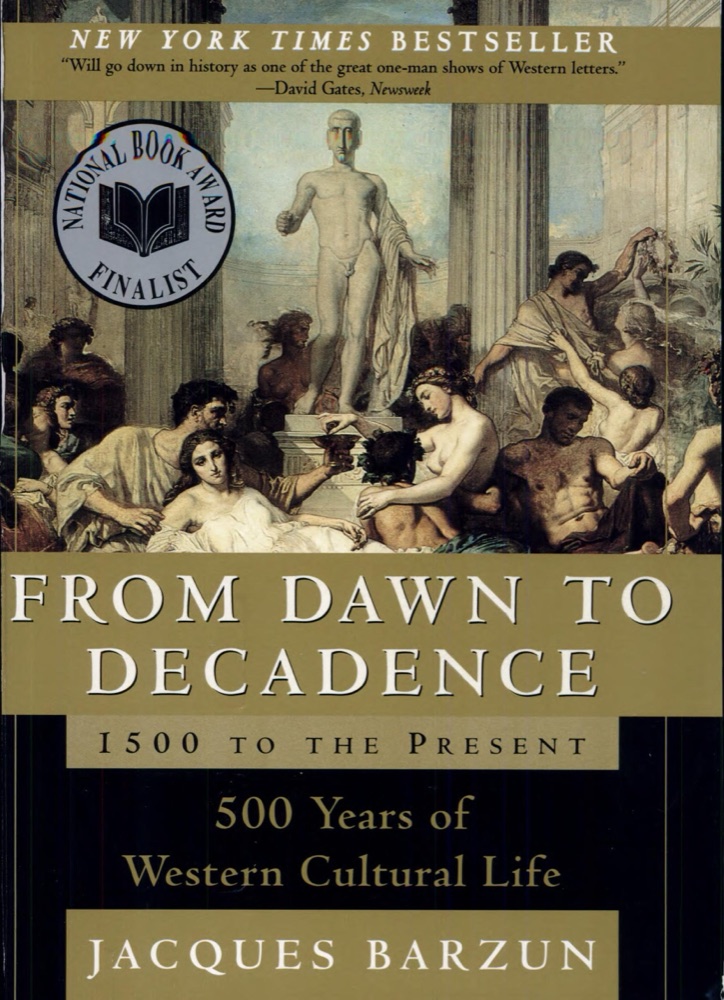 From Dawn to Decadence: 500 Years of Western Cultural Life, 1500 to the Present
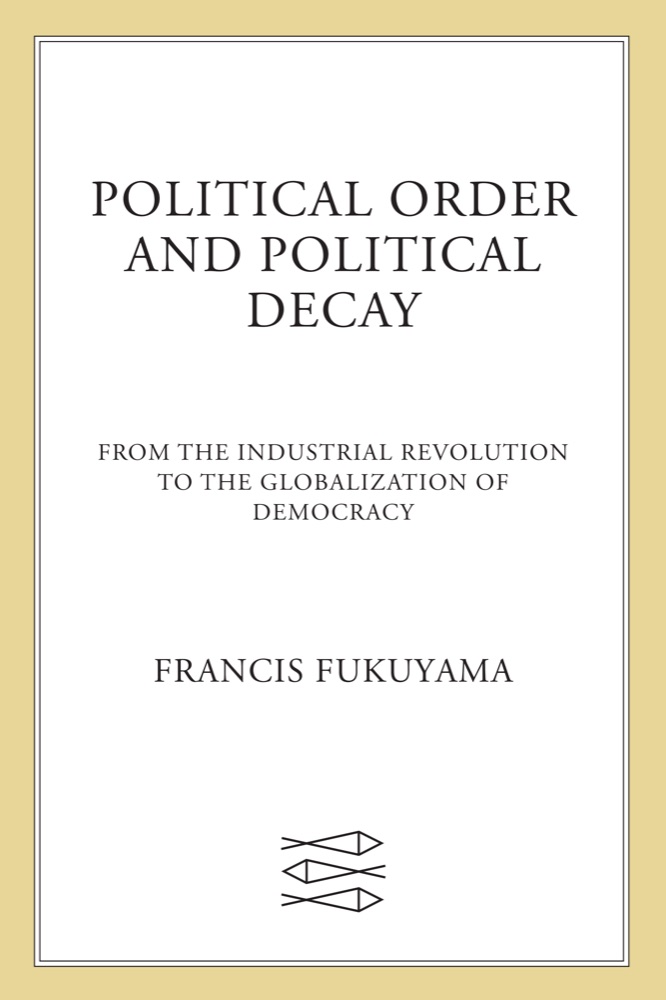 Political Order and Political Decay: From the Industrial Revolution to the Globalization of Democracy
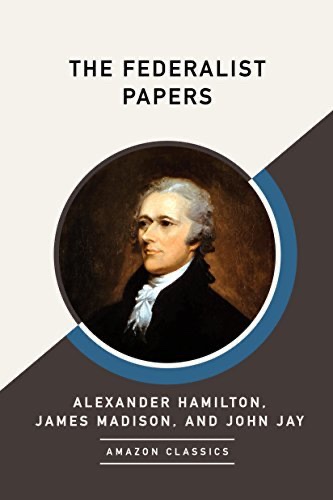 The Federalist Papers
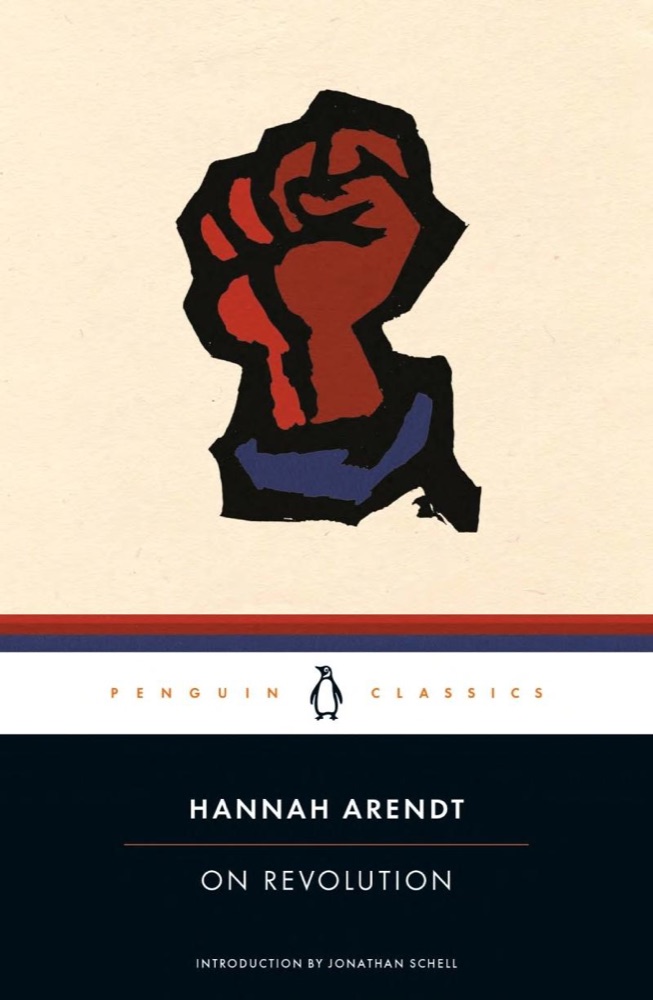 On Revolution
 The Origins of Totalitarianism
 After Virtue
 A Theory of Justice
 Conspirators' Hierarchy: The Story of the Committee of 300
 Discourse on the Origin of Inequality
 On Liberty
 Walden Two
 Capitalism, Socialism and Democracy
 The Soul of Man Under Socialism
 Anarchy, State, and Utopia
 On the Republic / On the Laws
 The Open Society and Its Enemies - Volume One: The Spell of Plato
 The End of History and the Last Man
 The Social Contract
 De la Démocratie en Amérique, tome II
 Fascism: A Warning
 The Eighteenth Brumaire of Louis Bonaparte
 Leadership : Six Studies in World Strategy
 The Chomsky-Foucault Debate: On Human Nature
 Utopia
 On the Genealogy of Morals
 Heretics
 World Order
 Modern Times: The World from the Twenties to the Nineties
 The Reactionary Mind: Conservatism from Edmund Burke to Sarah Palin
 The Discovery of India
 The Age of Revolution, 1789–1848
 Arguably: Selected Essays
 Elements of the Philosophy of Right
 Twilight of Democracy: The Seductive Lure of Authoritarianism