
 Black Rednecks and White Liberals
Quotes from the Book
There are no solutions. There are only trade-offs.
298
Each new generation born is in effect an invasion of civilization by little barbarians, who must be civilized before it is too late.
59
Clearly, only very unequal intellectual and moral standing could justify having equality imposed, whether the people want it or not, as Dworkin suggests, and only very unequal power would make it possible.
21
practically every individual has some advantage over all others because he possesses unique information of which beneficial use might be made, but of which use can be made only if the decisions depending on it are left to him or are made with his active cooperation.
7
I have never known much good done by those who affected to trade for the public good.
6
The most dangerous state in the growth of civilization may well be that in which man has come to regard all these beliefs as superstitions and refuses to accept or to submit to anything which he does not rationally understand. The rationalist whose reason is not sufficient to teach him those limitations of the power of conscious reason, and who despises all the institutions and customs which have not been consciously designed, would thus become the destroyer of the civilization built upon them.
5
While believers in the unconstrained vision seek the special causes of war, poverty, and crime, believers in the constrained vision seek the special causes of peace, wealth, or a law-abiding society.
4
His was the unconstrained vision of human nature, in which man was capable of directly feeling other people’s needs as more important than his own, and therefore of consistently acting impartially, even when his own interests or those of his family were involved.
4
Alexander Hamilton in The Federalist Papers: It is the lot of all human institutions, even those of the most perfect kind, to have defects as well as excellencies—ill as well as good propensities.
3
Visions are the foundations on which theories are built. The final structure depends not only on the foundation, but also on how carefully and consistently the framework of theory is constructed and how well buttressed it is with hard facts.
3
...the constrained vision does not defend existing inequalities... as just. According to Hayek, "the manner in which the benefits and burdens are apportioned by the market mechanism would in many instances have to be regarded as very unjust if it were the result of a deliberate allocation...
2
...loyalty, seen as an abandonment of impartiality in future behavior by those with the unconstrained vision, was viewed very differently by those with the constrained vision... the alternative to loyalty is not impartiality but pure selfishness. The kinds of emotional attachments which lead to loyalty are thus seen as beneficial social ties, essential to the functioning of the whole society.
2
In short, attempts to equalize economic results lead to greater—and more dangerous—inequality in political power.
2
Adherents of both the constrained and the unconstrained visions each see fascism as the logical extension of the adversary’s vision.
2
The first thing a man will do for his ideals is lie,
1
intellectuals’ narrow conception of what constitutes knowledge and wisdom.
1
Despite necessary caveats, it remains an important and remarkable phenomenon that how human nature is conceived at the outset is highly correlated with the whole conception of knowledge, morality, power, time, rationality, war, freedom, and law which defines a social vision.
1
The constrained vision is a tragic vision of the human condition. The unconstrained vision is a moral vision of human intentions, which are viewed as ultimately decisive. The unconstrained vision promotes pursuit of the highest ideals and the best solutions. By contrast, the constrained vision sees the best as the enemy of the good—a vain attempt to reach the unattainable being seen as not only futile but often counterproductive, while the same efforts could have produced a more viable and beneficial trade-off.
1
Visions are all, to some extent, simplistic—though that is a term usually reserved for other people’s visions, not our own.
1
Whenever A can get B to do what A wishes, then A has "power" over B, according to the results-oriented definition of the unconstrained vision... But if B is in a process in which he has at least as many options as he had before A came along, then A has not "restricted" B's choices, and so has no "power" over him, by the process definition... characteristic of the constrained vision.
1
Adam Smith's entire economic doctrine of laissez-faire implicitly assumed the same lack of correspondence between intention and effect, for the systemic benefits of capitalism were no part of the intention of capitalists.
1
The greatest danger of the concept of social justice, according to Hayek, is that it undermines and ultimately destroys the concept of a rule of law, in order to supersede merely “formal” justice, as a process governed by rules, with “real” or “social” justice as a set of results to be produced by expanding the power of government to make discretionary determinations in domains once exempt from its power.
1
In the constrained vision, each new generation born is in effect an invasion of civilization by little barbarians, who must be civilized before it is too late. Their prospects of growing up as decent, productive people depends on the whole elaborate set of largely unarticulated practices which engender moral values, self-discipline, and consideration for others. Those individuals on whom this process does not “take”—whether because its application was insufficient in quantity or quality or because the individual was especially resistant—are the sources of antisocial behavior, of which crime is only one form.
1
Articulation plays an important role in the dissemination of knowledge, as knowledge is conceived in the unconstrained vision.
1
The statesman who should attempt to direct people in what manner they ought to employ their capitals, would not only load himself with a most unnecessary attention, but assume an authority which could safely be trusted, not only to no single person, but to no council or senate whatever, and which would nowhere be so dangerous as in the hands of a man who had folly and presumption enough to fancy himself fit to exercise it.
Watch on YouTube
About Thomas Sowell
We have collected 86 quotes from 5 books by Thomas Sowell on BookQuoters.
More about the author →More by Thomas Sowell
Black Rednecks and White Liberals
 The Quest for Cosmic Justice
 Basic Economics: A Citizen's Guide to the Economy
 Wealth, Poverty and Politics: An International Perspective
About the book
Controversies in politics arise from many sources, but the conflicts that endure for generations or centuries show a remarkably consistent pattern. In this classic work, Thomas Sowell analyzes this pattern. He describes the two competing visions that shape our debates about the nature of reason, justice, equality, and power: the "constrained" vision, which sees human nature as unchanging and selfish, and the "unconstrained" vision, in which human nature is malleable and perfectible. A Conflict of Visions offers a convincing case that ethical and policy disputes circle around the disparity between both outlooks.
Book details
- First published
- 1986
- Author
- Thomas Sowell
- Genre
- Nonfiction
- Goodreads rating
- 4.31 (5k ratings)
Keep reading
 A Theory of Justice
 The Fatal Conceit: The Errors of Socialism
 The Machiavellians: Defenders of Freedom
 Human Action: A Treatise on Economics
 The Constitution of Liberty
 The Road to Serfdom
 Ameritopia: The Unmaking of America
 On Liberty
 Capitalism: The Unknown Ideal
 Political Theology: Four Chapters on the Concept of Sovereignty
 Anarchy, State, and Utopia
 Reflections on the Revolution in France
 Rules for Radicals: A Pragmatic Primer for Realistic Radicals
 Small Is Beautiful: Economics as if People Mattered
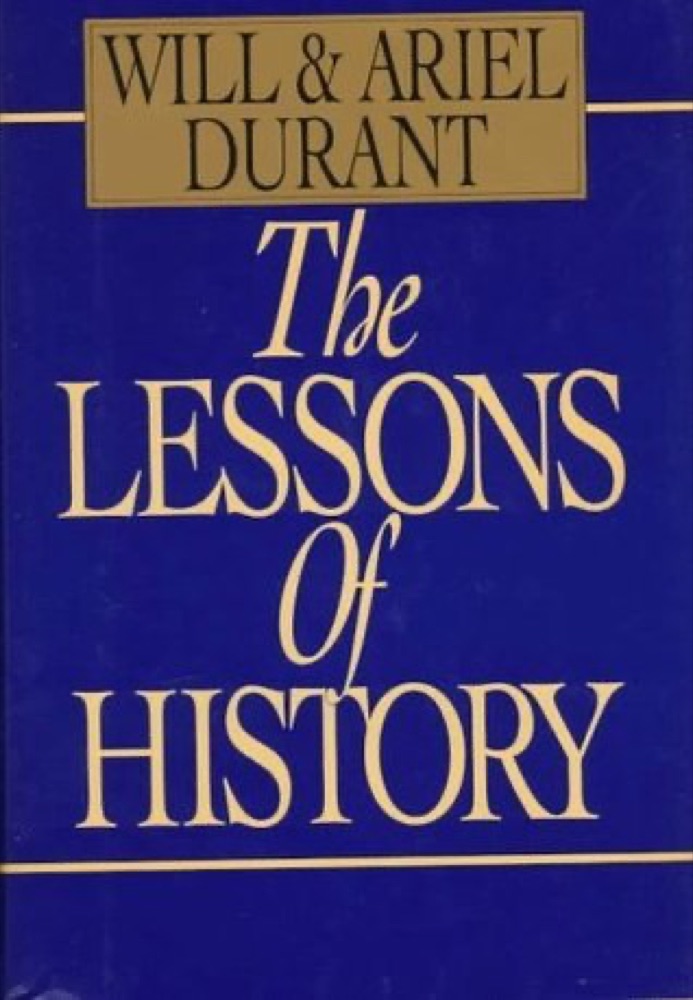 The Lessons of History
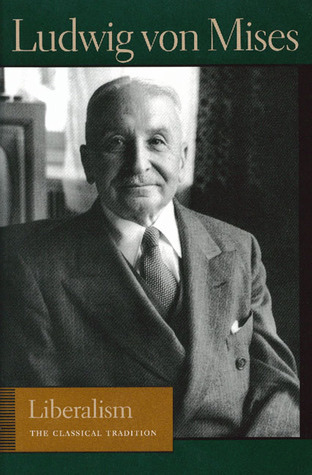 Liberalism: The Classical Tradition
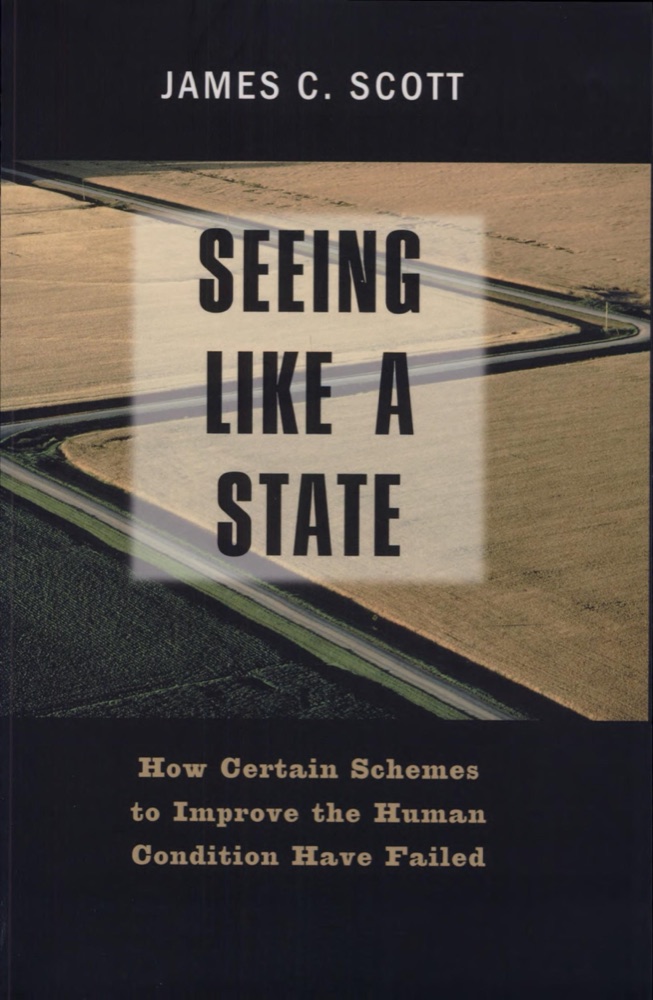 Seeing Like a State: How Certain Schemes to Improve the Human Condition Have Failed
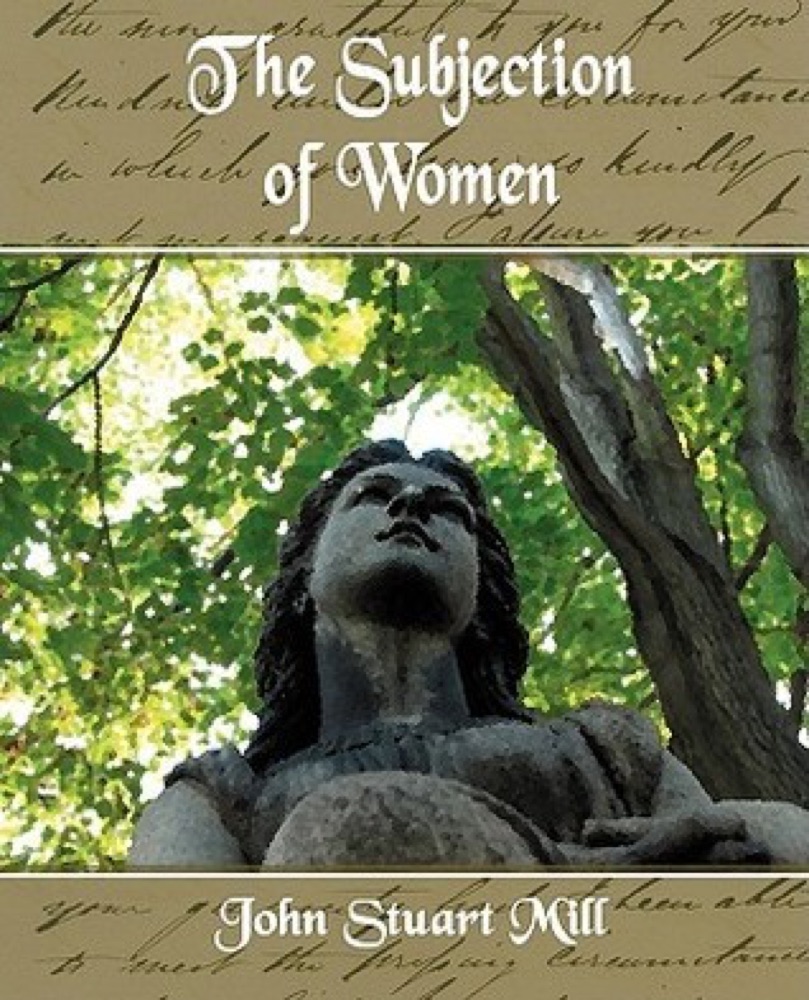 The Subjection of Women
 Elements of the Philosophy of Right
 Ill Fares the Land
 Walden Two
 Capitalism and Freedom
 Justice: What's the Right Thing to Do?
 Democracy in America
 Politics
 The Chomsky-Foucault Debate: On Human Nature
 The Origins of Totalitarianism
 From Dawn to Decadence: 500 Years of Western Cultural Life, 1500 to the Present
 Discourse on the Origin of Inequality
 The Virtue of Selfishness: A New Concept of Egoism
 The Human Condition
 One-Dimensional Man: Studies in the Ideology of Advanced Industrial Society
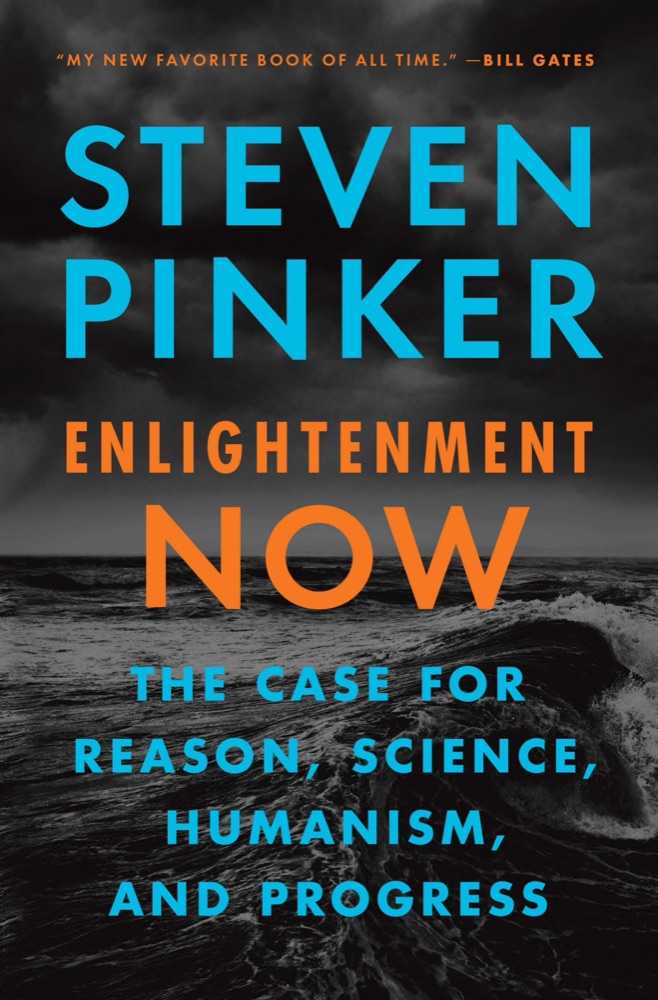 Enlightenment Now: The Case for Reason, Science, Humanism, and Progress
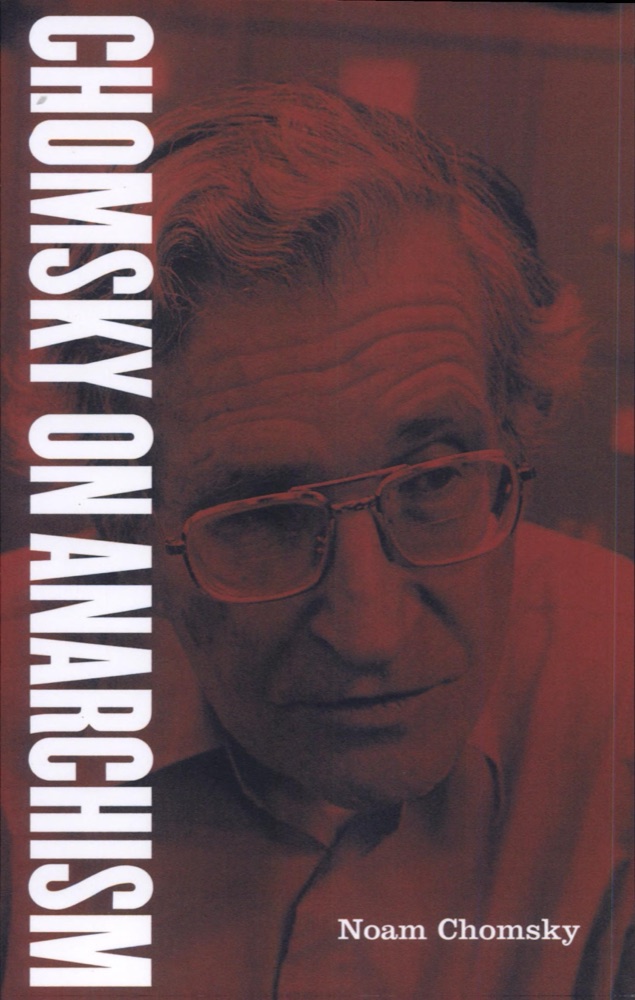 Chomsky On Anarchism
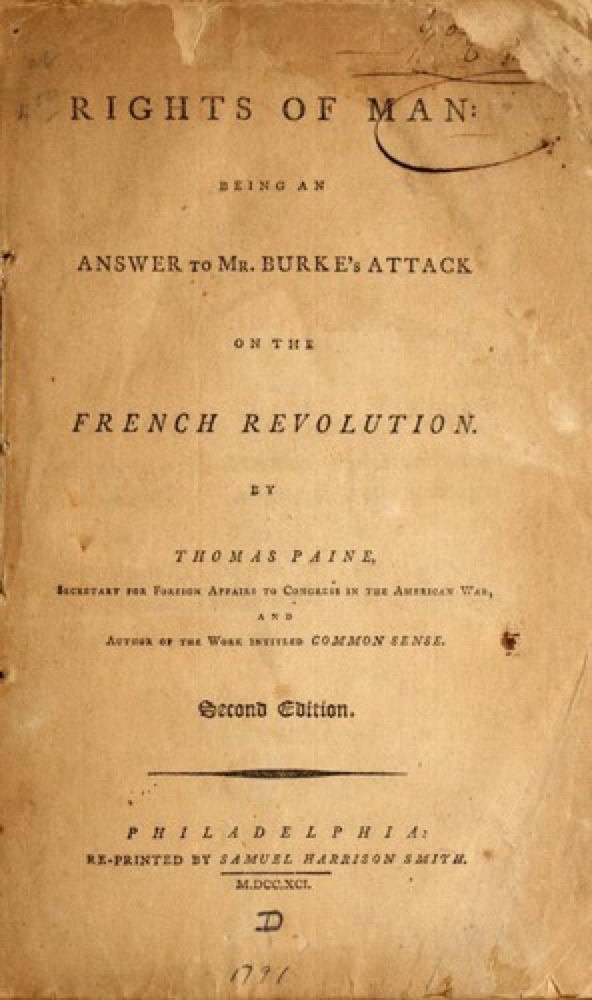 Rights of Man
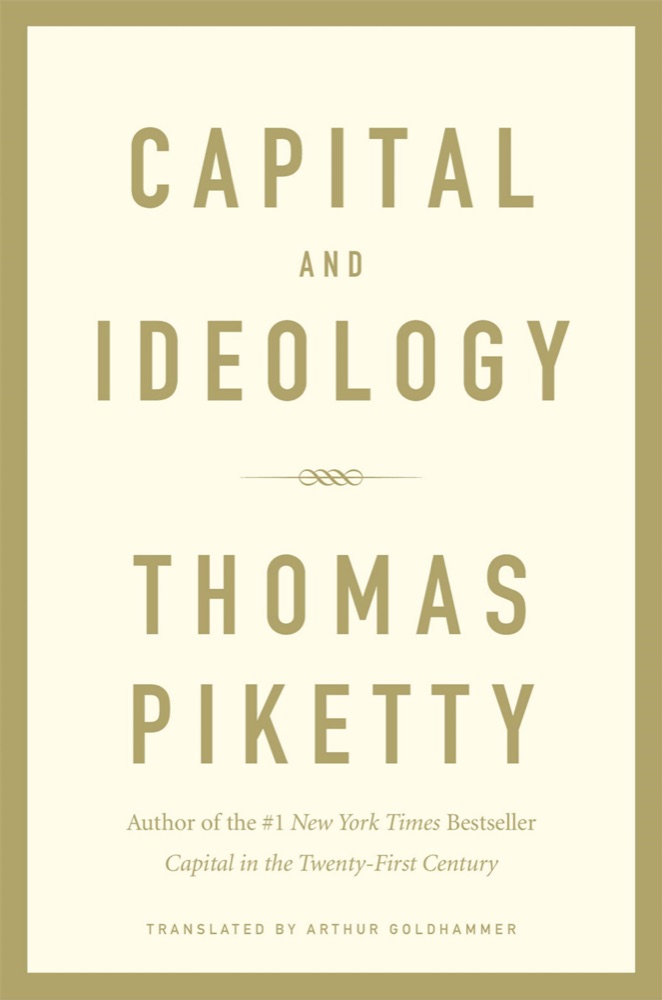 Capital and Ideology
 Brave New World Revisited
 After Virtue
 Capitalism, Socialism and Democracy
 The Accursed Share: An Essay on General Economy, Volume I: Consumption
 First As Tragedy, Then As Farce
 World Order
 The Undiscovered Self
 The Soul of Man Under Socialism
 The Will to Power
 Socialism: An Economic and Sociological Analysis
 The Evolution of Everything: How New Ideas Emerge
 The Blank Slate: The Modern Denial of Human Nature
 The Crisis of the Modern World
 The Utopia of Rules: On Technology, Stupidity, and the Secret Joys of Bureaucracy
 The Social Contract
 Philosophical Dictionary
 Civil Disobedience
 Humankind: A Hopeful History
 Children of Dune
 The Future of an Illusion
 The Iron Heel
 Utopia
 Selections from the Prison Notebooks
 A People's History of the United States