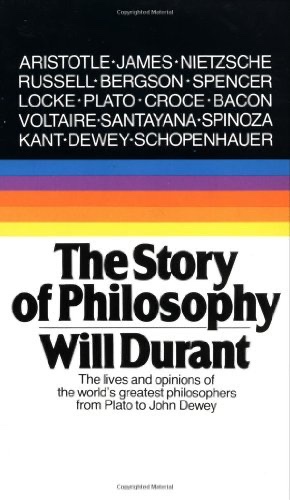
 The Story of Philosophy: The Lives and Opinions of the World's Greatest Philosophers
Quotes from the Book
History reports that the men who can manage men manage the men who can manage only things, and the men who can manage money manage all.
110
you can’t fool all the people all the time,” but you can fool enough of them to rule a large country.
88
In progressive societies the concentration[of wealth] may reach a point where the strength of number in the many poor rivals the strength of ability in the few rich; then the unstable equilibrium generates a critical situation, which history has diversely met by legislation redistributing wealth or by revolution distributing poverty.
62
The present is the past rolled up for action, and the past is the present unrolled for understanding.
58
The fear of capitalism has compelled socialism to widen freedom, and the fear of socialism has compelled capitalism to increase equality. East is West and West is East, and soon the twain will meet.
44
In the last 3,421 years of recorded history only 268 have seen no war.
40
The only real revolution is in the enlightenment of the mind and the improvement of character, the only real emancipation is individual, and the only real revolutionists are philosophers and saints.
35
Most history is guessing, and the rest is prejudice.
32
We frolic in our emancipation from theology, but have we developed a natural ethic—a moral code independent of religion—strong enough to keep our instincts of acquisition, pugnacity, and sex from debasing our civilization into a mire of greed, crime, and promiscuity? Have we really outgrown intolerance, or merely transferred it from religious to national, ideological, or racial hostilities?
27
It is not the race that makes the civilization, it is the civilization that makes the people: circumstances geographical, economic, and political create a culture, and the culture creates a human type.
26
We must operate with partial knowledge, and be provisionally content with probabilities.
25
Normally and generally men are judged by their ability to produce—except in war, when they are ranked according to their ability to destroy.
21
History is, above all else, the creation and recording of that heritage; progress is its increasing abundance, preservation, transmission, and use. To those of us who study history not merely as a warning reminder of man’s follies and crimes, but also as an encouraging remembrance of generative souls, the past ceases to be a depressing chamber of horrors; it becomes a celestial city, a spacious country of the mind, wherein a thousand saints, statesmen, inventors, scientists, poets, artists, musicians, lovers, and philosophers still live and speak, teach and carve and sing. The historian will not mourn because he can see no meaning in human existence except that which man puts into it; let it be our pride that we ourselves may put meaning into our lives, and sometimes a significance that transcends death. If a man is fortunate he will, before he dies, gather up as much as he can of his civilized heritage and transmit it to his children. And to his final breath he will be grateful for this inexhaustible legacy, knowing that it is our nourishing mother and our lasting life.
18
When the universe has crushed him man will still be nobler than that which kills him, because he knows that he is dying, and of its victory the universe knows nothing.
18
Our knowledge of any past event is always incomplete, probably inaccurate, beclouded by ambivalent evidence and biased historians, and perhaps distorted by our own patriotic or religious partisanship. “Most history is guessing, and the rest is prejudice.
16
If race or class war divides us into hostile camps, changing political argument into blind hate, one side or the other may overturn the hustings with the rule of the sword. If our economy of freedom fails to distribute wealth as ably as it has created it, the road to dictatorship will be open to any man who can persuasively promise security to all; and a martial government, under whatever charming phrases, will engulf the democratic world.
12
So the conservative who resists change is as valuable as the radical who proposes it—perhaps as much more valuable as roots are more vital than grafts.
12
Animals eat one another without qualm; civilized men consume one another by due process of law. Co-operation
11
[...] violent revolutions do not so much redistribute wealth as destroy it. There may be a redivision of the land, but the natural inequality of men soon re-creates an inequality of possessions and privileges, and raises to power a new minority with essentially the same instincts as in the old. The only real revolution is in the enlightenment of the mind and the improvement of character, the only real emancipation is individual, and the only real revolutionists are philosophers and saints.
9
We conclude that the concentration of wealth is natural and inevitable, and is periodically alleviated by violent or peaceable partial redistribution. In this view all economic history is the slow heartbeat of the social organism, a vast systole and diastole of concentrating wealth and compulsive recirculation.
9
The historian always oversimplifies, and hastily selects a manageable minority of facts and faces out of a crowd of souls and events whose multitudinous complexity he can never quite embrace or comprehend.
9
Generally religion and puritanism prevail in periods when the laws are feeble and morals must bear the burden of maintaining social order; skepticism and paganism (other factors being equal) progress as the rising power of law and government permits the decline of the church, the family, and morality without basically endangering the stability of the state.
9
Economic development specializes functions, differentiates abilities, and makes men unequally valuable to their group.
9
History in the large is the conflict of minorities; the majority applauds the victor and supplies the human material of social experiment.
7
Utopias of equality are biologically doomed, and the best that the amiable philosopher can hope for is an approximate equality of legal justice and educational opportunity. A
7
it was fear that first made the gods”25 —fear of hidden forces in the earth, rivers, oceans, trees, winds, and sky. Religion became the propitiatory worship of these forces through offerings, sacrifice, incantation, and prayer.
7
The influence of geographic factors diminishes as technology grows. The character and contour of a terrain may offer opportunities for agriculture, mining, or trade, but only the imagination and initiative of leaders, and the hardy industry of followers, can transform the possibilities into fact...Man, not the earth, makes civilization.
7
In progressive societies the concentration may reach a point where the strength of number in the many poor rivals the strength of ability in the few rich; then the unstable equilibrium generates a critical situation, which history has diversely met by legislation redistributing wealth or by revolution distributing poverty.
6
Nothing is clearer in history than the adoption by successful rebels of the methods they were accustomed to condemn in the forces they deposed.
6
Watch on YouTube
About Will Durant
We have collected 110 quotes from 5 books by Will Durant on BookQuoters.
More about the author →More by Will Durant
The Story of Philosophy: The Lives and Opinions of the World's Greatest Philosophers
 Our Oriental Heritage
 The Story of Civilization
 Caesar and Christ
About the book
In this illuminating and thoughtful book, Will and Ariel Durant have succeeded in distilling for the reader the accumulated store of knowledge and experience from their four decades of work on the ten monumental volumes of "The Story of Civilization." The result is a survey of human history, full of dazzling insights into the nature of human experience, the evolution of civilization, the culture of man. With the completion of their life's work they look back and ask what history has to say about the nature, the conduct and the prospects of man, seeking in the great lives, the great ideas, the great events of the past for the meaning of man's long journey through war, conquest and creation - and for the great themes that can help us to understand our own era.To the Durants, history is "not merely a warning reminder of man's follies and crimes, but also an encouraging remembrance of genera
Book details
- First published
- 1968
- Author
- Will Durant
- Genre
- History
- Goodreads rating
- 4.05 (21k ratings)
Keep reading
 From Dawn to Decadence: 500 Years of Western Cultural Life, 1500 to the Present
 Civilization: The West and the Rest
 Enlightenment Now: The Case for Reason, Science, Humanism, and Progress
 Human Action: A Treatise on Economics
 Reflections on the Revolution in France
 These Truths: A History of the United States
 The Discovery of India
 A People's History of the United States
 The Dawn of Everything: A New History of Humanity
 Capital and Ideology
 Ill Fares the Land
 A History of the World in 100 Objects
 Sapiens: A Brief History of Humankind
 The Muqaddimah: An Introduction to History
 A Short History of Progress
 The Better Angels of Our Nature: Why Violence Has Declined
 The Road to Serfdom
 The Machiavellians: Defenders of Freedom
 The Fatal Conceit: The Errors of Socialism
 Guns, Germs, and Steel: The Fates of Human Societies
 The Evolution of Everything: How New Ideas Emerge
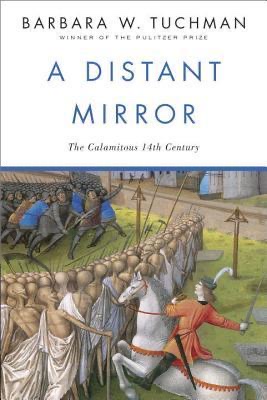 A Distant Mirror: The Calamitous 14th Century
 Democracy in America
 History of the Peloponnesian War
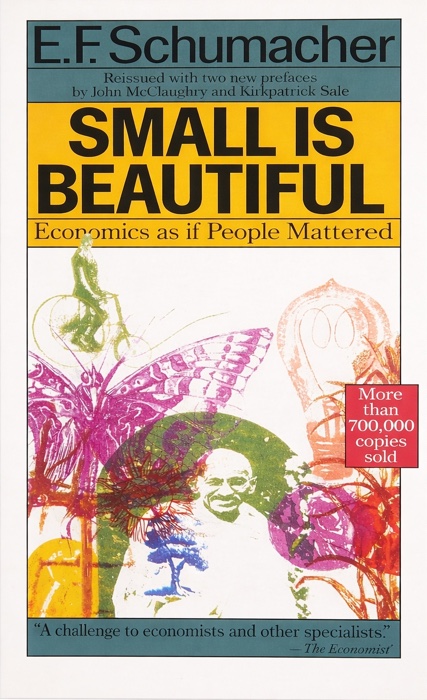 Small Is Beautiful: Economics as if People Mattered
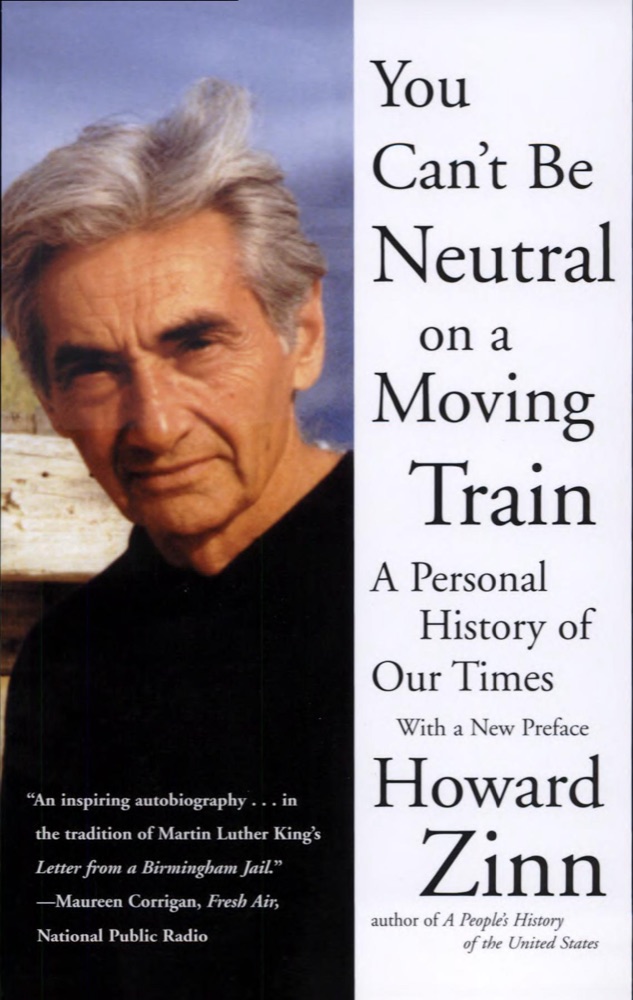 You Can't Be Neutral on a Moving Train: A Personal History of Our Times
 Collapse: How Societies Choose to Fail or Succeed
 Walden Two
 The Wretched of the Earth
The Story of Civilization
The Wretched of the Earth
The Story of Civilization
 Capitalism: The Unknown Ideal
 Homo Deus: A History of Tomorrow
 Brave New World Revisited
 The Origins of Totalitarianism
 The Constitution of Liberty
 The Rational Optimist: How Prosperity Evolves
 Humankind: A Hopeful History
 Discourse on the Origin of Inequality
 The Wizard and the Prophet: Two Remarkable Scientists and Their Dueling Visions to Shape Tomorrow's World
Our Oriental Heritage
The Wizard and the Prophet: Two Remarkable Scientists and Their Dueling Visions to Shape Tomorrow's World
Our Oriental Heritage
 The Argumentative Indian: Writings on Indian History, Culture and Identity
 Principles for Dealing with the Changing World Order: Why Nations Succeed and Fail
 The Histories
 The End of History and the Last Man
 The Age of Revolution, 1789–1848
 The Laws of Plato
 The Old Regime and the French Revolution
 Upheaval: Turning Points for Nations in Crisis
 The American Spirit: Who We Are and What We Stand For
 Common Sense
 Politics
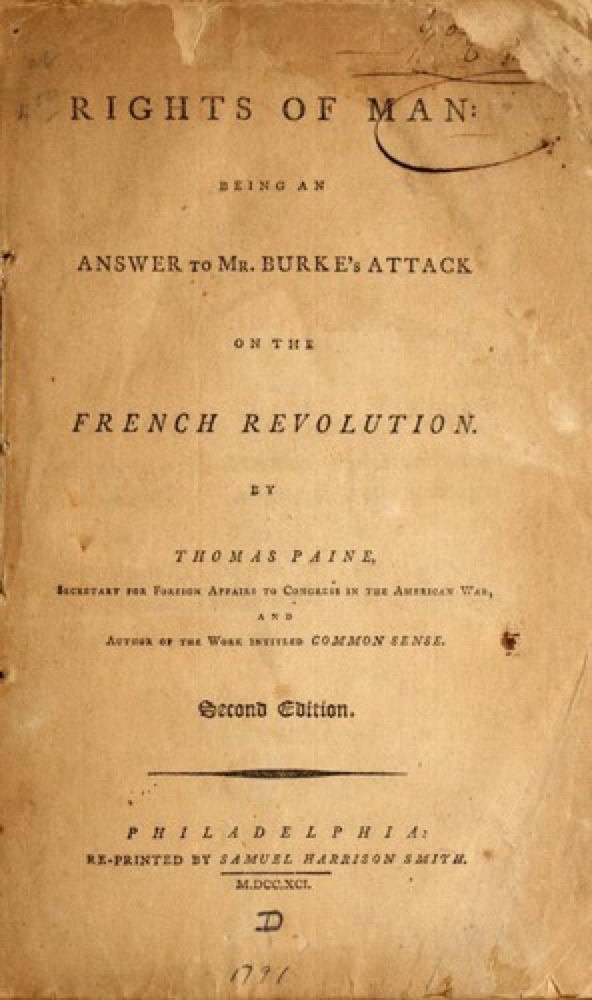 Rights of Man
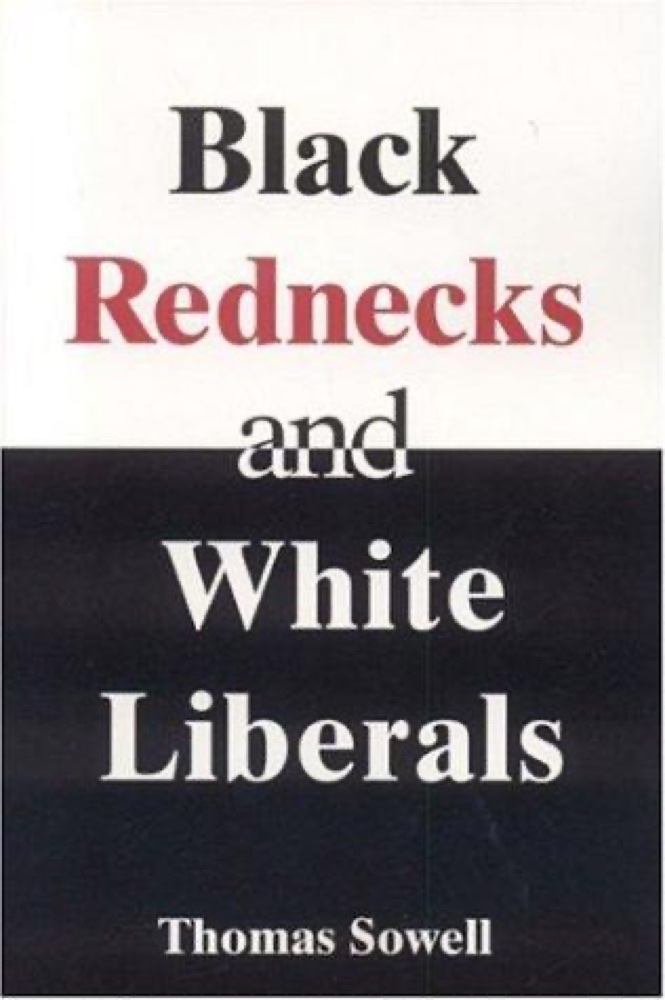 Black Rednecks and White Liberals
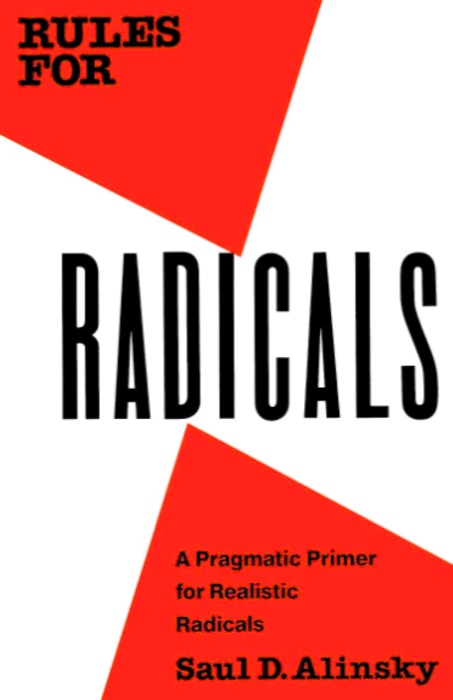 Rules for Radicals: A Pragmatic Primer for Realistic Radicals
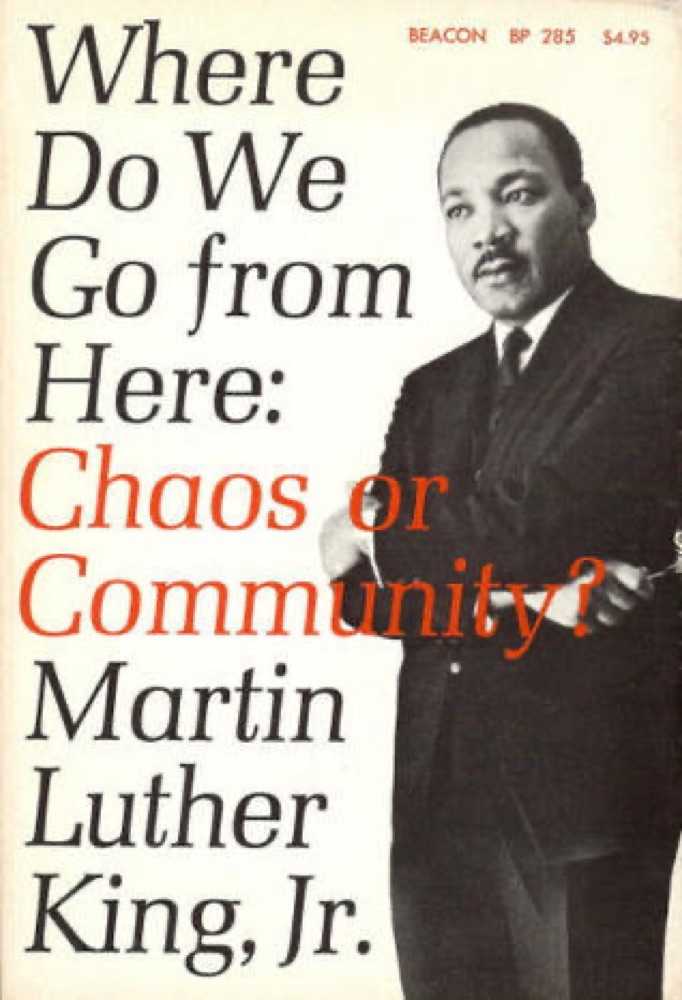 Where Do We Go from Here: Chaos or Community?
 World Order
 The Will to Power
 Last and First Men
 The Subjection of Women
 The Education of Henry Adams