
 The End of History and the Last Man
Quotes from the Book
In societies where incomes and educational levels are low, it is often far easier to get supporters to the polls based on a promise of an individual benefit rather than a broad programmatic agenda.
13
National identity is frequently formed in deliberate opposition to other groups and therefore serves to perpetuate conflict.
11
I argued earlier that clientelism is an early form of democracy: in societies with masses of poor and poorly educated voters, the easiest form of electoral mobilization is often the provision of individual benefits such as public-sector jobs, handouts, or political favors. This suggests that clientelism will start to decline as voters become wealthier. Not only does it cost more for politicians to bribe them, but the voters see their interests tied up with broader public policies rather than individual benefits.
8
When the middle class constitutes only 20–30 percent of the population, it may side with antidemocratic forces because it fears the intentions of the large mass of poor people below it and the populist policies they may pursue.
5
The displacement of class politics by identity politics has been very confusing to older Marxists, who for many years clung to the old industrial working class as their preferred category of the underprivileged. They tried to explain this shift in terms of what Ernest Gellner labeled the “Wrong Address Theory”: “Just as extreme Shi’ite Muslims hold that Archangel Gabriel made a mistake, delivering the Message to Mohamed when it was intended for Ali, so Marxists basically like to think that the spirit of history or human consciousness made a terrible boob. The awakening message was intended for classes, but by some terrible postal error was delivered to nations.
5
But the simple availability of information about corruption tends not to produce genuine accountability because the politically active part of the population are members of clientelistic networks.
2
The courts, instead of being constraints on government, have become alternative instruments for the expansion of government.
2
The future of democracy in developed countries will depend on their ability to deal with the problem of a disappearing middle class. In the wake of the financial crisis there has been a rise of new populist groups from the Tea Party in the United States to various anti-EU, anti-immigrant parties in Europe. What unites all of them is the belief that elites in their countries have betrayed them. And in many ways they are correct: the elites who set the intellectual and cultural climate in the developed world have been largely buffered from the effects of middle-class decline. There has been a vacuum in new approaches to the problem, approaches that don’t involve simply returning to the welfare state solutions of the past. The proper approach to the problem of middle-class decline is not necessarily the present German system or any other specific set of measures. The only real long-term solution would be an educational system that succeeded in pushing the vast majority of citizens into higher levels of education and skills. The ability to help citizens flexibly adjust to the changing conditions of work requires state and private institutions that are similarly flexible. Yet one of the characteristics of modern developed democracies is that they have accumulated many rigidities over time that make institutional adaptation increasingly difficult. In fact, all political systems—past and present—are liable to decay. The fact that a system once was a successful and stable liberal democracy does not mean that it will
2
The Chinese Communist Party has seen fit to protect most property rights because it recognizes that it has a self-interest in doing so. But the party faces no legal constraints other than its own internal political controls if it decides to violate property rights. Many peasants find their land coveted by municipal authorities and developers who want to turn it into commercial real estate, high-density housing, shopping centers, and the like, or else into public infrastructure like roads, dams, or government offices. There are large incentives for developers to work together with corrupt local officials to illegally take land away from peasants or urban homeowners, and such takings have been perhaps the largest single source of social discontent in contemporary China.
2
Diego Gambetta, however, presents an elegant economic theory of the Mafia’s origins: mafiosi are private entrepreneurs whose function is to provide protection of individual property rights in a society in which the state fails to perform this basic service. That is, if one party to a private transaction is cheated by the other, he would normally take his partner to court in a well-ordered rule-of-law society. But where the state is corrupt, unreliable, or perhaps altogether absent, one must turn instead to a private provider of protection and task him to threaten to break the legs of the other party if he doesn’t pay up. By this account, the Mafia is simply a private organization providing a needed service that is normally performed by the state—that is, use of the threat of violence (and sometimes actual violence) to enforce property rights. Gambetta shows that the Mafia arose precisely in those parts of southern Italy where there was economic conflict over land, mobile wealth and a high volume of transactions, and political discord in connection with the changes taking place in the nature of the Italian state after 1860.
2
So why did strong, modern states not emerge in Latin America as they did in Europe? If there is a single factor that explains this outcome, it is the relative absence of interstate war in the New World. We have seen how central war and preparation for war were in the creation of modern states in China, Prussia, and France. Even in the United States, state building has been driven by national security concerns throughout the twentieth century. Though Europe has been remarkably peaceful since 1945, the prior centuries were characterized by high and endemic levels of interstate violence. Over the past two centuries, the major political acts that reconfigured the map of Europe—the French Revolution and Napoleonic Wars, and the wars of unification of Italy and Germany—all involved high levels of violence, culminating in the two world wars of the twentieth century. There has been plenty of violence in Latin America, of course: today the region is infested with drug cartels, street gangs, and a few remaining guerrilla groups, all of which inflict enormous sufferings on local populations. But in comparison with Europe, Latin America has been a peaceful place in terms of interstate war. This has been a blessing for the region, but it has also left a problematic institutional legacy.
2
When liberal democracies work well, state, law, and accountability all reinforce one another
2
[D]emocracy can be in tension with itself: efforts to increase levels of democratic participation and transparency can actually decrease the democratic representativeness of the system as a whole. The great mass of individuals living in a democracy are not able by background or temperament to make complex public policy decisions, and when they are asked to do so repeatedly the process is often taken over by well-organized interest groups that can manipulate the process to serve their narrow purposes. Excessive transparency can undermine deliberation.
1
a politically developed liberal democracy includes all three sets of institutions—the state, rule of law, and procedural accountability—
1
The principle of effective government is meritocracy; the principle of democracy is popular participation. These two principles can be made to work together, but there is always an underlying tension between them.
1
This new middle-class elite sought reforms against the interests of a political class that had succeeded in mobilizing the vast mass of nonelite voters into the patronage system.
1
in cold countries they have very little sensibility for pleasure; in temperate countries, they have more; in warm countries, their sensibility is exquisite.
1
Finally, state capacity is a function of resources. The best-trained and most enthusiastic officials will not remain committed if they are not paid adequately, or if they find themselves lacking the tools for doing their jobs. This is one of the reasons that poor countries have poorly functioning governments. Melissa Thomas notes that while a rich country like the United States spends approximately $17,000 per year per capita on government services of all sorts, the government of Afghanistan spends only $17 when foreign donor contributions are excluded. Much of the money it does collect is wasted through corruption and fraud. It is therefore not surprising that the central Afghan government is barely sovereign throughout much of its own territory.
1
Interstate wars in Latin America have been so infrequent and politically unimportant that many major surveys of Latin American history barely cover them. Compared to Europe and ancient China, or indeed North America, war had a marginal effect on state building. Charles Tilly’s aphorism “war made the state, and the state made war” remains true, but begs the question of why wars are more prevalent in some regions than in others.
1
Under these circumstances, revenue from the New World in the form of exports of gold and silver was critical. The Spanish government, however, imposed strict rules limiting economic exchange—a system known as mercantilism—under the mistaken belief that this would maximize its income from the colonies. Exports from the New World could go only to Spain, indeed, to a single port in Spain; they were required to travel in Spanish ships; and the colonies were not permitted to compete with Spanish producers of manufactured goods. Mercantilism, as Adam Smith was to demonstrate in The Wealth of Nations, created huge inefficiencies and was highly detrimental to economic growth. It also had very significant political consequences: access to markets and the right to make productive economic investments were limited to individuals or corporations favored by the state. This meant that the route to personal wealth lay through the state and through gaining political influence. This then led to a rentier rather than an entrepreneurial mentality, in which energy was spent seeking political favor rather than initiating new enterprises that would create wealth. The landowning and merchant classes that emerged under this system grew rich because of the political protection they received from the state.
1
All states concentrate and use power—that is, the ability to violently coerce people—but successful states rely more heavily on authority, that is voluntary compliance with the state's wishes based on a broad belief in the government's legitimacy. In peaceful liberal democracies, the fist is usually hidden behind layered gloves of law, custom, and norms. States that make heavy use of overt coercion and brutality often do so because they cannot exercise proper authority.
The right to participate politically grants recognition to the moral personhood of the citizen, and exercise of that right gives that person some degree of agency over the common life of the community. The citizen may make poorly informed or bad decisions, but the exercise of political choice in and of itself is an important part of human flourishing.
By the end of that century, Europe saw an enormous shift as peasants left the countryside, cities expanded, and an industrial working class was formed.1 The German social theorist Ferdinand Tönnies described this as the shift from Gemeinschaft to Gesellschaft, or what is typically translated in English as “community” and “society.
Latin America has been characterized by a “birth defect” of inequality from which it has not yet recovered.
Clientelism is an efficient form of political mobilization in societies with low levels of income and education, and is therefore best understood as an early form of democracy.
As some observers pointed out at the time, the stability of modern Western Europe was built on ethnic cleansings that had taken place in earlier historical periods, which modern Europeans had conveniently
But the impact of national identity on state strength is not limited to its coercive power. Much of what passes for corruption is not simply a matter of greed but rather the by-product of legislators or public officials who feel more obligated to family, tribe, region, or ethnic group than to the national community and therefore divert money in that direction.
Successful state building is dependent, therefore, on the prior existence of a sense of national identity that serves as a locus of loyalty to the state itself, rather than to the social groups underlying it.
This is the meaning of state autonomy: a government that is responsive to interest groups but not owned by them, that is not too easily swayed by the short-term vagaries of democratic public opinion but rather looks to long-term public interest.
Watch on YouTube
About Francis Fukuyama
We have collected 69 quotes from 3 books by Francis Fukuyama on BookQuoters.
More about the author →More by Francis Fukuyama
The End of History and the Last Man
 Identity: The Demand for Dignity and the Politics of Resentment
About the book
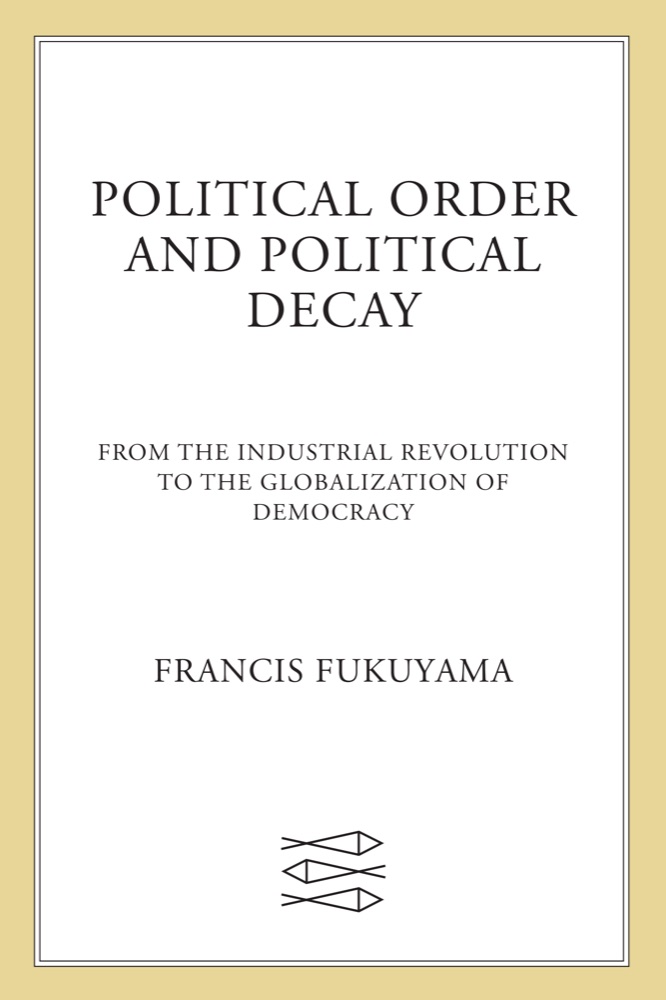
The second volume of the bestselling landmark work on the history of the modern state
Writing in The Wall Street Journal, David Gress called Francis Fukuyama's Origins of Political Order "magisterial in its learning and admirably immodest in its ambition." In The New York Times Book Review, Michael Lind described the book as "a major achievement by one of the leading public intellectuals of our time." And in The Washington Post, Gerard DeGrott exclaimed "this is a book that will be remembered. Bring on volume two." Volume two is finally here, completing the most important work of political thought in at least a generation. Taking up the essential question of how societies develop strong, impersonal, and accountable political institutions, Fukuyama follows the story from the French Revolution to the so-called Arab Spring and the deep dysfunctions of contemporary American politics. He e
Book details
- First published
- 2014
- Author
- Francis Fukuyama
- Genre
- Nonfiction
- Goodreads rating
- 4.34 (5k ratings)
Keep reading
Identity: The Demand for Dignity and the Politics of Resentment
 Twilight of Democracy: The Seductive Lure of Authoritarianism
 Capital and Ideology
 Why Nations Fail: The Origins of Power, Prosperity, and Poverty
 Ill Fares the Land
 The Machiavellians: Defenders of Freedom
The End of History and the Last Man
The Machiavellians: Defenders of Freedom
The End of History and the Last Man
 Occupy
 The Road to Serfdom
 Upheaval: Turning Points for Nations in Crisis
 A People's History of the United States
 Seeing Like a State: How Certain Schemes to Improve the Human Condition Have Failed
 Wealth, Poverty and Politics: An International Perspective
 The Old Regime and the French Revolution
 Political Theology: Four Chapters on the Concept of Sovereignty
 Chomsky On Anarchism
 First As Tragedy, Then As Farce
 The Spirit of the Laws
 Elite Capture: How the Powerful Took Over Identity Politics
 Power Systems: Conversations on Global Democratic Uprisings and the New Challenges to U.S. Empire
 Conspirators' Hierarchy: The Story of the Committee of 300
 Death of the Liberal Class
 The System: Who Rigged It, How We Fix It
 The Evolution of Everything: How New Ideas Emerge
 Capitalism and Freedom
 Free to Choose: A Personal Statement
 The Shock Doctrine: The Rise of Disaster Capitalism
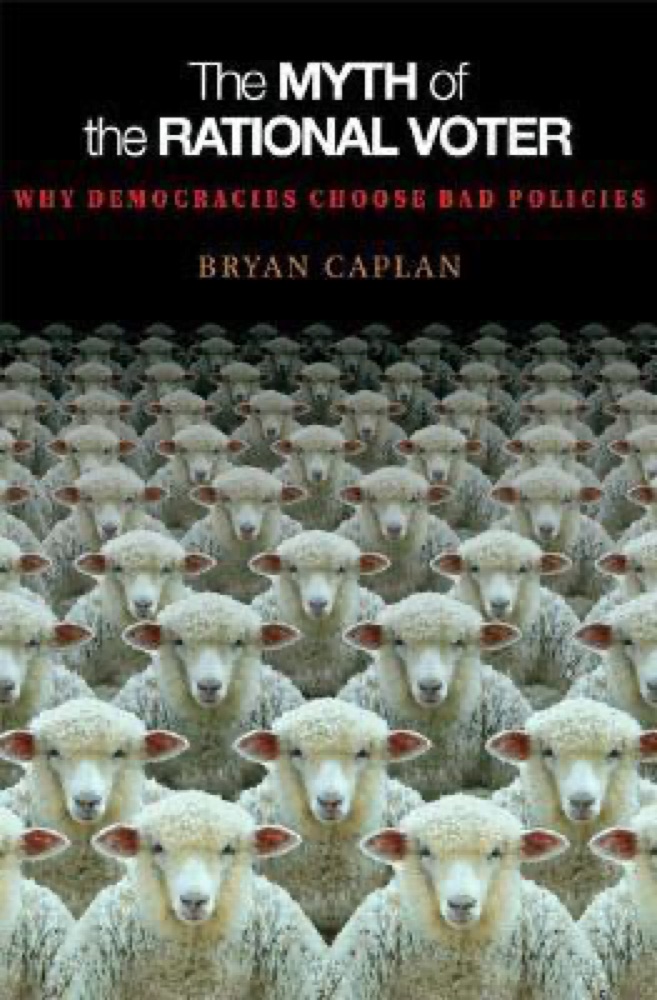 The Myth of the Rational Voter: Why Democracies Choose Bad Policies
 Capital in the Twenty-First Century
 Twilight of the Elites: America After Meritocracy
 The Constitution of Liberty
 The Dictator's Handbook: Why Bad Behavior is Almost Always Good Politics
 Dark Continent: Europe's Twentieth Century
 The Great Transformation: The Political and Economic Origins of Our Time
 World Order
 Principles for Dealing with the Changing World Order: Why Nations Succeed and Fail
 A Theory of Justice
 Reflections on the Revolution in France
 Capitalism: The Unknown Ideal
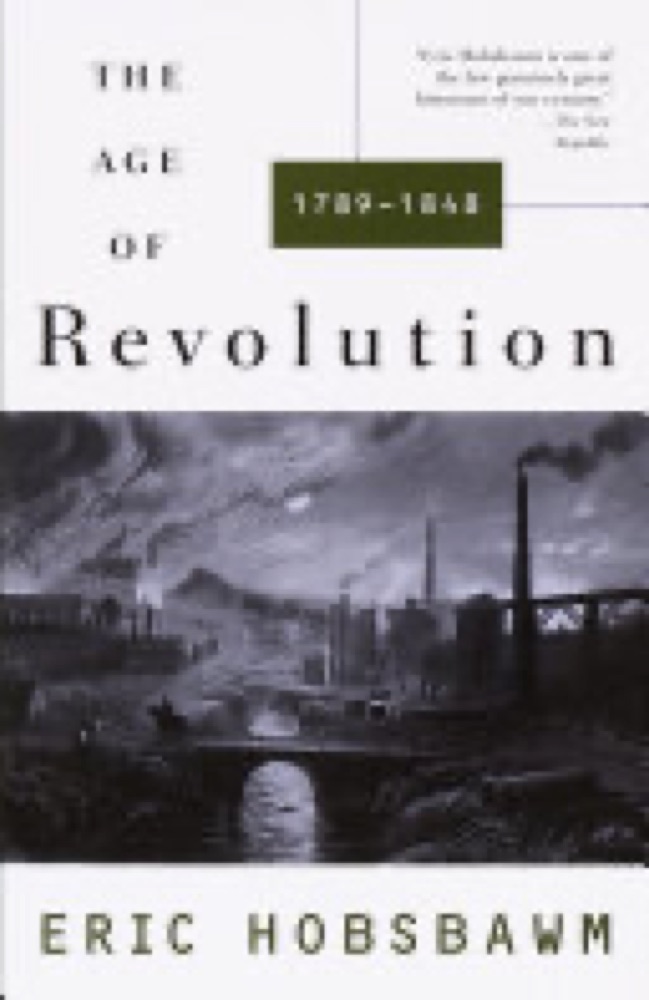 The Age of Revolution, 1789–1848
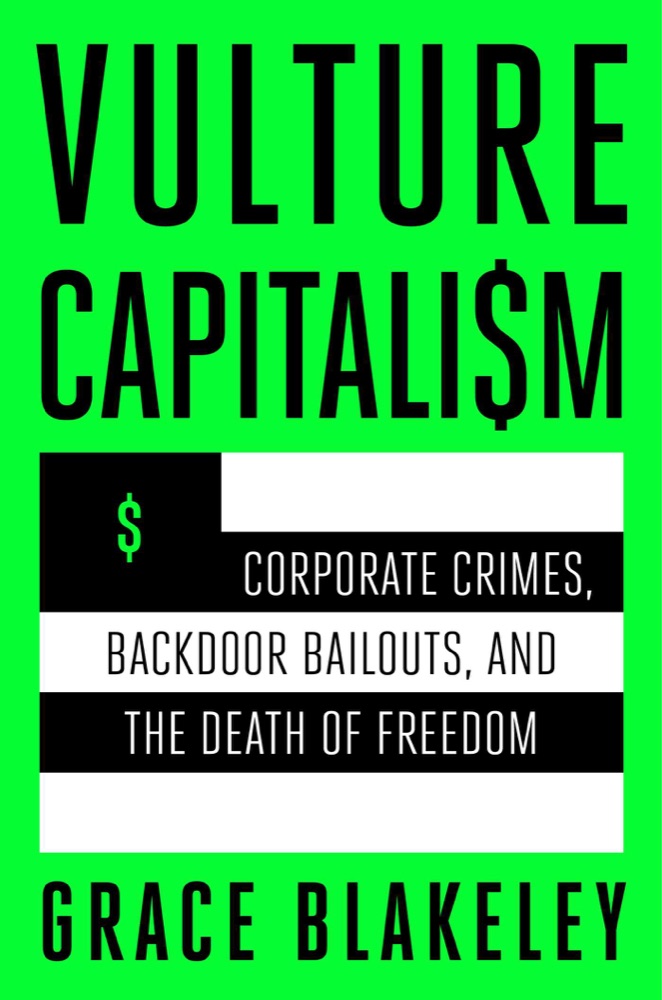 Vulture Capitalism: Corporate Crimes, Backdoor Bailouts, and the Death of Freedom
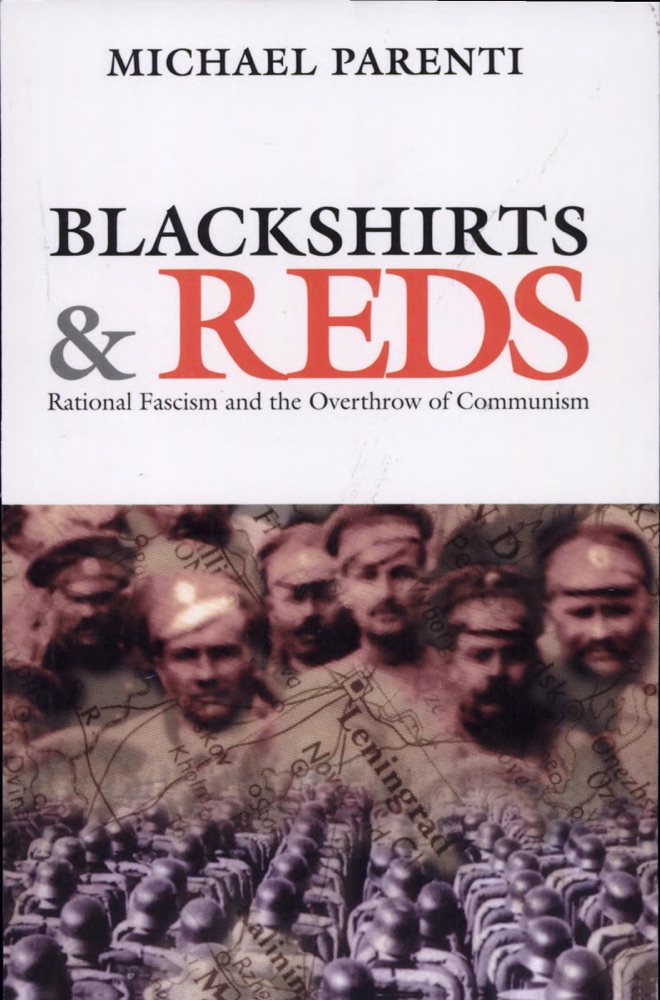 Blackshirts and Reds: Rational Fascism and the Overthrow of Communism
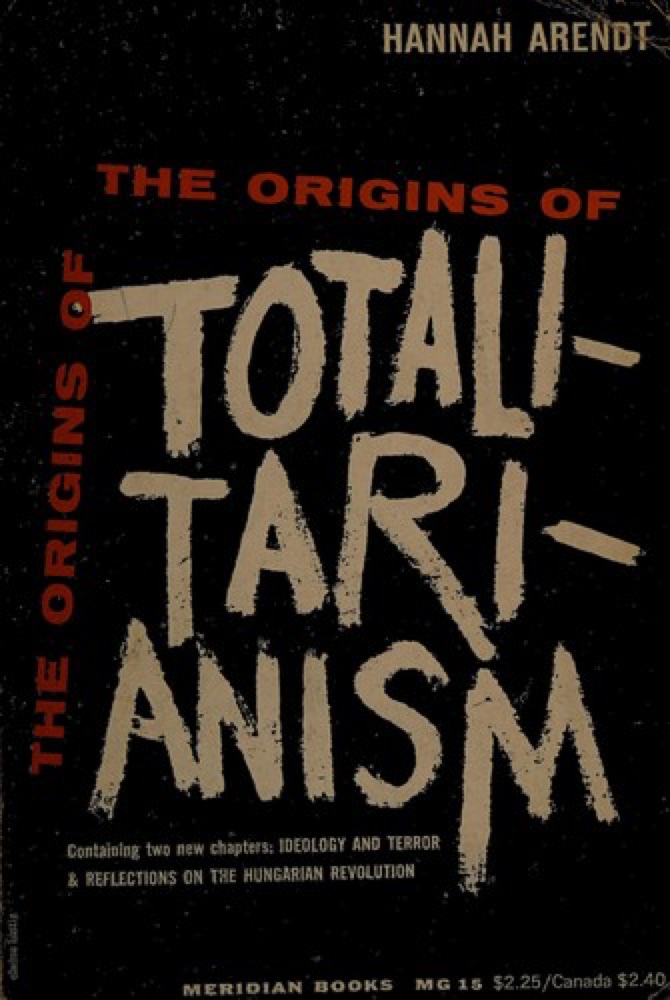 The Origins of Totalitarianism
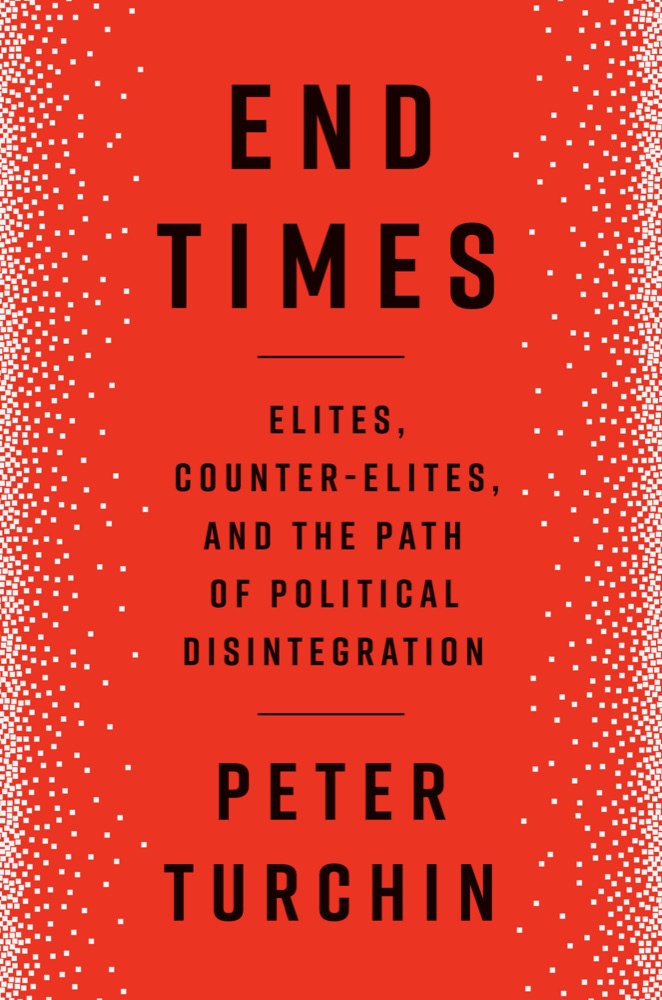 End Times: Elites, Counter-Elites, and the Path of Political Disintegration
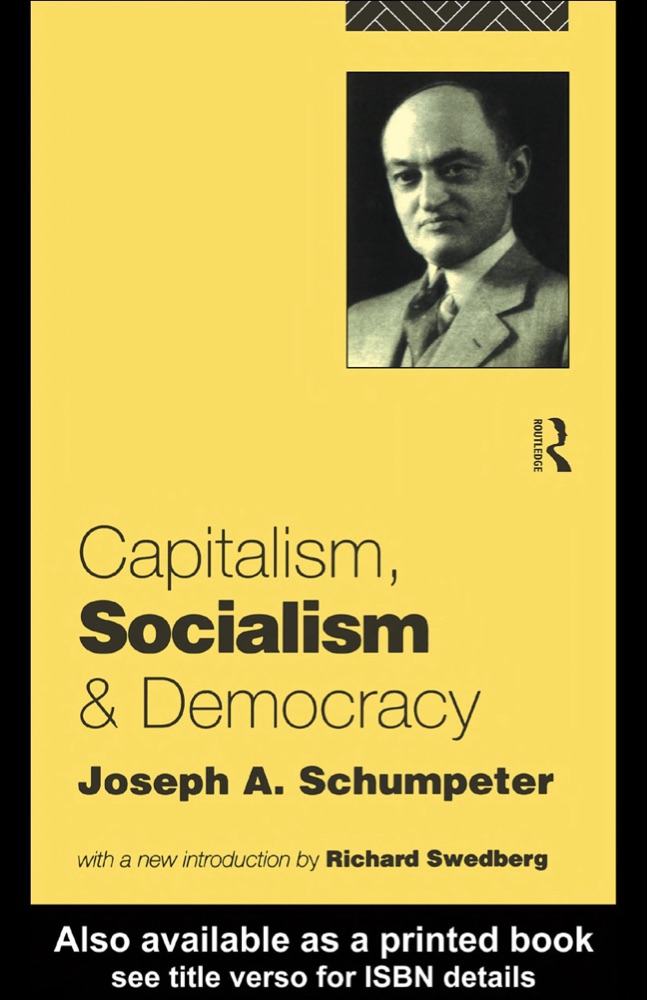 Capitalism, Socialism and Democracy
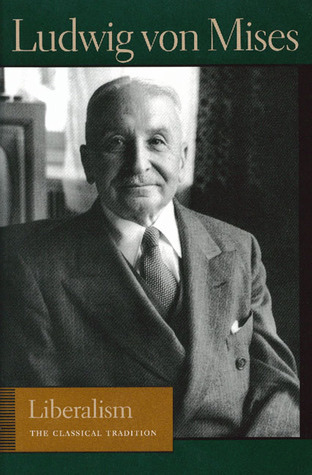 Liberalism: The Classical Tradition
 America (The Book): A Citizen's Guide to Democracy Inaction
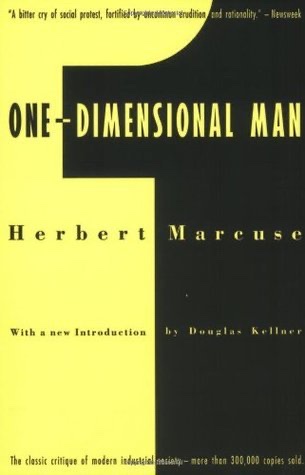 One-Dimensional Man: Studies in the Ideology of Advanced Industrial Society
 Power and Progress: Our Thousand-Year Struggle Over Technology and Prosperity
 The Reactionary Mind: Conservatism from Edmund Burke to Sarah Palin
 Fascism: A Warning
 The Utopia of Rules: On Technology, Stupidity, and the Secret Joys of Bureaucracy
 Democracy in America
 The Strange Death of Europe: Immigration, Identity, Islam
 Collapse: How Societies Choose to Fail or Succeed
 The Lessons of History
 A Brief History of Equality
 Parliament of Whores: A Lone Humorist Attempts to Explain the Entire U.S. Government
 The Federalist Papers
 Socialism: An Economic and Sociological Analysis