
 A Distant Mirror: The Calamitous 14th Century
Quotes from the Book
Between policy-makers in the capital and realities in the field lies an eternal gap whitened by the bones of failed and futile efforts.
4
Would the fate of China have been different if Stilwell had been allowed to reform the army and create an effective combat force of 90 divisions? ... This assumption might have been true if Asia were clay in the hands of the West. But the"regenerative idea," stilwell's or another's, could not be imposed from the outside. The Kuomintang military structure could not be reformed without reform of the system from which it sprang and, as Stillwell himself recognized, to reform such a system "it must be torn to pieces." In great things, wrote Erasmus, it is enough to have tried. Stilwell's mission was America's supreme try in China. He made the maximum effort because his temperament permitted no less: he never slackened and he never gave up. Yet the mission failed in its ultimate purpose because the goal was unachievable. The impulse was not Chinese. Combat efficiency and the offensive spirit, like the Christianity and democracy offered by missionaries and foreign advisers, were not indigenous demands of the society and culture to which they were brought. Even the Yellow River Road that Stilwell built in 1921 had disappeared twelve years later. China was a problem for which there was no American solution. The American effort to sustain the status quo could not supply an outworn government with strength and stability or popular support. It could not hold up a husk nor long delay the cyclical passing of the mandate of heaven. In the end, China went her own way as if the Americans had never come.
3
After the first year Marshall described him as “a genius for instruction.” In reply to the routine question on an Efficiency Report as to the highest command the officer could be recommended to hold
1
No nation has ever produced a military history of such verbal nobility as the British. Retreat or advance, win or lose, blunder or bravery, murderous folly or unyielding resolution, all emerge alike clothed in dignity and touched with glory. Every engagement is gallant, every battle a decisive action. There is no shrinking from superlatives: every campaign produces a general or generalship hailed as the most brilliant of the war. Everyone is splendid: soldiers are staunch, commanders cool, the fighting magnificent. Whatever the fiasco, aplomb is unbroken. Mistakes, failures, stupidities or other causes of disaster mysteriously vanish. Disasters are recorded with care and pride and become transmuted into things of beauty. Official histories record every move in monumental and infinite detail but the details serve to obscure. Why Singapore fell or how the Sittang happened remains shrouded. Other nations attempt but never quite achieve the same self-esteem. It was not by might but by the power of her self-image that Britain in her century dominated the world. That this was irrecoverable (and that no successor would inherit it) was not yet clear in 1944.
1
Struggles over areas of command continued throughout the war to absorb as much attention as plans for action. Ever since the invention of the General Staff in the nineteenth century the paper arrangements of warfare had assumed an importance happily unknown to Caesar, Genghis Khan or Napoleon. War was now regarded by staff professionals no longer as the province of Great Captains but as an exercise in “command problems.” Having learned the lesson of World War I, all the conductors of World War II were so intent on achieving unity of direction for each theater that what happened in the field seemed almost secondary.
1
On February 12, 1912, the Empress Regent abdicated on behalf of the dynasty. China was now a Republic. As such she was welcomed by Joint Resolution of the United States Congress: “Whereas the Chinese Nation has successfully asserted that sovereignty resides in the people” and whereas the American people are “inherently and by tradition sympathetic to all efforts to adopt representative government,” therefore the United States “congratulates the people of China on their assumption of the powers, duties and responsibilities of self-government” in the hope that under a republican form of government “…the happiness of the Chinese people will be secure and the progress of the country insured.” It was not to be that simple. Yuan Shih-kai remained in control of north China, which he withheld from accession to the Republican regime. He maneuvered and waited. Lacking united support or firm authority or a reliable military arm, Sun Yat-sen could not prevail. More negotiations ensued with unavoidable result. On March 12, 1912, Dr. Sun retired as President in favor of Yuan Shih-kai, who reestablished the Government at Peking. In this unstable mongrel resolution China’s modern age began.
1
The fervor of the Kuomintang’s youth had passed to the Communists leaving Chungking with history’s most melancholy tale: that every successful revolution puts on in time the robes of the tyrant it has deposed. Madame Chiang Kai-shek in a rare moment left a brief acknowledgement. When a number of journalists returned from Yenan with enthusiastic reports, she invited them to tea, though disbelieving, to hear what they had to say in person. After listening to their glowing tales of the Communists’ integrity, idealism and sacrifice for a cause, she said it was impossible for her to believe them. Walking to the window she stared out across the river in silence for several minutes and then turned back to the room and spoke the saddest sentence of her life: “If what you tell me about them is true, then I can only say they have never known real power.
1
It is a feature of government that the more important the problem, the further it tends to be removed from handling by anyone well acquainted with the subject.
1
His motto was Illegitimati non carborundum, personally translated as “Don’t let the bastards grind you down.
Watch on YouTube
About Barbara W. Tuchman
We have collected 147 quotes from 6 books by Barbara W. Tuchman on BookQuoters.
More about the author →More by Barbara W. Tuchman
A Distant Mirror: The Calamitous 14th Century
 The Guns of August
 The March of Folly: From Troy to Vietnam
 The Proud Tower: A Portrait of the World Before the War, 1890-1914
About the book
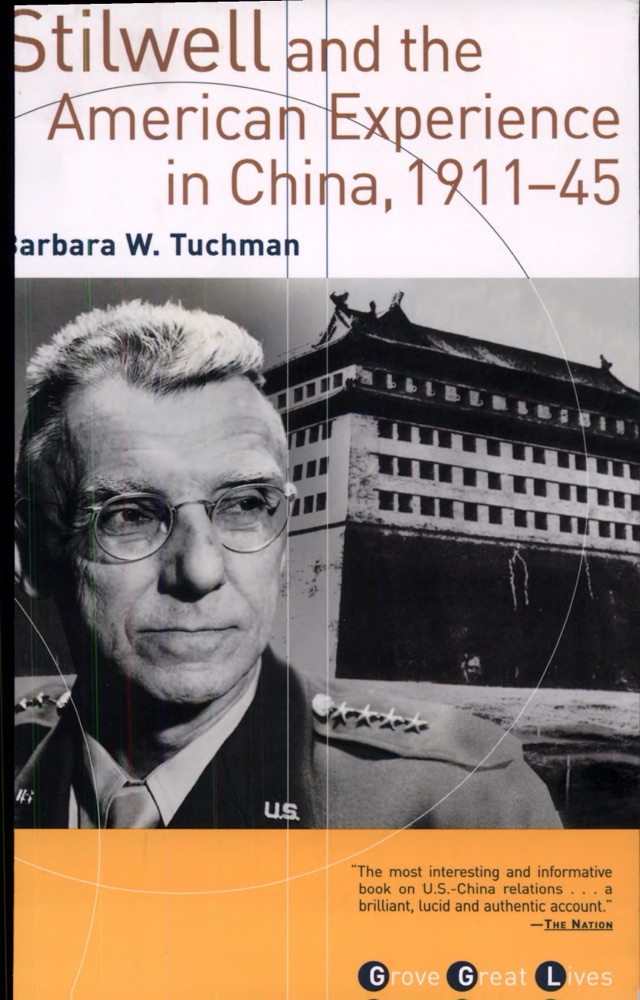
Barbara W. Tuchman won the Pulitzer Prize for Stilwell and the American Experience in China, 1911-45 in 1972. She uses the life of Joseph Stilwell, the military attache to China in 1935-39 and commander of United States forces and allied chief of staff to Chiang Kai-shek in 1942-44, to explore the history of China from the revolution of 1911 to the turmoil of World War II, when China's Nationalist government faced attack from Japanese invaders and Communist insurgents. Her story is an account of both American relations with China and the experiences of one of our men on the ground. In the cantankerous but level-headed "Vinegar Joe," Tuchman found a subject who allowed her to perform, in the words of The National Review, "one of the historian's most envied magic conjoining a fine biography of a man with a fascinating epic story."
Book details
- First published
- 1971
- Author
- Barbara W. Tuchman
- Genre
- History
- Goodreads rating
- 4.17 (4k ratings)
Keep reading
 The Coldest Winter: America and the Korean War
 The First Salute : View of the American Revolution
The Guns of August
The First Salute : View of the American Revolution
The Guns of August
 Closing the Ring
 The Best and the Brightest
 This Kind of War: A Study in Unpreparedness
 World Order
 The Path Between the Seas: The Creation of the Panama Canal, 1870-1914
 Executive Orders
 Vietnam: An Epic Tragedy, 1945-1975
The Proud Tower: A Portrait of the World Before the War, 1890-1914
Vietnam: An Epic Tragedy, 1945-1975
The Proud Tower: A Portrait of the World Before the War, 1890-1914
 The Last Lion: Winston Spencer Churchill: Alone, 1932-40
 The Untold History of The United States
 The Winds of War
 The Civil War, Vol. 3: Red River to Appomattox
 Mr. Lincoln's Army
 Precipice
 The Last Lion 3: Winston Spencer Churchill: Defender of the Realm, 1940-1965
 Diplomats & Admirals: From Failed Negotiations and Tragic Misjudgments to Powerful Leaders and Heroic Deeds, the Untold Story of the Pacific War from Pearl Harbor to Midway
 Modern Times: The World from the Twenties to the Nineties
 The Guns at Last Light: The War in Western Europe, 1944-1945
 Pacific Crucible: War at Sea in the Pacific, 1941-1942
 1776
1776
 Truman
 Quotations from Chairman Mao Tsetung
 The Next Decade: Where We've Been . . . and Where We're Going
 The Second World War
 The Path to Power
 The Splendid and the Vile: A Saga of Churchill, Family, and Defiance During the Blitz
 Postwar: A History of Europe Since 1945
 An Army at Dawn: The War in North Africa, 1942-1943
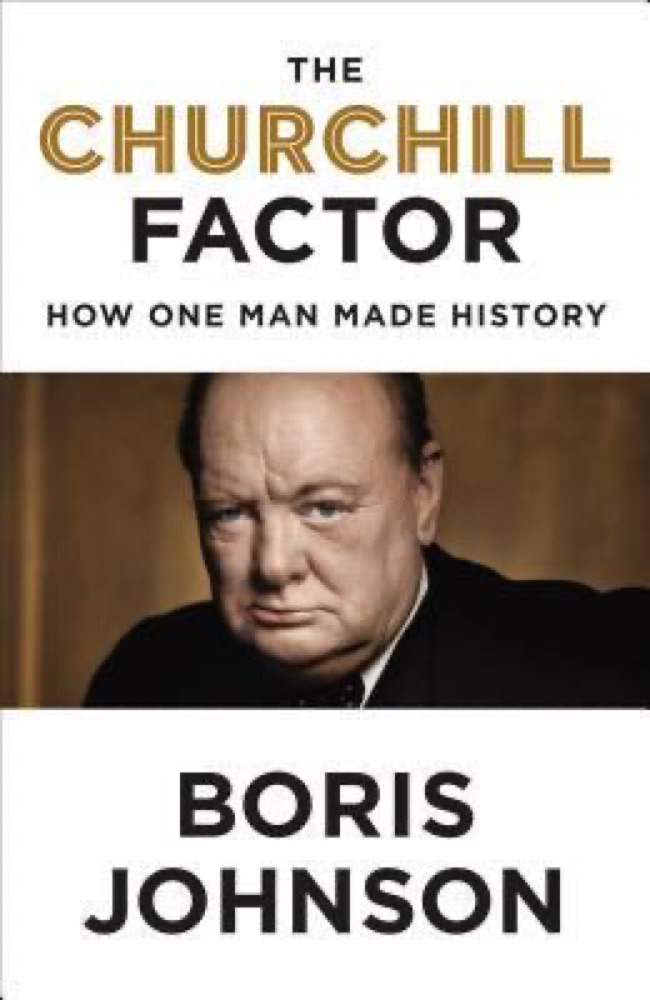 The Churchill Factor: How One Man Made History
 Leadership : Six Studies in World Strategy
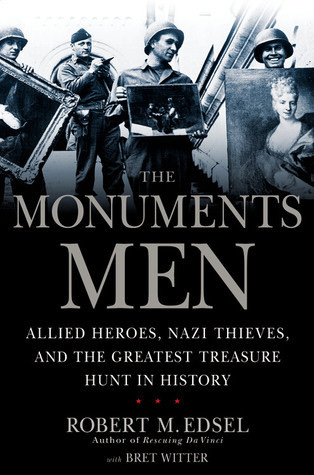 The Monuments Men: Allied Heroes, Nazi Thieves, and the Greatest Treasure Hunt in History
 April 1865: The Month That Saved America
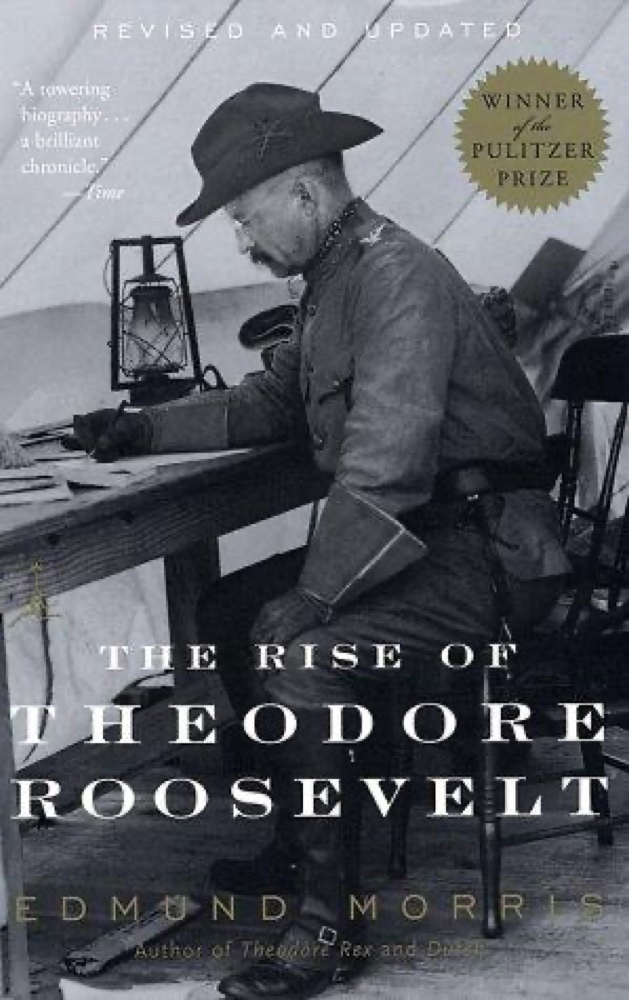 The Rise of Theodore Roosevelt
 The Rise and Fall of the Third Reich: A History of Nazi Germany
 The History of the Decline and Fall of the Roman Empire Volume I
 Fascism: A Warning
 These Truths: A History of the United States
 Revolutionary Summer: The Birth of American Independence
 The Autobiography of Eleanor Roosevelt
 American Shaolin: Flying Kicks, Buddhist Monks, and the Legend of Iron Crotch: An Odyssey in the New China
 Founding Brothers: The Revolutionary Generation
 Principles for Dealing with the Changing World Order: Why Nations Succeed and Fail
 American Colossus: The Triumph of Capitalism, 1865-1900
 Upheaval: Turning Points for Nations in Crisis
 A Full Life: Reflections at Ninety
 Flyboys: A True Story of Courage
 River of Smoke
 The Greatest Generation
 Imperial Ambitions: Conversations on the Post-9/11 World
 The Fall of the Roman Empire: A New History of Rome and the Barbarians
 Fall of Giants
 Into the Silence: The Great War, Mallory and the Conquest of Everest
 The Admirals: Nimitz, Halsey, Leahy, and King—the Five-Star Admirals Who Won the War at Sea
 Koba the Dread: Laughter and the Twenty Million
 Reflections on the Revolution in France
 His Excellency: George Washington