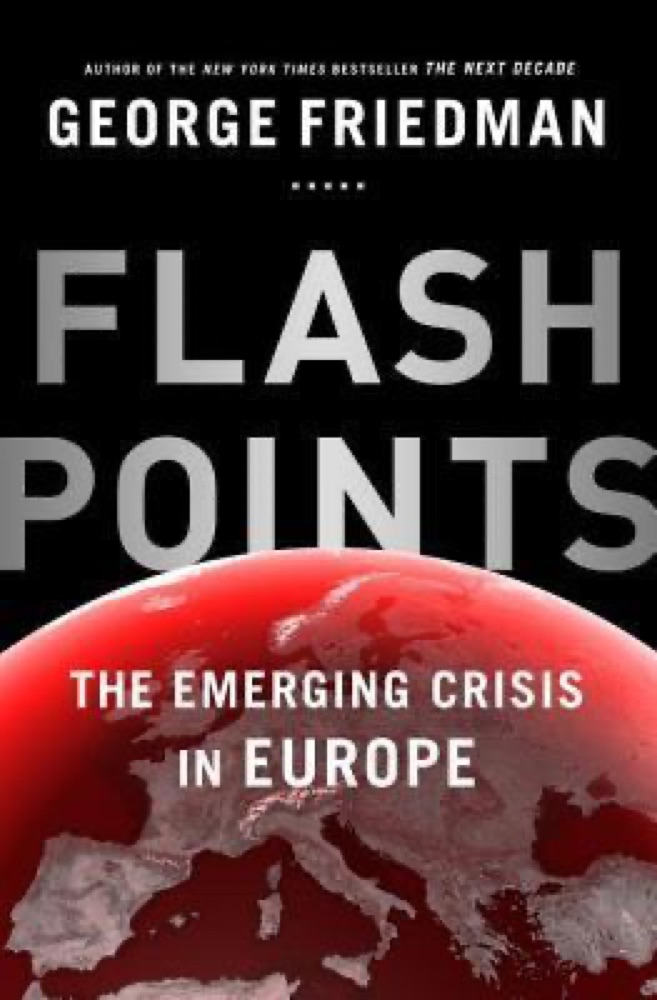
 Flashpoints: The Emerging Crisis in Europe
Quotes from the Book
As Napoleon said, to know a nation's geography is to know its foreign policy
43
Mass education, because it produces hosts of badly educated people liberated from fatalism, will contribute to instability (p. 123).
7
Geography and history demonstrate that we can never discount Russia. Russia’s partial resurgence in our own age following the dissolution of the Soviet Empire is part of an old story. Russia
5
And so this is where the post Cold War has brought us: to the recognition that the very totalitarism that we fought against in the decades following WWII might, in quite a few circumstances, be preferable to a situation where nobody is in charge. There are things worse than communism, it turned out, and in Iraq we brought them about ourselves.
5
Ivan showed that in his time and place the only antidote to chaos was absolutism.
4
The United States was a great power less because of its ideas than because, with direct access to the Atlantic and Pacific oceans, it was “the most favored state in the world from the point of view of location.
4
As Morgenthau points out, small- and medium-sized states like Israel, Great Britain, France, and Iran cannot absorb the same level of punishment as continental-sized states such as the United States, Russia, and China, so that they lack the requisite credibility in their nuclear threats.
4
Realists value order above freedom: for them the latter becomes important only after the former has been established.
4
The threat to Europe comes not in the form of uniforms, but in the tattered garb of refugees,
3
It is the freedom to concentrate military equipment in key locations around the world that has preserved American military might.
3
Statesmen can strive for the universal values of justice, fairness, and tolerance, but only so far as they do not interfere with the quest for power, which to him is synonymous with survival.
3
The debacle of the early years in Iraq has reinforced the realist dictum, disparaged by idealists in the 1990s, that the legacies of geography, history, and culture really do set limits on what can be accomplished in any given place.
3
Or take the opportunity offered to the United States following the attacks of September 11, 2001, when both Ayatollah Ali Khamenei and President Mohammed Khatami condemned the Sunni al Qaeda terrorism in no uncertain terms and Iranians held vigils for the victims in the streets of Tehran...or the help Iran gave to the US-led coalition against the Taliban later that year; or the Iranian offer for substantial talks following the fall of Baghdad in the Spring of 2003.
3
The fact is, and there's no denying it, realism... is supposed to make one uneasy.
2
Maps, in other words, can be dangerous tools. And yet they are crucial to any understanding of world politics.
2
(The United States is virtually an island nation bordered by two oceans and the thinly peopled Canadian Arctic to the north. Only to its south is it threatened by the forces of Mexican demography.)
2
vast and pivotal expanse of Central Asia and its Mongol-Turkic hordes. These four marginal regions, as he informs us, correspond not coincidentally to the four great numerical religions: for faith, too, in Mackinder’s judgment, is a function of geography. There are the “monsoon lands,” one in the east facing the Pacific Ocean, the home of Buddhism; the other in the south facing the Indian Ocean, the home of Hinduism. The third marginal region is Europe itself, watered by the Atlantic to the west, the hub of Christianity. But the most fragile of the four outliers is the Middle East, home of Islam,
2
Mongol-Turkic invasions were arguably the most significant event in world history in the second millennium of the common era, and it was mainly because of the use of certain animals tied to geography.
2
This means that a small state in the midst of adversaries, such as Israel, has to be particularly passive, or particularly aggressive, in order to survive. It is primarily a matter of geography. 29
2
And yet these same oceans, by separating America by thousands of miles from other continents, have given America a virulent strain of isolationism that has persisted to this day.
2
Morgenthau begins his argument by noting that the world “is the result of forces inherent in human nature.” And, human nature, as Thucydides pointed out, is motivated by fear ( phobos ), self-interest ( kerdos ), and honor ( doxa ).
2
idea of Central Europe has a “fatal geographical flaw.” Central Europe, Mackinder and Fairgrieve tell us, belongs to the “crush zone” that lays athwart Maritime Europe, with its “oceanic interests,
2
It is the very impersonal quality of urban life, which is lived among strangers, that accounts for intensified religious feeling. For in the village of old, religion was a natural extension of the daily traditions and routine of life among the extended family; but migrations to the city brought Muslims into the anonymity of slum existence, and to keep the family together and the young from drifting into crime, religion has had to be reinvented in starker, more ideological form. In this way states weaken, or at least have to yield somewhat, to new and sometimes extreme kinds of nationalism and religiosity advanced by urbanization. Thus, new communities take hold that transcend traditional geography, even as they make for spatial patterns of their own. Great changes in history often happen obscurely.10 A Eurasia and North Africa of vast, urban concentrations, overlapping missile ranges, and sensational global media will be one of constantly enraged crowds, fed by rumors and half-truths transported at the speed of light by satellite channels across the rimlands and heartland expanse, from one Third World city to another. Conversely, the crowd, empowered by social media like Twitter and Facebook, will also be fed by the very truth that autocratic rulers have denied it. The crowd will be key in a new era where the relief map will be darkened by densely packed megacities—the crowd being a large group of people who abandon their individuality in favor of an intoxicating collective symbol. Elias Canetti, the Bulgarian-born Spanish Jew and Nobel laureate in literature, became so transfixed and terrified at the mob violence over inflation that seized Frankfurt and Vienna between the two world wars that he devoted much of his life to studying the human herd in all its manifestations. The signal insight of his book Crowds and Power, published in 1960, was that we all yearn to be inside some sort of crowd, for in a crowd—or a mob, for that matter—there is shelter from danger and, by inference, from loneliness. Nationalism, extremism, the yearning for democracy are all the products of crowd formations and thus manifestations of seeking to escape from loneliness. It is loneliness, alleviated by Twitter and Facebook, that ultimately leads to the breakdown of traditional authority and the erection of new kinds.
2
For two thousand years, the closer to Carthage (roughly the site of modern-day Tunis) the greater the level of development. Because urbanization in Tunisia started two millennia ago, tribal identity based on nomadism—which the medieval historian Ibn Khaldun said disrupted political stability—is correspondingly weak. Indeed, after the Roman general Scipio defeated Hannibal in 202 B.C. outside Tunis, he dug a demarcation ditch, or fossa regia, that marked the extent of civilized territory. The fossa regia remains relevant to the current Middle East crisis. Still visible in places, it runs from Tabarka on Tunisia’s northwestern coast southward, and turns directly eastward to Sfax, another Mediterranean port. The
2
While we have spent hundreds of billions of dollars to affect historical outcomes in Eurasia, we are curiously passive about what is happening to a country with which we share a long land border, that verges on disorder, and whose population is close to double that of Iraq and Afghanistan combined. Surely,
2
Huntington argues that it is a partial truth, not a total truth, that America is a nation of immigrants; America is a nation of Anglo-Protestant settlers and immigrants both, with the former providing the philosophical and cultural backbone of the society.
2
In 1945, there were 20,000 mosques in Turkey; in 1985, 72,000, and that number has since risen steadily, out of proportion to the population.
2
When Erdogan assumed control, he gave power to a wave of Islamism, strengthened by Ozal, that had been creeping back into Turkish life under the radar screen of official Kemalism.
2
the boundary zone that divides the East from West Germany … is one of the oldest in history,” the one which separated Frankish and Slavonic tribes in the Middle Ages. In other words, there was little artificial about the frontier between West and East Germany.
2
Since the security benefits of hegemony are enormous” in an anarchic system in which there is no world hegemon, “powerful states will invariably be tempted to emulate the United States and try to dominate their region of the world.
2
Watch on YouTube
About Robert D. Kaplan
We have collected 30 quotes from 1 book by Robert D. Kaplan on BookQuoters.
More about the author →About the book
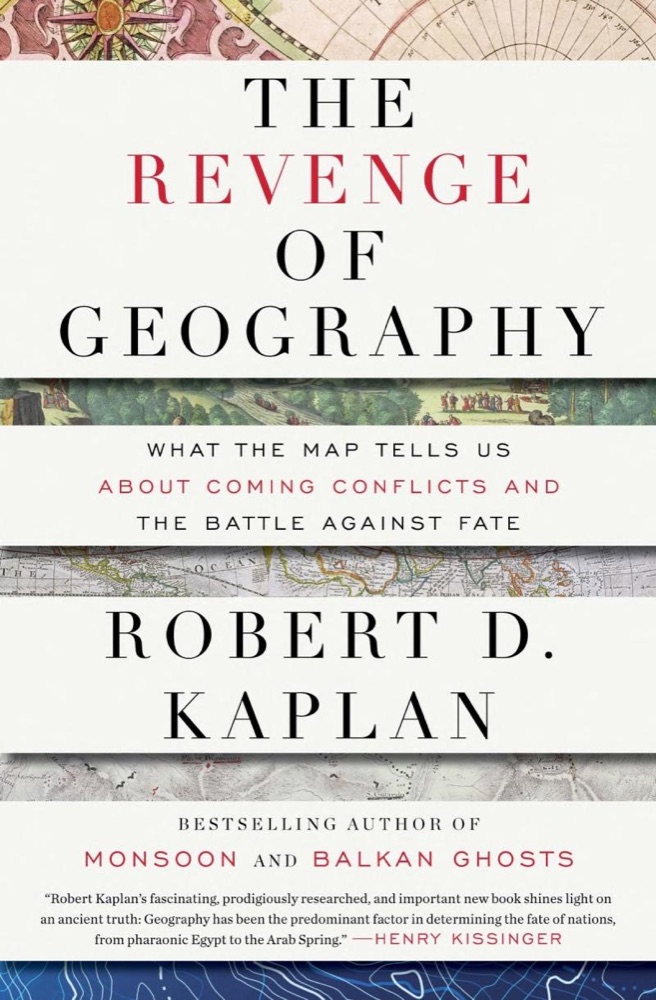
In this provocative, startling book, Robert D. Kaplan, the bestselling author of Monsoon and Balkan Ghosts, offers a revelatory new prism through which to view global upheavals and to understand what lies ahead for continents and countries around the world. In The Revenge of Geography, Kaplan builds on the insights, discoveries, and theories of great geographers and geopolitical thinkers of the near and distant past to look back at critical pivots in history and then to look forward at the evolving global scene. Kaplan traces the history of the world’s hot spots by examining their climates, topographies, and proximities to other embattled lands. The Russian steppe’s pitiless climate and limited vegetation bred hard and cruel men bent on destruction, for example, while Nazi geopoliticians distorted geopolitics entirely, calculating that space on the globe used by the British Empire and
Book details
- First published
- 2012
- Author
- Robert D. Kaplan
- Genre
- History
- Goodreads rating
- 3.79 (6k ratings)
Keep reading
Flashpoints: The Emerging Crisis in Europe
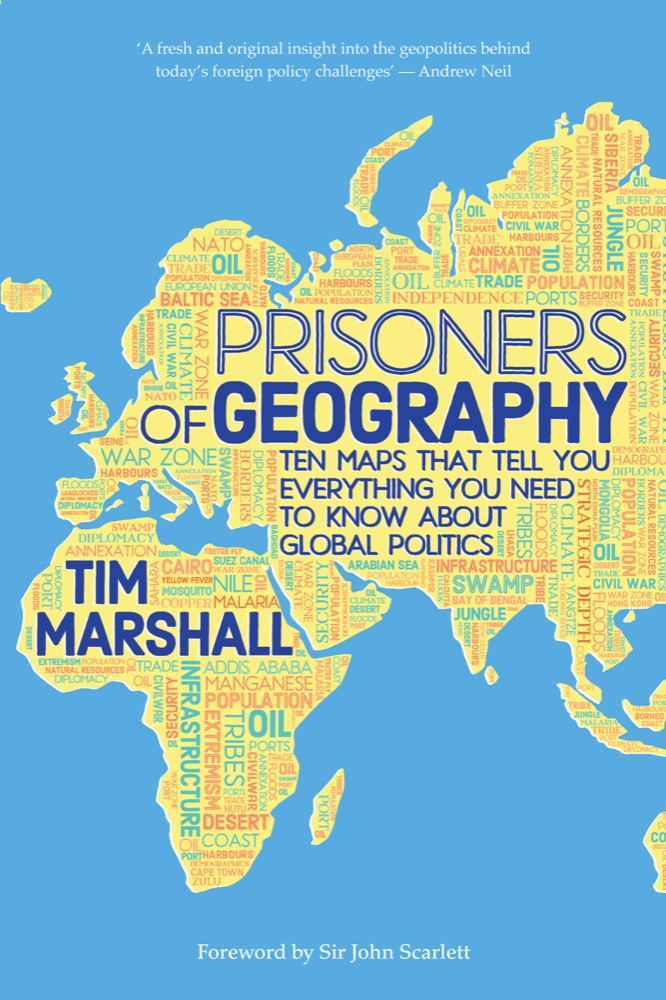 Prisoners of Geography: Ten Maps That Tell You Everything You Need to Know About Global Politics
 World Order
 The Next 100 Years: A Forecast for the 21st Century
 Postwar: A History of Europe Since 1945
 Upheaval: Turning Points for Nations in Crisis
 A World Without Islam
 Europe: A History
 The Strange Death of Europe: Immigration, Identity, Islam
 A Short History of Russia: Tracing Russia's Path Through History, from Its Wars and Conquests, Royal Dynasties, Revolutions into the Modern Era Under Putin―a Concise Exploration of a Complex Nation
 Guns, Germs, and Steel: The Fates of Human Societies
 Imperial Ambitions: Conversations on the Post-9/11 World
 Imperium
 The Next Decade: Where We've Been . . . and Where We're Going
 The Nutmeg's Curse: Parables for a Planet in Crisis
 Border: A Journey to the Edge of Europe
 Civilization: The West and the Rest
 Modern Times: The World from the Twenties to the Nineties
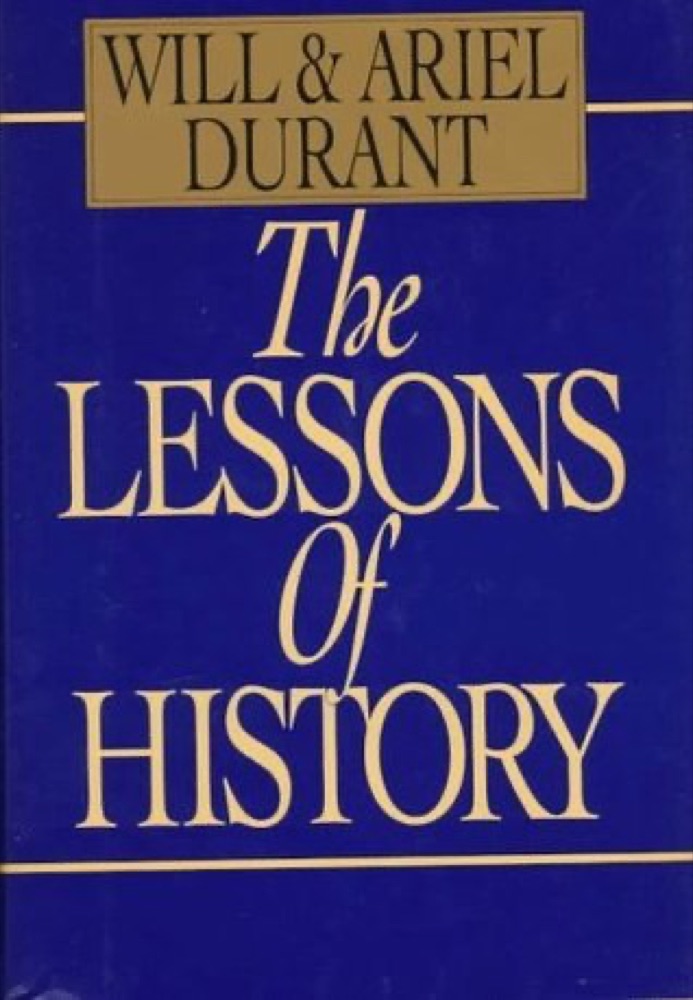 The Lessons of History
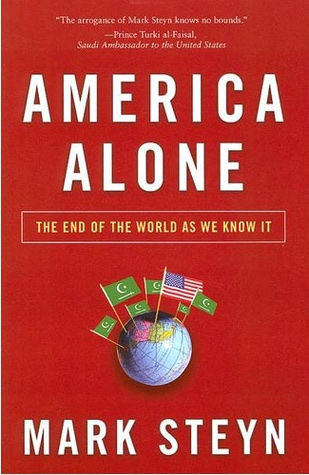 America Alone: The End of the World As We Know It
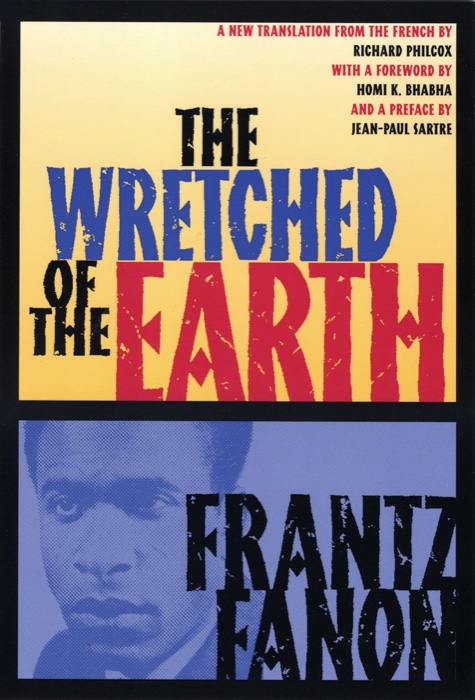 The Wretched of the Earth
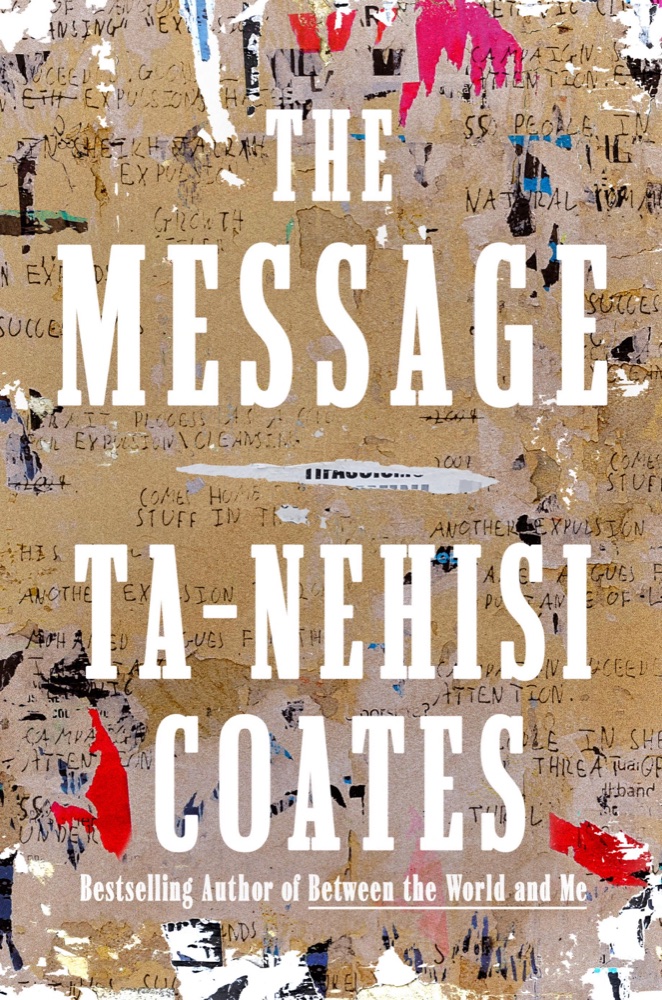 The Message
 This Kind of War: A Study in Unpreparedness
 The Origins of Totalitarianism
 Collapse: How Societies Choose to Fail or Succeed
 Principles for Dealing with the Changing World Order: Why Nations Succeed and Fail
 Ill Fares the Land
 The Question of Palestine
 The Untold History of The United States
 Political Order and Political Decay: From the Industrial Revolution to the Globalization of Democracy
 Closing the Ring
 Dead Fall
 Maphead: Charting the Wide, Weird World of Geography Wonks
 The Looming Tower: Al-Qaeda and the Road to 9/11
 Culture and Imperialism
 A History of the World in 100 Objects
 Recognizing the Stranger: On Palestine and Narrative
 The Shock Doctrine: The Rise of Disaster Capitalism
 The End of the Myth: From the Frontier to the Border Wall in the Mind of America
 Dark Continent: Europe's Twentieth Century
 The Argumentative Indian: Writings on Indian History, Culture and Identity
 A People's History of the United States
 The New Penguin History of The World
 A Distant Mirror: The Calamitous 14th Century
 Understanding Power: The Indispensable Chomsky
 The Jakarta Method: Washington's Anticommunist Crusade and the Mass Murder Program that Shaped Our World
 From Beirut to Jerusalem
 Hegemony or Survival: America's Quest for Global Dominance
 Twilight of Democracy: The Seductive Lure of Authoritarianism
 Conspirators' Hierarchy: The Story of the Committee of 300
 1491: New Revelations of the Americas Before Columbus
 The Guns of August
 Capital and Ideology
 The Age of Revolution, 1789–1848
 Arguably: Selected Essays
 The Fall of the Roman Empire: A New History of Rome and the Barbarians
 The Wizard and the Prophet: Two Remarkable Scientists and Their Dueling Visions to Shape Tomorrow's World
 The Machiavellians: Defenders of Freedom
 Bloodlands: Europe Between Hitler and Stalin